What this tool does
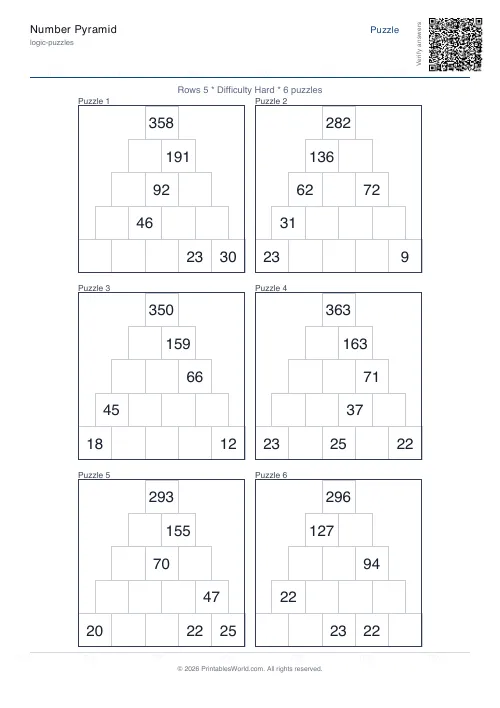
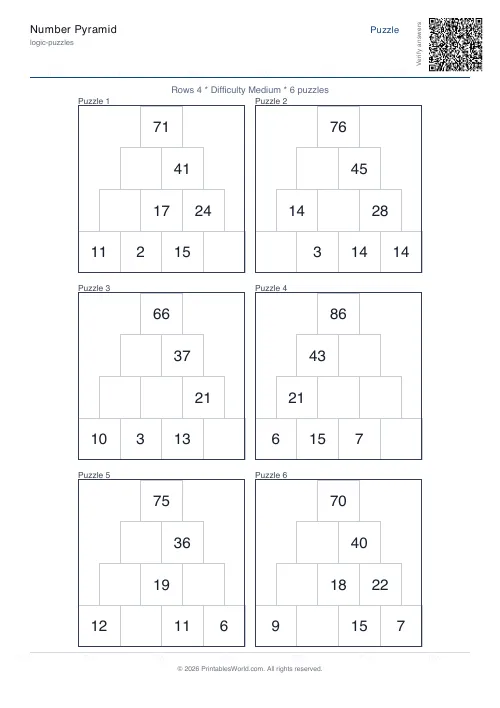
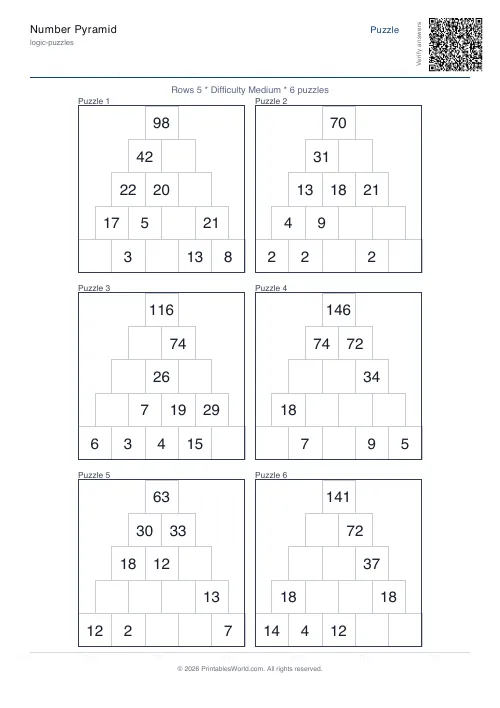
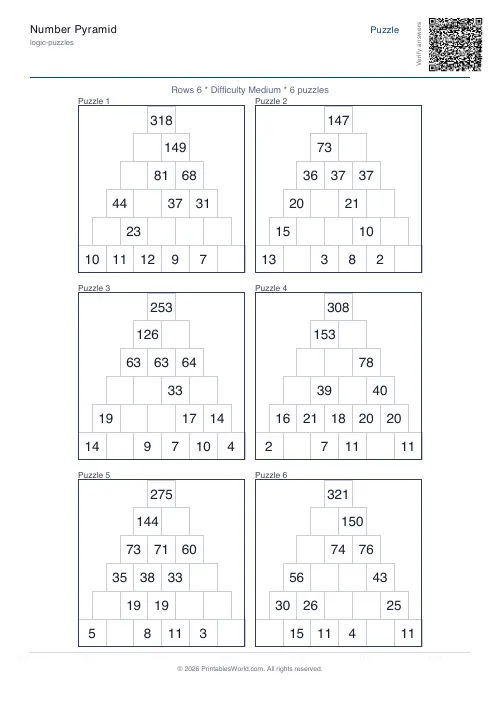
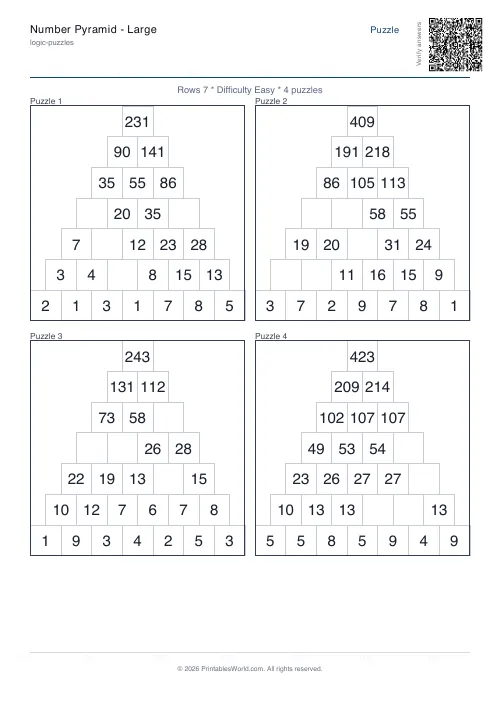
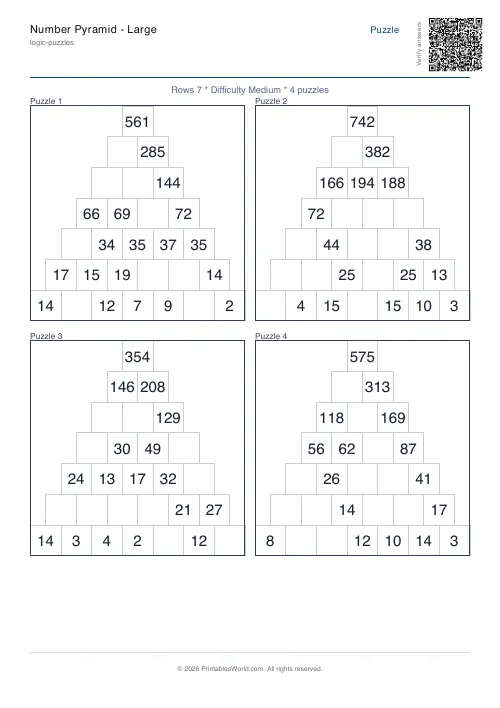
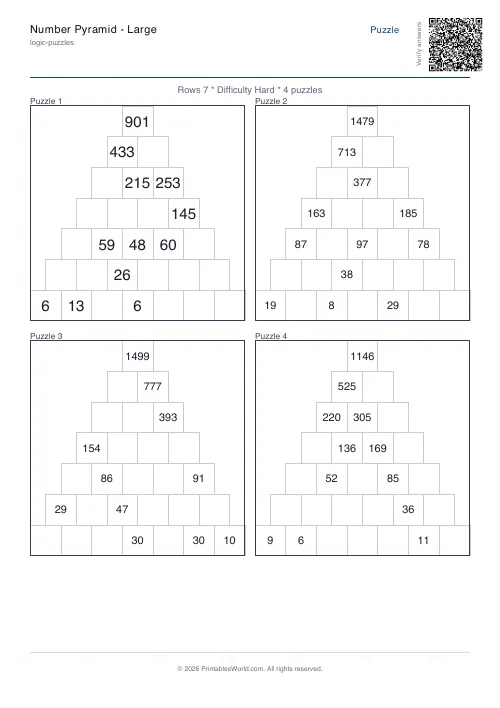
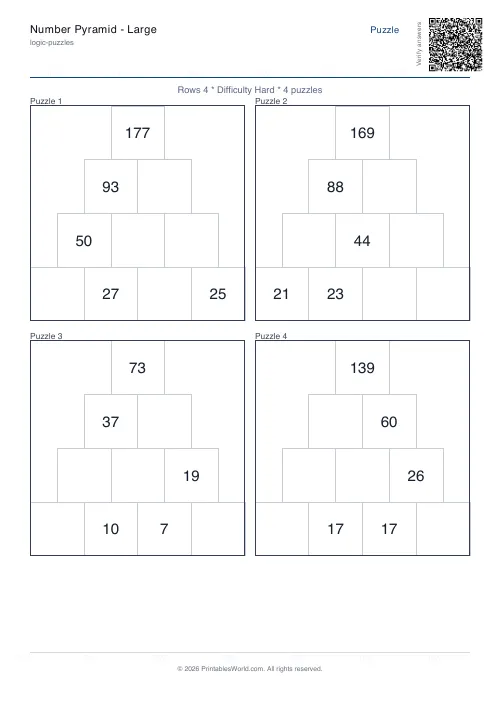
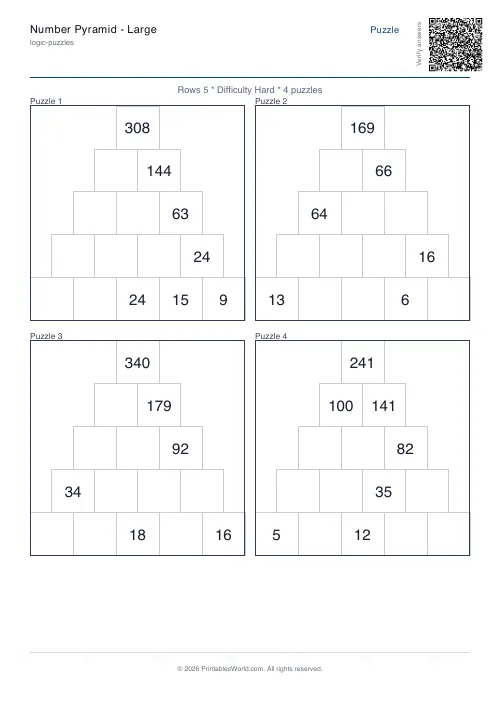
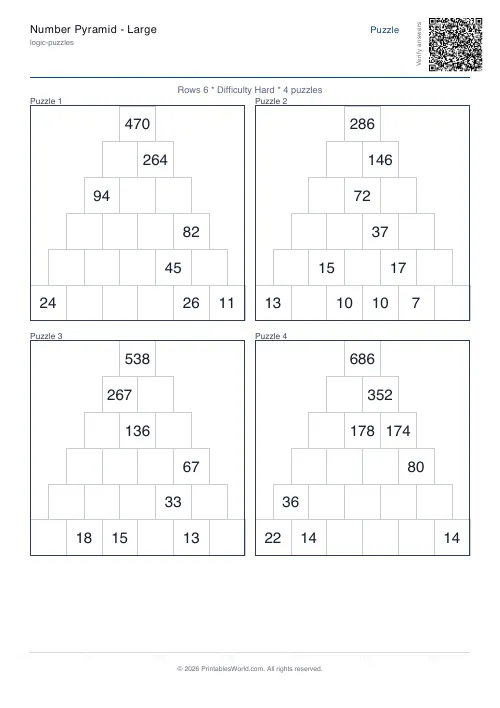
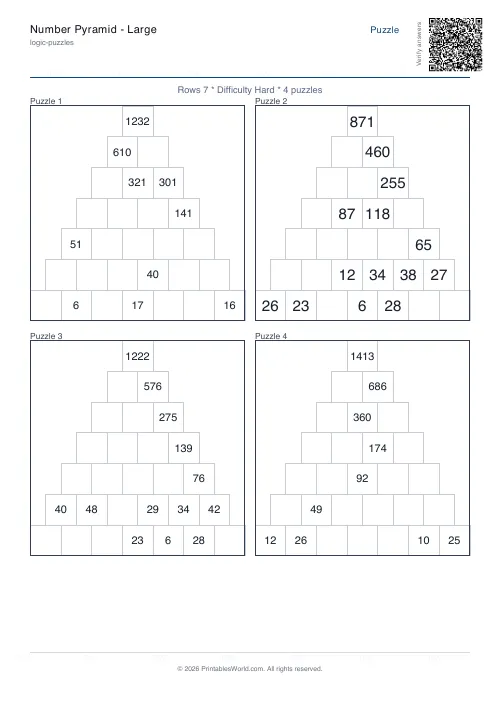
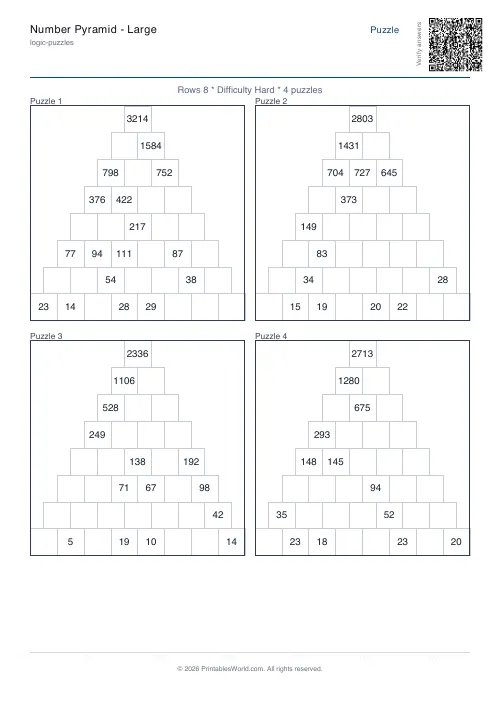
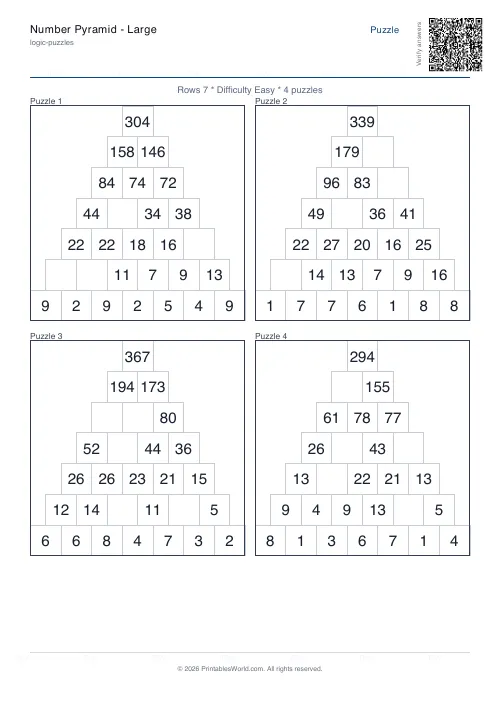
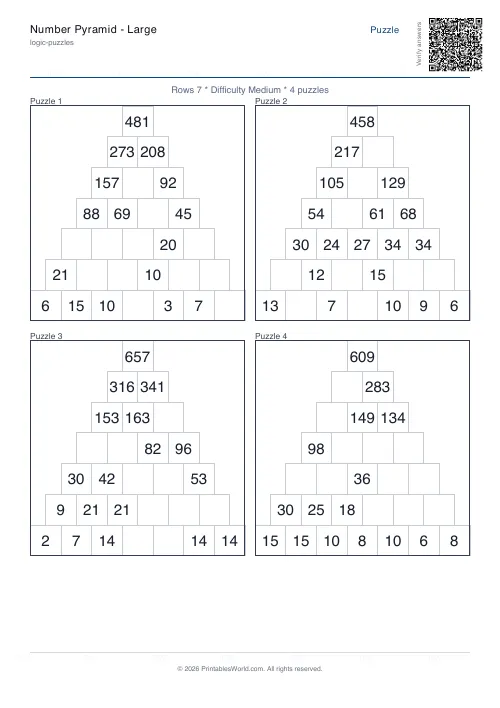
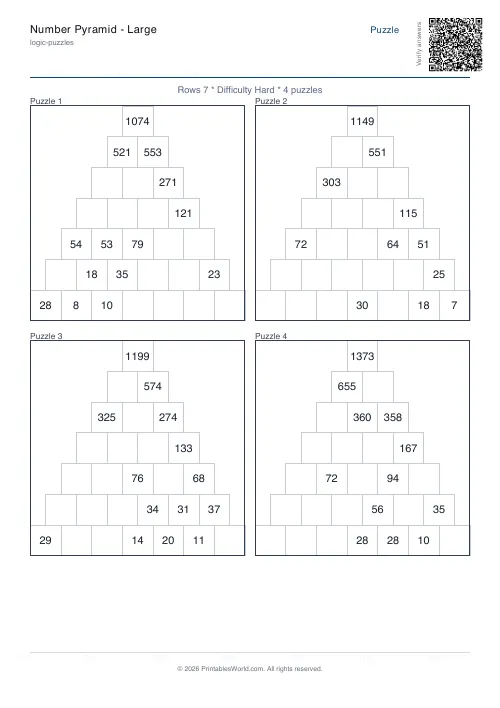
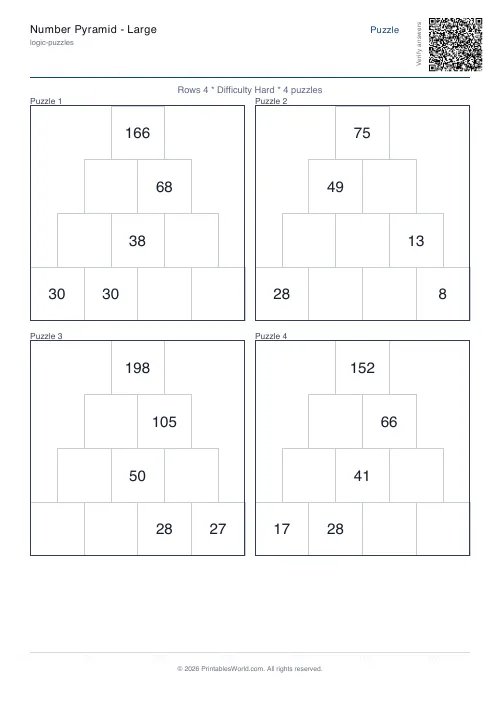
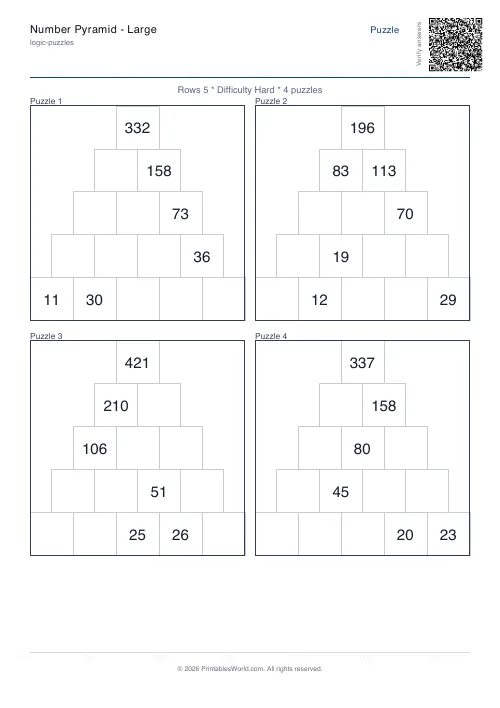
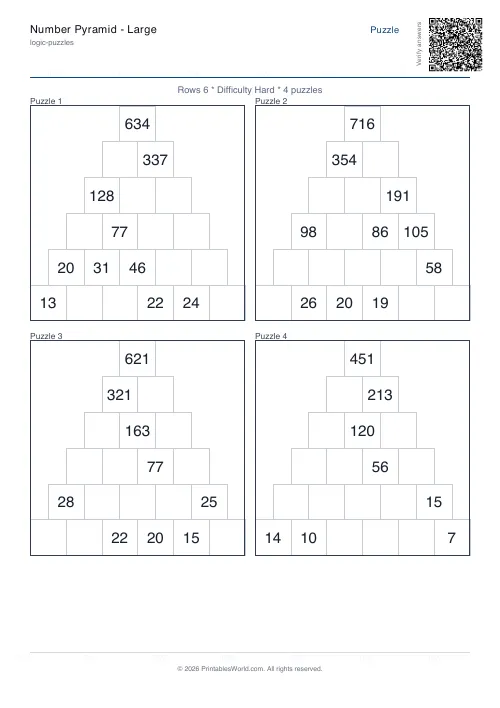
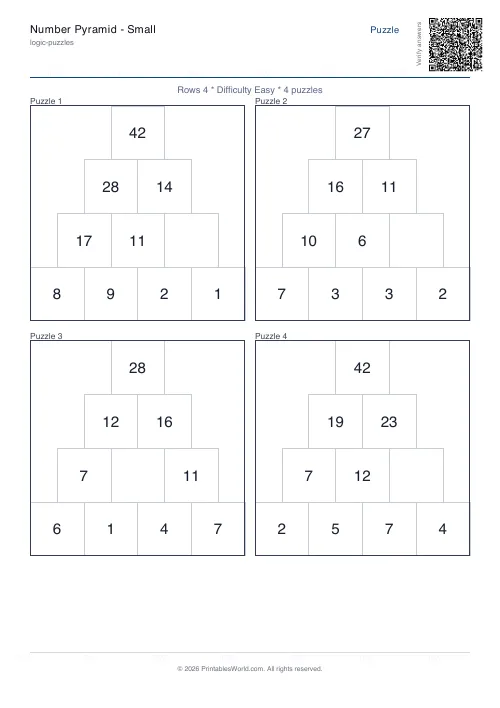
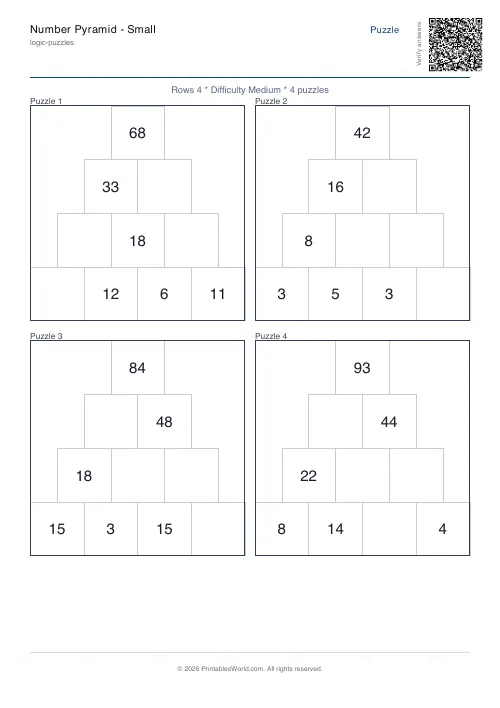
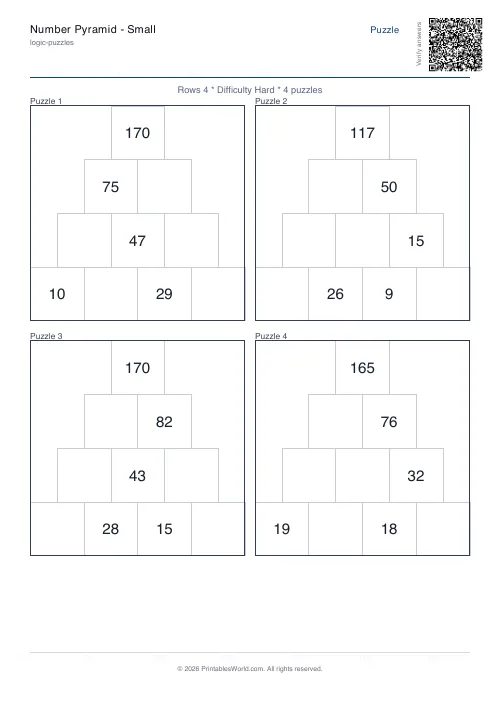
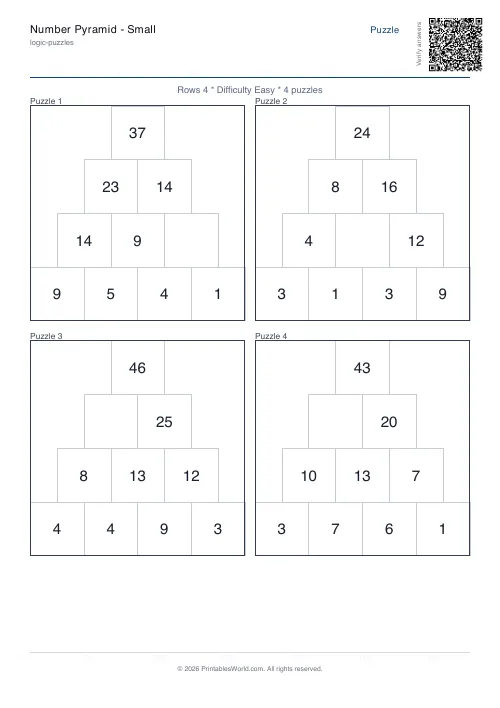
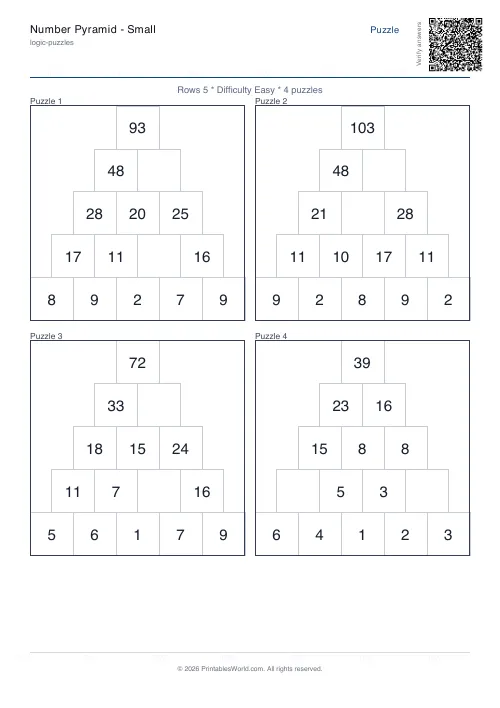
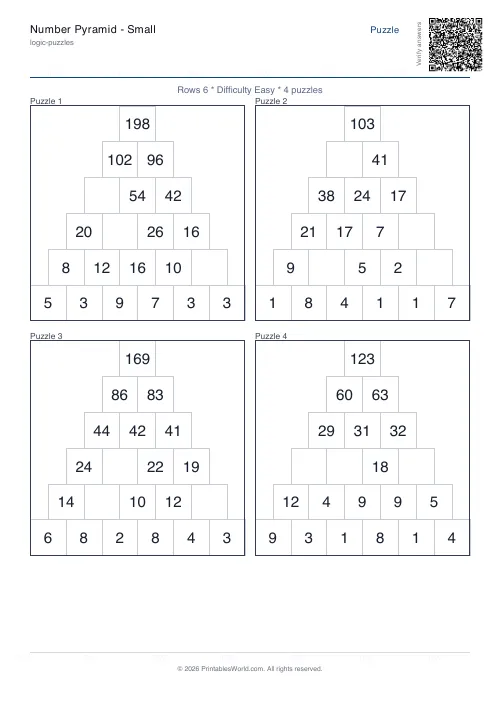
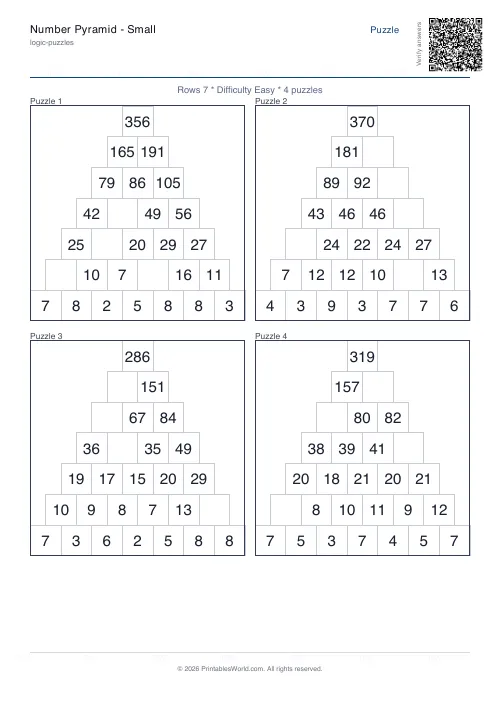
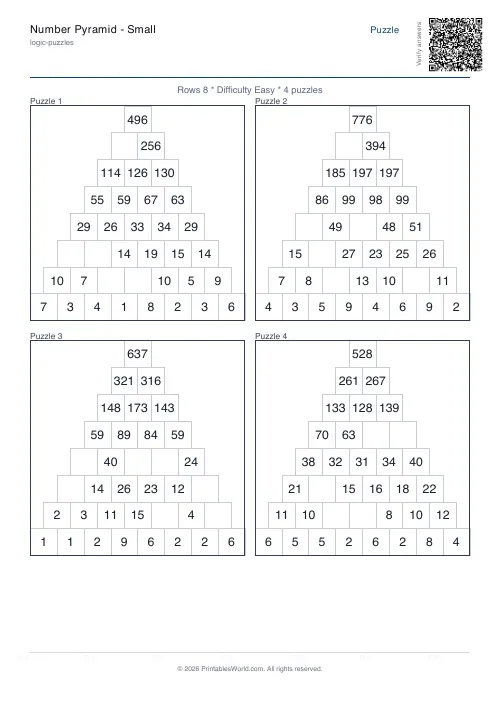
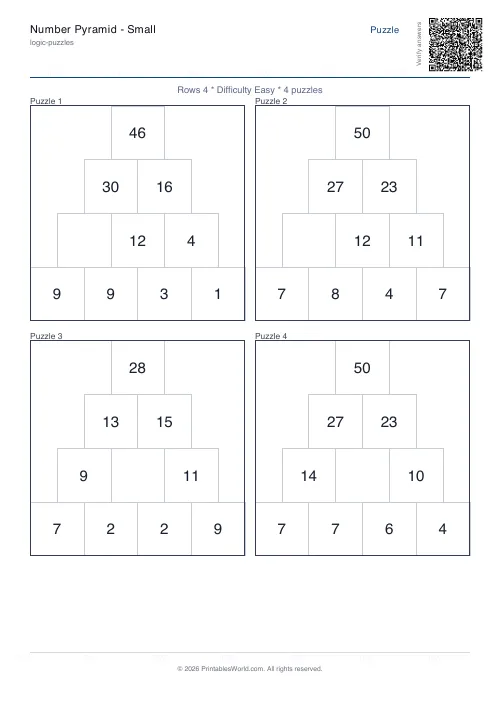
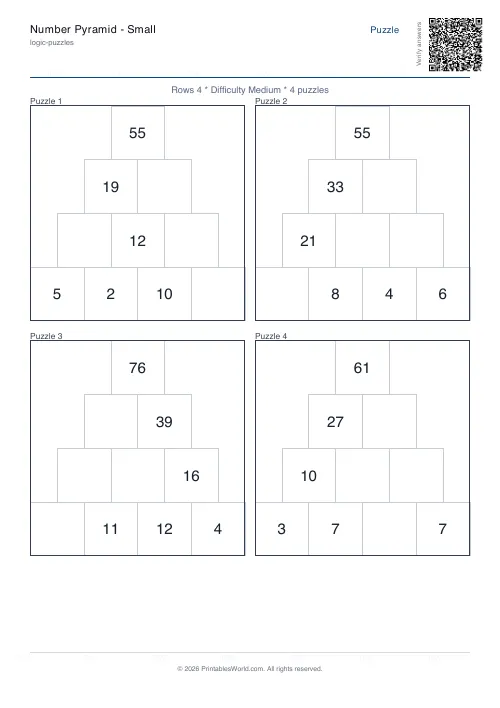
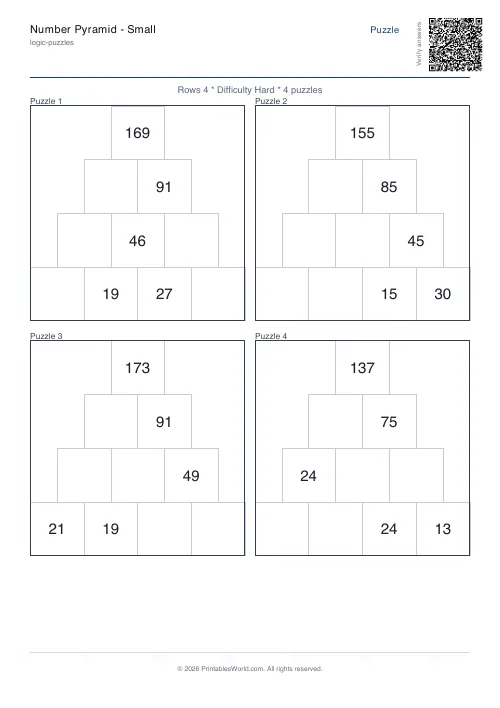
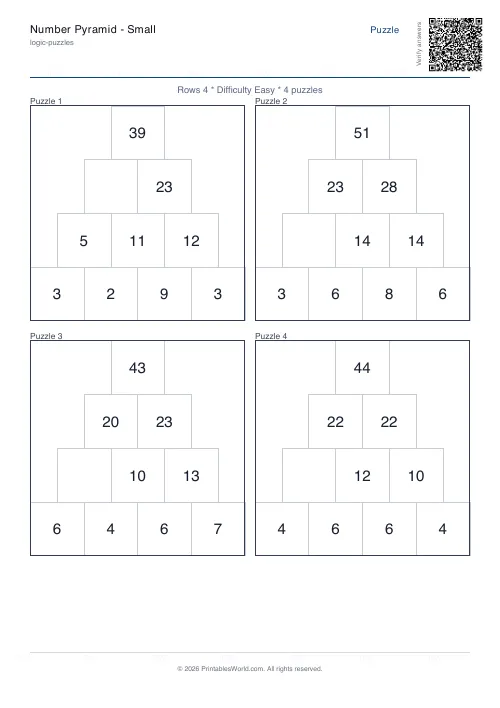
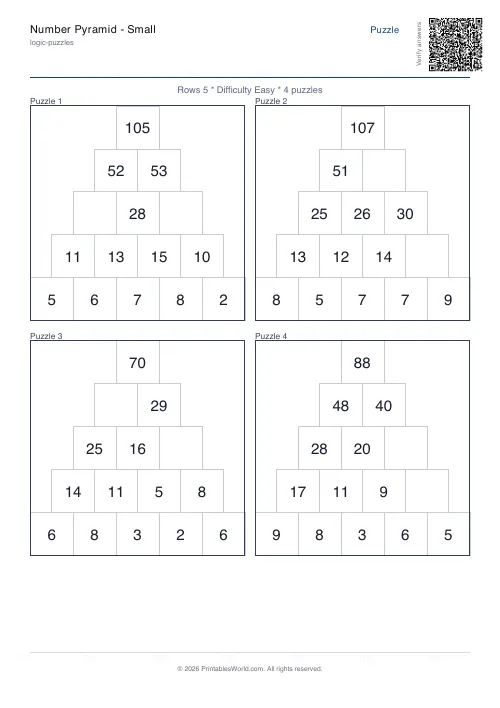
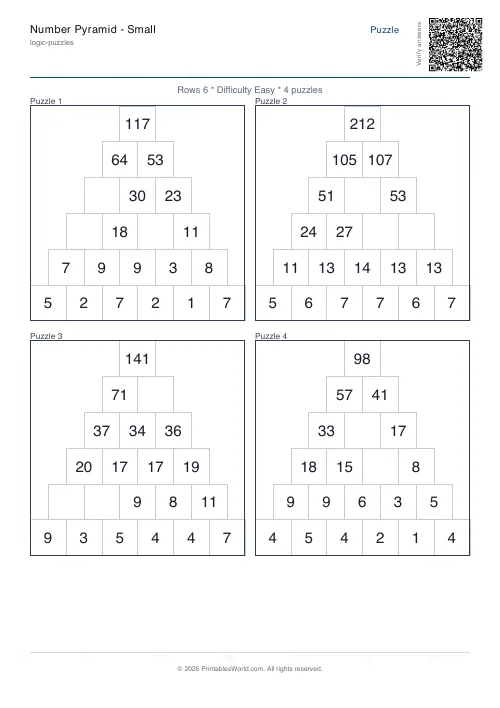
Addition pyramids, where every cell holds the sum of the two directly beneath it. Set the number of rows, pick a difficulty band that controls both the size of the numbers and how many cells are blanked, choose how many pyramids share a page, and switch on a solutions sheet. Easy uses 1 to 9 and always shows the whole bottom row; hard uses 5 to 30 and hides up to 65 per cent of the grid.
People also used
Number Chain Generator: Mental Maths
Print mental-maths number chains with custom difficulty, length and answer keys.
Binary Puzzle Generator: Printable
Create printable binary logic puzzles (Takuzu/Binairo) with customisable grid sizes and difficulty levels.
Achi / Three Men's Morris Board
Print a clean, branded Three Men's Morris (Achi) board with optional rules and cut-out pieces for two players.
Feedback
Spotted something off with this tool?
Each cell is the sum of the two below it
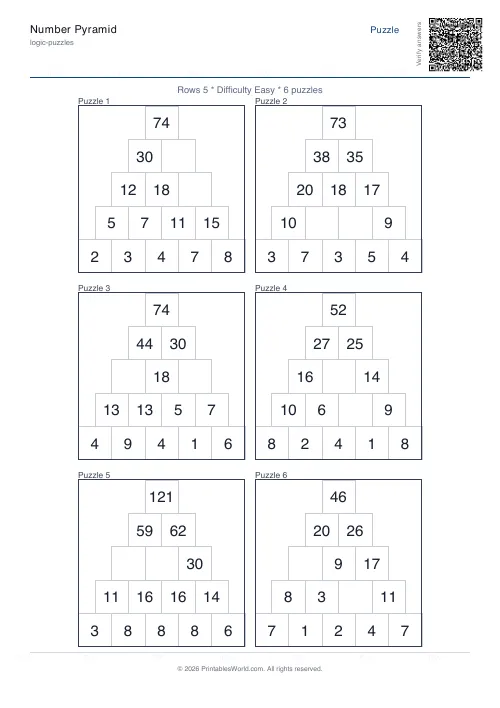
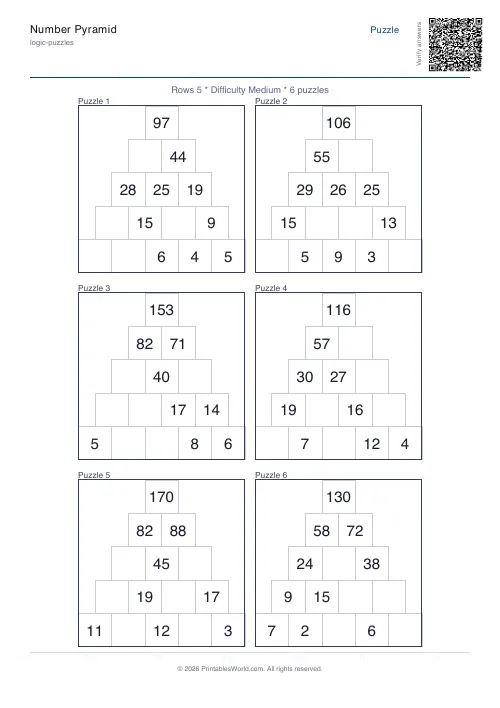
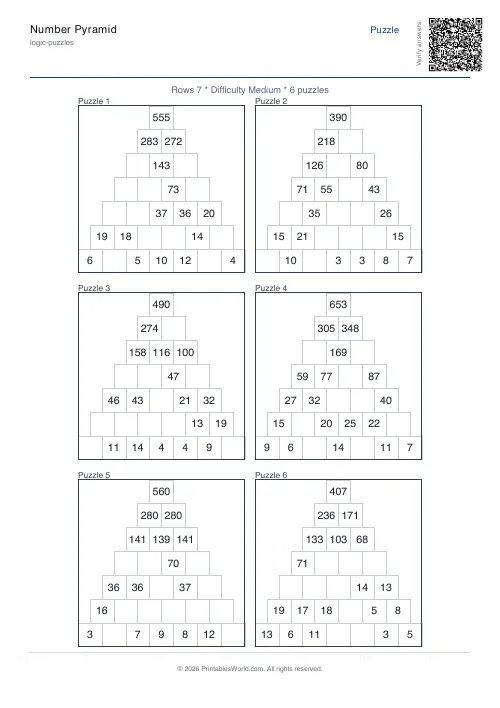
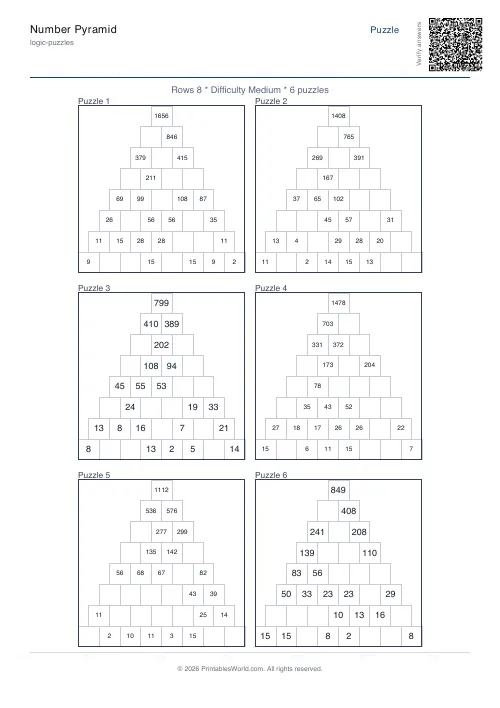
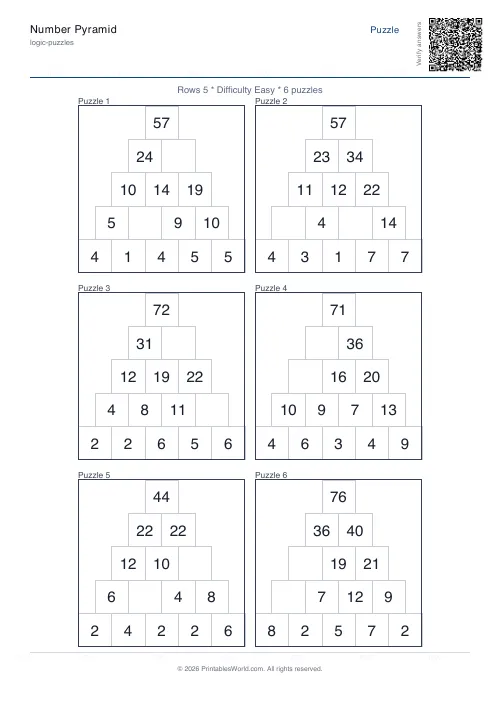
A triangle of cells with some numbers filled in and the rest blank. Every cell equals the two beneath it added together, which means you can work upwards with addition or downwards with subtraction, and a good solver does both.
That bidirectional bit is what separates a pyramid from a page of sums. If you know a cell and one of the two below it, the other one is a subtraction. Children who only ever add get stuck the moment a base cell is missing.
Rows matter more than the difficulty setting
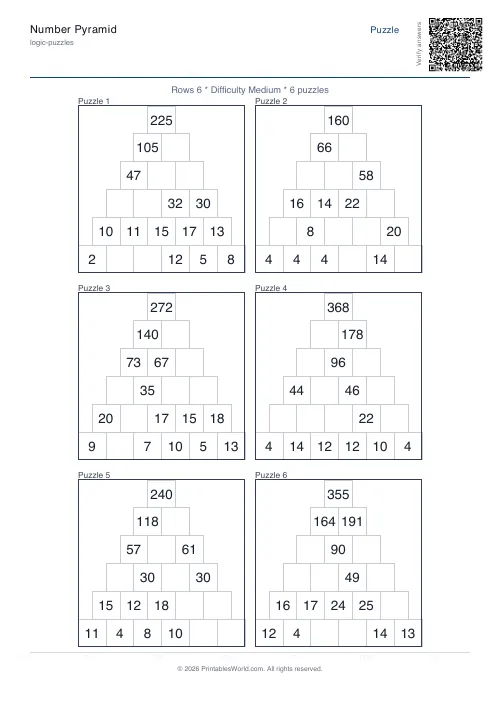
Three to seven rows. A four-row pyramid has ten cells; a seven-row one has twenty-eight, and every extra layer depends on everything under it.
Which is the real point: an arithmetic slip near the base propagates all the way to the apex, so a seven-row pyramid is not simply a longer four-row pyramid, it is a puzzle where mistakes compound. That is what makes the large version genuinely harder, and not simply bigger.
It is also the argument for switching solutions on. With a propagating error a child cannot locate where they went wrong by staring at their own work; they need the correct grid beside it.
What each difficulty band actually changes
Two things at once, which is worth knowing because they can be pulled apart in your head even though the control combines them.
- Easy. Numbers from 1 to 9, and 15 to 25 per cent of cells blanked. The entire bottom row is always given, so the whole puzzle can be solved by adding upwards and never subtracting.
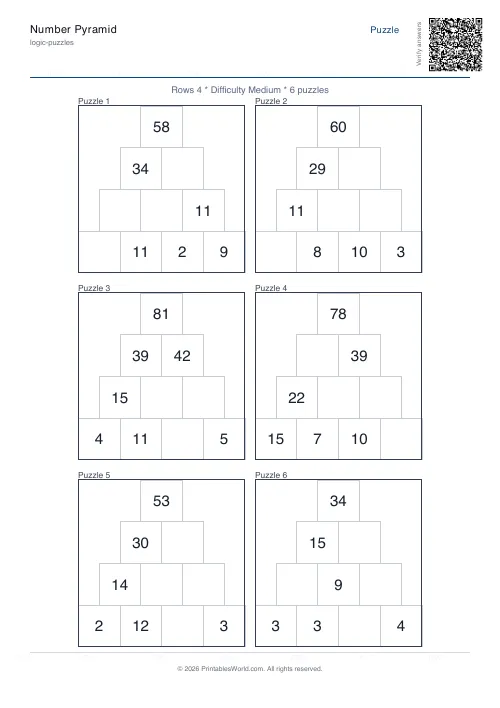
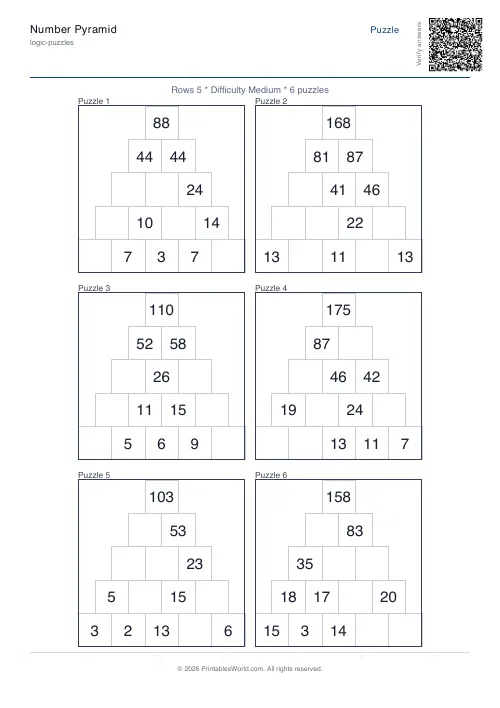
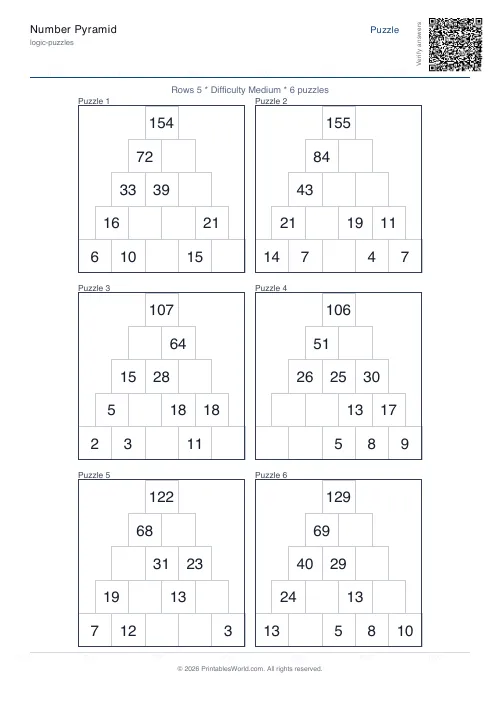
- Medium. Numbers 2 to 15, and 30 to 45 per cent blanked, including cells in the bottom row. Subtraction becomes necessary here.
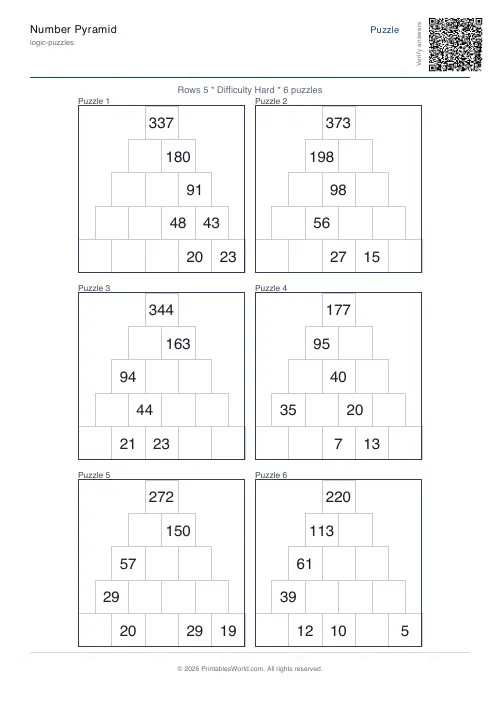
- Hard. Numbers 5 to 30, and up to 65 per cent of the grid blank. Enough is hidden that solvers work in both directions at once and occasionally have to backtrack.
The jump from easy to medium is the significant one, because it is where the puzzle stops being addition practice and starts being reasoning.
Twenty pyramids for a Friday
Five rows, medium, two puzzles per page, large cells on because the classroom printer is not what it was, solutions included.
Out comes a ten-page PDF with two unique pyramids on each page and every answer grid collected in miniature at the end. Fifteen copies, hole-punched, into the maths station. Early finishers take a sheet, solve one or both, and check against the key pinned to the noticeboard rather than queueing at the desk.
How the grid is built
Backwards. The generator picks random integers for the bottom row inside the difficulty's number range, then computes every cell above it by summing pairs, so a complete valid pyramid exists before anything is hidden.
Only then does it blank cells, and it leaves enough givens in each row that a logical path to the answer always survives. That ordering is why every puzzle is solvable: the solution is not searched for afterwards, it was there first.
Where it stops
- No custom starting numbers and no fixed apex value. Every pyramid is randomly seeded.
- PDF only. Nothing exports as an editable document.
- Cell size and typeface are fixed within each tier and cannot be overridden.
- Uniqueness is not tracked across separate sessions, so generating twice may occasionally throw up something similar. Rarely identical, but similar.
FAQs
Quick answers
How many pyramids can I print on one page?
The puzzles-per-page setting typically offers one, two, or four pyramids per sheet, depending on row count and cell size. Larger pyramids (six or seven rows) usually print one per page; smaller grids (three or four rows) can fit two or four.
Can I print these worksheets on US Letter paper?
Yes. The PDF layout adjusts automatically for both A4 and US Letter. Margins and spacing scale so that puzzles fit without clipping, regardless of your printer's paper setting.
What is the difference between easy, medium, and hard?
Easy mode reveals the entire bottom row and uses single-digit numbers, making it suitable for younger pupils. Medium blanks out 30–45 per cent of cells and raises the number range to 2–15. Hard hides 50–65 per cent of cells, uses numbers from 5 to 30, and requires trial-and-error solving.
Do I get an answer key?
If you tick the Include Solutions box, the generator appends a separate page at the end of the PDF showing the completed grids for every puzzle. If you leave the box unticked, the PDF contains only the blank puzzles.
Can I save the PDF and print it later?
Yes. Click the download button, save the file to your device, and print it whenever you need. The PDF includes no expiry date or digital-rights restrictions.
How do pupils solve a number pyramid?
Each cell equals the sum of the two cells directly below it. Solvers fill blanks by adding adjacent lower cells or by subtracting a known cell from the one above to find the missing partner. The process usually involves working both upward and downward through the rows.
Are the puzzles unique every time I generate?
Each generation uses a random seed to produce a fresh set of pyramids. While it is theoretically possible for two sessions to yield similar puzzles, the probability is low enough that classroom teachers rarely encounter duplicates across separate downloads.
Related tools
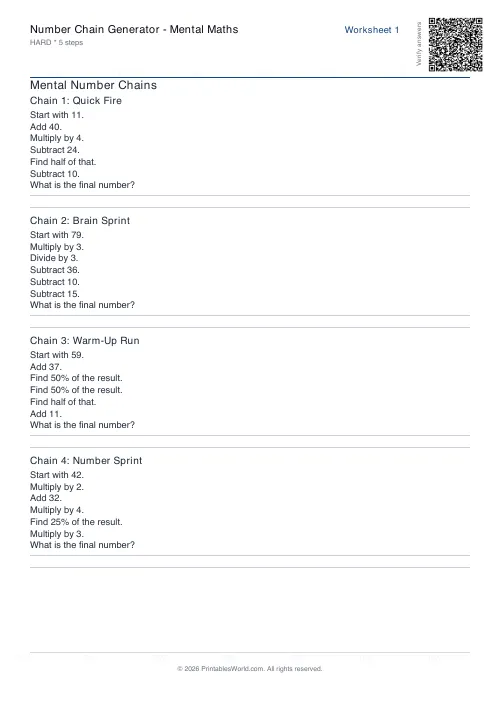
Number Chain Generator: Mental Maths
Print mental-maths number chains with custom difficulty, length and answer keys.
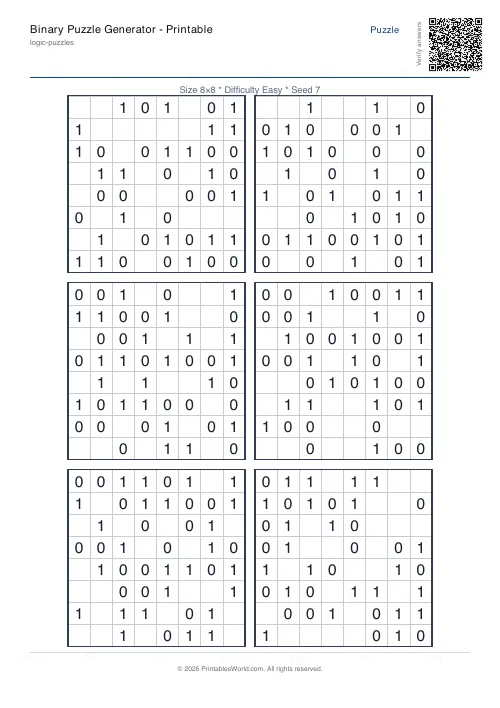
Binary Puzzle Generator: Printable
Create printable binary logic puzzles (Takuzu/Binairo) with customisable grid sizes and difficulty levels.
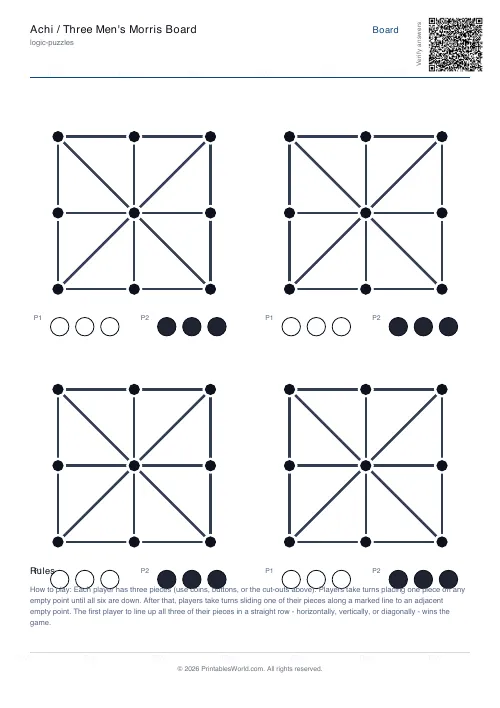
Achi / Three Men's Morris Board
Print a clean, branded Three Men's Morris (Achi) board with optional rules and cut-out pieces for two players.
Further reading
Logic Puzzles
How to solve Sudoku: a beginner's step-by-step guide
Four techniques, learned in order, solve almost every easy and medium Sudoku: scanning, the last free cell, pencil marks and naked pairs. Here is each one with a worked example.
6 min read
Math Worksheets
Making maths fun: 15 ways to practise without tears
Maths tears are usually about difficulty, length or fear of being wrong, not about maths. Fifteen practical changes, grouped by which of those three problems they actually solve.
6 min read
Logic Puzzles
Kakuro, killer sudoku and other number puzzles explained
If sudoku has stopped being a challenge, these are the natural next steps. And unlike sudoku, most of them genuinely involve arithmetic.
5 min read