What this tool does
Mental-arithmetic chains written as instructions: start with a number, then add, double, halve, multiply and so on down to an answer. Four difficulty levels, 3 to 8 steps, up to 20 chains a sheet and 10 sheets at once.
People also used
Maths Operations Chain
Follow a chain of operations to find the final answer. Multi-step.
Number Chain Generator: Mental Maths
Print mental-maths number chains with custom difficulty, length and answer keys.
Number Pyramid Generator
Create printable addition pyramid puzzles with adjustable rows, difficulty, and optional answer keys.
Feedback
Spotted something off with this tool?
Chains written as instructions, not as sums
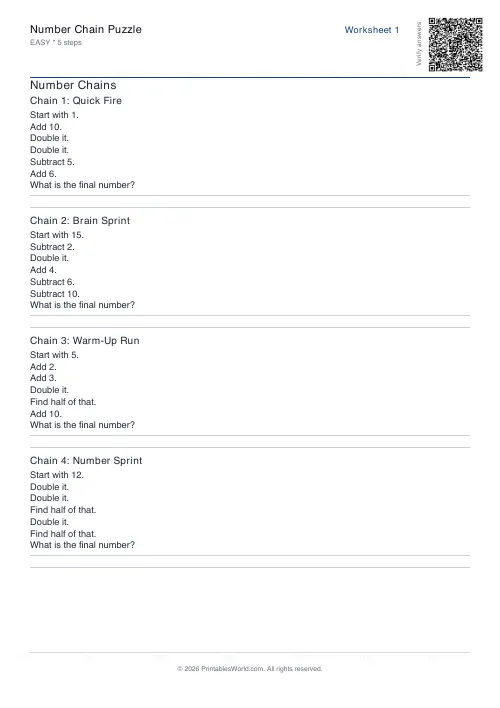
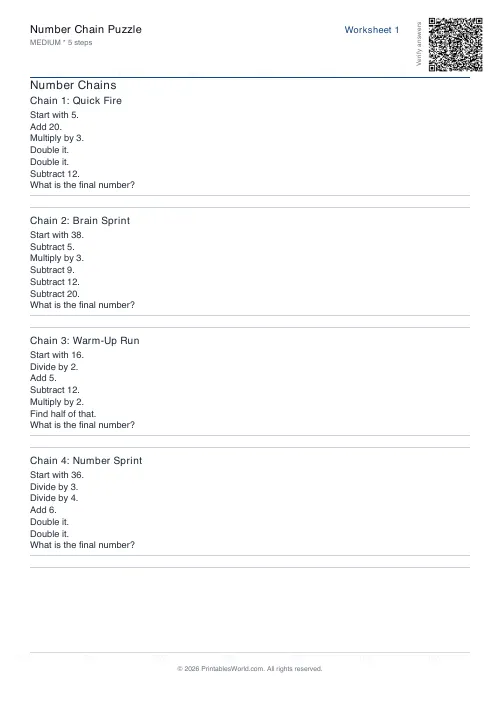
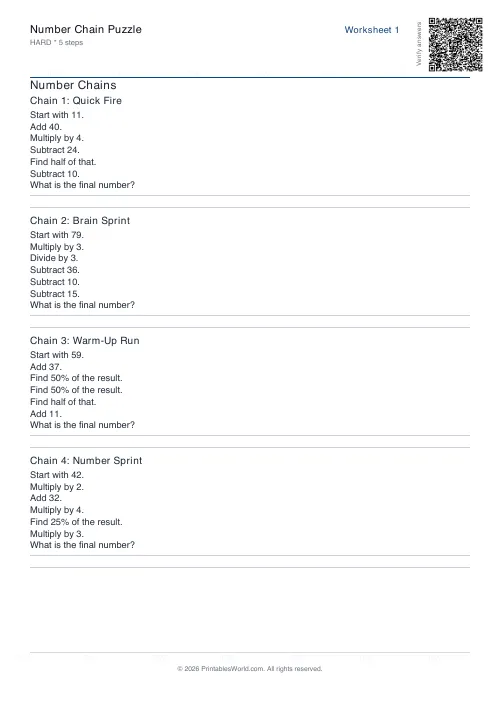
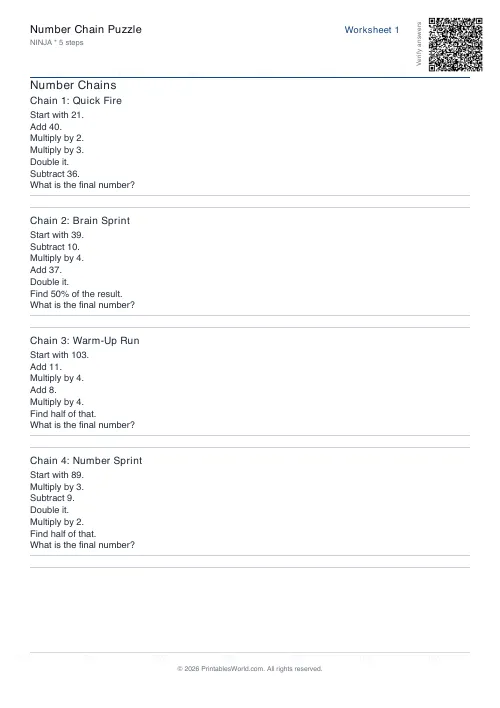
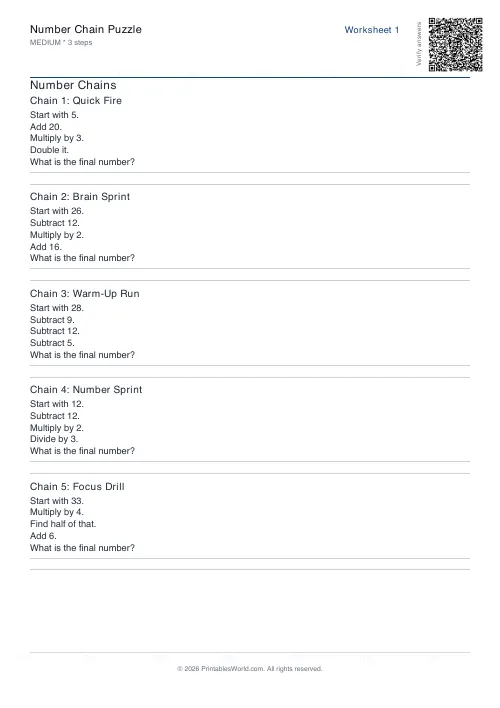
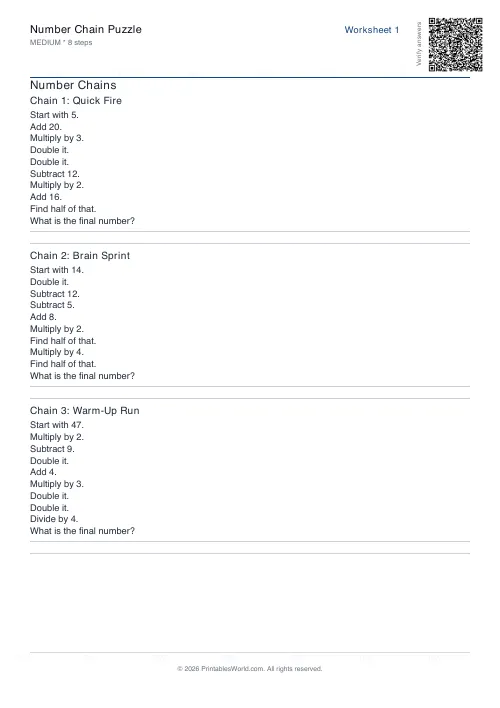
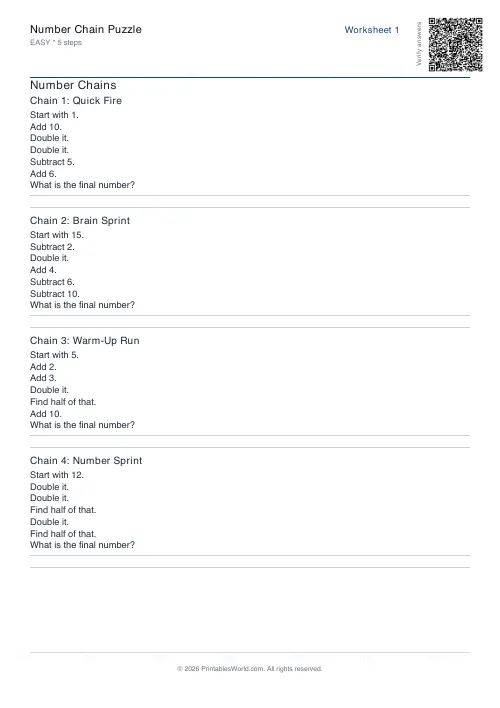
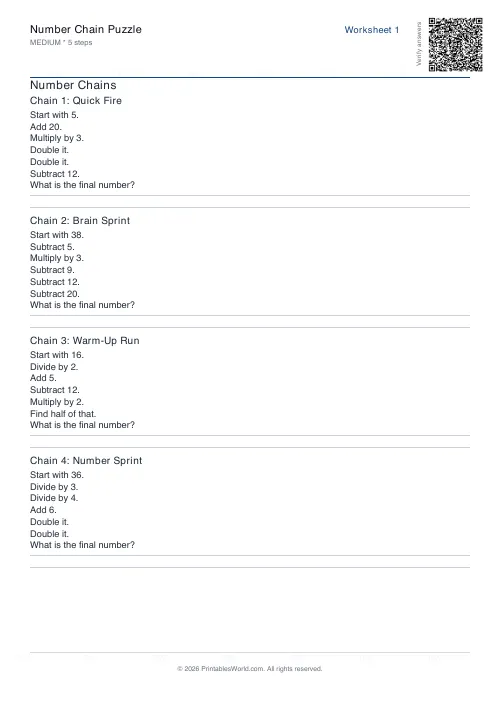
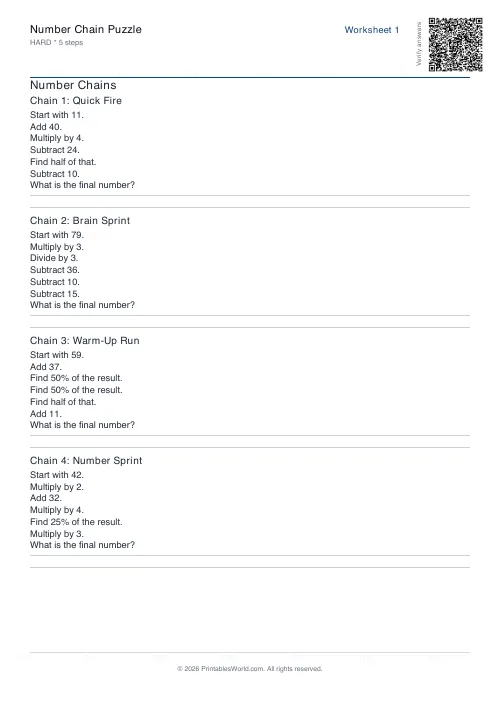
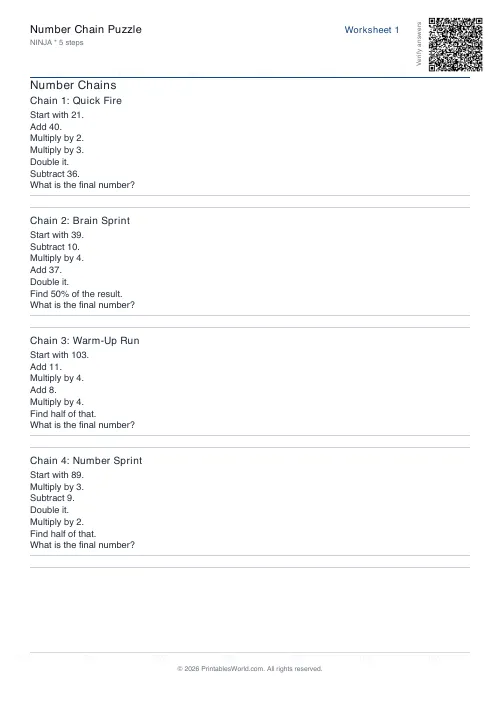
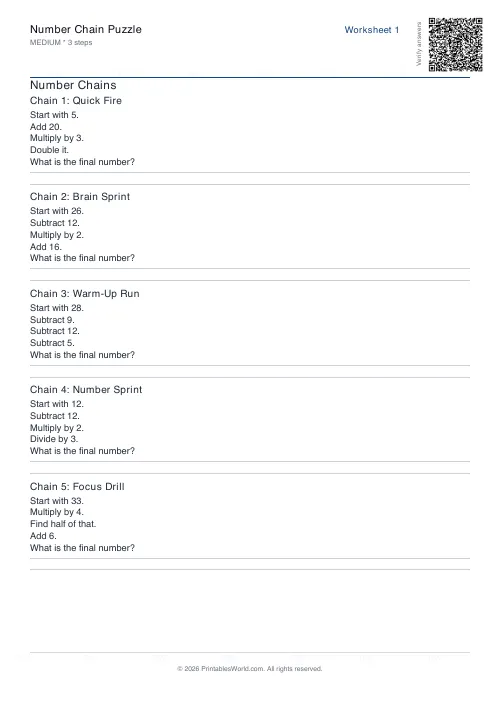
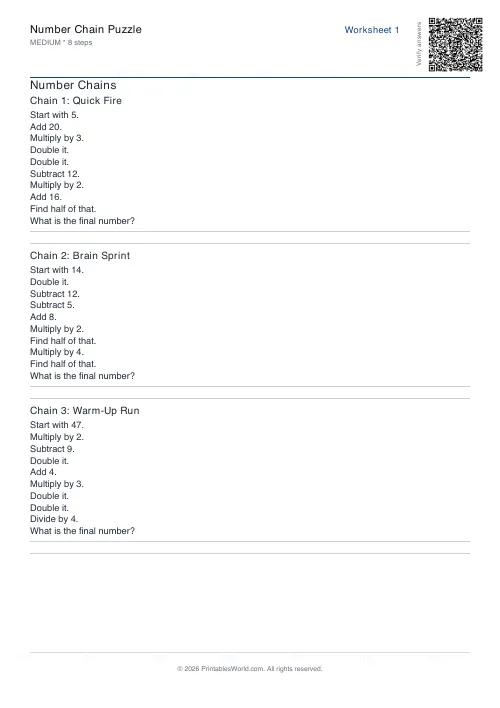
Each chain gives a starting number and then a short list of instructions — Add 7. Double it. Find half of that. Subtract 9. — ending in a box for the answer. The point is to carry a running total in your head from one line to the next.
Up to twenty chains a sheet, and up to ten sheets in one download, each with its own randomly chosen title.
The four difficulty levels change which operations appear
- Easy — add and subtract (1 to 10), double, halve. Nothing else.
- Medium — adds and subtracts grow to 3–20, and multiply and divide join in with small factors.
- Hard — adds and subtracts reach 40, factors reach 6, and percentages and squaring appear.
- Ninja — everything at once.
The jump worth watching is easy to medium. Doubling and halving are single moves a child can do without a strategy; multiplying by 4 is a fact they either know or must build. A class that flies through easy chains and stalls on medium has a times-table gap, not a working-memory one, and the two need completely different help.
Halving and dividing never leave a fraction
A halving step is only used when the running total is even, and a division step only when the number divides exactly. If the chain has arrived somewhere awkward, the generator picks a different operation instead.
That constraint is what keeps the whole thing mental. One decimal in the middle of a chain and the child is reaching for paper, at which point they are doing four separate sums rather than one chain.
Chain length is the working-memory dial
Three steps to eight. Three is a warm-up. Eight is genuinely demanding, and the errors change character: at three steps children get sums wrong, and at eight they get the arithmetic right and lose the total.
Watch which is happening before you change the difficulty. Shortening the chain helps the second problem and does nothing for the first.
Running it out loud
The sheet is written as instructions on purpose, so it can be read aloud. Cover the page, read one chain line by line at whatever pace suits the class, and have everyone write only the final answer.
That version is harder than the printed one and much closer to what mental arithmetic actually is, since a child reading the page can go back and check step two. Do both. The gap between a pupil's written score and their spoken score tells you how much of their fluency depends on being able to re-read.
What the form offers
Difficulty, steps per chain (3–8), chains per sheet (4–20), sheets per download (1–10), a title, the answer key, and a seed. A4 or US Letter.
Ten sheets in one download is a half-term of daily starters, printed once.
FAQs
Quick answers
What is a number chain?
A short list of arithmetic instructions you follow from a starting number to the end. They build mental-maths fluency.
How long are the chains?
Five steps by default, with a slider for 3-8 steps depending on the audience.
How many chains per page?
Up to five chains per worksheet page, and you can request multiple worksheets at once.
Are answers included?
Yes. Toggle the answer key to add a separate page listing the final answers in order.
Related tools
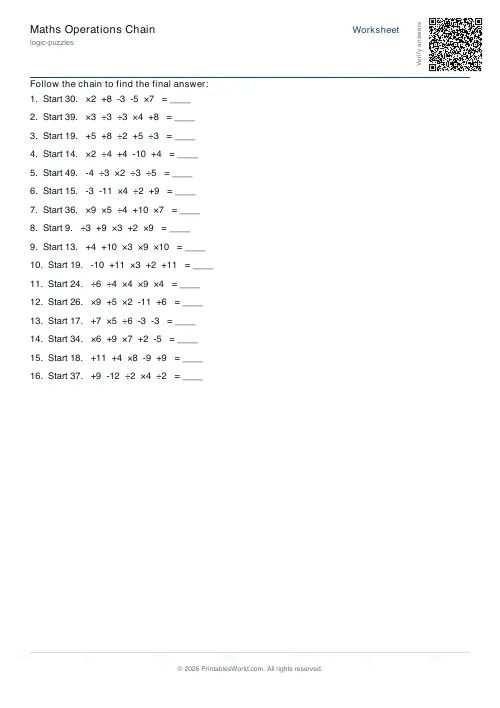
Maths Operations Chain
Follow a chain of operations to find the final answer. Multi-step.
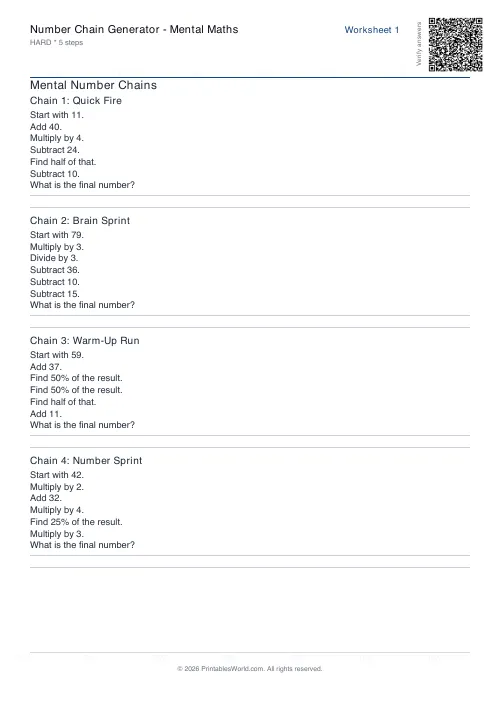
Number Chain Generator: Mental Maths
Print mental-maths number chains with custom difficulty, length and answer keys.
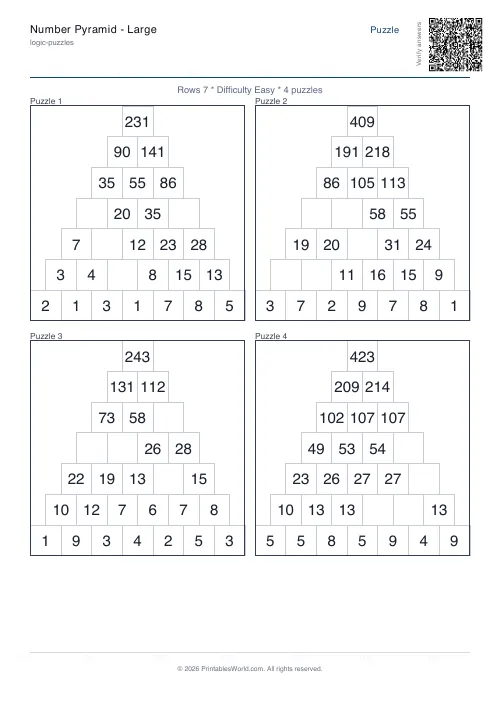
Number Pyramid Generator
Create printable addition pyramid puzzles with adjustable rows, difficulty, and optional answer keys.
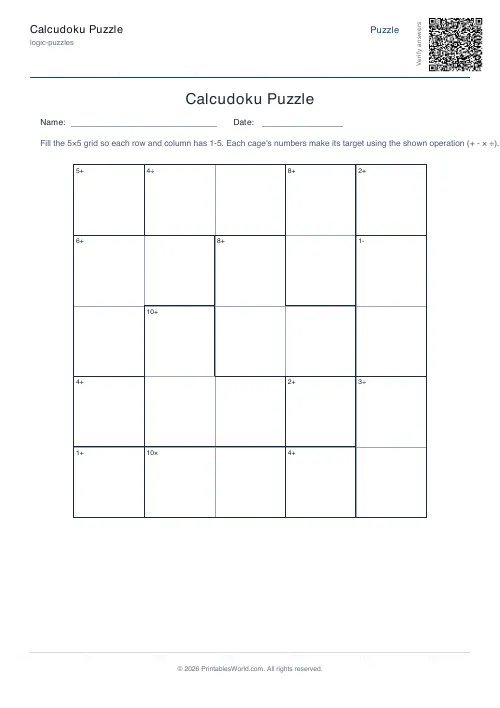
Calcudoku Puzzle
Latin-square number puzzles with arithmetic cages.
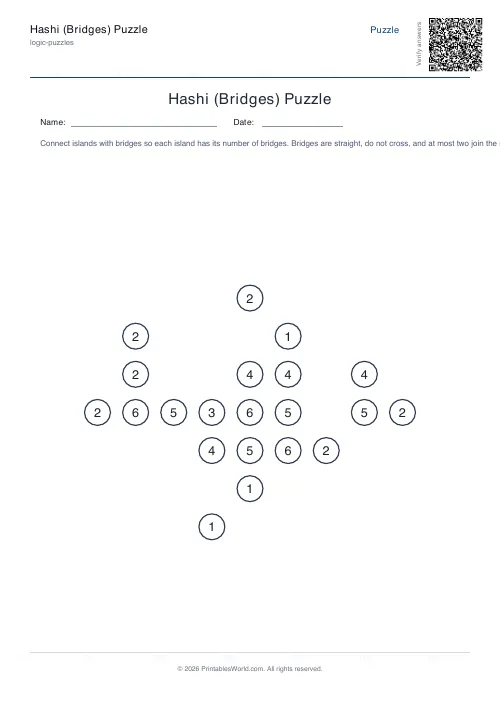
Hashi (Bridges) Puzzle
Connect the numbered islands with bridges.
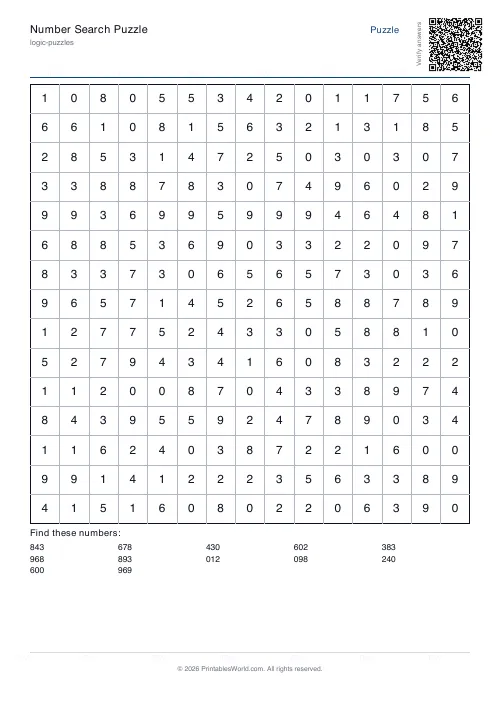
Number Search Puzzle
Find hidden numbers in a grid of digits. Configurable number length.
Further reading
Logic Puzzles
Kakuro, killer sudoku and other number puzzles explained
If sudoku has stopped being a challenge, these are the natural next steps. And unlike sudoku, most of them genuinely involve arithmetic.
5 min read
Logic Puzzles
The benefits of logic puzzles for developing brains
Logic puzzles teach deduction and persistence, which are worth having. The claim that they make children generally smarter is weaker than the marketing suggests.
5 min read
Puzzles & Brain Games
Printable brain games for seniors: a free puzzle pack
A free printable puzzle pack for older adults, with a sample seven-day plan, large-print and easier-difficulty tips, and how to use the Logic Puzzles collection.
7 min read