What this tool does
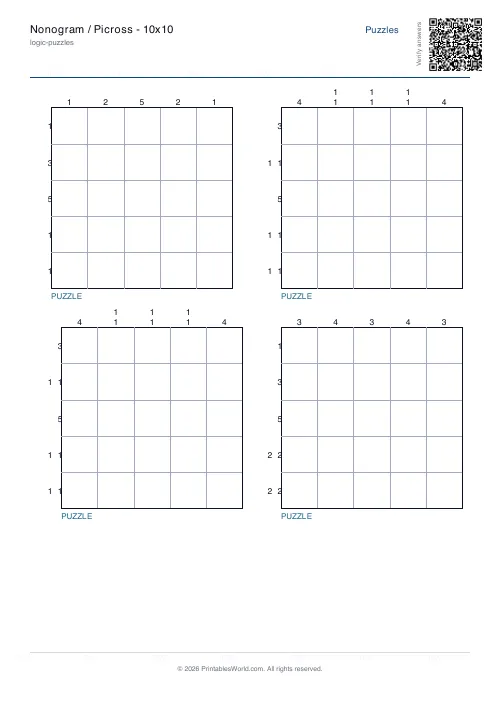
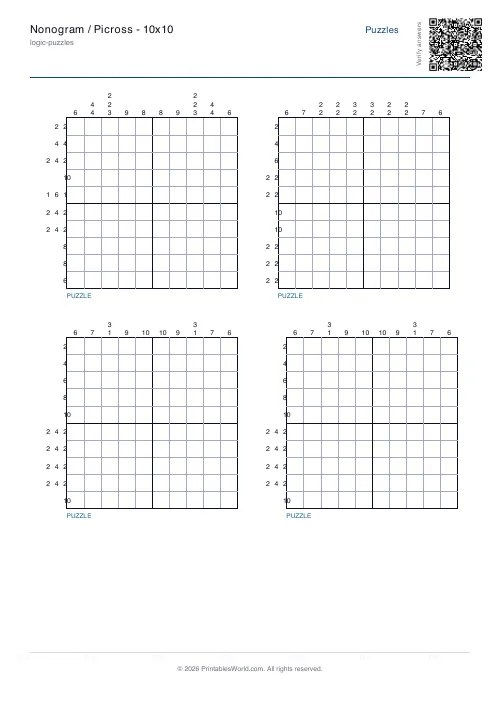
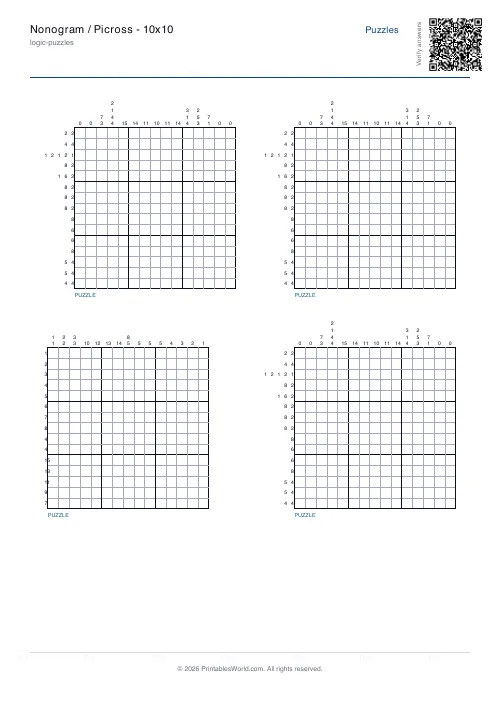
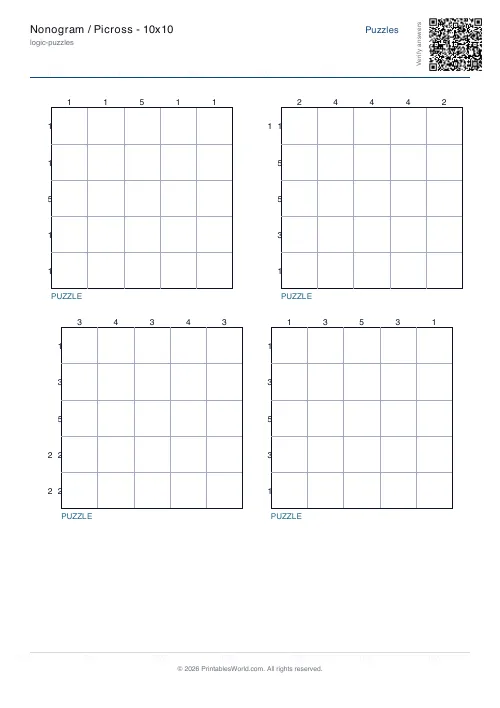
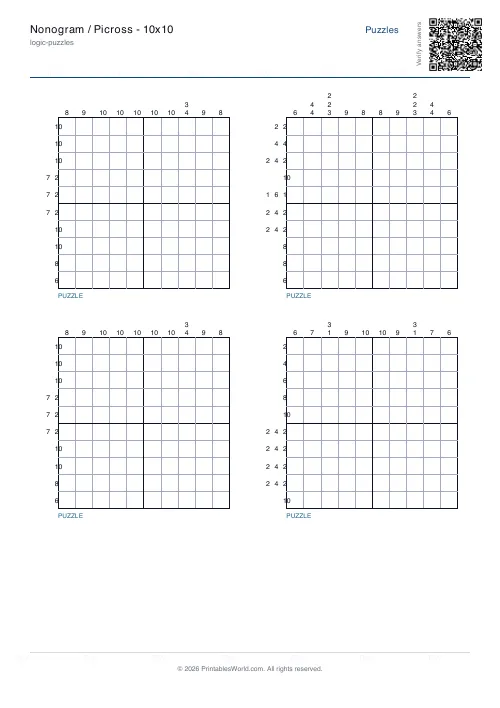
Printable 10×10 nonograms, also called Nonogram or Griddlers. Numbers along the top and the left tell you the runs of filled cells in each column and row, and a solved grid reveals a picture. Eight hand-drawn designs at this size, one to six puzzles a page, an optional solutions page, and a seed to reproduce a set exactly.
People also used
Feedback
Spotted something off with this tool?
Numbers on two edges, a picture in the middle
The clues along the top and the left give the lengths of the filled runs in each column and row, in order. Work out which cells must be shaded and a recognisable image appears.
Eight designs are available at 10×10: a house, a cat face, a sailboat, a tree, a bird, a mug, a flower with a stem, and a large letter A. They are hand-drawn bitmaps rather than random noise, which is the entire reason a finished grid looks like something instead of a speckle.
One to six puzzles a page.
Where to begin
- Find the biggest numbers first. A clue of 8 in a row of ten leaves only two possible positions, so the middle six cells are filled whichever way it sits. That is free information and it is where every solve starts.
- Mark the definite blanks with a dot or a cross rather than leaving them empty. On a grid with several runs in one line, forgetting which blanks you had proved is how people go wrong.
- Alternate between rows and columns constantly. One confirmed cell in a row often resolves an entire column, and that column resolves two more rows.
- Pencil. Nonograms reward trying a line and backing out of it, and ink does not.
The seed makes a class set
Type any word into the seed field and the same sequence of images comes back every time. Leave it blank and the pick is random.
Which is how you give thirty children the same four puzzles: one seed, one print run, and everybody is looking at the same sailboat when you put the solution up. It also lets you find a puzzle again months later without having kept the PDF.
A Friday logic station
Four puzzles to a page, solutions on, a seed typed in. Six copies of the two-page PDF.
Groups of four take a copy and work through the puzzles in pairs, rotating. At the end the solution page goes on the board and everybody checks their own sailboat, mug, bird and tree at once, which takes about ninety seconds and no marking at all.
Ten to twenty minutes per puzzle is typical at this grid size for most pupils, which is why 10×10 is the useful classroom size: big enough to need real deduction, small enough to finish inside a lesson.
Limits of this page
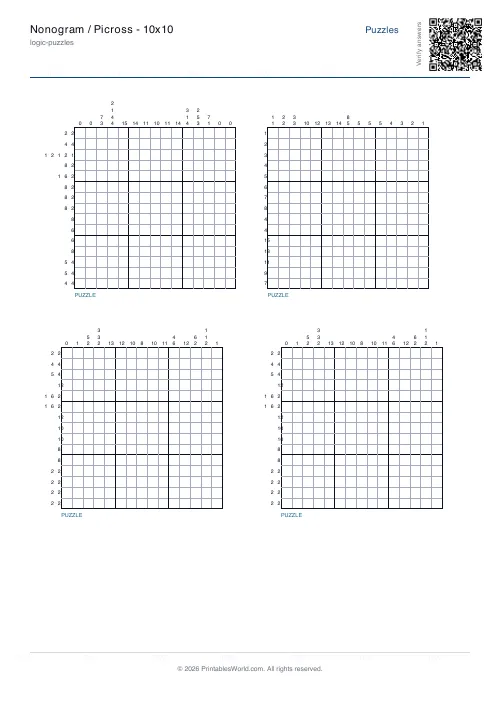
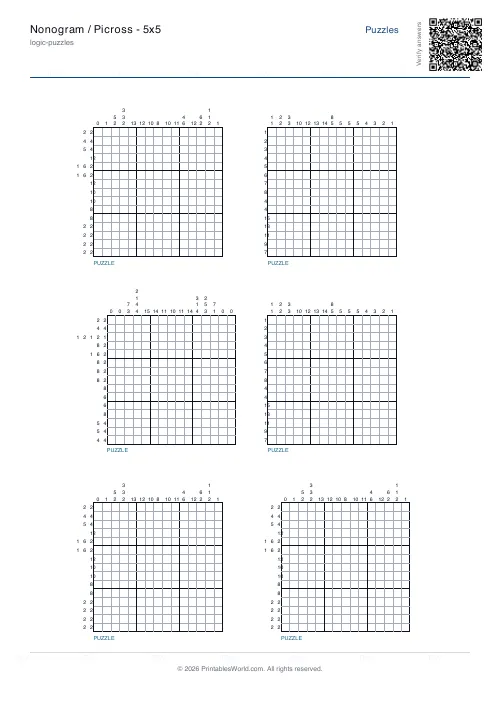
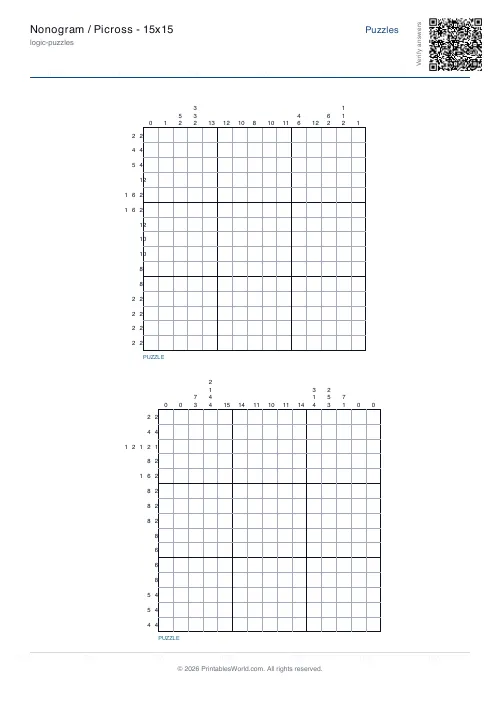
- 10×10 only. Smaller 5×5 grids and larger 15×15 ones are separate pages in the logic puzzles category.
- Eight designs, fixed. Changing the seed reorders them; it does not invent new ones.
- No custom images. You cannot upload a photograph or turn a word into a grid.
- Every puzzle has exactly one valid solution. The bitmaps were drawn to avoid ambiguity, which is why the library is curated rather than generated.
FAQs
Quick answers
How many puzzles fit on one page?
You can print 1, 2, 3, or 4 puzzles per page. One puzzle uses the full page for a large grid; four puzzles arrange in a 2×2 layout with smaller cells. Choose the count that matches your paper size and eyesight comfort.
What pictures will the solved puzzles reveal?
The 10×10 library includes a house, cat face, sailboat, tree, bird, coffee mug, flower with stem, and a large letter A. The generator rotates through these designs based on your seed (or randomly if you leave the seed blank).
Can I print on US Letter paper?
Yes. Every PDF auto-scales to fit both A4 and US Letter dimensions without clipping clues or grid edges. Print settings stay on default and the layout adjusts automatically.
What does the seed field do?
The seed determines which images the generator picks and in what order. Type any word or phrase. The same seed always produces the same sequence. Leave it blank for a random selection each time.
Do I get solution keys?
Only if you tick "Include solutions" before generating. When enabled, the PDF adds a second page showing each puzzle with the correct cells shaded. Turn it off for a worksheet with no answers.
How long does a 10×10 Nonogram take to solve?
Most adults finish in 10–20 minutes; children aged 8–12 may need 20–30 minutes. Experienced solvers breeze through in under 10 minutes. The time depends on familiarity with run-length logic and how many pencil marks you use.
Are the puzzles guaranteed to have one unique solution?
Yes. Every bitmap in the curated library produces unambiguous clues. You will never need to guess. Standard Nonogram logic (comparing row and column runs) always leads to a single correct grid.
Related tools
Further reading
Logic Puzzles
The benefits of logic puzzles for developing brains
Logic puzzles teach deduction and persistence, which are worth having. The claim that they make children generally smarter is weaker than the marketing suggests.
5 min read
Puzzles & Brain Games
Printable brain games for seniors: a free puzzle pack
A free printable puzzle pack for older adults, with a sample seven-day plan, large-print and easier-difficulty tips, and how to use the Logic Puzzles collection.
7 min read
Logic Puzzles
Kakuro, killer sudoku and other number puzzles explained
If sudoku has stopped being a challenge, these are the natural next steps. And unlike sudoku, most of them genuinely involve arithmetic.
5 min read