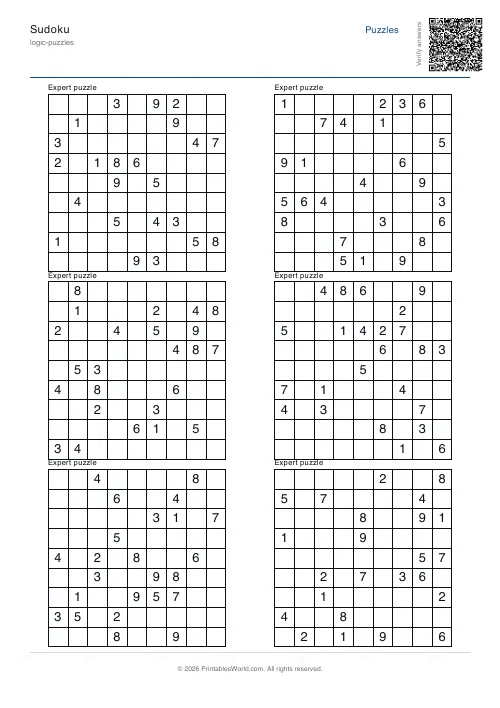
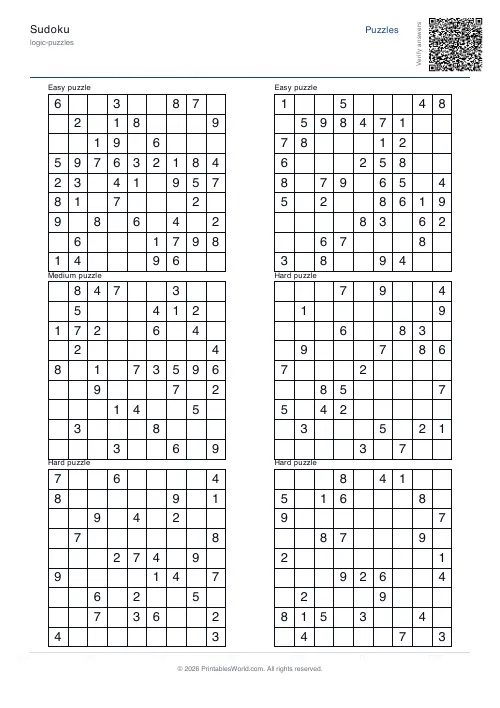
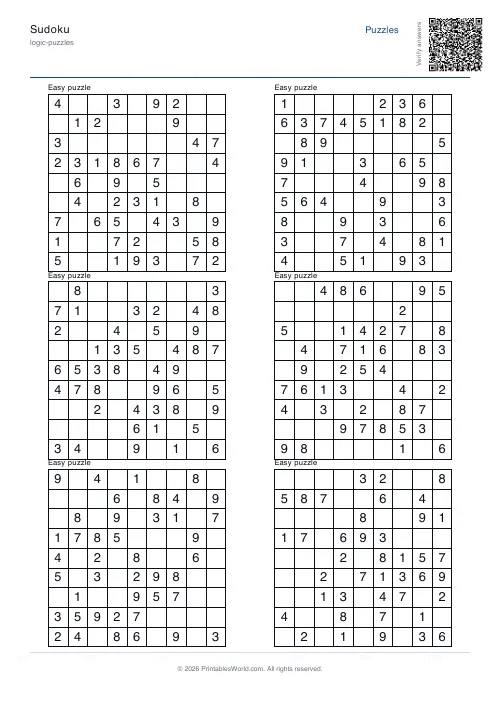
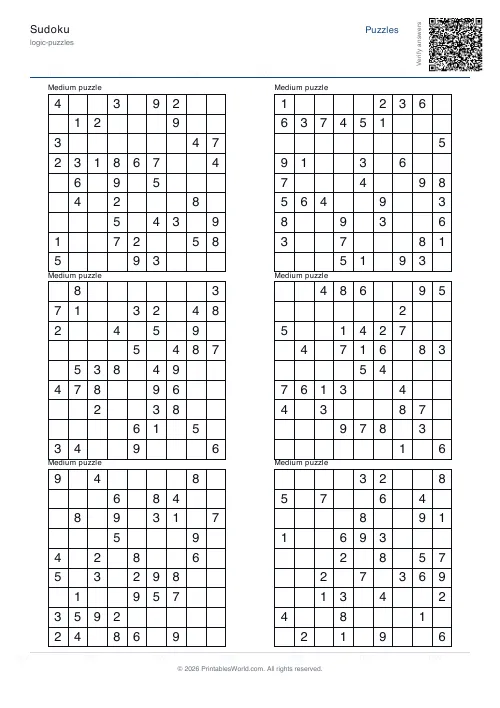
What this tool does
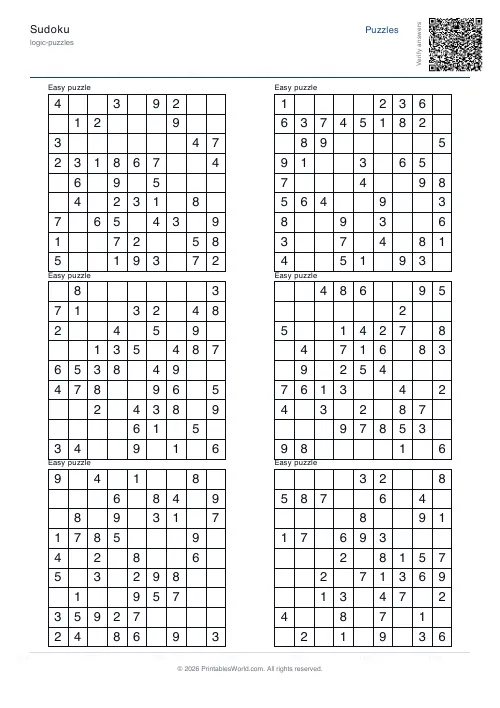
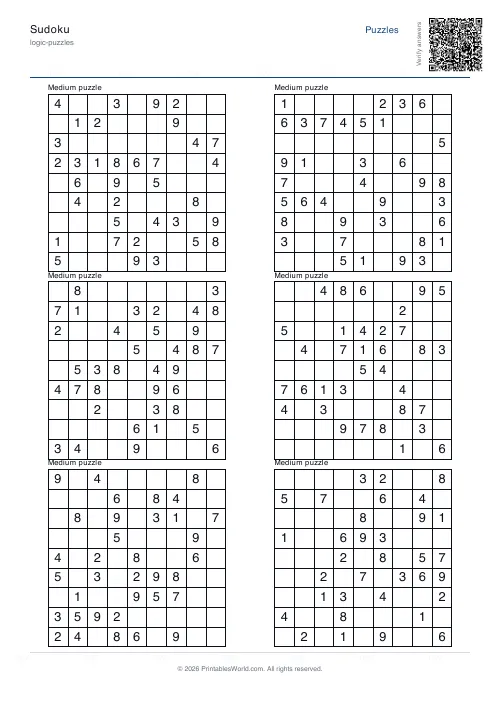
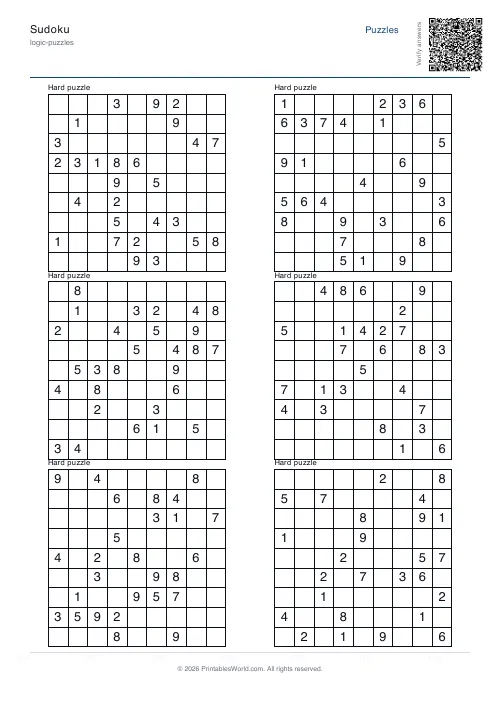
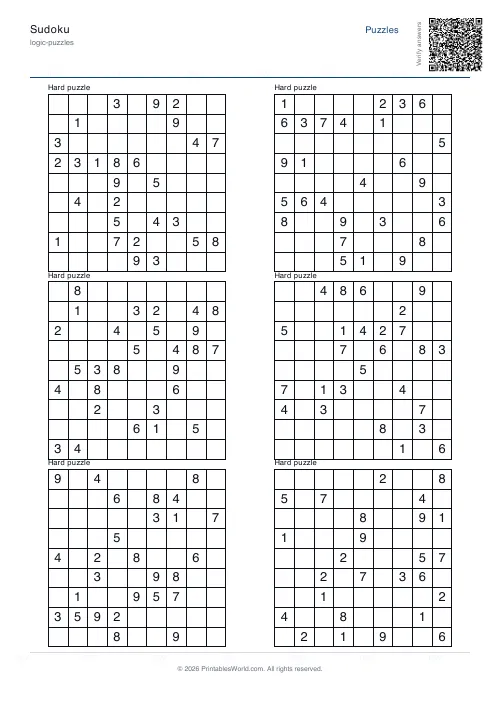
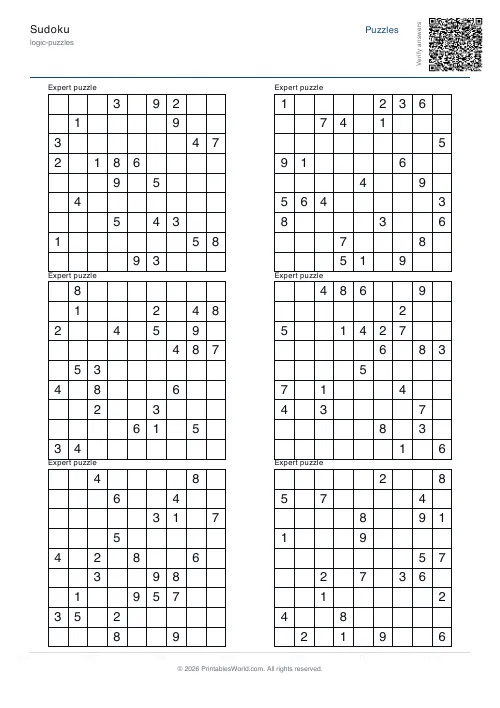
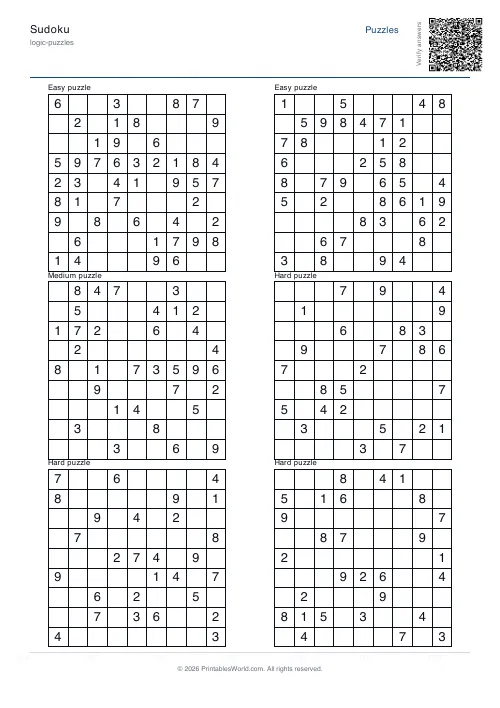
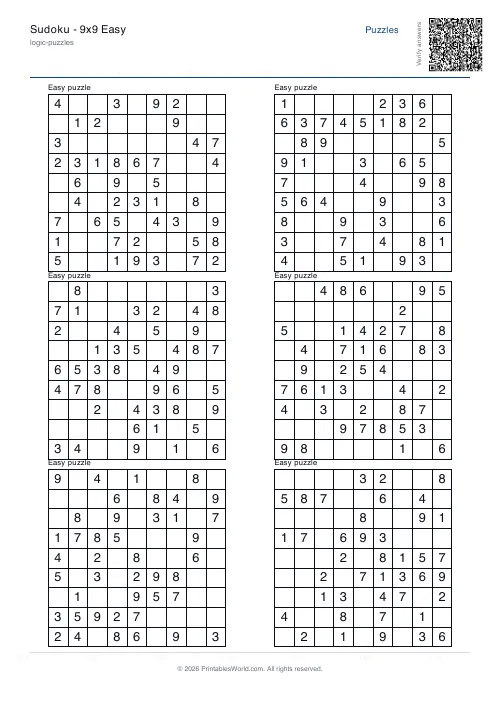
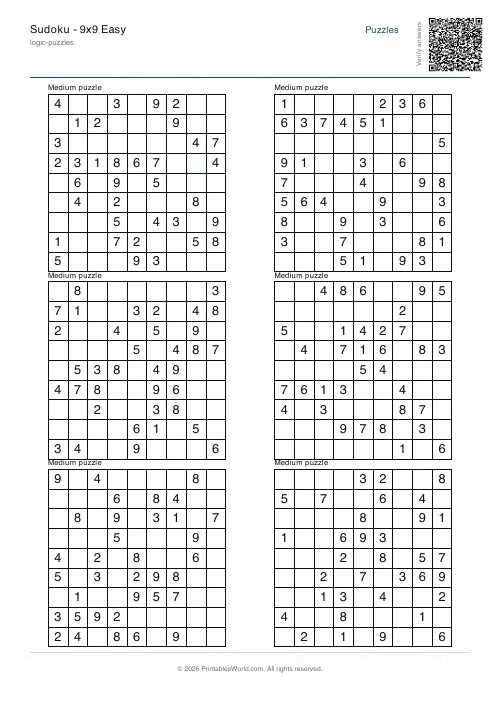
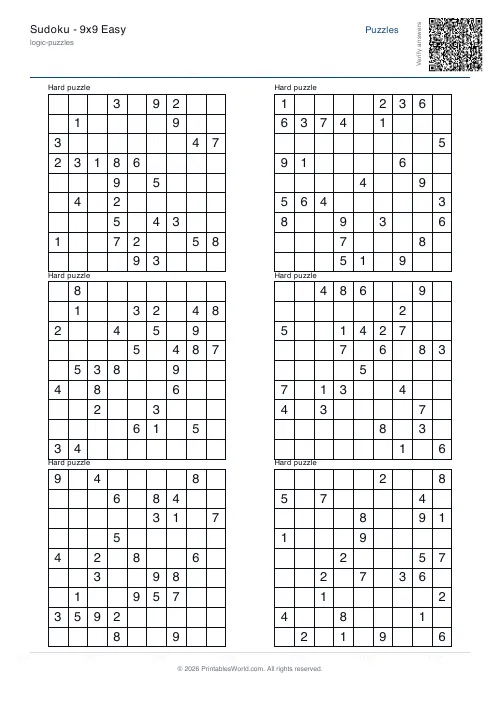
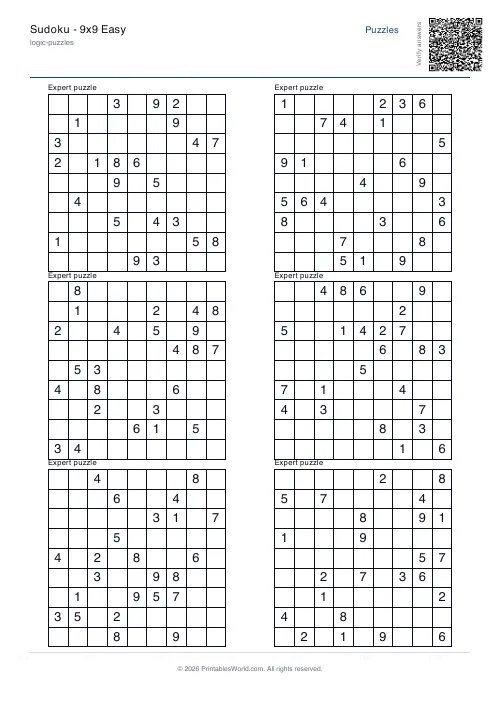
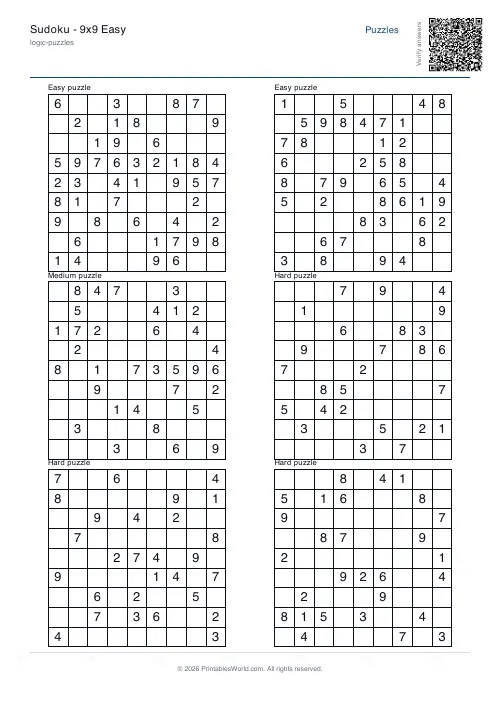
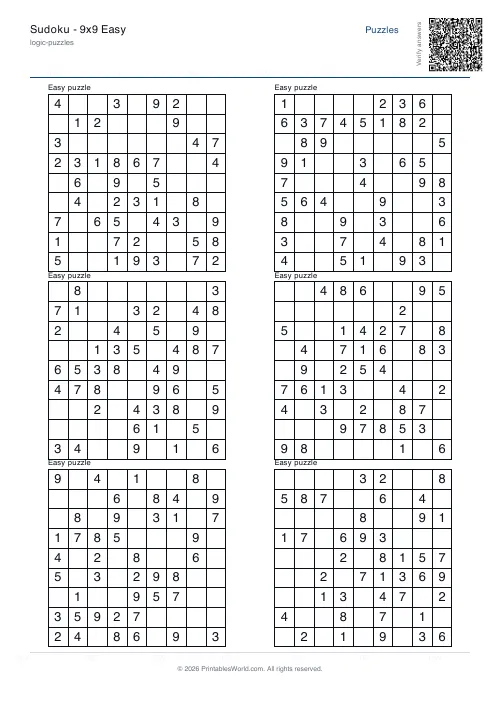
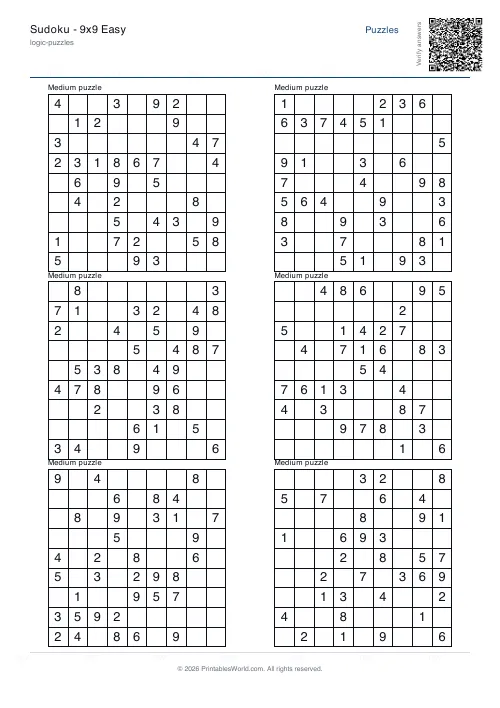
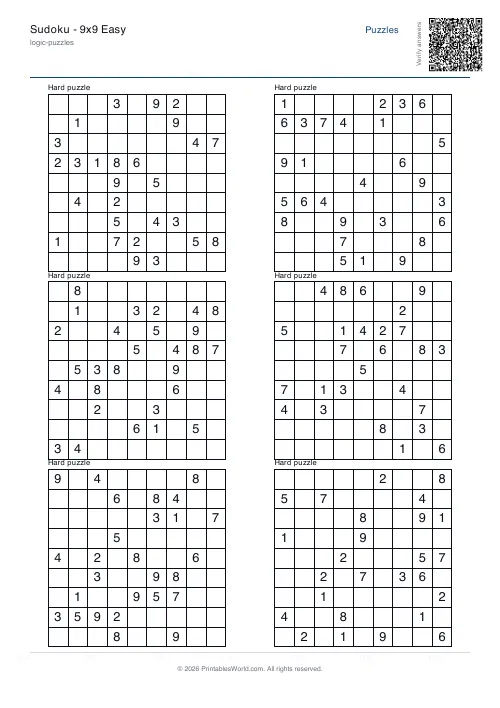
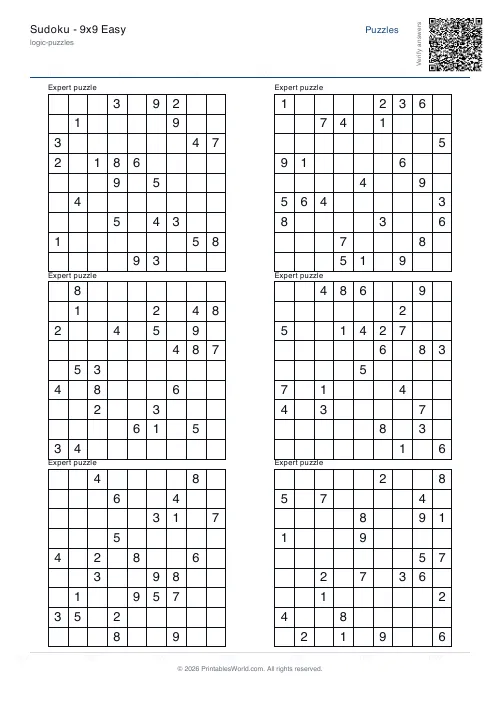
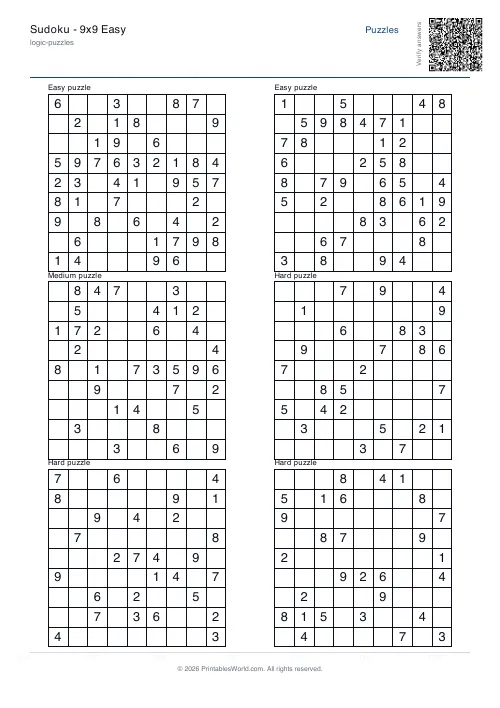
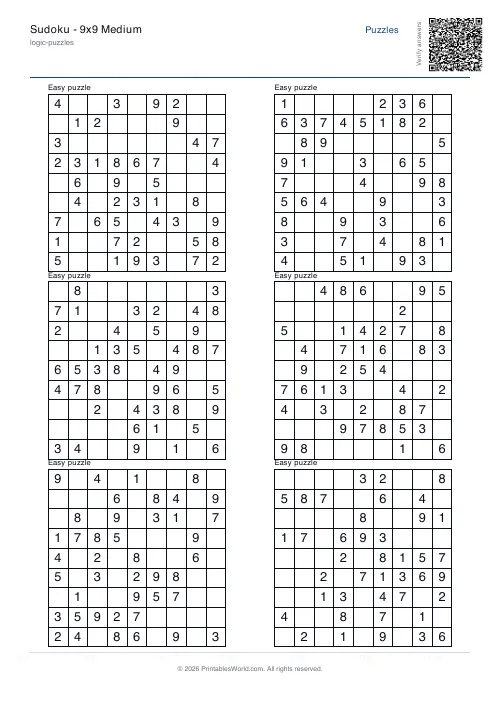
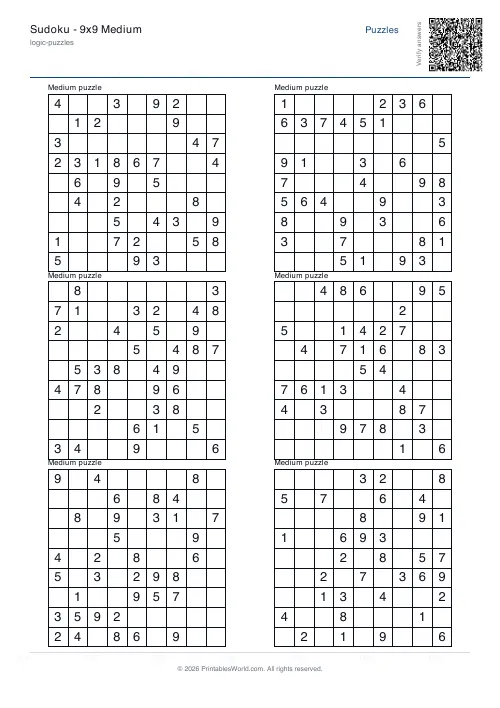
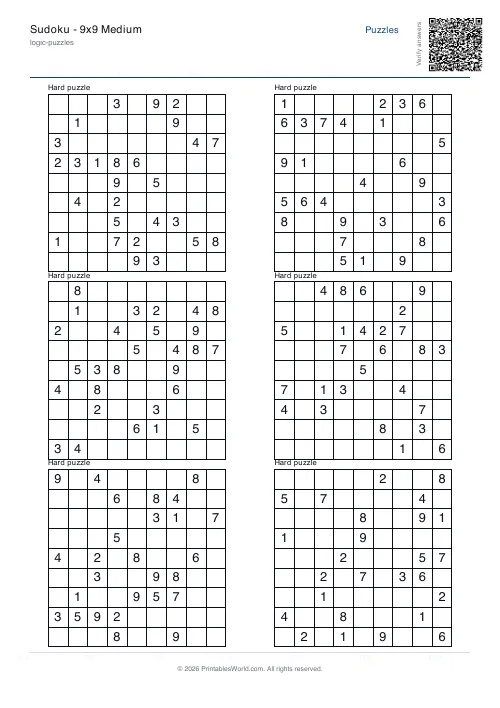
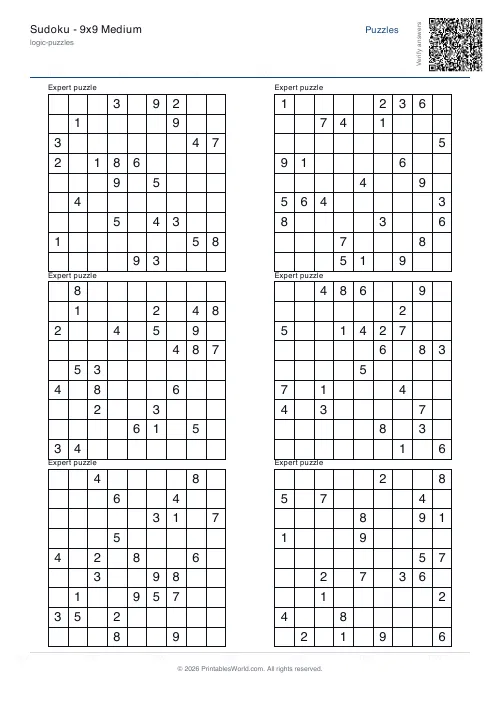
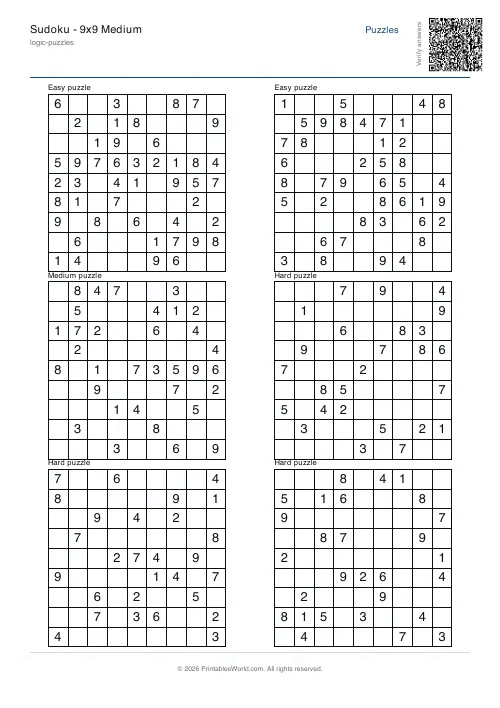
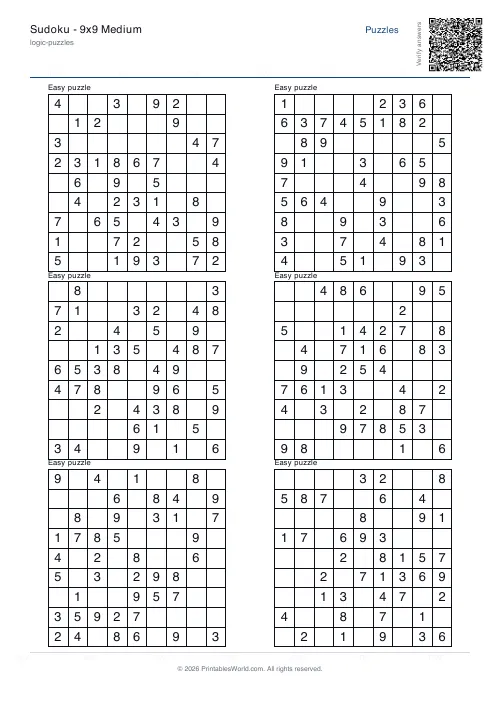
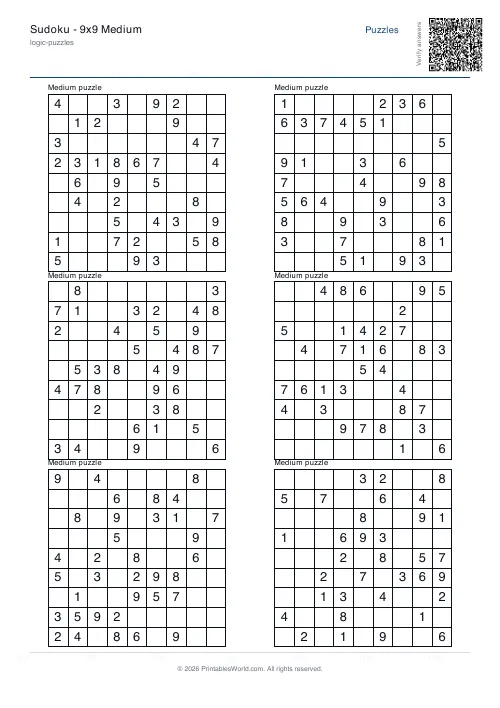
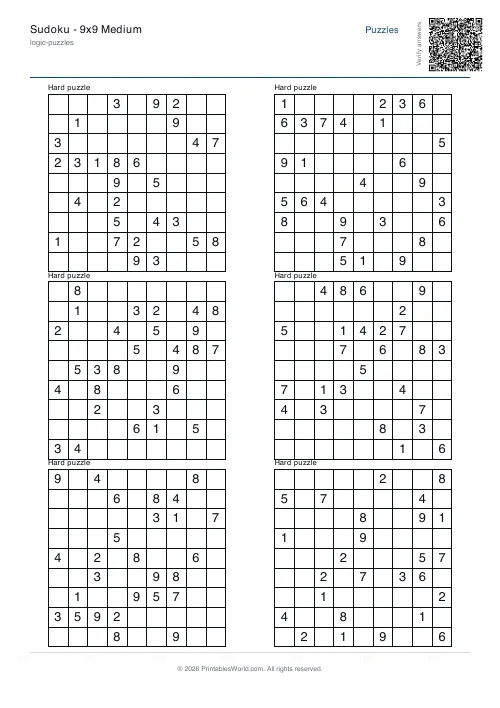
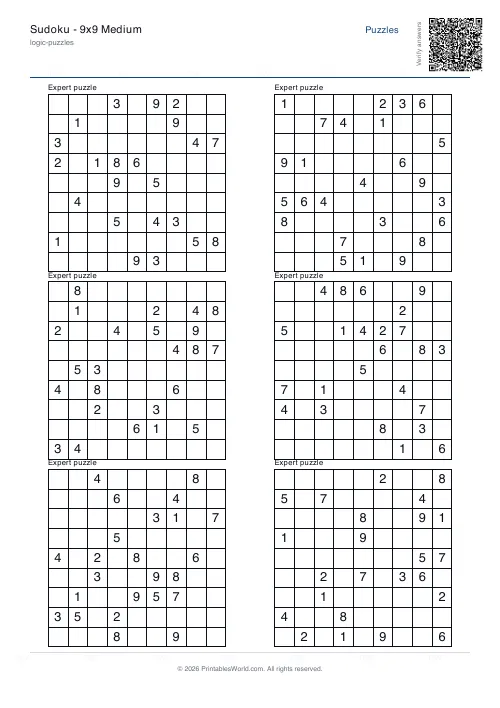
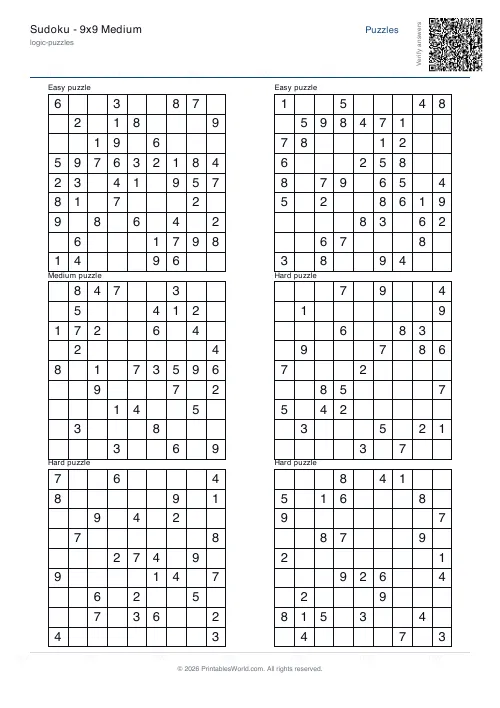
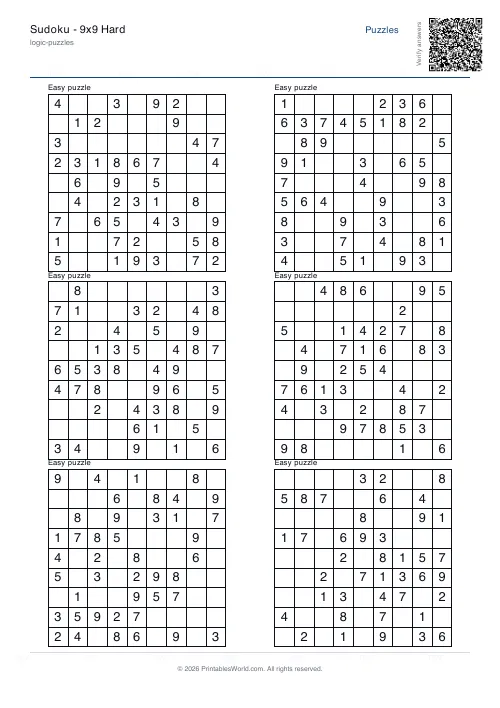
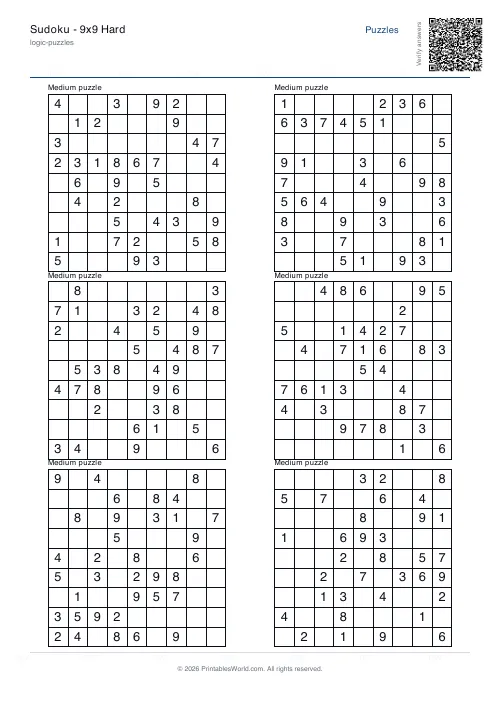
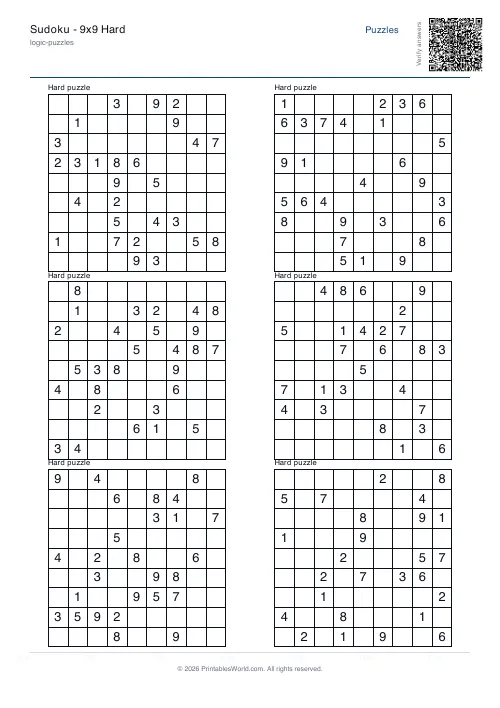
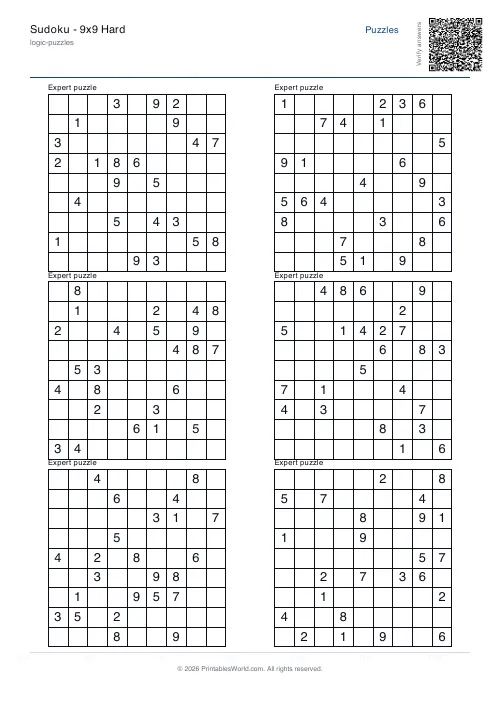
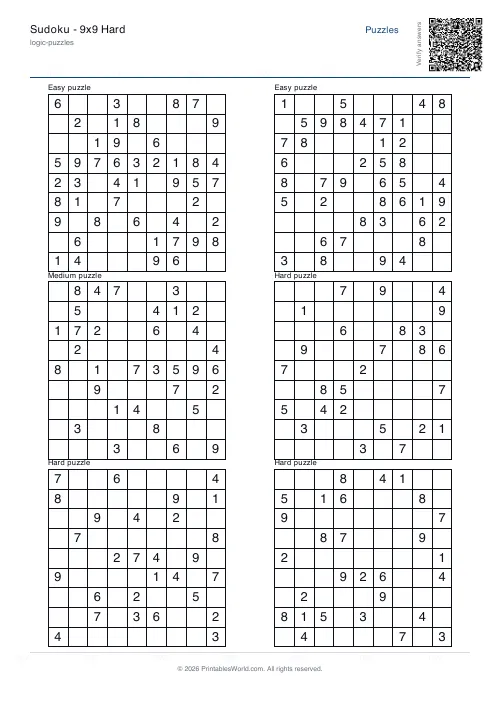
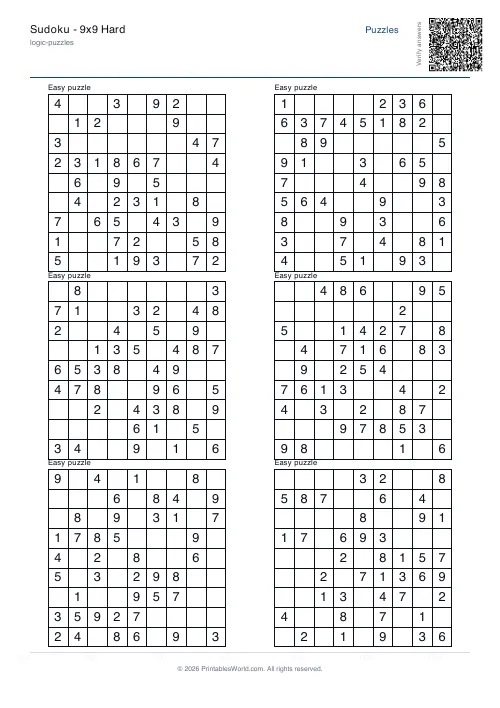
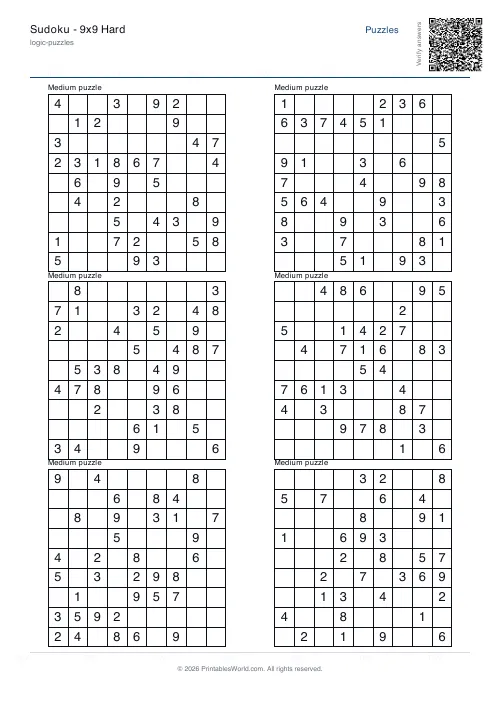
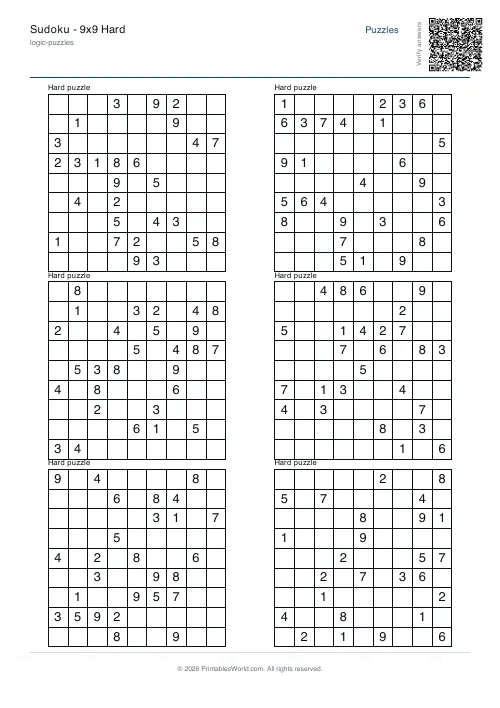
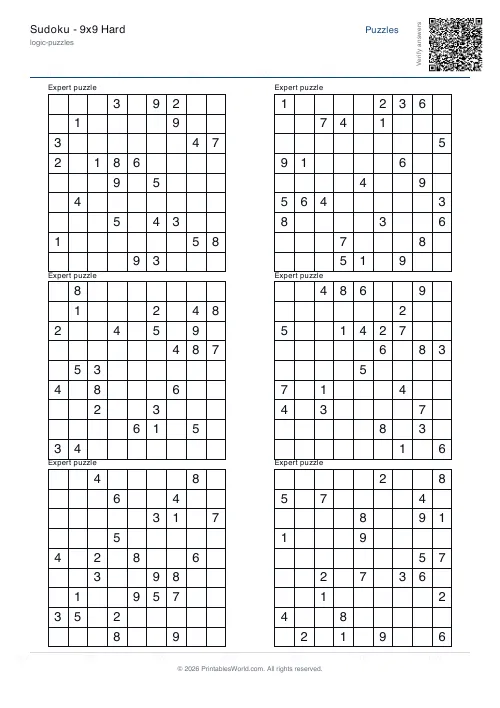
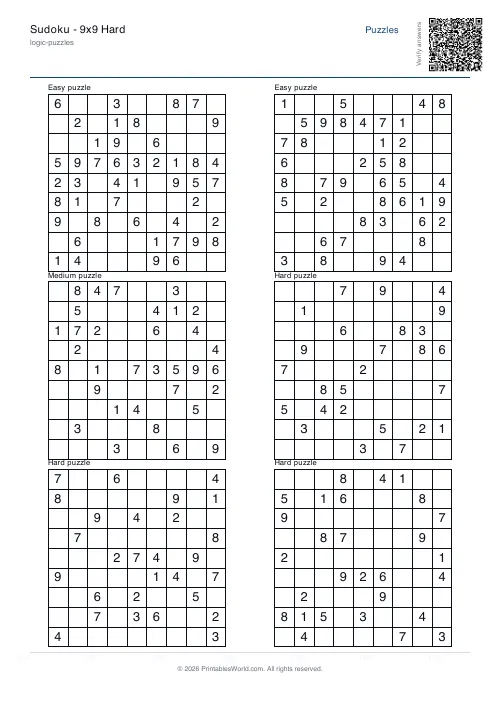
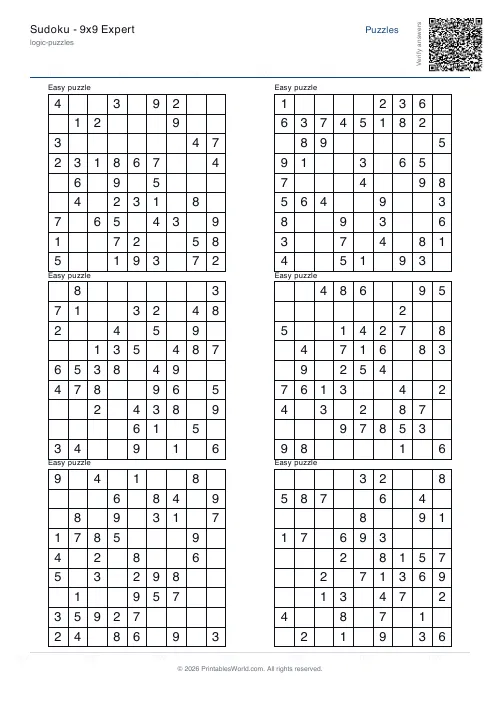
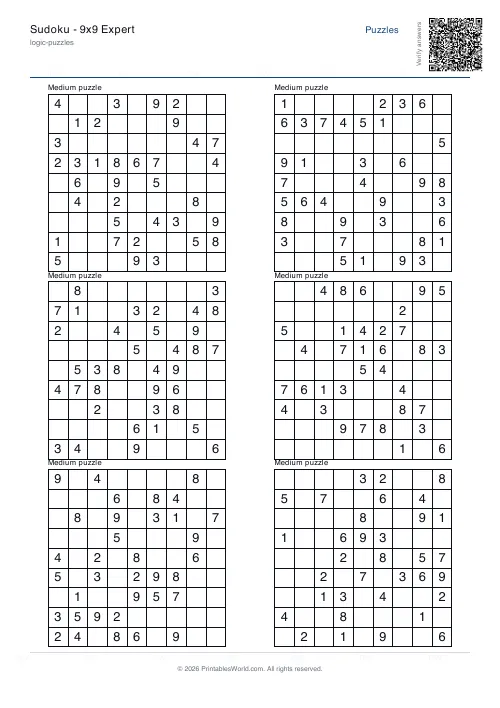
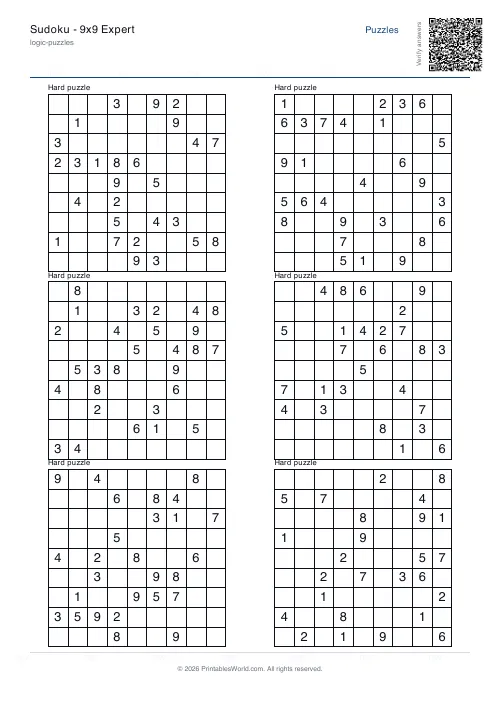
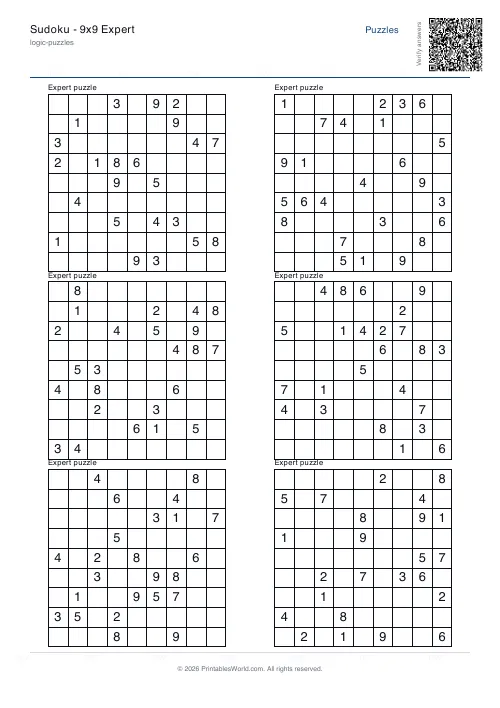
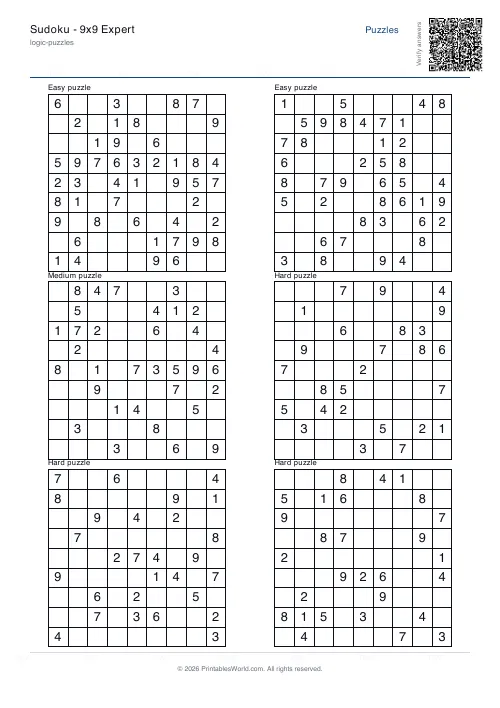
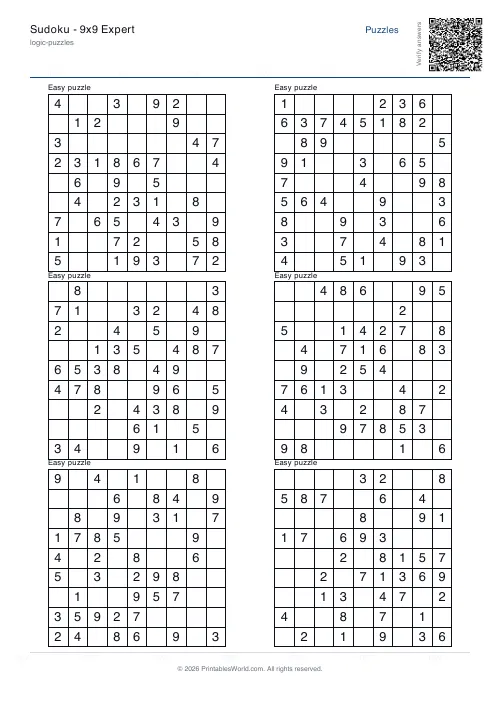
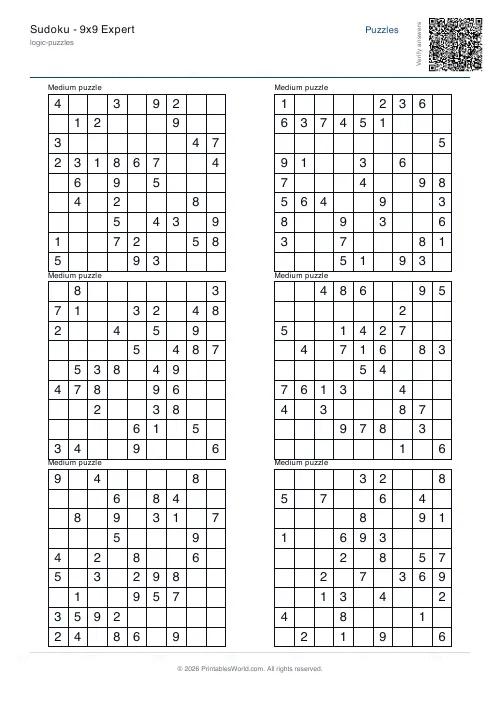
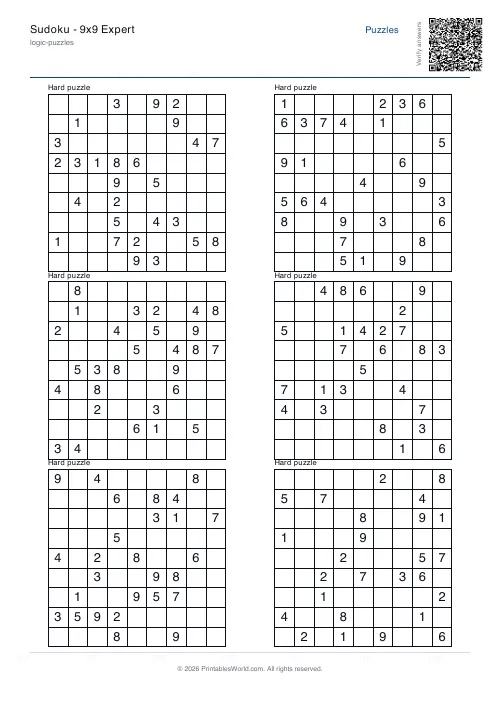
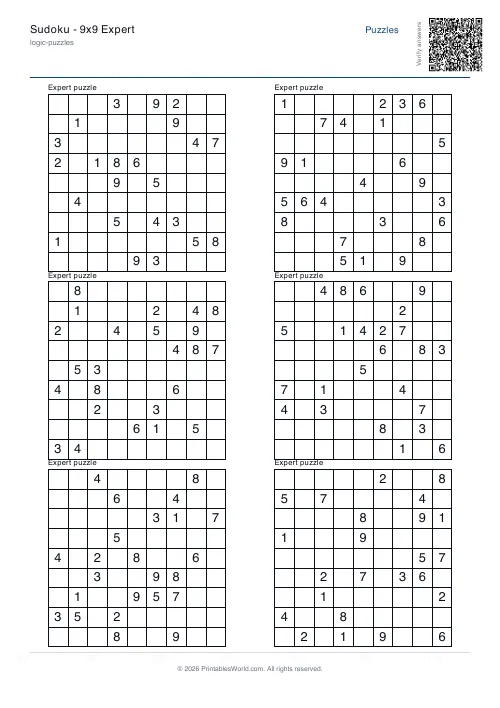
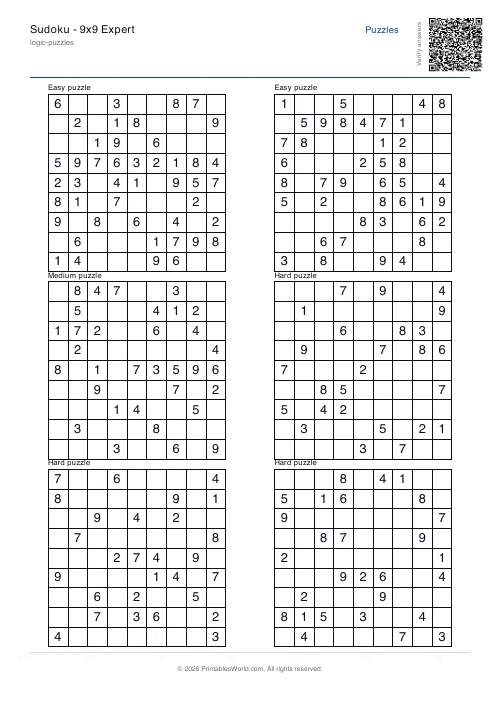
Printable Sudoku, six 9×9 puzzles to a page. Easy runs 40 to 45 clues, medium 32 to 38, hard 24 to 30, expert 17 to 23, and mixed spreads the first three of those across the six puzzles on one sheet. Safe mode runs an internal solver and throws away any board with more than one solution. Optional solutions page.
People also used
Binary Puzzle Generator: Printable
Create printable binary logic puzzles (Takuzu/Binairo) with customisable grid sizes and difficulty levels.
Number Pyramid Generator
Create printable addition pyramid puzzles with adjustable rows, difficulty, and optional answer keys.
Deduction Puzzle: Who Did It?
Clue-based deduction puzzles in story format. Multiple suspects.
Feedback
Spotted something off with this tool?
Six puzzles a page, and never the same grid twice
Classic 9×9 Sudoku, laid out two columns by three rows. Print the puzzle pages alone or add a matching solutions sheet at the end.
Every puzzle begins as a fully solved grid, and then the generator shuffles the row bands, the column stacks and the digit mapping before removing any clues. That shuffling is why you will not meet the same board twice however many you generate: it is not picking from a library, it is building one.
Difficulty is a clue count
- Easy leaves 40 to 45 clues. Solvable by scanning alone, with nothing to pencil in.
- Medium, 32 to 38. Pencil marks become necessary in places.
- Hard, 24 to 30. Candidate elimination throughout.
- Expert, 17 to 23, which is close to the seventeen-clue theoretical minimum below which no Sudoku can have a unique solution at all.
Then there is mixed, which spreads the first three bands across the six puzzles on a sheet rather than picking one at random for the whole page. That is the classroom setting: one sheet, several levels, and nobody is visibly handed the easy one in front of the room.
Expert stays out of that rotation deliberately. Somebody who asked for variety and got a seventeen-clue grid in position four has not been given variety. They have been given a wall.
What safe mode actually does
Removing clues from a solved grid does not guarantee the result still has only one answer. Take away one clue too many in the wrong place and two different completions become possible, and a puzzle like that cannot be solved by logic. It can only be guessed.
Safe mode runs a backtracking solver over each candidate board and discards any that turns out ambiguous, trying a different removal order instead. It costs a few seconds per puzzle. Turn it on for anything being marked, and turn it off if you are generating hundreds and would rather have them now.
Six weeks of Friday warm-ups
Medium difficulty, safe mode on, solutions on. Thirty copies of one page.
Each sheet carries six puzzles, so a single print run covers the last ten minutes of six Fridays. File the solutions page separately and use it to check whoever finishes early, rather than working through their grid yourself.
What it will not do
- Classic 9×9 only. No 4×4, no 16×16, no diagonal variant, no placing your own clues.
- Mixed draws from the first three bands only. Expert is available on its own, never in the rotation.
- Safe mode is slower, by a few seconds per puzzle.
- There is no seed or puzzle ID to save. Each generation is ephemeral, so download the set you like when you have it.
FAQs
Quick answers
How many puzzles appear on each page?
Six puzzles per page in a two-column grid. You can request more puzzles to generate multiple pages, and the tool will paginate automatically.
What does safe mode do?
Safe mode runs an internal solver on each puzzle to confirm that exactly one solution exists. Puzzles with multiple valid answers are discarded and regenerated. This takes longer but guarantees logical solvability.
Can I print on US Letter paper?
Yes. Choose US Letter from the paper-size dropdown and the PDF will scale to 8.5×11 inches. A4 is also supported at 210×297 mm.
How do the difficulty levels differ?
Easy leaves 40–45 clues, medium 32–38, hard 24–30, and expert 17–23. Mixed mode randomly picks easy, medium, or hard for each puzzle on the page (expert is excluded from the mix).
Does the solution sheet show all six puzzles?
Yes. When you enable the solution option, the generator appends a second page with the completed grids for all six puzzles in the same order as the puzzle page.
Will I ever get duplicate puzzles?
No. Each puzzle starts from a freshly shuffled solution grid with randomised row bands, column stacks, and digit mappings, so every board is unique even across thousands of generations.
Can I choose which cells are given as clues?
No. The algorithm removes clues randomly (or semi-randomly in safe mode) to hit the target count for your difficulty. Custom clue placement is not supported.
Related tools
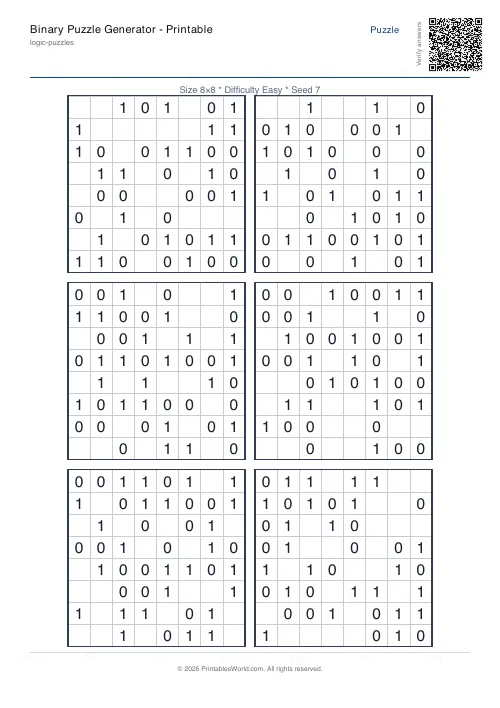
Binary Puzzle Generator: Printable
Create printable binary logic puzzles (Takuzu/Binairo) with customisable grid sizes and difficulty levels.
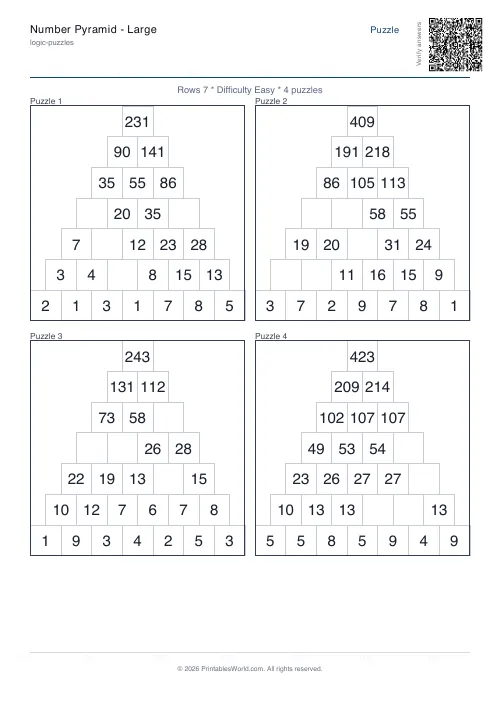
Number Pyramid Generator
Create printable addition pyramid puzzles with adjustable rows, difficulty, and optional answer keys.
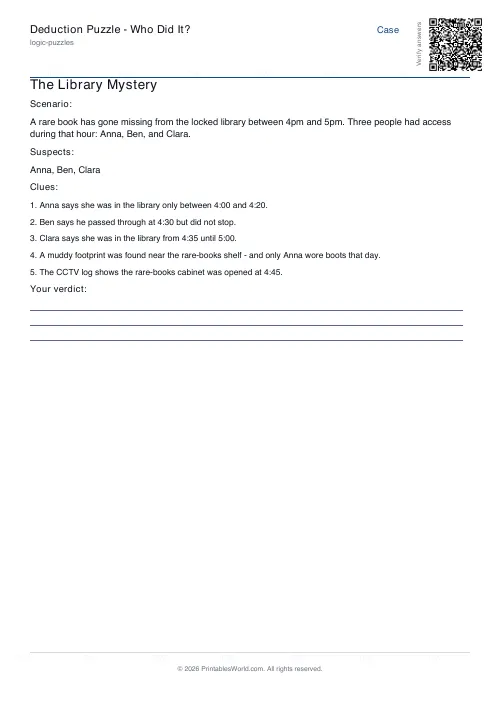
Deduction Puzzle: Who Did It?
Clue-based deduction puzzles in story format. Multiple suspects.
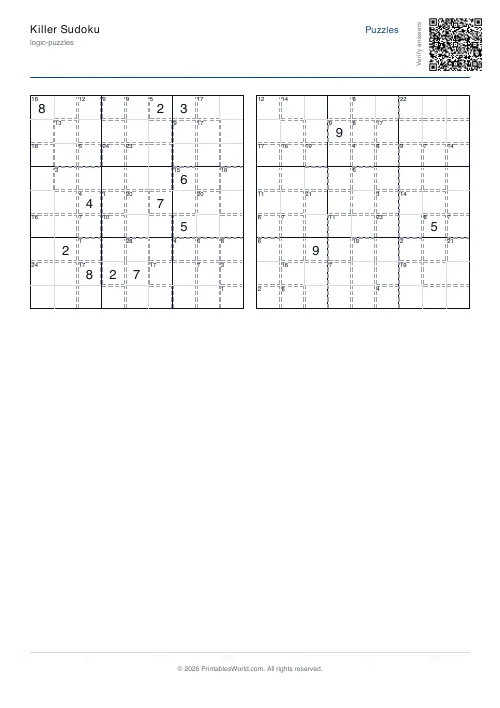
Killer Sudoku
Sudoku variant where cages must sum to given totals. Generates unique puzzles.
Further reading
Logic Puzzles
The benefits of logic puzzles for developing brains
Logic puzzles teach deduction and persistence, which are worth having. The claim that they make children generally smarter is weaker than the marketing suggests.
5 min read
Logic Puzzles
How to solve Sudoku: a beginner's step-by-step guide
Four techniques, learned in order, solve almost every easy and medium Sudoku: scanning, the last free cell, pencil marks and naked pairs. Here is each one with a worked example.
6 min read
Logic Puzzles
Kakuro, killer sudoku and other number puzzles explained
If sudoku has stopped being a challenge, these are the natural next steps. And unlike sudoku, most of them genuinely involve arithmetic.
5 min read