What this tool does
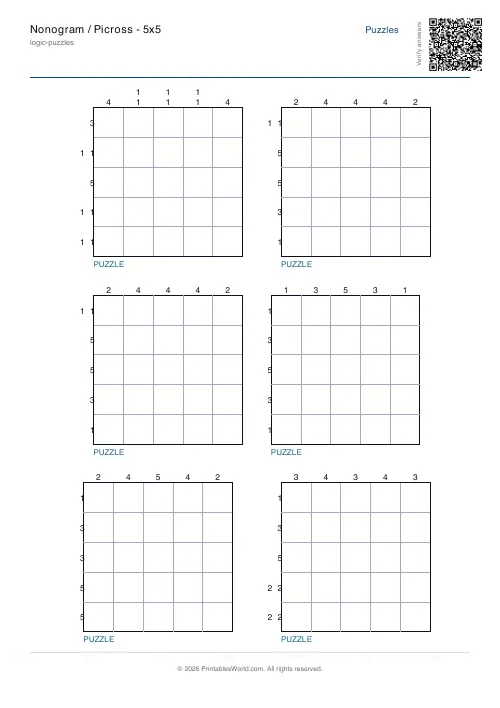
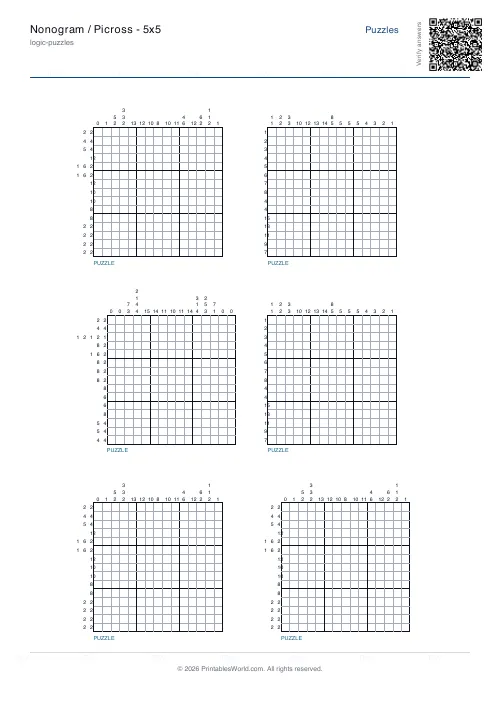
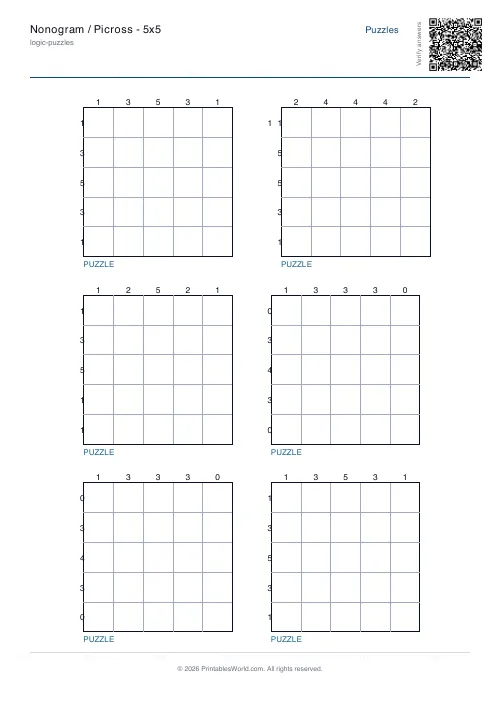
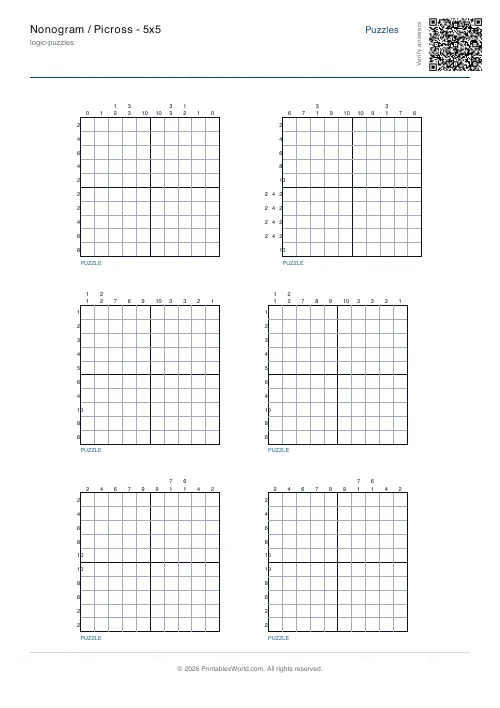
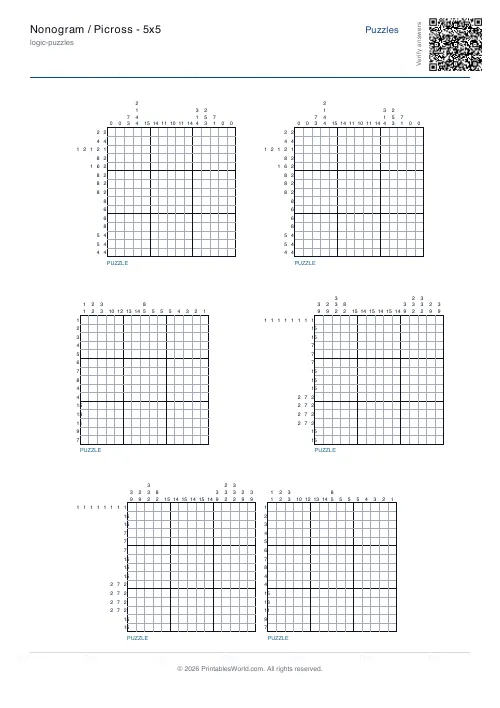
5×5 nonograms for a first attempt. The numbers beside each row and column say how long the shaded runs are; work them out and a small picture appears. Up to six puzzles a page.
People also used
Feedback
Spotted something off with this tool?
Nonograms small enough to learn the rules on
Twenty-five cells. The numbers along the top and down the side give the lengths of the shaded runs in that line, in order, with at least one empty cell between them. Shade the right ones and a picture appears.
Eight designs at this size — a heart, an arrow, a cross, a diamond, a house, a fish, a triangle and a letter A — picked at random per puzzle, with up to six puzzles to a page.
Why five is the right size to start
Because on a 5×5 grid the two openings that unlock every nonogram are visible immediately.
A clue of 5 fills the whole line. A clue of 4 fills at least three cells in the middle regardless of which end it starts from, and once those are shaded the crossing lines start resolving. On a 15×15 grid those same moves exist and are buried in a wall of numbers; here you can see them.
One more rule is worth teaching here rather than later. A 0 means the line is empty, and crossing off blanks tells you exactly as much as shading does. Beginners shade and never cross. Then they lose track of what they have already ruled out.
Every puzzle has exactly one answer
The clue sets are checked against a solver before they go on the page, so no puzzle here has two valid pictures. That matters on a small grid, where a careless design can easily be ambiguous and a child who found the other answer has no way of knowing they were right.
Options on the form
Puzzles per page from 1 to 6, the solutions page on or off, and a seed to reproduce an exact sheet. A4 or US Letter.
Six on a page gives a whole activity. One on a page prints large, which is what you want if the solver is small and using a crayon.
Where it goes next
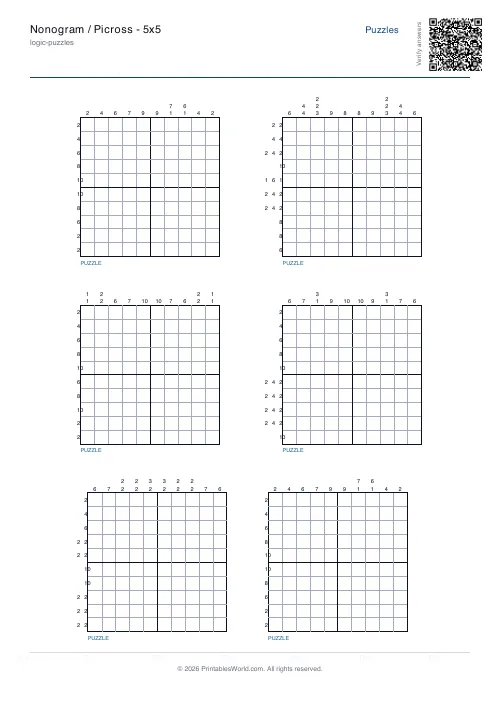
Once these are quick, the 15×15 version is a genuinely different puzzle rather than the same one bigger. It has 225 cells and clue strings long enough that you have to work the intersections rather than reading whole lines.
There is no useful intermediate on this site, which is deliberate — the jump is worth making once the technique is there.
A note on the name
Nonogram, Griddler, Paint by Numbers, Hanjie. All the same puzzle. It was invented in the late 1980s by Non Ishida and Tetsuya Nishio independently, and the "nonogram" name comes from Ishida's.
Print at 100% on A4 or US Letter.
FAQs
Quick answers
What is a nonogram?
A picture-logic puzzle where each row and column has clues showing how many consecutive cells to shade.
How many puzzles per page?
Six small puzzles per page in a 2×3 layout.
How are images chosen?
In v1 we generate random binary images and derive the clues; pictures are abstract rather than recognisable subjects.
Want bigger puzzles?
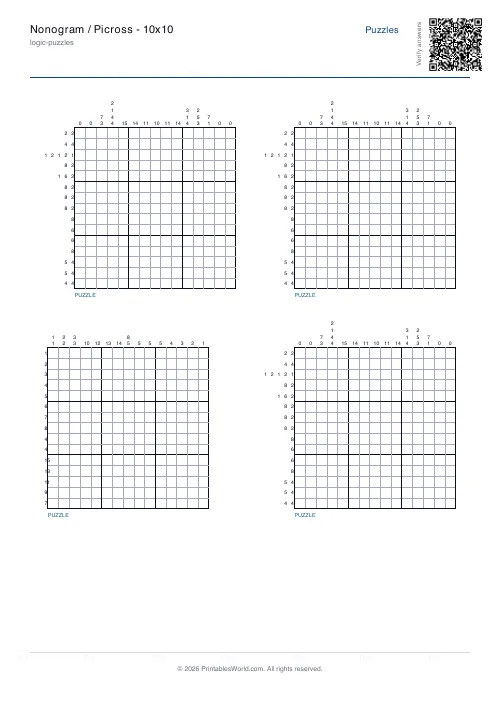
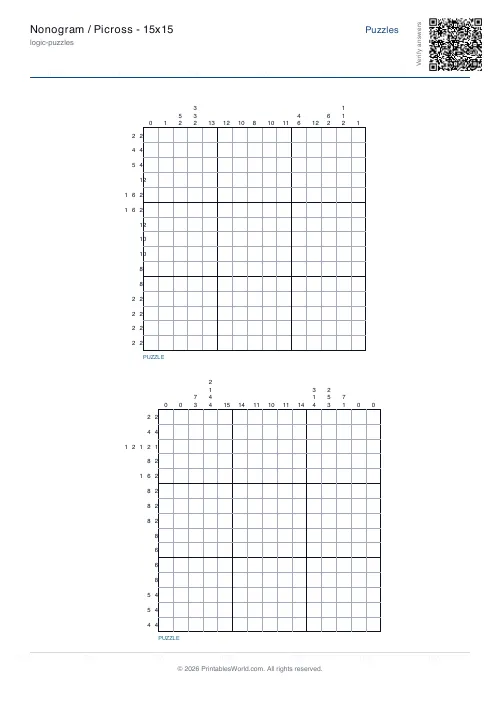
Try the 10x10 or 15x15 variants for more challenge.
Related tools
Further reading
Logic Puzzles
The benefits of logic puzzles for developing brains
Logic puzzles teach deduction and persistence, which are worth having. The claim that they make children generally smarter is weaker than the marketing suggests.
5 min read
Puzzles & Brain Games
Printable brain games for seniors: a free puzzle pack
A free printable puzzle pack for older adults, with a sample seven-day plan, large-print and easier-difficulty tips, and how to use the Logic Puzzles collection.
7 min read
Logic Puzzles
Kakuro, killer sudoku and other number puzzles explained
If sudoku has stopped being a challenge, these are the natural next steps. And unlike sudoku, most of them genuinely involve arithmetic.
5 min read