What this tool does
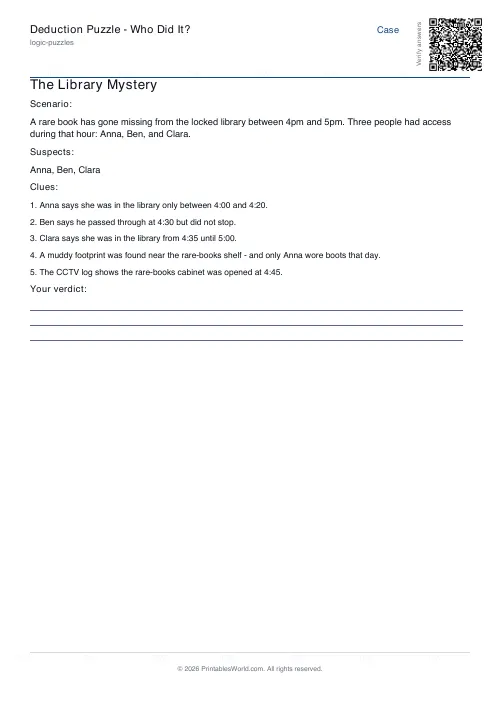
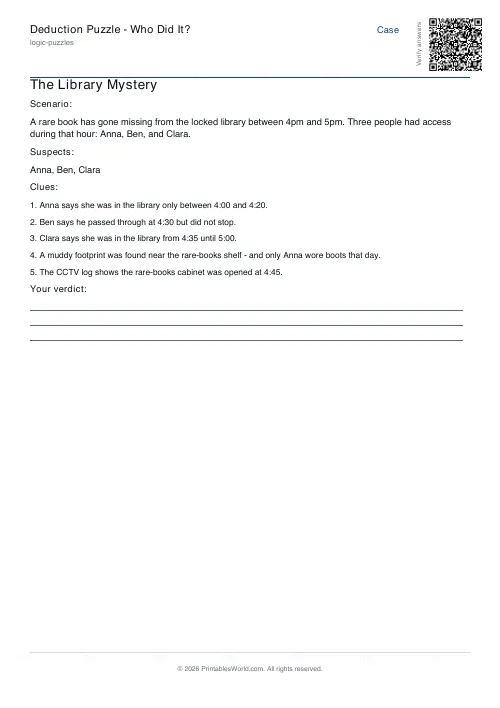
A printable whodunit. Each sheet carries a short mystery, a list of suspects, a handful of clues, and three lines for the solver's verdict and reasoning. Four curated cases, picked by index or at random from a seed, with an optional solution page that explains why the culprit fits every clue.
People also used
Logic Grid Puzzle Generator: Printable
Create custom logic grid puzzles with your own categories, items, and clues. Print-ready PDFs in seconds.
Lateral Thinking Questions
Situation puzzles and lateral thinking scenarios for group discussion.
Brain Teaser Worksheet
Collection of classic and original brain teasers. Varying difficulty.
Feedback
Spotted something off with this tool?
A logic puzzle wearing a story
A short scenario, several suspects with different habits and alibis, and a set of clues that eliminate all but one of them. Then three ruled lines for the verdict, which have to carry both the name and the reasoning.
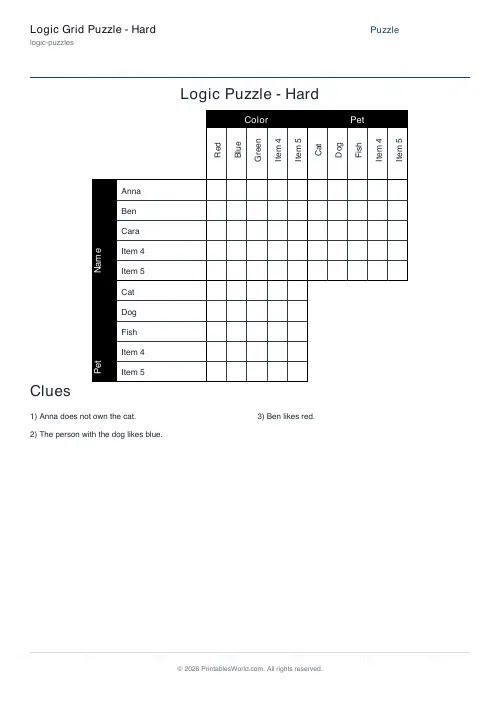
Underneath, it is the same elimination a logic grid asks for. The difference is that a bare grid announces itself as a test and a missing cake does not, and plenty of children who groan at one will argue happily about the other.
Four cases are curated, so this is a handful of good puzzles rather than an endless generator. Pick one by index or let a seed choose.
Working a case
- Read the scenario and the suspect list before looking at any clue.
- Take the clues one at a time and rule out whoever cannot match. One clue, one pass.
- Write the verdict on the three lines, with the reasoning on it, not only the name.
- Check against the solution page, which explains why the culprit fits every clue instead of merely naming them.
How the elimination goes
Take an invented case to show the rhythm. Three suspects. Clue one: the culprit drinks tea, not coffee. Clue two: the culprit was in the room at first break. Clue three: they wore a blue lanyard.
The first suspect drinks coffee, so she is out on clue one alone. The second drinks tea but wore red, so clue three removes him. The third matches all three, and there is the answer.
Every case runs on that shape: three or four clues, careful elimination, one suspect standing at the end. Nothing depends on outside knowledge and no clue is a trick.
Solving it well
- Draw a suspect table down the margin. Ticking each clue against each name turns the story back into the small logic grid it secretly is, and most solvers get faster the moment they start doing this.
- One clue at a time. Trying to hold all of them at once is the beginner trap and it is what makes a solvable case feel impossible.
- Re-read the scenario after an elimination. A line that meant nothing on the first pass often means something once the field has narrowed.
- Say the answer out loud. If it will not go into one sentence, you have missed a clue.
The verdict lines are the assessment
Three short lines, deliberately. There is no room to hedge and no room to write everything, so the solver has to choose the strongest clue and commit.
For a classroom that is the valuable part. Picking out evidence from a passage, comparing claims against each other, and writing a short justified conclusion is a comprehension skill that transfers well beyond puzzle time, and it is far easier to mark than a grid, because the reasoning is on the page beside the answer.
Turn the solution page off and the argument in the room lasts twice as long.
FAQs
Quick answers
How many cases are bundled?
Three curated cases ship in v1; pick one explicitly or let the seed choose at random.
What ages are these for?
Designed for age 9+; great for classroom discussion or family game nights.
Is the answer included?
Yes. Toggle the answer option for a second page that explains the verdict.
Can I get a specific case?
Yes. Set caseIndex to 0, 1, or 2 in the underlying inputs.
Related tools
Logic Grid Puzzle Generator: Printable
Create custom logic grid puzzles with your own categories, items, and clues. Print-ready PDFs in seconds.
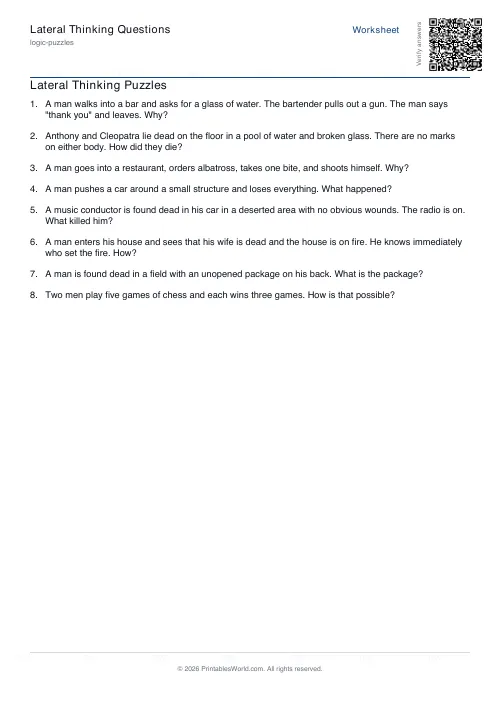
Lateral Thinking Questions
Situation puzzles and lateral thinking scenarios for group discussion.
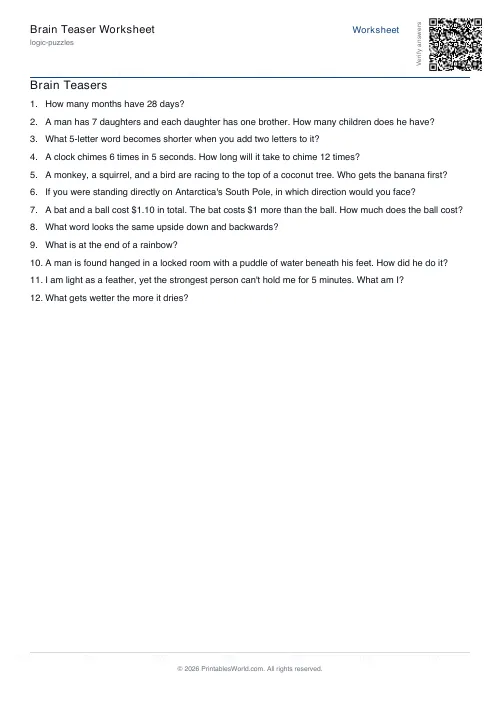
Brain Teaser Worksheet
Collection of classic and original brain teasers. Varying difficulty.
Further reading
Logic Puzzles
The benefits of logic puzzles for developing brains
Logic puzzles teach deduction and persistence, which are worth having. The claim that they make children generally smarter is weaker than the marketing suggests.
5 min read
Puzzles & Brain Games
Printable brain games for seniors: a free puzzle pack
A free printable puzzle pack for older adults, with a sample seven-day plan, large-print and easier-difficulty tips, and how to use the Logic Puzzles collection.
7 min read
Logic Puzzles
Kakuro, killer sudoku and other number puzzles explained
If sudoku has stopped being a challenge, these are the natural next steps. And unlike sudoku, most of them genuinely involve arithmetic.
5 min read