What this tool does
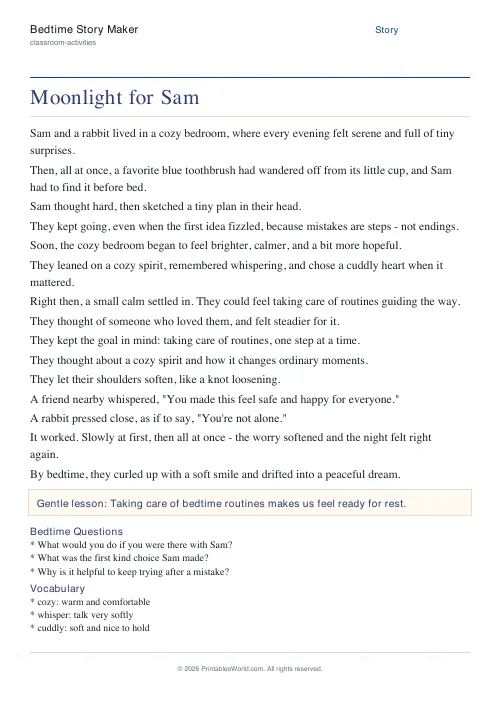
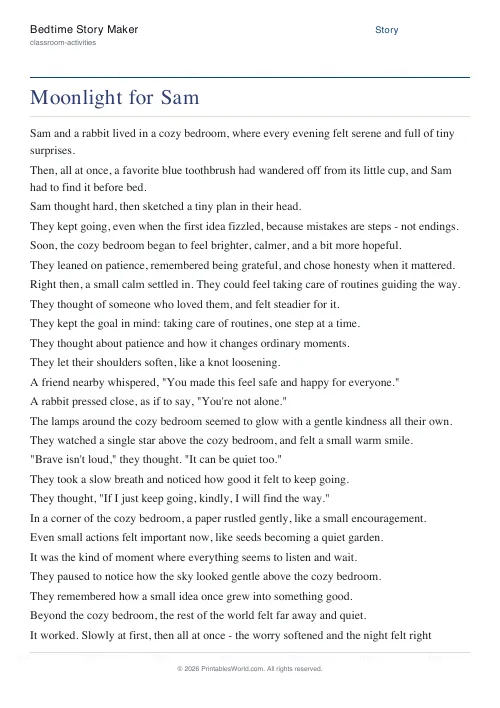
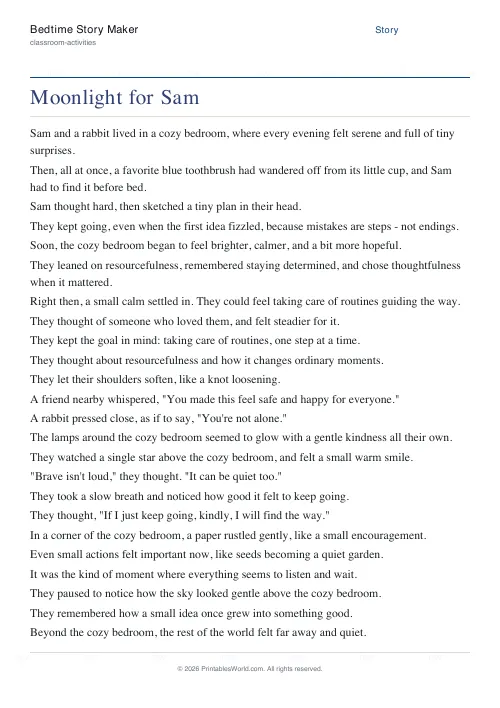
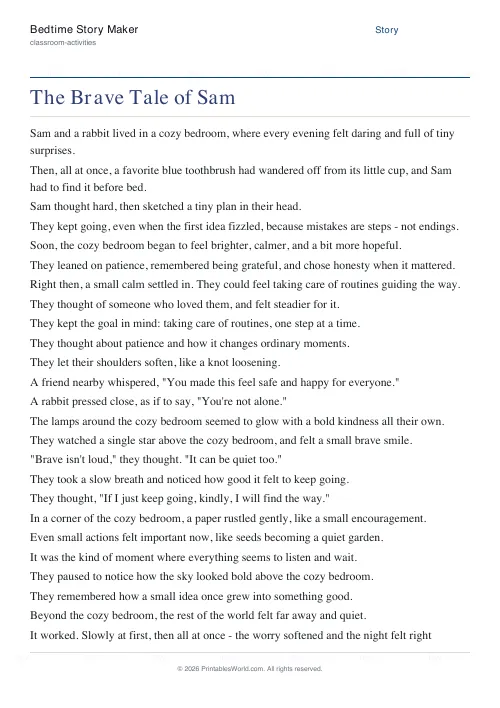
Generates a one-page bedtime story built around your child's name. Pick an age band and the story length follows it: 220 words for three and four year olds, 350 for five to seven, 500 for eight to ten. Choose a tone: calm, or funny, or adventurous, add a favourite animal or a setting, and pick a template prompt or write your own. Each story prints with a one-line moral, three reflection questions and three vocabulary words.
People also used
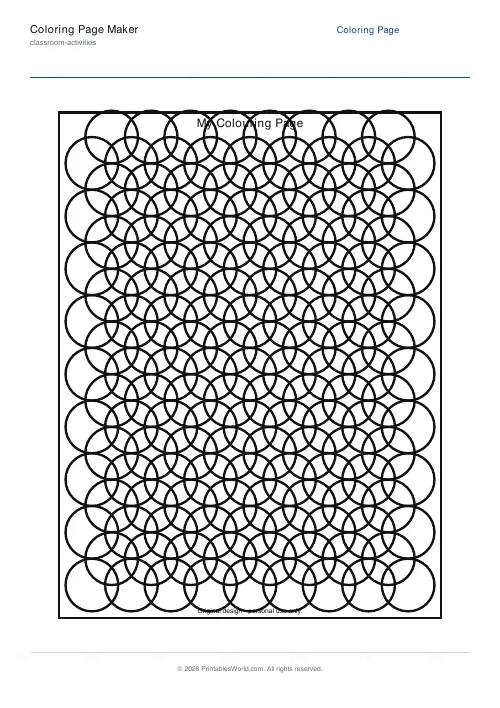
Coloring Page Maker
Create printable coloring pages with mandala, geometric, and animal templates in any line thickness.
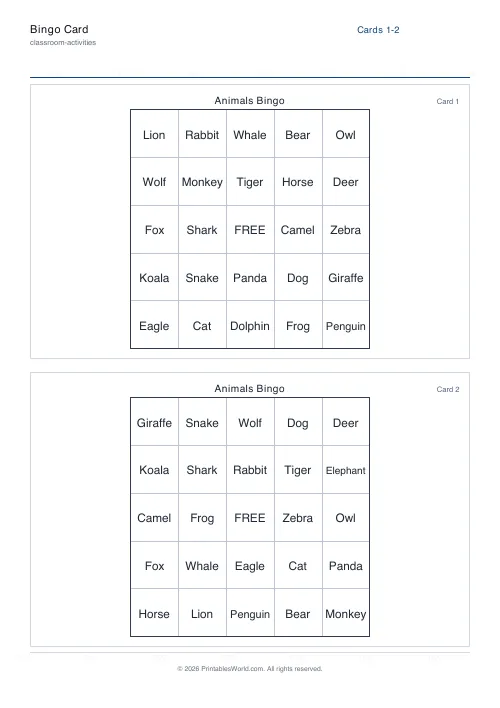
Bingo Card Generator
Generate unique printable bingo cards with custom words, FREE centre toggle, call sheet, and seeded shuffles.
Color by Number Generator
Make printable color-by-number sheets. Numbers, sums, or sight words, with an answer key.
Feedback
Spotted something off with this tool?
One page, one story, your child's name in it
The story arrives complete: the narrative itself, a single line naming the moral, three questions to talk about afterwards, and three words with simple definitions. All of it fits on one printable sheet.
Length is set by the age band and not by you. Three and four year olds get about 220 words across at least seven short paragraphs. Five to seven gets 350 across nine. Eight to ten gets 500 across eleven. Those are not arbitrary: the paragraph minimums matter as much as the word counts, because a 220-word story in three long paragraphs is a much harder read than the same words in seven short ones.
Tone changes the words, not the plot
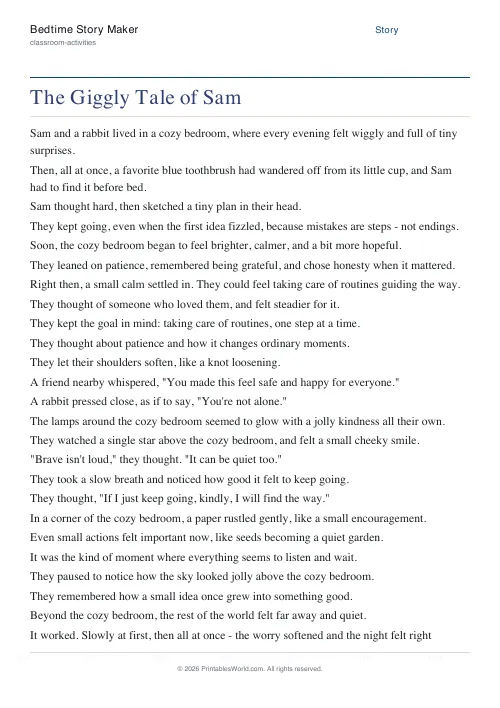
Calm draws on gentle verbs and quiet imagery, and it is the one to pick if the reading is genuinely the last thing before lights out. Funny swaps in silly verbs and playful adjectives. Adventurous goes bold.
Choose by what the evening needs rather than by what the child would choose. A funny story at bedtime produces a child who is awake and delighted, which is a lovely outcome at six o'clock and a problem at eight.
What you can put into it
- The child's name. They are the protagonist, throughout.
- Pronoun. They, she or he, and the possessive and object forms are adjusted everywhere in the story rather than only in the first line.
- A favourite animal, which then appears in the story.
- A setting override, if you want the whole thing to happen somewhere specific.
- A prompt. Easy mode offers ready-made hero-and-conflict templates. Creative mode takes a seed idea you type yourself.
The three questions are the point
A story read and finished is a story. A story read and then talked about for two minutes is something else, and the questions exist to make that second thing easy at the end of a long day when nobody has the energy to invent one.
Those vocabulary words work the same way. Three words, each with a plain definition, that the child has just heard used in context rather than met on a list. That is how vocabulary actually arrives, and it is why a printed story beats a screen for this: the sheet stays on the table and the word is still there tomorrow.
A calm story for a five-year-old
Age band 5 to 7, tone calm, name Mia, pronoun she, favourite animal rabbit, and the template about learning to share in a garden.
Out comes 350 words in nine paragraphs. Mia finds a hidden carrot patch, hesitates about telling anyone, then invites her friends. The moral line reads that sharing brings more happiness than keeping things to yourself. The three questions ask why Mia felt happier afterwards, whether the child has ever shared something special, and what they would do if they found a secret garden. The three vocabulary words are hesitate, then discover, then content. All on one sheet.
What it is not
- It is a template engine with seeded randomness, not a language model. Sentence shapes and vocabulary come from fixed pools, so the same inputs give the same story every time and the range of stories is finite.
- One story per PDF. A batch means generating a batch.
- The word count is fixed by age band and cannot be set directly.
- No illustrations. Text, with call-out boxes for the moral, the questions and the vocabulary.
- The moral and the question set come with the template you picked. Neither can be edited here.
FAQs
Quick answers
Can I print these stories on US Letter or A4 paper?
Yes. Every PDF is formatted to fit both A4 and US Letter sizes without clipping or requiring margin adjustments.
How long are the stories for each age band?
Ages 3-4 receive approximately 220 words in 7+ paragraphs, ages 5-7 get 350 words in 9+ paragraphs, and ages 8-10 see 500 words in 11+ paragraphs.
What is the difference between Easy mode and Creative mode?
Easy mode lets you select from a library of pre-built story templates with hero, setting, and conflict already defined. Creative mode accepts a free-text prompt so you can invent your own story starting point.
Do the vocabulary words match the age band I choose?
Yes. The generator selects three words from an age-appropriate pool and provides simple definitions suitable for the chosen age range.
Can I change the child's pronoun throughout the story?
When you select a pronoun (they, she, or he), the generator automatically adjusts possessive and object forms in every sentence, so the entire narrative is consistent.
Are the reflection questions the same for every story?
No. Each template or creative prompt includes a specific set of three questions tied to the story's moral and plot, encouraging children to think about the events and lessons.
Can I edit the story text after I generate the PDF?
The PDF is a fixed output. If you want different wording, moral, or questions, adjust your inputs (age band, tone, prompt, or template) and generate a new version.
Related tools
Further reading
Classroom Activities
Escape room activities for the classroom: a how-to
A classroom escape room is a sequence of puzzles with a story on top. The design decision that matters most is whether groups work through them in order or all at once.
5 min read
Classroom Activities
Back-to-school printables every teacher needs
Sorted by when you will actually need them: the two things to print before the children arrive, the week-one set, and the routines worth establishing while everyone is still compliant.
5 min read
Classroom Activities
Positive reinforcement in the classroom: charts that work
Reward charts work when they name a specific behaviour and fade over time. They backfire when they rank children publicly. Here is the difference in practice.
5 min read