What this tool does
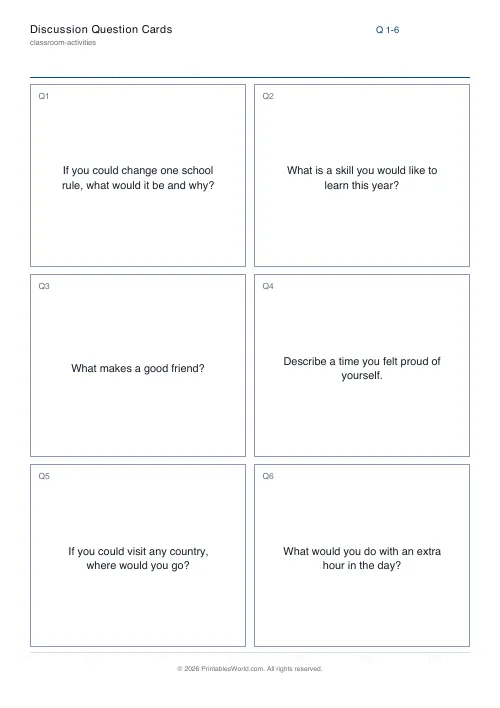
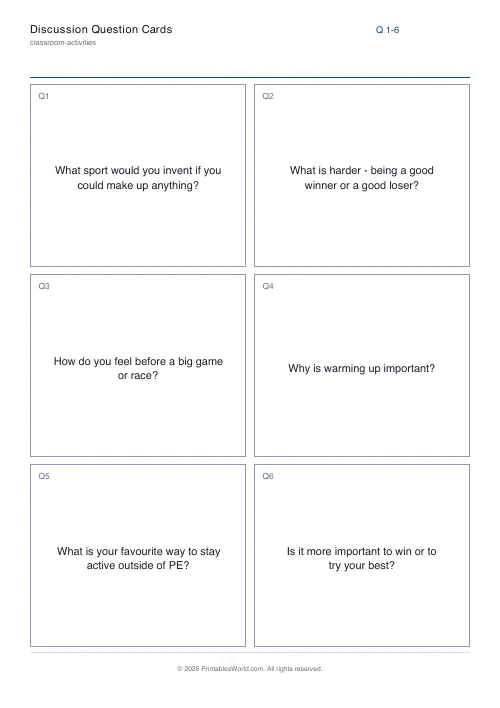
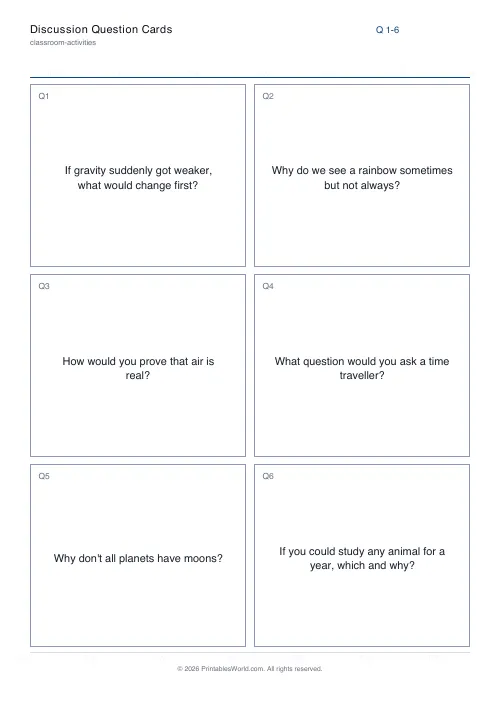
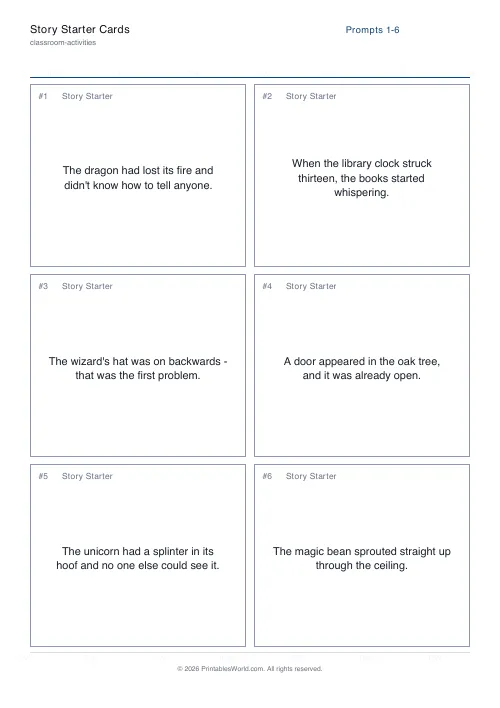
Discussion prompts printed one to a card, drawn from a general, PE, science or philosophy set, or from a topic you name yourself. One to sixty cards.
People also used
Feedback
Spotted something off with this tool?
One question per card, to draw and answer
Prompts print one to a card so they can be cut out, shuffled, drawn from a pot or passed round a circle. Choose a topic and how many cards you want, up to sixty.
Four built-in sets — general, PE, science and philosophy — plus a custom option for your own subject.
Why cards rather than a list on the board
A list gets scanned and the easy question gets picked. A card is drawn, and whatever comes up is what you answer.
That removal of choice is the whole mechanism. It also spreads the questions across a group instead of concentrating on the two that everybody finds safest, and it stops the same confident pupil answering first every time.
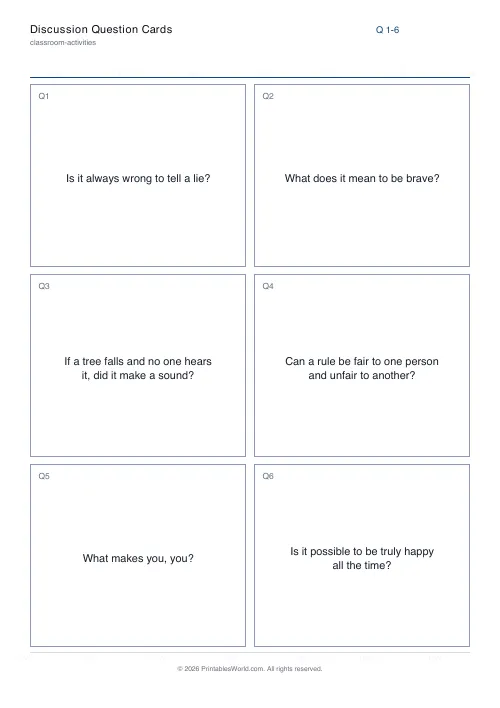
The philosophy set is the one that surprises people
Questions with no right answer are unusual in a school day, and children respond to them differently — the pupils who dominate factual discussion are not always the ones who do well here.
That is the argument for running it. A child who is quiet in every lesson because they are unsure of the facts has nothing to be unsure about when the question is whether it is ever right to break a promise.
Expect it to be slow at first. Groups that have never been asked an open question sit in silence for a while, and that silence is not failure.
Running a circle without it collapsing
Agree that passing is allowed. A child who cannot opt out will opt out by saying nothing awkwardly, and the option to pass gets used less than you would think once it exists.
Give thinking time before anybody speaks. Thirty seconds of quiet after the card is read produces noticeably better answers than going straight round the circle.
Answer one yourself, honestly, early on. A group takes its cue from whether the adult is actually participating or administering.
Where they get used
Circle time and form groups, obviously. Also plenaries, where a card is a better closing five minutes than a summary; assemblies; transition activities; and warm-ups for a debate.
They also work at a dinner table, which is not what they were built for and is where a lot of them end up.
Choices
A title, the topic, a custom topic name, and how many cards (1 to 60). A4 or US Letter, printed at 100%.
Print on card and keep them in a pot where they are visible. A set in a drawer is a set nobody remembers to use.
FAQs
Quick answers
Are the questions single-answer or open-ended?
Every prompt is deliberately open-ended. They’re designed to start conversation, not to be marked right or wrong.
What does “custom topic” do?
It fills twelve generic question templates with your topic word so you can spin up a quick set for any subject you’re studying.
Can I use these with adults?
Yes. The philosophy set in particular works well with older students, team-building sessions, or book groups.
How many questions per page?
Six per A4 or Letter page. Increase the count to produce more pages automatically.
Related tools
Further reading
Classroom Activities
How to run a classroom economy (free printables)
A classroom economy teaches money, work and choice at once. But it collapses if the maths is wrong. Here is how to set the numbers, and the four pitfalls to avoid.
5 min read
Classroom Activities
Escape room activities for the classroom: a how-to
A classroom escape room is a sequence of puzzles with a story on top. The design decision that matters most is whether groups work through them in order or all at once.
5 min read
Classroom Activities
20 classroom games that need zero prep
Games organised by the gap they fill: two minutes at the end of a lesson, ten minutes before assembly, or a whole wet lunchtime. Almost all need nothing but a voice.
6 min read