What this tool does
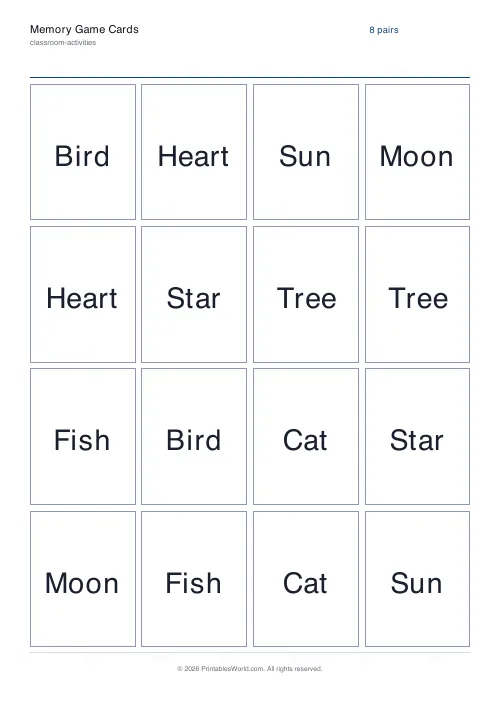
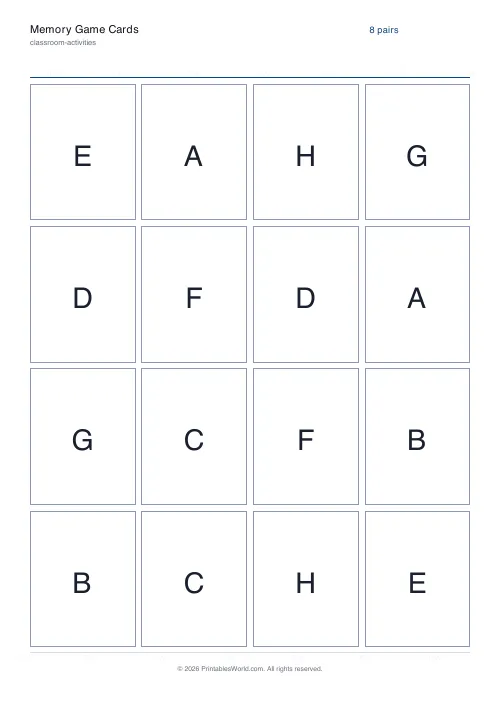
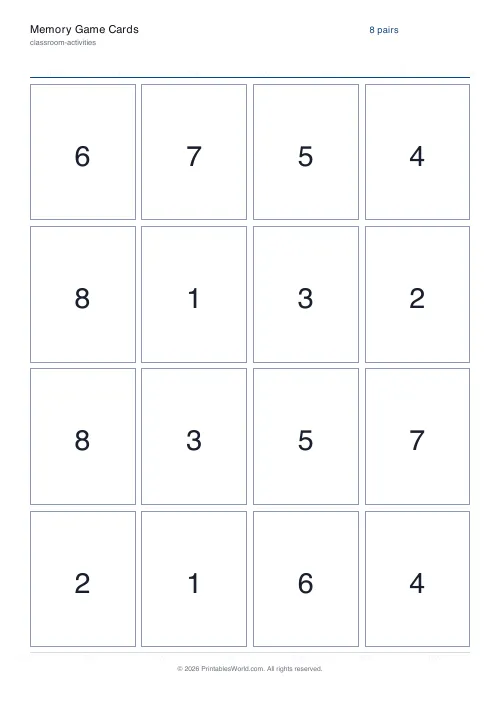
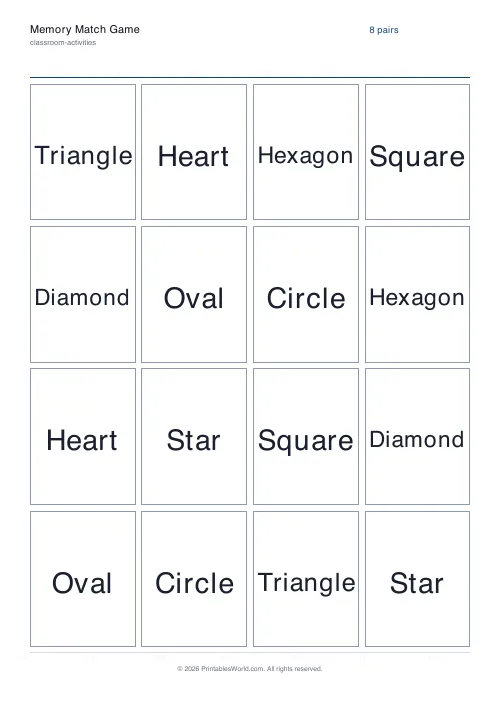
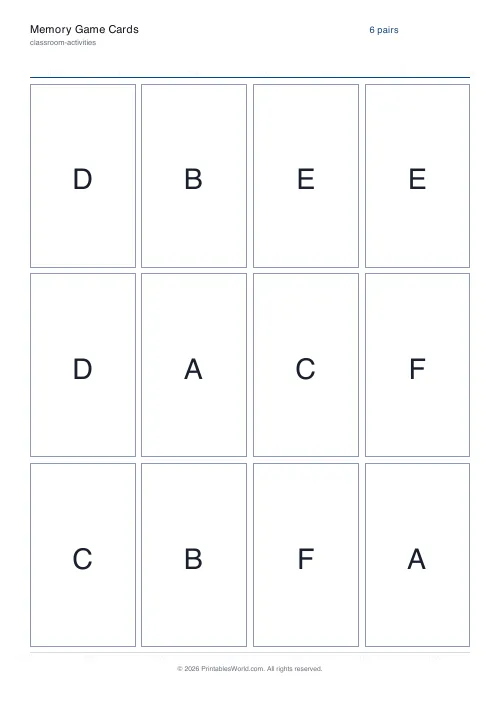
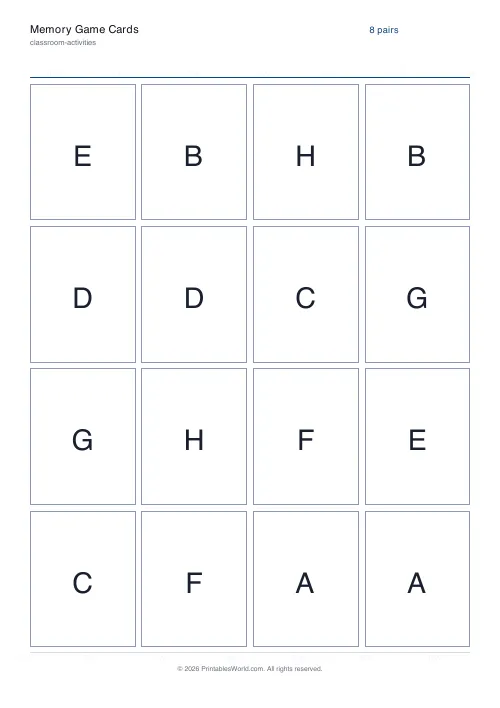
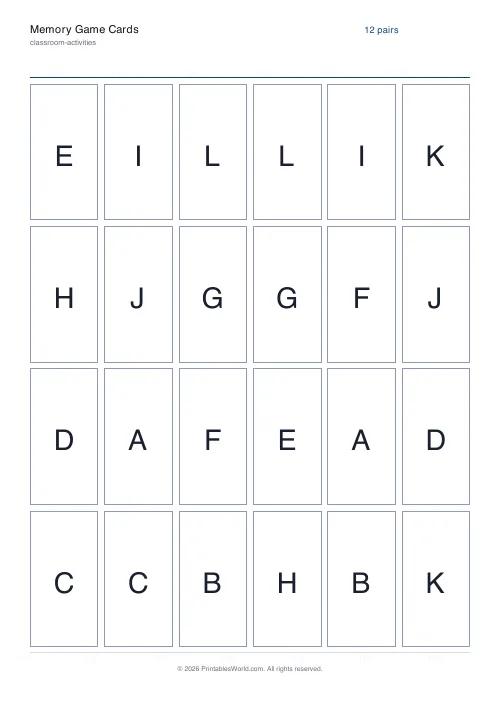
A shuffled grid of paired cards to cut out and play concentration with. Six, eight or twelve pairs, using letters, numbers, shape names or picture words. All on one page.
People also used
Feedback
Spotted something off with this tool?
Pairs, shuffled, on one page
Every symbol appears twice, the whole deck is shuffled, and the cards print in a grid ready to cut apart. Turn them face down and take turns flipping two.
Six pairs prints 12 cards in a 4×3 grid, eight pairs gives 16 in a 4×4, and twelve pairs gives 24 in a 6×4.
Four symbol sets
- Letters A to L. The most useful set for a young child, because matching two letter shapes is a real pre-reading skill.
- Numbers 1 to 12.
- Shape names — the words Circle, Square, Triangle and so on.
- Picture words — Star, Heart, Sun, Moon, Tree, Fish and the rest.
Two of those sets print words rather than pictures, and that is worth knowing before you print for a pre-reader. The PDF uses the standard print fonts, which carry no emoji glyphs, so the picture set is labelled in words instead of drawn. For a child who cannot read yet, use letters or numbers — or print the word set and let them draw the picture on each card before playing, which is a decent activity on its own.
How many pairs to print
Six for a three- or four-year-old. Twelve is a real game for a seven-year-old, and adults find twenty-four cards genuinely difficult if they are not concentrating.
Start smaller than you think. A child who wins a six-pair game wants to play again; one who loses a twelve-pair game to an adult usually does not.
What the game trains
Spatial working memory, which is one of the few things a card game trains that is difficult to practise any other way. A player has to hold "the Star was second from the left in the top row" across several turns while other information arrives on top of it.
It is also one of the very few games where a young child can legitimately beat an adult, because the adult's advantages — strategy, vocabulary, arithmetic — do not apply. That matters more than it sounds for a child who usually loses.
Printing and making them last
Print on card if you have it, or glue the sheet onto cereal box card before cutting.
Ordinary paper is thin enough to see the symbol through from the back under a bright light, which children notice immediately and exploit without mentioning it. Card, or a second sheet glued behind, fixes it.
The controls
Title, pair count, and symbol set. Paper size A4 or US Letter. Print at 100% so the cards come out the same size as each other.
FAQs
Quick answers
Why emoji “words” instead of actual emoji pictures?
The PDF uses a print-safe standard font that does not always include full-colour emoji glyphs, so we label each pair with a word instead (e.g. “Star”, “Heart”). The game play is identical.
How many cards will I cut out?
Twice the pair count. So 12, 16, or 24 cards depending on the setting you pick.
Is the layout reshuffled each time?
Yes, each PDF randomises the card order so the game is fresh for every print.
Can I use this with very young children?
Yes. Start with 6 pairs and shape or letter cards; increase pair count as concentration builds.
Related tools
Matching Cards
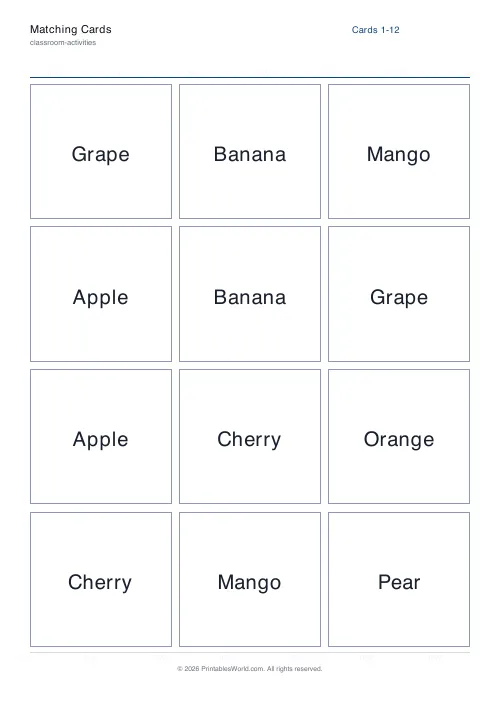
Pairs of identical cards for a concentration-style match game.
Custom Flashcards
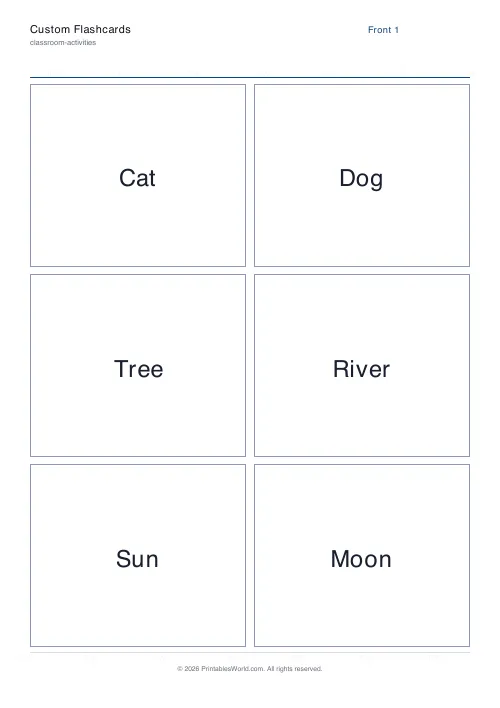
Double-sided printable flashcards from your own list of pairs.
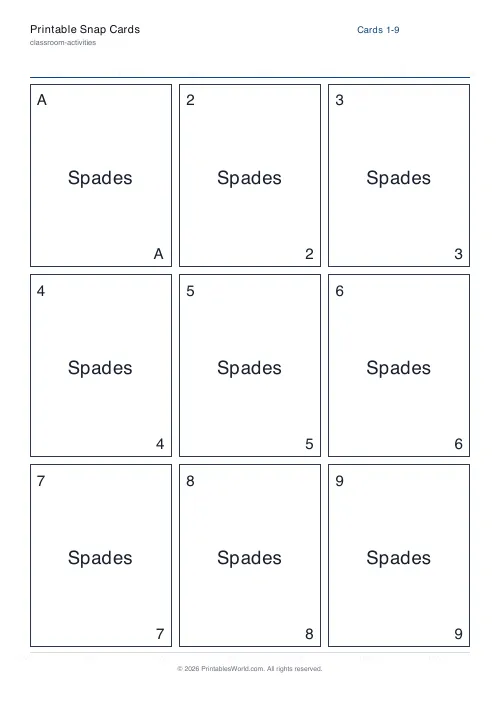
Printable Snap Cards
Printable deck of snap playing cards. Standard, colour, or shape suits.
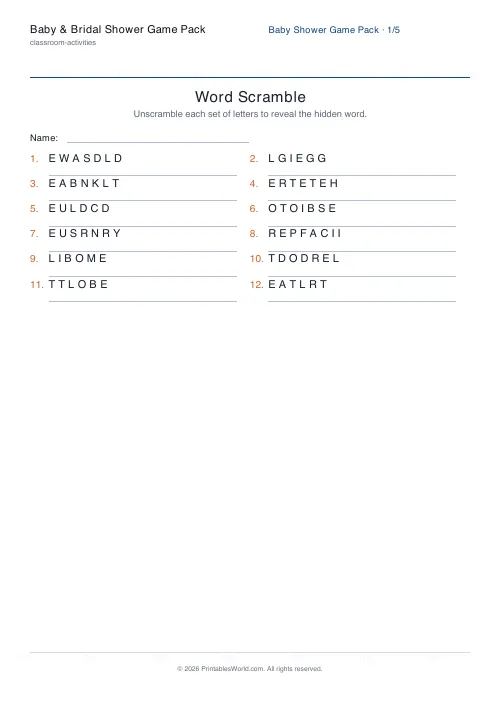
Baby & Bridal Shower Game Pack
Print a ready-made booklet of classic baby and bridal shower games.
Further reading
Classroom Activities
20 classroom games that need zero prep
Games organised by the gap they fill: two minutes at the end of a lesson, ten minutes before assembly, or a whole wet lunchtime. Almost all need nothing but a voice.
6 min read
Classroom Activities
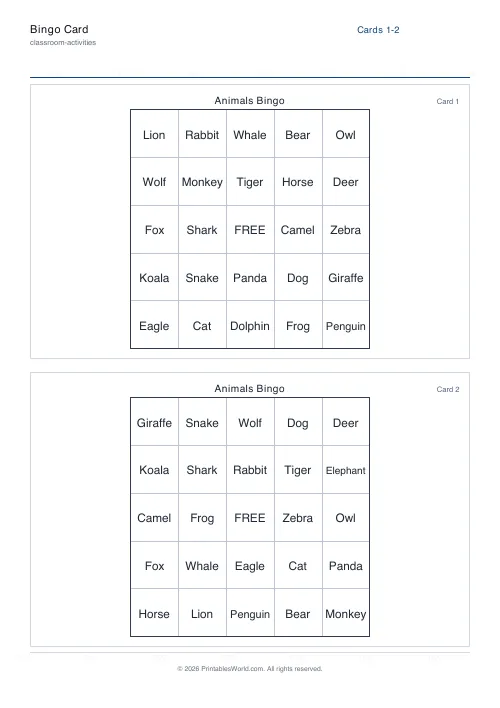
Bingo in the classroom: 10 subjects, one game
Bingo works in almost every subject because the mechanic never changes. Only the call does. Ten variations, and the one rule that turns it from a filler into retrieval practice.
4 min read