What this tool does
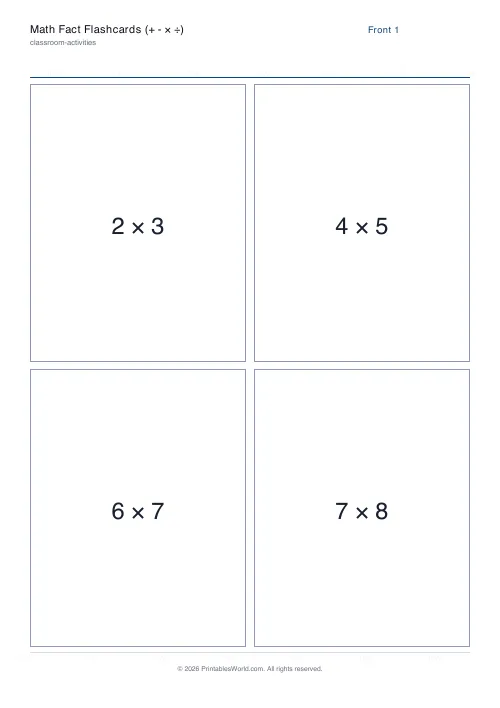
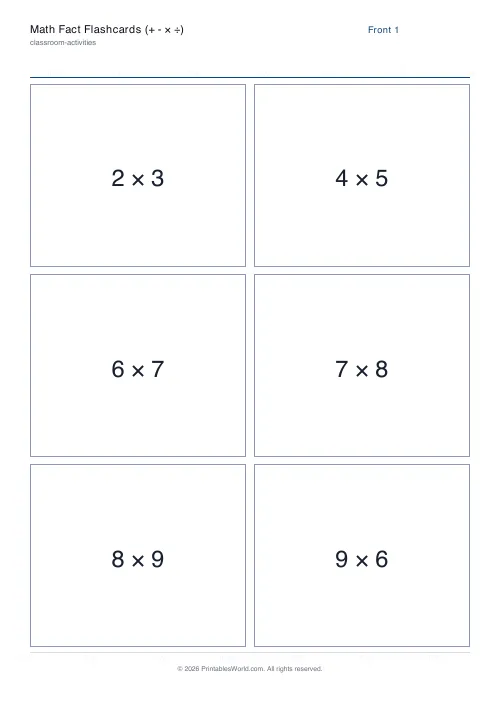
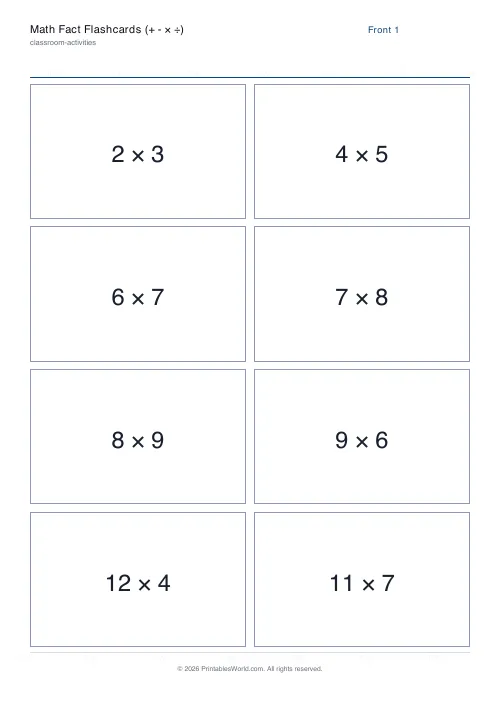
A deck of maths fact flashcards, fact on the front and answer on the back. The default deck is twenty multiplication facts, and every card is editable, so you can swap in addition, or subtraction, or division, for whatever range you happen to be drilling. Four, six or eight cards a page, and the back page mirrors the front grid so double-sided printing lands each answer behind its own question.
People also used
Feedback
Spotted something off with this tool?
Recall, not reading
A maths fact card does a different job from an alphabet card, and the difference decides how you use it. An alphabet card teaches a symbol a child does not know. A maths fact card rehearses something they can already work out, until they no longer have to work it out.
That is the target: retrieval without calculation. A child who gets to 56 by counting up in eights has the right answer and has spent their working memory getting there. A child who simply knows 56 has that memory free for whatever the actual problem was. The cards are not teaching multiplication, they are converting something known into something automatic.
Which makes speed part of the assessment in a way it never is for letter cards. More than about three seconds and the fact is not fluent yet, so the card goes back into the pile rather than being worked out slowly.
The three-pile method
Going through a deck front to back rehearses the facts a child already knows exactly as often as the ones they do not, which is most of why flashcards have a reputation for not working.
Use three piles. Show a card: an instant correct answer goes to known, a slow but correct one to working, and a wrong or absent one to learning. Then run learning again. Then working. Finish with a handful from known so the session ends on success rather than on struggle.
Five minutes daily beats twenty minutes weekly, comfortably. And the learning pile visibly shrinking is progress a child can see, which is worth more than any chart. Print two or three sets and keep the piles apart between sessions instead of reshuffling everything back together.
What to put on the cards
The deck that loads is twenty multiplication facts. In practice you want a deck per target, and typing your own pairs is the point of the tool.
- Number bonds to 10 and 20. 6+4, 7+3, 13+7. Everything later leans on these.
- One times table at a time. The sevens and eights are where children stall, and twelve cards is a far less daunting object than a hundred and forty-four.
- Doubles and near doubles. 6+6 next to 6+7, which is a strategy deck rather than a recall deck, and it works differently: the child is meant to notice the relationship rather than memorise both.
- Division beside its multiplication. 56 ÷ 7 in the same deck as 7 × 8, so the pair is learned as one thing rather than two unrelated facts.
Twelve to twenty cards is a working deck. A hundred cards is a box nobody opens.
Printing, and the flip that catches everyone
Six to a page is the default and gives roughly a playing-card size: readable across a table, small enough for a child to hold a dozen.
Print double-sided, and run one test sheet first. Printers disagree about which edge they flip on, and a deck printed on the wrong flip has every answer behind the wrong question. That is not obvious from looking at the stack, only from using it, usually five minutes into a lesson. Hold the test sheet up to the light before you print thirty.
160gsm card or lamination matters more here than for most printables, because these are handled daily rather than filed. A laminated deck lasts a school year. A paper one is dog-eared by October.
FAQs
Quick answers
What is on each math flashcard?
The front shows a number fact, such as 7 × 8 or 15 − 8, and the back shows the answer. You can edit any fact and its answer before printing.
Can I make addition, subtraction, or division decks?
Yes. The starter deck mixes the four operations, but you can replace the pairs with any addition, subtraction, multiplication, or division facts for the range you are practising.
How do I print the backs so they line up with the fronts?
Print double-sided and choose “flip on the short edge” (short-edge binding). The engine already mirrors the back page so each answer lands on the reverse of its fact.
What paper and card should I use?
A4 or US Letter both work. For a deck that survives daily use, print on 160 gsm card or heavier and laminate after cutting.
Related tools
Custom Flashcards
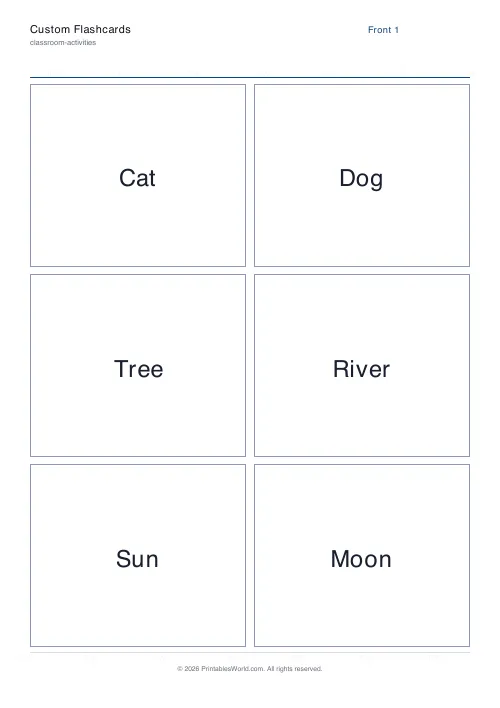
Double-sided printable flashcards from your own list of pairs.
Blank Flashcard Template
Print blank flashcards ready to fill in by hand.
Matching Cards
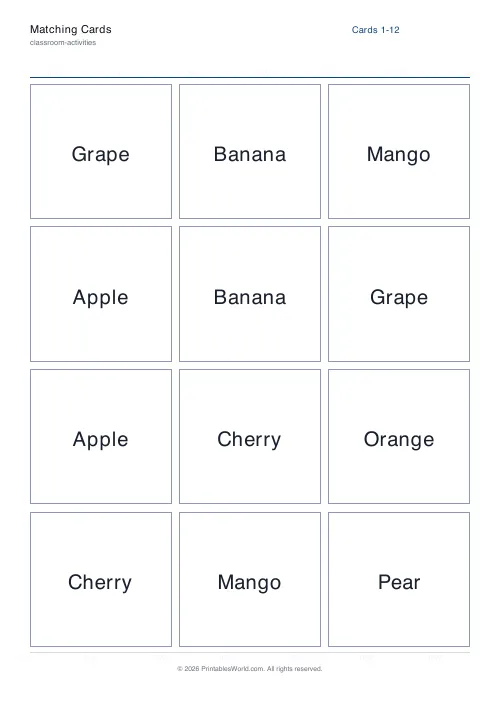
Pairs of identical cards for a concentration-style match game.
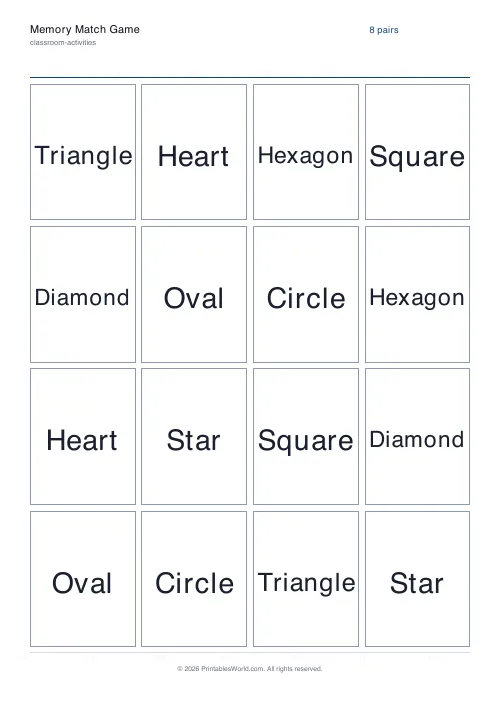
Memory Game Cards
Grid of paired cards for a classic flip-and-match memory game.
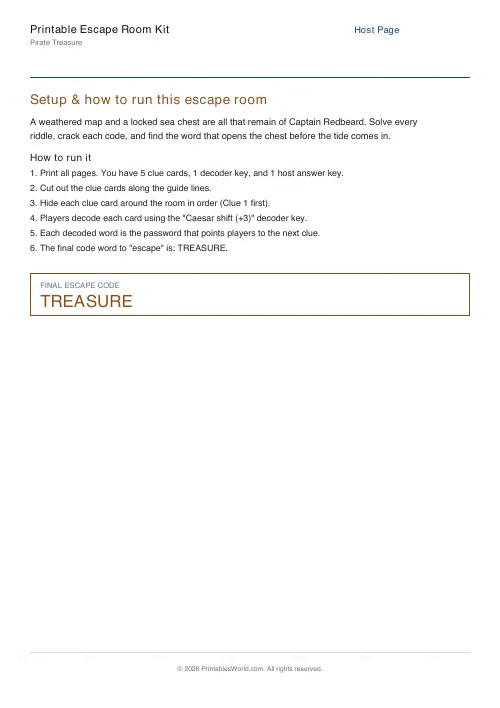
Printable Escape Room Kit
Print a ready-to-run escape room: themed clue cards, a cipher decoder key, and a host answer sheet.
Further reading
Classroom Activities
How to run a classroom economy (free printables)
A classroom economy teaches money, work and choice at once. But it collapses if the maths is wrong. Here is how to set the numbers, and the four pitfalls to avoid.
5 min read
Classroom Activities
Back-to-school printables every teacher needs
Sorted by when you will actually need them: the two things to print before the children arrive, the week-one set, and the routines worth establishing while everyone is still compliant.
5 min read
Classroom Activities
Positive reinforcement in the classroom: charts that work
Reward charts work when they name a specific behaviour and fade over time. They backfire when they rank children publicly. Here is the difference in practice.
5 min read