What this tool does
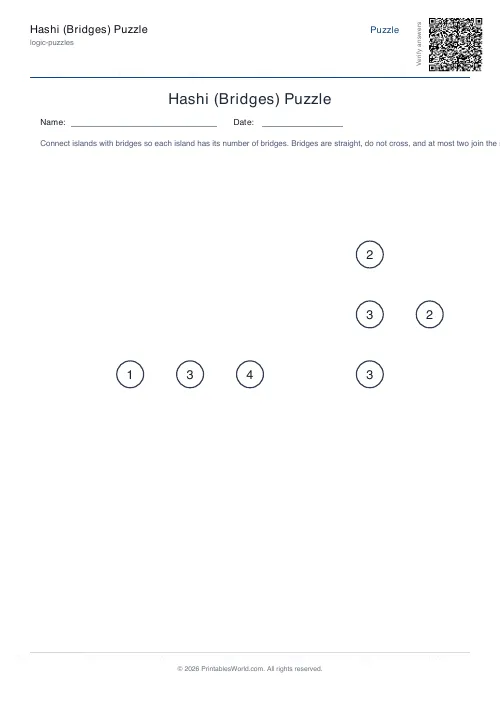
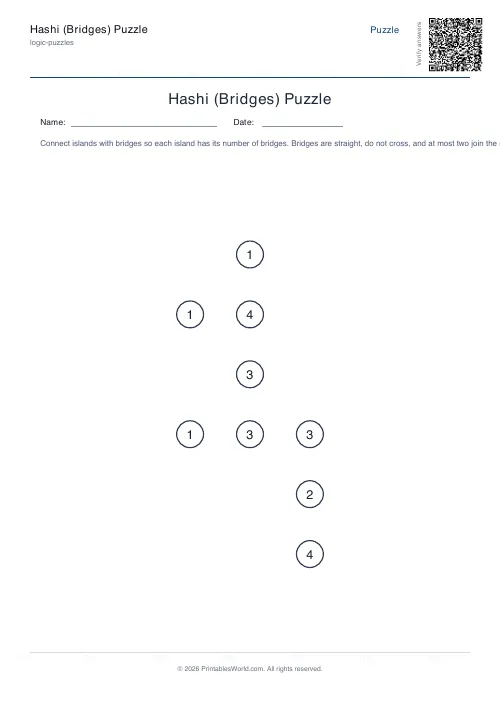
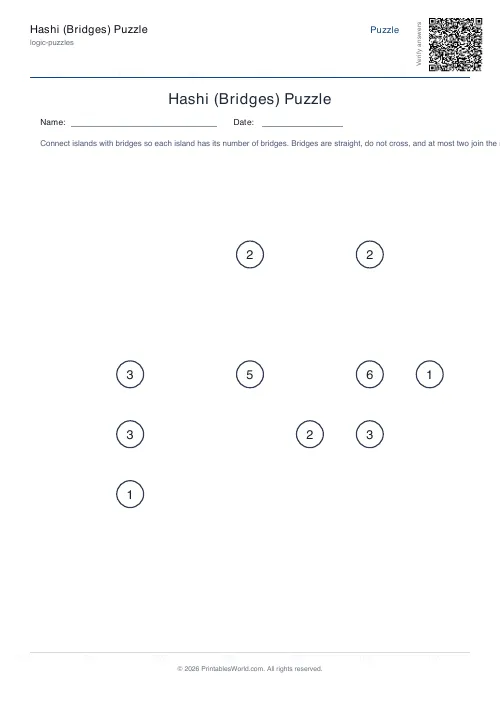
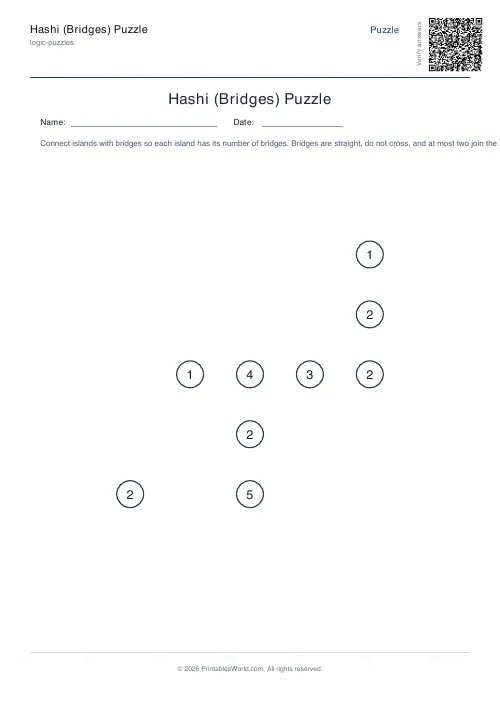
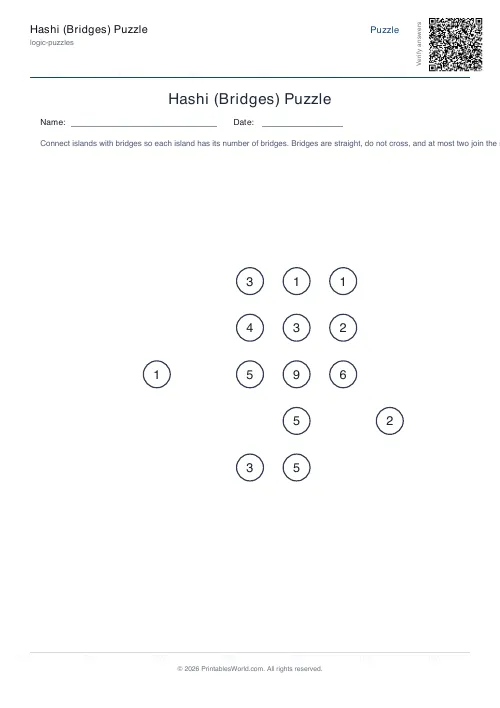
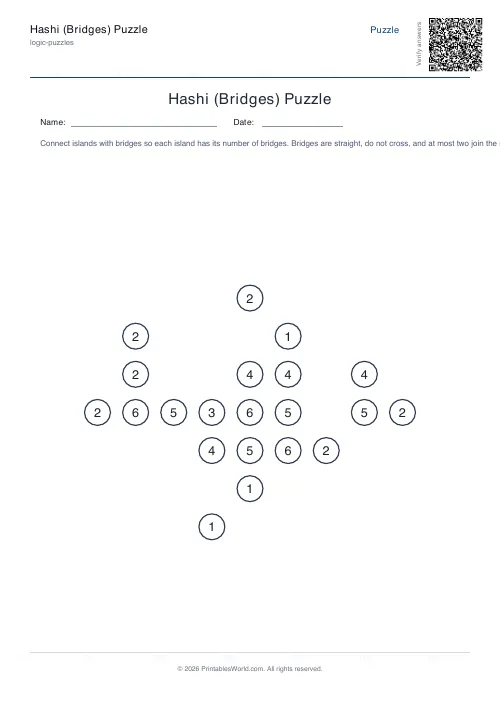
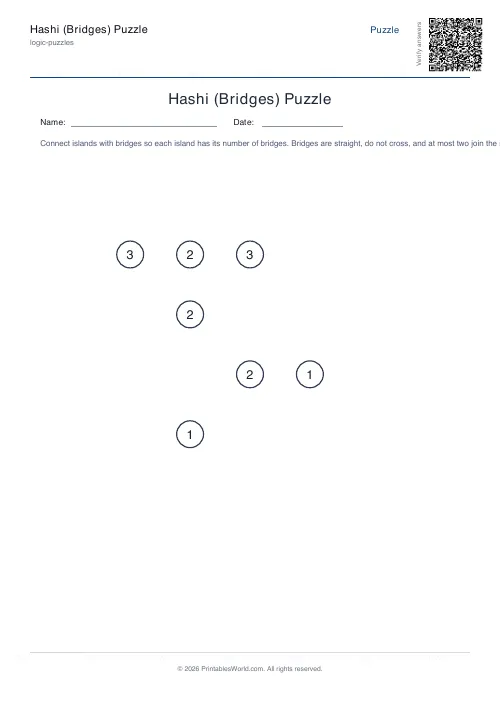
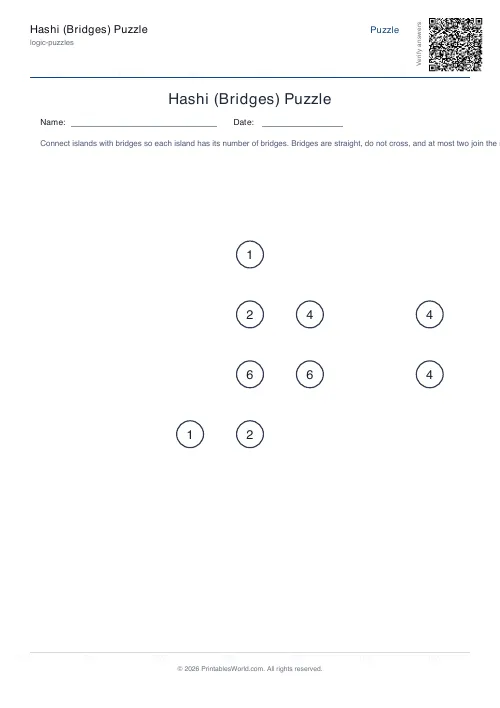
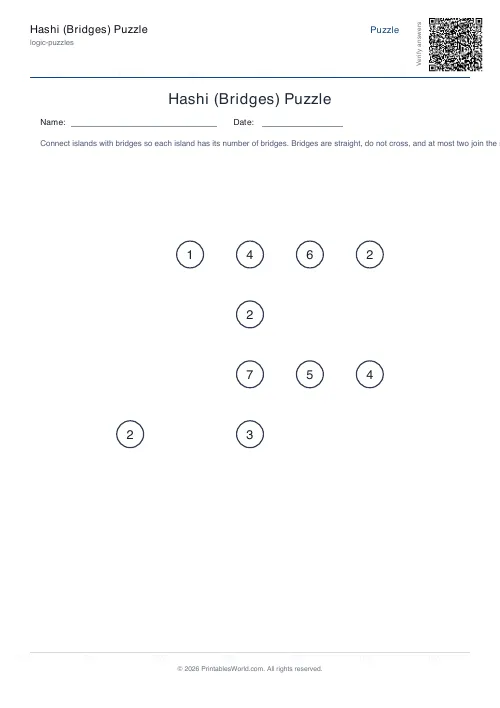
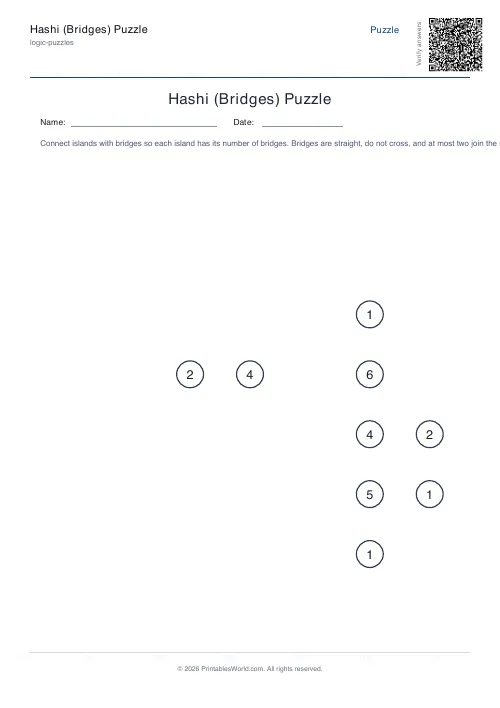
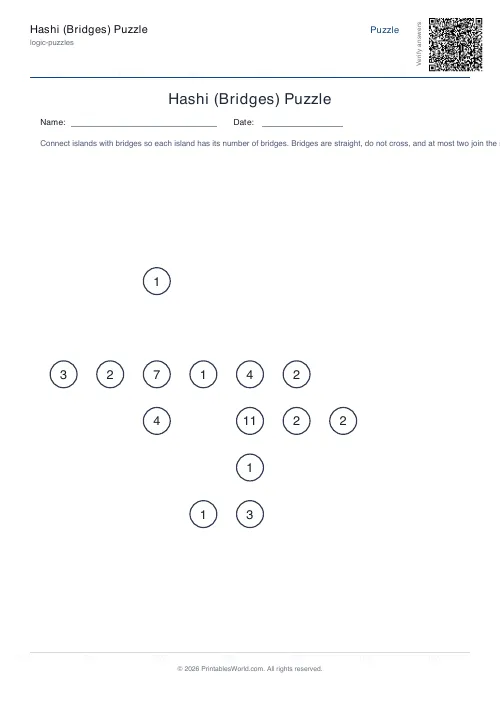
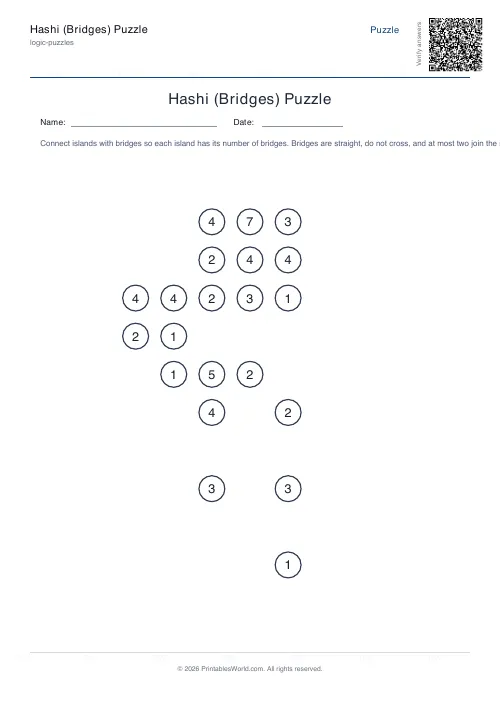
Printable Hashi, also called Hashiwokakero or Bridges. Numbered islands sit on a grid and get joined by straight, non-crossing bridges until every island has exactly as many bridge ends as its number and the whole thing forms one connected network. Grids from 5×5 to 11×11, seven by default, with an optional answer key.
People also used
Sudoku Generator
Generate printable Sudoku puzzles with six per page, multiple difficulty levels, and optional solutions.
Binary Puzzle Generator: Printable
Create printable binary logic puzzles (Takuzu/Binairo) with customisable grid sizes and difficulty levels.
Logic Grid Puzzle Generator: Printable
Create custom logic grid puzzles with your own categories, items, and clues. Print-ready PDFs in seconds.
Feedback
Spotted something off with this tool?
Join the islands, count the ends
Circles scattered on a grid, each with a number in it. Draw bridges between them until every island is touched by exactly as many bridge ends as its number says, and until the whole set forms one connected network.
Those are two separate conditions and both have to hold. A grid where every count is right but two islands sit in their own private pair is not solved.
Every puzzle is built from a valid bridge network first and the clue numbers are read off it, so the sheet and the answer key cannot disagree.
The rules, all five of them
Bridges run horizontally or vertically. Never diagonally.
At most two bridges may join the same pair, so a connection is a single line or a double line and nothing else. Bridges may not cross each other, and they may not pass through an island. The number on an island is the total count of bridge ends meeting it, so a 3 might be a double bridge on one side and a single on another.
Solved means two things at once: every count satisfied, and every island reachable from every other island by some path of bridges.
Opening moves
Look for islands that have no choice. A 1 in a corner can only reach one neighbour, so that single bridge is forced. An island whose number equals twice its number of available neighbours must run doubles to all of them: an edge island marked 4 with only two neighbours takes a double to each.
Then work outward. Every bridge you draw blocks a crossing route somewhere, which forces the next one. Pencil singles first and upgrade to doubles only when the counts demand it, because a double drawn early is much harder to undo than a single.
And keep checking connectivity as you go. A move that satisfies every local count while sealing a group of islands off from the rest is always wrong, and it is the mistake that costs the most time to find.
Grid size
Five by five up to eleven by eleven. Seven by default, and a 5×5 with mostly single bridges is genuinely approachable for a child who can count to four.
At the larger sizes the difficulty comes less from the arithmetic, which never gets harder than adding to eight, and more from holding the connectivity requirement in mind while you work in one corner. That is a different skill, and it is why an 11×11 is a considerably longer sit than the numbers suggest.
Why it works where word puzzles do not
No language on the sheet at all. No arithmetic beyond counting to eight, either, so it works in any classroom and in any language, and it works particularly well for a child whose reading has fallen behind their reasoning and who needs something they can be good at.
What it trains is planning and elimination and the habit of checking a move before committing to it. Press Generate New for a fresh layout at the same settings, turn the answer key on for marking, and print a different sheet for every pupil so there is nothing to copy.
FAQs
Quick answers
What do the numbers on the islands mean?
Each number is the total count of bridge ends that must touch that island. An island marked 4 needs four bridge ends, which could be two double bridges, or a double plus two singles, and so on.
How many bridges can join two islands?
At most two. Each connection between a pair of islands is either a single bridge or a double bridge, and bridges only run straight horizontally or vertically without crossing.
Is there an answer key?
Yes. Turn the answer key on and the PDF adds a second page showing the complete solution with every single and double bridge drawn in, so marking takes seconds.
Can I make every puzzle different?
Yes. Each puzzle is built from a fresh seed, so you can print a unique sheet for every pupil. Press Generate New to reshuffle the preview, and change the size or difficulty for a new challenge.
Related tools
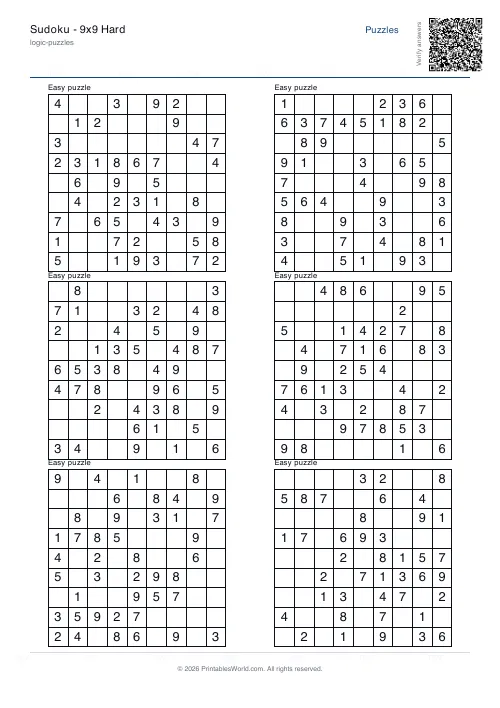
Sudoku Generator
Generate printable Sudoku puzzles with six per page, multiple difficulty levels, and optional solutions.
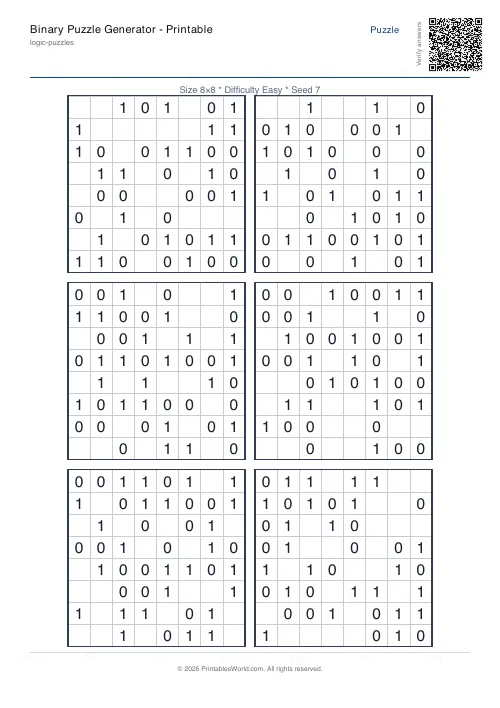
Binary Puzzle Generator: Printable
Create printable binary logic puzzles (Takuzu/Binairo) with customisable grid sizes and difficulty levels.
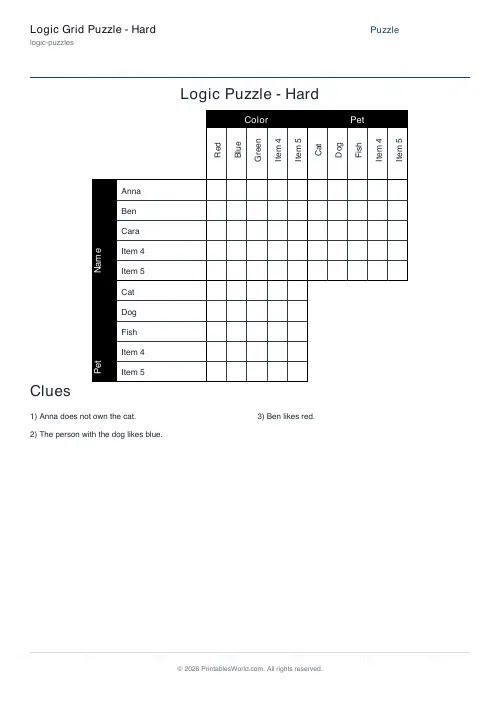
Logic Grid Puzzle Generator: Printable
Create custom logic grid puzzles with your own categories, items, and clues. Print-ready PDFs in seconds.
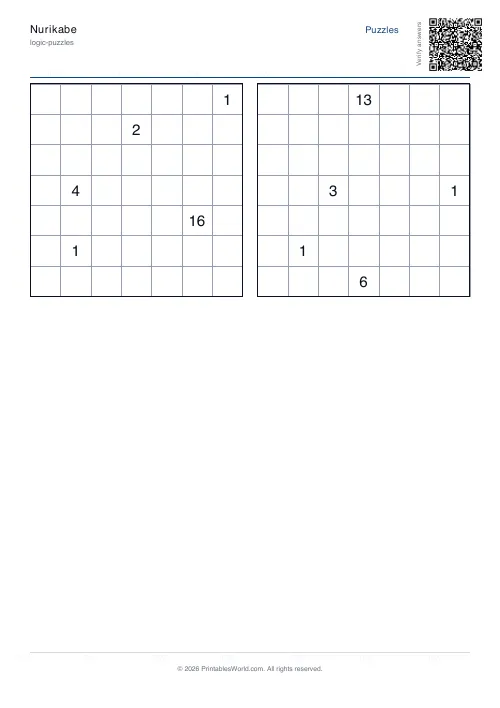
Nurikabe Generator
Shade cells into one connected sea around numbered white islands.
Further reading
Logic Puzzles
The benefits of logic puzzles for developing brains
Logic puzzles teach deduction and persistence, which are worth having. The claim that they make children generally smarter is weaker than the marketing suggests.
5 min read
Puzzles & Brain Games
Printable brain games for seniors: a free puzzle pack
A free printable puzzle pack for older adults, with a sample seven-day plan, large-print and easier-difficulty tips, and how to use the Logic Puzzles collection.
7 min read
Logic Puzzles
Kakuro, killer sudoku and other number puzzles explained
If sudoku has stopped being a challenge, these are the natural next steps. And unlike sudoku, most of them genuinely involve arithmetic.
5 min read