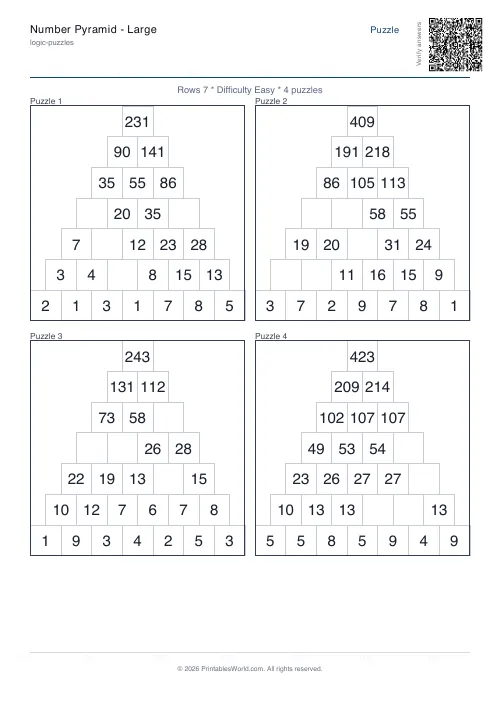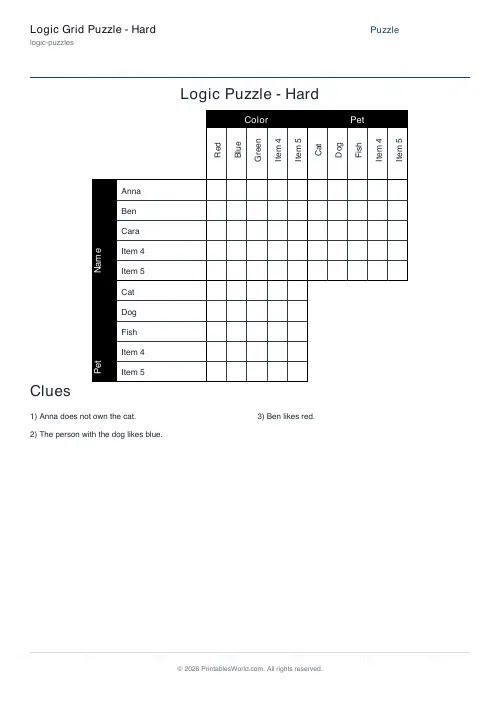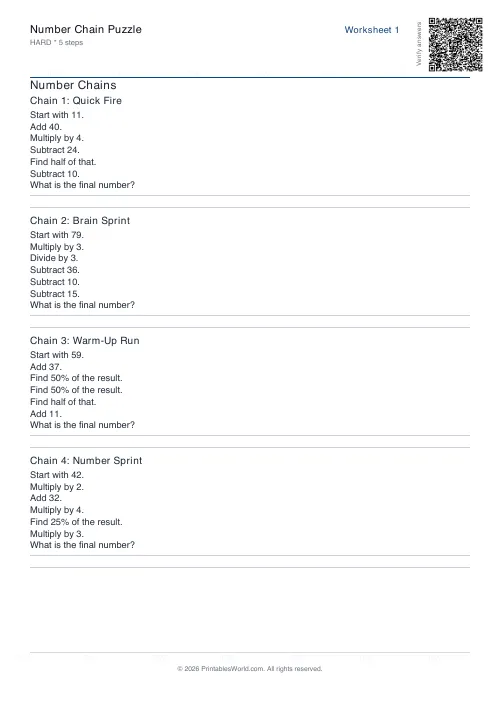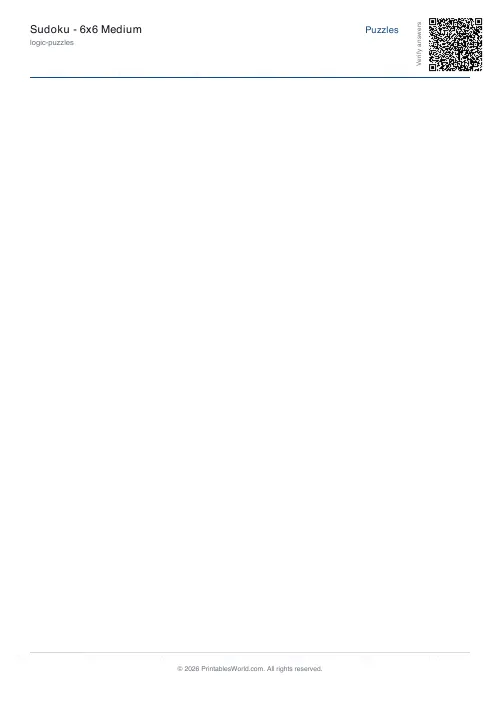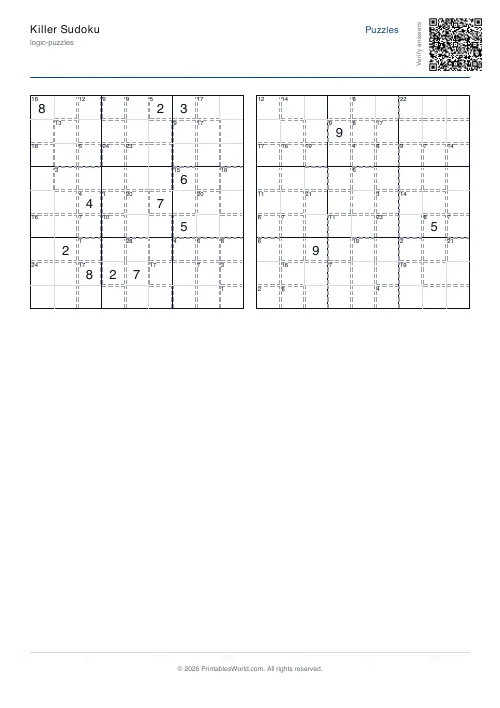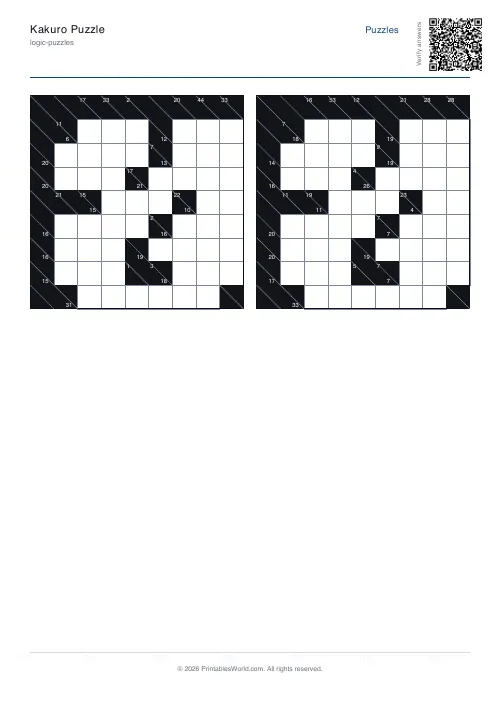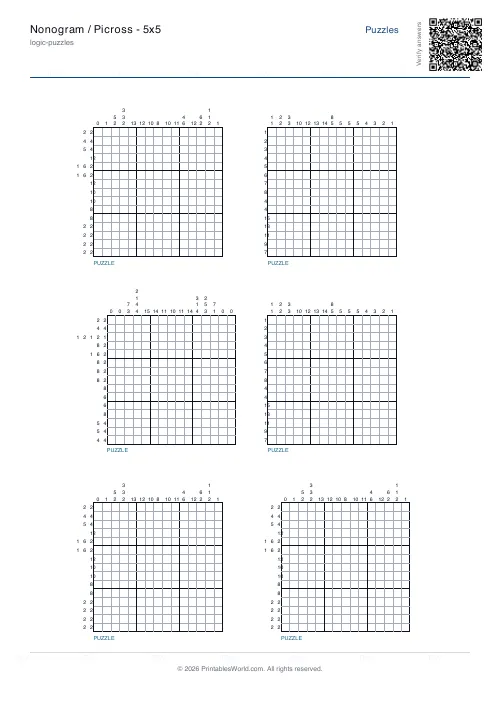
What this tool does
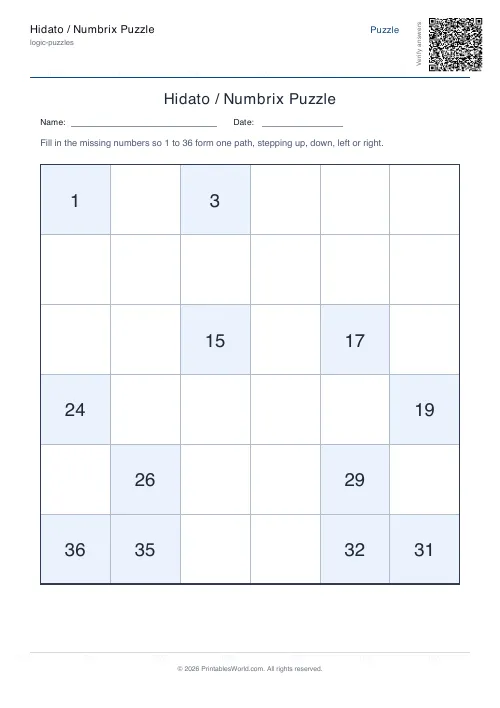
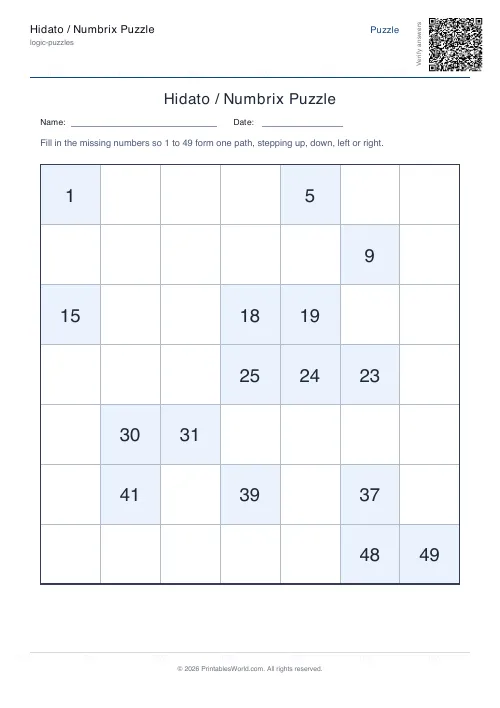
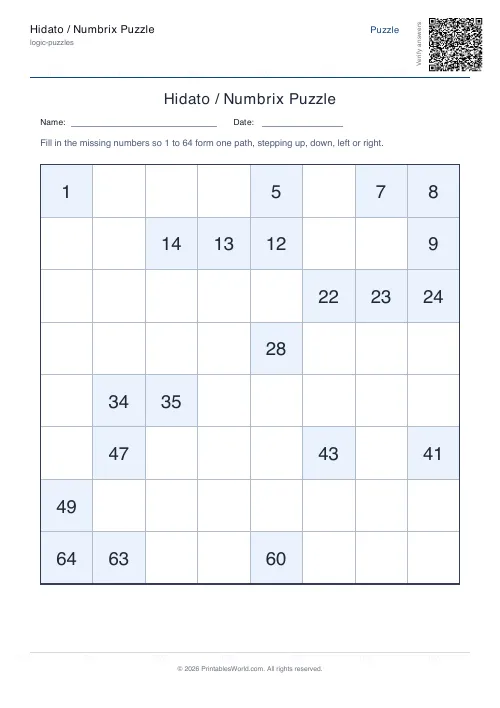
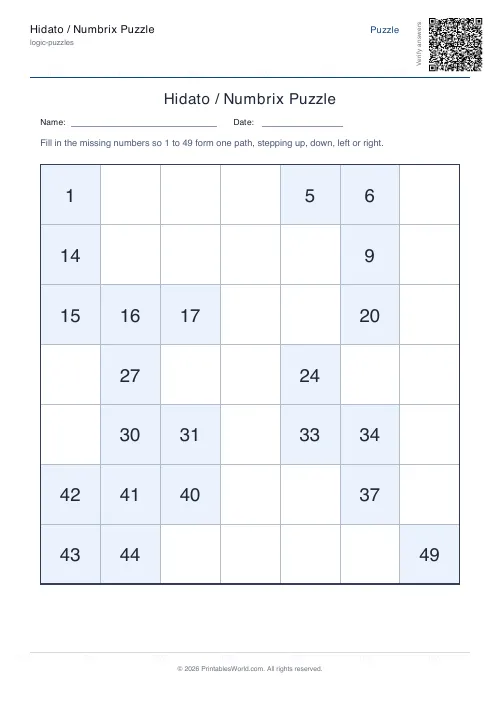
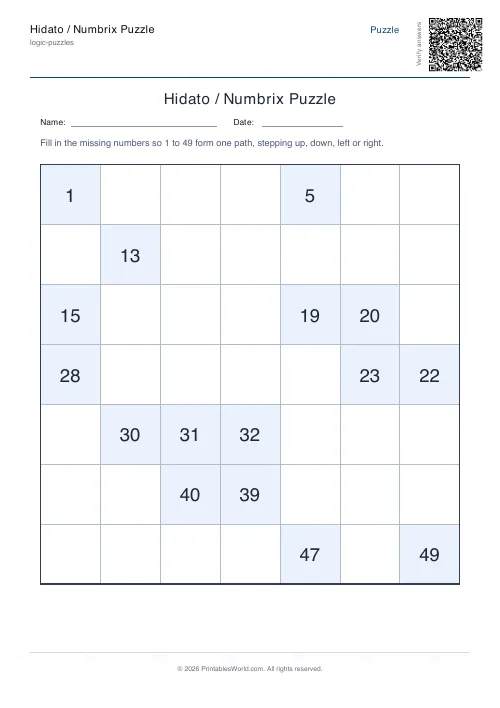
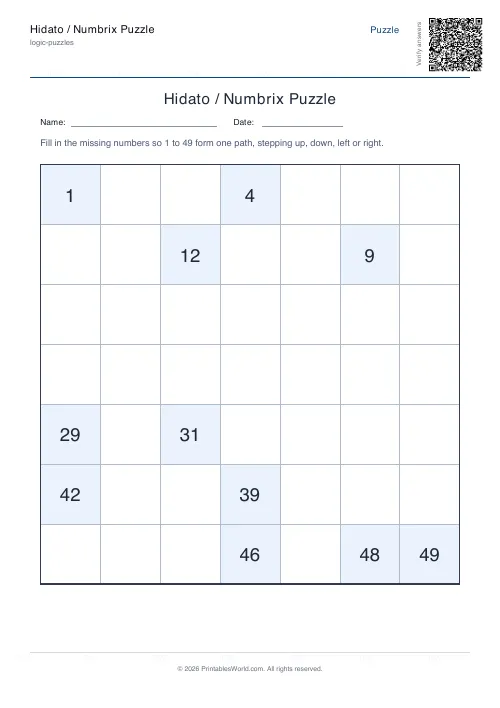
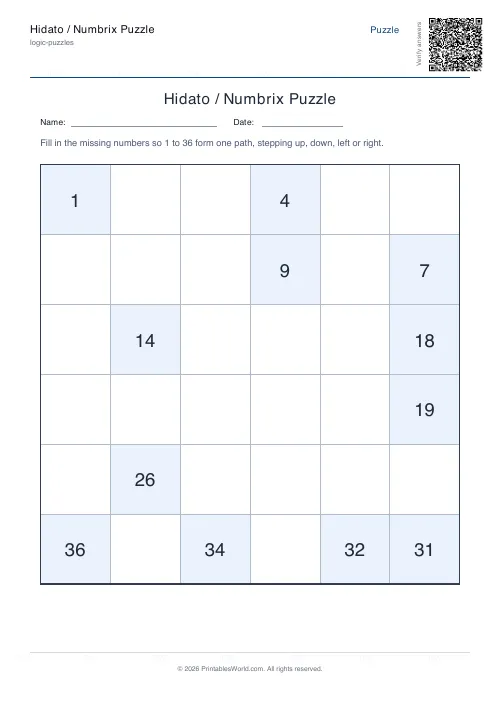
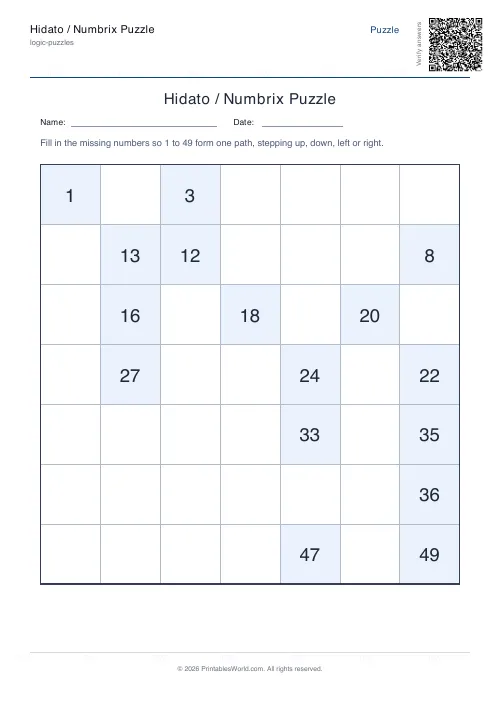
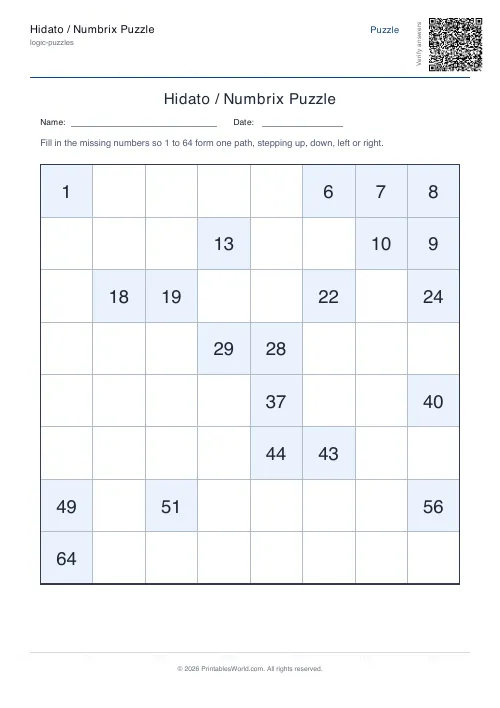
Create printable Hidato / Numbrix puzzles where you complete a grid of consecutive numbers that snake from 1 to the highest value. Choose the grid size and difficulty, then download a branded PDF with an optional answer key.
People also used
Sudoku Generator
Generate printable Sudoku puzzles with six per page, multiple difficulty levels, and optional solutions.
Binary Puzzle Generator: Printable
Create printable binary logic puzzles (Takuzu/Binairo) with customisable grid sizes and difficulty levels.
Number Chain Generator: Mental Maths
Print mental-maths number chains with custom difficulty, length and answer keys.
Feedback
Spotted something off with this tool?
One path, 1 to the end, no diagonals
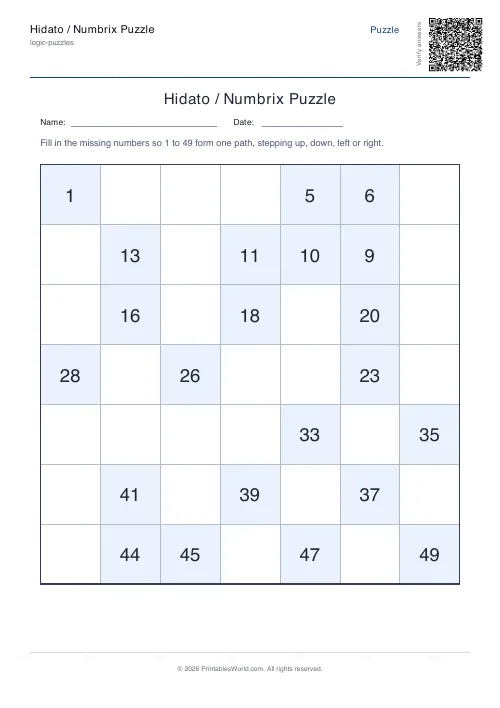
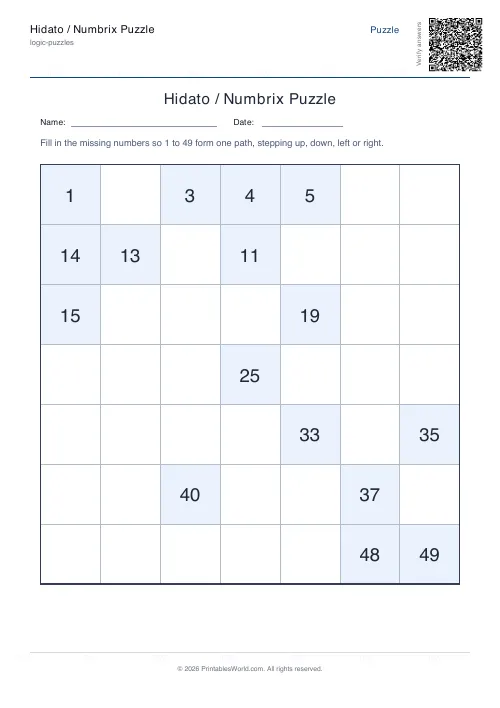
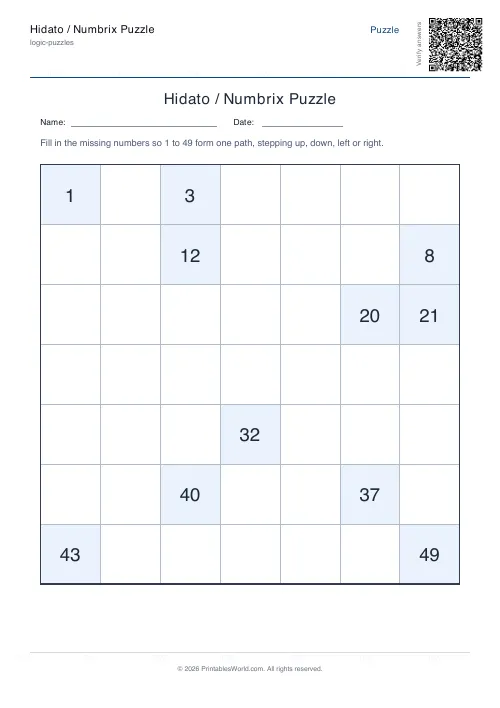
Every cell in the grid holds a different number, from 1 up to however many cells there are, and consecutive numbers must sit next to each other. Up, down, left, right. Never diagonally, in the Numbrix style used here.
So the completed grid is one unbroken chain that visits every square exactly once. A handful of numbers are printed to anchor it, including the 1 and the final number, and the rest is deduction. There is precisely one way to join them, which means careful reasoning always gets there and guessing never has to.
How to actually solve one
Work outwards from what you already have. If a 7 and a 9 sit with a single empty cell touching both of them, that cell is an 8 and there is nothing to think about.
Then look for pairs of givens that are close together, because the path between two known numbers has a fixed length and the cells in between are far more constrained than they look. The other reliable move is the dead end: whenever a number has only one empty neighbour left, the next number in the sequence has to go there. Fill the forced cells, treat them as new anchors, rescan. Since every step is orthogonal you can always count squares to check whether two givens are even reachable in the number of moves available, which kills bad branches early.
Repeat until the chain closes. It always does.
Grid size and how much gets revealed
Grids run from 4×4 to 9×9 and start at 6×6. A 4×4 is sixteen cells and a five-minute puzzle. A 9×9 is eighty-one and an evening.
Difficulty controls how many numbers are printed for you: easy shows roughly 45% of the cells, medium about a third, hard around 22%. On a 9×9 that is the difference between thirty-six givens and eighteen, which changes the puzzle considerably more than the grid size does. A hard 6×6 is a harder sheet than an easy 9×9.
Every puzzle comes from a seed, so Generate New gives a fresh solvable grid each press. Thirty pupils can have thirty different sheets, or you can run one size and difficulty repeatedly to build a booklet.
Why they suit a wider range of solvers than Sudoku
There is no arithmetic here beyond counting. The rules fit in a sentence, so a six-year-old has them immediately, and yet a hard 9×9 will hold an adult for a while.
What the puzzle trains is sequencing and spatial reasoning, and the patience to fill in only what is forced rather than what looks likely. Sudoku asks you to reason about symbols that could be anything; here the numbers mean what they say, which is a much shorter route in for a child who finds abstract logic slippery. Teachers use them as starters, as calm-down activities, and as something to hand an early finisher that is not more of the same work.
Printing a set
Givens are shaded and bold on the puzzle page, so nobody wastes time working out which numbers were already there. The answer key is on by default and prints the full chain from 1 to the last number on a second page, which is as useful for demonstrating the method on a visualiser as it is for marking.
Add a title if the sheet is going into a folder. Add name and date fields if it is coming back to you. A4 or US Letter.
FAQs
Quick answers
What is the difference between Hidato and Numbrix?
Both ask you to complete a continuous chain of consecutive numbers. Classic Hidato allows diagonal steps, while Numbrix allows only up, down, left and right moves. This generator uses the orthogonal Numbrix style, which keeps the path clean and easy to follow.
Is every puzzle solvable?
Yes. Each grid is built from a complete, valid number path first, and only then are some numbers hidden. The revealed numbers always lead to one consistent solution shown on the answer key.
What age group is this suitable for?
The rules need only counting, so even young children can start on a 4×4 easy grid. Larger sizes and the hard setting extend the same puzzle for older pupils and adults.
Can I get a different puzzle each time?
Yes. Press Generate New to reshuffle the revealed numbers and produce a fresh, fully solvable grid. Every generation is independent, so you can print a unique sheet for each solver.
Related tools
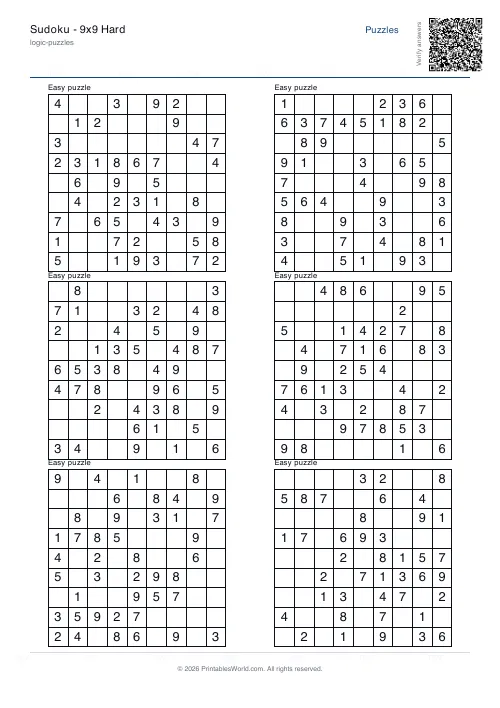
Sudoku Generator
Generate printable Sudoku puzzles with six per page, multiple difficulty levels, and optional solutions.
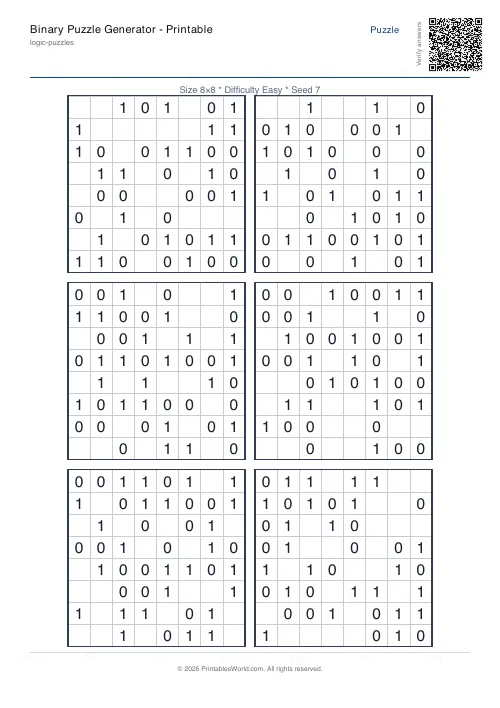
Binary Puzzle Generator: Printable
Create printable binary logic puzzles (Takuzu/Binairo) with customisable grid sizes and difficulty levels.
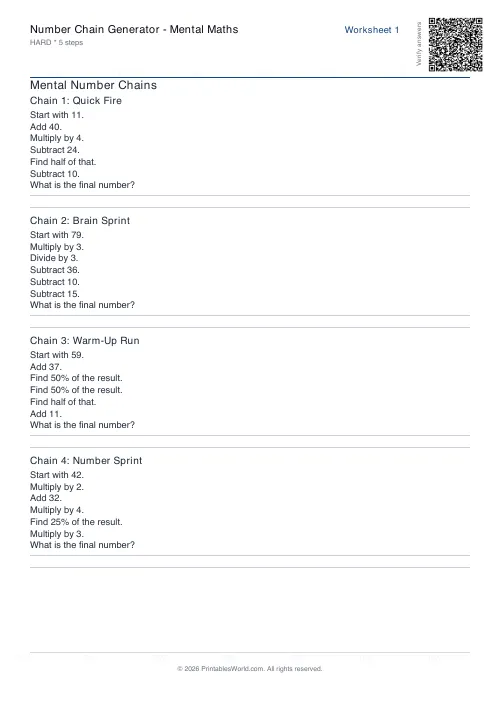
Number Chain Generator: Mental Maths
Print mental-maths number chains with custom difficulty, length and answer keys.
Nurikabe Generator
Shade cells into one connected sea around numbered white islands.
Further reading
Logic Puzzles
The benefits of logic puzzles for developing brains
Logic puzzles teach deduction and persistence, which are worth having. The claim that they make children generally smarter is weaker than the marketing suggests.
5 min read
Logic Puzzles
Kakuro, killer sudoku and other number puzzles explained
If sudoku has stopped being a challenge, these are the natural next steps. And unlike sudoku, most of them genuinely involve arithmetic.
5 min read
Puzzles & Brain Games
Printable brain games for seniors: a free puzzle pack
A free printable puzzle pack for older adults, with a sample seven-day plan, large-print and easier-difficulty tips, and how to use the Logic Puzzles collection.
7 min read