What this tool does
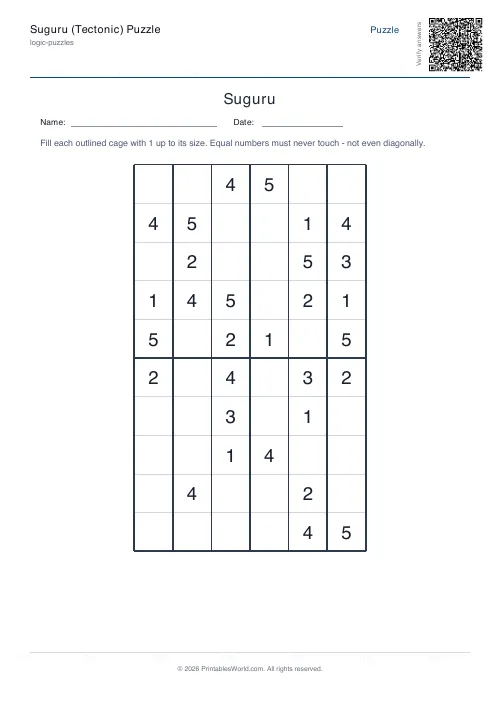
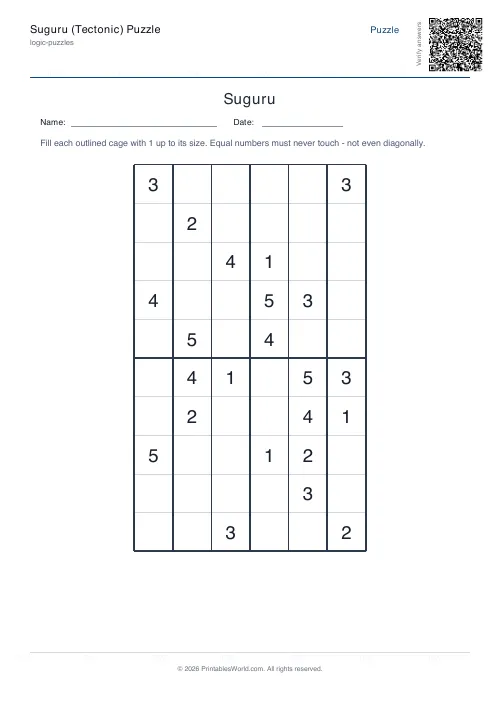
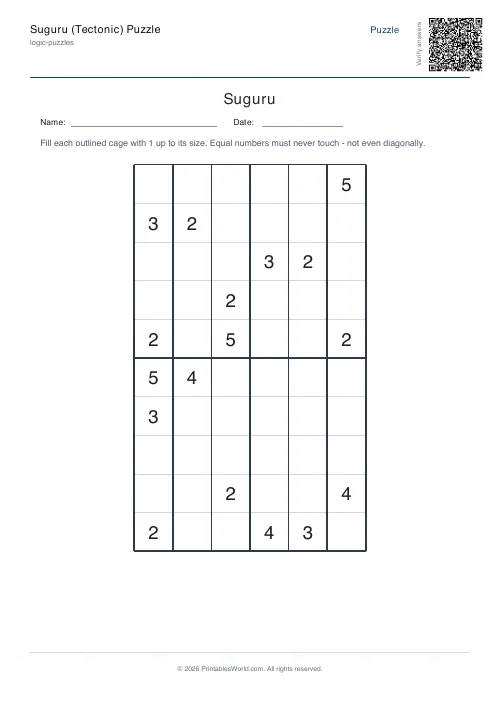
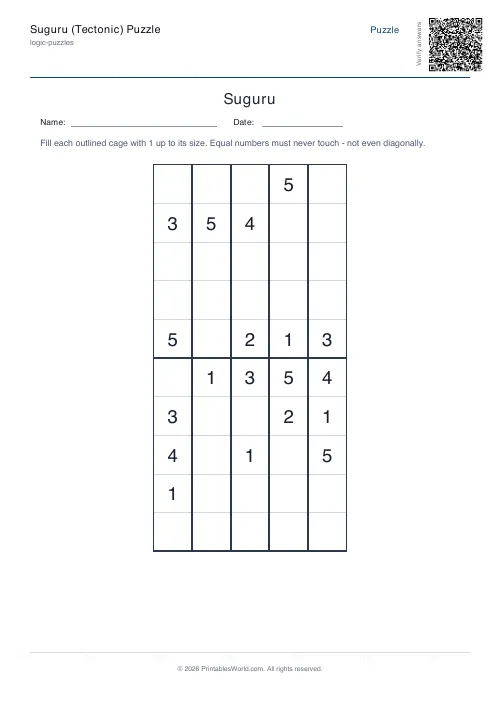
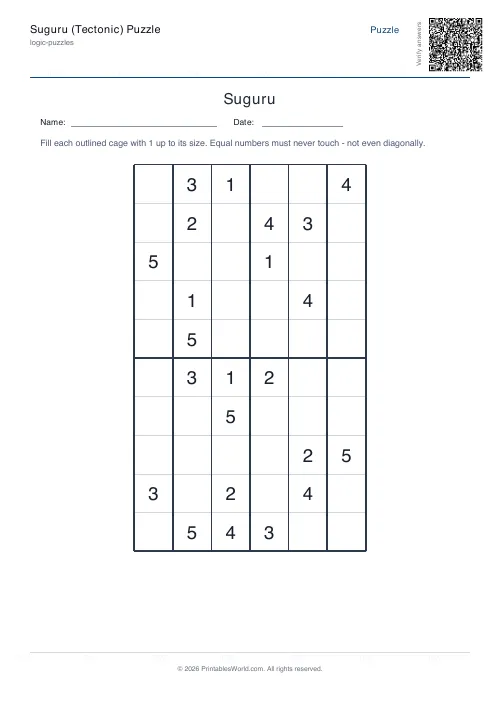
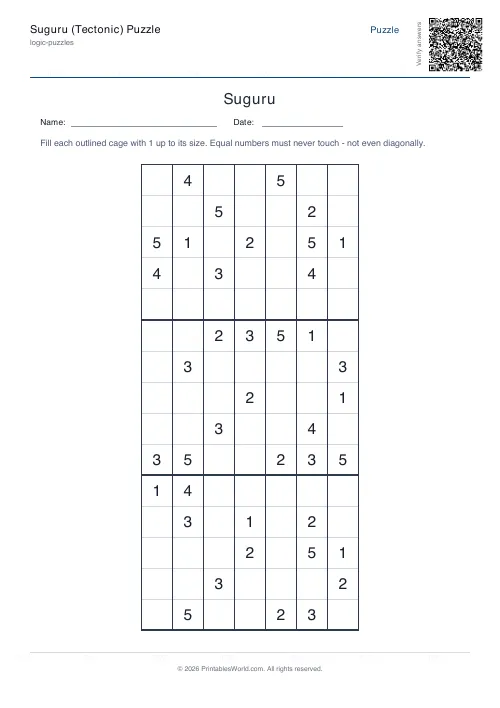
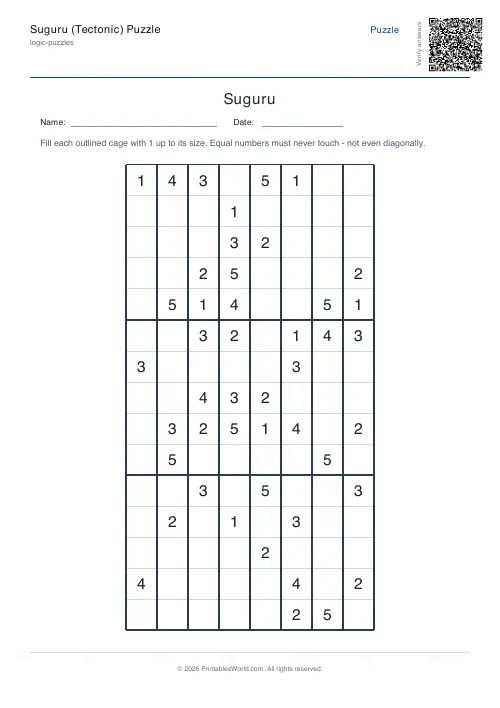
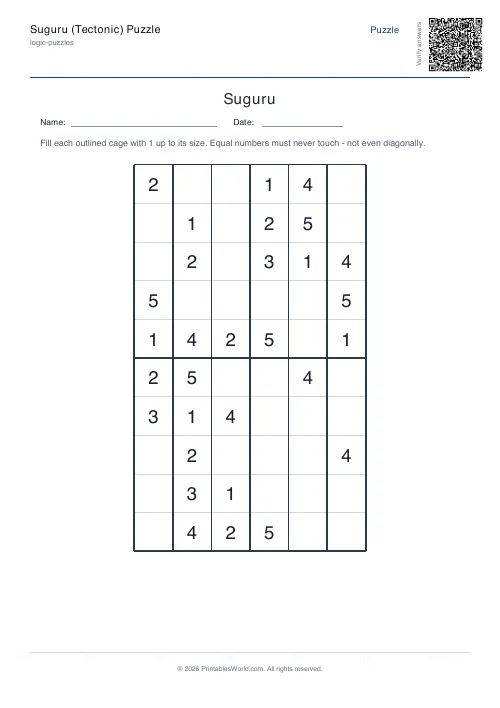
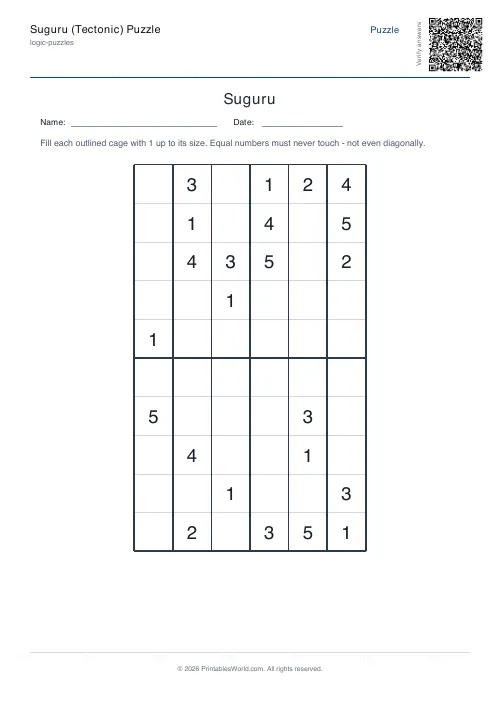
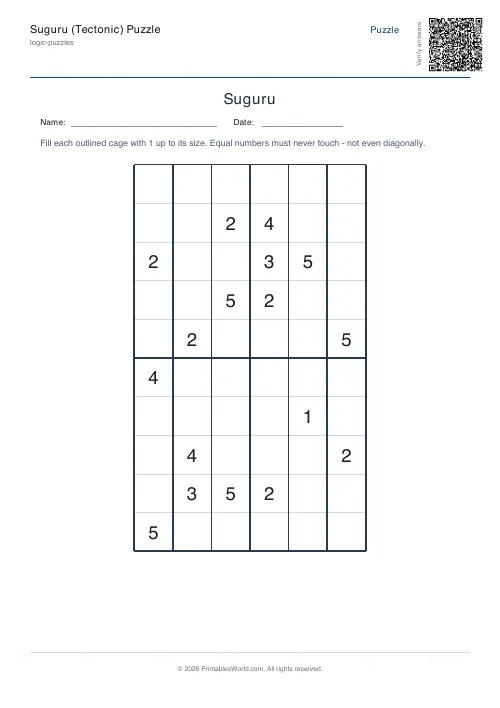
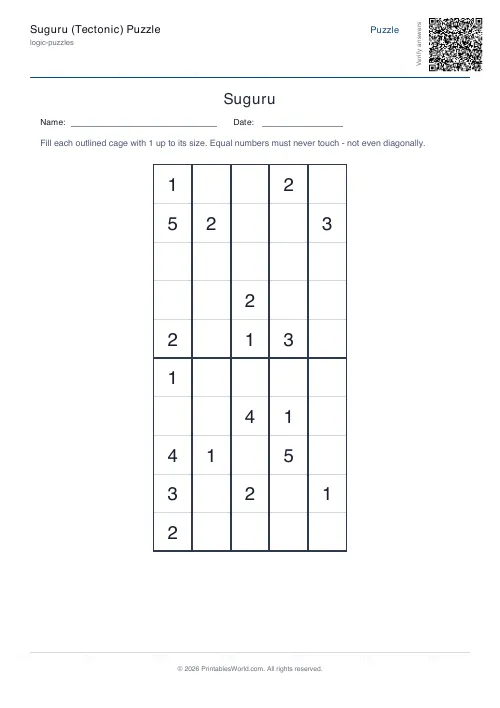
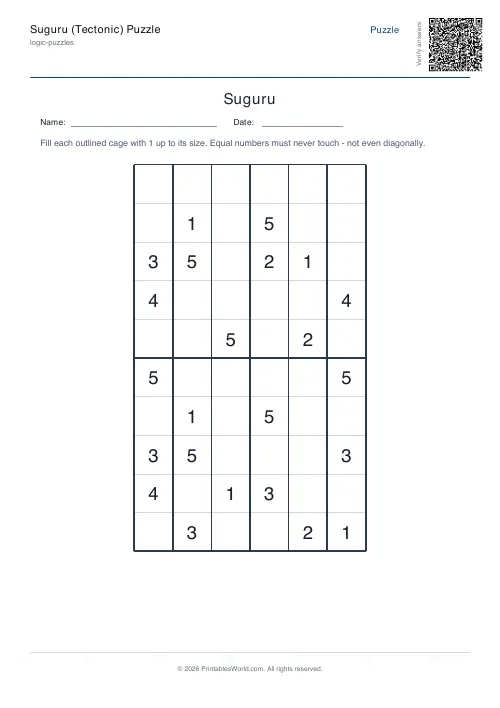
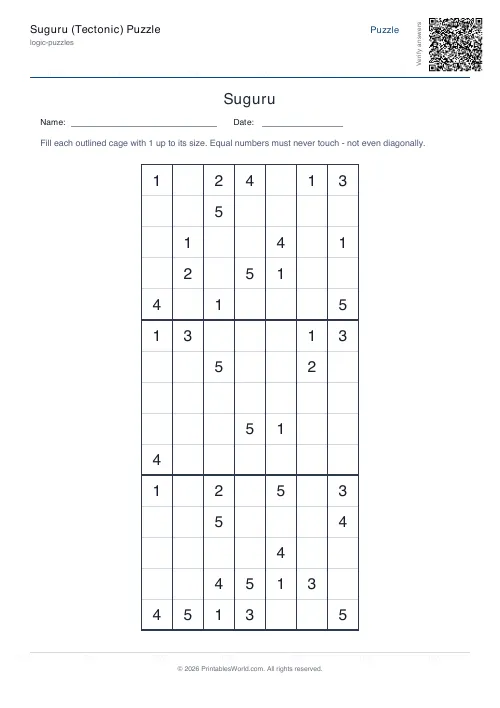
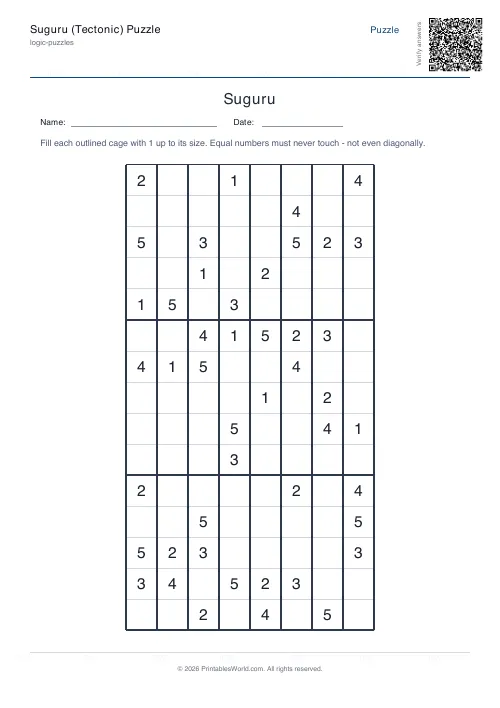
Printable Suguru, also called Tectonic. The grid is divided into outlined cages, and each cage takes the numbers 1 up to its own size. No two identical numbers may ever touch, not even at a corner. Grid width from 4 to 9, a difficulty setting that controls how many clues are given, a seed, and an optional answer key.
People also used
Sudoku Generator
Generate printable Sudoku puzzles with six per page, multiple difficulty levels, and optional solutions.
Binary Puzzle Generator: Printable
Create printable binary logic puzzles (Takuzu/Binairo) with customisable grid sizes and difficulty levels.
Number Pyramid Generator
Create printable addition pyramid puzzles with adjustable rows, difficulty, and optional answer keys.
Feedback
Spotted something off with this tool?
Two rules, and the second one is the puzzle
The grid is split into small outlined regions called cages. A cage of five cells takes 1 to 5. A cage of three takes 1 to 3. Each number once.
Then the rule that makes it Suguru rather than a jigsaw: no two identical numbers may be adjacent, including diagonally. A 3 guards all eight cells around it. That is a far stronger constraint than a Sudoku row, because it works in every direction at once rather than along lines.
Every puzzle is built from a complete valid solution, so the clues on the page and the answer key cannot disagree.
Start with the smallest cages
A cage of one cell can only hold a 1. Fill it the moment you spot it. That single placement immediately blocks a 1 from all eight cells around it, which in a tightly packed corner of the grid can touch three or four separate cages at once.
Cages of two are nearly as good: place either number and the other is forced. From those anchors the touching rule does the work. If a 2 sits next door, the cell beside it is not a 2, and on a small cage that frequently leaves exactly one legal value.
Pencil candidates lightly, cross out anything that would touch its twin, and look for the cell with one survivor. A well-made Suguru unravels one forced move at a time and never needs a guess.
Size and difficulty
Grid width runs from 4 to 9, at 6 by default. Difficulty changes how many numbers are printed for you rather than changing the rules: easy leaves plenty on the board, hard strips it back so the chains of reasoning run longer before they close.
A narrow grid on easy is a five-minute warm-up. A wide grid on hard is a proper sit-down, and the difference in solve time is much greater than the difference in cell count would suggest, because every extra cage interacts with its neighbours in eight directions.
Why it suits a wider range than Sudoku
There is no arithmetic. None at all: the largest number on most grids is a five, and a child who can count that far already has everything the puzzle asks for.
What the puzzle actually trains is spatial reasoning and the habit of justifying a move before making it, and neither of those depends on being good at maths. That makes it unusually good for a learner who has decided they are bad at numbers, because Suguru does not look like a maths worksheet and does not behave like one.
Type a seed and every child gets the same grid for a shared challenge. Leave it blank and every sheet is different, so there is nothing to copy.
FAQs
Quick answers
What is the difference between Suguru and Sudoku?
Sudoku uses fixed rows, columns and boxes that must each contain a full set of numbers. Suguru uses irregular cages of different sizes, each filled with 1 up to its own size, and adds the rule that identical numbers may never touch, not even diagonally. The numbers in Suguru are usually much smaller.
Do I need to be good at maths?
No. Suguru only involves counting up to the size of the largest cage, which in these puzzles is five. The challenge is logical and spatial, not arithmetical, so it suits a wide range of ages.
Is every puzzle solvable without guessing?
Each puzzle is built from a complete, valid solution and the clues are revealed from it, so a consistent answer always exists. Easier settings reveal more clues to keep the path clear; harder settings reveal fewer for a tougher challenge.
Can I print an answer key?
Yes. Switch on the answer key and the PDF adds a second page showing the full filled grid, with the numbers you had to work out highlighted, so marking is quick.
Related tools
Sudoku Generator
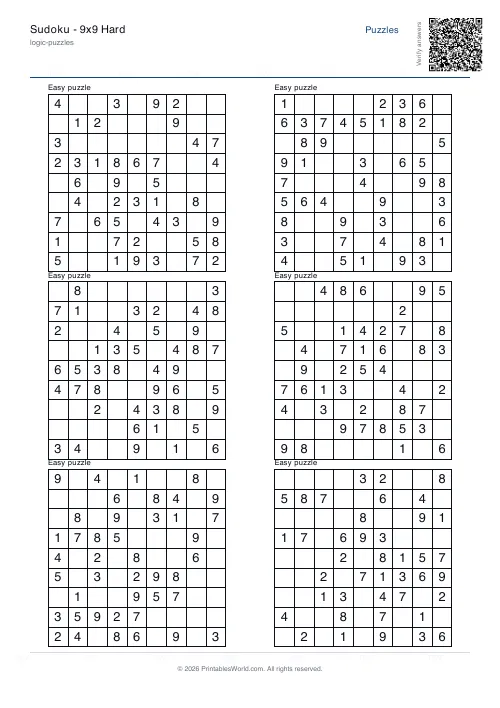
Generate printable Sudoku puzzles with six per page, multiple difficulty levels, and optional solutions.
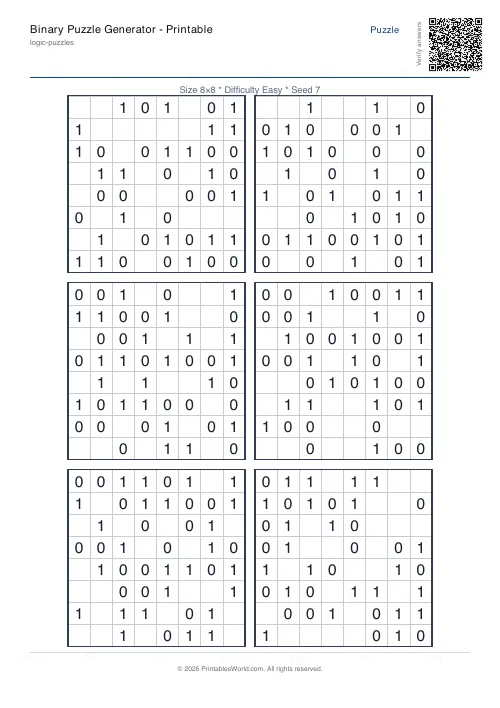
Binary Puzzle Generator: Printable
Create printable binary logic puzzles (Takuzu/Binairo) with customisable grid sizes and difficulty levels.
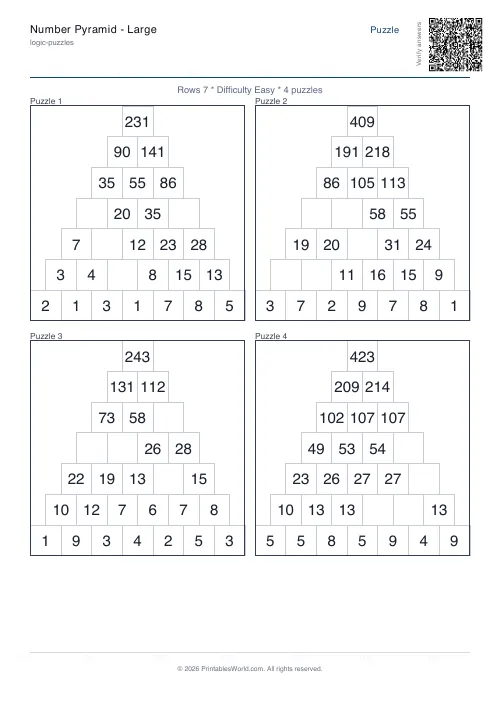
Number Pyramid Generator
Create printable addition pyramid puzzles with adjustable rows, difficulty, and optional answer keys.
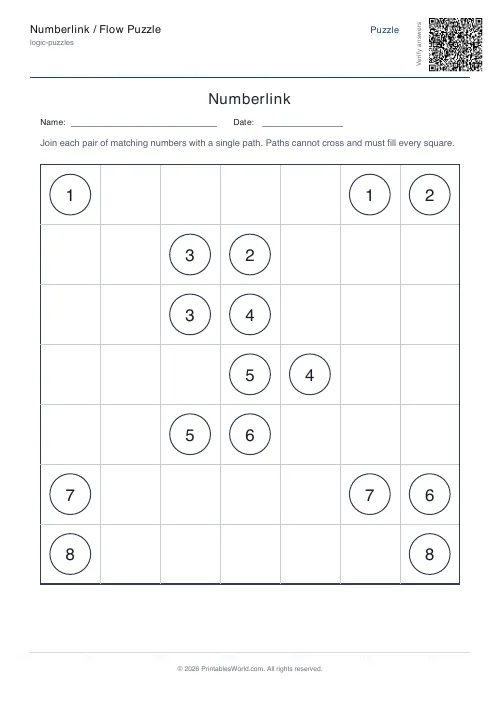
Numberlink / Flow Puzzle
Connect matching numbers with paths that fill the grid.
Further reading
Logic Puzzles
The benefits of logic puzzles for developing brains
Logic puzzles teach deduction and persistence, which are worth having. The claim that they make children generally smarter is weaker than the marketing suggests.
5 min read
Logic Puzzles
Kakuro, killer sudoku and other number puzzles explained
If sudoku has stopped being a challenge, these are the natural next steps. And unlike sudoku, most of them genuinely involve arithmetic.
5 min read
Puzzles & Brain Games
Printable brain games for seniors: a free puzzle pack
A free printable puzzle pack for older adults, with a sample seven-day plan, large-print and easier-difficulty tips, and how to use the Logic Puzzles collection.
7 min read