What this tool does
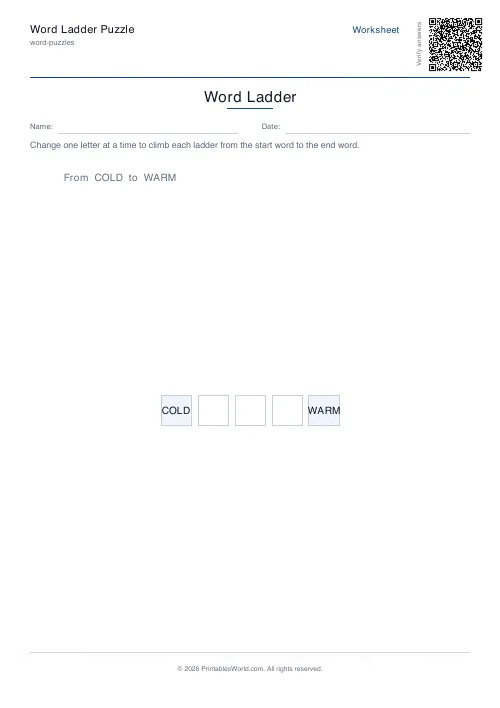
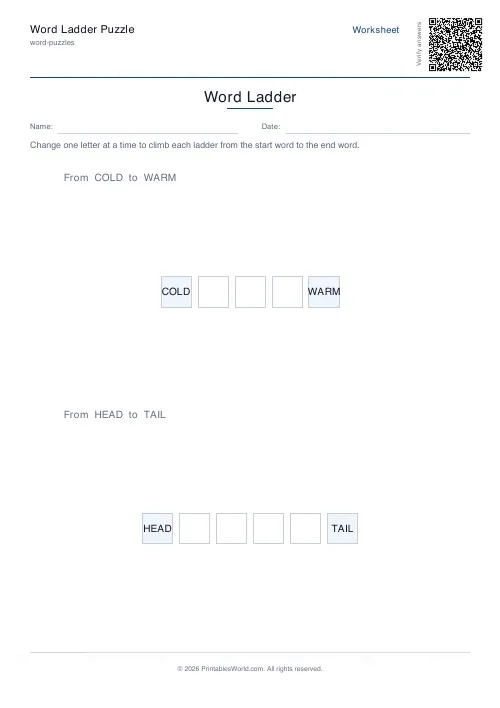
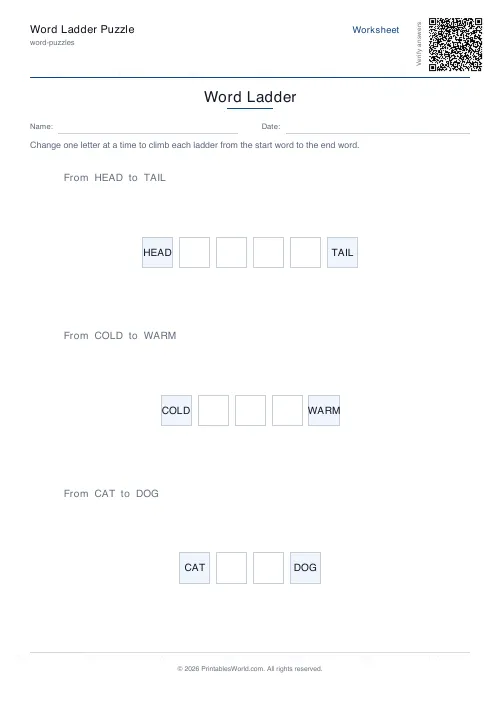
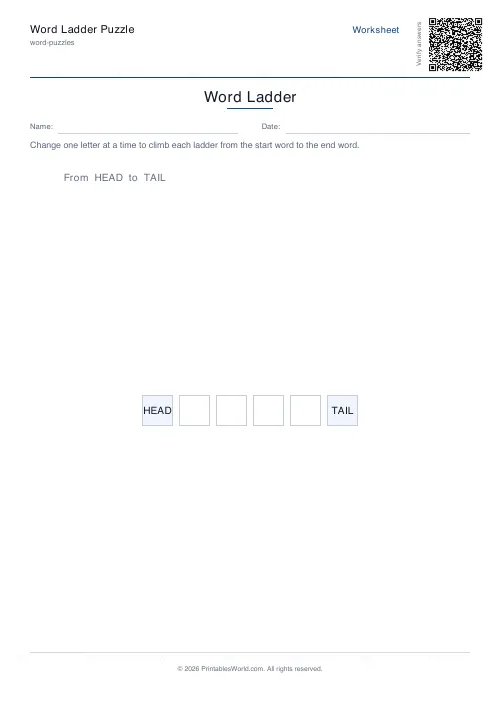
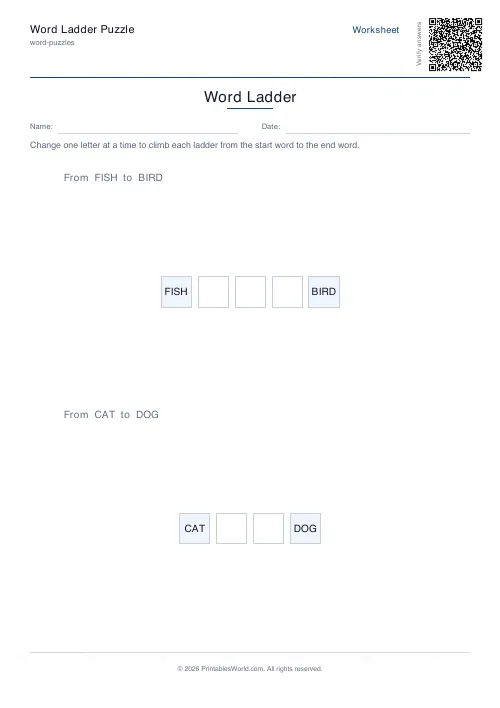
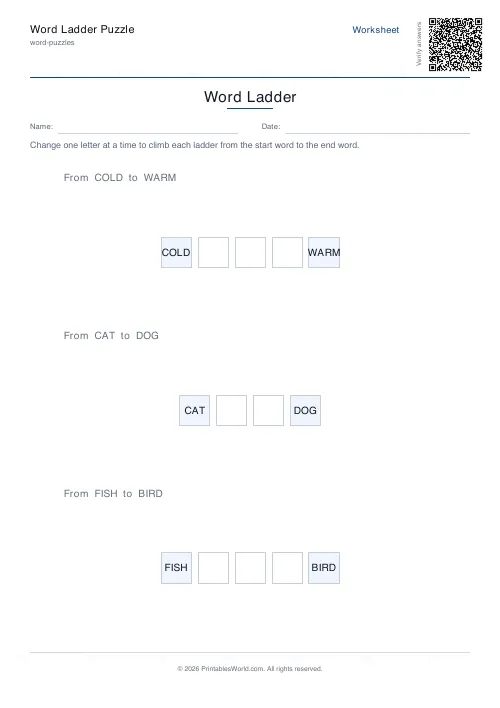
Word ladders: a start word, an end word, and empty rungs between them. Change one letter at a time to climb from one to the other. One to three ladders a sheet, with an answer key.
People also used
Feedback
Spotted something off with this tool?
One letter at a time
Each puzzle prints a start word at the bottom and an end word at the top, with empty boxes for the rungs in between. Every rung must differ from the one below it by exactly one letter, and every rung must be a real word.
One to three ladders a sheet, drawn from a bank of eight, with the answers on a separate page.
Every step really does change one letter
Worth stating, because it is easy for a ladder to be printed with a step that breaks its own rule — and a solver who spots one has been told the puzzle is impossible when they were right and the sheet was wrong.
Every rung in every ladder here is verified: same length as its neighbour, exactly one letter different, and a genuine word.
What it actually trains
Phoneme manipulation, mostly, which is a phonological skill rather than a vocabulary one.
Changing cat to cot means holding a word in mind, swapping one sound, and checking whether the result is a word. That is the same operation as segmenting and blending, done in reverse, and it is one of the better predictors of early reading.
It is also a genuine search problem. There are usually several routes, and the printed one is only the one that fits the boxes.
Accept any valid answer
The key gives one route. Others exist, and a child who found a different chain of real words with one-letter steps has solved the puzzle properly.
Mark against the rule rather than the key. If their chain is longer than the boxes allow, that is worth a conversation about efficiency rather than a cross — finding a shorter route is a second, harder puzzle.
Working it from both ends
The technique worth teaching, and children rarely find it alone.
Working forwards from the start is a search with no destination in sight. Working from both ends towards the middle halves the depth, and it usually makes the meeting point obvious — particularly on the longer ladders, where the middle rungs are the hardest.
Lewis Carroll invented these
He called them Doublets, and published them in Vanity Fair in 1879. The examples he set are still the ones everybody uses: HEAD to TAIL, COLD to WARM, APE to MAN.
They are also a real object in mathematics — a word ladder is a path through a graph whose vertices are words and whose edges join words one letter apart, which is a neat and genuinely useful thing to show an older class.
What the generator asks for
Ladder count (1 to 3), a title, an instruction line you can rewrite, optional Name and Date fields, and the answer key. A4 or US Letter, printed at 100%.
FAQs
Quick answers
What is a word ladder?
A puzzle invented by Lewis Carroll in 1877. You transform one word into another by changing a single letter at each step, with every step being a real word.
How many puzzles per page?
One to three ladders per sheet. Two is the comfortable default.
Is there only one valid solution?
No. Most ladders have several valid paths. The answer key prints one canonical solution; any other sequence of one-letter steps is also correct.
How long are the ladders?
Built-in ladders use four to six rungs, picked to be solvable for ages 9 and up.
Related tools
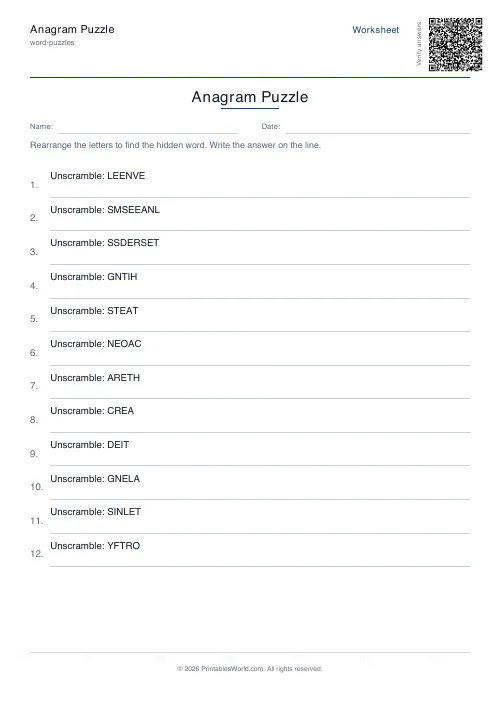
Anagram Puzzle Generator
Rearrange the letters to find the hidden word.
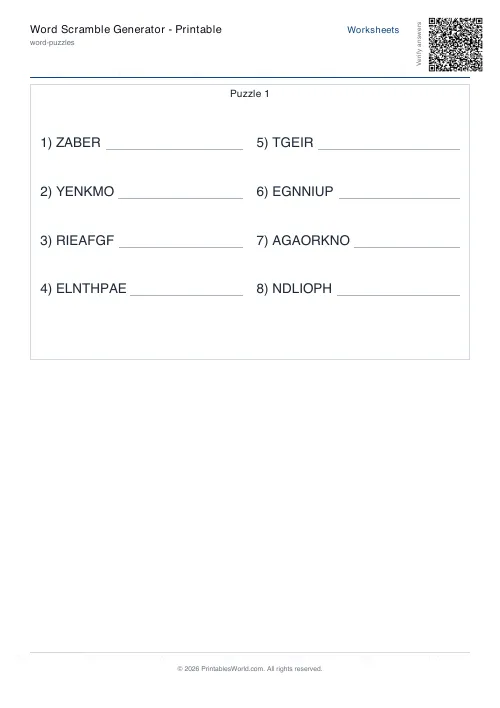
Word Scramble Generator: Printable
Turn your word list into printable scrambled-letter worksheets with optional answer keys.
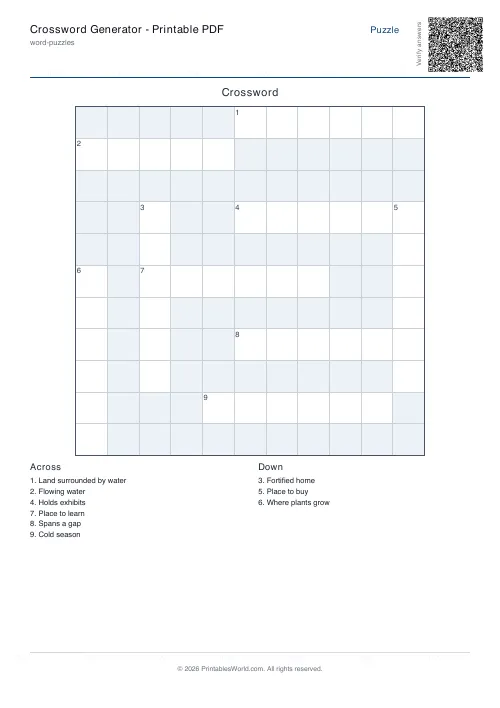
Crossword Generator: Printable PDF
Custom word lists into printable crossword puzzles with numbered clues.
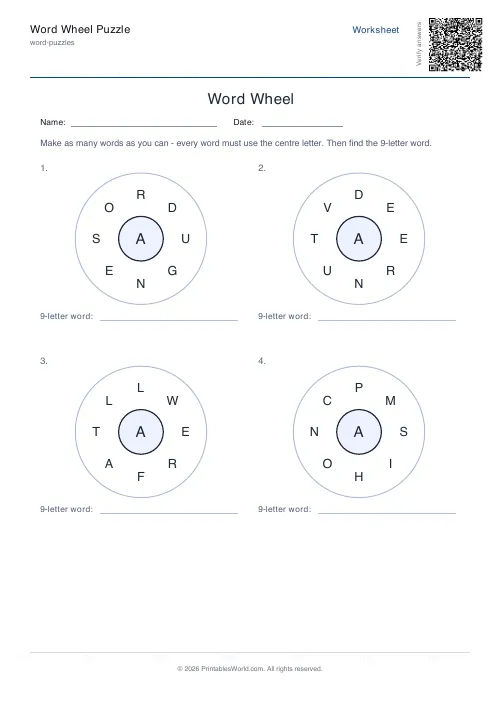
Word Wheel Puzzle
Find words and the nine-letter word from a letter wheel.
Further reading
Literacy & Spelling
Do word searches help spelling? What works
Do word searches help spelling, or just fill time? What they practise, what the evidence suggests, and how to turn a spelling list into useful recall practice.
8 min read
Word Puzzles
Sight words: the complete teaching guide
Sight words are usually taught as words to memorise. Most of them are partly decodable, and treating them that way works better. Here is how, and how many to teach at once.
6 min read
Word Puzzles
Phonics at home: CVC words, blends and beyond
The order matters more than the materials, and one small thing, saying pure sounds rather than "buh" and "cuh", makes blending dramatically easier.
6 min read
More like this
- Crossword Generator: Printable PDF
- Word Scramble Generator: Printable
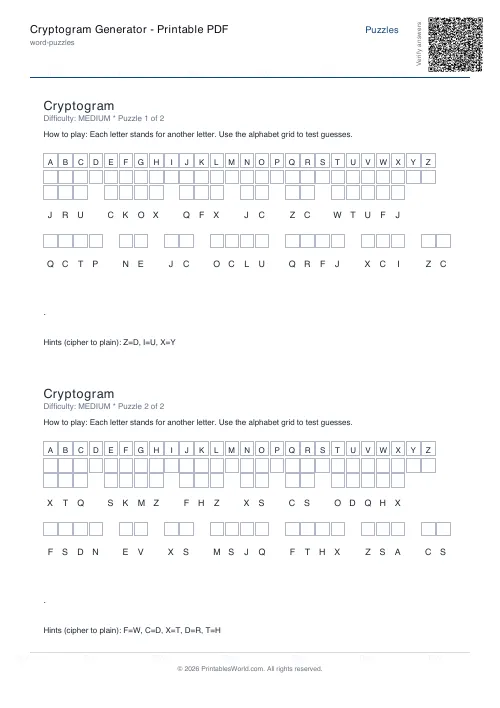 Cryptogram Generator: Printable PDF
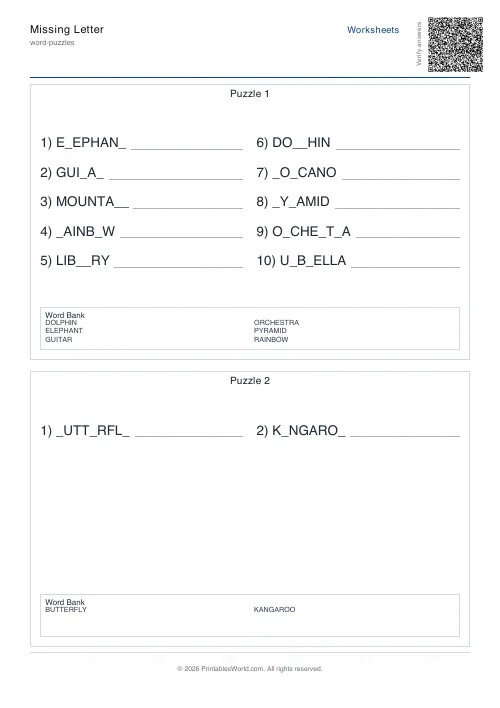 Missing Letter Generator
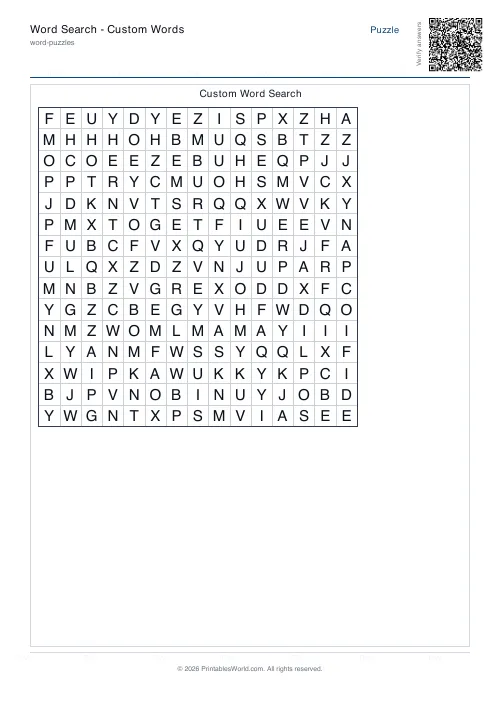 Word Search: Custom Words
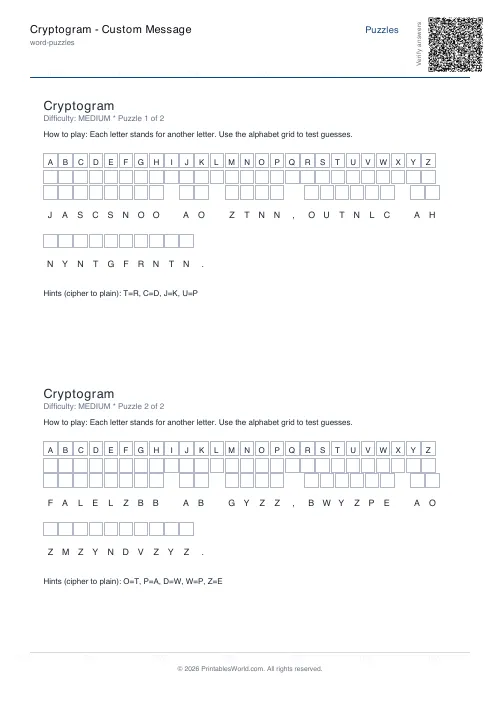 Cryptogram: Custom Message
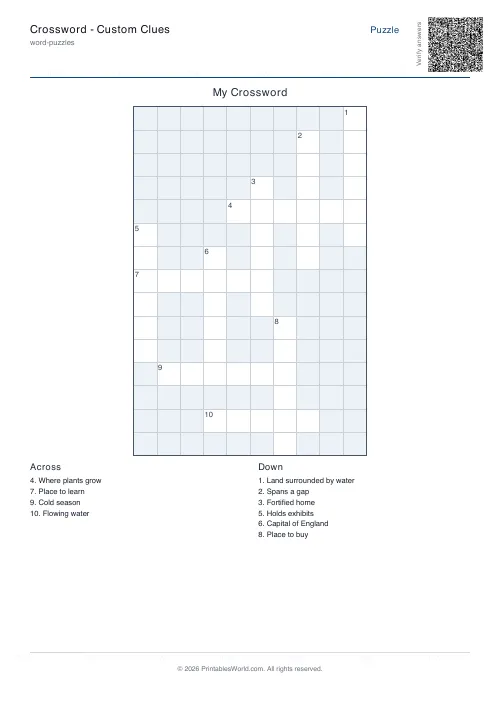 Crossword: Custom Clues
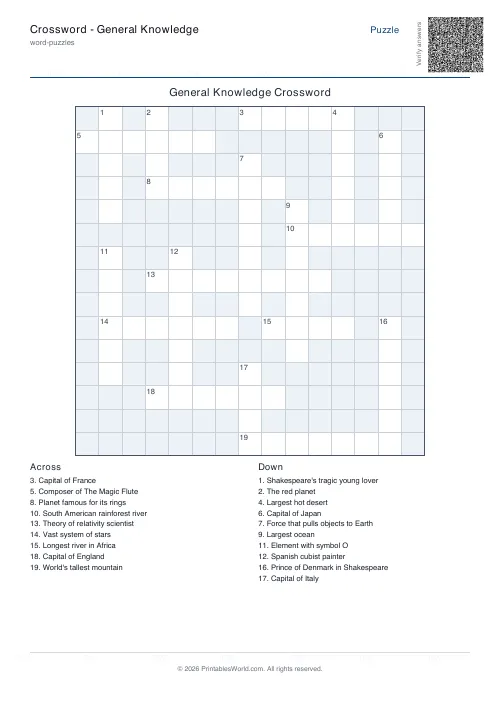 Crossword: General Knowledge
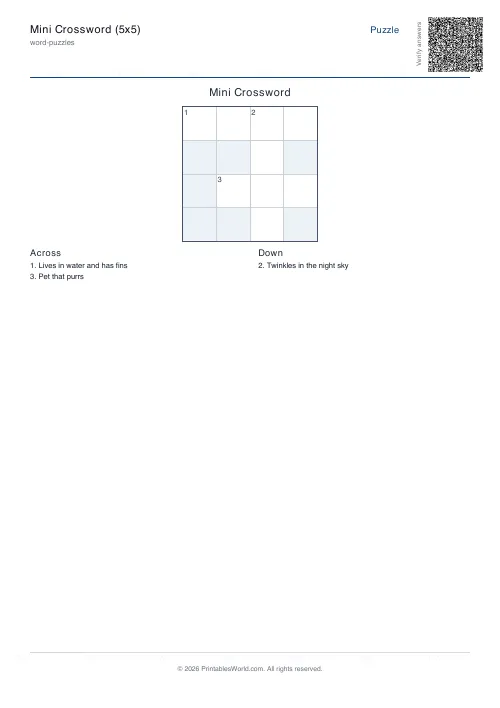 Mini Crossword
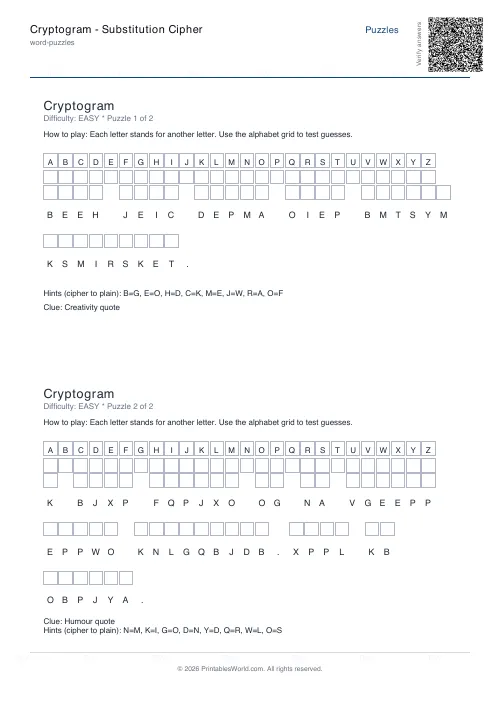 Cryptogram: Substitution Cipher
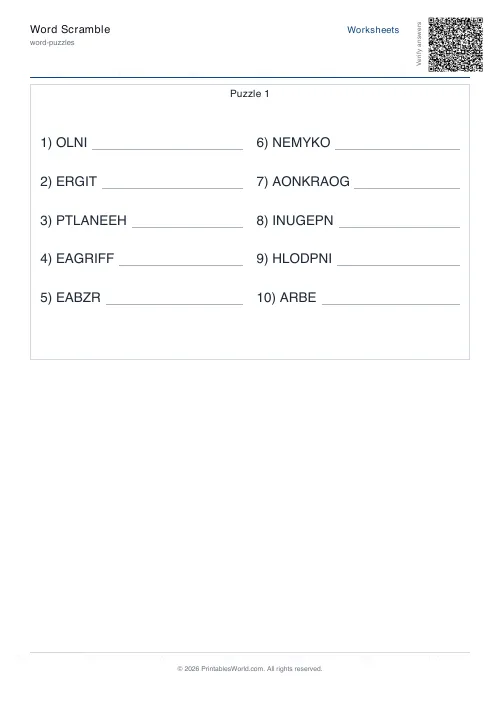 Word Scramble Generator
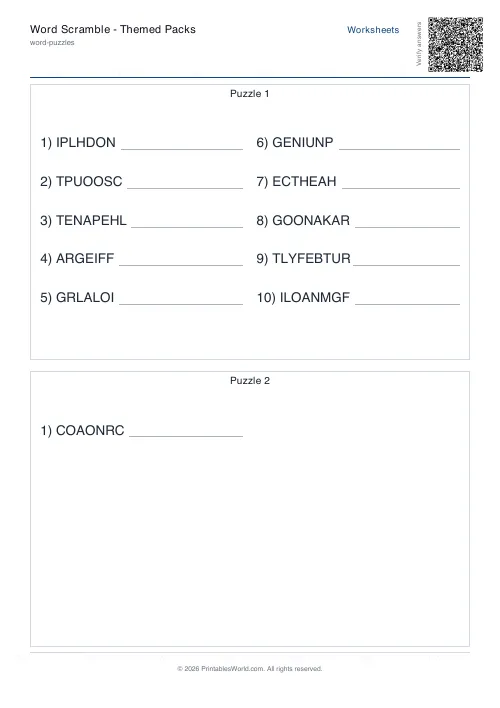 Word Scramble: Themed Packs
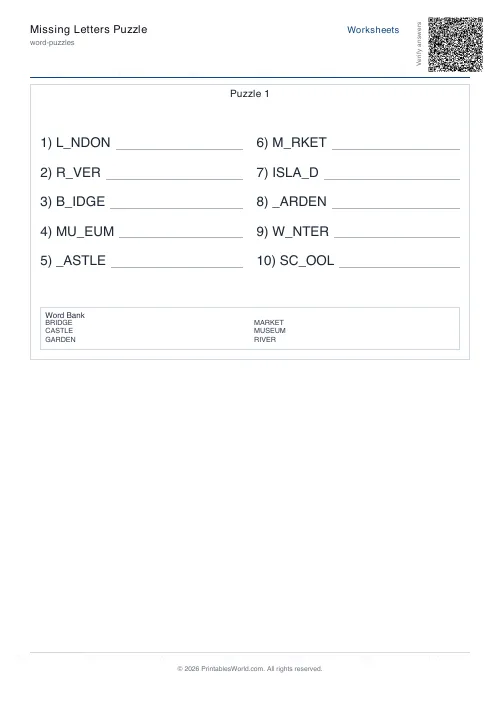 Missing Letters Puzzle
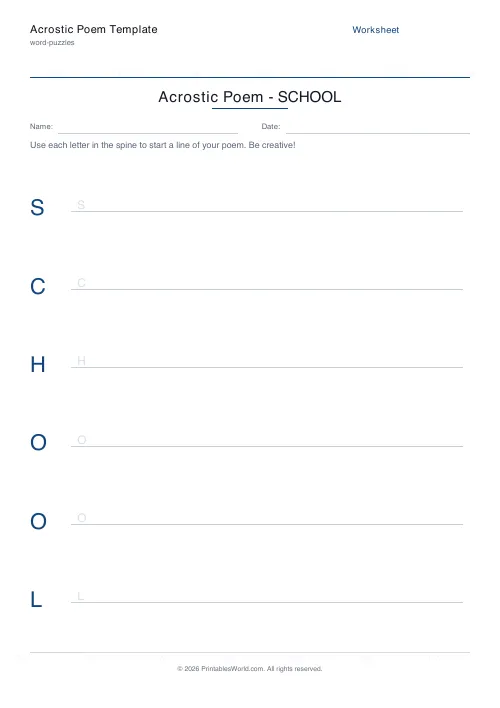 Acrostic Poem Template