What this tool does
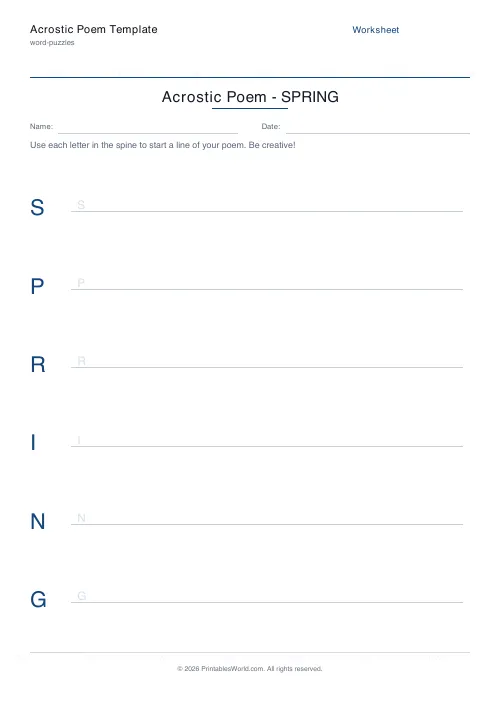
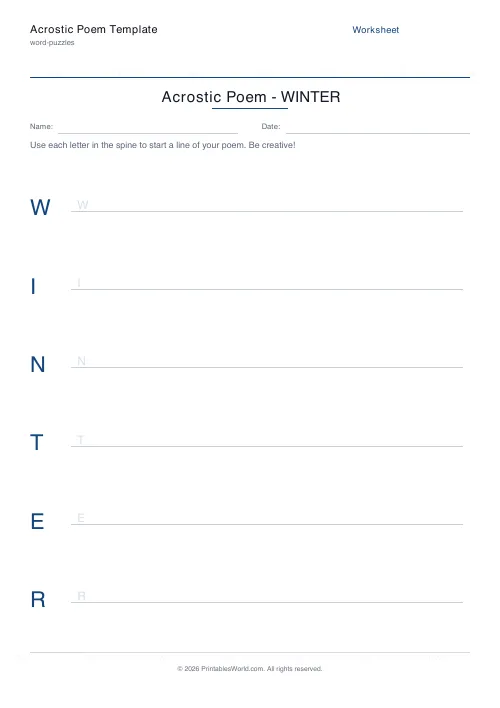
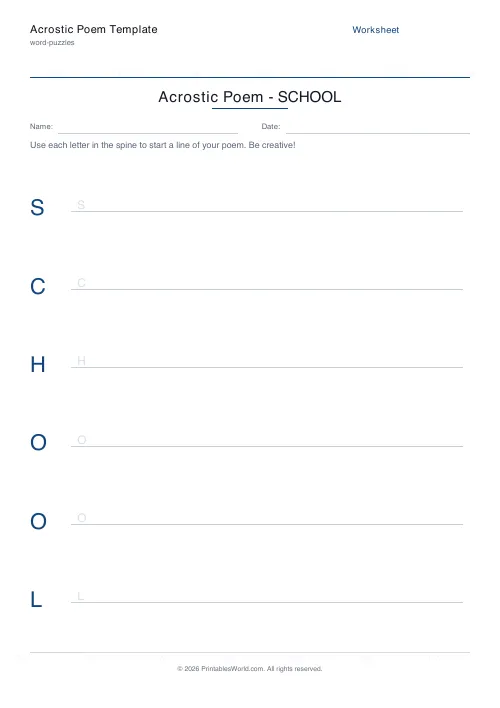
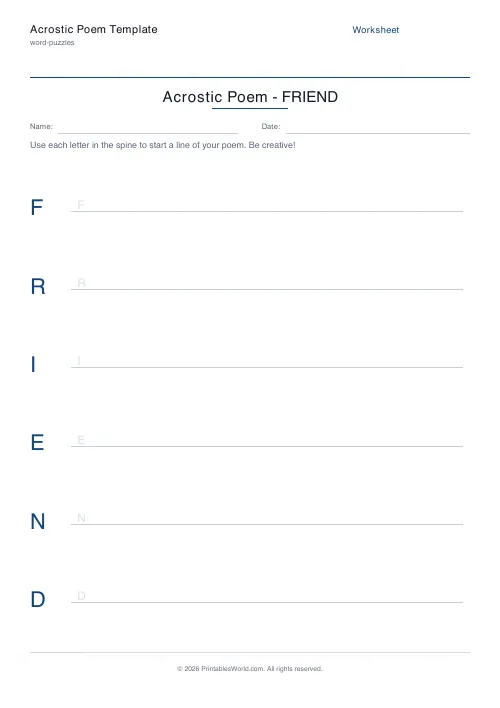
Your chosen word printed down the page in large coloured letters, with a writing line beside each one. Type any word; the letters become the poem's spine.
People also used
Feedback
Spotted something off with this tool?
One letter per line, down the page
Type a word and it prints vertically, one large coloured letter per row, with a ruled line beside each. Each line of the poem starts with the letter on its row.
The row height adjusts to the length of the word, so a four-letter spine gives generous lines and a ten-letter one fits without spilling onto a second page.
Why acrostics work with reluctant writers
Because the hardest part of writing a poem is deciding how to start, and this decides it for you eleven times over.
Every line has a fixed first letter, which is a constraint rather than a blank. Constraints are easier than freedom for most writers and dramatically easier for children, which is why the form gets used in primary classrooms far more than its literary reputation would suggest.
It is also finishable. A six-letter word is a six-line poem, visibly, and a child can see how much is left.
Choosing the spine word
Length first. Four to eight letters is the working range. Ten is a long poem for a nine-year-old and three is over before it starts.
Then look at the letters. Any word with a Q, X, Z or J in it will stall exactly there, and the child will spend more time on that one line than on all the others together. SPRING and FRIENDS are easy. QUIZZES is a punishment.
A child's own name is the classic use and works well because they care about it, though watch the awkward letters — a name with an X in it needs a plan.
Making it more than a word list
The default outcome of an acrostic is one adjective per line, which is a vocabulary exercise wearing a poem's clothes.
Ask for a whole phrase on each line, and for the lines to connect. "Sunlight on the classroom floor" beats "Sunny". Better still, ask that the poem make sense read straight through, ignoring the letters — that constraint turns it from a list into a piece of writing, and it is a genuinely hard task for an older student.
Beyond poetry
It works as a revision format. Spine word PHOTOSYNTHESIS, and each line has to state something true about it. The awkward letters become the interesting problem rather than a nuisance.
It also works for class rules, for a personal profile at the start of term, and for a card, where the spine is somebody's name and the lines are about them.
What the generator asks for
The spine word, a title, an instruction line you can rewrite, and optional Name and Date fields. A4 or US Letter.
Print at 100% on A4 or US Letter.
FAQs
Quick answers
What is an acrostic poem?
A poem where the first letter of each line spells out a word or phrase when read top-to-bottom. A creative way to celebrate any topic.
How long can my spine word be?
Anywhere from three to about ten letters works well on a single page. Longer words shrink the writing space; shorter ones leave more room per line.
Are there any built-in word ideas?
Yes. Try seasonal words like SPRING, WINTER or themes like HAPPY, KINDNESS, OCEAN. Or use any word you like.
Is there an answer key?
No. Acrostic poems are open creative writing, so each student's sheet will be unique.
Related tools
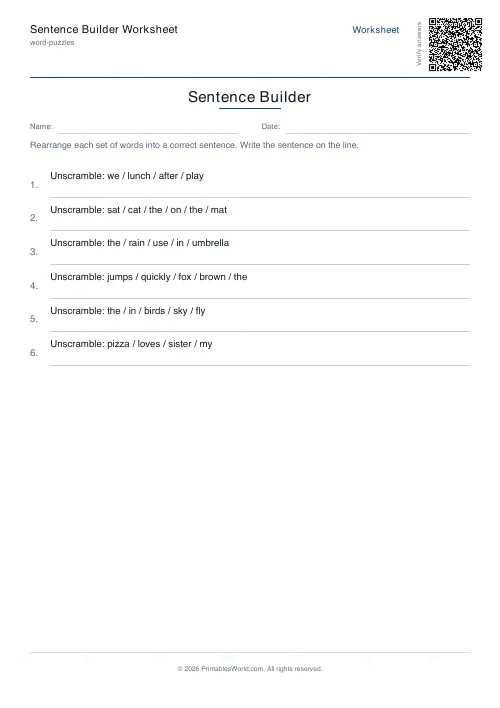
Sentence Builder Worksheet
Unscramble the words to build a correct sentence.
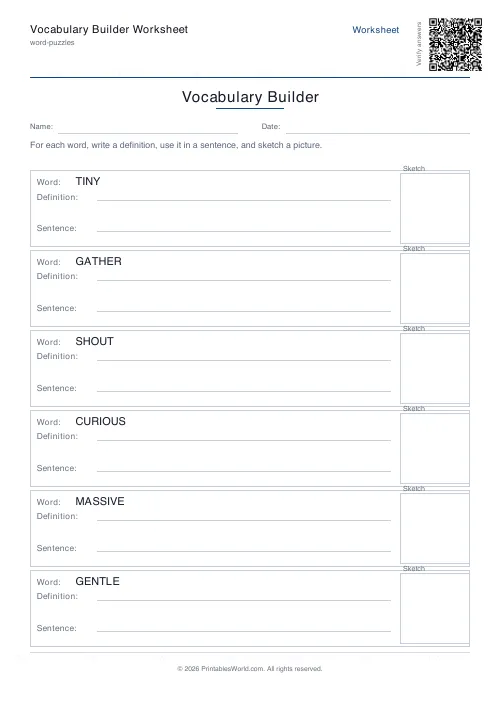
Vocabulary Builder Worksheet
Define, use in a sentence, and sketch. One word at a time.
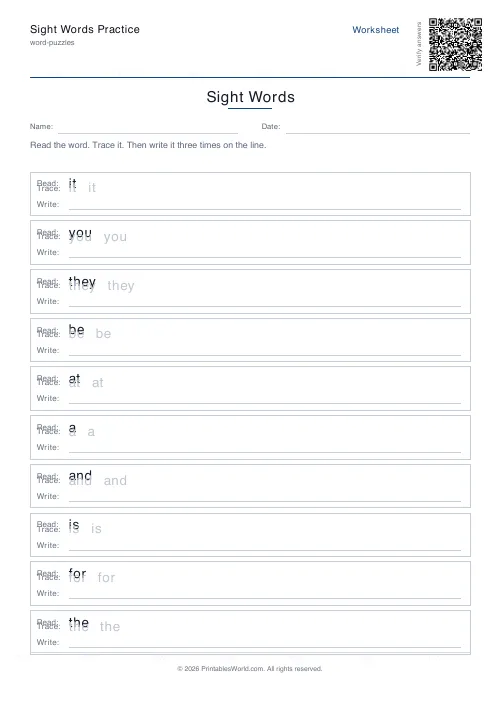
Sight Words Practice
Read, trace, and write high-frequency sight words.
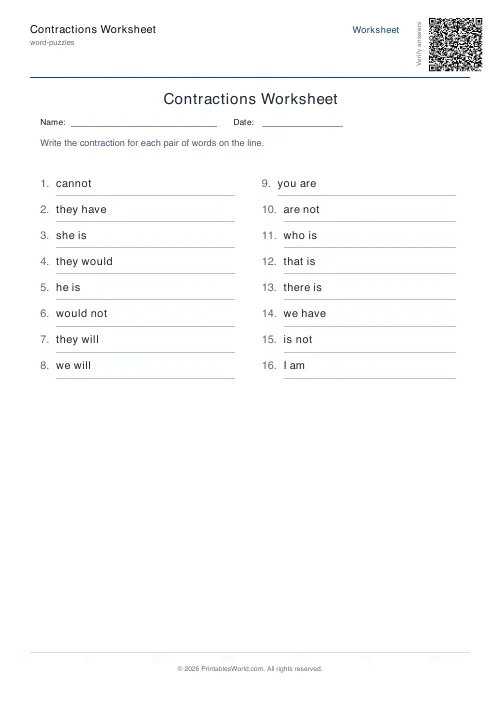
Contractions Worksheet
Write the contraction for each word pair.
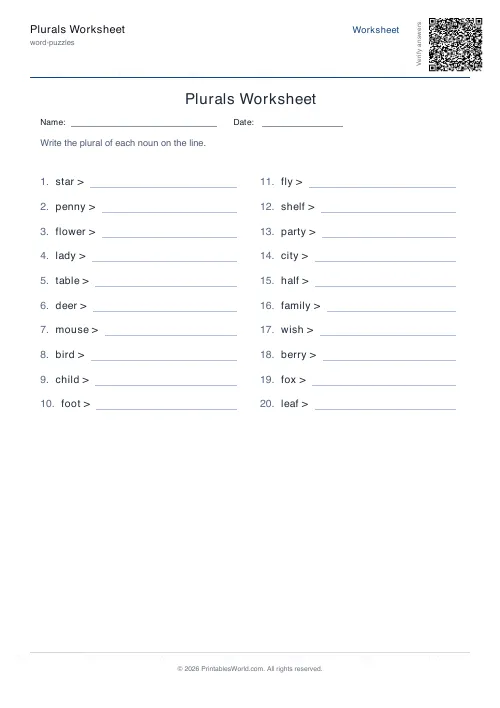
Plurals Worksheet
Write the plural of each noun.
Further reading
Word Puzzles
Sight words: the complete teaching guide
Sight words are usually taught as words to memorise. Most of them are partly decodable, and treating them that way works better. Here is how, and how many to teach at once.
6 min read
Literacy & Spelling
Do word searches help spelling? What works
Do word searches help spelling, or just fill time? What they practise, what the evidence suggests, and how to turn a spelling list into useful recall practice.
8 min read
Word Puzzles
Phonics at home: CVC words, blends and beyond
The order matters more than the materials, and one small thing, saying pure sounds rather than "buh" and "cuh", makes blending dramatically easier.
6 min read
More like this
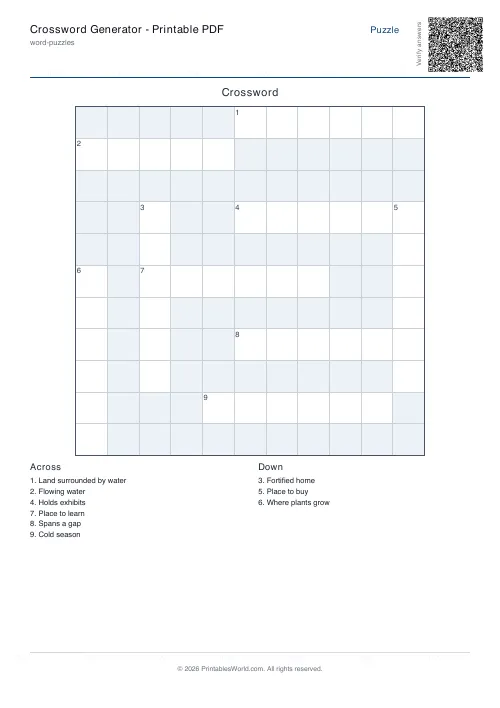 Crossword Generator: Printable PDF
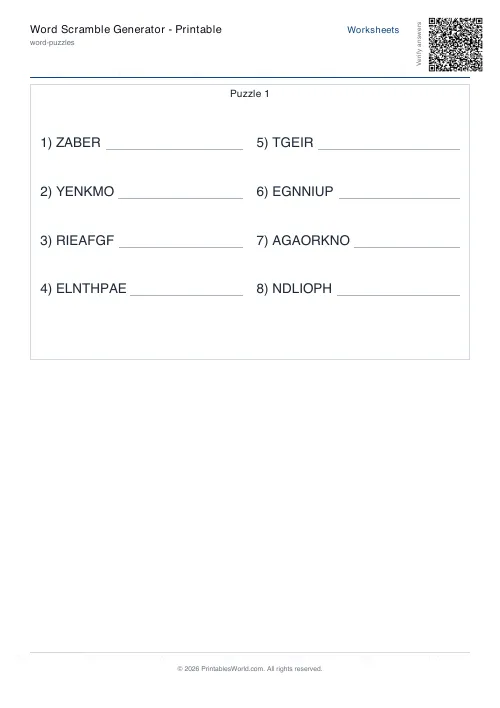 Word Scramble Generator: Printable
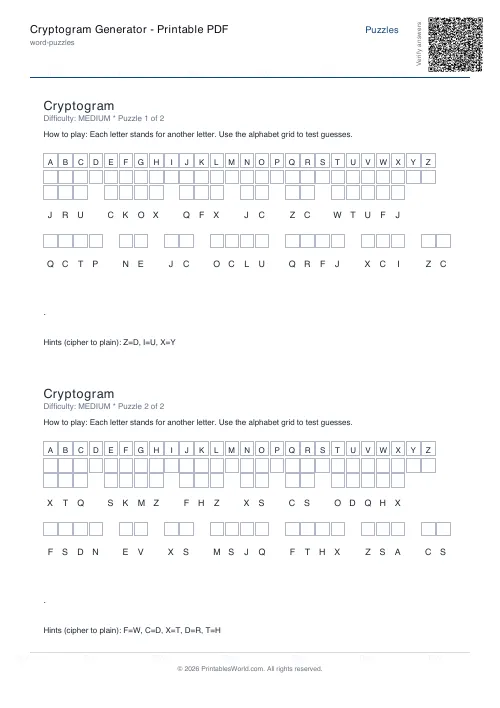 Cryptogram Generator: Printable PDF
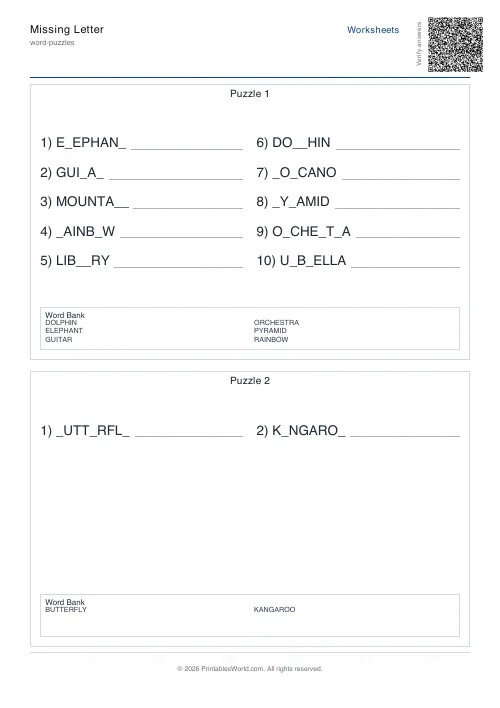 Missing Letter Generator
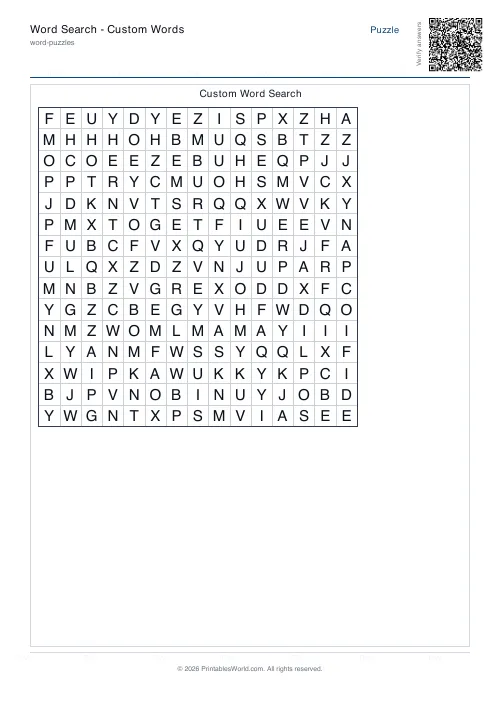 Word Search: Custom Words
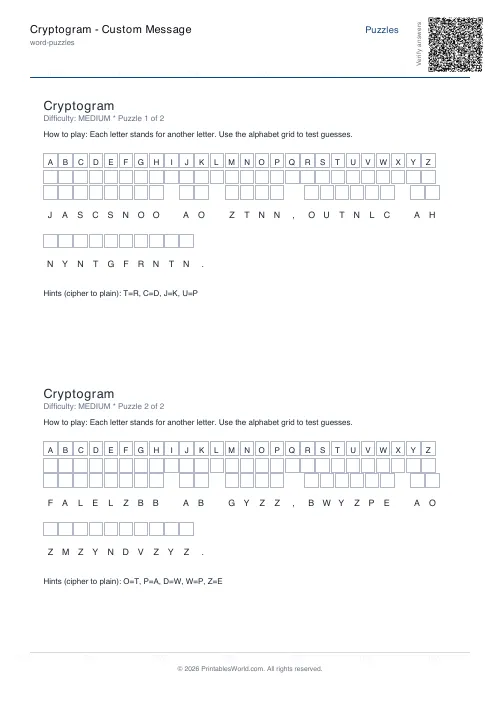 Cryptogram: Custom Message
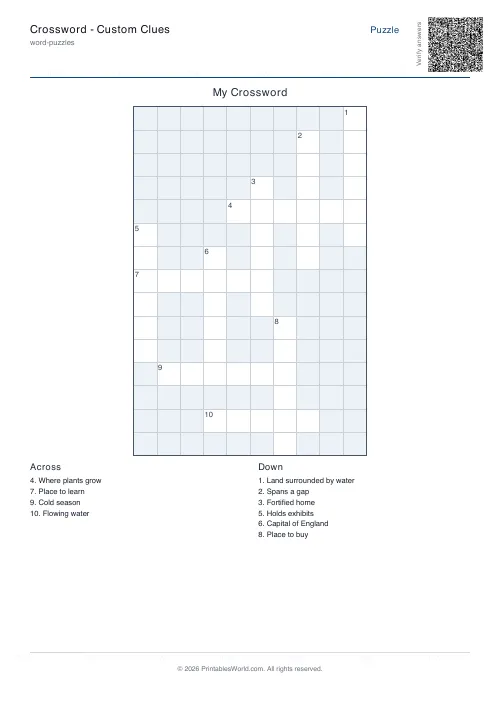 Crossword: Custom Clues
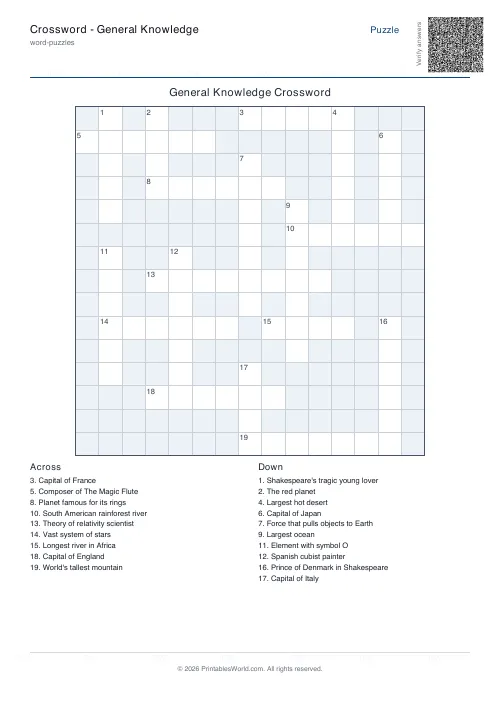 Crossword: General Knowledge
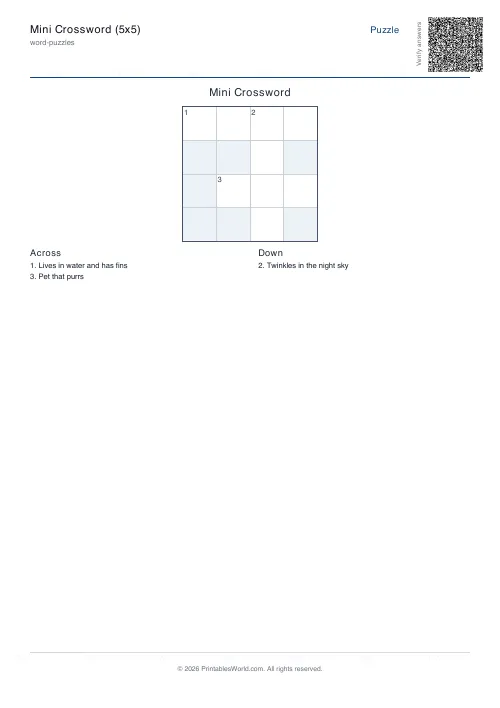 Mini Crossword
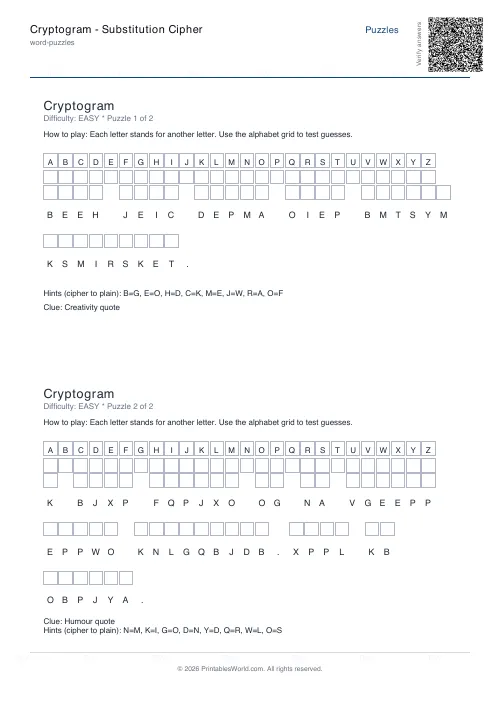 Cryptogram: Substitution Cipher
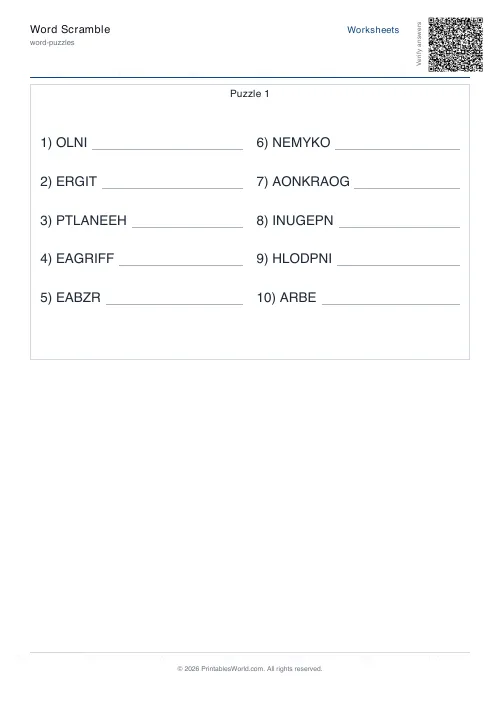 Word Scramble Generator
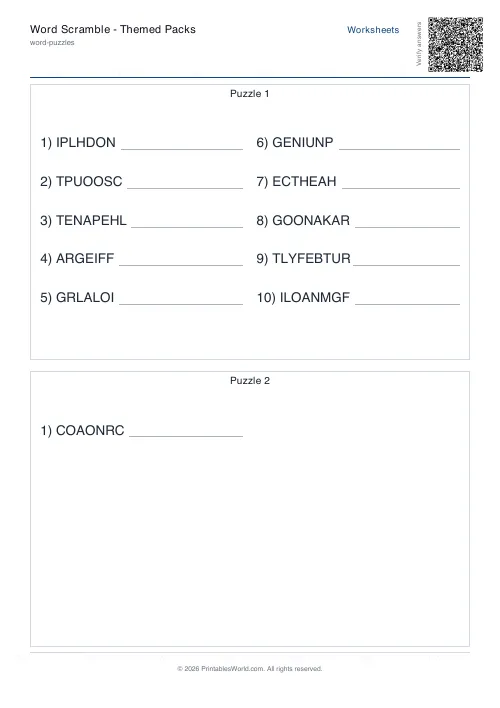 Word Scramble: Themed Packs
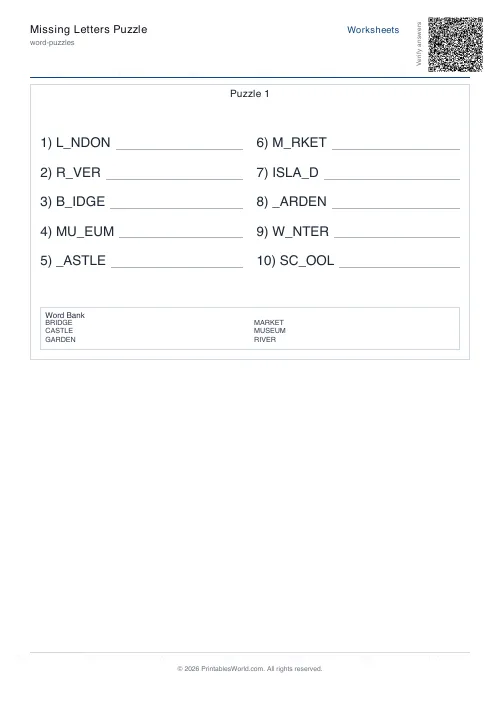 Missing Letters Puzzle
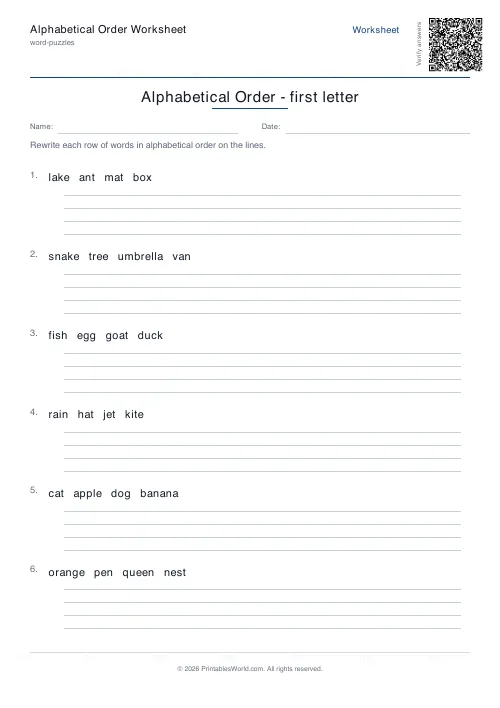 Alphabetical Order Worksheet