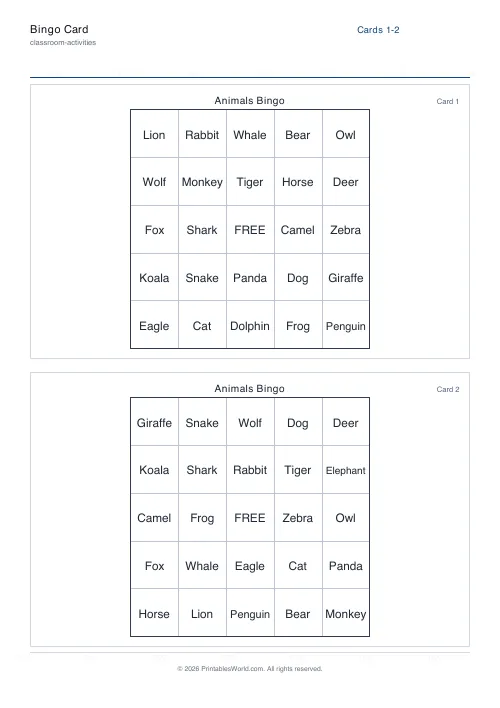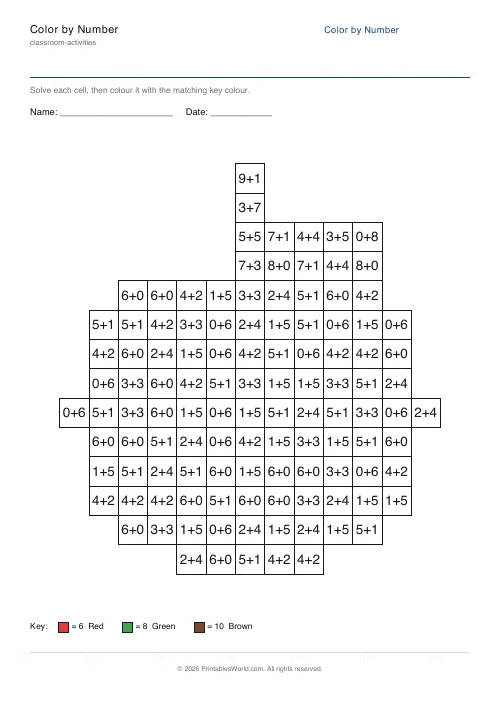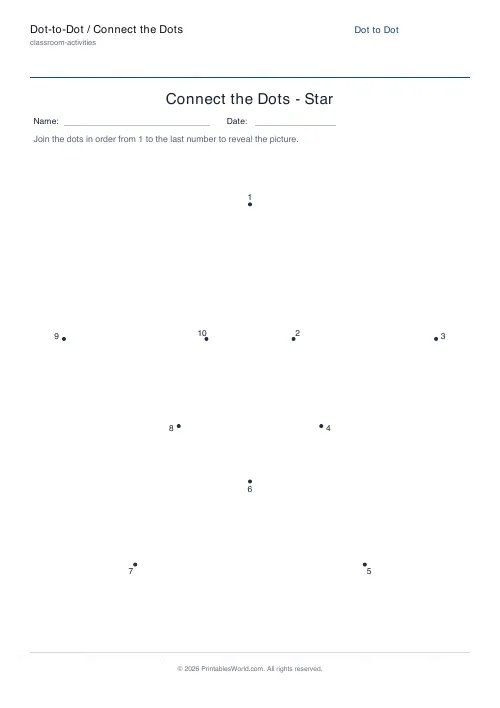
What this tool does
A dot-to-dot puzzle on one branded page. Ten outlines to choose from, and the dots can be labelled with numbers or with letters, so the same picture drills counting for one group and the alphabet for another. Optional faint dashed guide line for very young children, optional finished outline as an answer key, and a title with name and date fields. Pure geometry, so it prints crisp and costs almost nothing in ink.
People also used
Coloring Page Maker
Create printable coloring pages with mandala, geometric, and animal templates in any line thickness.
Scissors / Cutting Practice Sheets
Printable scissor-skills sheets with straight, zig-zag, wavy, curved, spiral and shape cut lines.
Alphabet & Number Coloring Pages
Make big bubble-outline coloring pages of letters, numbers, or both. Solid or dotted, ready to print.
Feedback
Spotted something off with this tool?
Join the dots, get a picture
A sequence of small numbered dots that becomes a recognisable outline once a child joins them in order. Ten pictures ship with it: a star, a heart, a house, a fish, a sailboat. A tree, a flower, a cat, a rocket, an umbrella.
Each one uses enough dots that the finished shape is obviously the thing, and few enough that a four-year-old does not lose their place halfway round. That balance is the only difficult part of designing one of these, and it is why more dots is not better.
Everything is drawn as geometry rather than clip art, so it prints sharp at any size and uses almost no ink.
Numbers or letters, same picture
Switch the labels to letters and the identical outline becomes alphabet-order practice instead of counting practice.
More useful than it sounds in a mixed class. Hand the number version to the group still working on sequence to twenty and the letter version to the group on the alphabet, and both are doing their own work on what looks from two desks away like the same worksheet. Nobody can tell who got the easier sheet. At that age, that matters.
It is also how you revisit a picture a fortnight later without it being obviously the same task.
The guide line, and who it is for
Off by default. Switch it on and a faint dashed line runs the route between the dots.
That turns the puzzle into a tracing exercise, which sounds like giving the game away and is exactly right for a child who cannot yet hold the sequence in their head. They still have to find the next number; they just cannot get catastrophically lost. Take it away once the picture comes out right twice in a row.
The answer key prints the completed outline and is for the adult, not the child.
What it is actually training
Pencil control, obviously. The more interesting part is one-to-one correspondence: matching a label to a dot, then the next label to the next dot, without skipping any and without doing one twice.
That is the same underlying skill as counting objects accurately and as tracking a line of text with a finger, and a child who wanders on a dot-to-dot is often a child who will wander on a page of print. It is a cheap thing to notice.
And the child ends up with a drawing they made. Morning work, a calm-down activity, a fast finisher, or something to send home that a parent will actually put on a fridge.
FAQs
Quick answers
What age are these dot-to-dot puzzles for?
They suit children roughly 3 to 8 years old. Younger children do well with the number puzzles and the optional guide line, while older children can complete the letter versions and the pictures with more dots unaided.
Can I use letters instead of numbers?
Yes. Switch the label style to letters and the dots are labelled A, B, C and so on, which is a great way to practise the alphabet in order. The same picture works with either numbers or letters.
What is the guide line option for?
The guide line prints a faint dashed path between the dots so very young children can still follow the route to the finished picture. Leave it off for a normal puzzle where the child works out the order themselves.
Is there an answer key?
Yes. Turn on the answer key option to print the completed outline so an adult can check the result at a glance. Print one copy with the key for yourself and the rest without it for the children.
Related tools
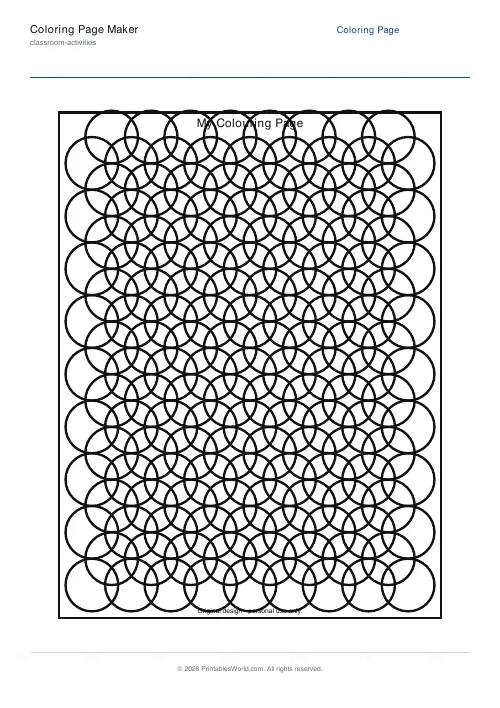
Coloring Page Maker
Create printable coloring pages with mandala, geometric, and animal templates in any line thickness.
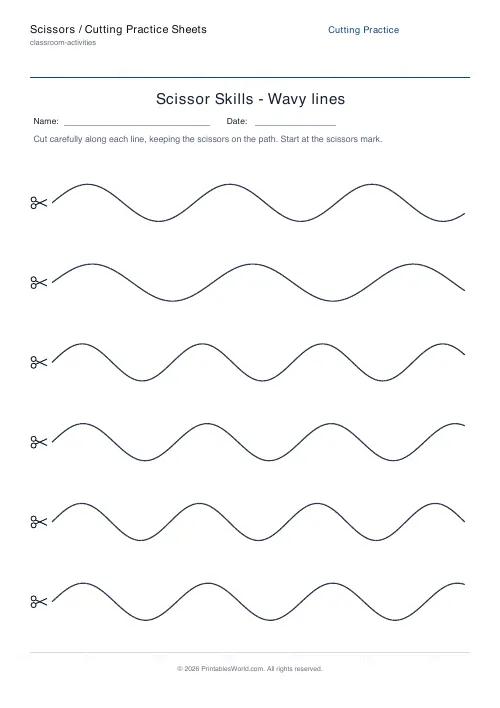
Scissors / Cutting Practice Sheets
Printable scissor-skills sheets with straight, zig-zag, wavy, curved, spiral and shape cut lines.
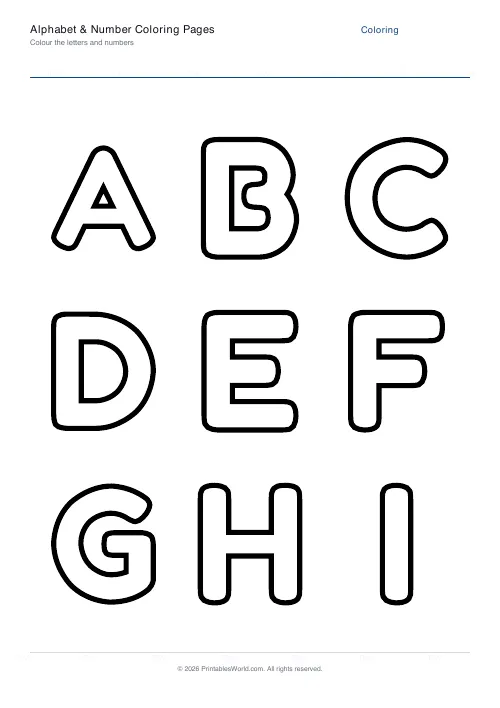
Alphabet & Number Coloring Pages
Make big bubble-outline coloring pages of letters, numbers, or both. Solid or dotted, ready to print.
Further reading
Classroom Activities
Escape room activities for the classroom: a how-to
A classroom escape room is a sequence of puzzles with a story on top. The design decision that matters most is whether groups work through them in order or all at once.
5 min read
Classroom Activities
Positive reinforcement in the classroom: charts that work
Reward charts work when they name a specific behaviour and fade over time. They backfire when they rank children publicly. Here is the difference in practice.
5 min read
Classroom Activities
20 classroom games that need zero prep
Games organised by the gap they fill: two minutes at the end of a lesson, ten minutes before assembly, or a whole wet lunchtime. Almost all need nothing but a voice.
6 min read