What this tool does
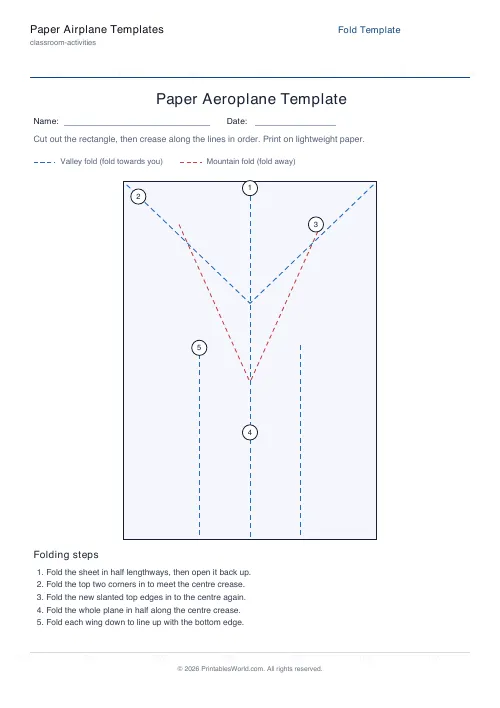
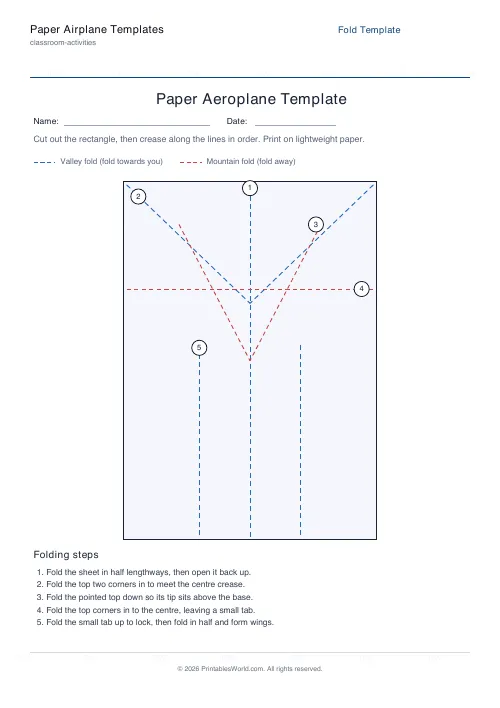
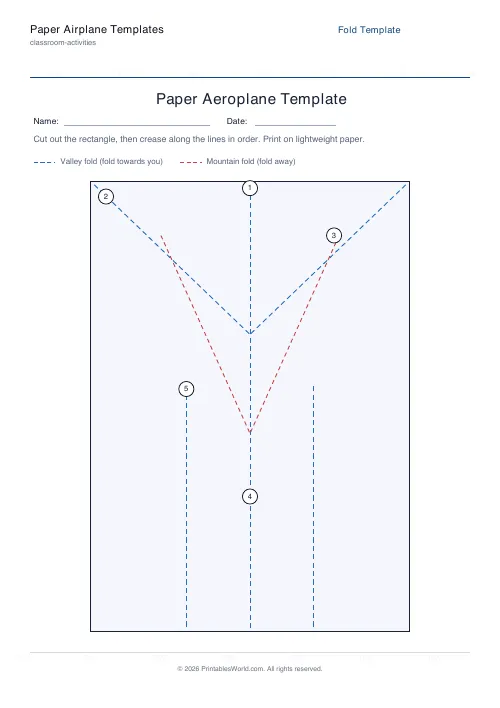
A fold template printed straight onto the sheet: dashed valley and mountain lines with numbered steps. Choose the plane style; step labels can be switched off.
People also used
Coloring Page Maker
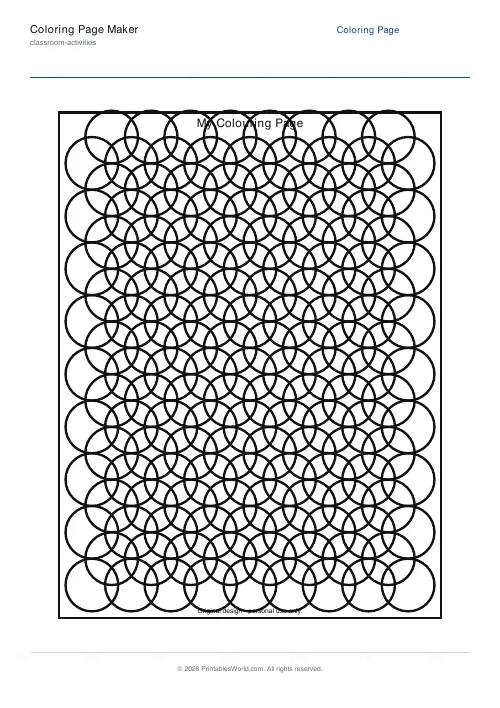
Create printable coloring pages with mandala, geometric, and animal templates in any line thickness.
Bingo Card Generator
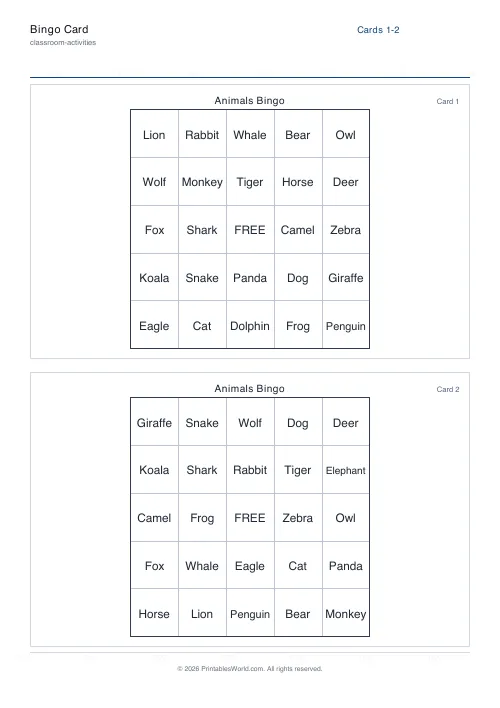
Generate unique printable bingo cards with custom words, FREE centre toggle, call sheet, and seeded shuffles.
Board Game Template
Printable snaking board game with Start, Finish, and themed milestone squares.
Feedback
Spotted something off with this tool?
The instructions are on the paper
A single rectangular sheet marked with dashed fold lines and numbered step labels. You fold along what is printed. No diagram on a screen, no guessing where the crease belongs.
Pick the style, and turn the step numbers off once the folder no longer needs them.
Valley and mountain
The two line types are not decoration. A valley fold brings the paper towards you and the crease sits at the bottom of a V; a mountain fold goes away from you and the crease is the ridge.
Getting one backwards is the commonest reason a plane comes out lopsided, and on a printed template you can see which is which instead of inferring it from a photograph.
Sharp creases matter more than accurate ones
Nobody says this. Every good folder knows it.
Run a fingernail or a ruler edge along every crease. A soft fold lets the wing lift in flight, the plane loses its shape after two throws, and no amount of careful measuring compensates. A slightly crooked plane with hard creases will outfly a perfectly symmetrical one with soft ones.
Why symmetry decides everything
A paper plane has no engine and no controls, so its flight is determined entirely by its shape. If one wing is a millimetre lower than the other, it turns. Every time.
Fold the sheet in half first and use that centre line as the reference for both wings, instead of folding one and then eyeballing the second to match it.
Making it a lesson
It is a genuinely good science investigation, because there is exactly one variable and an obvious measurement.
Change one thing — wing angle, a paperclip on the nose, a small upward bend at the back of each wing — and measure the distance over several throws. That nose weight is the interesting one: it moves the centre of gravity forward and usually makes the plane fly further and straighter, which surprises children who assumed lighter meant better.
Throw from the same spot, the same way, several times. One throw is a story; five throws is data.
Paper
Ordinary 80 gsm. Card is too stiff to crease cleanly and too heavy to glide, and thin paper will not hold a shape at all.
FAQs
Quick answers
What is the difference between the dart and the glider?
The dart has a sharp nose and narrow wings, so it flies fast and far in a straight line, great for distance. The glider has a folded-down blunt nose and wider wings, so it flies slowly and stays up longer. Great for hang time.
What do the coloured fold lines mean?
Blue dashed lines are valley folds (fold the paper towards you) and red dashed lines are mountain folds (fold it away from you). The numbered circles show the order of the folds and match the step list on the sheet.
What paper should I print on?
Standard printer paper works well, but lighter paper flies a little better and longer. Print on A4 or US Letter, cut out the marked rectangle, and crease each fold sharply for the best results.
Is this suitable for a classroom?
Yes. Turn on the Name and Date fields and the step-by-step folding guide, print one per child, and you have a self-contained activity that practises following instructions and explores how shape affects flight.
Related tools
Coloring Page Maker
Create printable coloring pages with mandala, geometric, and animal templates in any line thickness.
Bingo Card Generator
Generate unique printable bingo cards with custom words, FREE centre toggle, call sheet, and seeded shuffles.
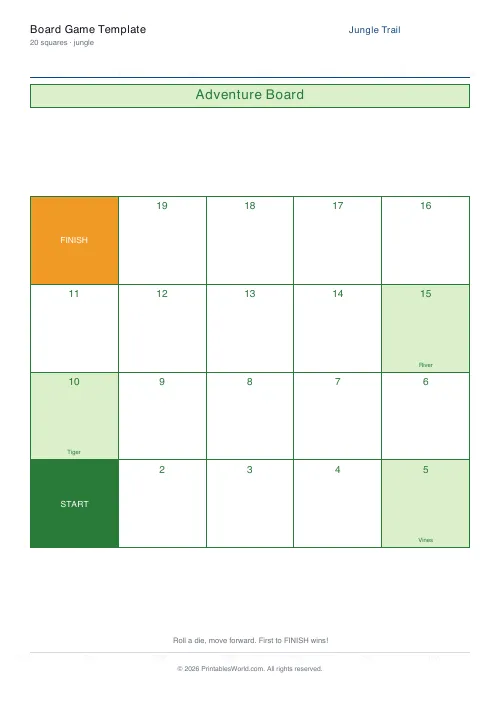
Board Game Template
Printable snaking board game with Start, Finish, and themed milestone squares.