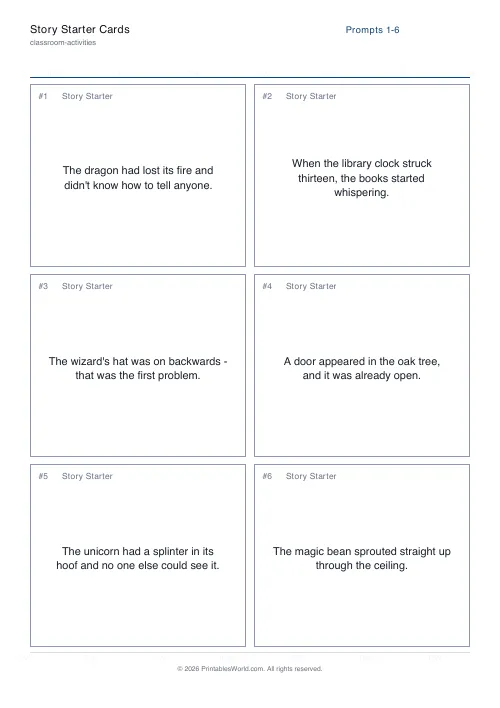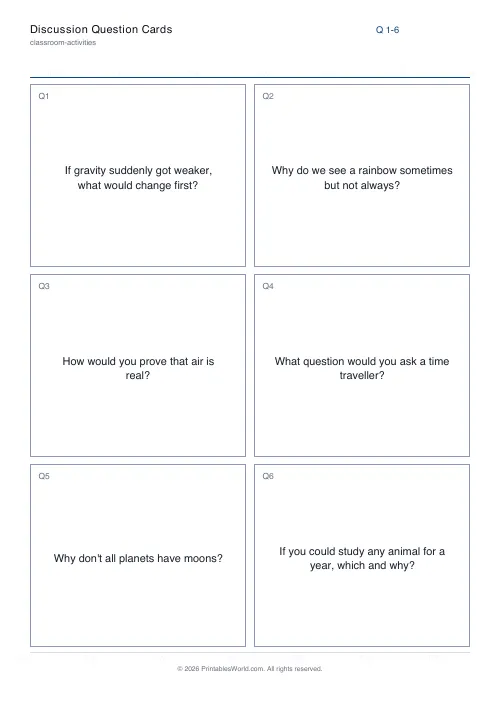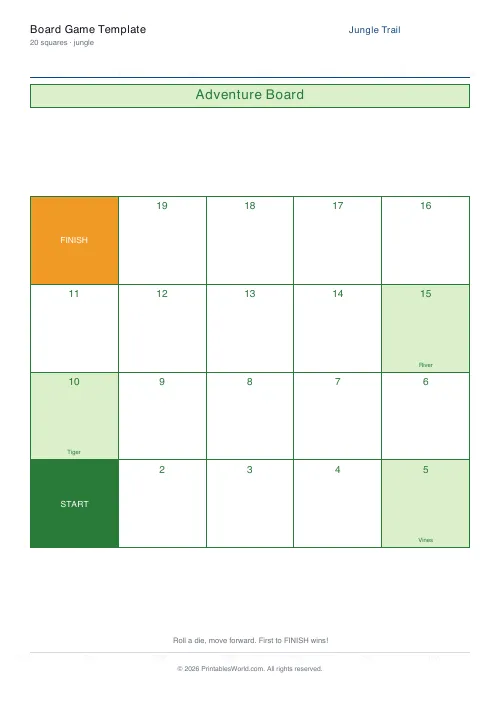
What this tool does
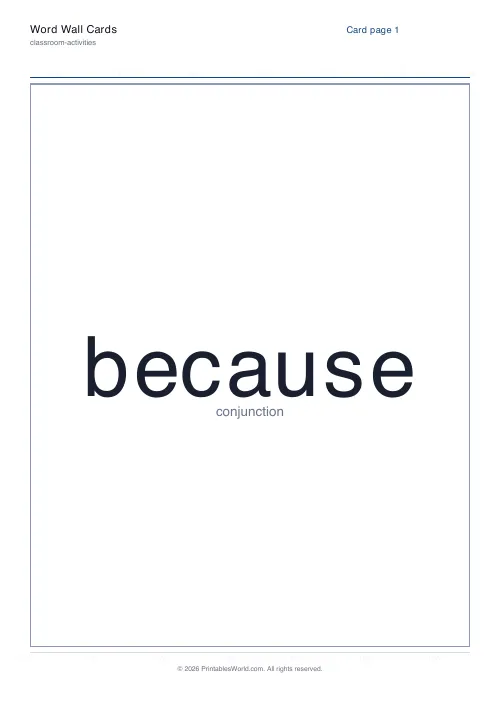
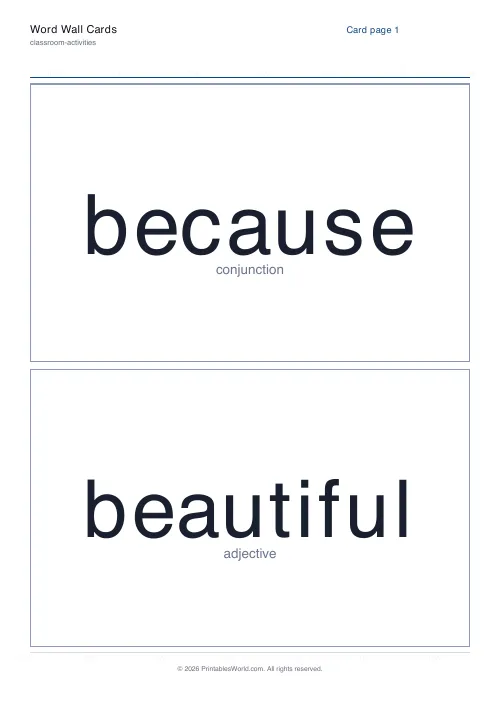
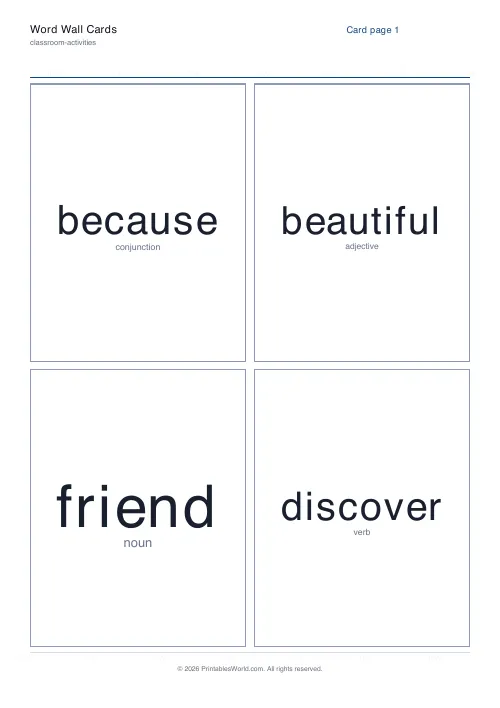
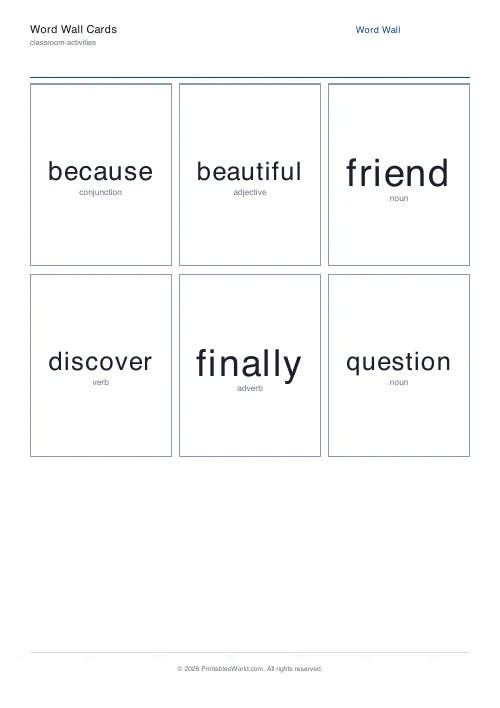
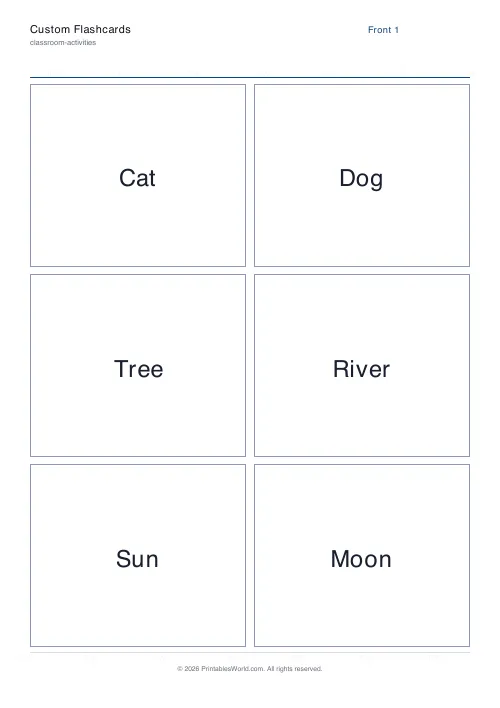
Large bold word cards for a classroom wall, with an optional small label under each word. One, two, four, six or nine to a page, in any letter case.
People also used
Feedback
Spotted something off with this tool?
Big words, cut out, on a wall
Type or paste a list and each word prints large and bold on its own card, with an optional smaller label underneath — a word class, a definition, a translation, a topic name.
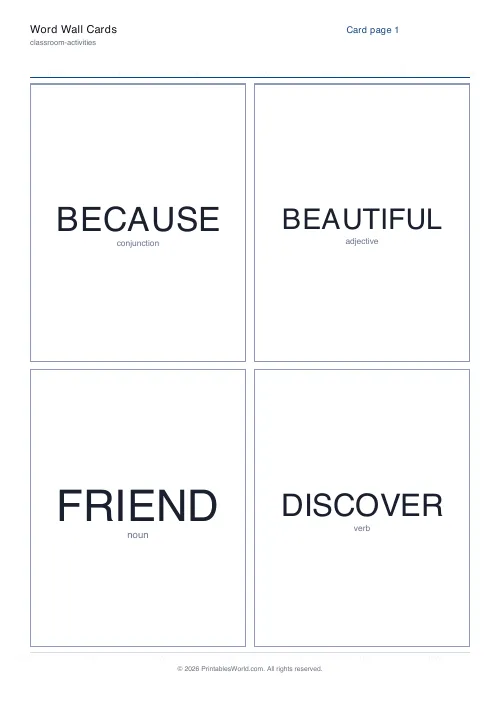
One, two, four, six or nine cards to a page. The letter case can be left exactly as you typed it, or forced into one of three: all caps, all lower, or capitalised.
Card size is a readability decision
A word wall only works if the words can be read from where the children sit.
One or two to a page gives cards readable across a room, which is what a wall display needs. Nine to a page gives cards for a table, a folder or a pocket, and they will be invisible from four metres away.
Decide where the cards are going before choosing, because reprinting a set at a different size is more annoying than getting it right first time.
Lowercase, almost always
The case setting matters more than it looks, and uppercase is the tempting wrong answer.
Children read lowercase far faster, because word shape carries information — ascenders and descenders give a word a silhouette, and UPPERCASE FLATTENS ALL OF IT INTO A RECTANGLE. Uppercase also does not match what they see in books.
Use lowercase for anything meant to be read. Reserve uppercase for a heading, or for a set aimed at a child who is still working on capitals.
The label is where the teaching happens
A wall of words is decoration. A wall of words with what they mean, what class they are, or what they translate to is a resource.
For vocabulary, put the definition in the label. For grammar, the word class. For a language lesson, the English. For a science topic, the unit or the symbol. It is a small field and it doubles what the display does.
Making it survive the term
Card rather than paper. Laminated if the set is going to be handled at all. Wall displays get pulled down by passing bags whatever you attach them with.
Print at 100% so every card is the same size — a set with one oversized card looks like a mistake from across the room, which is exactly the distance these are read from.
Beyond the wall
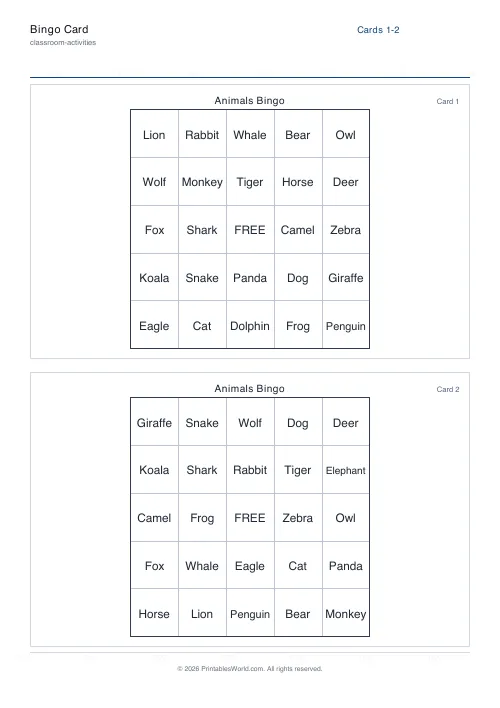
The same cards work as a sorting activity on a table, as flashcards, as a matching game against a second set of definition cards, and as labels for a display of objects.
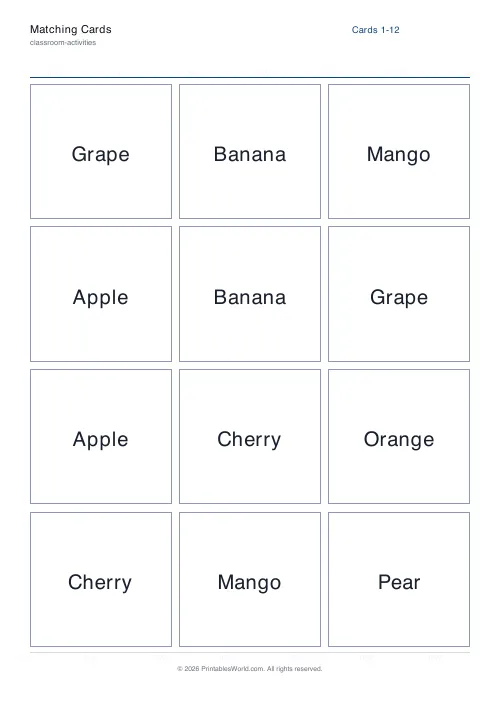
Print two sets at nine to a page and you have a pairs game. Print one set at one to a page and you have a display. Same list, different sheet.
FAQs
Quick answers
How big do the words print?
Each word is auto-sized to fill its card, so the fewer cards per page you choose, the bigger the words. Use 1, 2, or 4 per page for a wall that reads from across the room.
How do I add a part-of-speech or topic label?
Type the word, then a vertical bar, then the label on the same line. For example "because | conjunction". Tick "show labels" to print it under each word, or untick it to print the word alone.
Can I print everything in capitals?
Yes. Choose a letter case, As typed, UPPERCASE, lowercase, or Capitalised, and every card follows it, regardless of how you typed the words.
How many words can I add?
There is no hard limit. The PDF adds as many pages as your list needs based on the cards-per-page you choose.
Related tools
Further reading
Teaching & Classroom
How to make a custom spelling word search
Turn any spelling list into a printable class set in minutes. A practical guide to making a custom spelling word search, with a worked example and difficulty tips.
7 min read
Classroom Activities
Bingo in the classroom: 10 subjects, one game
Bingo works in almost every subject because the mechanic never changes. Only the call does. Ten variations, and the one rule that turns it from a filler into retrieval practice.
4 min read