What this tool does
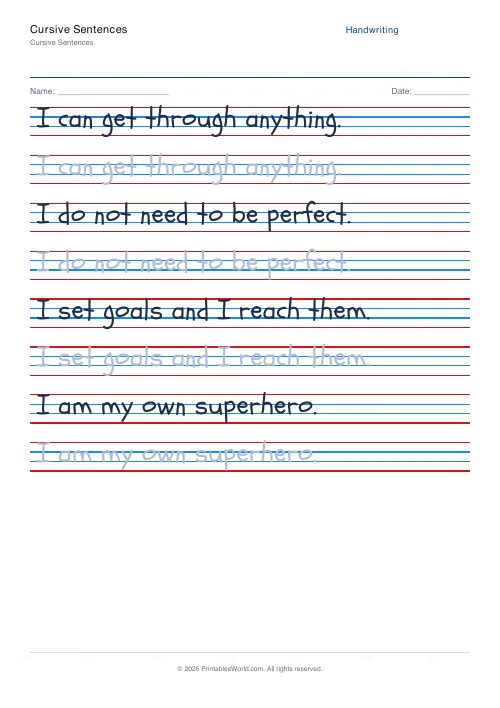
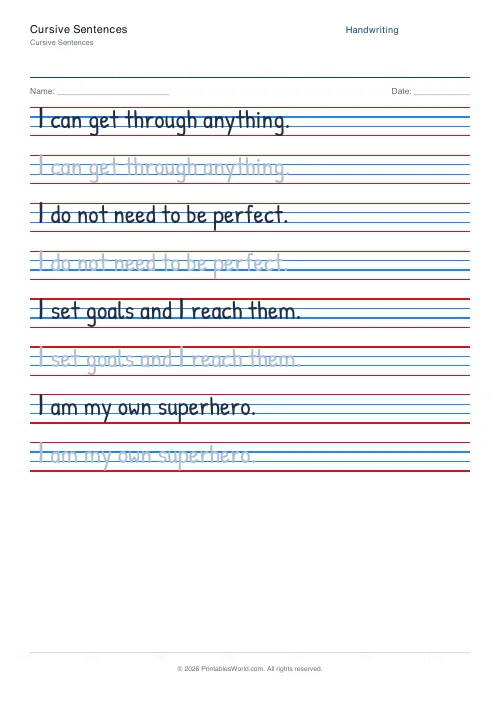
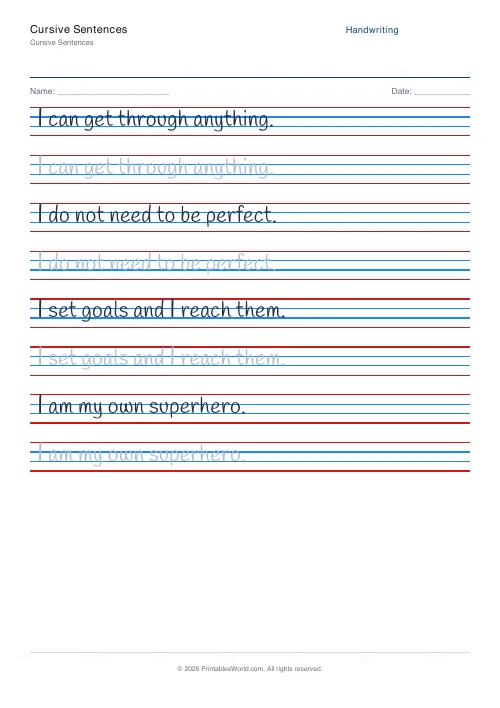
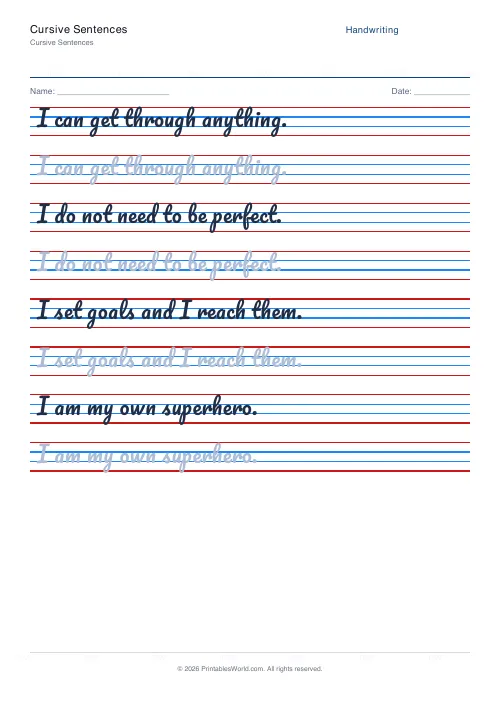
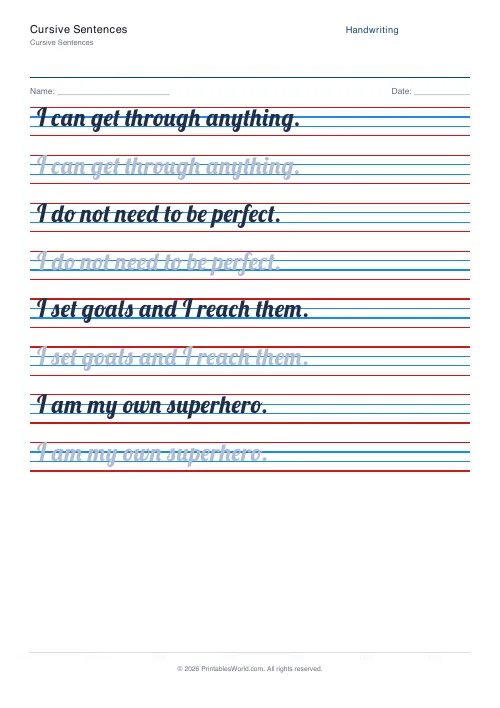
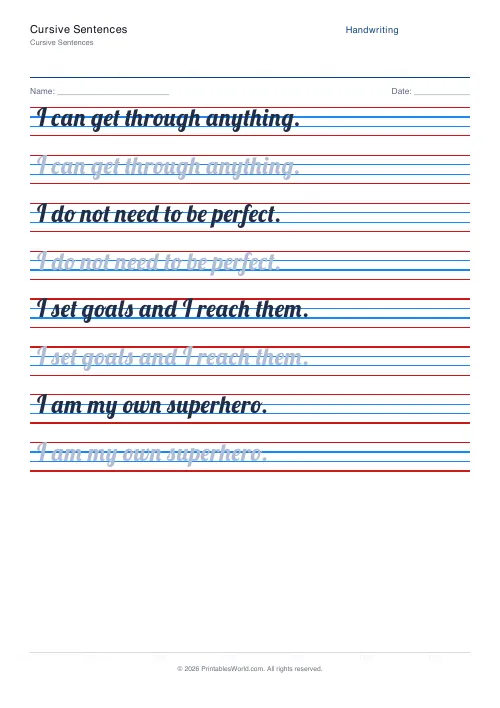
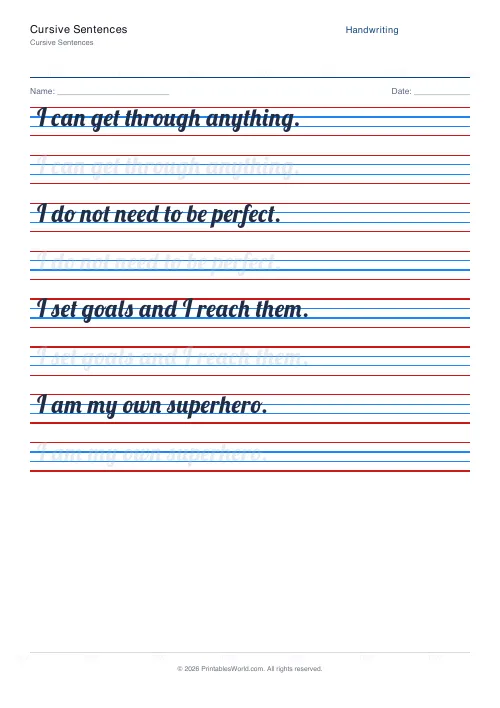
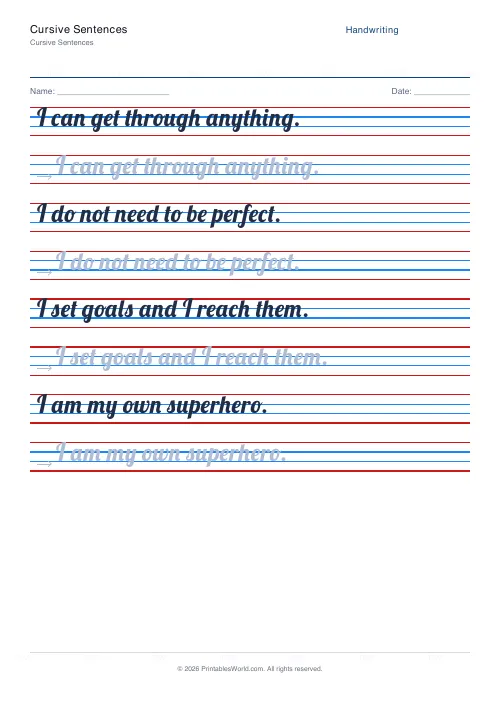
Full sentences in a genuine joined cursive, each with a model row and copy rows. The stage after single words, where slope and spacing have to hold across a whole line.
People also used
Feedback
Spotted something off with this tool?
Where the joins have to survive a whole line
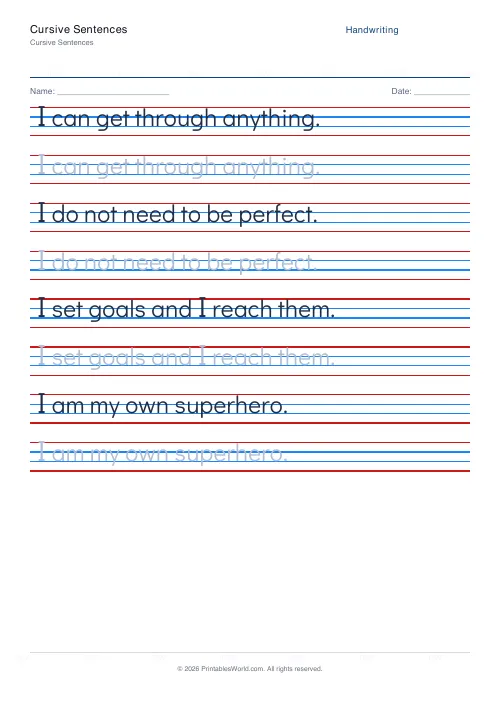
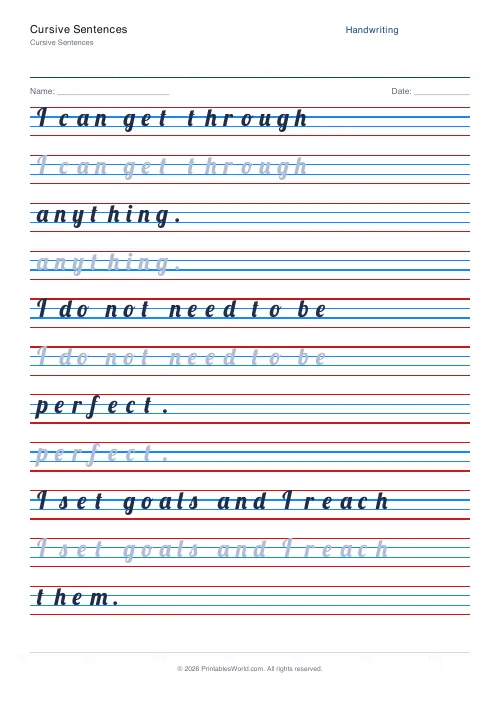
Each sentence prints in PW Cursive with a model row and copy rows underneath, on four-line ruling. This is the sheet after single words, and the difficulty is different in kind rather than in degree.
What a sentence adds
Three things a word sheet never tests.
Stamina. Joined writing is tiring before it is automatic, and handwriting visibly deteriorates towards the end of a line. That decline is the thing to look at — if the first three words are neat and the last two are not, the problem is endurance rather than letterforms, and the answer is shorter sessions rather than more correction.
Spacing between words. Within a word the joins set the spacing for you. Between words nothing does, and children either run everything together or leave gaps you could park in. The usual rule is a gap about the width of one letter.
Capitals and full stops. A sentence needs a capital that mostly does not join and a full stop that gets forgotten, and both only come up at this level.
Read the line, do not just look at it
The most useful marking question is whether you can read it at normal speed without slowing down. Handwriting is a communication tool, and legibility at speed is the only standard that matters outside a handwriting lesson.
Neatness is a different thing and it is over-weighted. A slightly untidy hand that reads instantly is better than a laboured, beautiful one that takes ten minutes a paragraph.
Use sentences worth writing
The preset loads affirmations about careful writing, which are fine and are not what a child will remember.
Better: a sentence from the book they are reading. A line from a poem. Something they said themselves that you wrote down. The sentence is going to be copied several times, so it may as well be worth having in their head.
Keep it to eight or ten words. A long sentence wraps, and a wrapped line breaks the practice at exactly the wrong point.
Setting it up
Practice text, the cursive face (GB or US), trace style, rows per sentence, ruling colour and line height. A4 or US Letter.
Two or three sentences a page. Print at 100%.
FAQs
Quick answers
Which font is used?
Lobster. A confident cursive script that shows the joins clearly.
Can I use my own quotes?
Yes. Type any short sentences, one per line, into the practice text box.
How is each sentence laid out?
Each sentence gets one solid trace row plus one copy row. Increase "Rows / sentence" for additional practice.
Are these for older students?
Yes. Joined-up writing is normally introduced from age 7+. Younger learners may prefer the print sentence-tracing variant.
Related tools
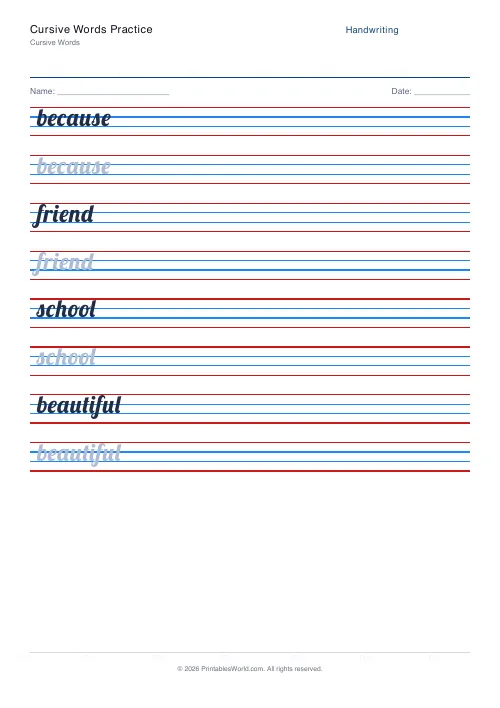
Cursive Words Practice
Practise writing common words in cursive script. Custom word input.
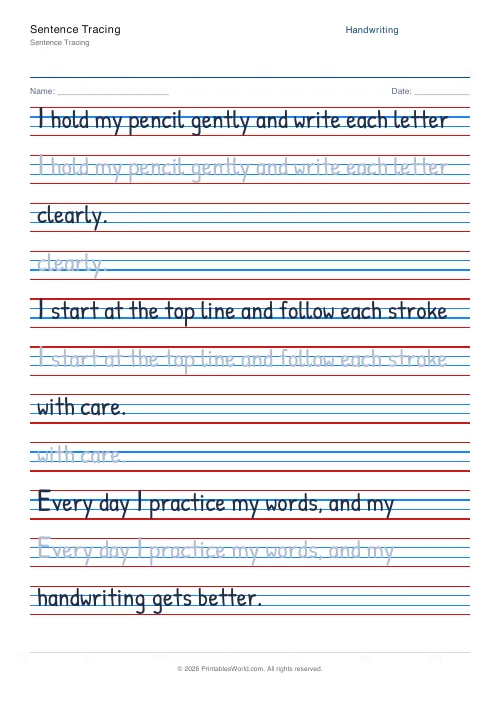
Sentence Tracing
Trace full sentences. Custom text or built-in presets.
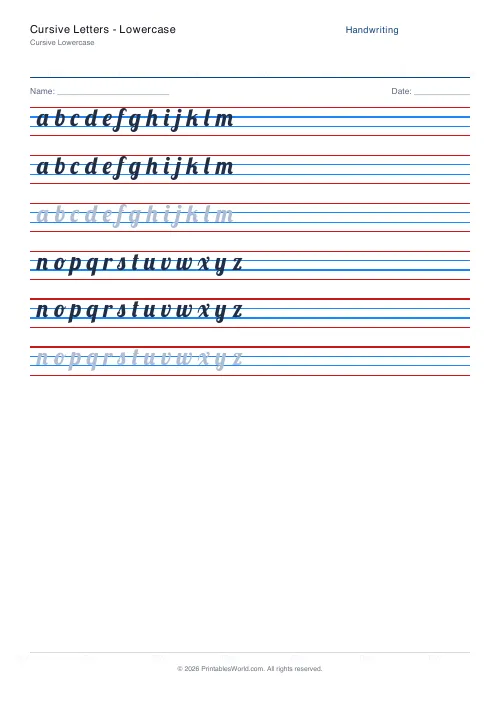
Cursive Letters: Lowercase
Trace and practise cursive lowercase letters with directional flow.
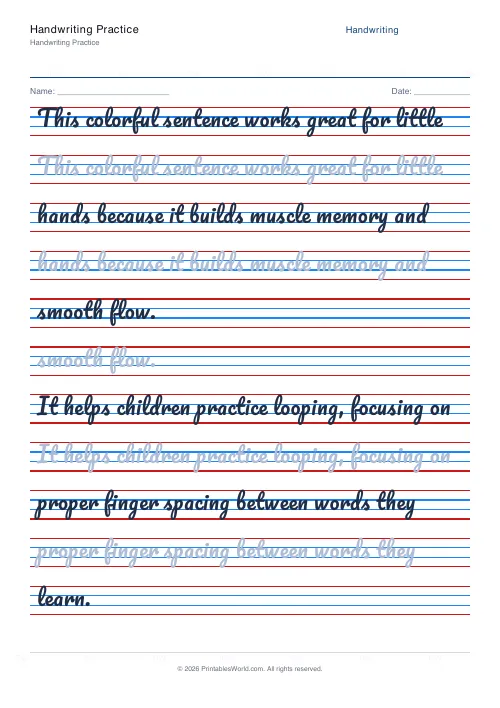
Handwriting Practice Generator
Create custom 4-line handwriting practice sheets with trace rows, adjustable guides, and your own text.
Further reading
Handwriting
Print vs cursive: which should children learn first?
Countries disagree, schools disagree, and the research is thinner than either side suggests. Here is what print and cursive each actually do well, and a practical way to decide for one child.
6 min read
Handwriting
How to teach cursive at home: a step-by-step plan
A simple step-by-step plan for teaching cursive at home, with letter families grouped by stroke, a four-week practice sequence, and free printable sheets to download.
8 min read
More like this
- Handwriting Practice Generator
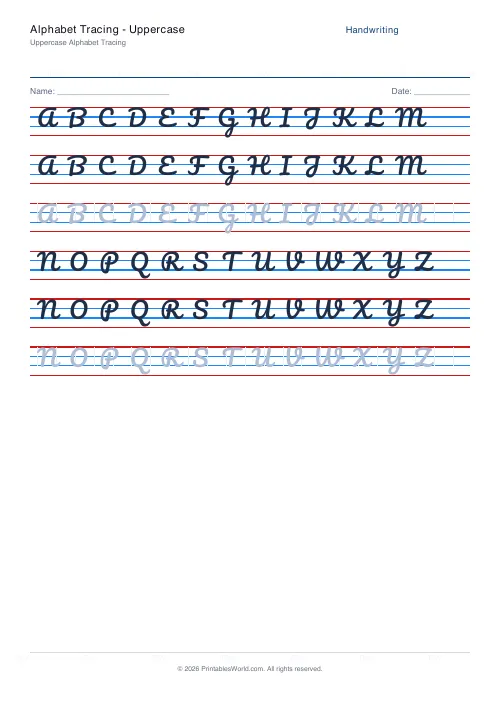 Alphabet Tracing: Uppercase
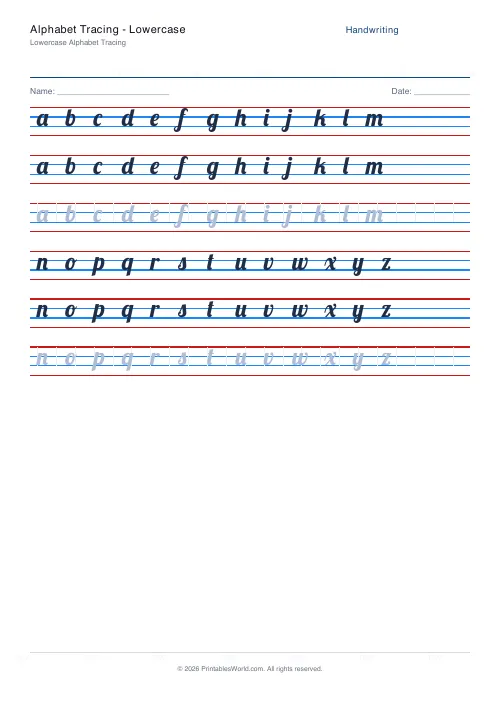 Alphabet Tracing: Lowercase
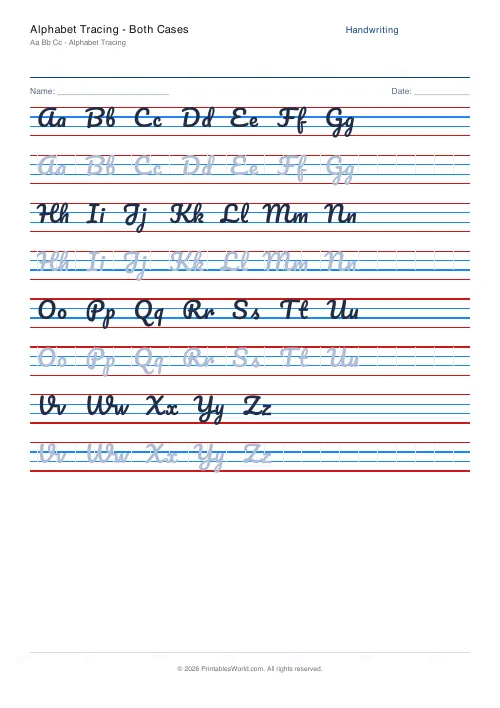 Alphabet Tracing: Both Cases
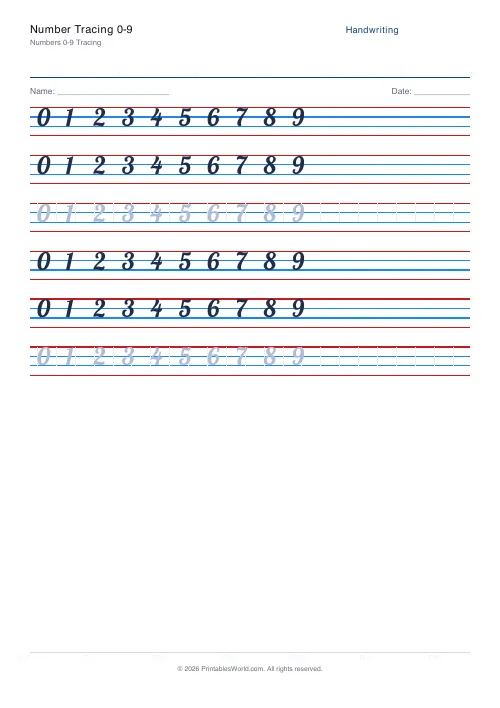 Number Tracing 0-9
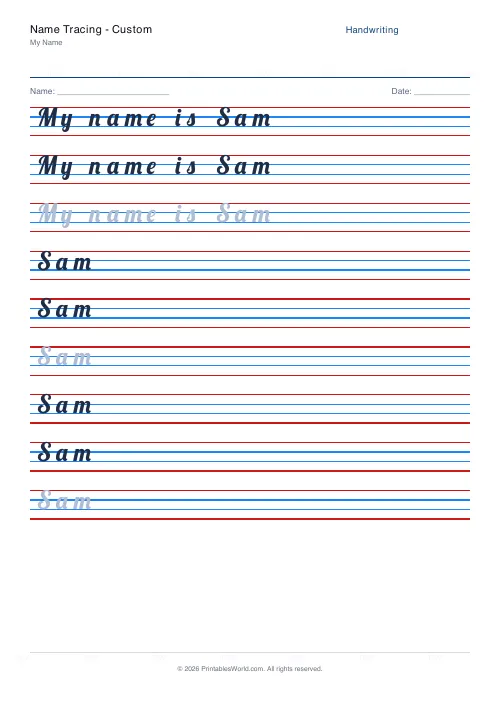 Name Tracing: Custom
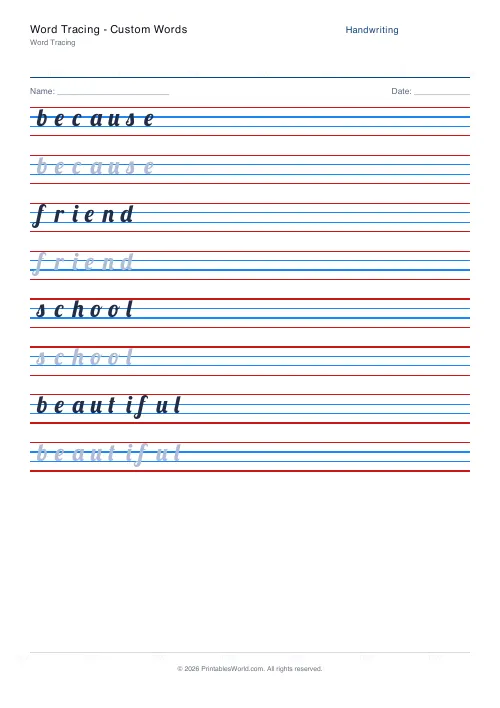 Word Tracing: Custom Words
- Sentence Tracing
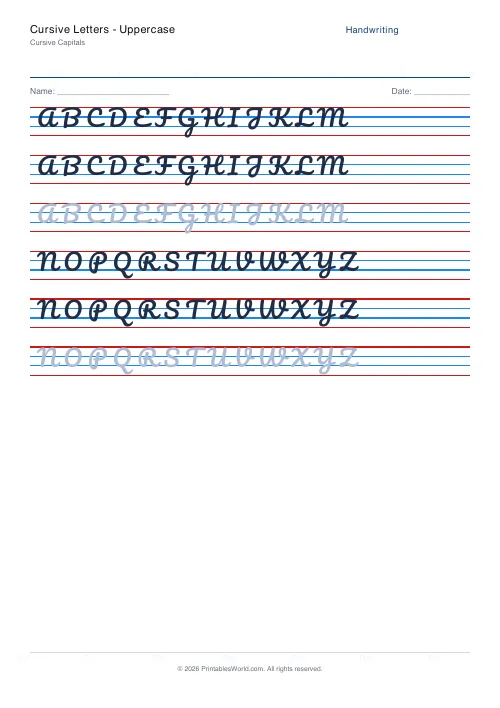 Cursive Letters: Uppercase
- Cursive Letters: Lowercase
- Cursive Words Practice
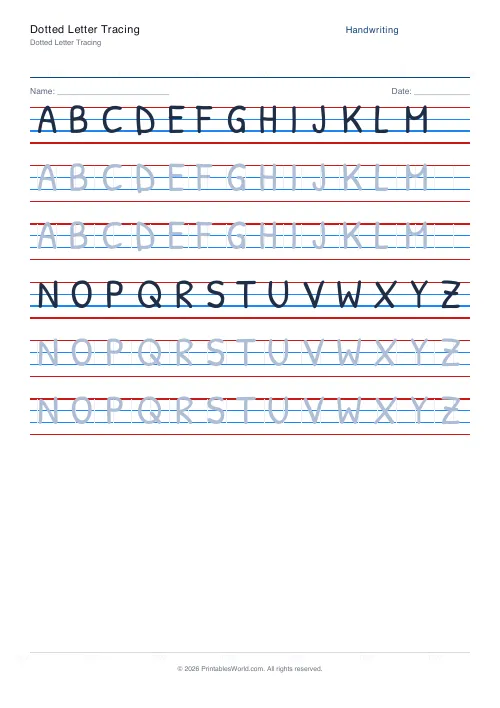 Dotted Letter Tracing
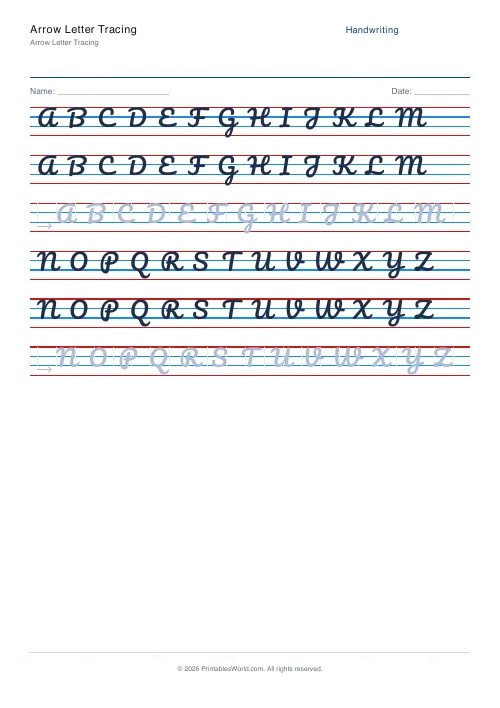 Arrow Letter Tracing
 Blank Handwriting Lines