What this tool does
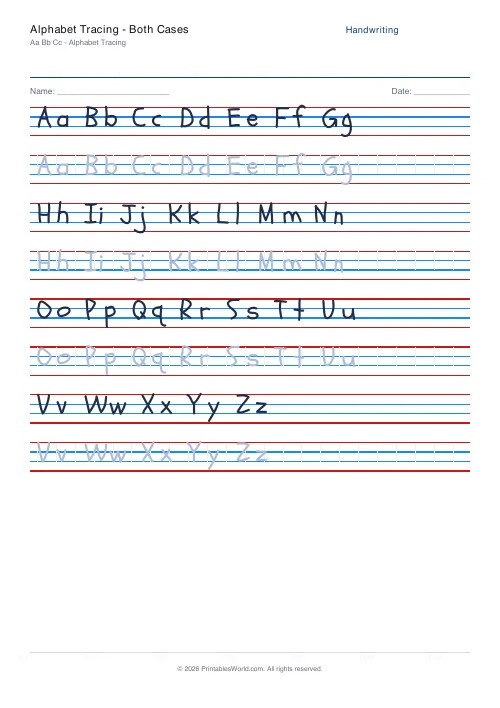
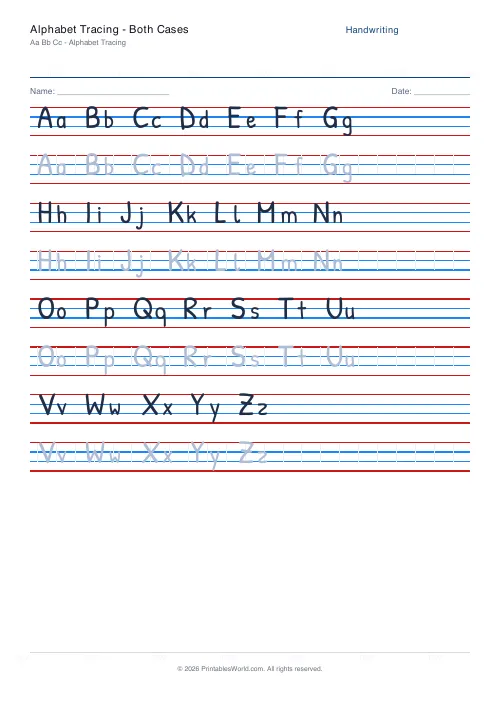
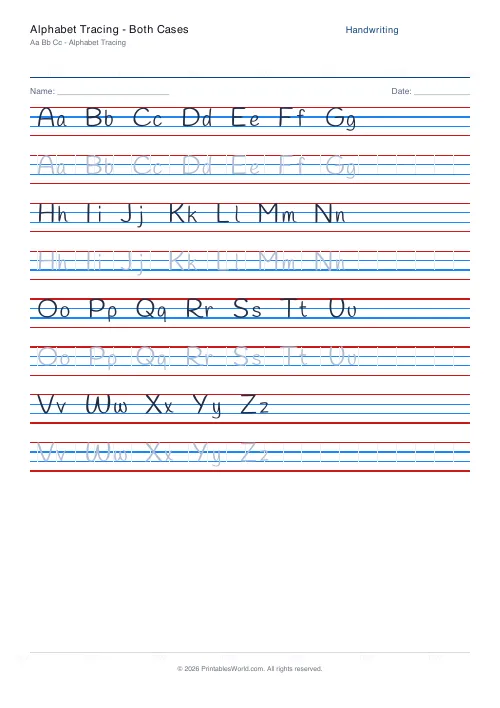
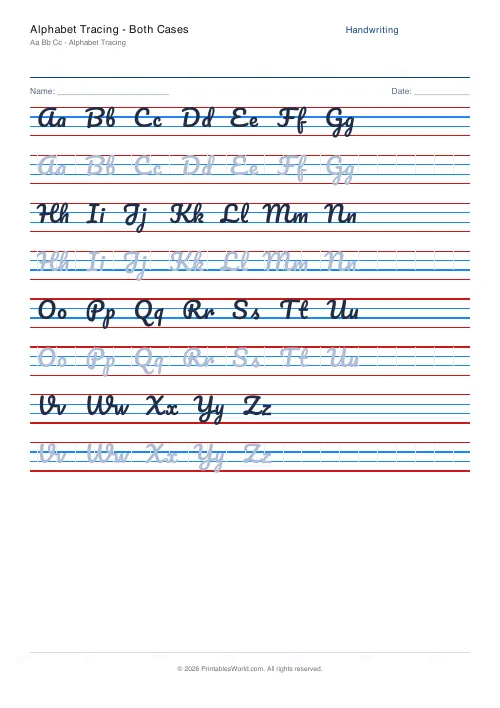
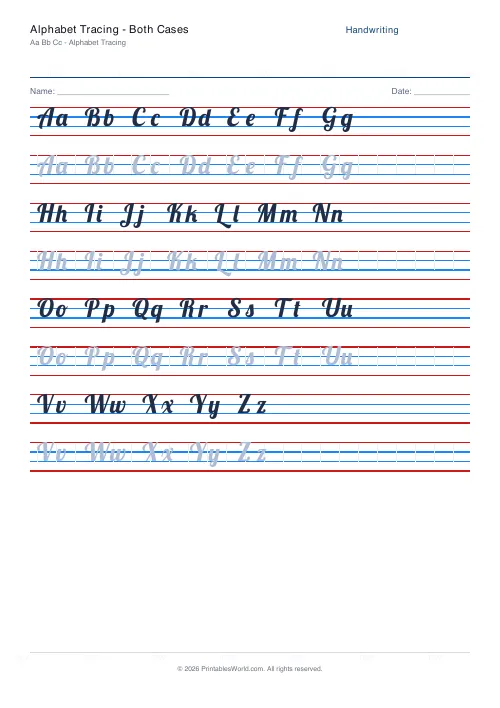
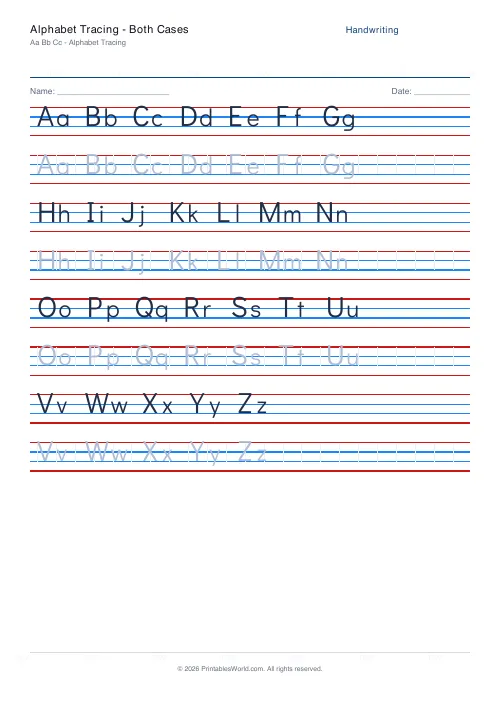
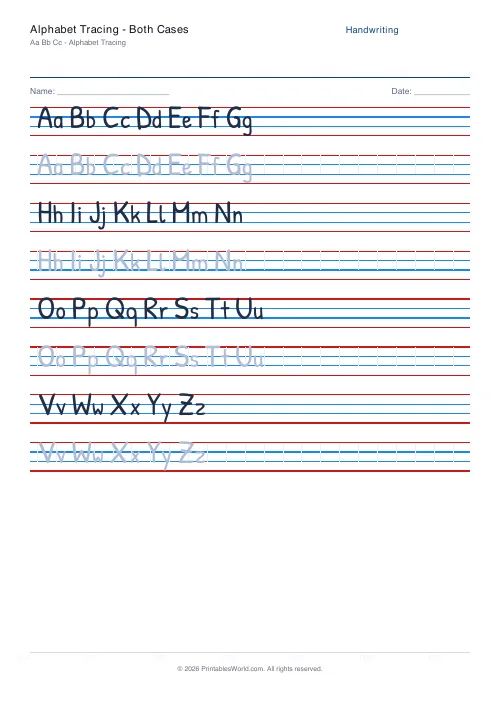
Capital and lowercase paired on the same line, as Aa Bb Cc, so the two forms of each letter get learned together rather than separately.
People also used
Feedback
Spotted something off with this tool?
Aa Bb Cc, seven pairs to a row
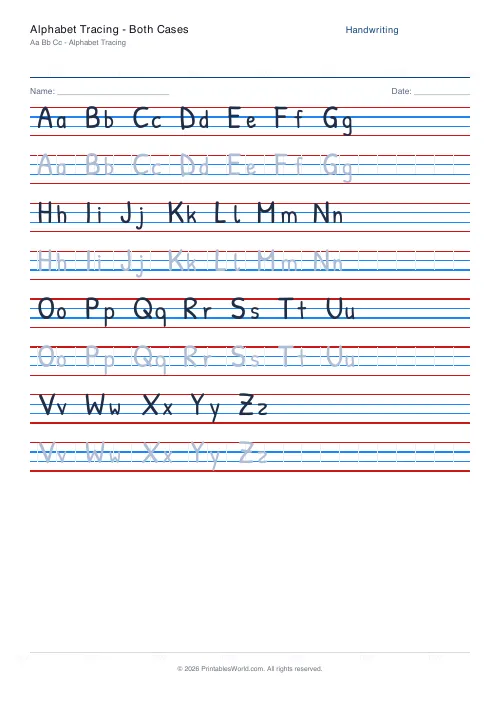
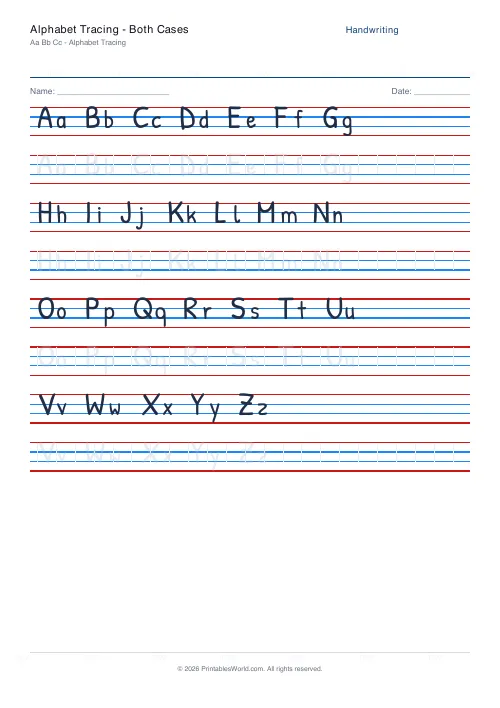
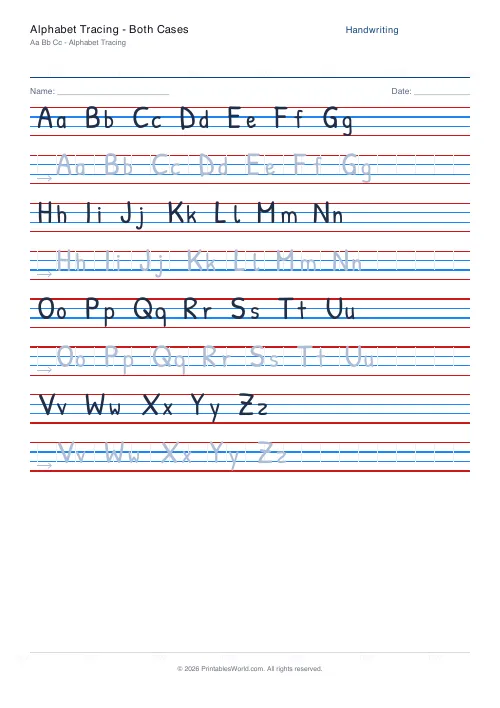
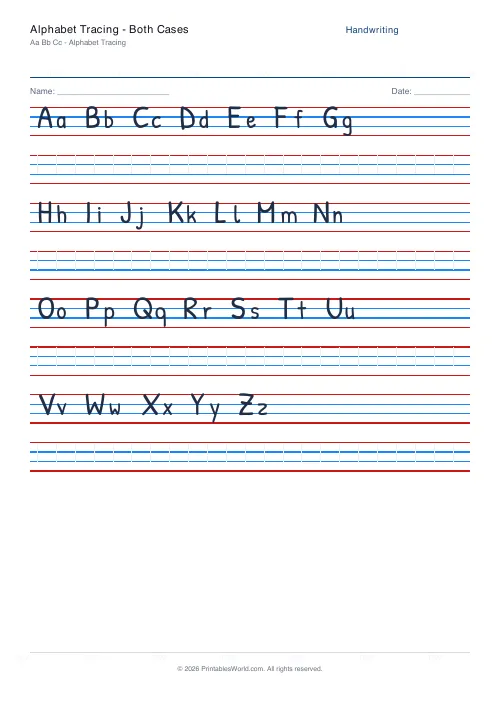
Every letter printed as its capital followed by its lowercase, on four-line ruling, with a model row and a copy row.
Twenty-six pairs across four short lines.
Pairing is the whole point
A capital and its lowercase are one letter with two appearances, and children do not know that until somebody makes it explicit.
Some pairs make it obvious — Cc, Oo, Ss, Ww differ only in size. Others share nothing at all. Aa is two unrelated drawings. So are Dd, Ee, Gg, Qq and Rr, and a child meeting those separately has no reason to connect them.
Seeing them adjacent, repeatedly, is what builds the link. It is also why this sheet is worth doing between the capitals sheet and the lowercase one rather than instead of either.
Where the height difference lives
The four-line ruling does something useful here that a single line cannot.
Capitals fill the space from the top line to the baseline. Most lowercase letters occupy only the middle band. Written side by side on ruled paper, that difference is visible rather than described — and letter height is one of the commonest things to go wrong in a child's writing, usually because nobody ever pointed at it.
Then note the exceptions in passing: b, d, f, h, k, l and t are lowercase letters that reach the top line anyway.
Say both names
"Big A, little a" as each pair is traced. It sounds laborious and it is the thing that makes the connection stick.
Some schools say "capital" and "small" instead, some say "uppercase" and "lowercase". Use whichever your school uses, and use it consistently — a child hearing three different word pairs for the same idea has three things to learn instead of one.
Cut it down
Twenty-six pairs is fifty-two letters, and a child working through the whole sheet in one sitting is tired by row two.
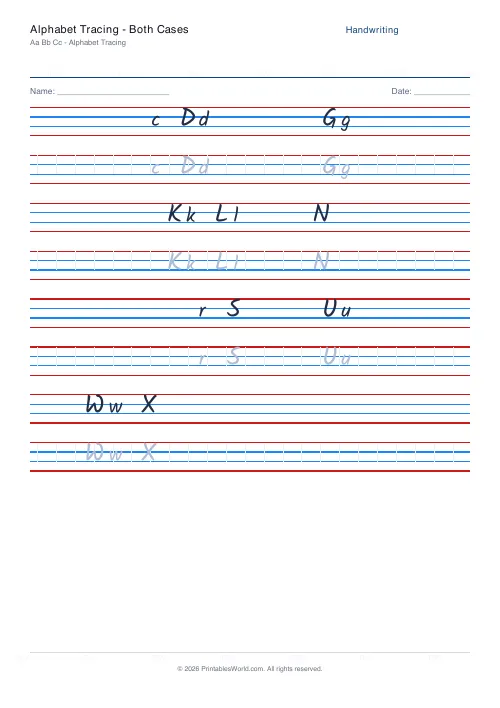
Use the practice text field. Four pairs, done carefully, beats twenty-six done at speed, and the letters worth choosing are the ones where the two forms look nothing alike.
Settings: practice text, font, trace style, rows per line, character boxes, ruling colour. A4 or US Letter at 100%.
FAQs
Quick answers
Why pair the cases together?
Seeing Aa, Bb, Cc on the same line helps children link the two forms of each letter while they practise.
How is each letter pair laid out?
Each line gets one trace row plus one copy row so kids warm up then write independently.
Which font is used?
Patrick Hand. A friendly print-style font that beginners can copy easily.
Can I edit the alphabet order?
Yes. Edit the practice text to focus on a smaller group such as the first six pairs.
Related tools
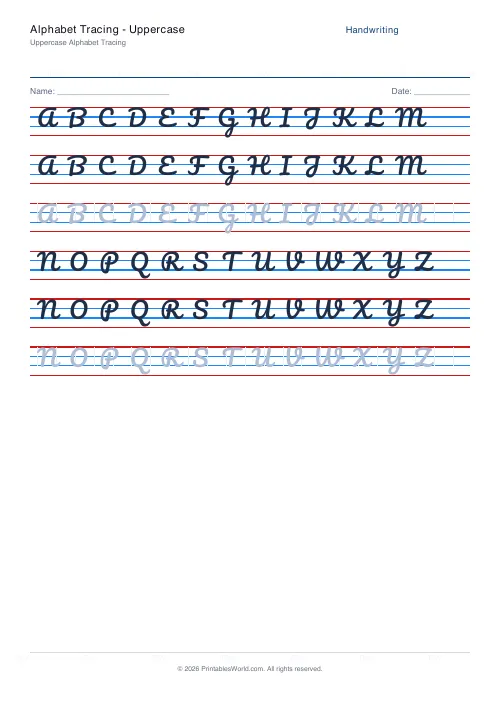
Alphabet Tracing: Uppercase
Trace all 26 uppercase letters with practice lines beneath each row.
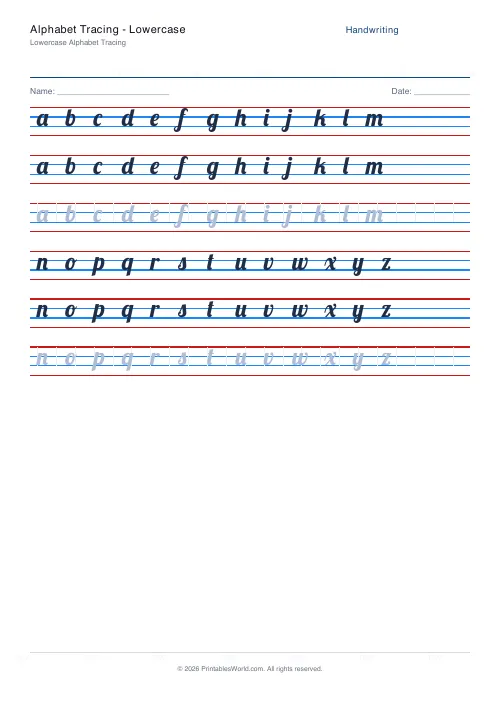
Alphabet Tracing: Lowercase
Trace all 26 lowercase letters with formation guides and practice lines.
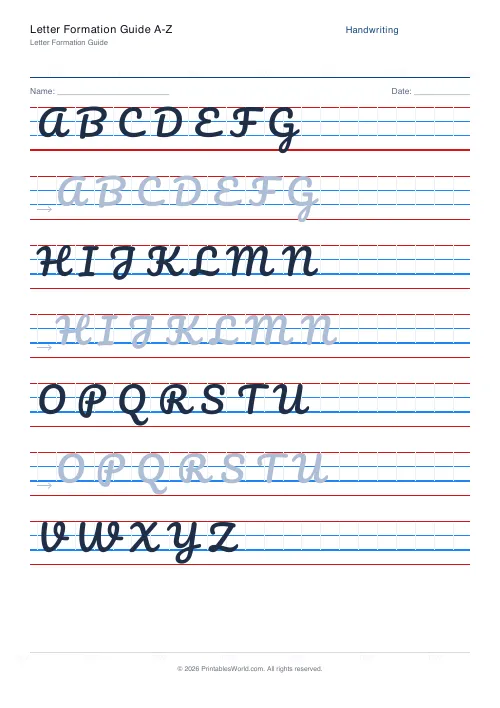
Letter Formation Guide A-Z
Full alphabet with directional arrows for stroke-order learning.
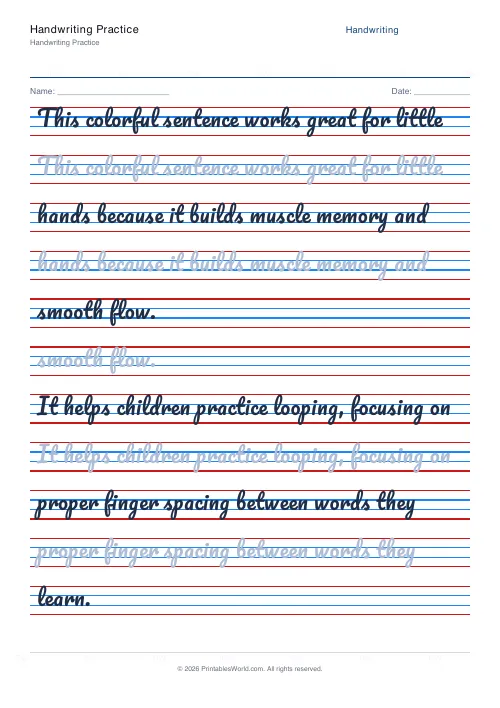
Handwriting Practice Generator
Create custom 4-line handwriting practice sheets with trace rows, adjustable guides, and your own text.
Further reading
Handwriting
Print vs cursive: which should children learn first?
Countries disagree, schools disagree, and the research is thinner than either side suggests. Here is what print and cursive each actually do well, and a practical way to decide for one child.
6 min read
Handwriting
How to teach handwriting to kids: a step-by-step guide
A practical order for teaching handwriting: get the body and the pencil right first, then teach letters in stroke families rather than alphabetically, and keep sessions short enough that the hand never tires.
7 min read
Handwriting
How to fix reversed letters (b and d) in young writers
Reversing b and d is normal up to around seven. The fix is not more practice of both together. It is teaching them apart, by movement rather than by shape.
5 min read
More like this
- Handwriting Practice Generator
- Alphabet Tracing: Uppercase
- Alphabet Tracing: Lowercase
 Number Tracing 0-9
 Name Tracing: Custom
 Word Tracing: Custom Words
 Sentence Tracing
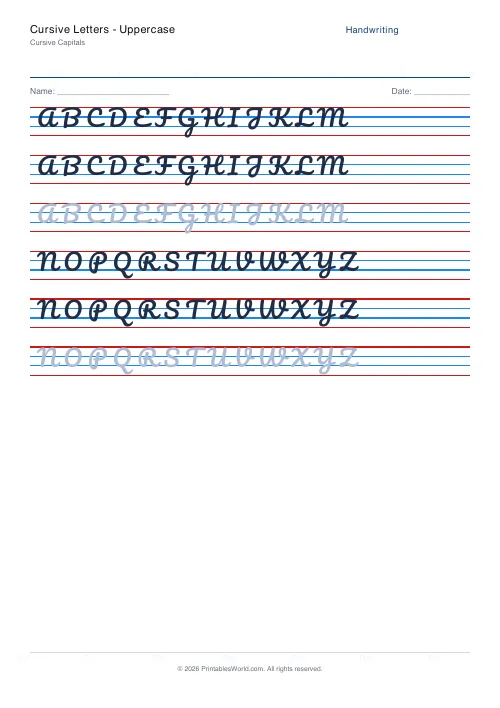 Cursive Letters: Uppercase
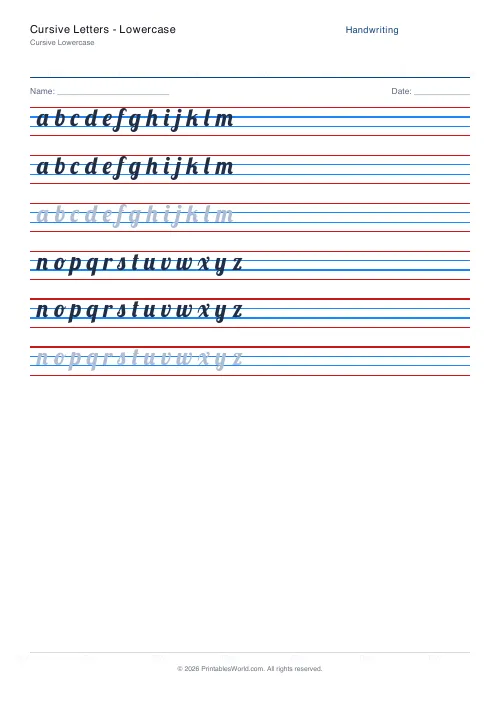 Cursive Letters: Lowercase
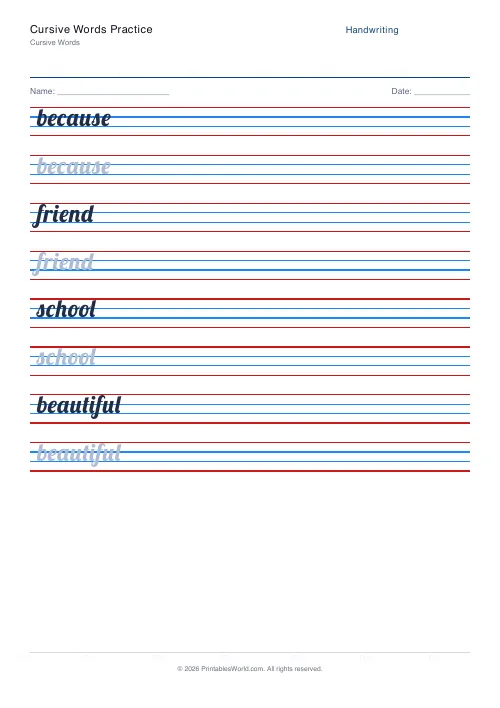 Cursive Words Practice
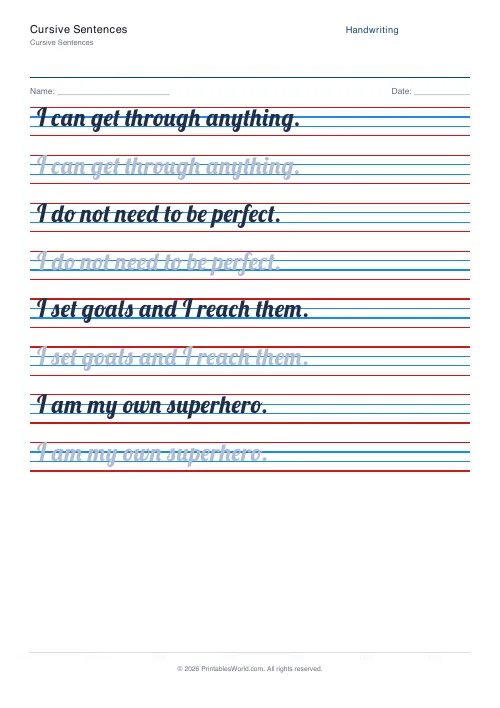 Cursive Sentences
 Dotted Letter Tracing
 Arrow Letter Tracing
 Blank Handwriting Lines