What this tool does
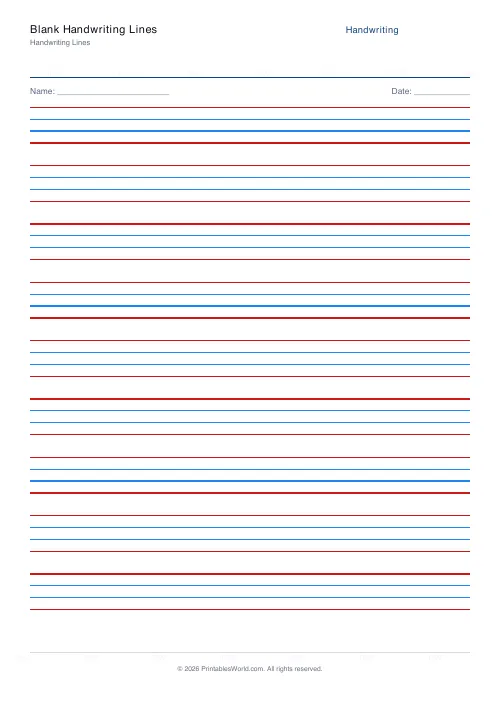
Four-line handwriting ruling with nothing printed on it. Just the lines, at whatever height you set.
People also used
Feedback
Spotted something off with this tool?
The ruling, and nothing else
Four-line handwriting paper — top line, midline, baseline, descender line — with no text, no model rows and nothing to trace. The line height is adjustable.
Fewer features than anything else on the site. More print runs than most of it.
What the four lines are for
Single-line paper tells a child where to sit letters and nothing else. Four-line ruling encodes the whole height system.
The middle band, between midline and baseline, is where most lowercase letters live. Ascenders reach the top line. Descenders drop below the baseline to the fourth. A child writing on this paper has a rule for how tall every letter should be, which is otherwise twenty-six separate things to remember.
Inconsistent letter height is one of the two most common reasons handwriting is hard to read. This paper is the cheapest fix for it.
Line height is the setting that matters
Younger children need taller bands. The reason is motor: fine control develops outward from the shoulder, so writing small is genuinely harder work for a five-year-old, not just tidier.
Start generous. Reduce the height when the writing is comfortably fitting the band rather than when a child reaches a particular age. A child squeezing letters into a band too small for them will press harder, tire faster, and write worse.
When blank beats a model
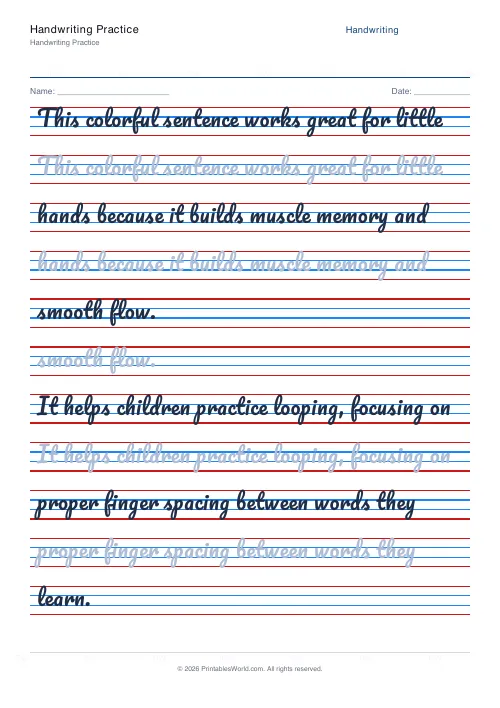
Tracing and copying sheets have a model on them, which is right while letterforms are being learned and wrong once they are known.
At that point the model is a crutch: it gives the eye something to follow, and following is easier than producing. Blank ruling is where a child writes their own sentences, their own spellings, their own story — with the height structure still supporting them and nothing else doing the work.
This is also the paper for a child whose letterforms are fine and whose presentation is not, which is a separate problem needing a separate fix.
Uses beyond practice
Spelling tests. Dictation. Any piece of writing where you want the height structure kept but do not want ordinary lined paper.
Also for adults relearning handwriting after illness or injury, where the same height cues help and children's tracing sheets do not.
Settings: line height, ruling colour, and the number of rows follows from the height. A4 or US Letter, printed at 100% — at any other scale the millimetre setting is no longer the millimetres you asked for.
FAQs
Quick answers
Why is the sheet empty?
It is intentionally text-free. The page prints just the 4-line guides so children can write their own words, sentences, or homework.
Can I switch to wider or narrower lines?
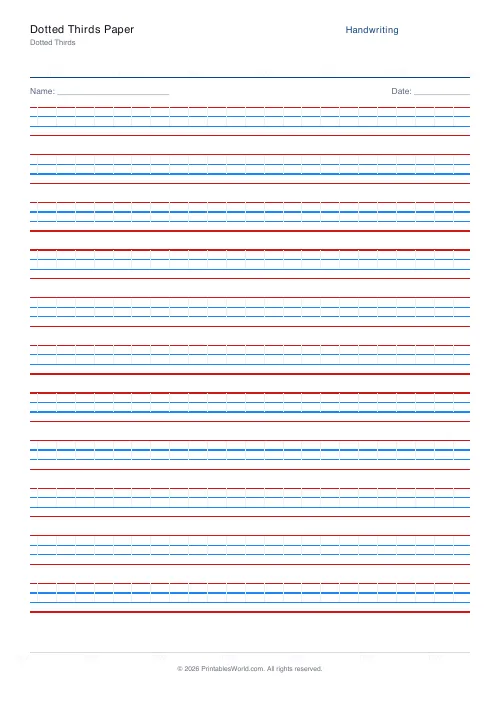
Yes. See the Wide-Lined and Narrow-Lined variants which preset different band heights for different age groups.
Is there a name and date strip?
Yes. Every page prints a Name and Date strip at the top so completed sheets can be filed and reviewed.
How many lines per page?
Around 18-22 rows on A4 at the default 5mm band. Exactly how many depends on the chosen paper size.
Related tools
Further reading
Handwriting
Left-handed handwriting practice: free printable sheets
How to set up left-handed handwriting practice for comfort: paper angle, grip and page layout, plus free printable sheets designed for lefties.
7 min read
Handwriting
The best age to start handwriting practice
Age is the wrong question. Three readiness signs predict whether handwriting practice will help or frustrate. And what to do with the child who is not there yet.
5 min read
Handwriting
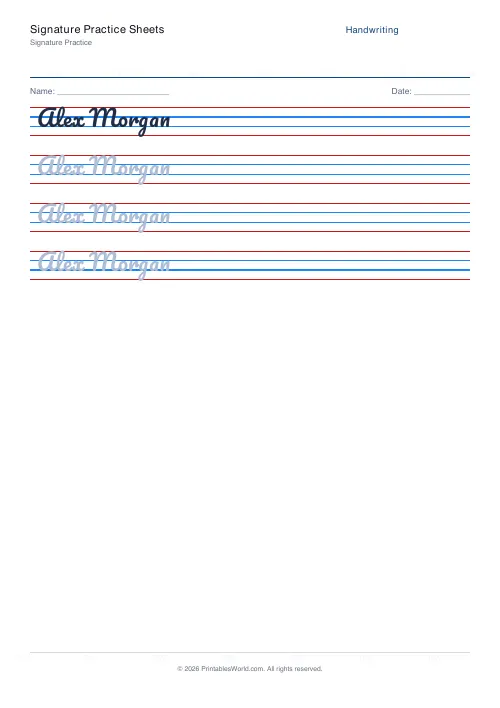
Dotted vs solid trace lines: what works best for beginners
Each trace style removes a different amount of support. The mistake is staying on one too long. Tracing feels productive and teaches less than copying.
4 min read
More like this
 Handwriting Practice Generator
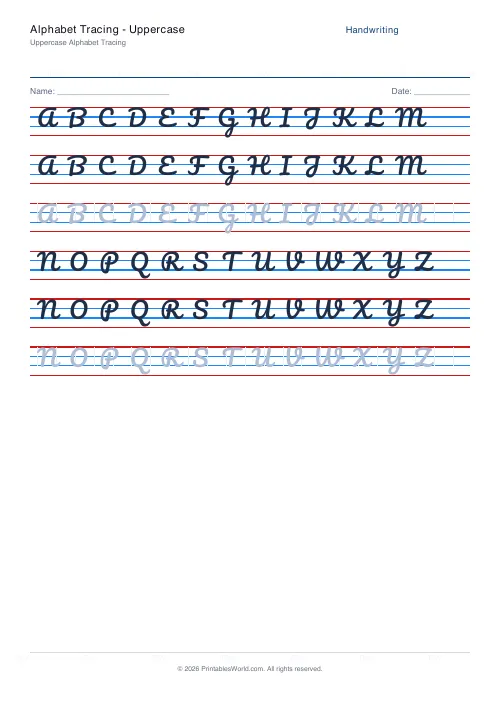 Alphabet Tracing: Uppercase
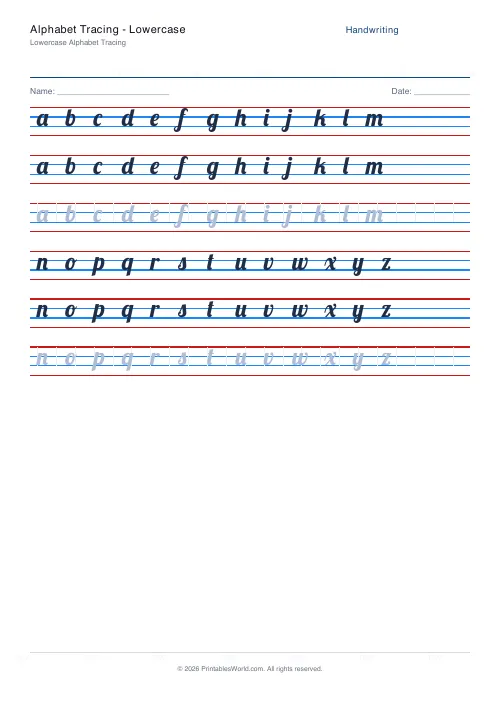 Alphabet Tracing: Lowercase
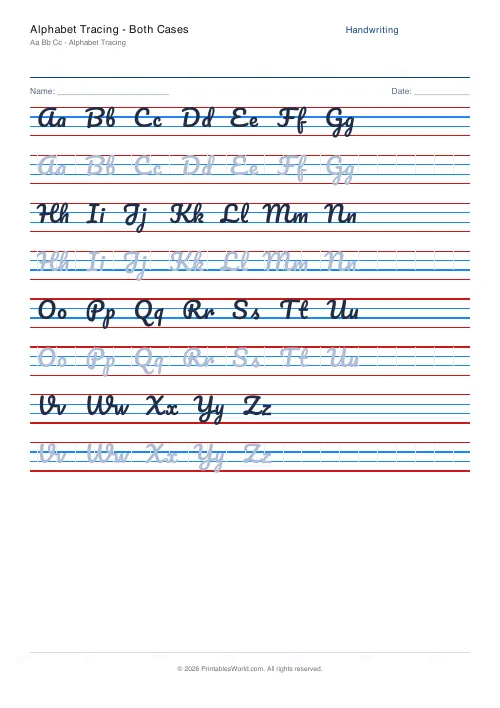 Alphabet Tracing: Both Cases
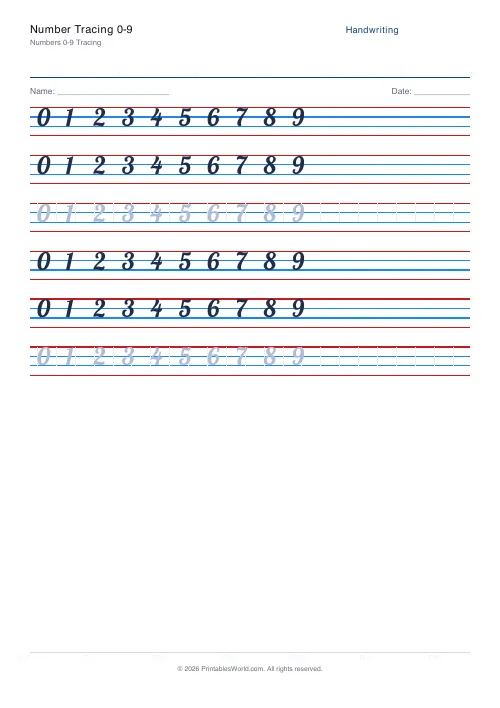 Number Tracing 0-9
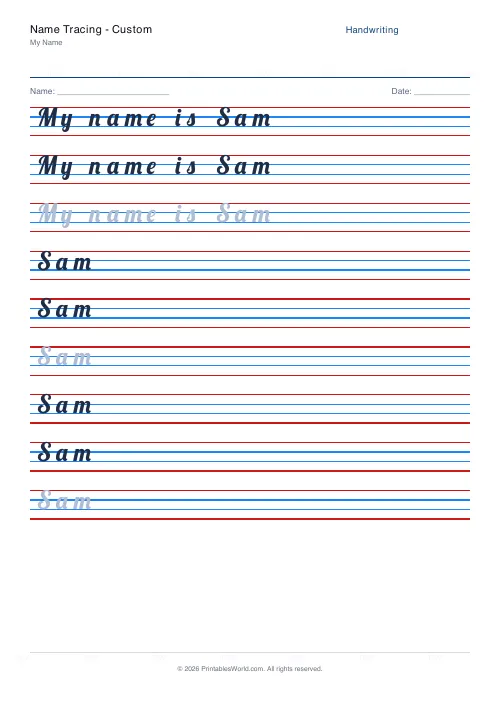 Name Tracing: Custom
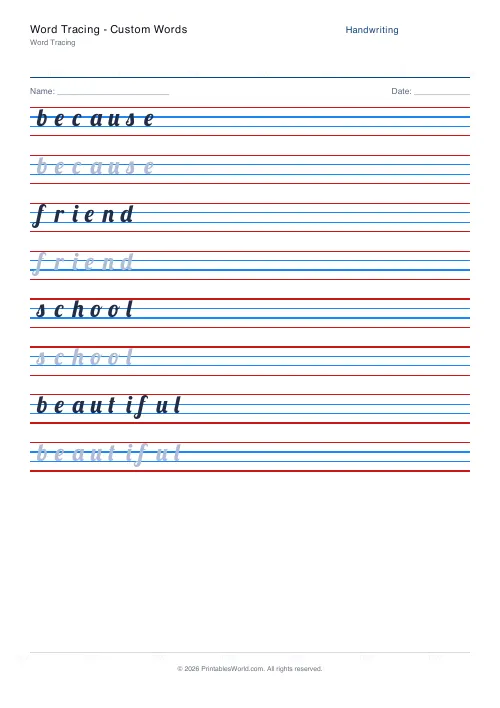 Word Tracing: Custom Words
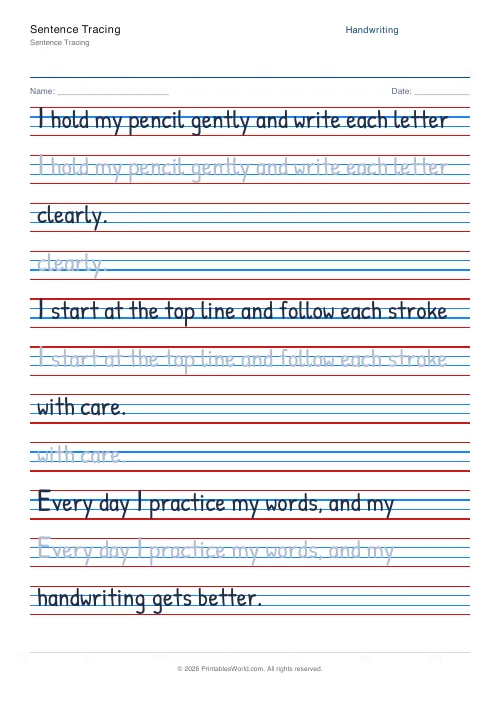 Sentence Tracing
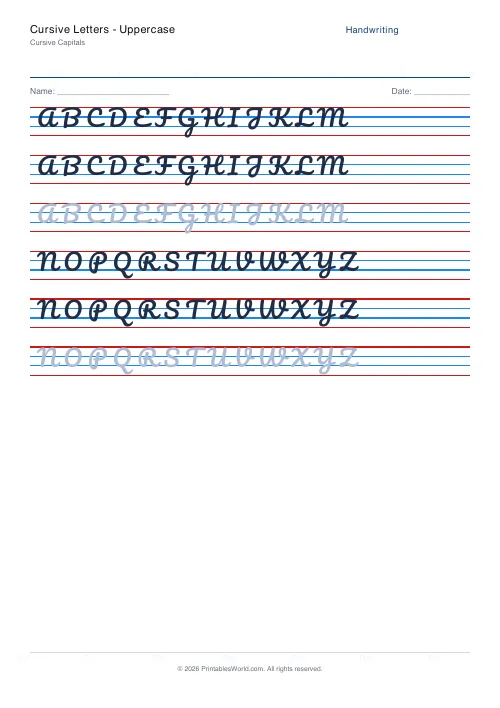 Cursive Letters: Uppercase
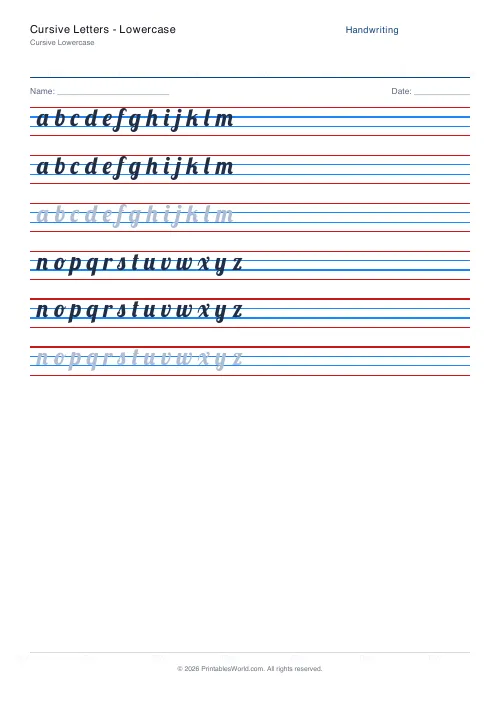 Cursive Letters: Lowercase
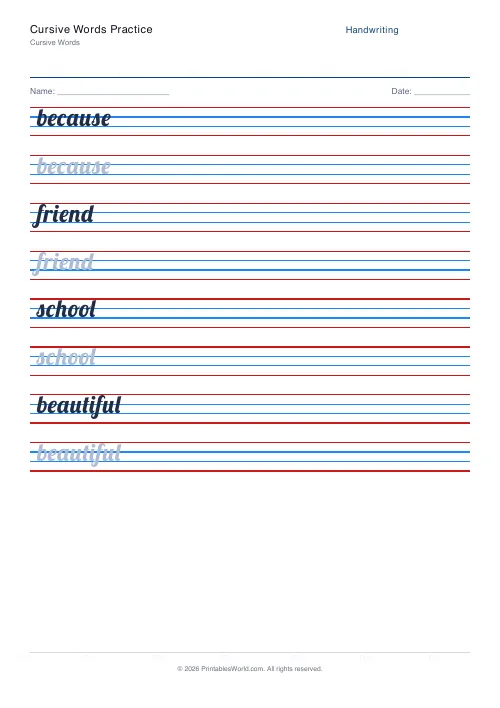 Cursive Words Practice
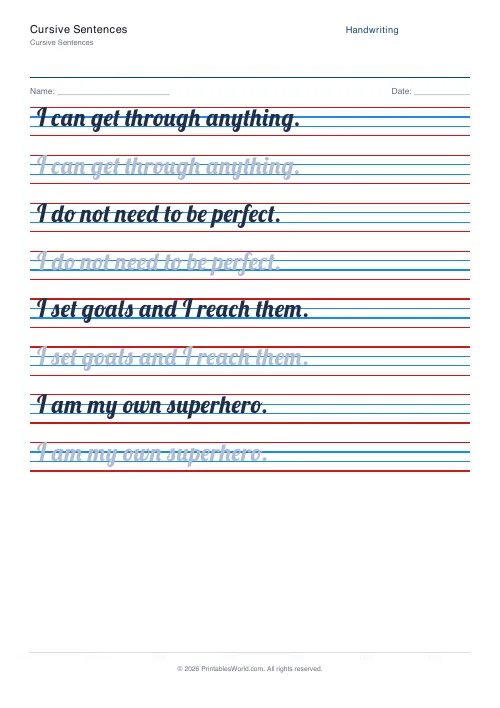 Cursive Sentences
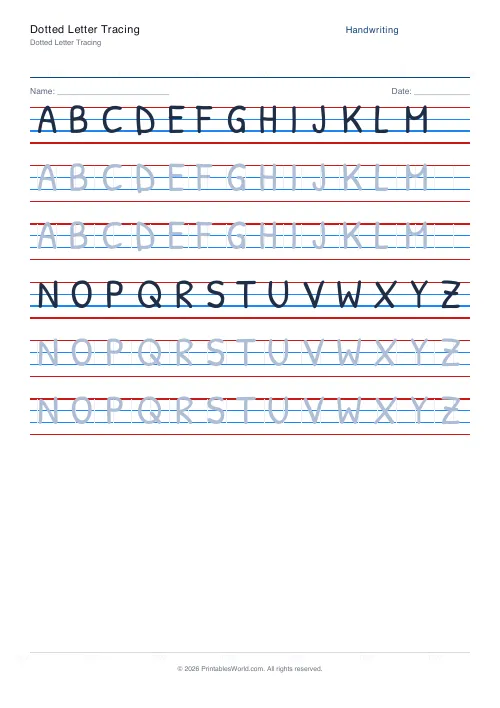 Dotted Letter Tracing
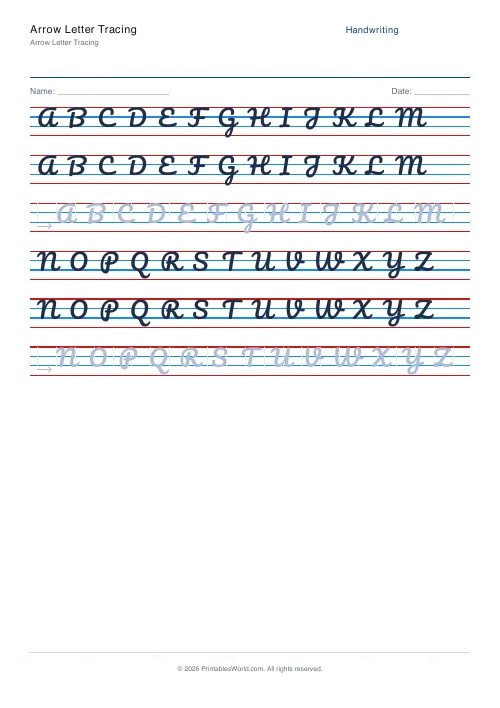 Arrow Letter Tracing