What this tool does
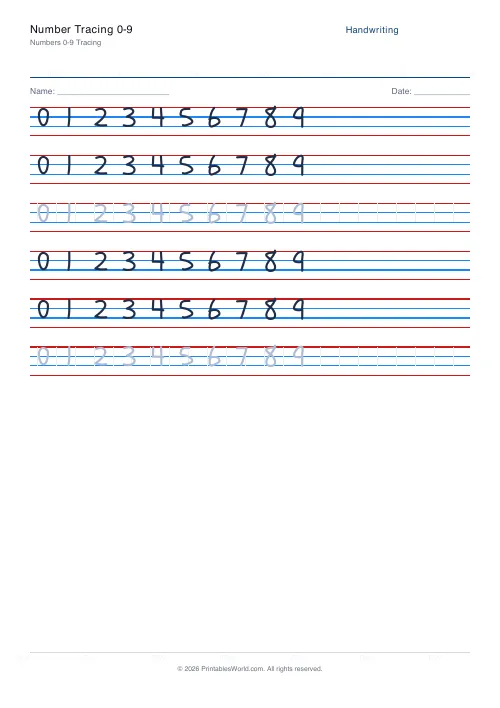
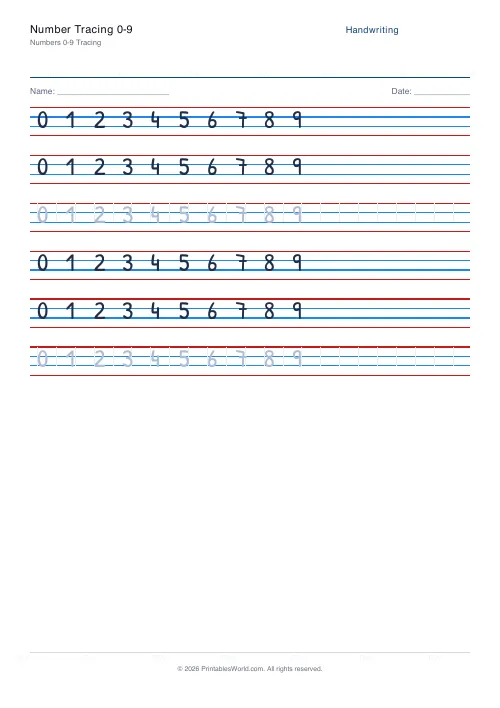
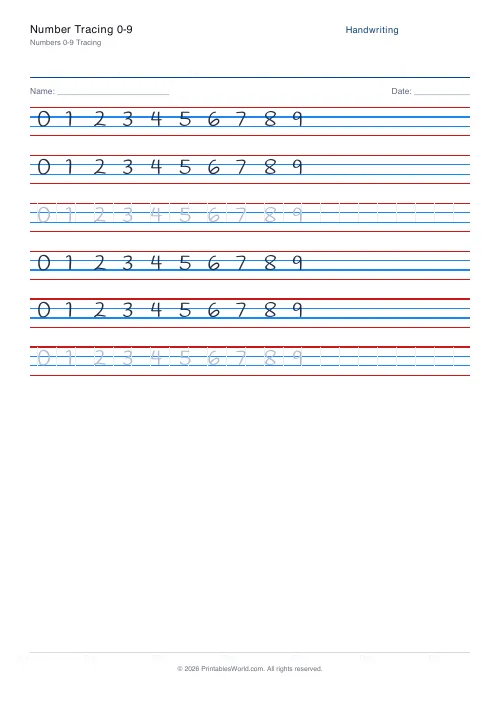
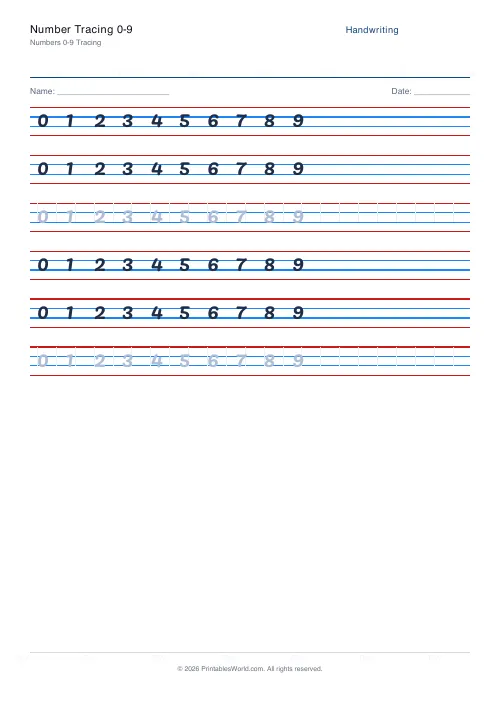
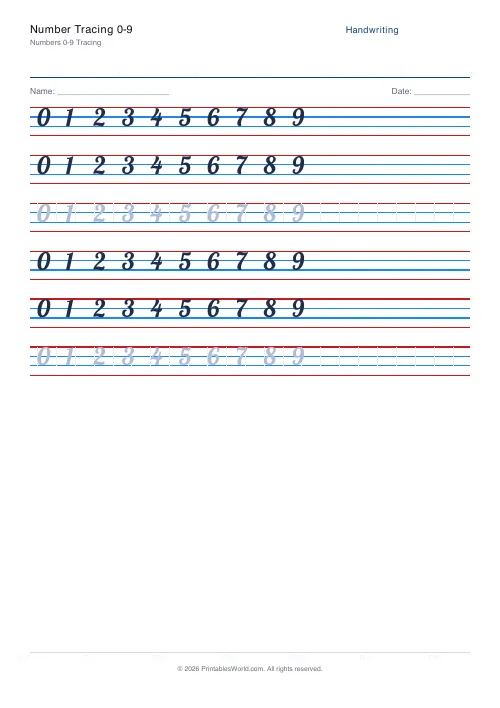
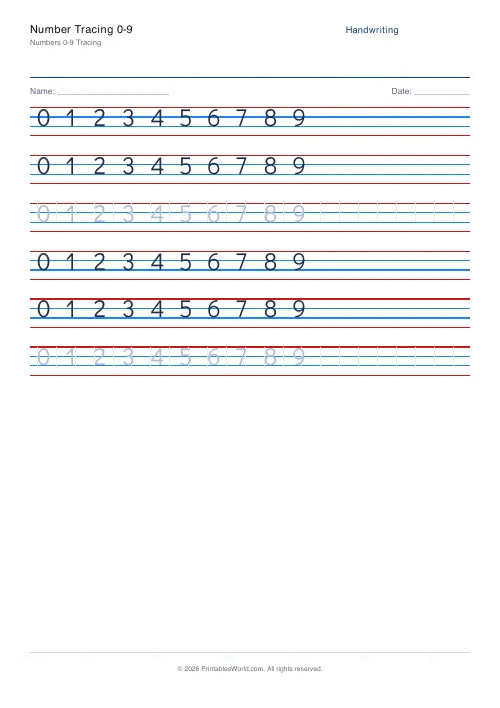
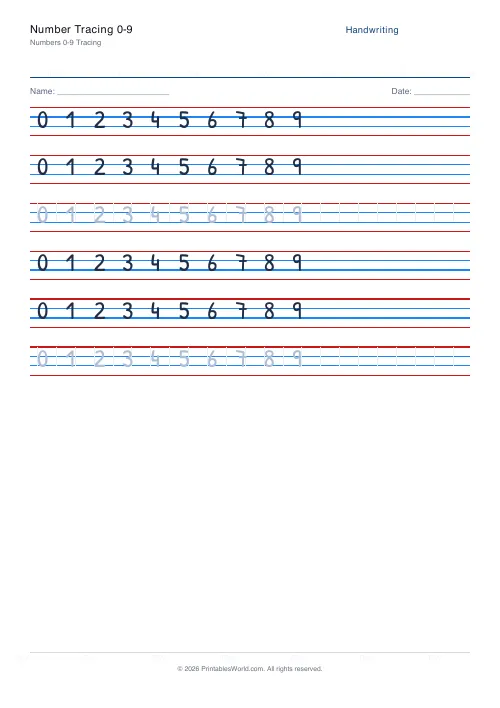
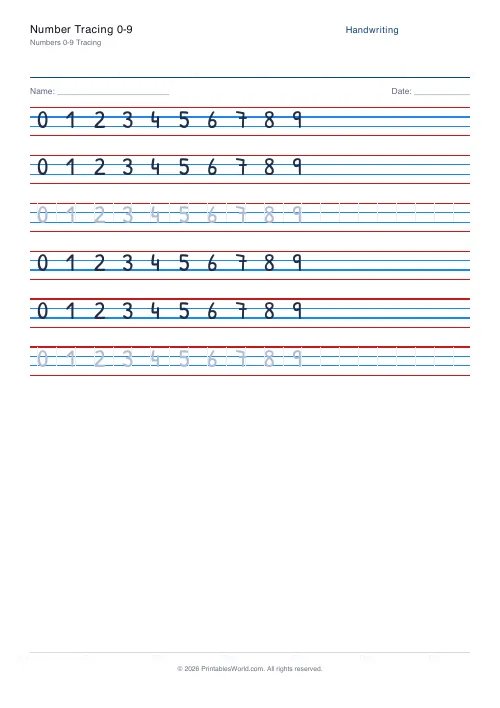
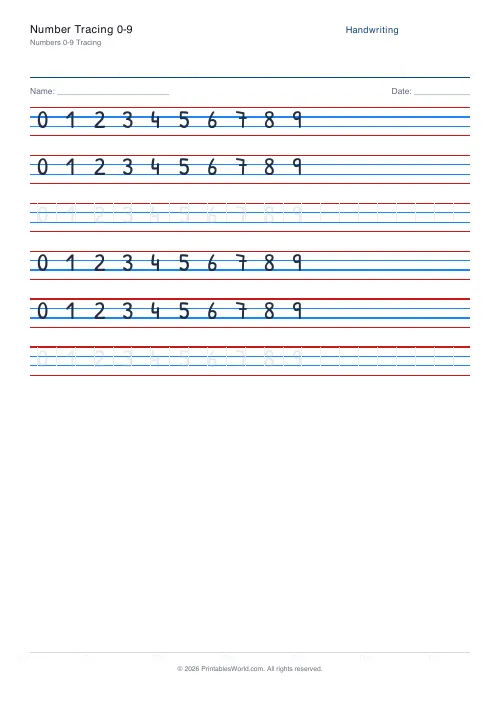
The digits 0 to 9 on four-line ruling, with a trace row and copy rows for each line. Sized generously for very young writers.
People also used
Feedback
Spotted something off with this tool?
Ten digits, on the ruling
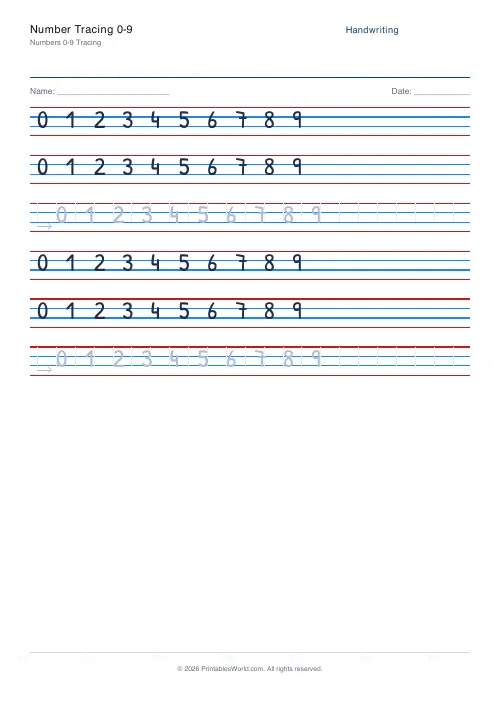
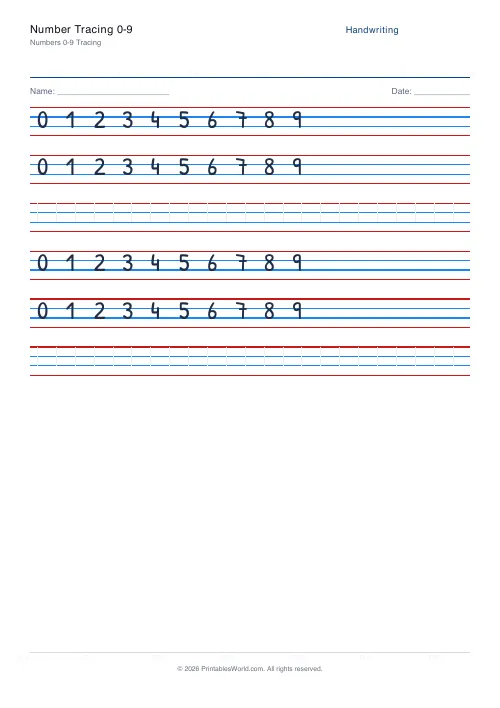
0 through 9 across two lines on the standard four-line ruling. A traceable model, then rows to write on unaided.
Digits are not letters and behave differently
Worth saying, because they are usually taught as though they were the same job.
All ten digits are the same height — there are no ascenders and no descenders, so every one sits between the top line and the baseline. That makes them easier than lowercase letters in one respect and harder in another: there is no height difference to help tell them apart, so the shape has to carry all of it.
They also have to be legible in isolation in a way letters never do. A slightly odd e in the middle of a word is readable from context; a 3 that could be an 8 in an answer box is simply wrong, and there is no context to rescue it.
The reversals to expect
2, 3, 5, 6, 7 and 9 all get written backwards by young children, and this is normal until about seven.
The commonest are 3 and 5. Both begin at the top and travel right, so a child who starts from the left instead produces a clean mirror image which looks entirely reasonable to them and entirely wrong to everybody else.
Correct them by watching the pencil rather than the page. A reversed 3 and a correct 3 are drawn from different starting points, and only the starting point can be fixed.
The two that catch people out
4 is drawn differently by different people — some in two strokes with an open top, some closed. Both are correct. Pick whichever the school uses and be consistent, because a child shown both will produce a hybrid.
0 should go anticlockwise from the top, like the letter o, which keeps it consistent with a, c, d, g and q. A child who draws circles clockwise has several things to unlearn rather than one.
Say the number as it is written
Every time. Digit formation and number sense are separate things, and a child can trace a 7 accurately with no idea what seven means.
Better still, count out something while writing it. Seven objects on the table, then the digit. That connection is the actual content; the handwriting is the vehicle.
Choices
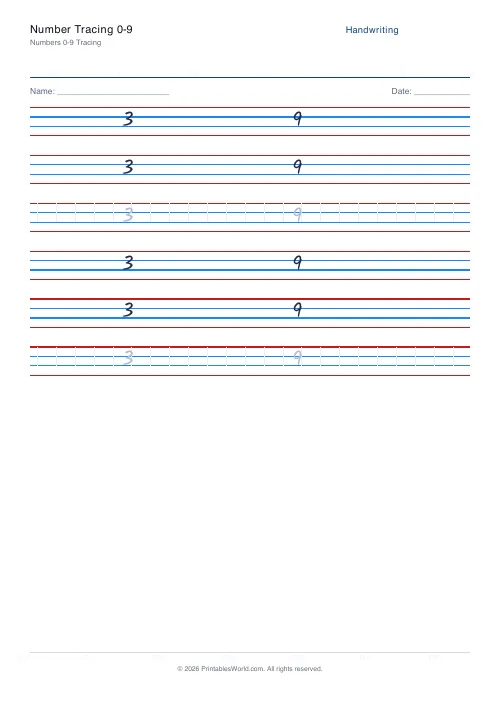
The text is editable, so a sheet can carry the two or three digits actually being worked on. Also font, trace style including start dots and stroke arrows, rows per line, character boxes, ruling colour and line height. A4 or US Letter at 100%.
For digits alongside their written words, the numbers to twenty sheet pairs them.
FAQs
Quick answers
Which digits are covered?
All digits 0 through 9, each appearing across multiple practice rows.
Can I focus on a single digit?
Yes. Edit the practice text to repeat one digit many times.
How are the rows organised?
Each line of digits gets one solid trace row plus two copy rows. A familiar warm-up-then-practise pattern.
Is this suitable for preschoolers?
Yes. The friendly Patrick Hand font and 4-line ruling are sized for ages 3+.
Related tools
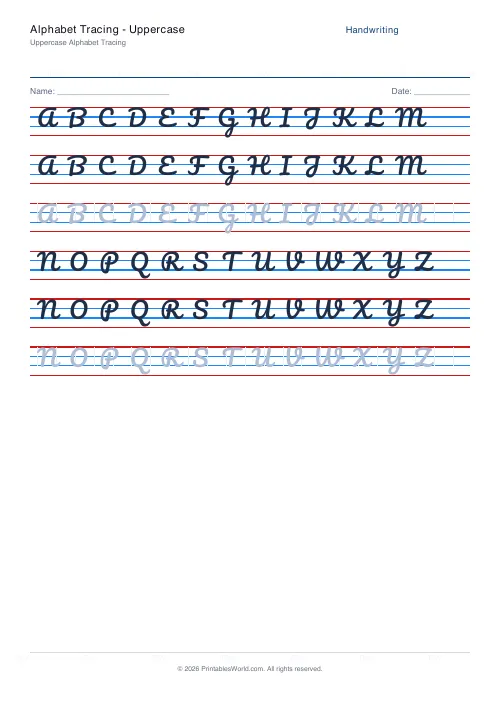
Alphabet Tracing: Uppercase
Trace all 26 uppercase letters with practice lines beneath each row.
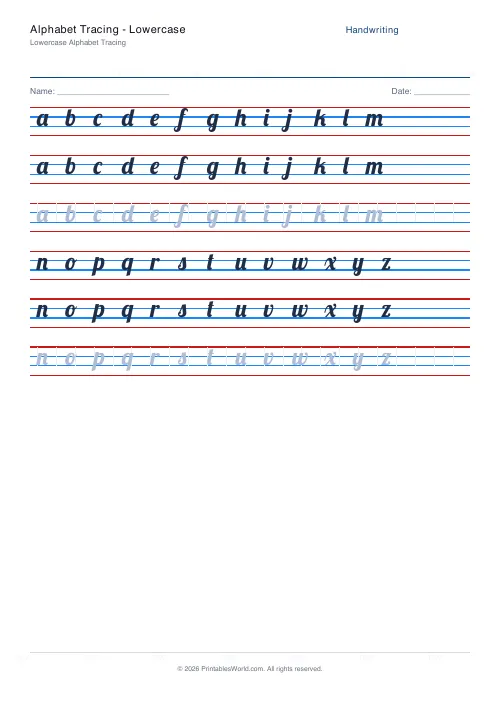
Alphabet Tracing: Lowercase
Trace all 26 lowercase letters with formation guides and practice lines.
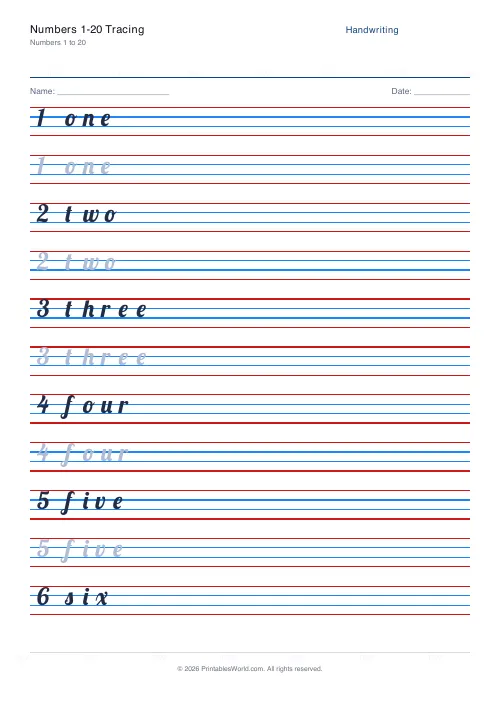
Numbers 1-20 Tracing
Trace and write the numbers one through twenty.
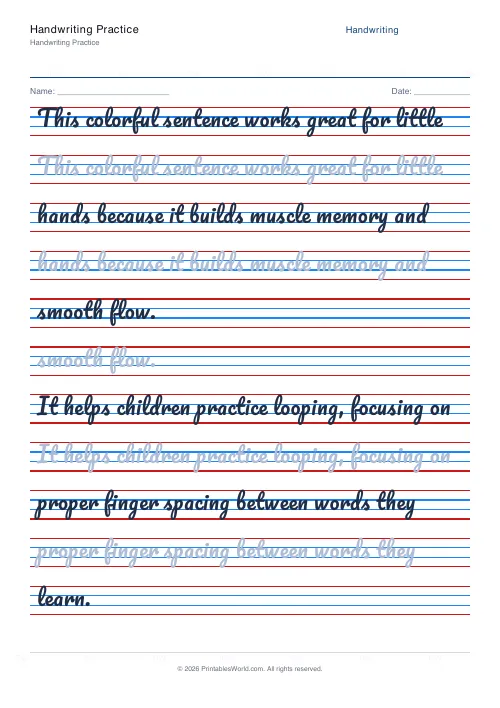
Handwriting Practice Generator
Create custom 4-line handwriting practice sheets with trace rows, adjustable guides, and your own text.
Further reading
Handwriting
Dotted vs solid trace lines: what works best for beginners
Each trace style removes a different amount of support. The mistake is staying on one too long. Tracing feels productive and teaches less than copying.
4 min read
Handwriting
Left-handed handwriting practice: free printable sheets
How to set up left-handed handwriting practice for comfort: paper angle, grip and page layout, plus free printable sheets designed for lefties.
7 min read
Handwriting
The best age to start handwriting practice
Age is the wrong question. Three readiness signs predict whether handwriting practice will help or frustrate. And what to do with the child who is not there yet.
5 min read
More like this
- Handwriting Practice Generator
- Alphabet Tracing: Uppercase
- Alphabet Tracing: Lowercase
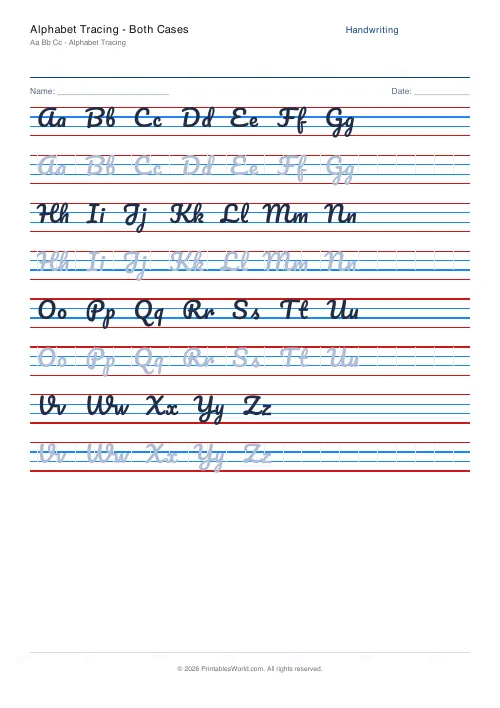 Alphabet Tracing: Both Cases
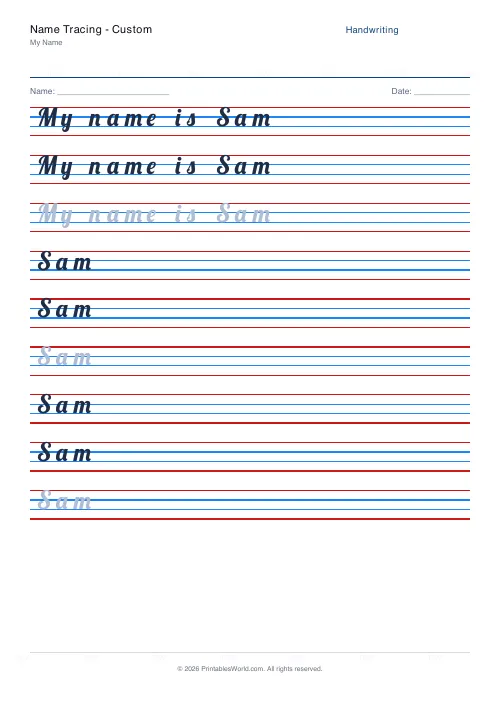 Name Tracing: Custom
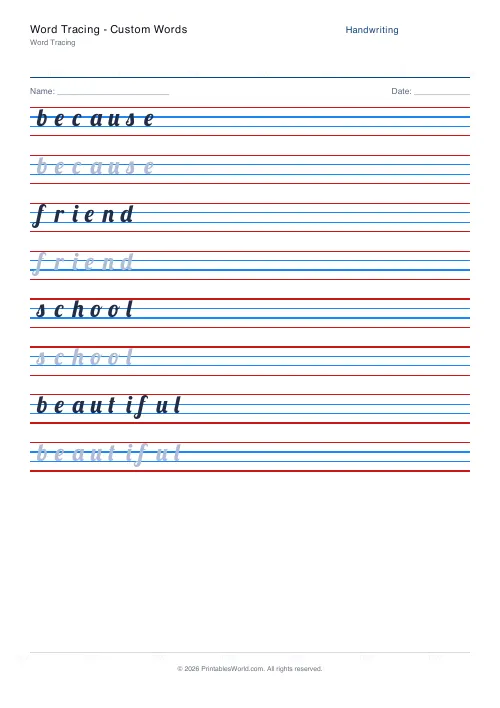 Word Tracing: Custom Words
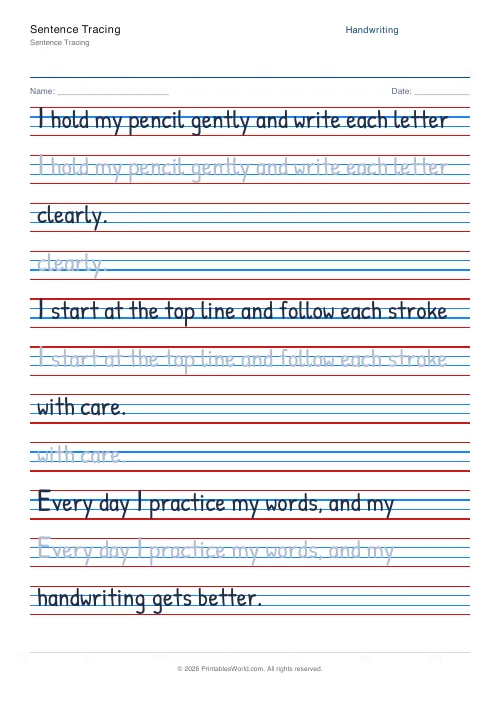 Sentence Tracing
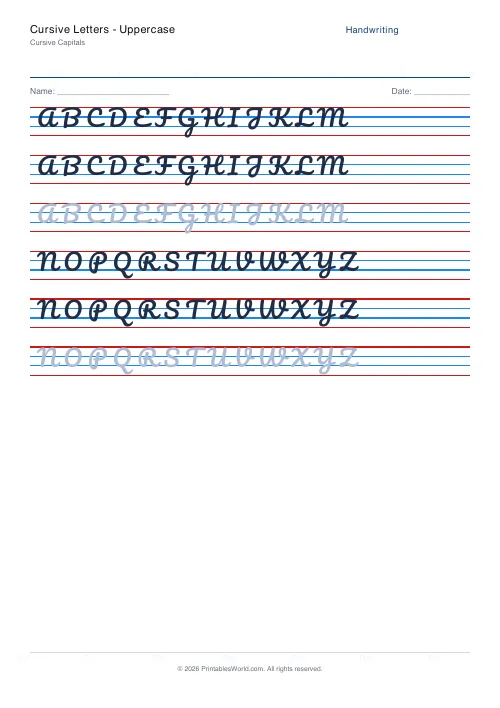 Cursive Letters: Uppercase
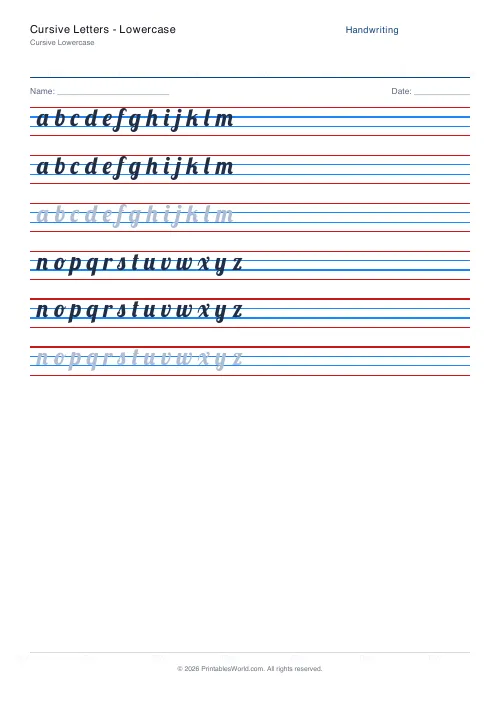 Cursive Letters: Lowercase
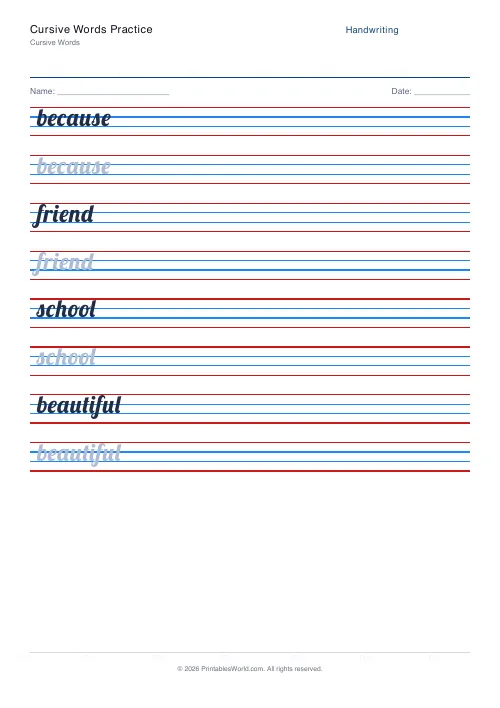 Cursive Words Practice
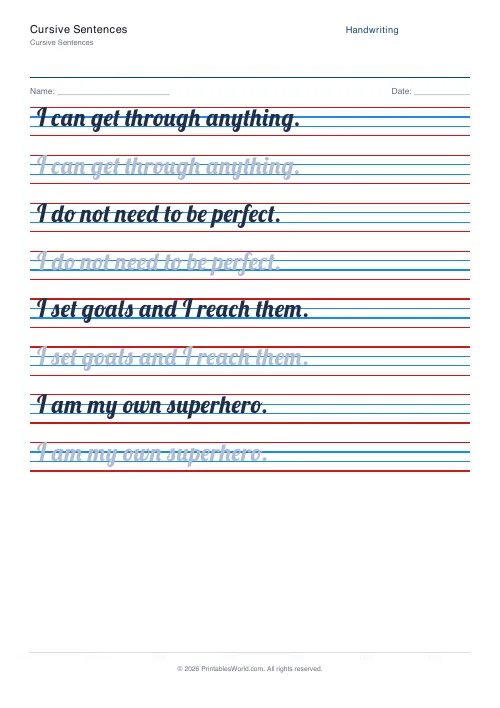 Cursive Sentences
 Dotted Letter Tracing
 Arrow Letter Tracing
 Blank Handwriting Lines