What this tool does
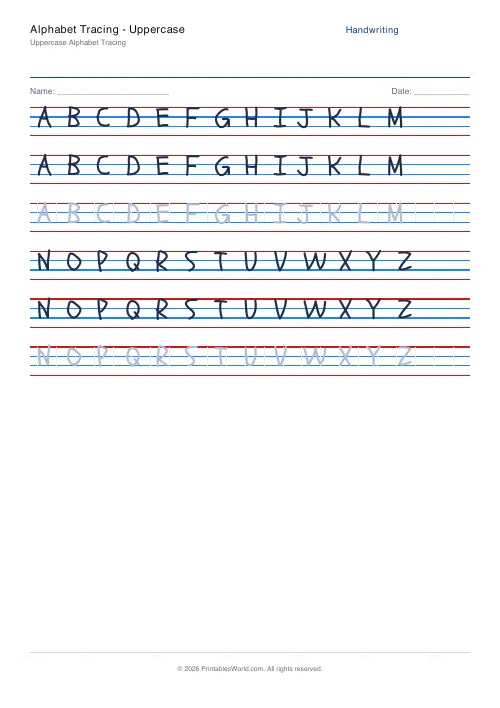
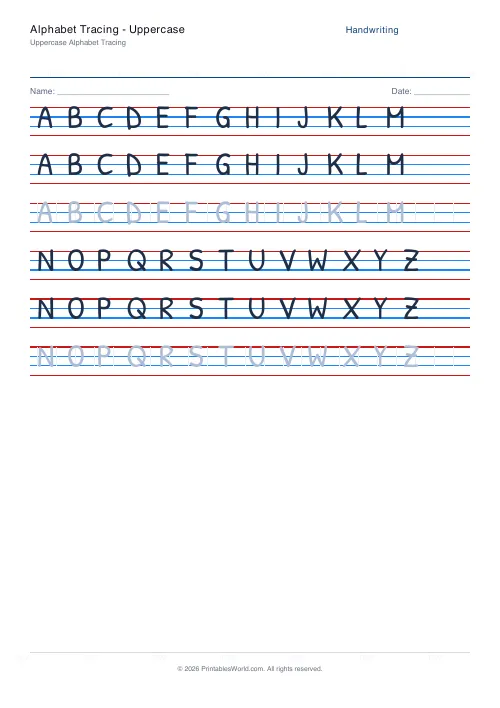
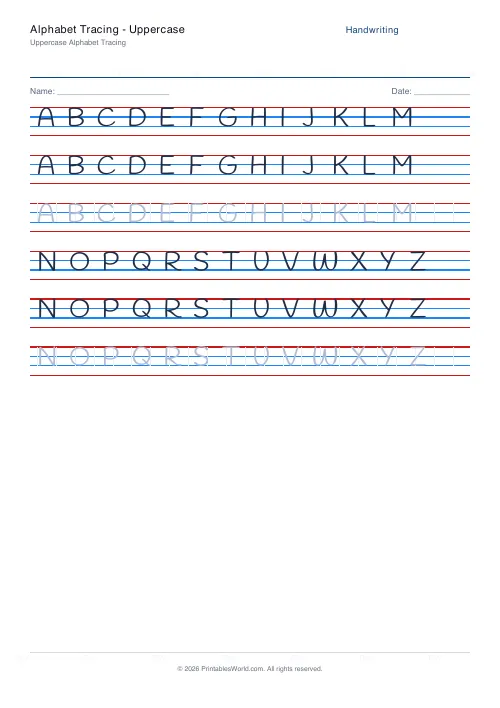
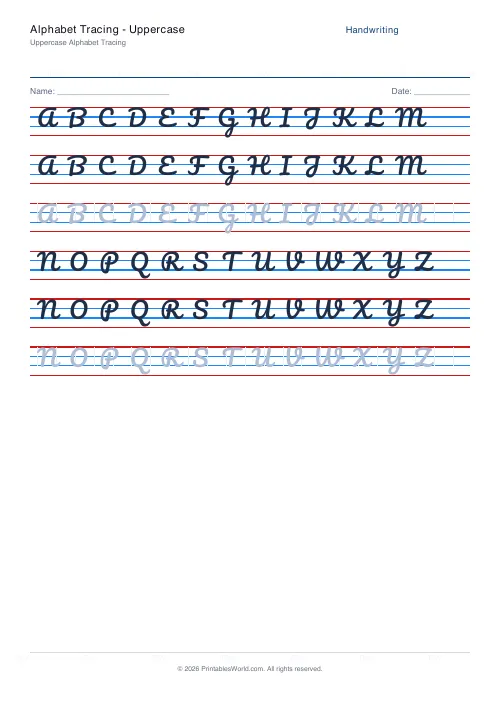
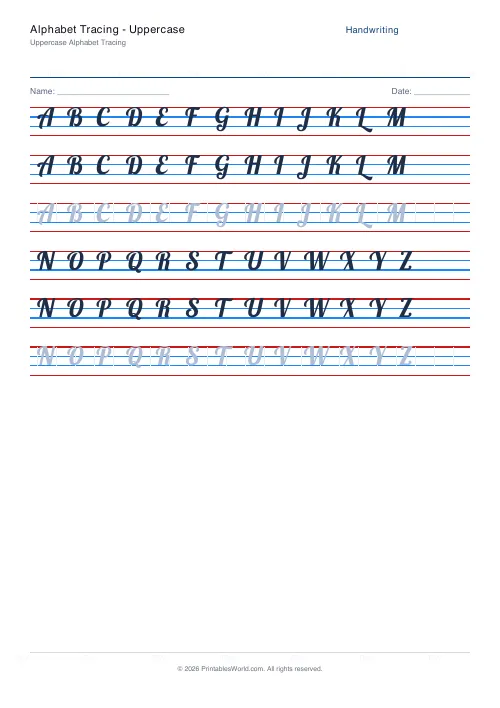
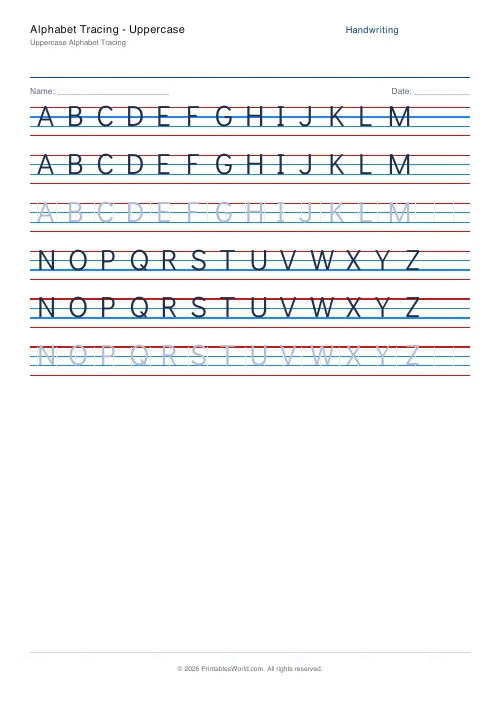
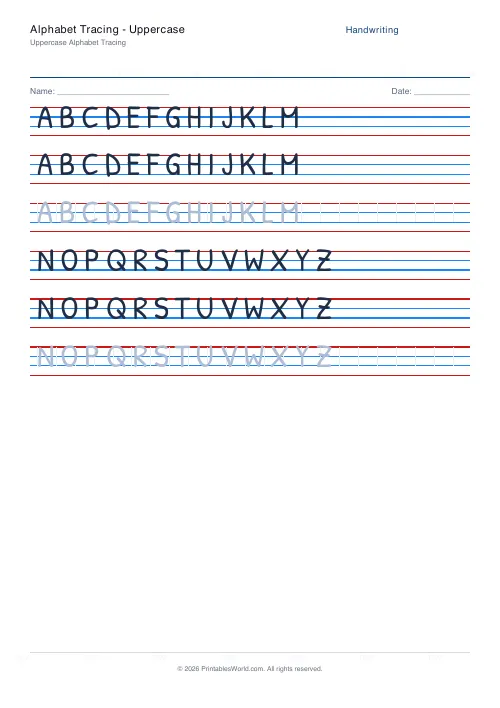
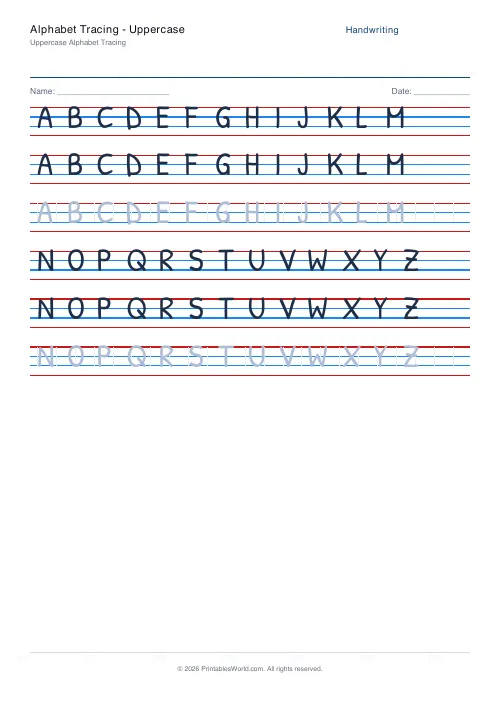
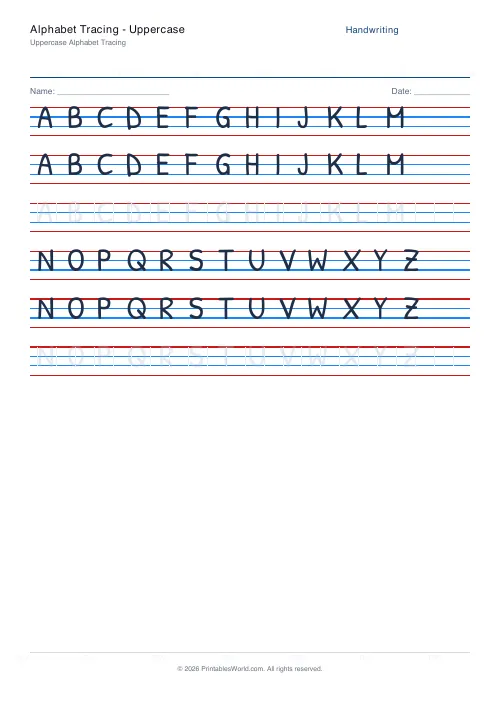
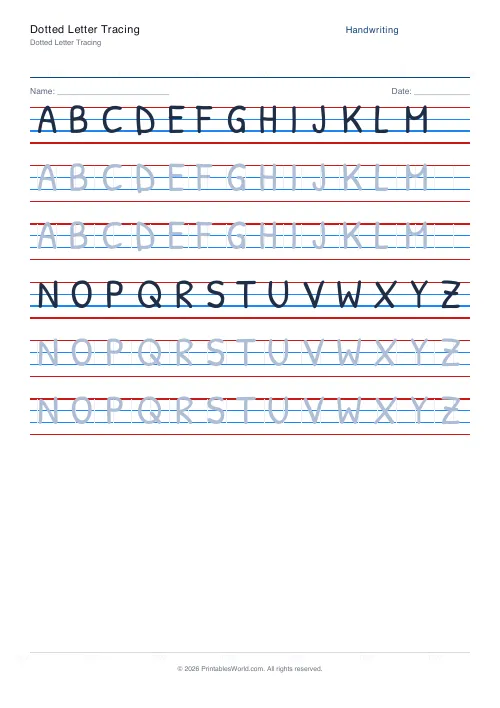
All 26 capitals on four-line ruling, arranged as trace rows followed by a clean copy line. Every setting on the main handwriting generator is available if you want to change the font, the trace style or the ruling.
People also used
Feedback
Spotted something off with this tool?
Twenty-six capitals, traced then copied
The sheet arrives loaded with A to Z across two lines on the standard four-line ruling. A traceable model row comes first, then an empty row to write on unaided.
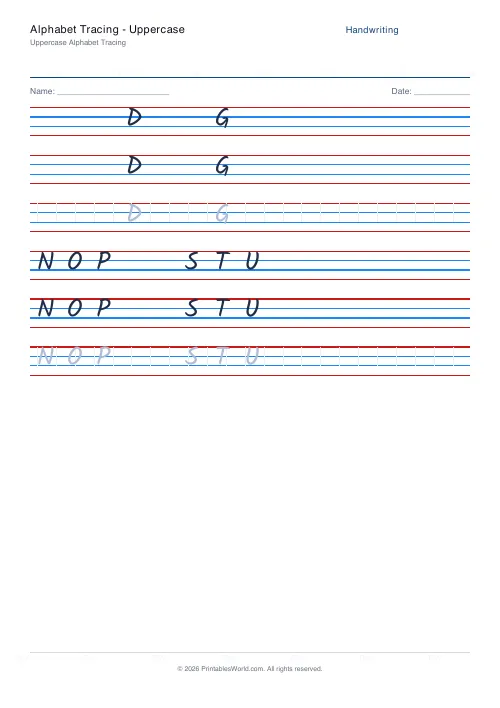
Everything is editable. The letters are just the starting text, so you can cut it to the six a child is working on, or repeat one letter across a whole page.
Why capitals come first
They are easier to form, and the reason is mechanical rather than educational.
Every capital in the Latin alphabet is built from straight lines and simple curves, and all of them start at the top. Lowercase needs loops. It needs tails, and dots, and letters that hang below the line. Several of them — b and d, p and q — are mirror images of each other, which a young hand confuses for months on end.
Which is why almost every child writes their name in capitals before they write it properly, and why fighting that is usually a waste of a year.
The trap that comes with them
A child who is fluent in capitals and slow in lowercase will keep using capitals, and by Year 2 you have a pupil writing THE CAT SAT and being marked down for it.
So use this sheet for the stage it suits — letter recognition, first name writing, pencil control — and move to lowercase practice as soon as the shapes are secure. Capitals are the entry point, not the destination.
Reading the four lines
Worth explaining explicitly, because children treat the ruling as decoration otherwise.
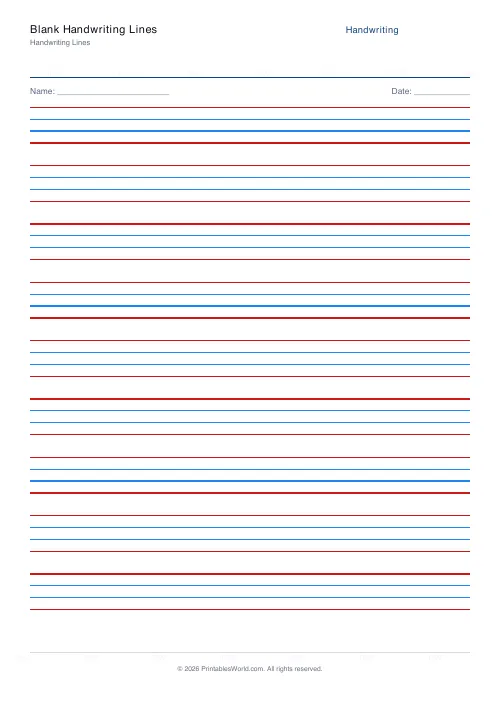
Capitals fill the space between the top line and the baseline. Nothing in this sheet goes below the baseline at all, which is one of the things that makes capitals a gentle start — the descender line is there, unused, waiting for lowercase g, j, p, q and y.
What you can change
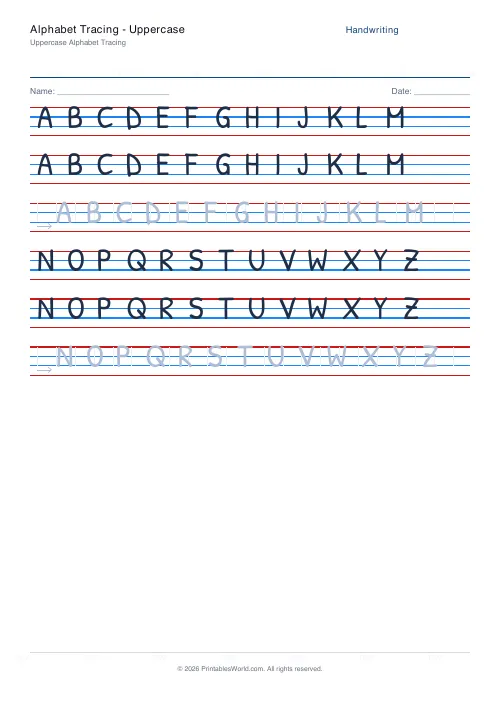
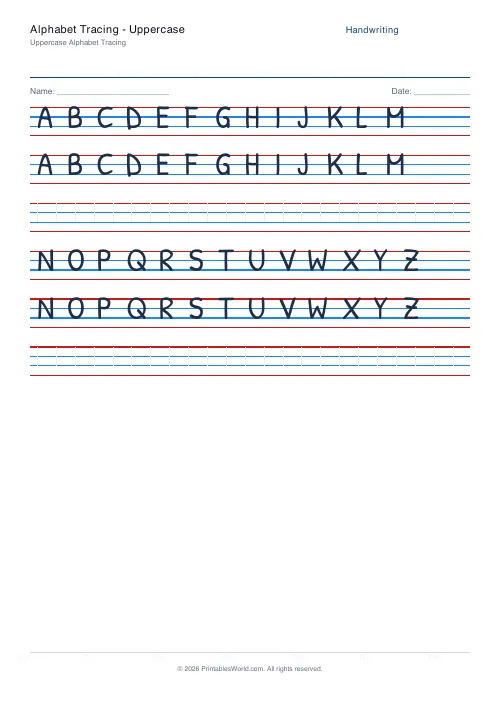
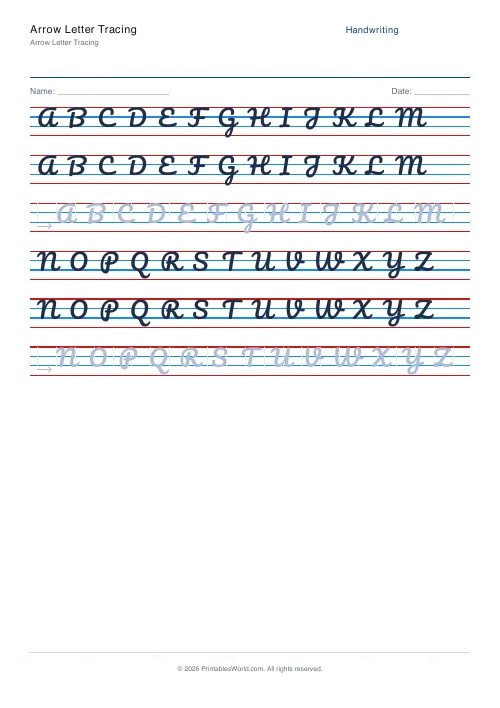
The whole handwriting engine is behind this preset: the practice text, the font (six handwriting faces plus a proper tracing font with hollow and dashed variants), the trace style, how many rows each line gets, character boxes, the ruling colour, and start dots with directional arrows.
Arrows are the setting worth knowing about. They show where each stroke begins and which way it goes, which is the single most common thing a child gets wrong — a letter that looks right and was drawn bottom-up will not join or speed up later.
How to run a sheet
Say the letter's name and its sound as it is traced. Silent tracing builds a motor pattern with nothing attached to it.
Do a few letters properly rather than all twenty-six carelessly. A page of twenty-six rushed capitals is worth less than four letters formed correctly, and the child is more tired afterwards.
Print at 100% on A4 or US Letter.
FAQs
Quick answers
Which font is used?
Patrick Hand. A friendly print-style font designed to be easy for children to copy.
How are the rows arranged?
Each line of letters gets one trace row plus two copy rows so kids can warm up then write independently.
Are there guide lines?
Yes. The standard 4-line band with the dashed midline shows top, middle, base, and descender so children learn correct height proportions.
Can I customise the letters?
Yes. Edit the practice text to focus on a single letter, a small group, or a child's initials.
Related tools
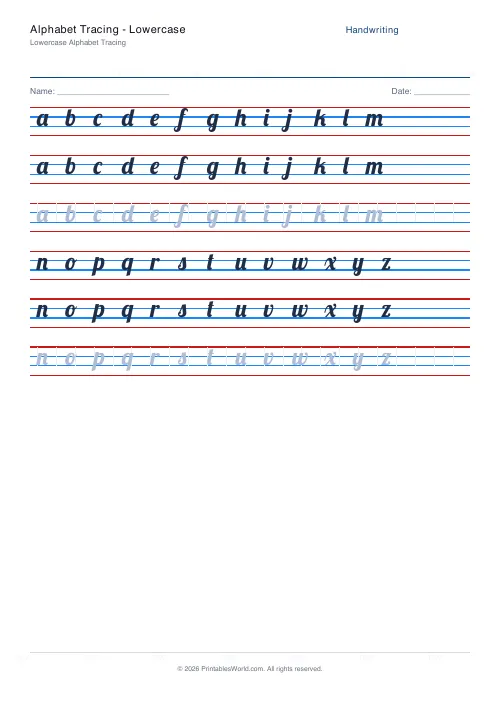
Alphabet Tracing: Lowercase
Trace all 26 lowercase letters with formation guides and practice lines.
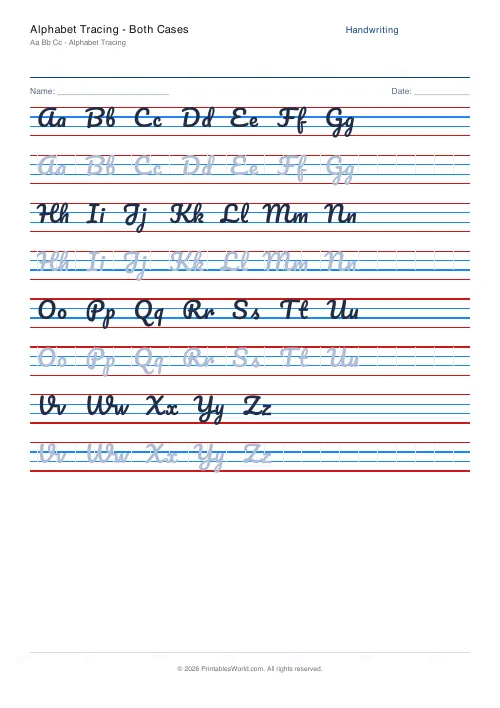
Alphabet Tracing: Both Cases
Uppercase and lowercase letters paired on one sheet for comparison.
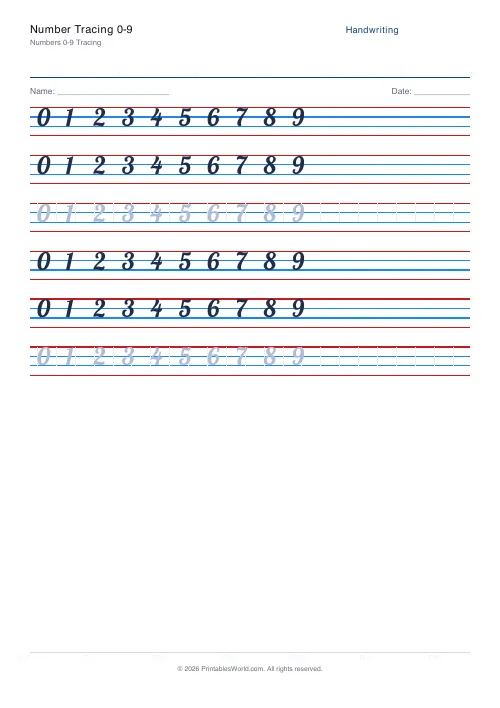
Number Tracing 0-9
Trace and write numbers 0-9 with practice rows on lined paper.
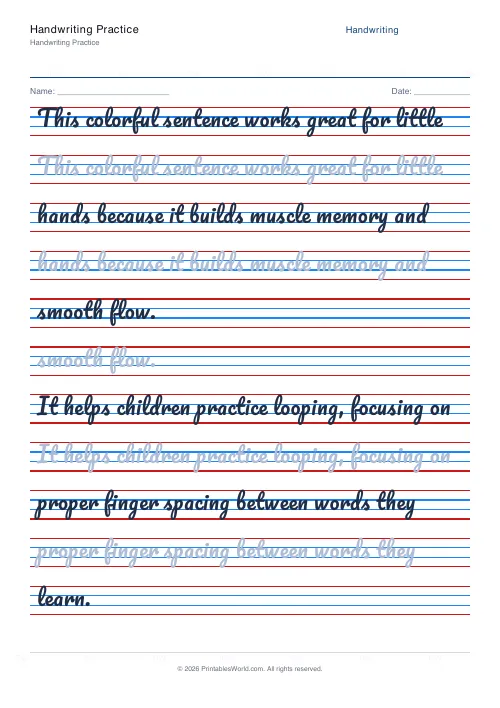
Handwriting Practice Generator
Create custom 4-line handwriting practice sheets with trace rows, adjustable guides, and your own text.
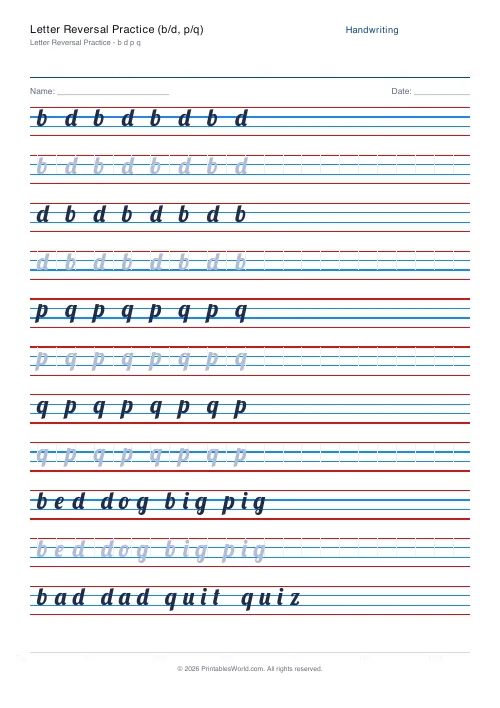
Letter Reversal Practice (b/d, p/q)
Targeted tracing for the most commonly reversed letters. B, d, p and q.
Further reading
Handwriting
Dotted vs solid trace lines: what works best for beginners
Each trace style removes a different amount of support. The mistake is staying on one too long. Tracing feels productive and teaches less than copying.
4 min read
Handwriting
How to fix reversed letters (b and d) in young writers
Reversing b and d is normal up to around seven. The fix is not more practice of both together. It is teaching them apart, by movement rather than by shape.
5 min read
Handwriting
Left-handed handwriting practice: free printable sheets
How to set up left-handed handwriting practice for comfort: paper angle, grip and page layout, plus free printable sheets designed for lefties.
7 min read
More like this
- Handwriting Practice Generator
- Alphabet Tracing: Lowercase
- Alphabet Tracing: Both Cases
- Number Tracing 0-9
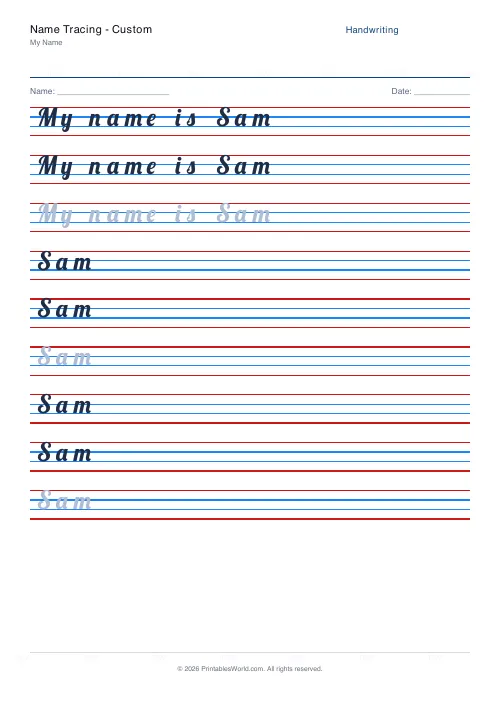 Name Tracing: Custom
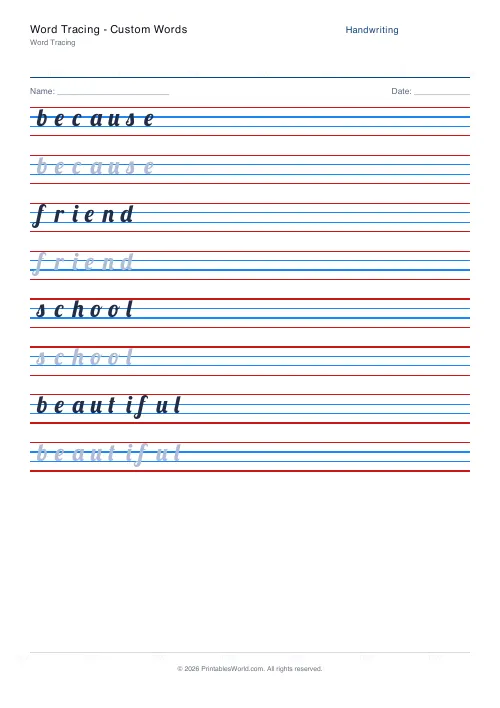 Word Tracing: Custom Words
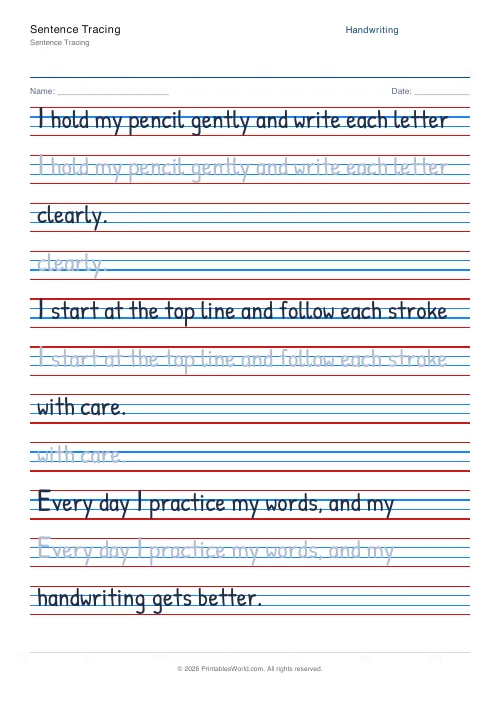 Sentence Tracing
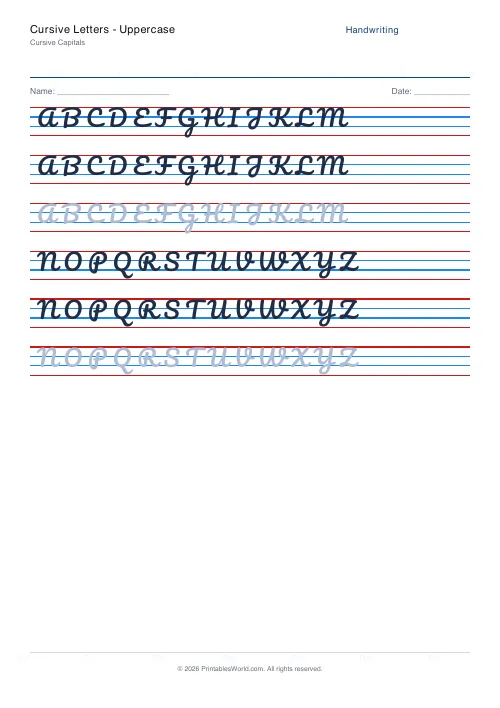 Cursive Letters: Uppercase
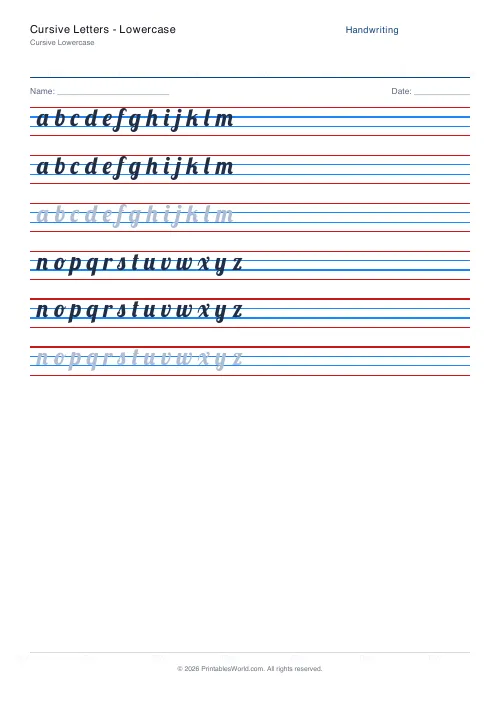 Cursive Letters: Lowercase
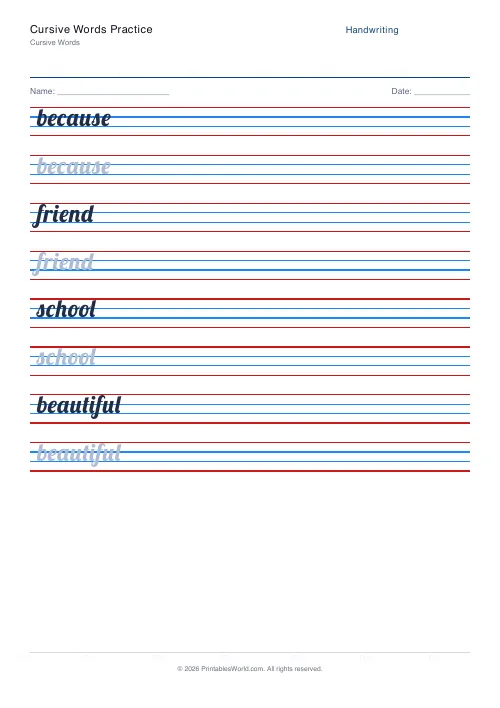 Cursive Words Practice
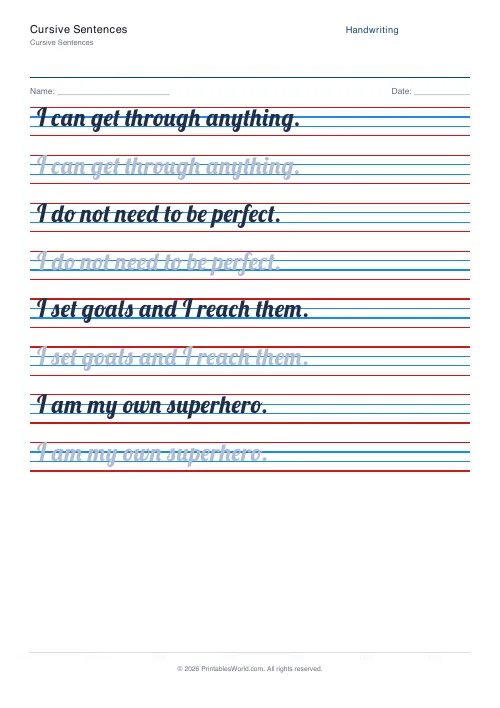 Cursive Sentences
 Dotted Letter Tracing
 Arrow Letter Tracing
 Blank Handwriting Lines