What this tool does
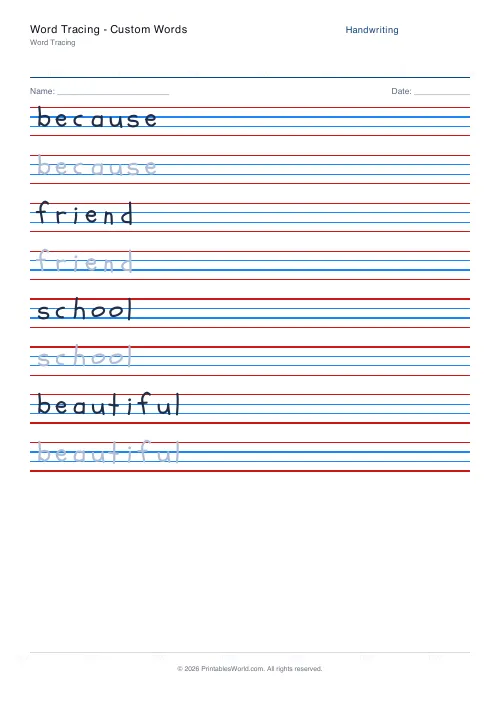
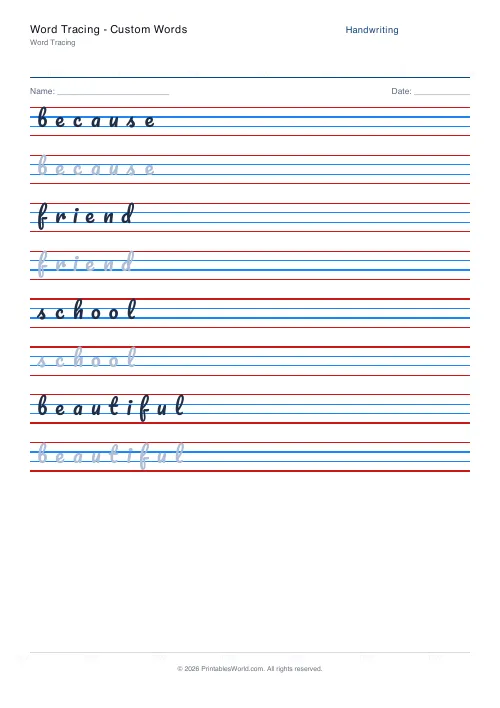
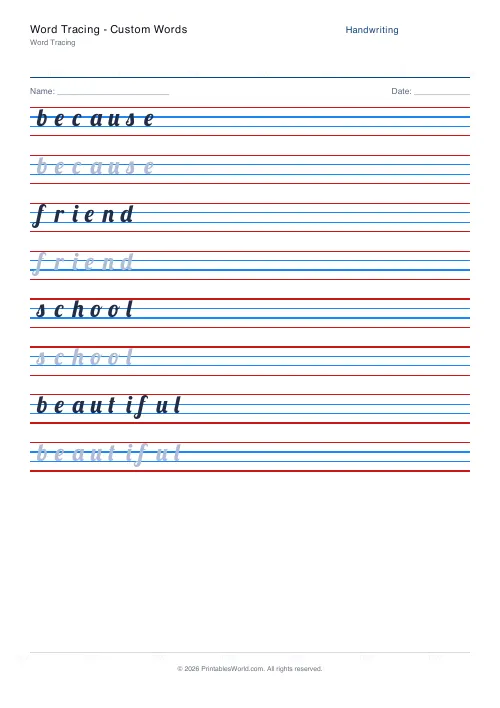
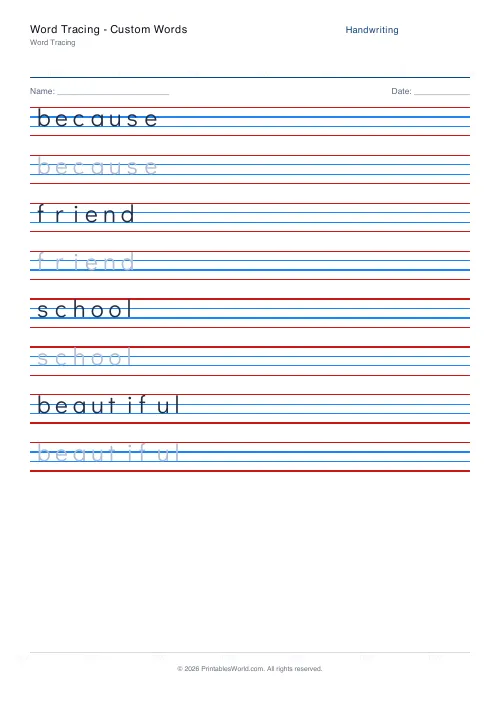
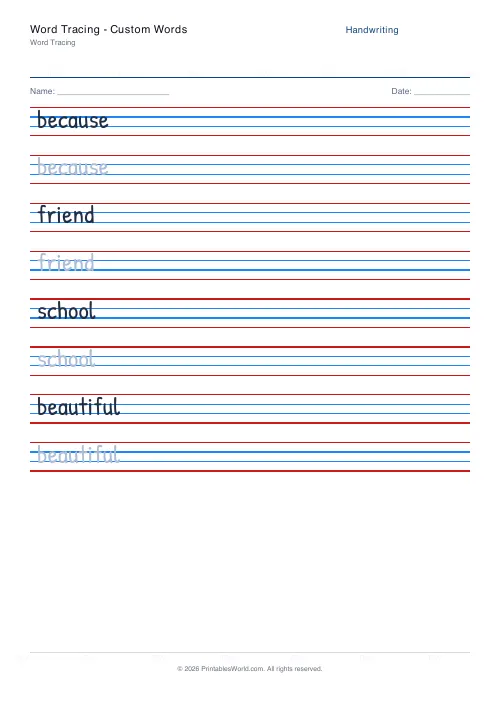
Paste your own word list and get trace-and-copy rows for each word on four-line ruling. Spelling words, topic vocabulary, a child's own name — whatever they are working on.
People also used
Feedback
Spotted something off with this tool?
Your words, one to a set of rows
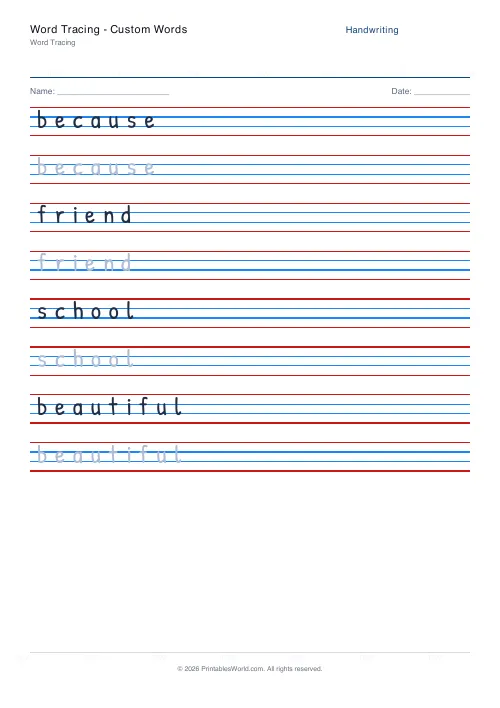
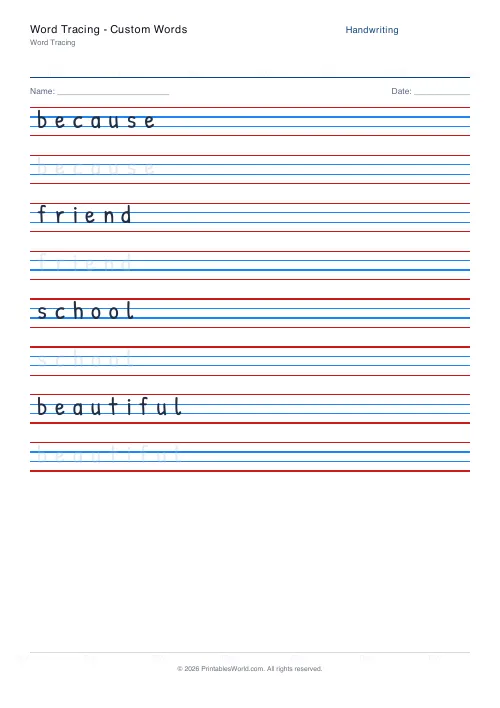
Type a list, one word per line, and each gets a traceable model row followed by a copy row on the standard four-line ruling.
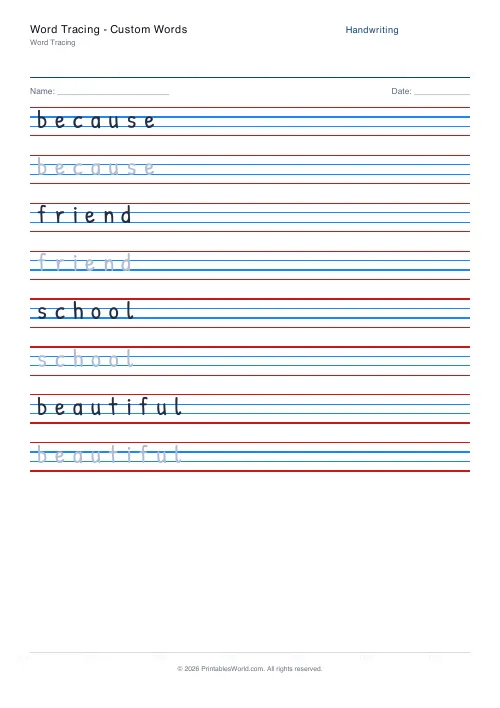
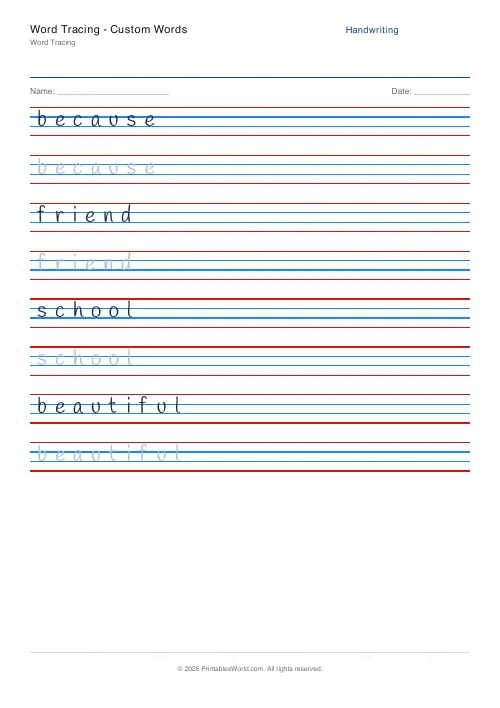
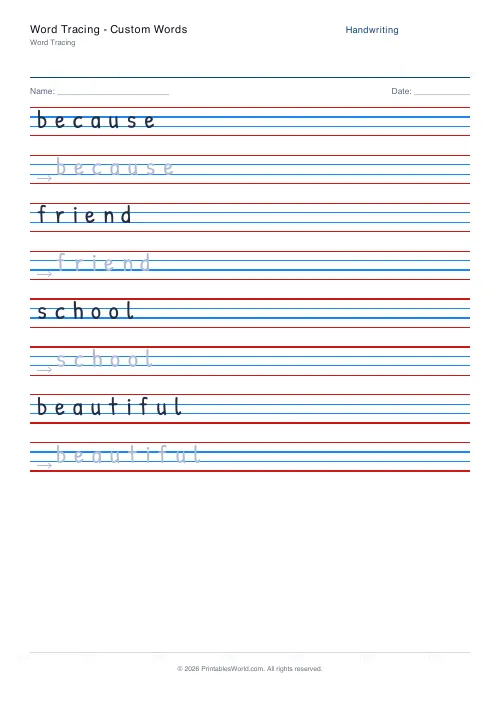
The sheet starts with four notoriously awkward spellings — because, friend, school, beautiful — which are there to show the format rather than to be used. Replace them.
Where the words should come from
The child's own errors, ideally. A word misspelled twice in their own writing is one they are actively using and actively getting wrong. Nothing else you could put on a tracing sheet is worth as much.
After that: this week's spelling list, the topic vocabulary from a science unit, the names of family members, the words in a reading book that keep tripping them up.
Long lists of unrelated words do not work. Four to six gets finished. Fifteen gets abandoned around word nine, and the last six are traced carelessly, which practises carelessness.
Tracing a word is not the same as tracing letters
This is the reason word tracing earns its own sheet rather than being a longer alphabet page.
Letters practised in isolation are a set of shapes. A word needs them in sequence, at a consistent size, with consistent spacing and, if the writing is joined, the joins between them — and it is the joins that decide whether handwriting becomes fluent or stays laboured for years. Perfect individual letters still produce an unreadable word if the spacing collapses halfway along it.
It also puts the spelling in the hand rather than only in the eye. Writing a word out is a genuinely different memory task from reading it, which is why look-cover-write-check works.
Settings that matter here
Joined or separate is the first decision, and it should match whatever the school teaches — a child taught two systems at once learns neither.
Trace style controls the model row. Solid to write straight over, a hollow outline to fill in, a dashed version, or arrows marking where each stroke begins. Rows per word sets how much practice each one gets, and character boxes keep letter widths even for a child whose writing sprawls across the page.
Doing it properly
Say the word before tracing it and again after copying it. A child who traces silently is practising a motor pattern with no meaning attached.
Then cover the whole row and ask for the word from memory on the back of the sheet. Ten seconds, and considerably more informative than the completed page.
Print at 100% on A4 or US Letter.
FAQs
Quick answers
How do I add words?
Type each word on its own line in the practice text. The engine generates trace-and-copy rows for every line.
Are words shown one per row?
Yes. Each word becomes its own line with one trace and one copy row by default.
Which font is used?
Patrick Hand. A clear print-style font that early writers can copy easily.
Can I do sentences instead?
Yes. Try the sentence-tracing variant for full lines of text.
Related tools
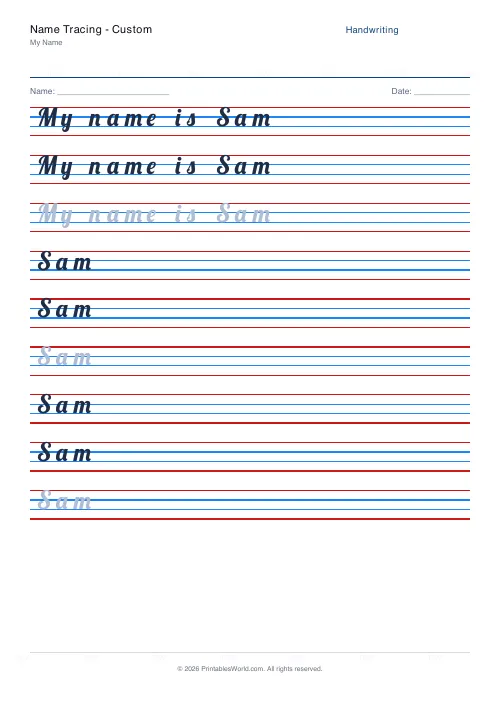
Name Tracing: Custom
Enter any name and generate a personalised tracing worksheet.
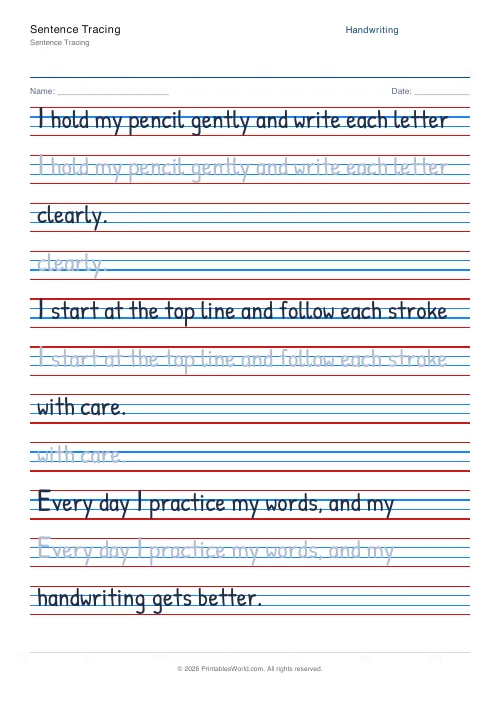
Sentence Tracing
Trace full sentences. Custom text or built-in presets.
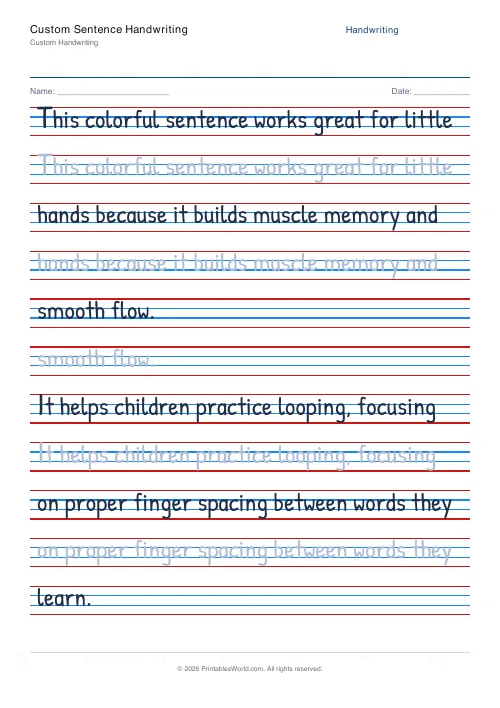
Custom Sentence Handwriting
Type any sentence and instantly generate a personalised practice sheet.
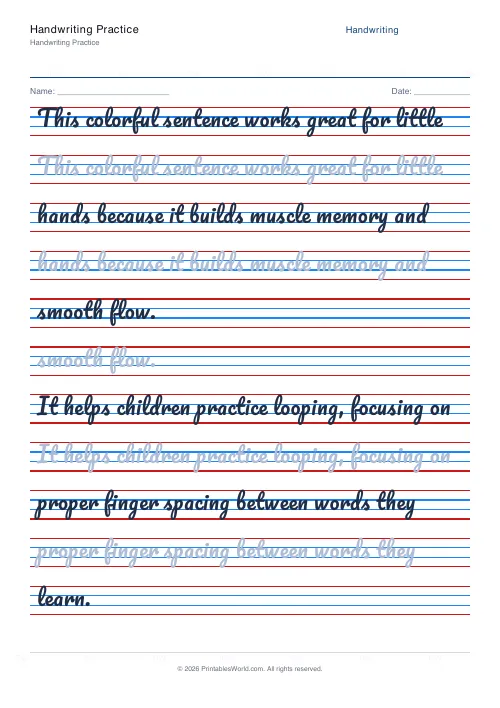
Handwriting Practice Generator
Create custom 4-line handwriting practice sheets with trace rows, adjustable guides, and your own text.
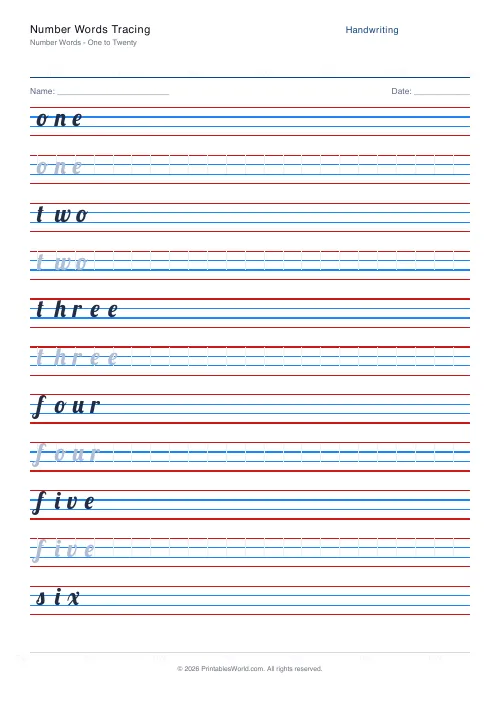
Number Words Tracing
Trace the number words one to twenty on 4-line ruling.
Further reading
More like this
- Handwriting Practice Generator
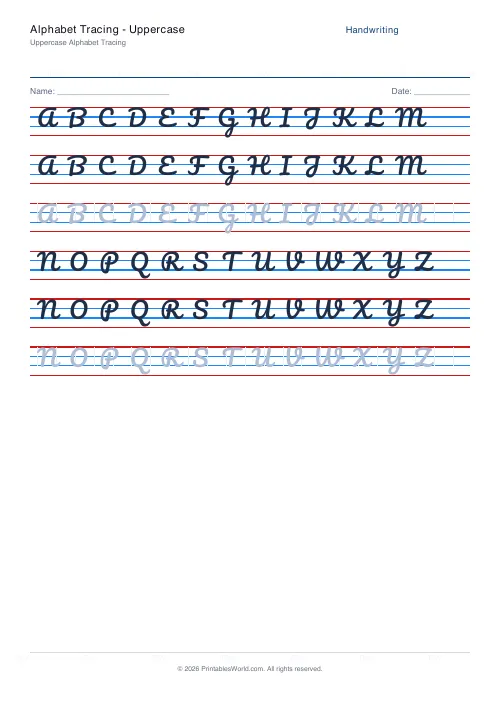 Alphabet Tracing: Uppercase
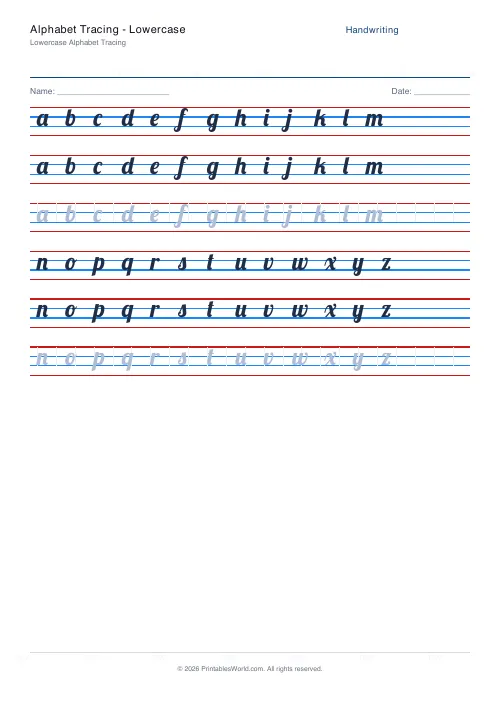 Alphabet Tracing: Lowercase
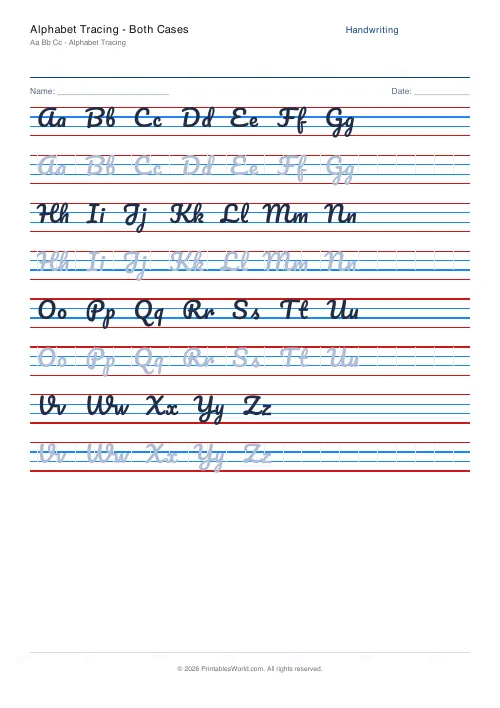 Alphabet Tracing: Both Cases
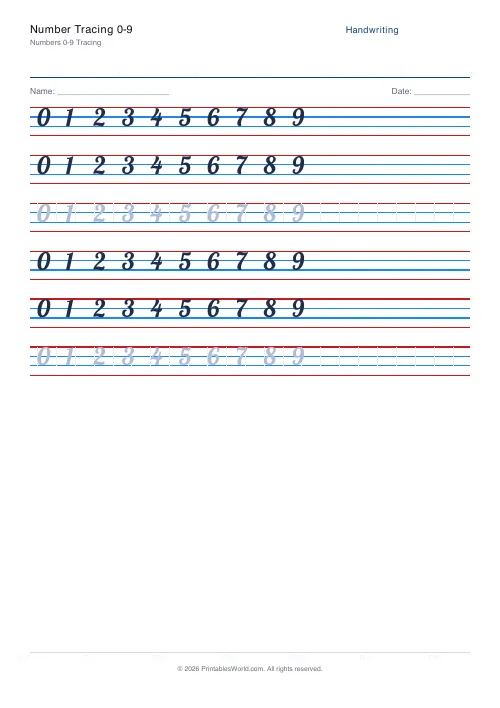 Number Tracing 0-9
- Name Tracing: Custom
- Sentence Tracing
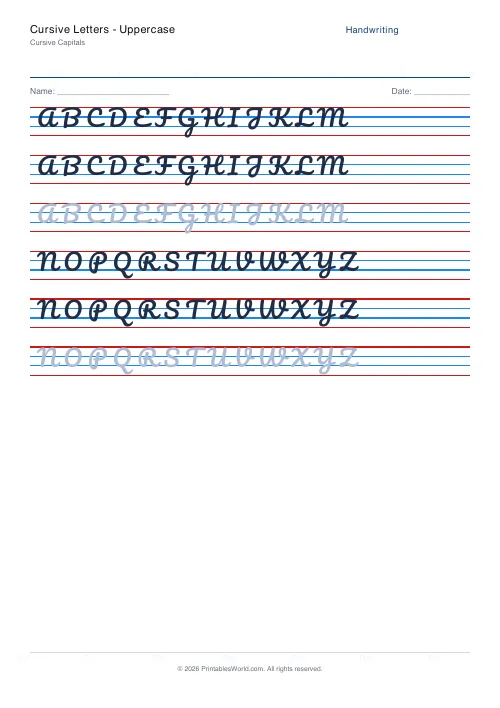 Cursive Letters: Uppercase
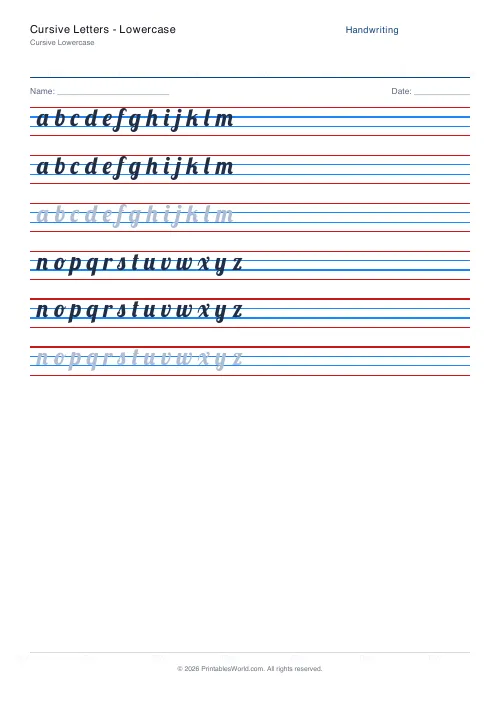 Cursive Letters: Lowercase
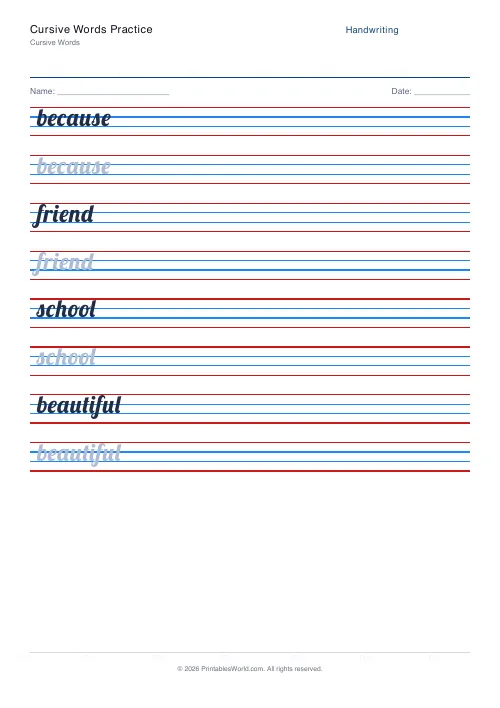 Cursive Words Practice
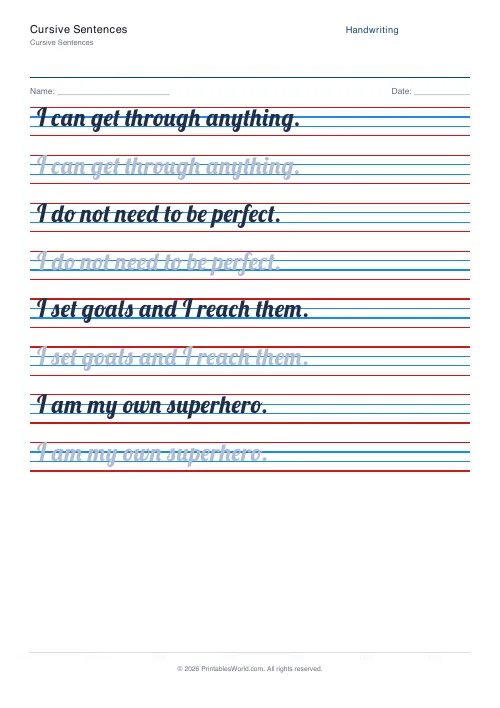 Cursive Sentences
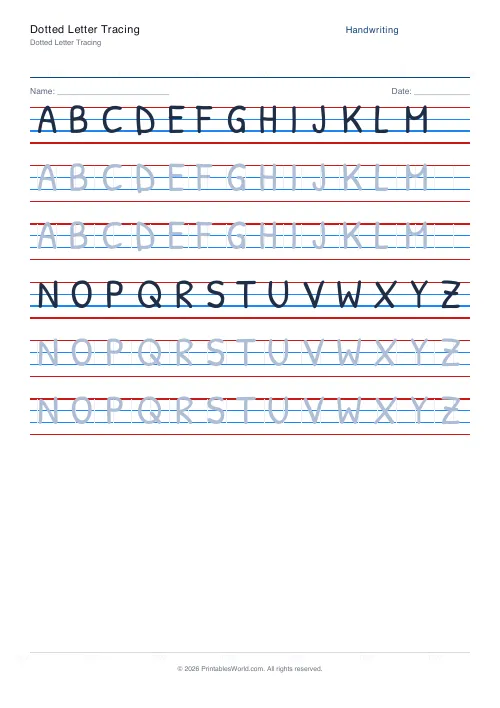 Dotted Letter Tracing
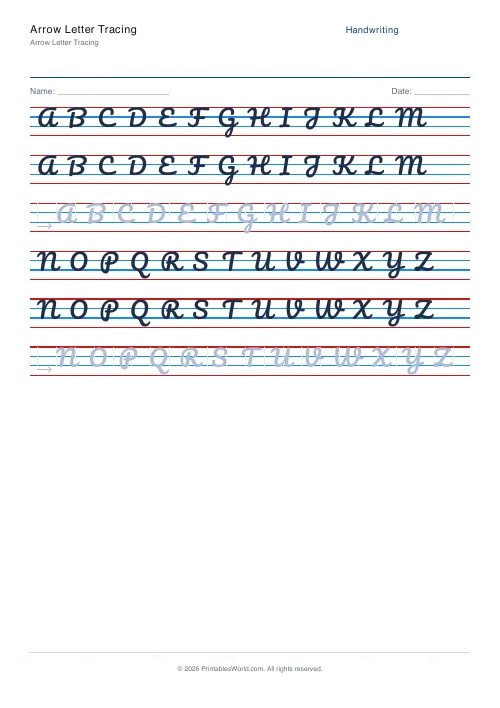 Arrow Letter Tracing
 Blank Handwriting Lines