What this tool does
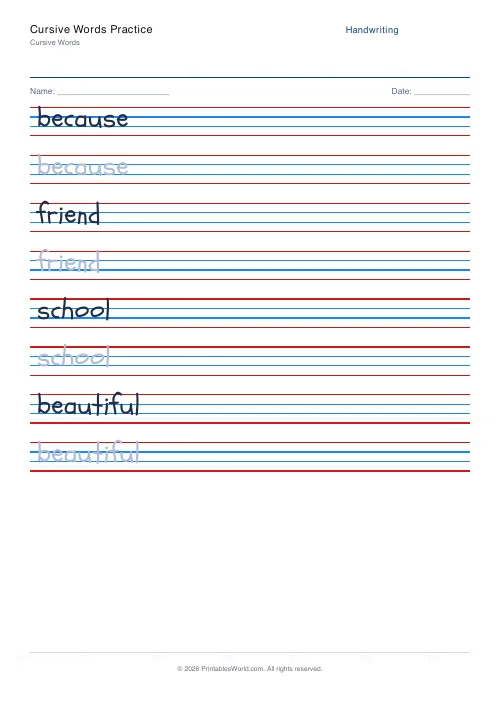
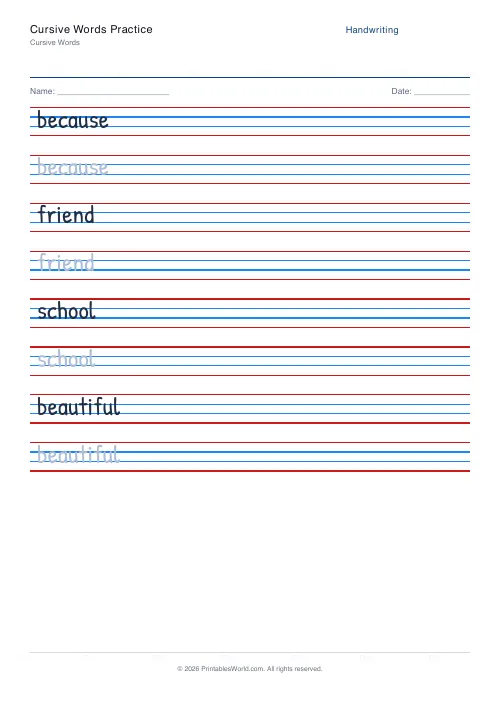
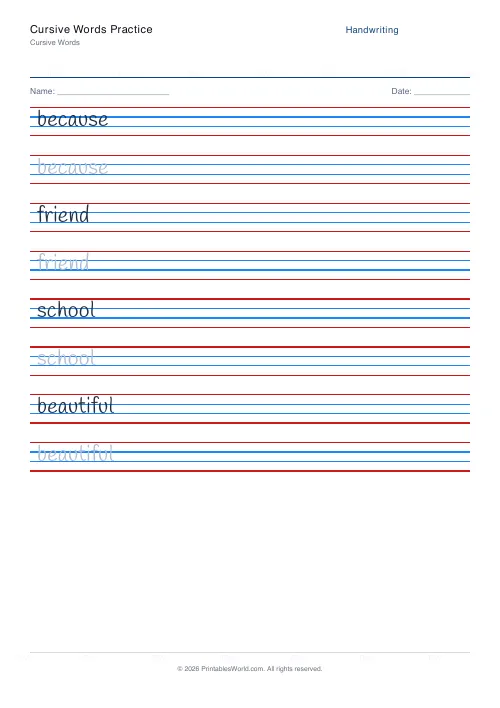
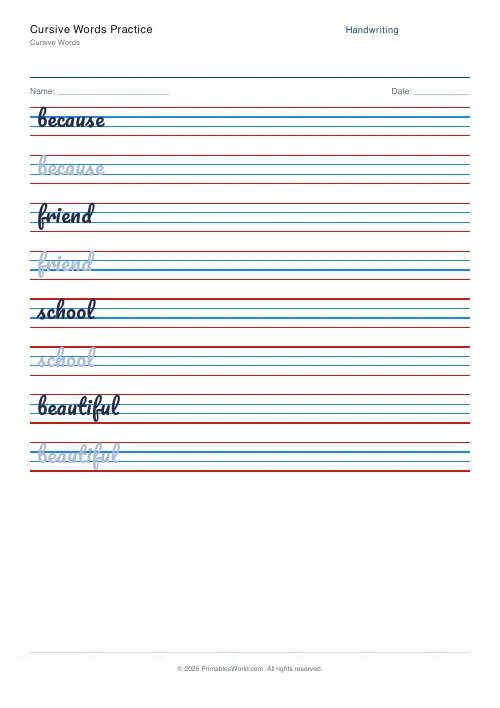
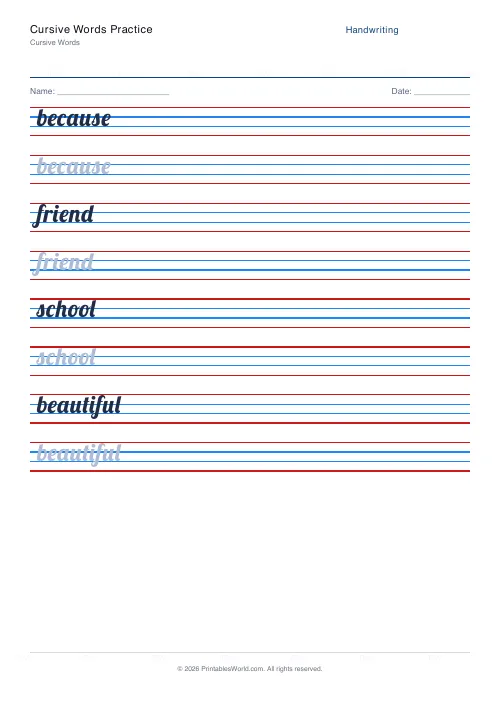
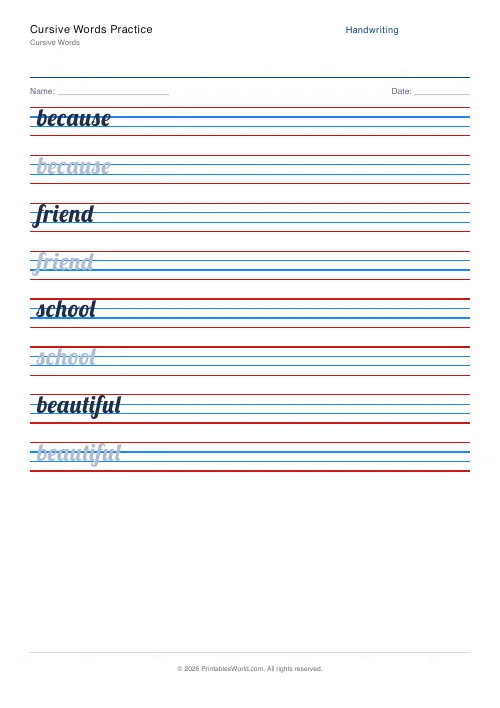
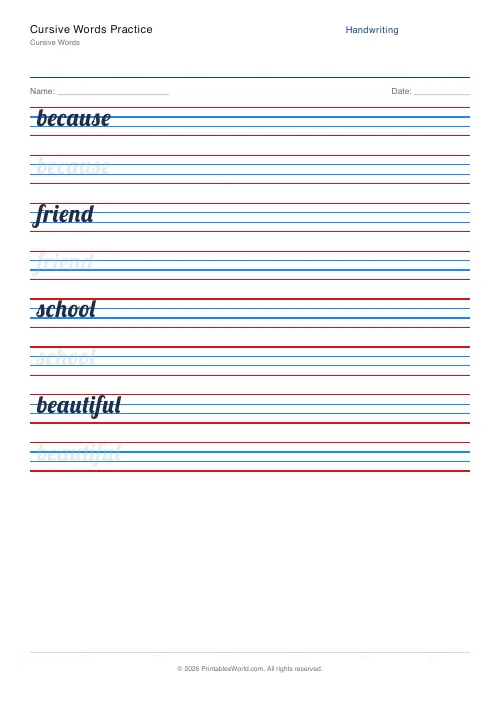
Whole words in a genuine joined cursive, each with a model row and a copy row. Paste your own list to practise joins on the words a child actually writes.
People also used
Feedback
Spotted something off with this tool?
Joins, in the context they are used
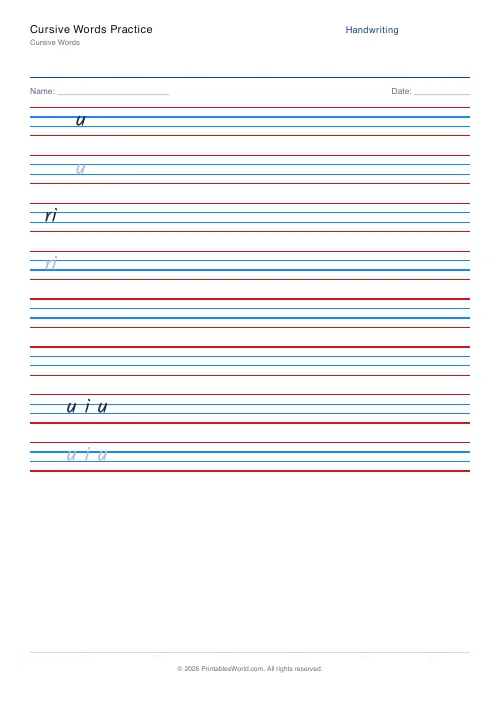
Each word prints in PW Cursive with a dark model row and a copy row beneath, on four-line ruling. Four awkward spellings load by default. They are there to show the format, and you should replace them.
Why words rather than letters
An alphabet sheet practises 26 letterforms. A word sheet practises the joins between them, and the joins are the part that decides whether joined writing is faster than print or slower.
It also practises what only exists at word level. Keeping every letter the same height. Holding the slope steady across six or seven of them. Not letting the spacing collapse halfway along. A child with immaculate individual letters can still produce a word nobody can read, and no amount of letter drilling will ever show you that.
Choose words for their joins, not their spelling
This is the setting that makes the sheet worth using deliberately.
Words full of baseline-exit letters — and, hand, stand — are the easy ones, because every join is the same upward stroke. Words containing o, r, v or w are harder, because those four exit from the top and the join arrives high.
So from, world, over and write are worth more practice than their spelling difficulty suggests. If you want a sheet that targets the hard joins, pick words on that basis rather than by how tricky they are to spell.
Or use their spelling list
The other productive source is whatever the child is being tested on this week. Practising the joins and the spelling in the same exercise costs nothing extra and means one sheet does two jobs.
Their own name belongs on an early sheet too. It is the word they write most and the one they care about.
What the generator asks for
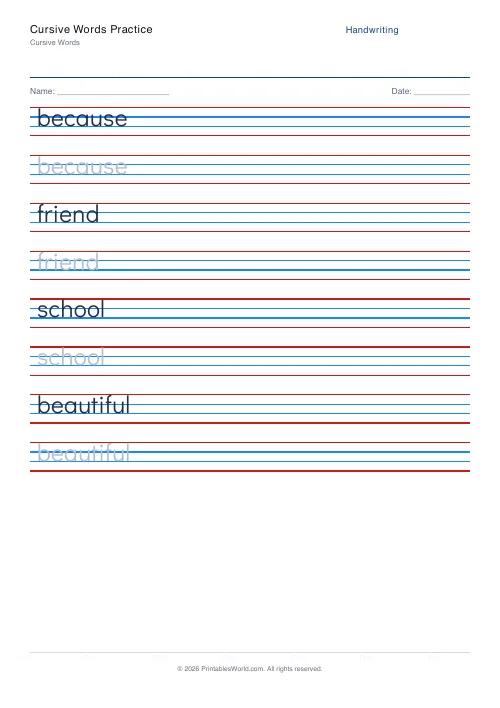
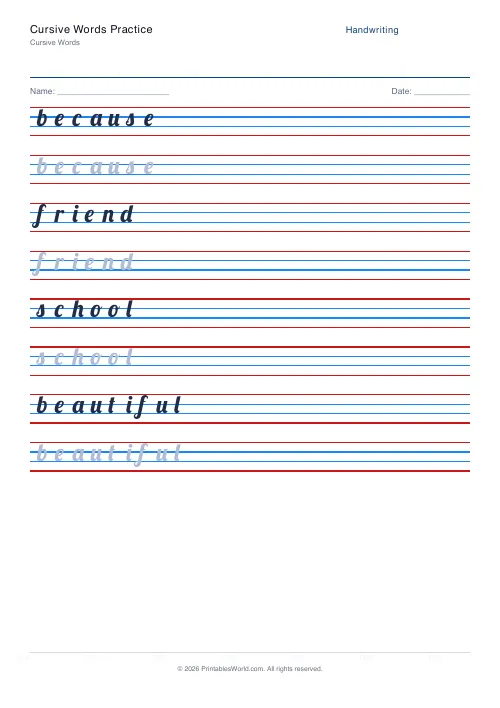
The word list, the cursive face (GB or US), trace style, rows per word, character boxes, ruling colour and line height. A4 or US Letter.
Four to six words. More than that and the last few get traced without attention, which is carelessness being practised at speed.
Running it
Say the word before tracing and again after copying. Watch the pencil rather than the page — a join that looks right on paper may have been drawn as two separate strokes with the pen lifted, which will not survive being written at speed.
Print at 100% on A4 or US Letter.
FAQs
Quick answers
Which font is used?
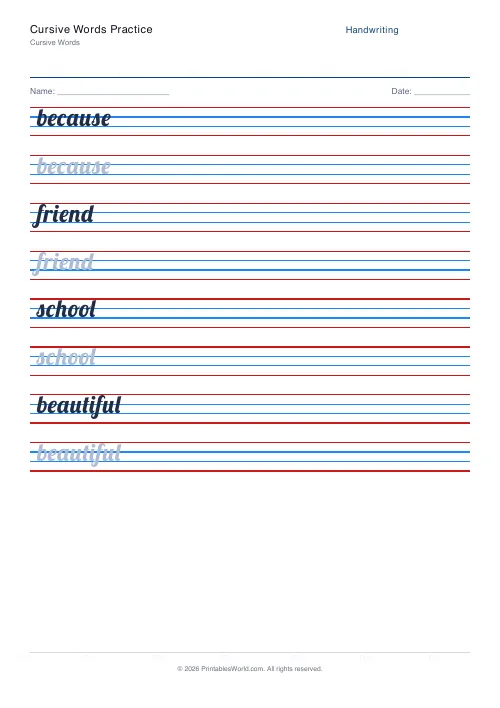
Lobster. A confident cursive script that shows off the joins clearly.
Can I use my own words?
Yes. Type any list, spelling words, sight words, vocabulary, one per line in the practice text box.
How is each row arranged?
Each word gets one trace row plus one copy row. Increase "Rows / sentence" for more practice.
Want full sentences?
Try the cursive-sentences variant for longer joined-up writing practice.
Related tools
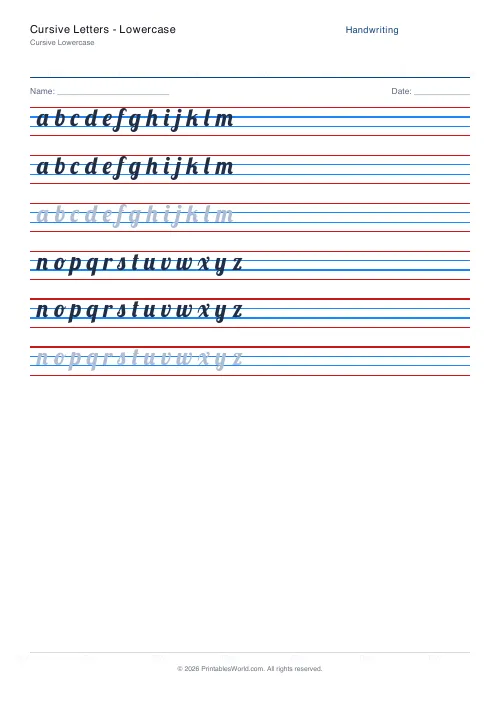
Cursive Letters: Lowercase
Trace and practise cursive lowercase letters with directional flow.
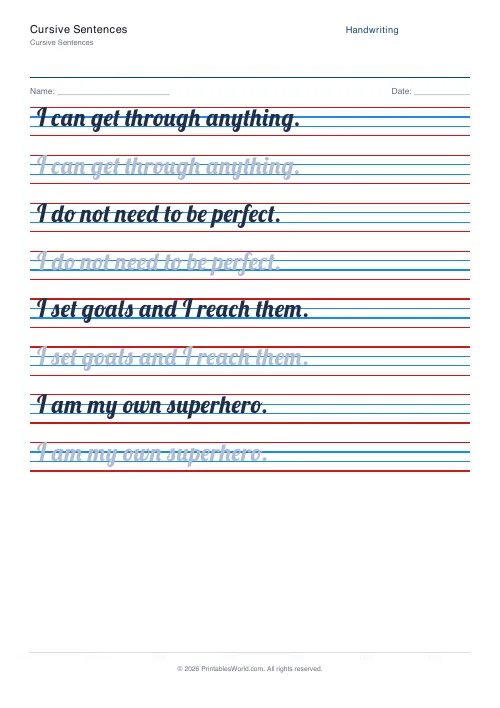
Cursive Sentences
Copy sentences in cursive. Includes well-known quotes and custom input.
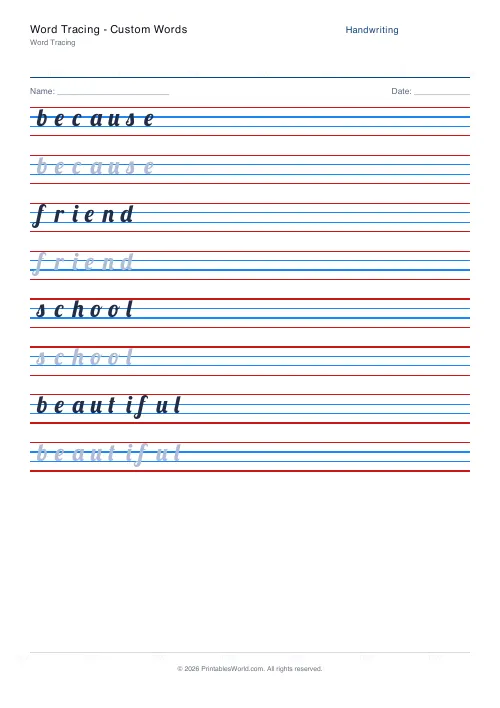
Word Tracing: Custom Words
Enter a word list and generate a tracing sheet on 4-line ruling.
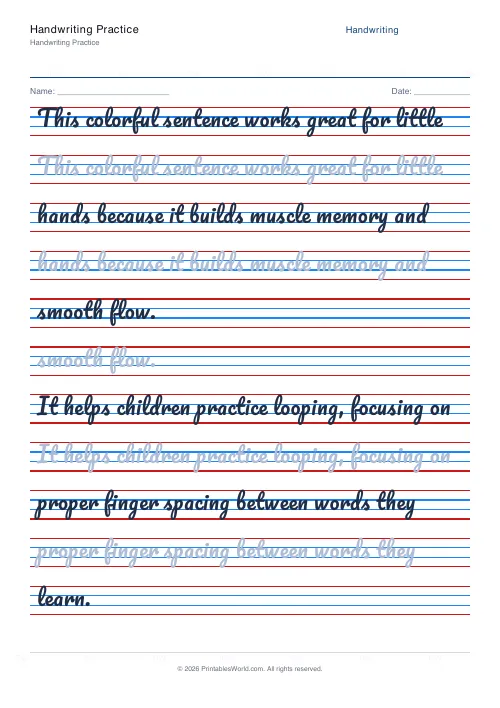
Handwriting Practice Generator
Create custom 4-line handwriting practice sheets with trace rows, adjustable guides, and your own text.
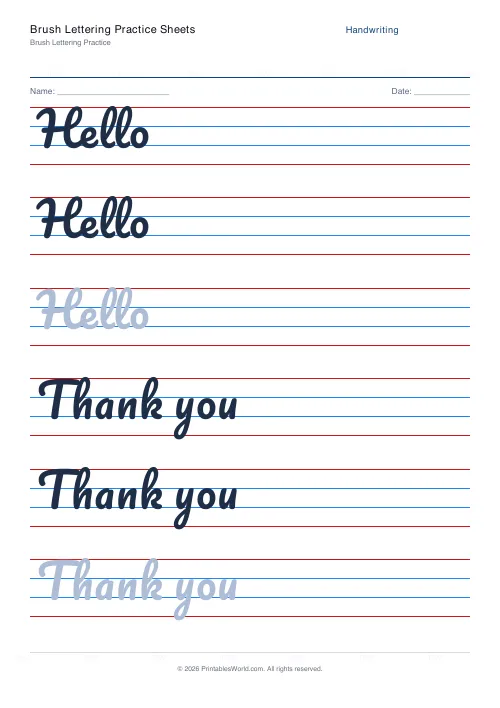
Brush Lettering Practice Sheets
Modern brush-script practice on wide ruling. Warm up your strokes word by word.
Further reading
Handwriting
How to teach cursive at home: a step-by-step plan
A simple step-by-step plan for teaching cursive at home, with letter families grouped by stroke, a four-week practice sequence, and free printable sheets to download.
8 min read
Handwriting
Print vs cursive: which should children learn first?
Countries disagree, schools disagree, and the research is thinner than either side suggests. Here is what print and cursive each actually do well, and a practical way to decide for one child.
6 min read
Handwriting
Left-handed handwriting practice: free printable sheets
How to set up left-handed handwriting practice for comfort: paper angle, grip and page layout, plus free printable sheets designed for lefties.
7 min read
More like this
- Handwriting Practice Generator
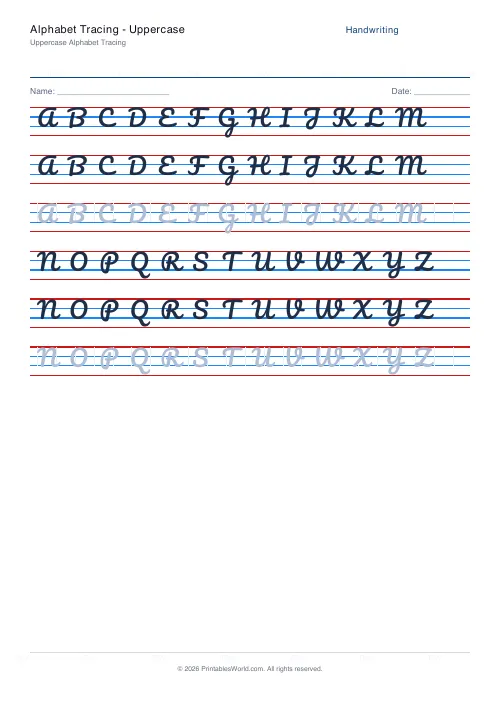 Alphabet Tracing: Uppercase
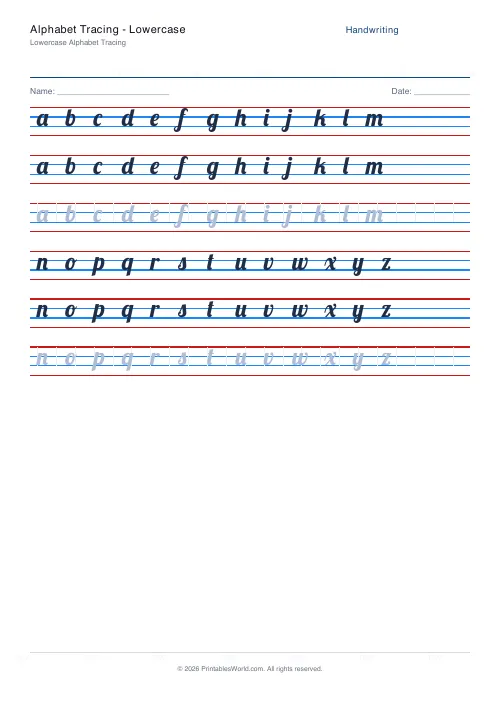 Alphabet Tracing: Lowercase
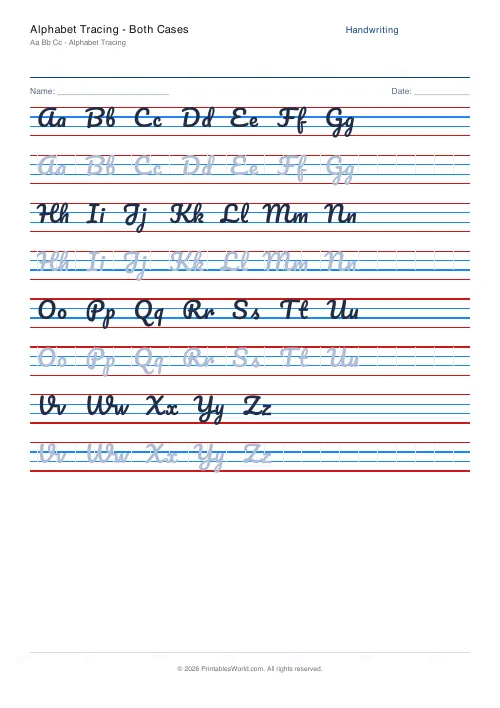 Alphabet Tracing: Both Cases
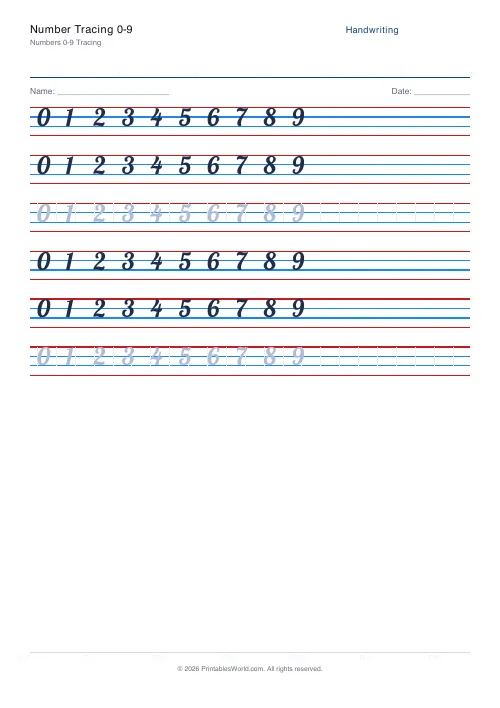 Number Tracing 0-9
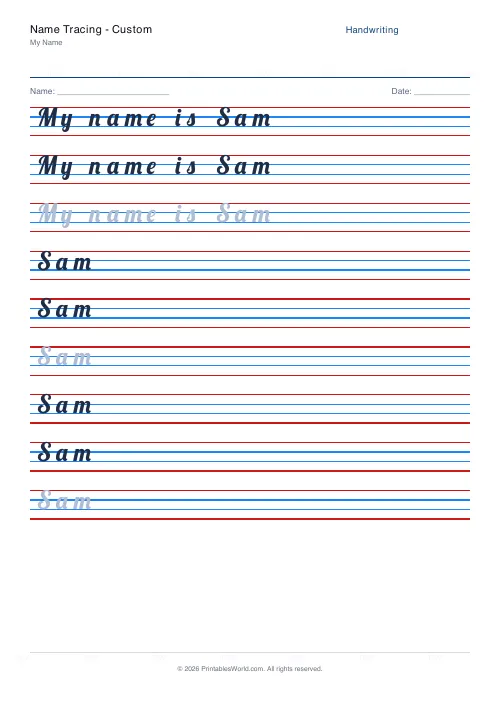 Name Tracing: Custom
- Word Tracing: Custom Words
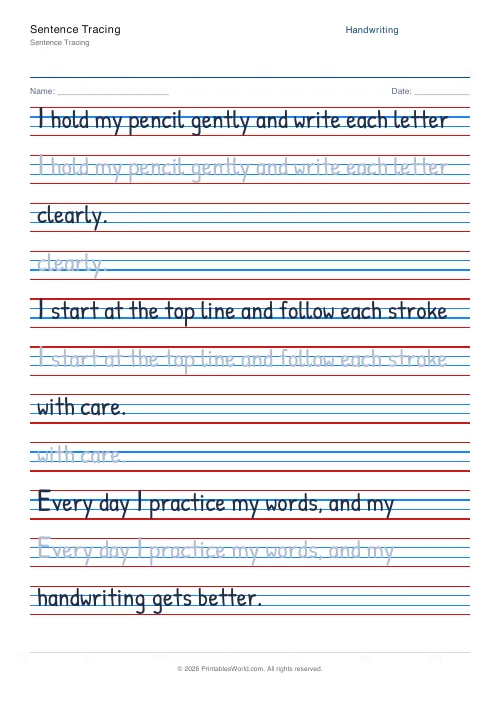 Sentence Tracing
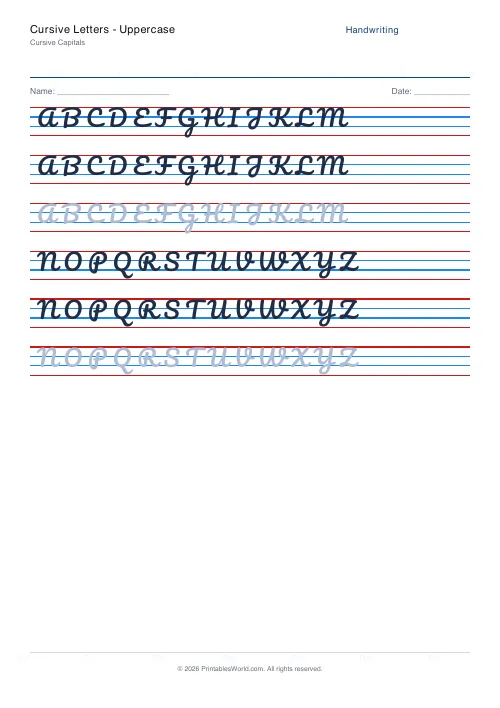 Cursive Letters: Uppercase
- Cursive Letters: Lowercase
- Cursive Sentences
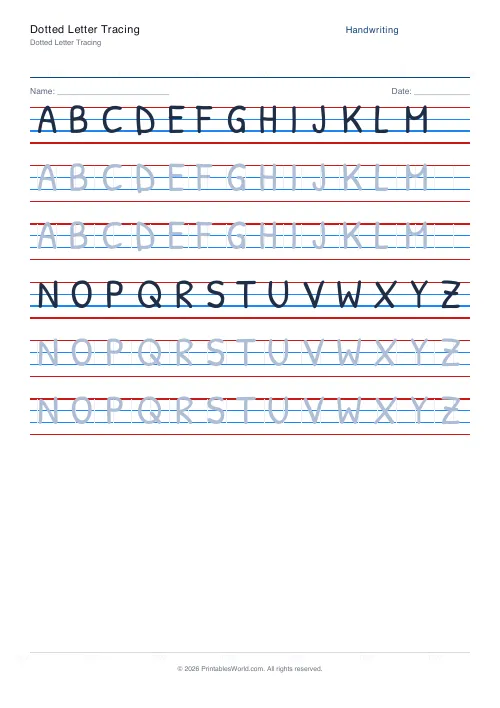 Dotted Letter Tracing
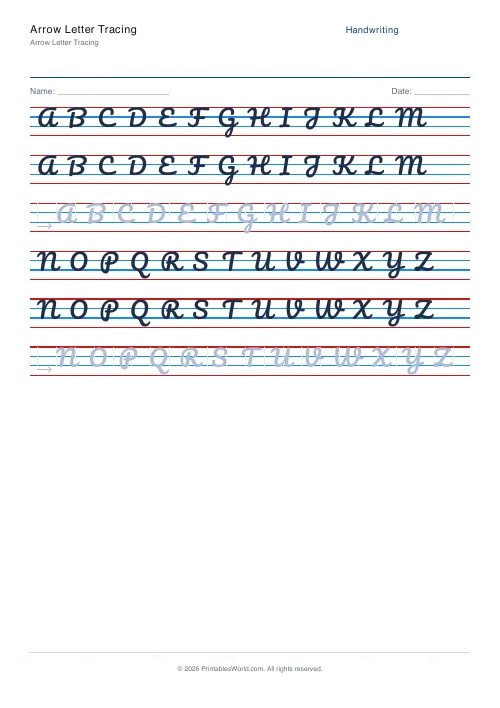 Arrow Letter Tracing
 Blank Handwriting Lines