What this tool does
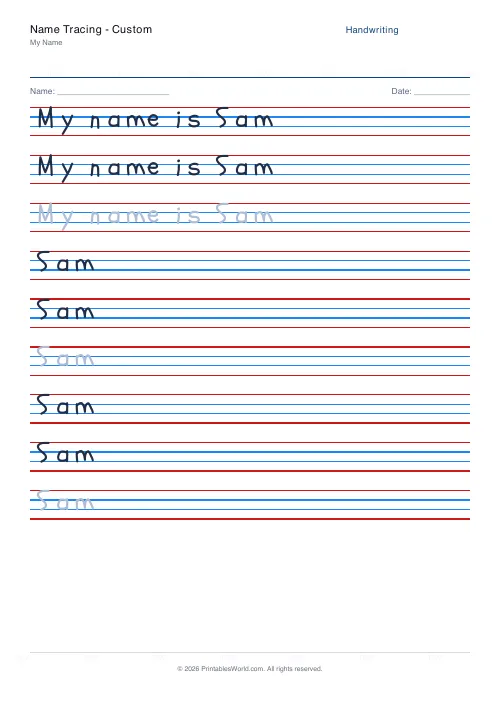
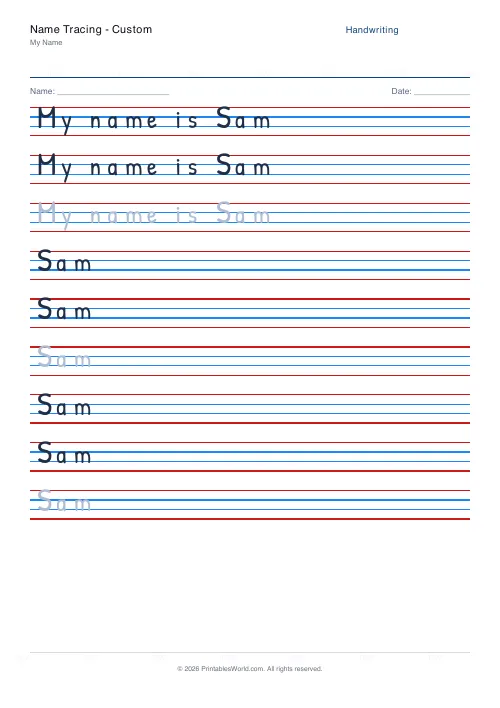
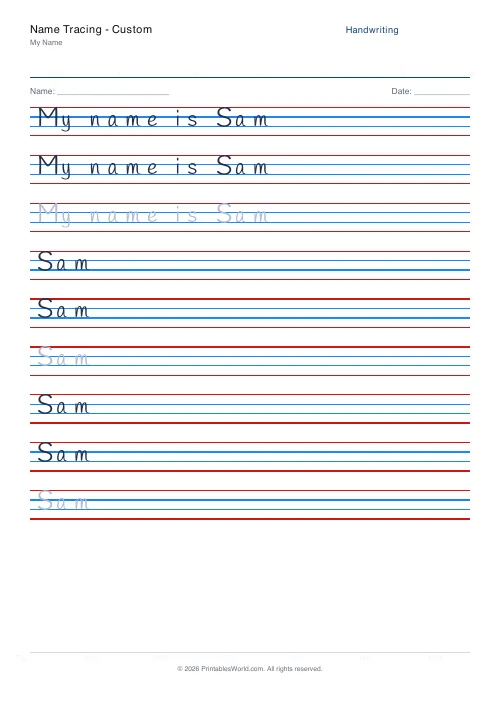
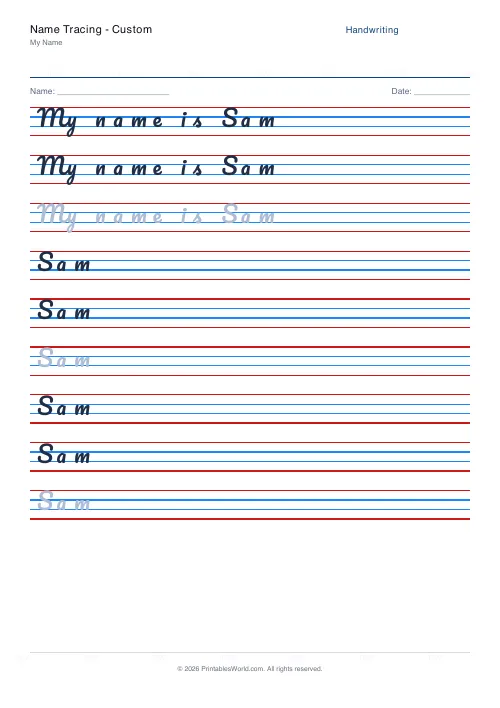
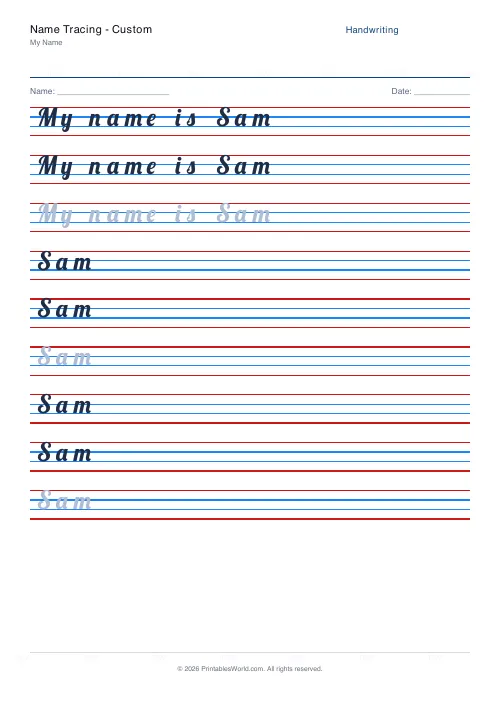
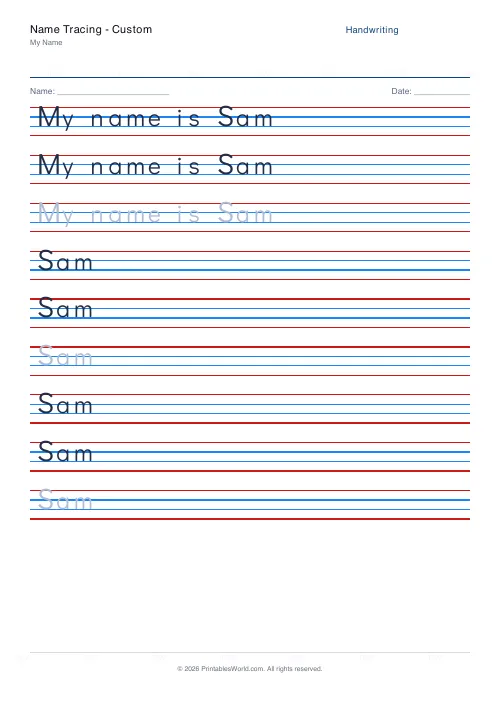
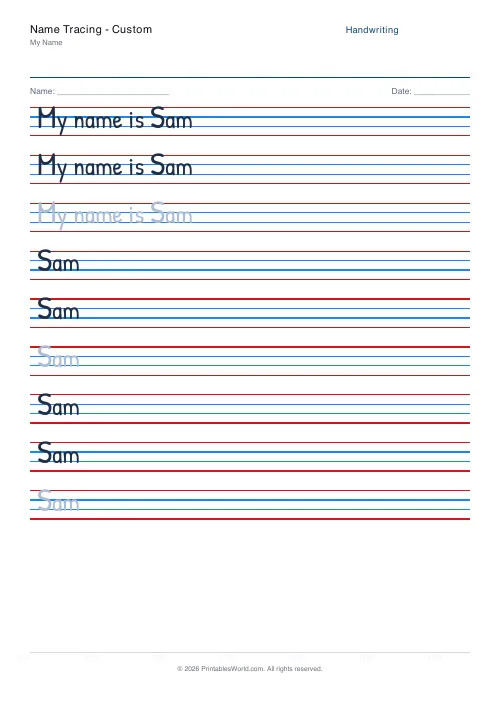
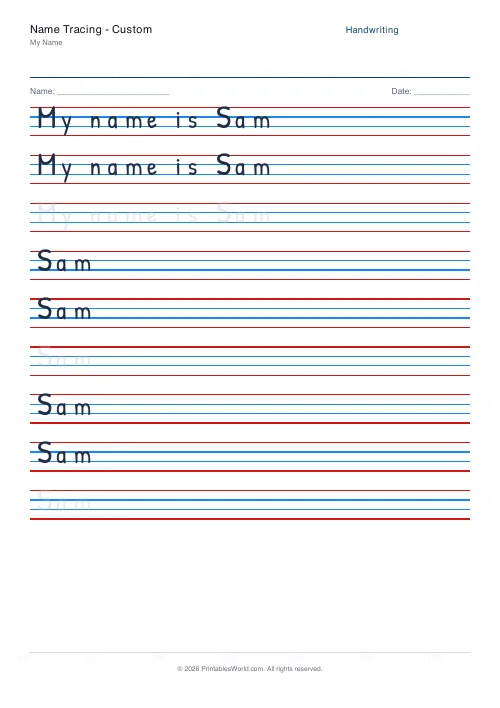
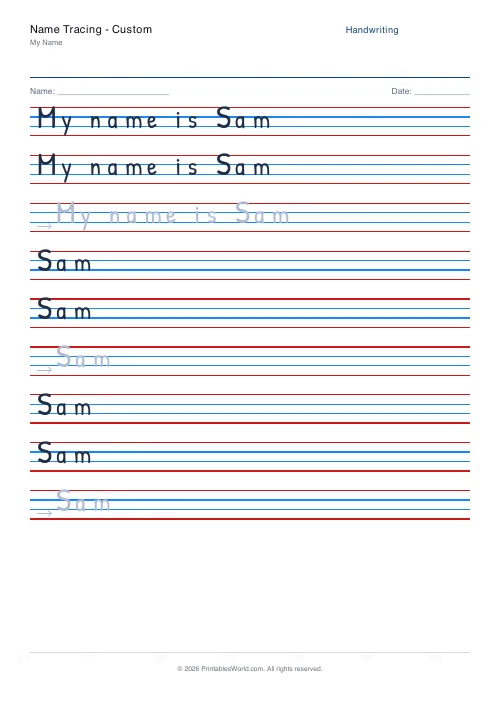
A name-tracing sheet. Replace the sample name with the child's own and it becomes the word they most want to write.
People also used
Feedback
Spotted something off with this tool?
The one word they want to write
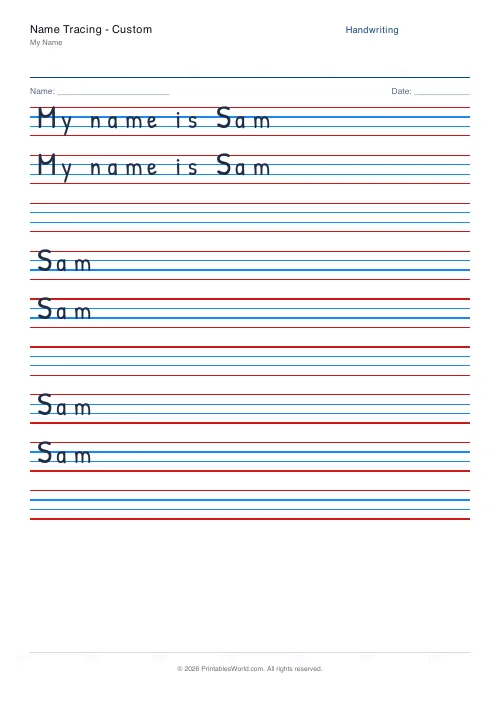
The preset loads a sentence and two plain repetitions of a name. Swap in the child's own and the sheet is about them.
That is the entire feature, and it works better than any other single handwriting sheet on this site.
The first word almost every child writes
Names come first. Before the alphabet, before letter sounds, before anything a curriculum would have sequenced.
The reason is motivation, not difficulty. A child who will not trace a row of bs will trace their own name over and over, because it means something to them, and it is useful the same afternoon — a drawing to label, a coat peg, a lunchbox.
So it is the right place to start even though the letters in a name are an arbitrary set that no phonics scheme would choose.
One capital, the rest lowercase
The convention worth establishing from the first sheet, because the alternative is very hard to undo.
Children taught in capitals write SAM for years. They are still writing it at seven, by which point somebody is marking it. Typing the name as Sam on this sheet teaches the right form from the first day, and it costs nothing.
Type it exactly as it should be written, including any accent or hyphen — a child whose name is Zoë or Ana-María should see it correctly from the start.
Short first, then the whole thing
Four letters makes a reasonable first sheet. Nine does not. Print it anyway and you get a child who tires around letter five and writes the rest badly, which is the opposite of what the sheet was for.
Use the shortened form the child is called by, then move to the full name, then add the surname. The practiceText field takes several lines, so a sheet can hold the short version twice and the full one once.
Where else it gets used
Beyond the child's own name: family names, a pet's name, the name of the school. All of them carry the same motivation and all of them are words the child will actually write.
It is also the sheet to reach for at the start of a school year, when thirty children each need their own, and printing thirty personalised sheets takes about as long as printing one generic one.
Settings: the text, font, trace style including stroke arrows, rows per line, character boxes and ruling. A4 or US Letter at 100%.
FAQs
Quick answers
How do I personalise it?
Replace "Sam" in the practice text with the child's name. Add the surname for a fuller workout.
How many practice rows do I get?
Each line of text gets one trace row plus two copy rows by default. Adjust under "Rows / sentence".
Which font is used?
Patrick Hand. A friendly print font that early writers can copy easily.
Can I print it landscape?
The sheet is portrait by default, sized for A4 or US Letter, which matches most school exercise books.
Related tools
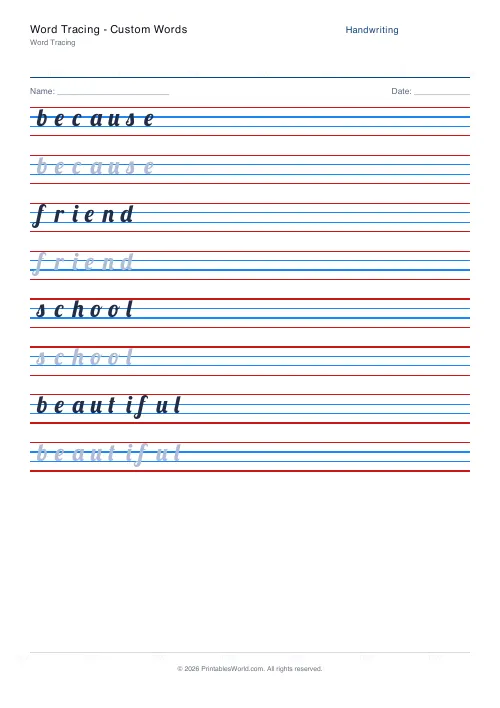
Word Tracing: Custom Words
Enter a word list and generate a tracing sheet on 4-line ruling.
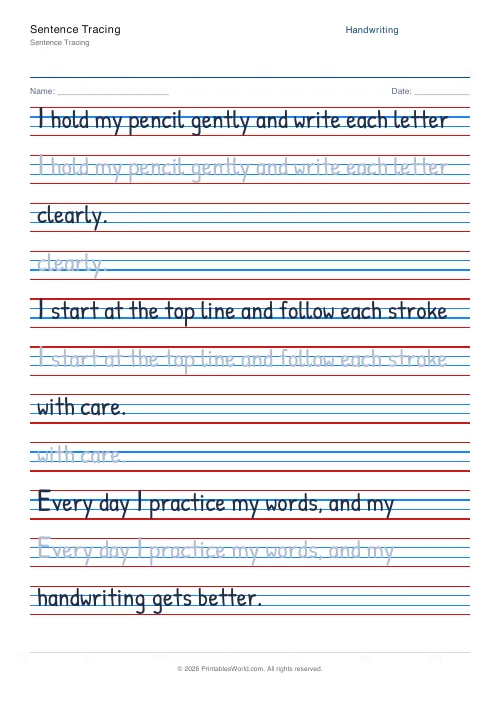
Sentence Tracing
Trace full sentences. Custom text or built-in presets.
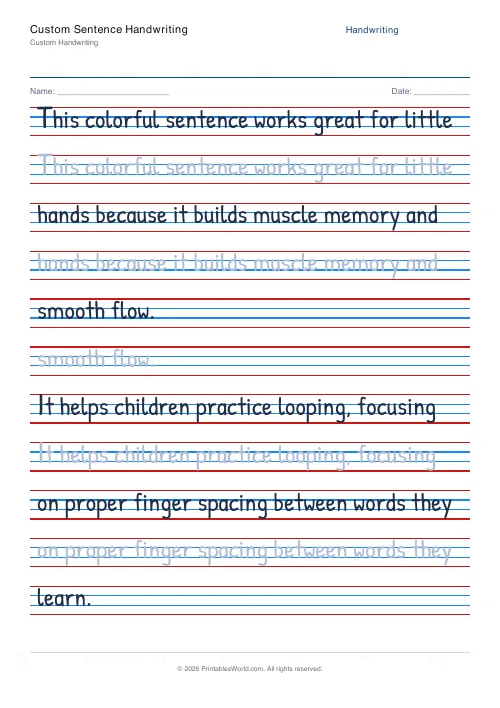
Custom Sentence Handwriting
Type any sentence and instantly generate a personalised practice sheet.
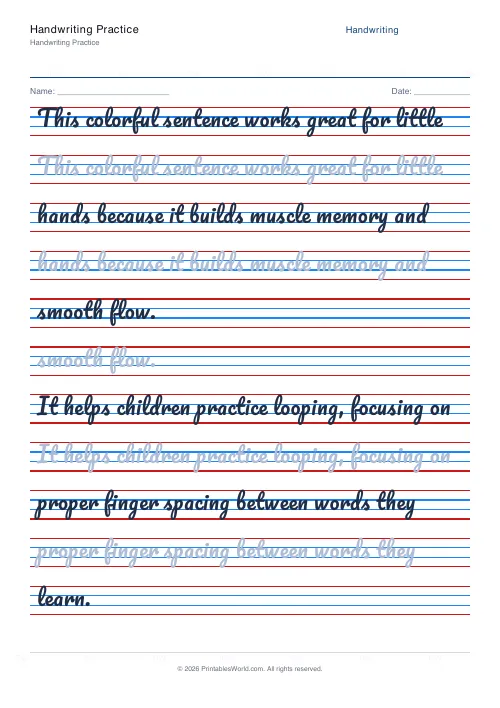
Handwriting Practice Generator
Create custom 4-line handwriting practice sheets with trace rows, adjustable guides, and your own text.
Further reading
More like this
- Handwriting Practice Generator
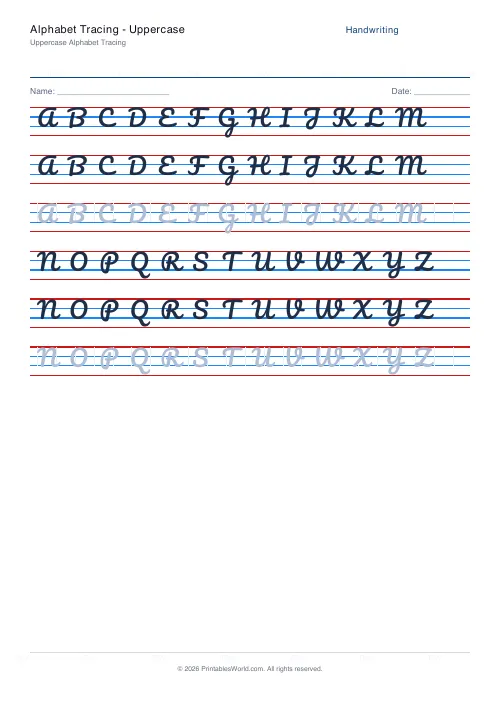 Alphabet Tracing: Uppercase
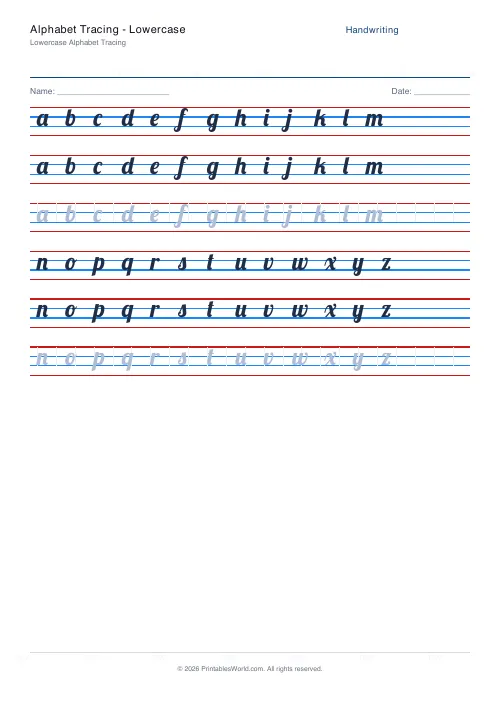 Alphabet Tracing: Lowercase
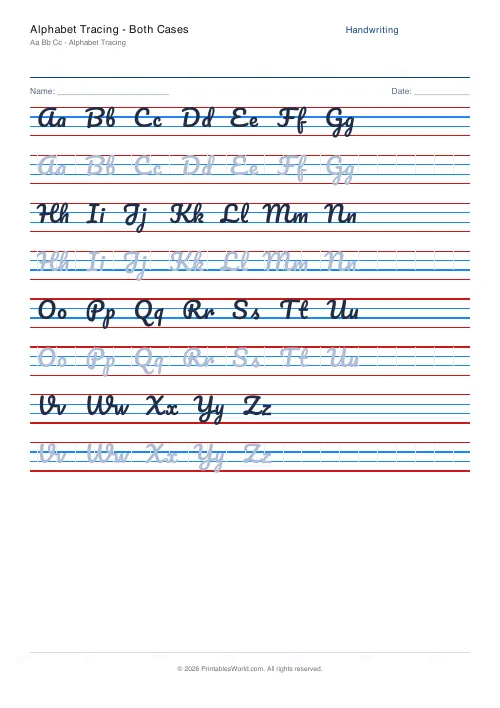 Alphabet Tracing: Both Cases
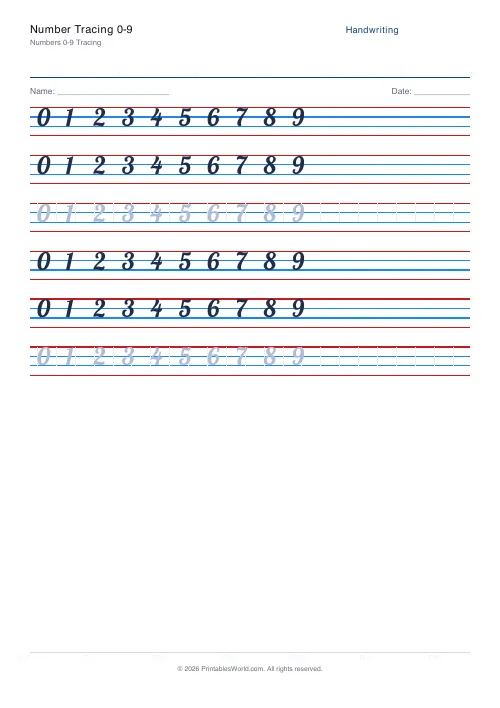 Number Tracing 0-9
- Word Tracing: Custom Words
- Sentence Tracing
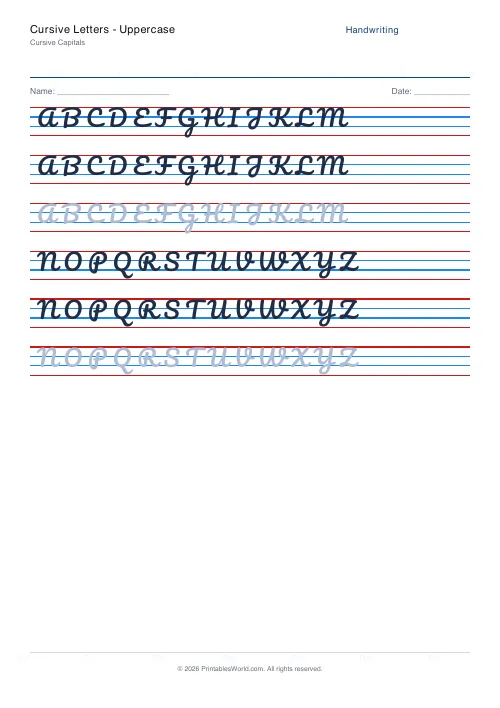 Cursive Letters: Uppercase
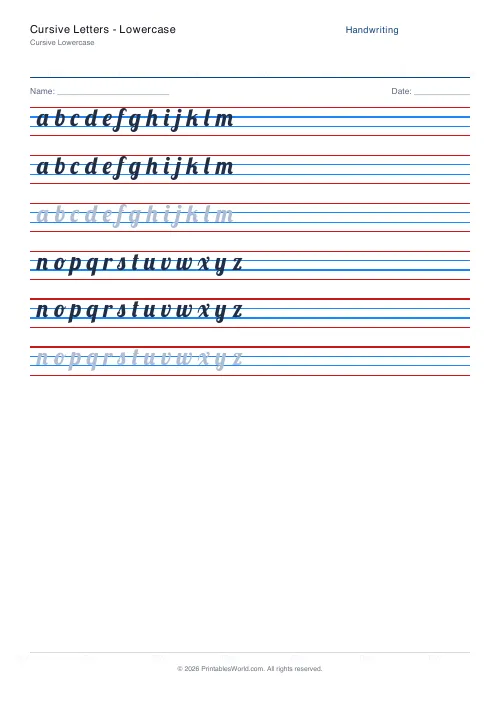 Cursive Letters: Lowercase
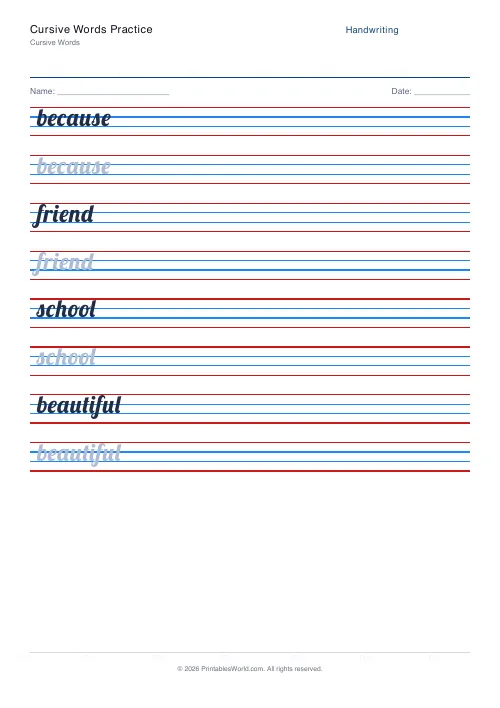 Cursive Words Practice
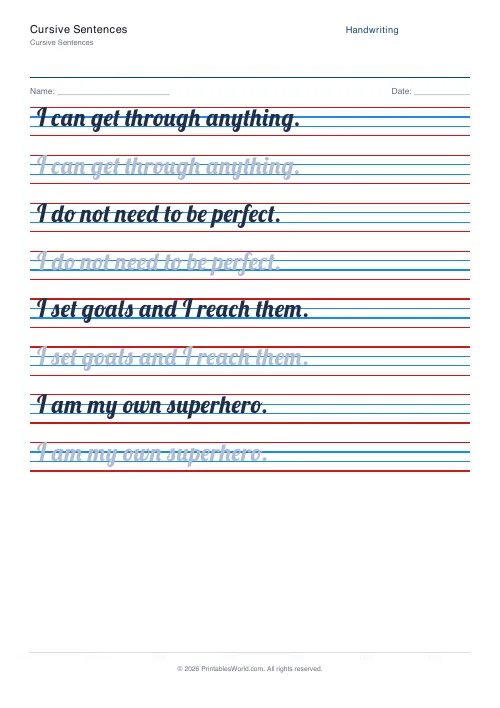 Cursive Sentences
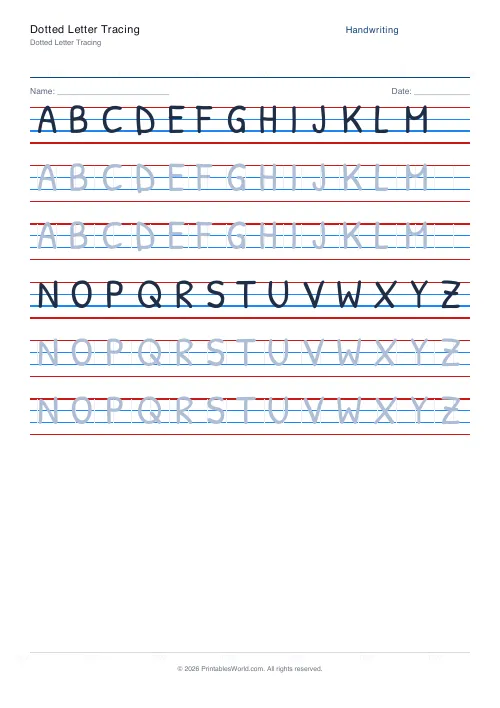 Dotted Letter Tracing
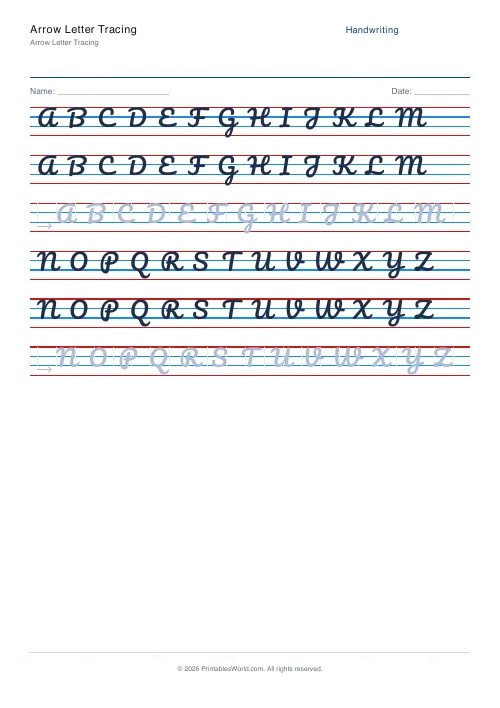 Arrow Letter Tracing
 Blank Handwriting Lines