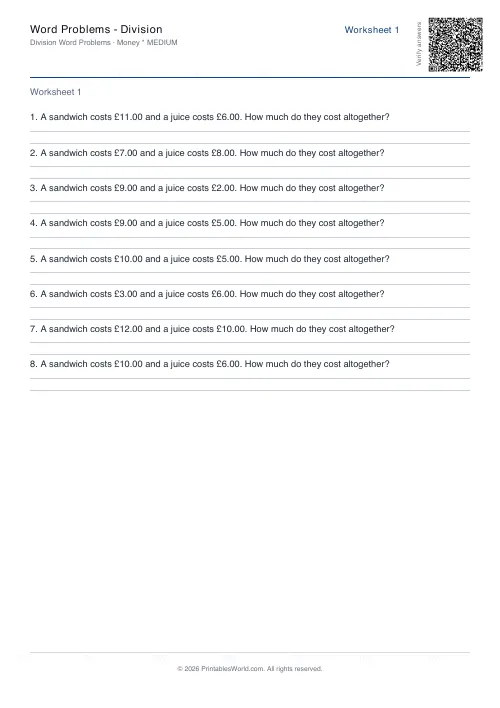
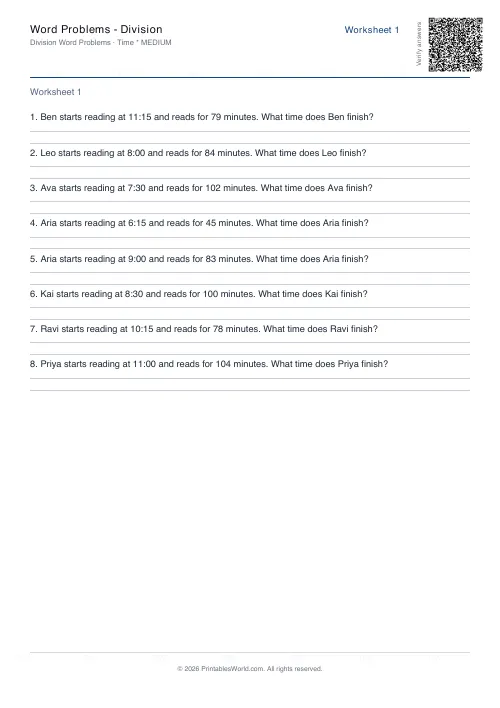
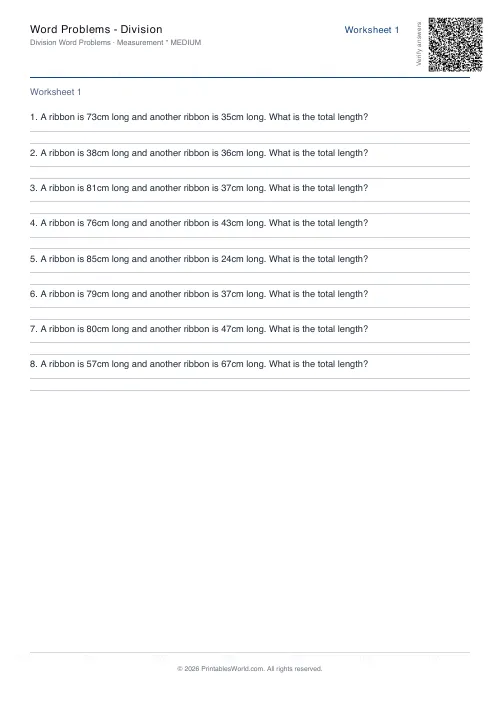
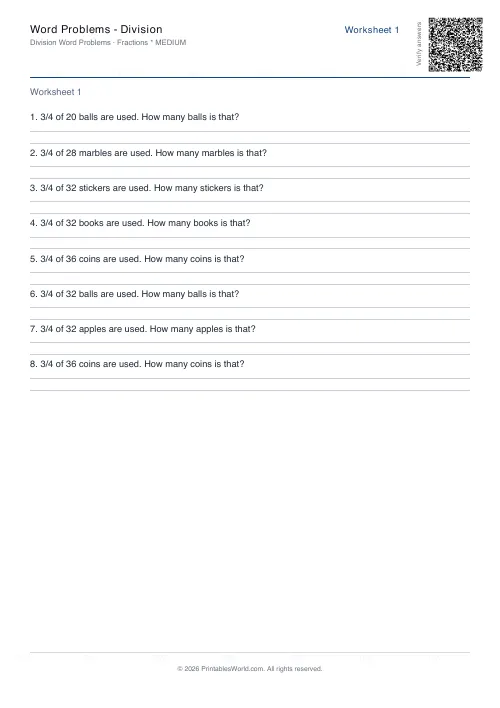
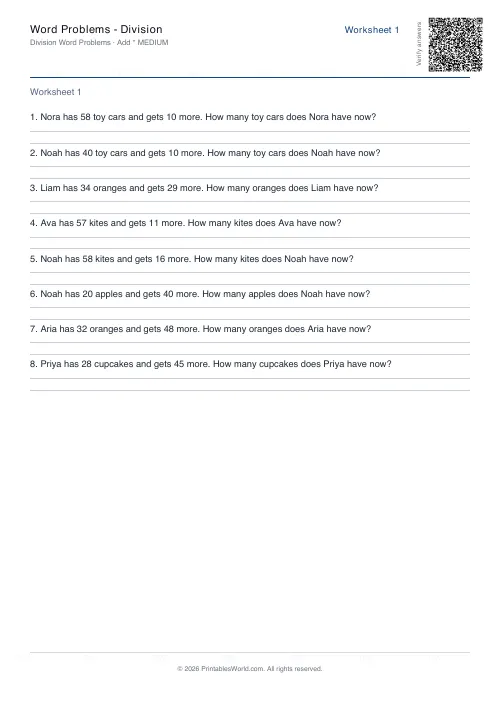
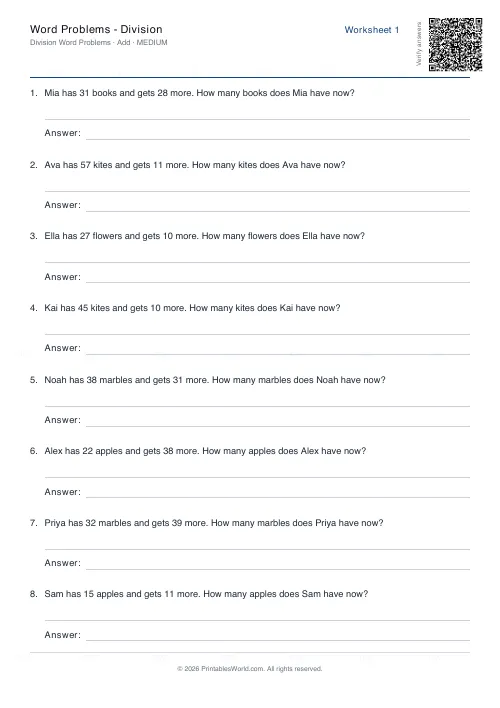
What this tool does
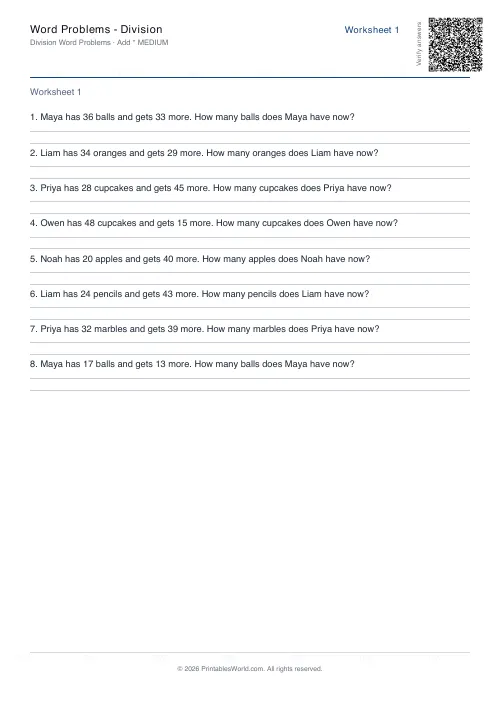
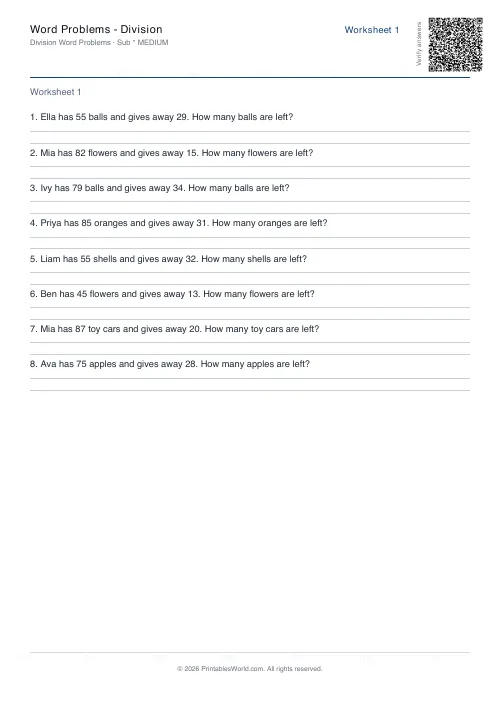
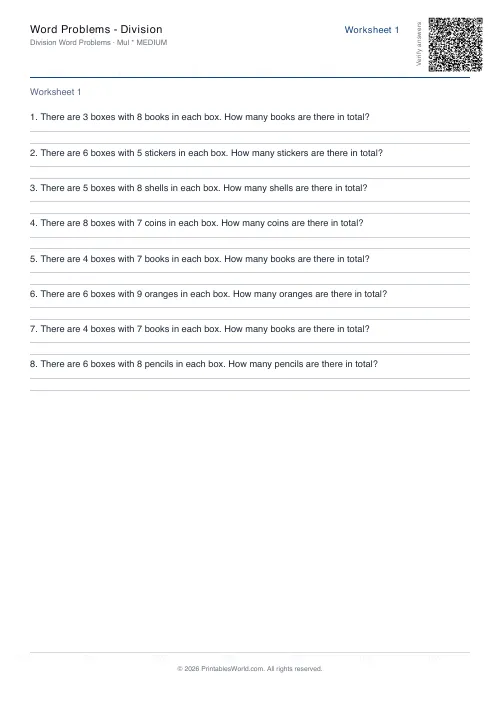
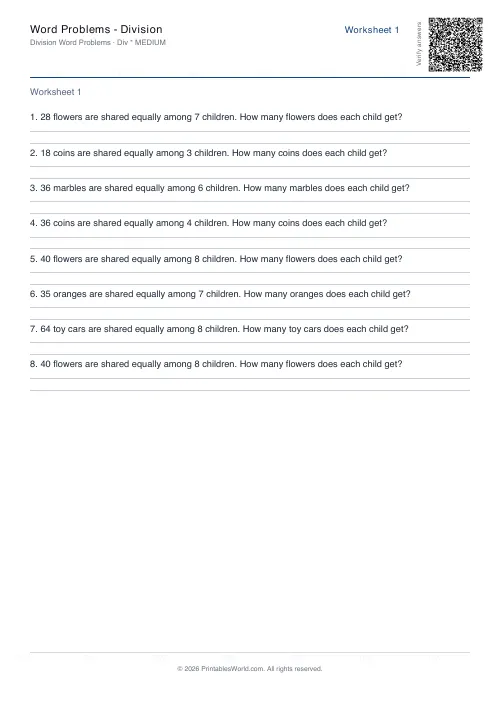
Division word problems built as sharing scenarios, with whole-number answers throughout. Three difficulty bands, answer key included.
People also used
Word Problems: Addition
Generate printable addition word problems with real-world contexts and adjustable difficulty.
Word Problems: Subtraction
Free printable subtraction word problems with answer keys. Adjustable difficulty, real-world contexts.
Word Problems: Multiplication
Free printable multiplication word problems with groups, arrays and repeated-addition contexts.
Feedback
Spotted something off with this tool?
Division, in sentences
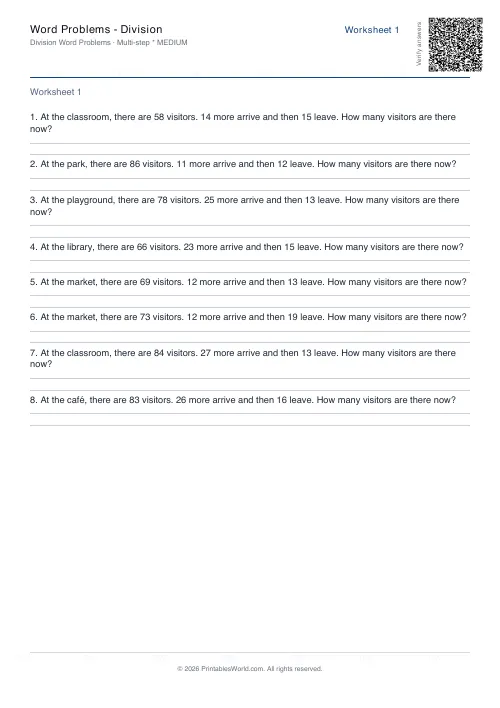
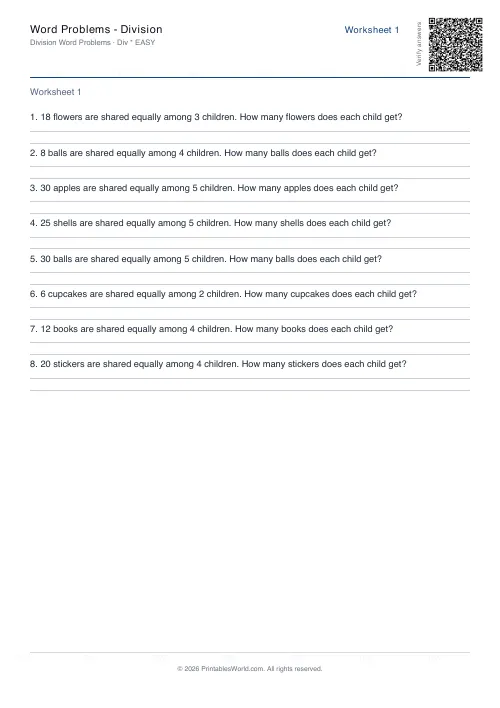
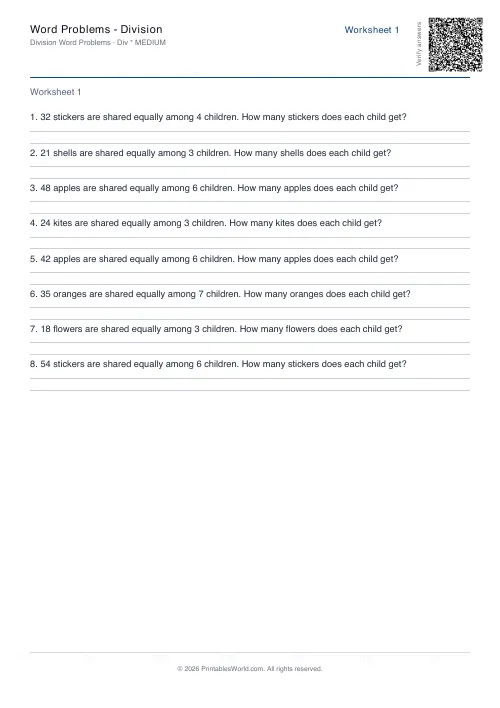
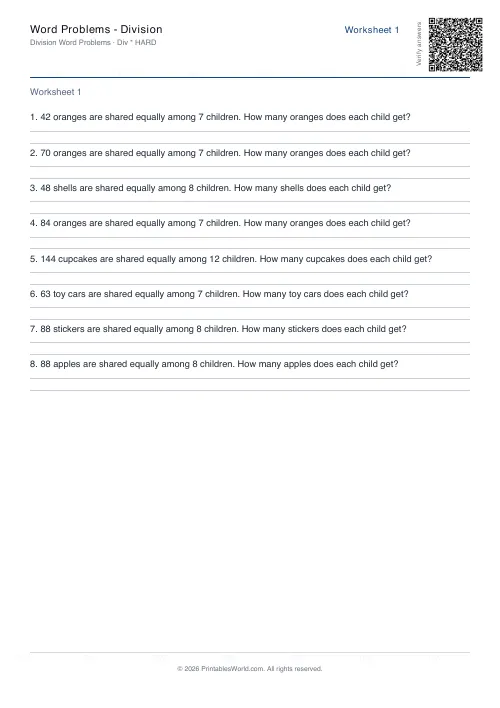
A quantity is shared equally among a number of children, and the question asks how many each one gets. The totals are constructed by multiplying up from the answer, so every division comes out exactly — no remainders on these sheets.
Easy stays inside the small tables. Medium reaches eight groups of nine. Hard goes to twelve by twelve.
Sharing and grouping are different questions
Twelve divided by three can mean two things, and children meet them as separate problems long before anyone tells them they are the same operation.
Sharing: twelve sweets between three children, how many each. Grouping: twelve sweets in bags of three, how many bags. The first is the version these sheets use, because it is the one children meet first and the one they can act out. The second is worth introducing separately, and the moment a child sees that both are 12 ÷ 3 is a genuinely useful one.
The three bands
Only the numbers move between the bands. The sentence pattern stays exactly where it is.
This matters for diagnosis. A child who copes on the easy sheet and not the hard one has an arithmetic problem you can fix with tables practice; a child stuck across all three has a reading problem, and no amount of extra division drill will touch it.
Read it before touching it
The mistake is nearly never the division. It is deciding that division was wanted.
Children scan for numbers and reach for the last operation they were taught, which succeeds often enough to become entrenched. The counter-routine is short: read the whole question with the pencil down, say what is happening in your own words, find the sentence that asks something, underline that one.
Against keyword spotting
"Shared means divide" holds up until a question describes the same sharing without using the word, which examiners do on purpose.
Better to ask what the story is doing. Combining, removing, repeating equal groups, splitting into equal parts. That question does not care how the sentence was phrased.
Using them
Twelve questions and an answer key. The names and objects and places all rotate between sheets, so the same settings twice give you two different worksheets — handy for a second attempt.
Generate a few at once to cover a week.
Companion sheets: addition, subtraction and multiplication.
FAQs
Quick answers
Can I print on US Letter paper?
Yes. The generator adjusts margins automatically so worksheets print correctly on both A4 and US Letter stock without clipping.
What is the difference between easy, medium, and hard?
Easy uses divisors from 2 to 5 and dividends up to 30, usually with no remainders. Medium introduces divisors up to 8, dividends up to 90, and occasional remainders. Hard uses divisors up to 12, three-digit dividends, and sometimes embeds an extra reasoning step.
Do the problems include remainders?
Medium and hard problems often produce remainders as a natural outcome. Easy problems are chosen to avoid remainders so learners can focus on the core division operation first.
How do I generate different problems for the same class?
Change the seed value in the options or adjust the difficulty level. The generator uses the seed to produce a unique set of questions, so a new seed yields a fresh worksheet even at the same difficulty.
Can I add my own custom word problems?
The tool uses a fixed question bank and cannot accept user-written problems. You can edit the PDF in a separate editor after download if you need bespoke scenarios.
Is the answer key on a separate page?
Yes. When you enable the answer key option, solutions print on the final page of the PDF, making it easy to detach or share separately.
How many problems fit on one page?
The layout adjusts based on your problem count setting. Typically five to ten questions fit comfortably on one page with space for working-out beneath each question.
Related tools
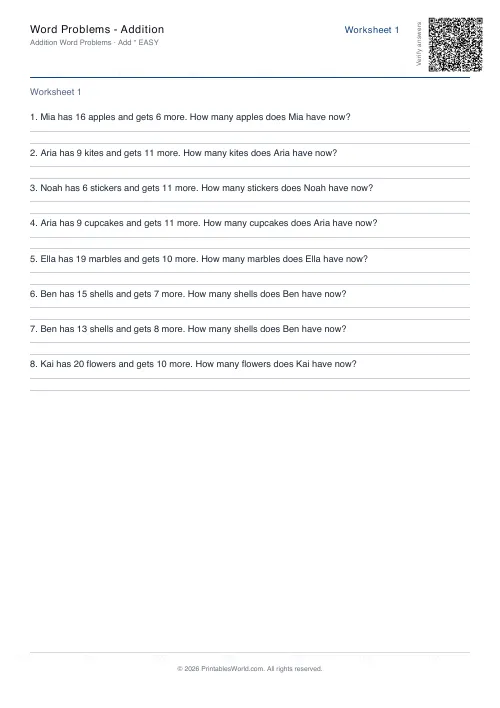
Word Problems: Addition
Generate printable addition word problems with real-world contexts and adjustable difficulty.
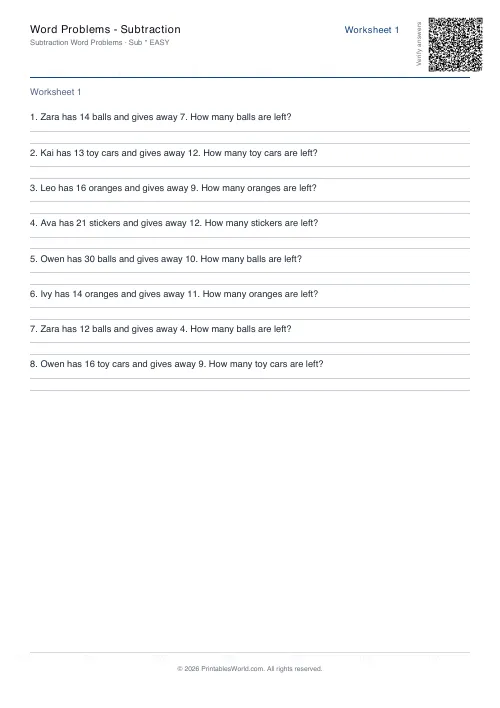
Word Problems: Subtraction
Free printable subtraction word problems with answer keys. Adjustable difficulty, real-world contexts.
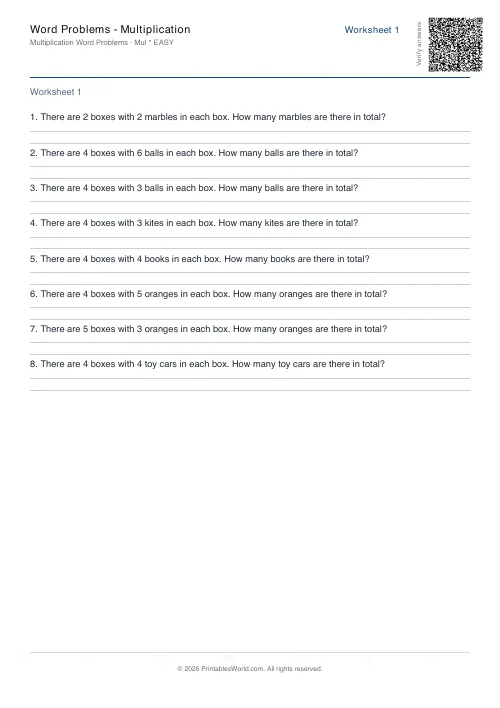
Word Problems: Multiplication
Free printable multiplication word problems with groups, arrays and repeated-addition contexts.
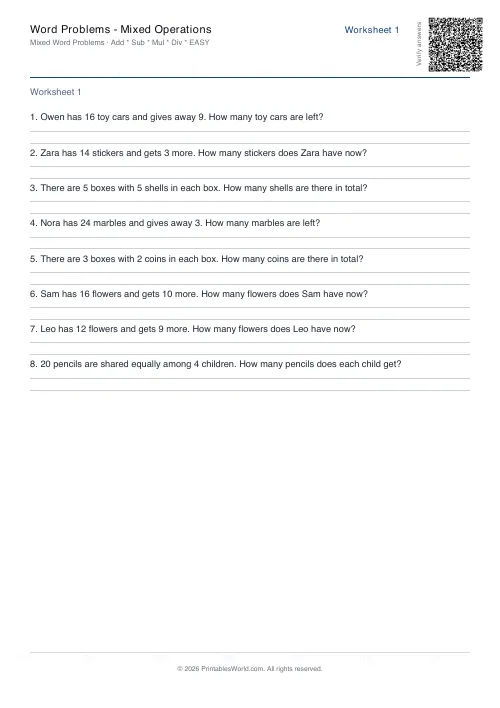
Word Problems: Mixed Operations
Print word problems that mix addition, subtraction, multiplication and division on one worksheet.
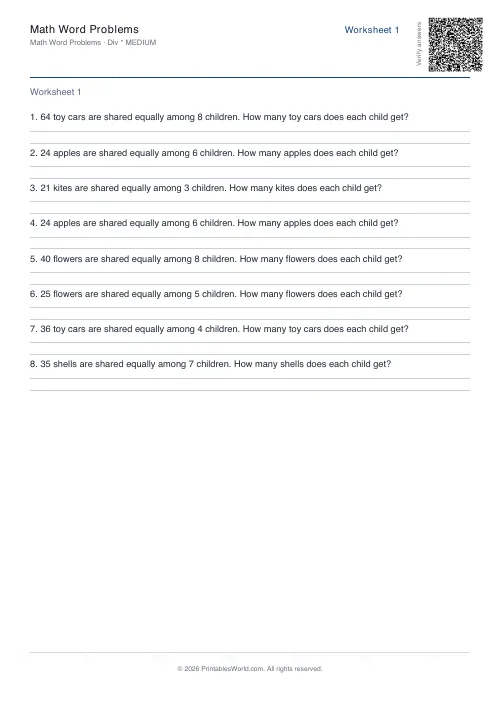
Math Word Problems Generator
Generate printable math word problem worksheets with customisable topics, difficulty, and answer keys.
Further reading
Math Worksheets
Understanding BODMAS and PEMDAS: order of operations explained
BODMAS and PEMDAS describe the same rule in different words. The trouble is that both hide two facts the acronym cannot express. Which is where nearly every mistake comes from.
5 min read
Math Worksheets
Making maths fun: 15 ways to practise without tears
Maths tears are usually about difficulty, length or fear of being wrong, not about maths. Fifteen practical changes, grouped by which of those three problems they actually solve.
6 min read
More like this
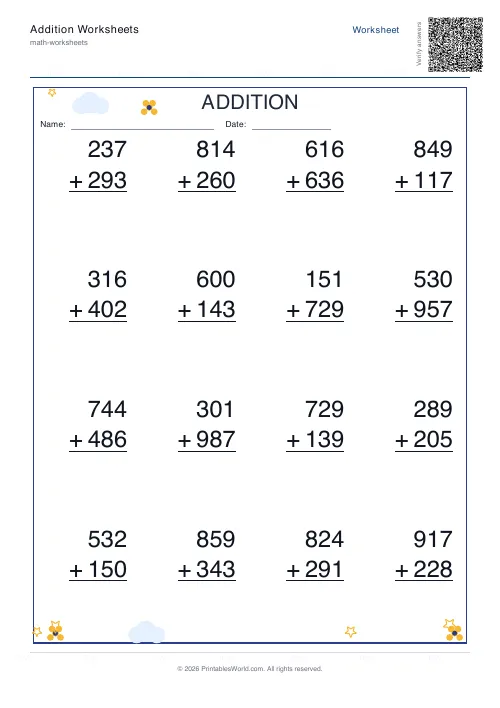 Addition Worksheets Generator
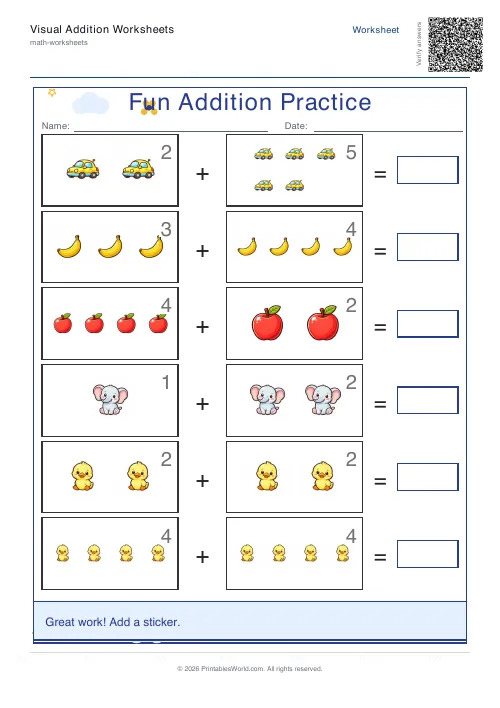 Visual Addition Worksheets Generator
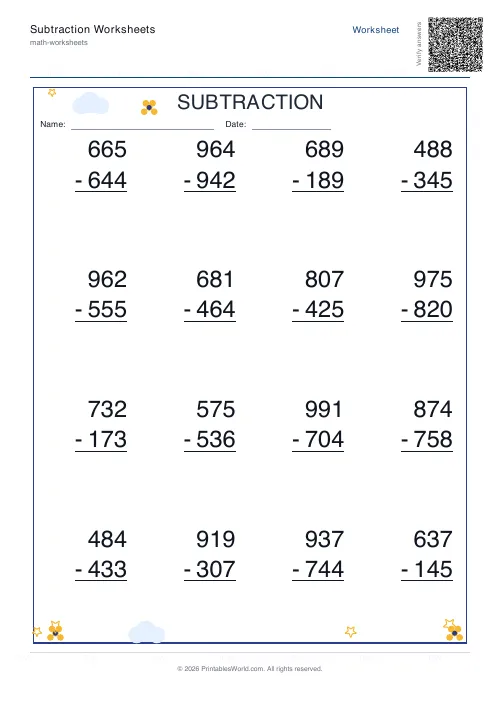 Subtraction Worksheets Generator
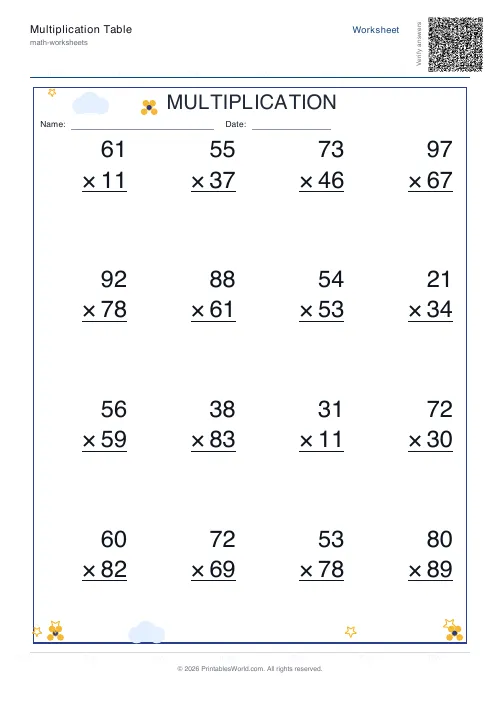 Multiplication Table Generator
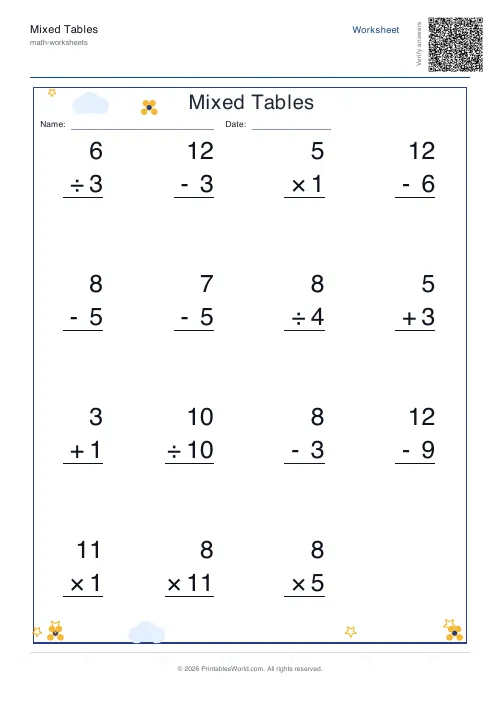 Mixed Tables Generator
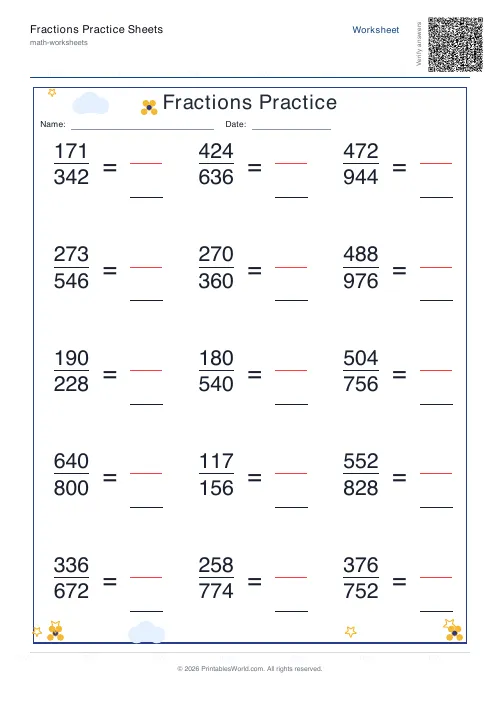 Fractions Practice Sheets Generator
- Math Word Problems Generator
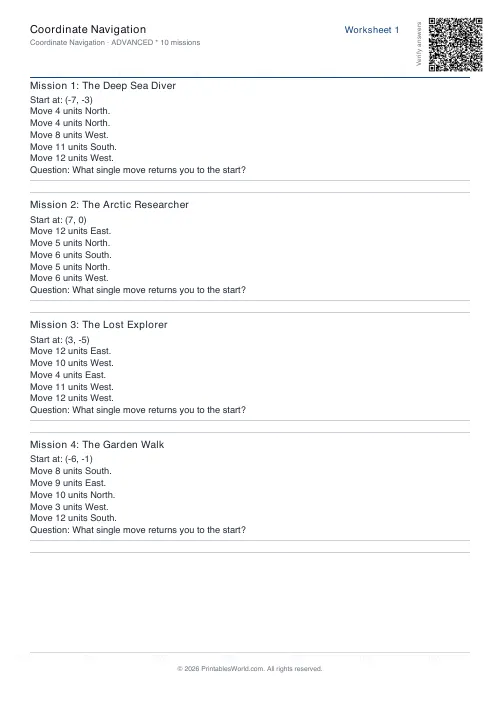 Coordinate Navigation Generator
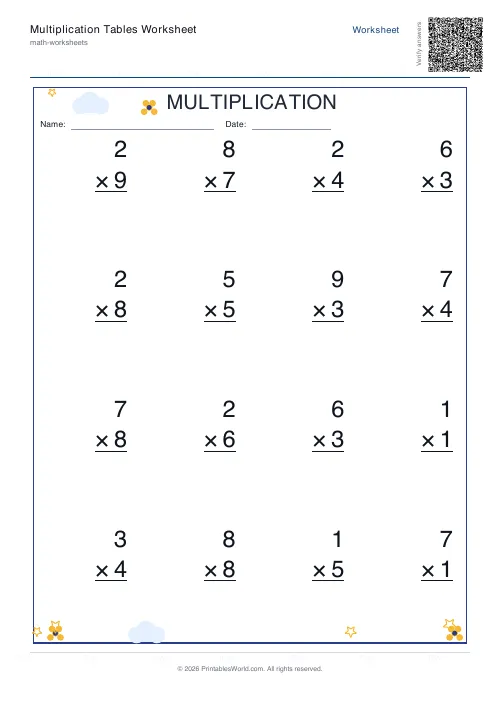 Multiplication Tables Worksheet
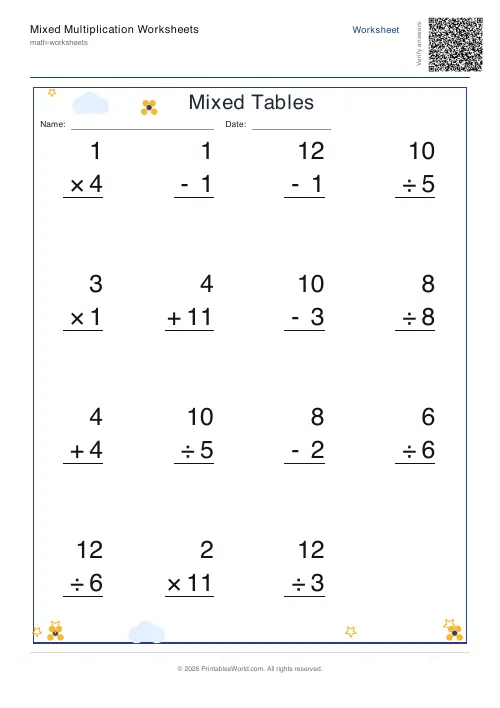 Mixed Multiplication Worksheets
- Word Problems: Addition
- Word Problems: Subtraction
- Word Problems: Multiplication
- Word Problems: Mixed Operations