What this tool does
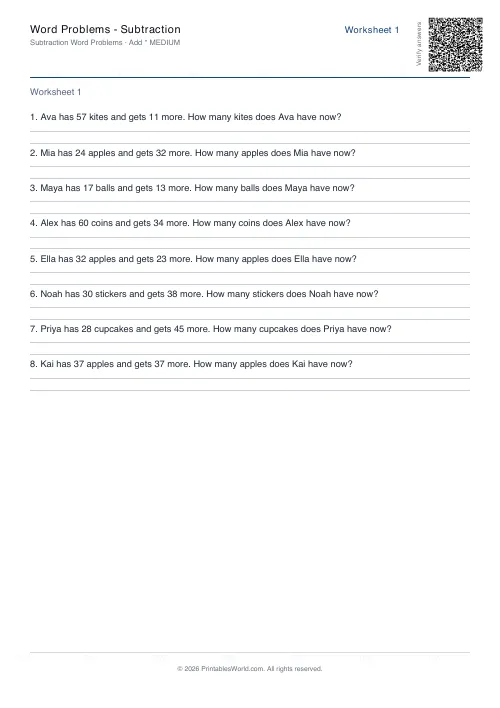
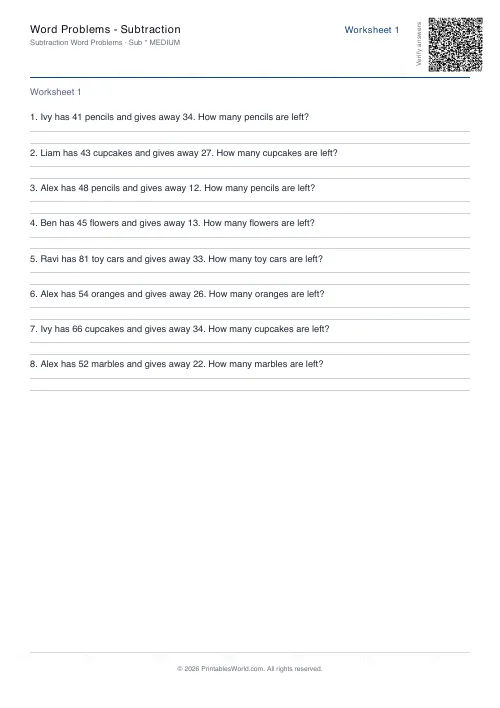
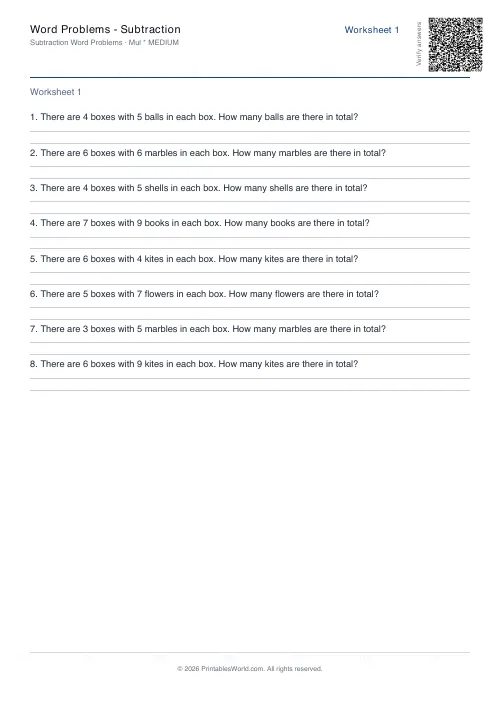
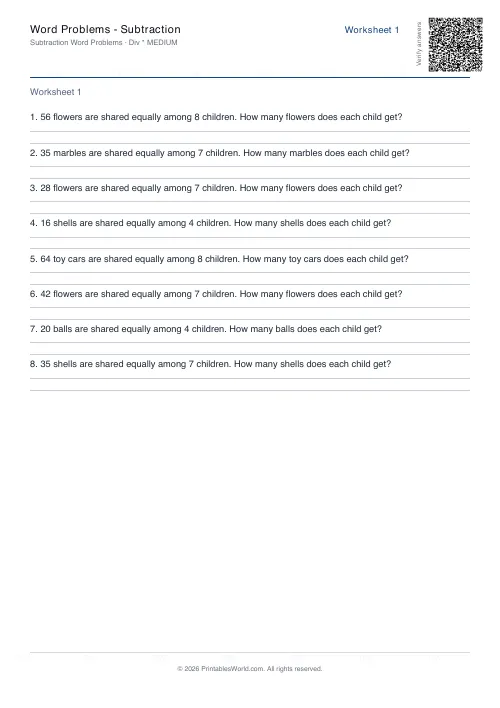
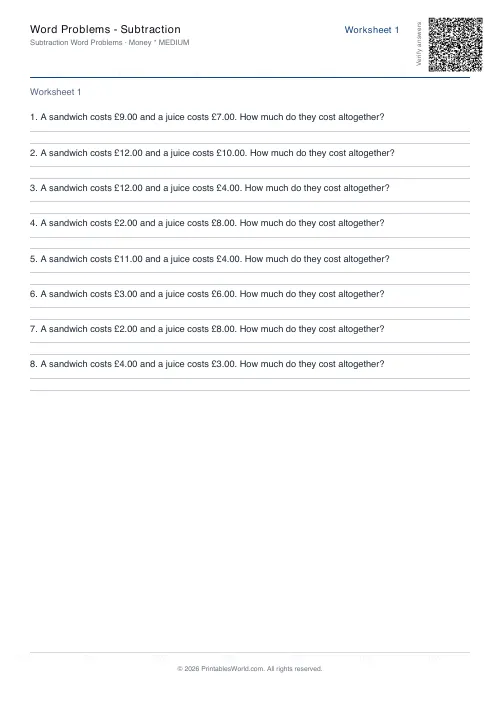
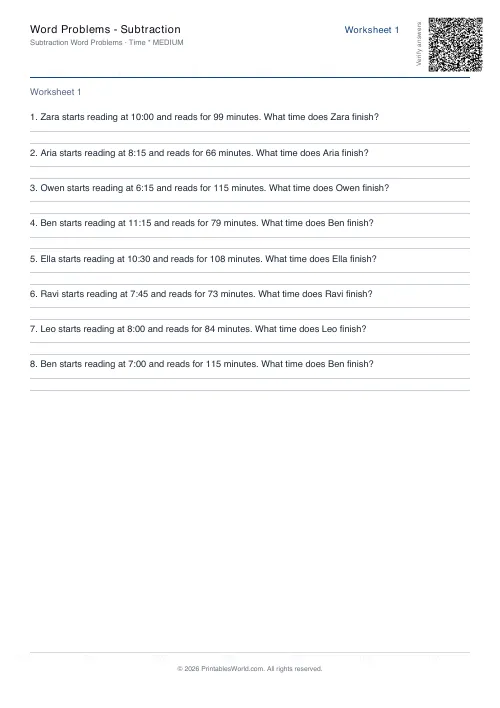
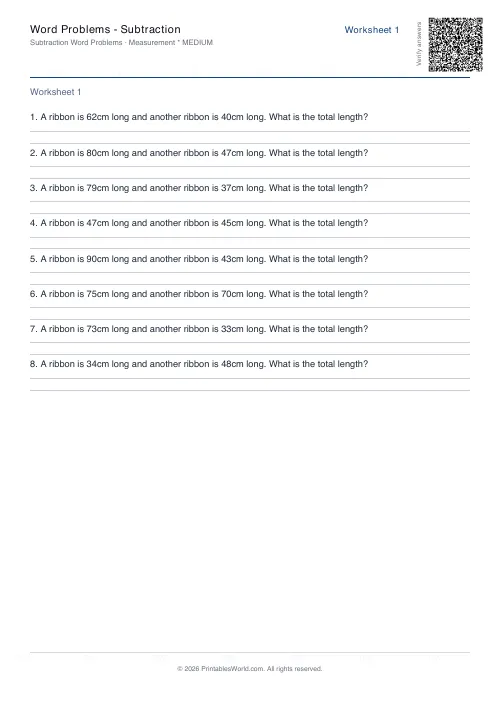
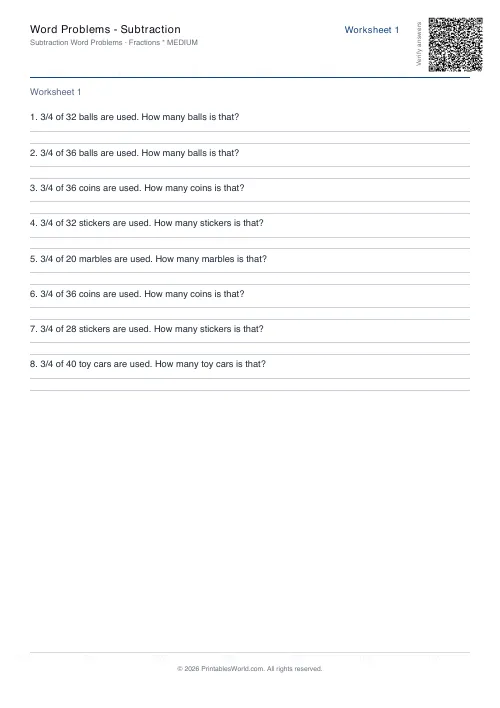
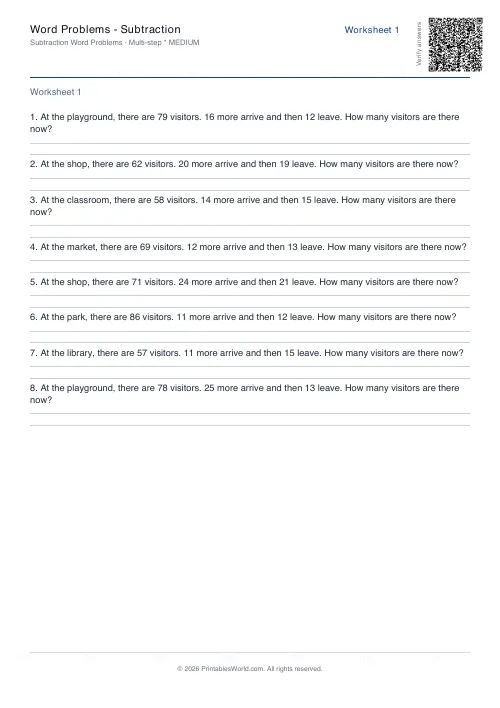
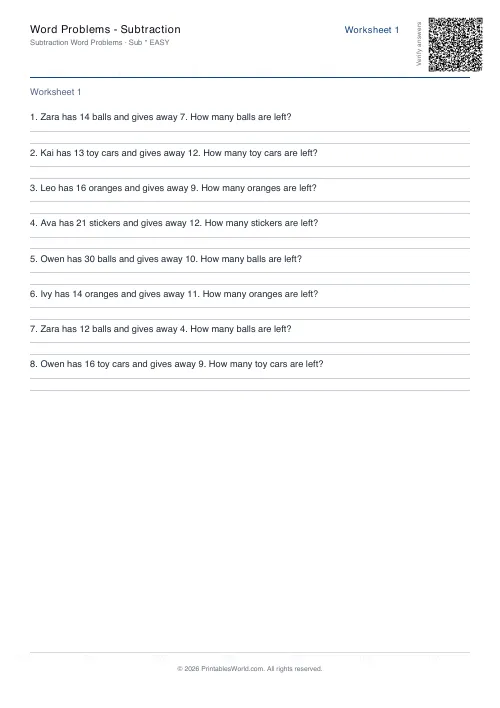
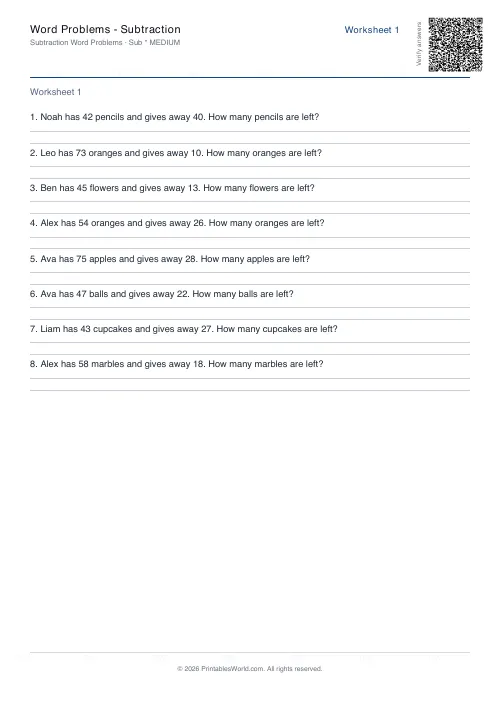
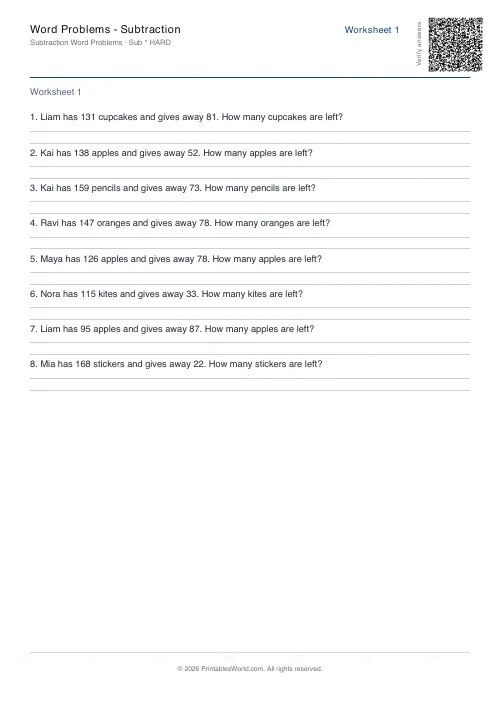
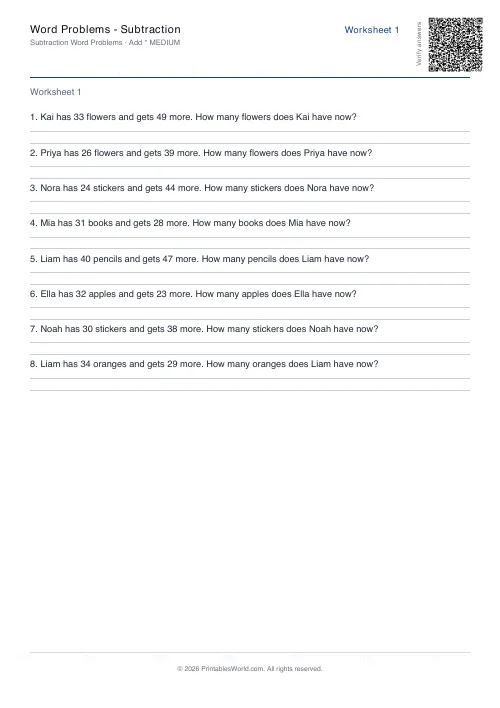
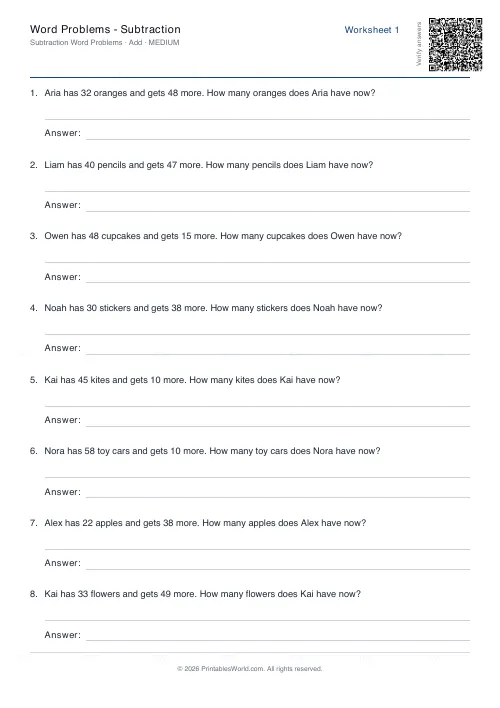
Subtraction word problems set as short scenarios rather than bare sums. Three difficulty bands change the size of the numbers; answer key included.
People also used
Word Problems: Addition
Generate printable addition word problems with real-world contexts and adjustable difficulty.
Word Problems: Multiplication
Free printable multiplication word problems with groups, arrays and repeated-addition contexts.
Word Problems: Division
Print division word problems with sharing and grouping scenarios in real-world contexts.
Feedback
Spotted something off with this tool?
Subtraction, in sentences
Somebody has a quantity and gives some away. How many are left. That is the shape, with the names and the objects varying question to question.
Easy keeps the total under thirty. Medium runs to ninety. Hard reaches a hundred and eighty, where borrowing across a ten is routine.
Subtraction has more than one meaning
This is what makes it harder than addition, and it is rarely taught explicitly.
Taking away is one meaning. Finding a difference is another — how many more does Sam have than Priya — and it involves nothing being removed at all. Finding a missing part is a third. All three are subtractions and they feel completely different to a child, which is why one who is fluent at take-away can stall on a comparison question.
What the bands do
Easy, medium, hard: bigger numbers, same sentence structure throughout.
Keeping the wording constant is the point. If a child can handle the easy sheet and not the hard one, the difficulty is arithmetic; if they are stuck on both, it is comprehension, and those need completely different help.
Where the marks go
Not on the subtraction. On deciding that it was one.
The commonest failure is the number grab: spot two numbers, apply whatever operation the last lesson used, move on. Break it with a fixed routine — pencil down, read it through, describe the situation out loud, then find the question sentence and underline that rather than the digits.
Do not teach keyword spotting
"Left over means take away" survives exactly as long as the questions are written the way the examples were.
The durable question is what is happening in the story. Is something being removed, or compared, or is a part missing from a known whole? A child who can answer that will pick the right operation no matter how the sentence is arranged.
Using the sheets
Twelve problems as standard, with a key. The generator varies names and objects between sheets, so you can print a fresh one for a resit without printing the same questions.
Ask for several worksheets at once and you have the week.
Companion sheets: addition, multiplication and division. For bare sums, the subtraction worksheet generator.
FAQs
Quick answers
What difficulty levels are available?
Easy uses numbers between 3 and 30, medium spans 10 to 90, and hard ranges from 20 to 180. Difficulty affects both the starting quantity and the amount subtracted, so hard problems may involve three-digit arithmetic.
Can I print on US Letter paper?
Yes. The generator supports both A4 and US Letter. Select your preferred size before generating, and the layout will adjust margins and spacing accordingly.
How many problems fit on one page?
You control the number of problems per worksheet. Typically 5 to 10 fit comfortably with space for learners to show working, but you can request more if you prefer a denser layout.
Does the answer key appear on a separate page?
Yes. If you enable the answer key, it prints after all the question worksheets. One answer page per worksheet. This keeps solutions out of sight when you hand out the question sheets.
Can I regenerate the same problems later?
The generator uses a seed value (visible in the advanced options). If you keep the same seed, difficulty, and problem count, you will get identical questions and numbers every time you regenerate.
Are the word problems always subtraction only?
When you select the subtraction topic, yes. If you want a mix of operations, choose the mixed topic or generate separate worksheets for addition, multiplication, and division.
Can I customise the title on the worksheet?
Yes. Replace the default title with your class name, student name, or any label you like. The custom title appears at the top of every worksheet page in the PDF.
Related tools
Word Problems: Addition
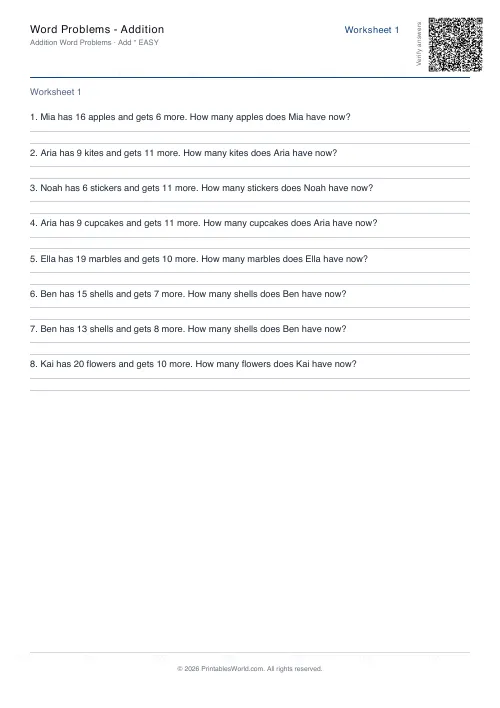
Generate printable addition word problems with real-world contexts and adjustable difficulty.
Word Problems: Multiplication
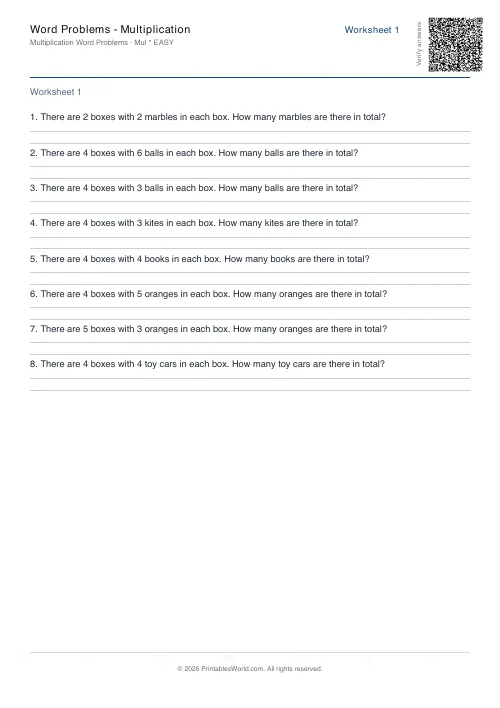
Free printable multiplication word problems with groups, arrays and repeated-addition contexts.
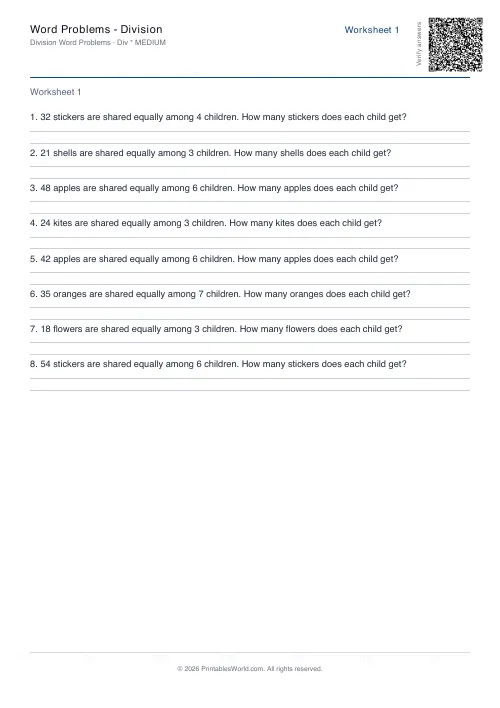
Word Problems: Division
Print division word problems with sharing and grouping scenarios in real-world contexts.
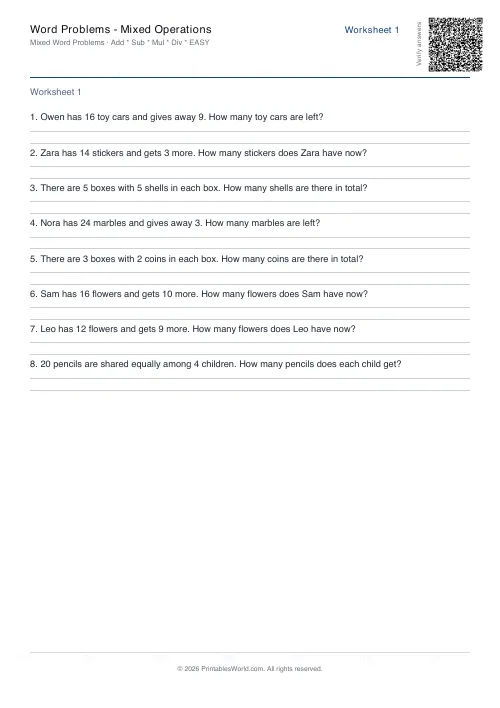
Word Problems: Mixed Operations
Print word problems that mix addition, subtraction, multiplication and division on one worksheet.
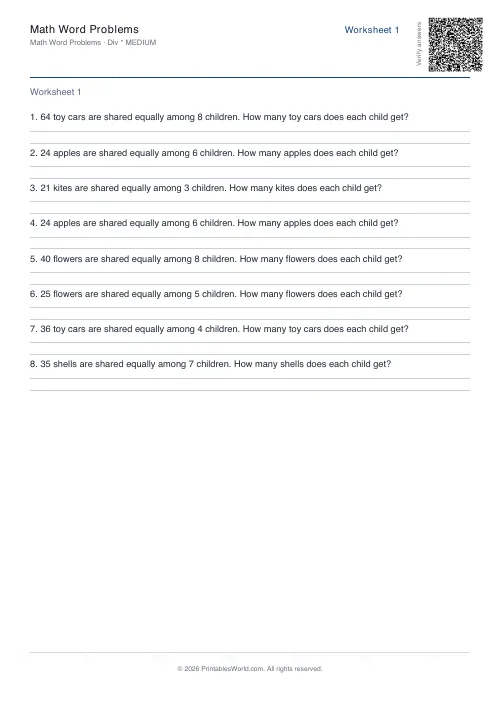
Math Word Problems Generator
Generate printable math word problem worksheets with customisable topics, difficulty, and answer keys.
Further reading
Math Worksheets
Making maths fun: 15 ways to practise without tears
Maths tears are usually about difficulty, length or fear of being wrong, not about maths. Fifteen practical changes, grouped by which of those three problems they actually solve.
6 min read
Math Worksheets
Understanding BODMAS and PEMDAS: order of operations explained
BODMAS and PEMDAS describe the same rule in different words. The trouble is that both hide two facts the acronym cannot express. Which is where nearly every mistake comes from.
5 min read
Math Worksheets
How many maths worksheets per day? A parent's guide
The honest answer is less than most parents assume. And the number of questions matters less than whether the session ends well.
5 min read
More like this
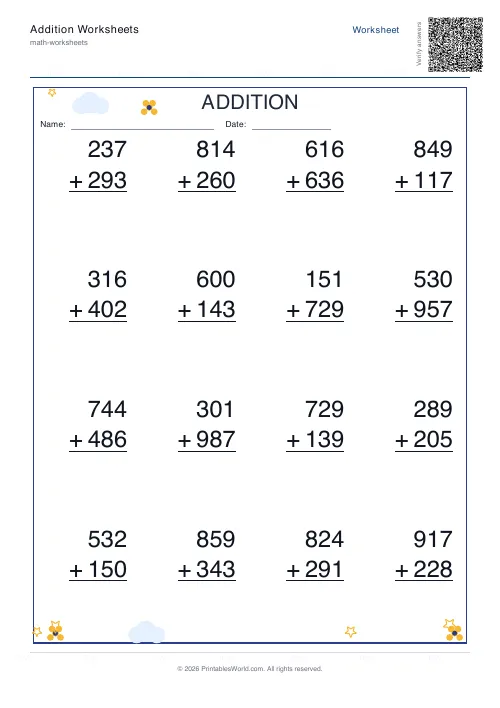 Addition Worksheets Generator
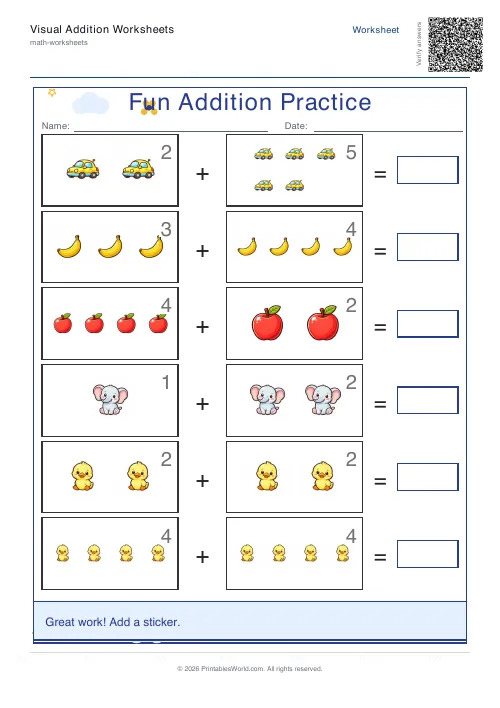 Visual Addition Worksheets Generator
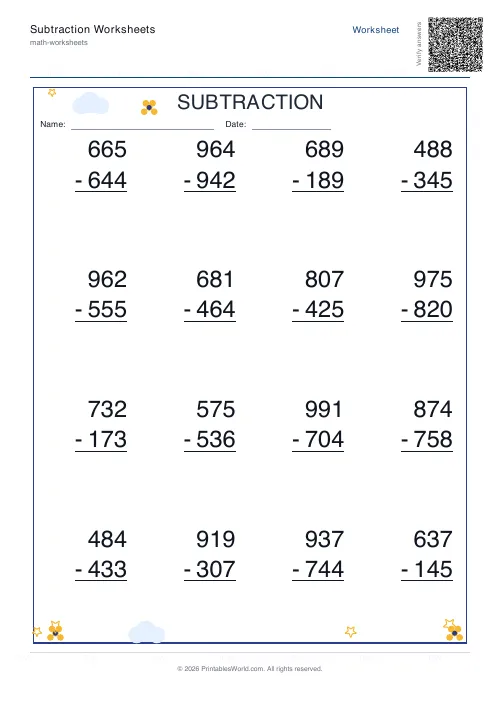 Subtraction Worksheets Generator
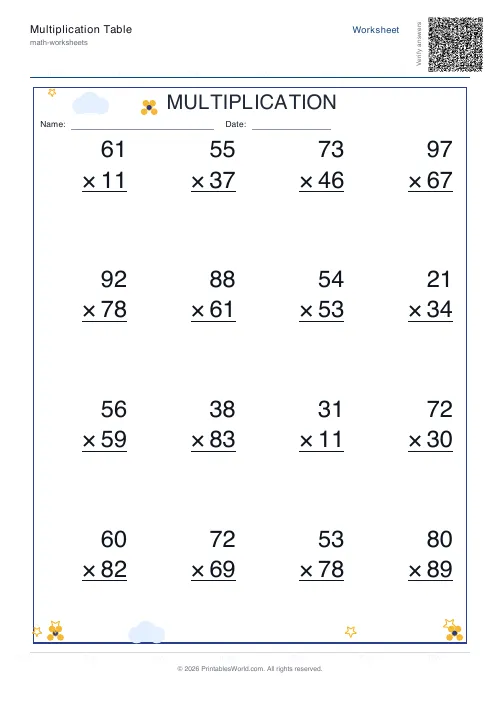 Multiplication Table Generator
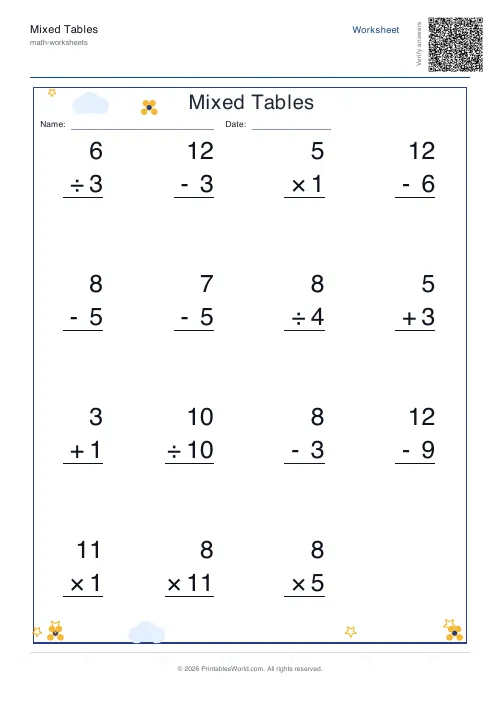 Mixed Tables Generator
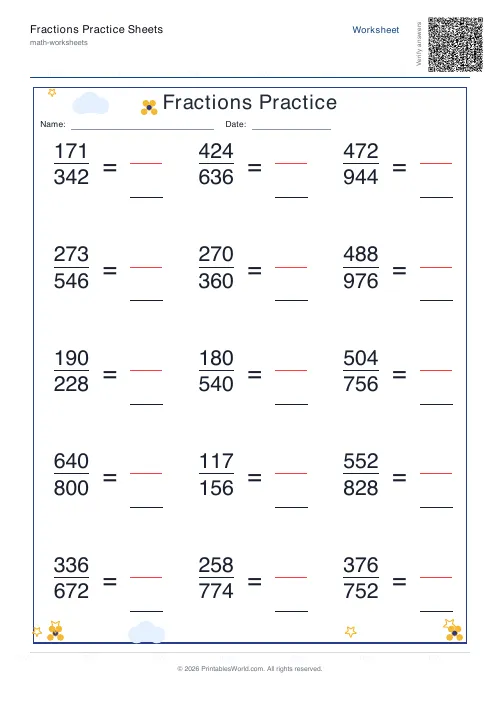 Fractions Practice Sheets Generator
- Math Word Problems Generator
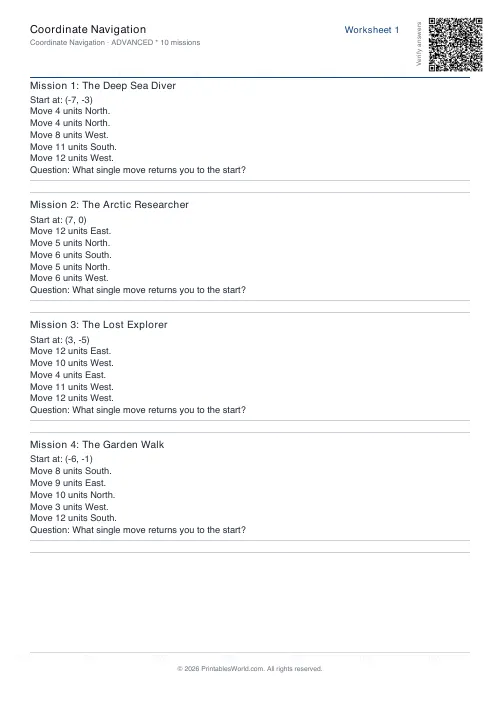 Coordinate Navigation Generator
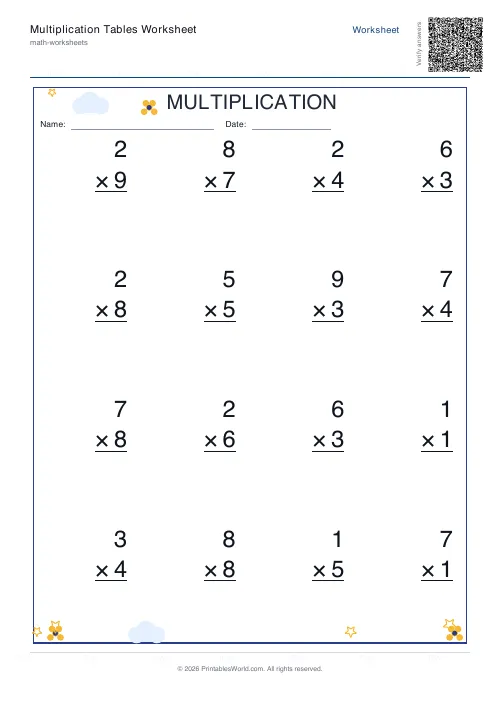 Multiplication Tables Worksheet
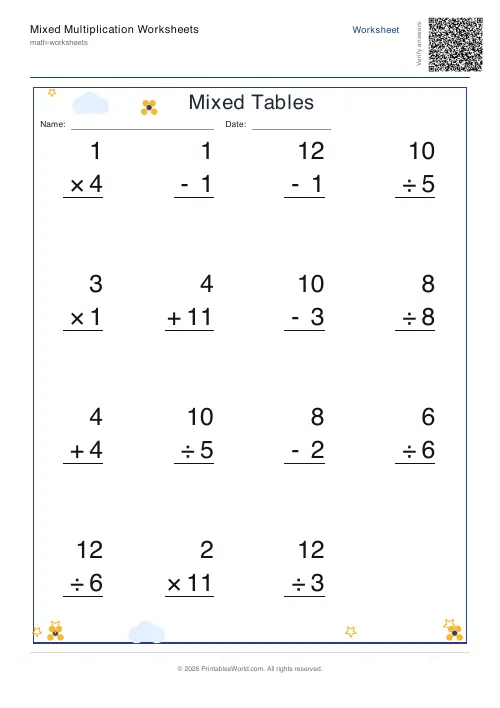 Mixed Multiplication Worksheets
- Word Problems: Addition
- Word Problems: Multiplication
- Word Problems: Division
- Word Problems: Mixed Operations