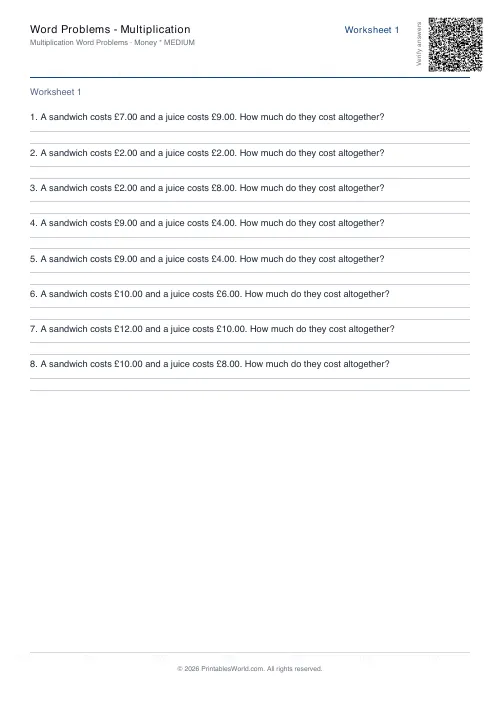
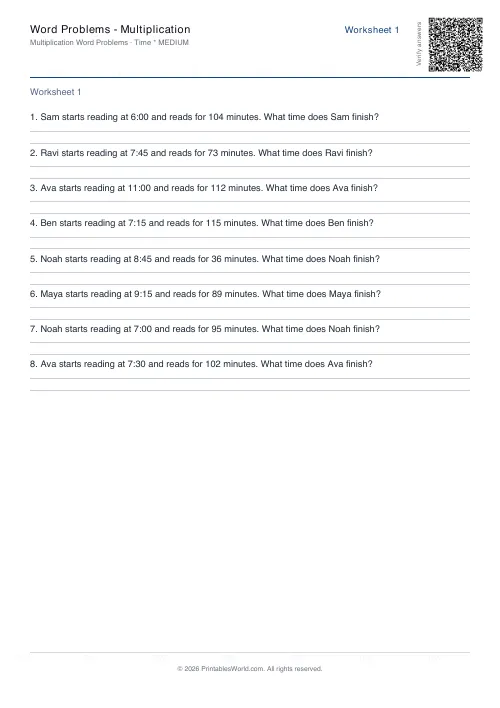
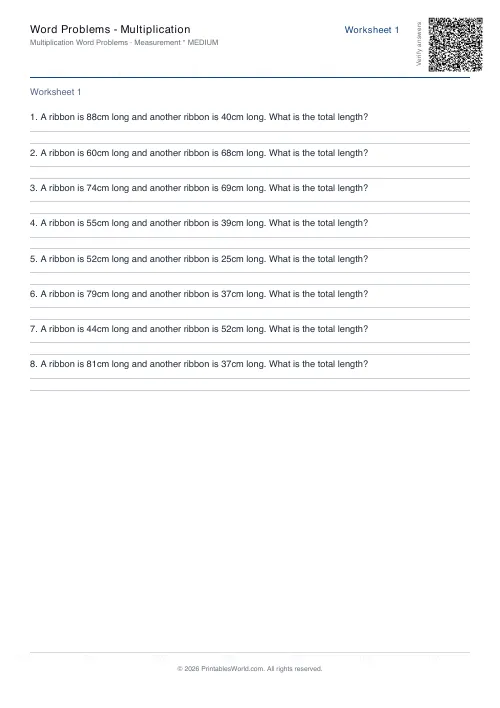
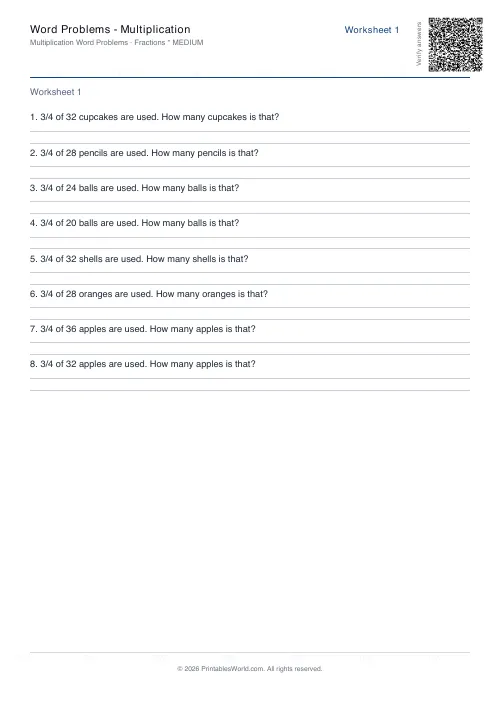
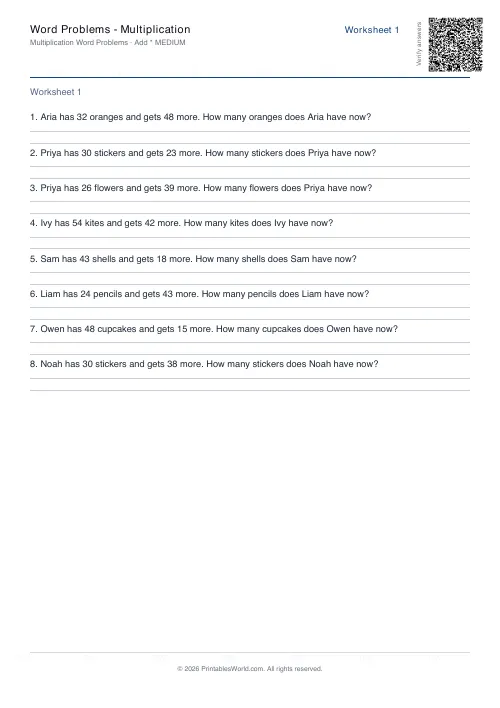
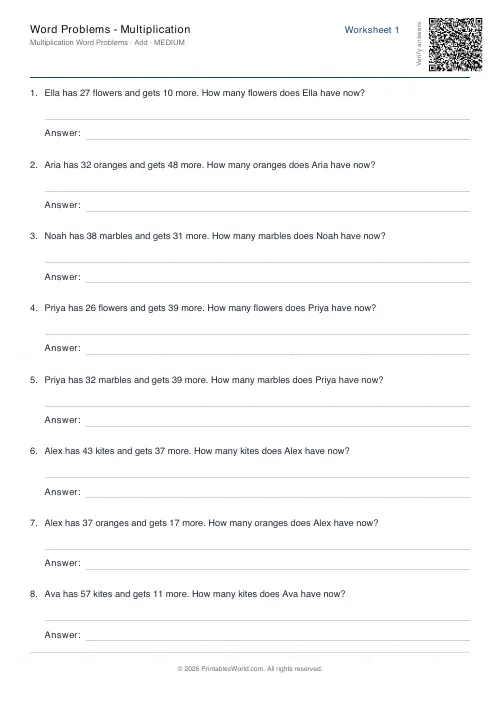
What this tool does
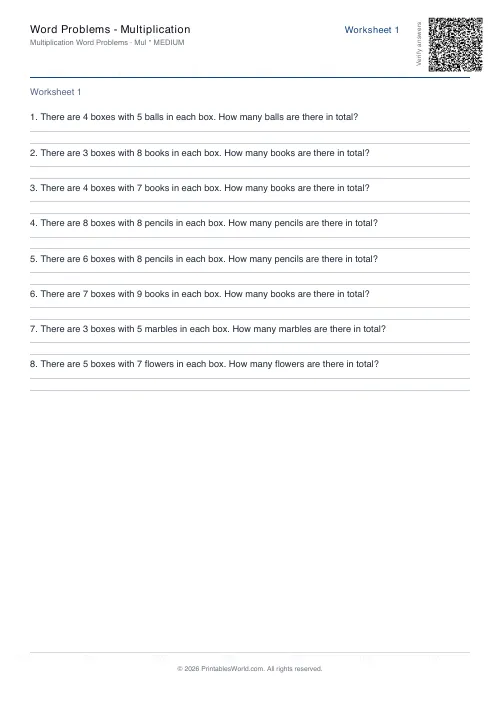
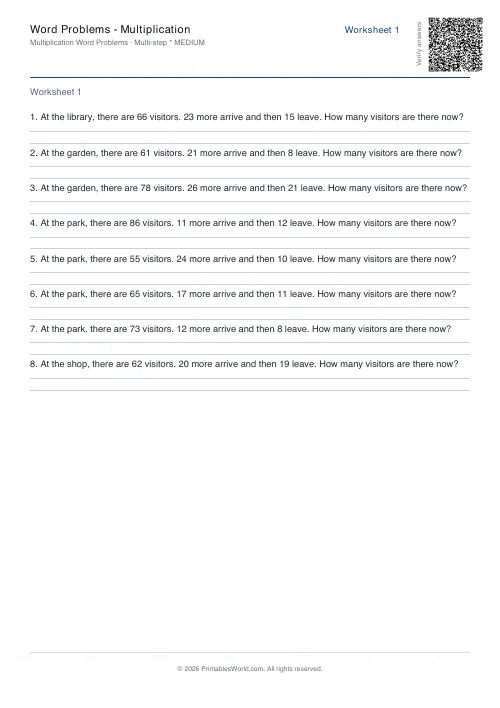
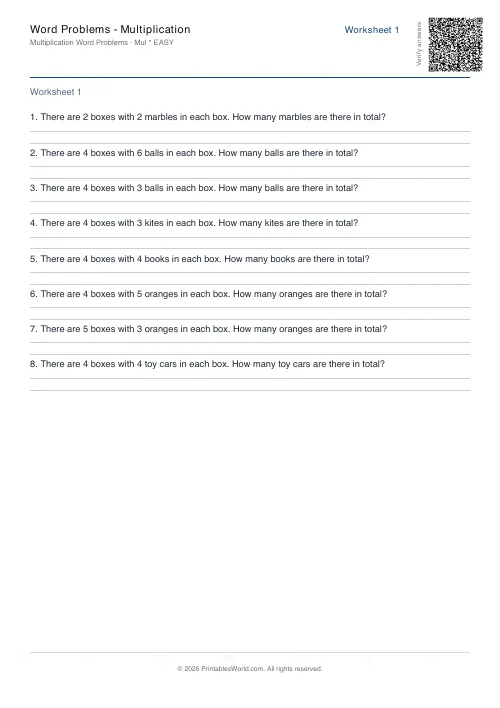
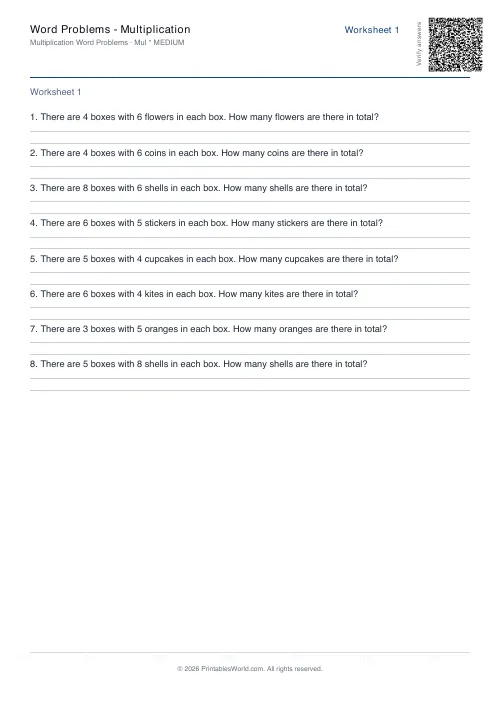
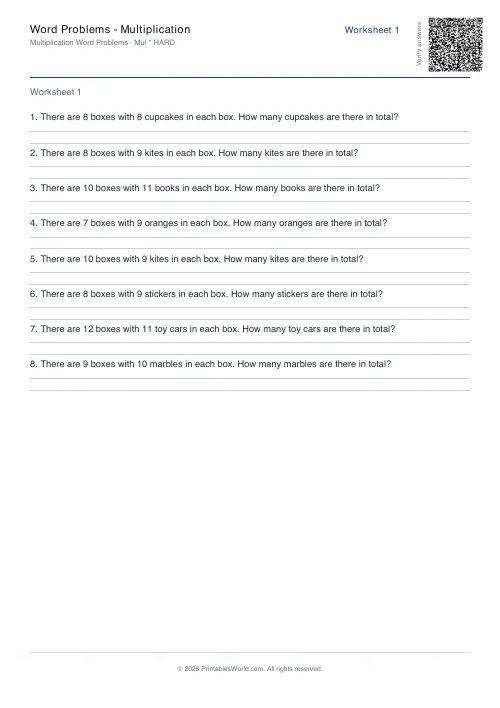
Multiplication word problems set as equal-groups scenarios — boxes with the same number in each. Three difficulty bands, answer key included.
People also used
Word Problems: Addition
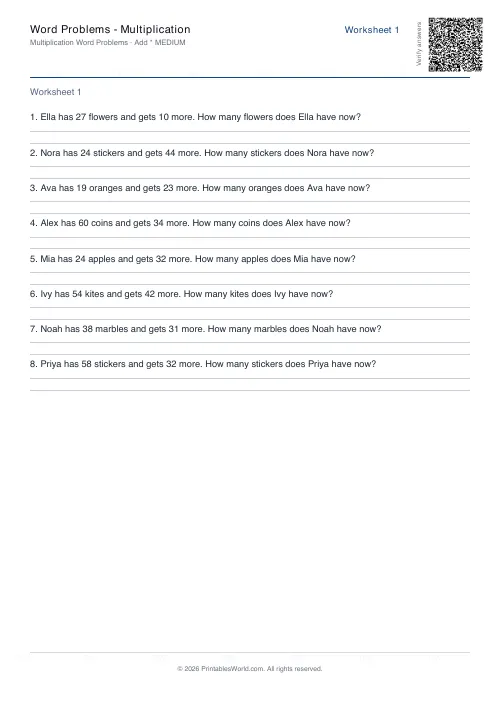
Generate printable addition word problems with real-world contexts and adjustable difficulty.
Word Problems: Subtraction
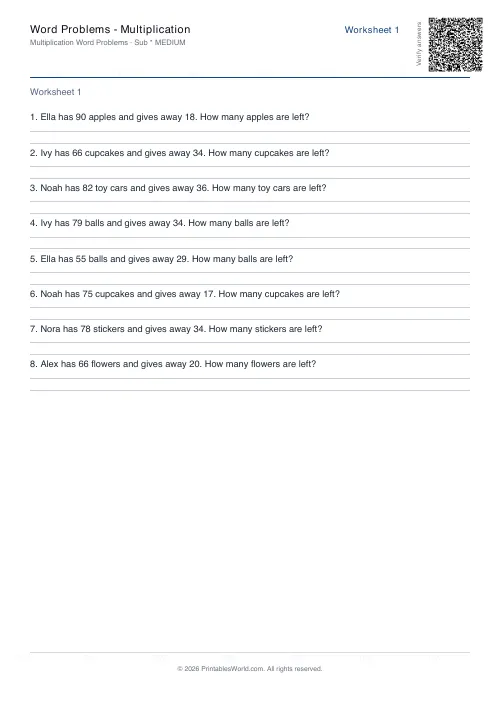
Free printable subtraction word problems with answer keys. Adjustable difficulty, real-world contexts.
Word Problems: Division
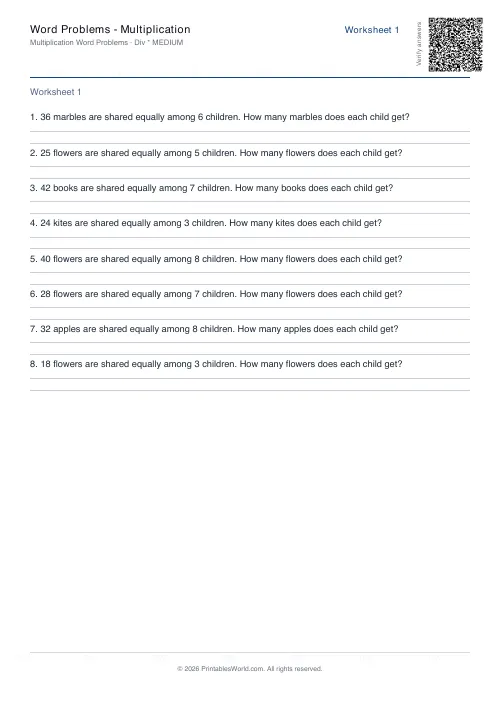
Print division word problems with sharing and grouping scenarios in real-world contexts.
Feedback
Spotted something off with this tool?
Multiplication, in sentences
A number of boxes, the same number of things in each, and the question asks for the total. Equal groups, which is the meaning of multiplication a child can picture.
Easy keeps both factors small. Medium runs to eight by nine. Hard reaches twelve by twelve, which is the whole tables grid.
Equal groups first, arrays second
Boxes with the same number in each is the most concrete image available, and it is where multiplication should start.
It is not the only one. Arrays — rows and columns — make commutativity obvious, since turning the array sideways plainly does not change the count. Scaling is a third and the hardest. A child who has only met one of these can be fluent in tables and still lost on a question that uses another, so introduce the others alongside these sheets rather than after them.
What changes with difficulty
The factors get larger. Nothing else does.
Holding the sentence steady while the numbers grow is what makes the sheets diagnostic: it separates a tables gap, which shows up only on the hard band, from a comprehension gap, which shows up on all three equally and needs entirely different help.
The failure is upstream of the arithmetic
Children rarely get these wrong at the multiplication. They get them wrong having decided, on the strength of two numbers in a sentence, that some other operation was called for.
Insist on a sequence. Pencil down. Read it all. Say what is going on. Find the question. Then, and not before, look at the numbers.
Why keyword lists let you down
"Each means times" works while the questions are built like the examples and fails the moment one is not.
Ask instead what the situation is doing — combining things, taking them away, repeating a group, or splitting one up. That holds regardless of the wording, which is the whole point.
In practice
Twelve problems, answer key optional. The names and objects are drawn from a pool, so a second sheet on the same settings is genuinely a different sheet.
Ask for a few worksheets in one go if you want a set.
Companion sheets: addition, subtraction and division. For tables drill, the multiplication table generator.
FAQs
Quick answers
What difficulty level should I choose for Year 3 students?
Start with easy if your class is beginning multiplication or still learning 2×, 5× and 10× tables. Easy problems use factors from 2 to 6 and keep group counts low. Move to medium once most students recall facts up to 6× fluently.
Can I generate worksheets with different problems for each student?
Yes. Change the seed string each time you generate, or increase the worksheet count and print different pages for different students. Each worksheet in a batch has unique problems drawn from the question bank.
How many problems fit on one page?
Typically 8–12 problems fit comfortably on A4 or US Letter, depending on the problem count you select. Shorter sentences at easy difficulty allow more per page; longer hard problems need more space.
Does the answer key show working, or just the final answer?
The answer key lists the numerical answer for each problem (for example, '24'). It does not show multiplication sentences or working steps; you can ask students to write those on their worksheet.
Can I edit the problems after generating the PDF?
No. The PDF is static once generated. If you want different wording or specific numbers, adjust the difficulty or seed and regenerate. For fully custom problems, you will need to create them manually.
Are the names and items the same every time?
The question bank includes 18 names and 13 item types (apples, marbles, stickers and so on). The generator permutes these randomly based on your seed, so you will see variety across worksheets but the same seed always produces the same set of problems.
Can I use these worksheets for division practice too?
These problems are phrased for multiplication. If you want division word problems, select 'div' from the topics list when the generator offers that option, or use the related division word-problems tool on PrintablesWorld.
Related tools
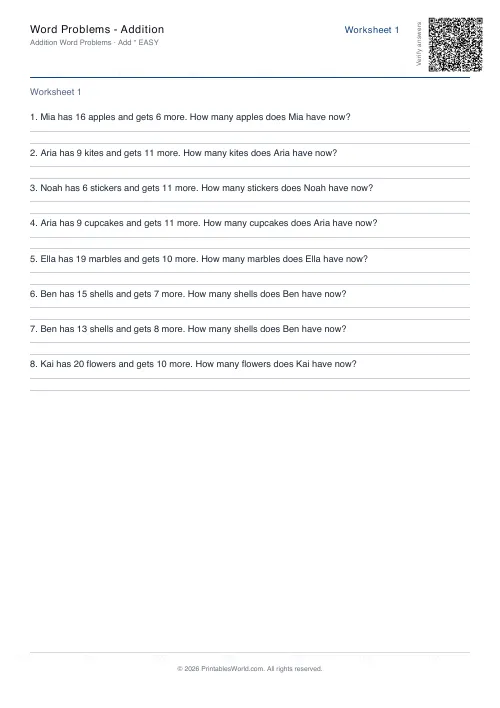
Word Problems: Addition
Generate printable addition word problems with real-world contexts and adjustable difficulty.
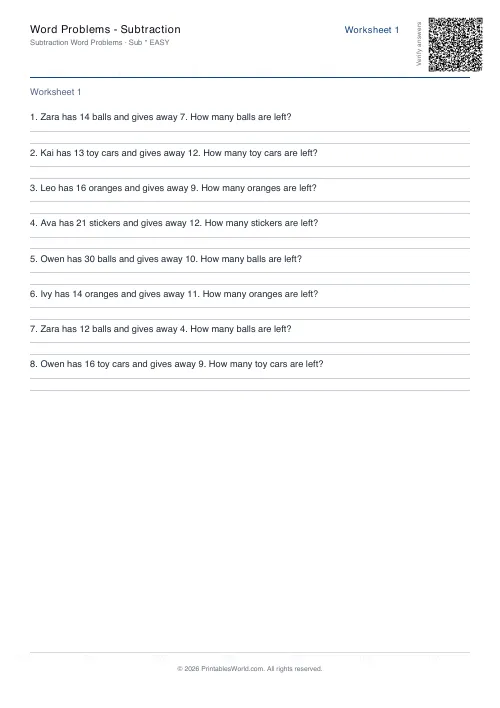
Word Problems: Subtraction
Free printable subtraction word problems with answer keys. Adjustable difficulty, real-world contexts.
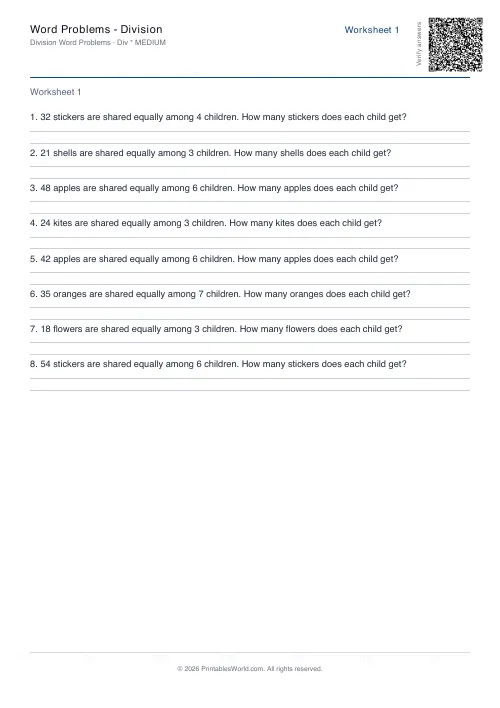
Word Problems: Division
Print division word problems with sharing and grouping scenarios in real-world contexts.
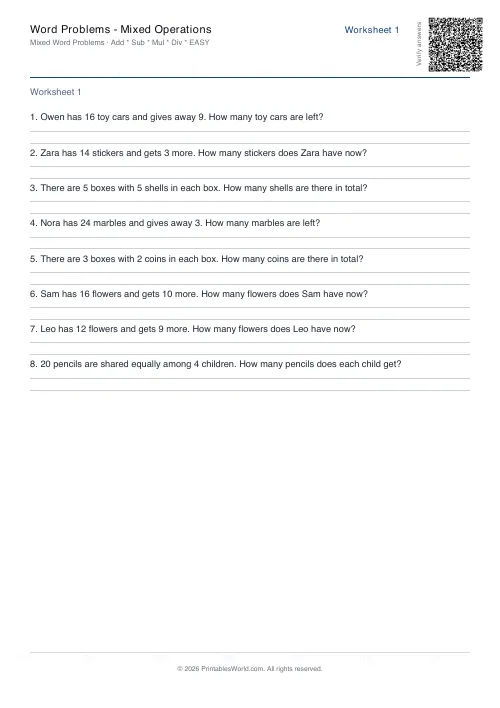
Word Problems: Mixed Operations
Print word problems that mix addition, subtraction, multiplication and division on one worksheet.
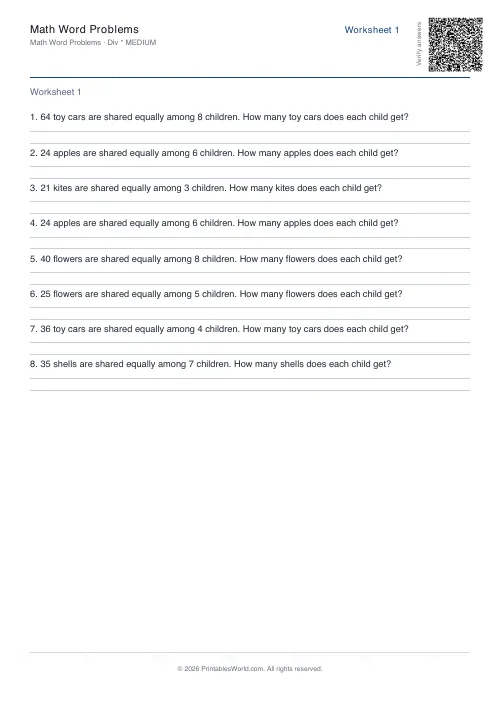
Math Word Problems Generator
Generate printable math word problem worksheets with customisable topics, difficulty, and answer keys.
Further reading
Math Worksheets
Understanding BODMAS and PEMDAS: order of operations explained
BODMAS and PEMDAS describe the same rule in different words. The trouble is that both hide two facts the acronym cannot express. Which is where nearly every mistake comes from.
5 min read
Math Worksheets
Making maths fun: 15 ways to practise without tears
Maths tears are usually about difficulty, length or fear of being wrong, not about maths. Fifteen practical changes, grouped by which of those three problems they actually solve.
6 min read
Math Worksheets
Addition strategies: number lines, regrouping and more
Column addition is the destination, not the route. Here are the strategies that come before it, why each matters, and how to tell which one a child is actually using.
5 min read
More like this
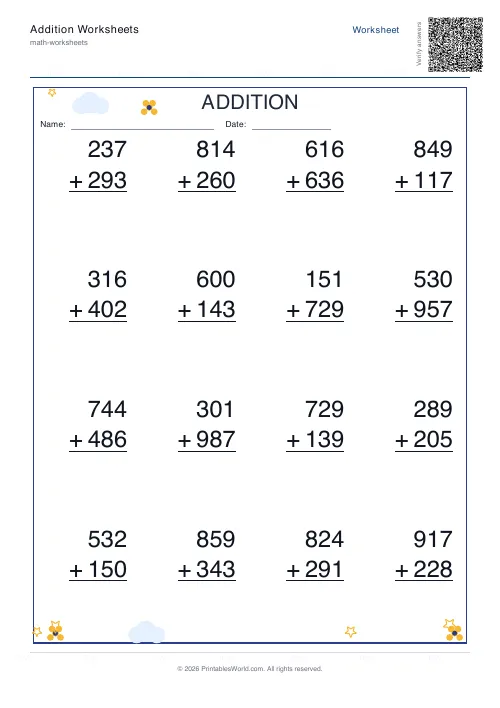 Addition Worksheets Generator
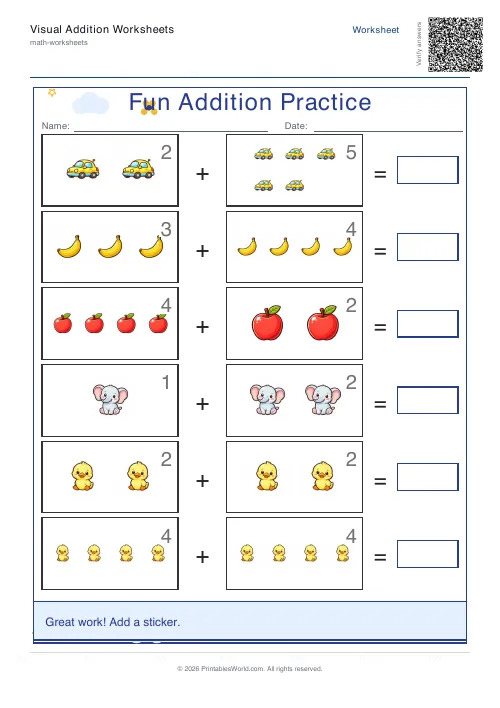 Visual Addition Worksheets Generator
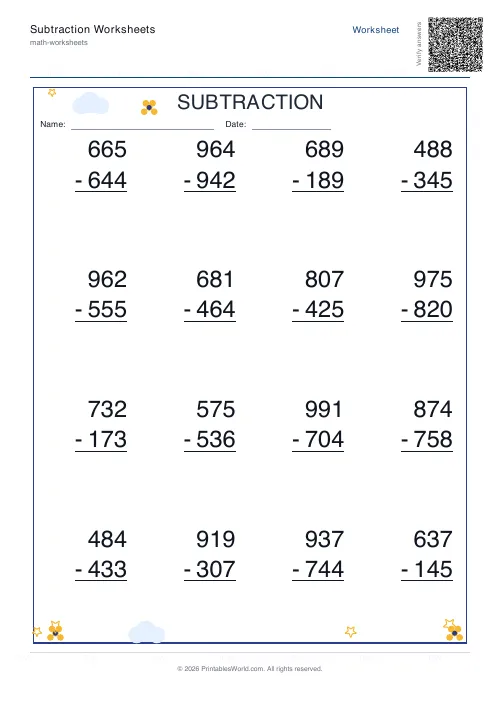 Subtraction Worksheets Generator
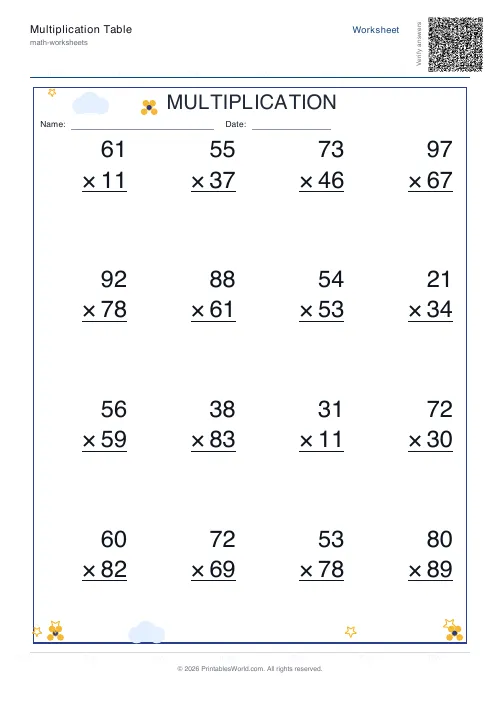 Multiplication Table Generator
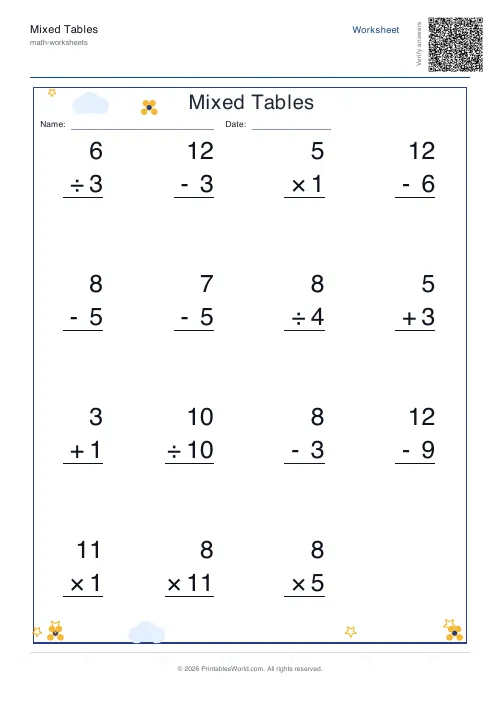 Mixed Tables Generator
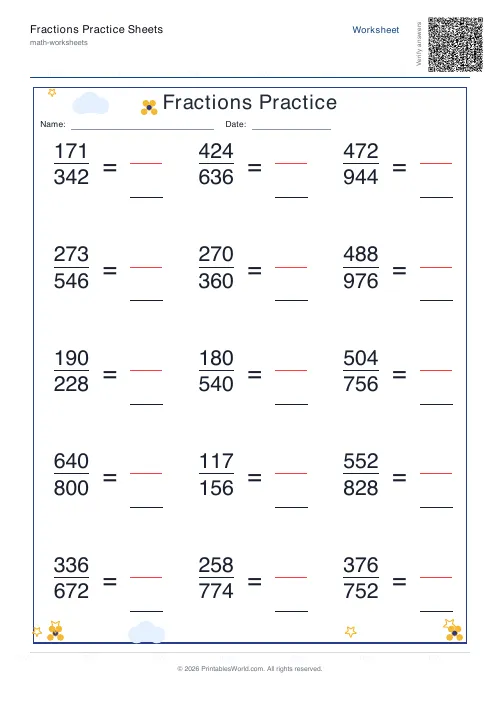 Fractions Practice Sheets Generator
- Math Word Problems Generator
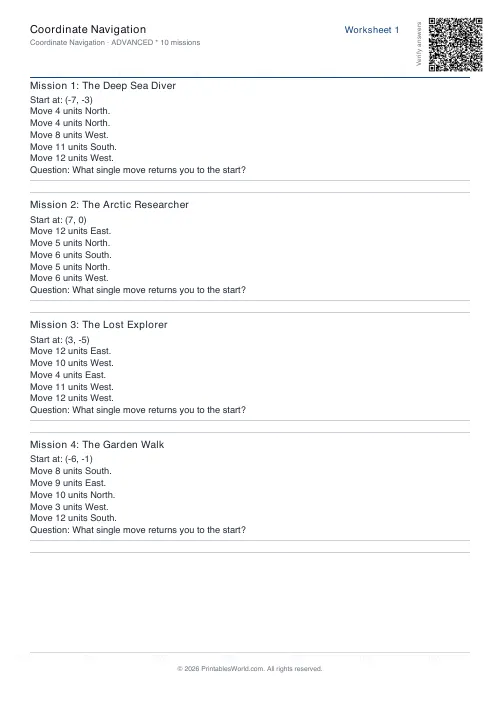 Coordinate Navigation Generator
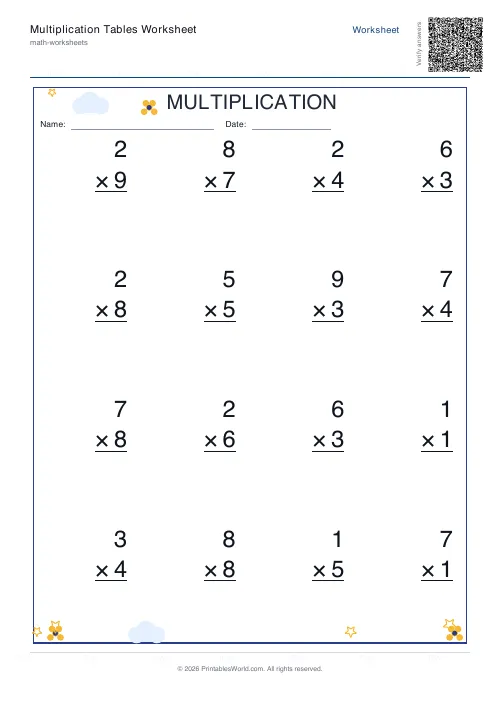 Multiplication Tables Worksheet
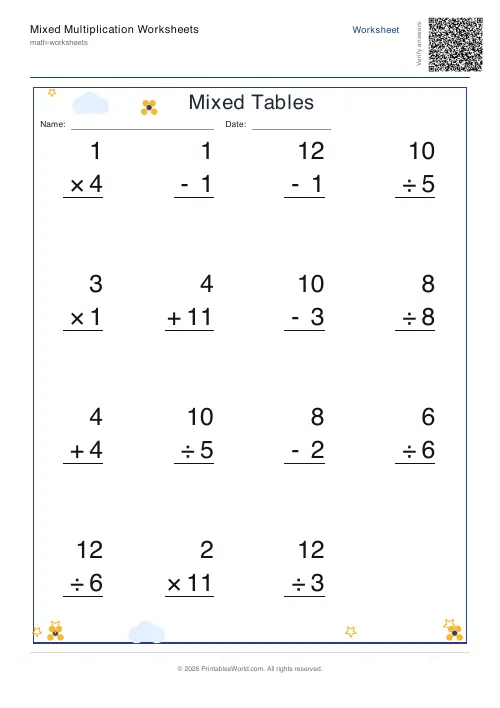 Mixed Multiplication Worksheets
- Word Problems: Addition
- Word Problems: Subtraction
- Word Problems: Division
- Word Problems: Mixed Operations