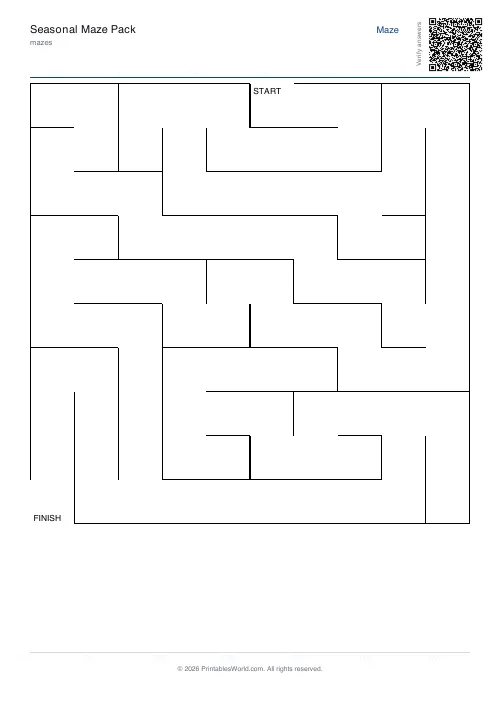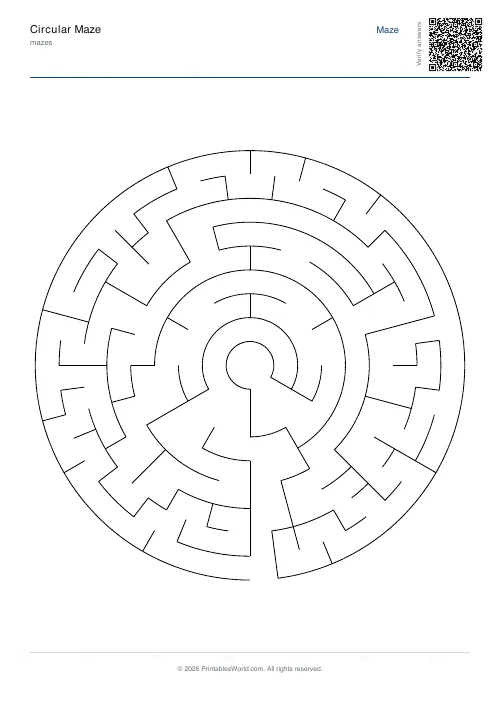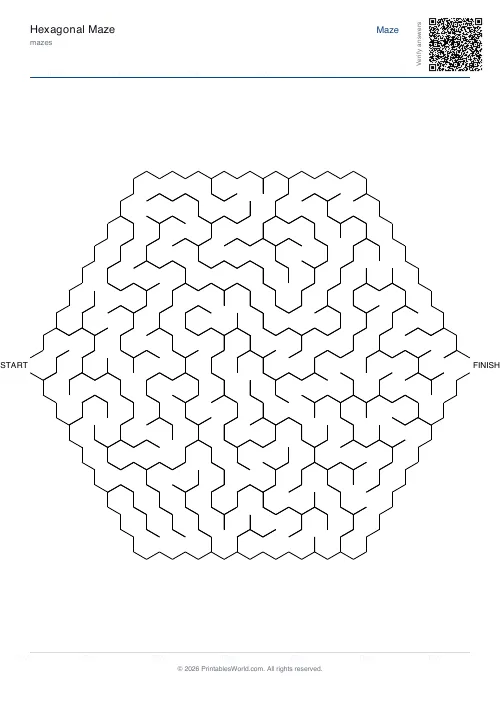
What this tool does
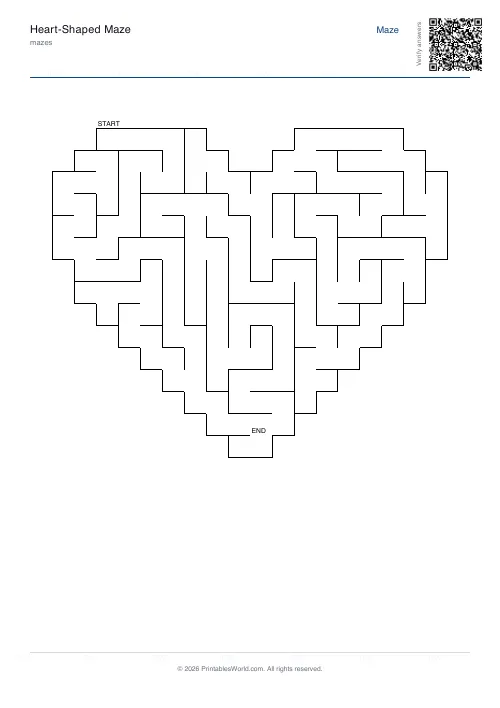
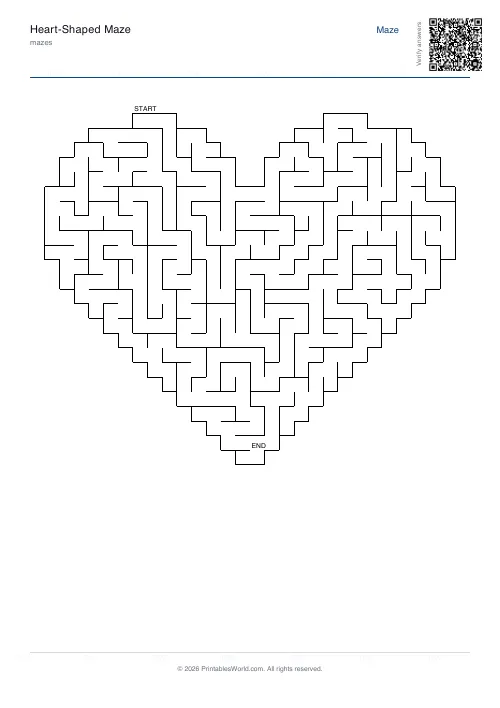
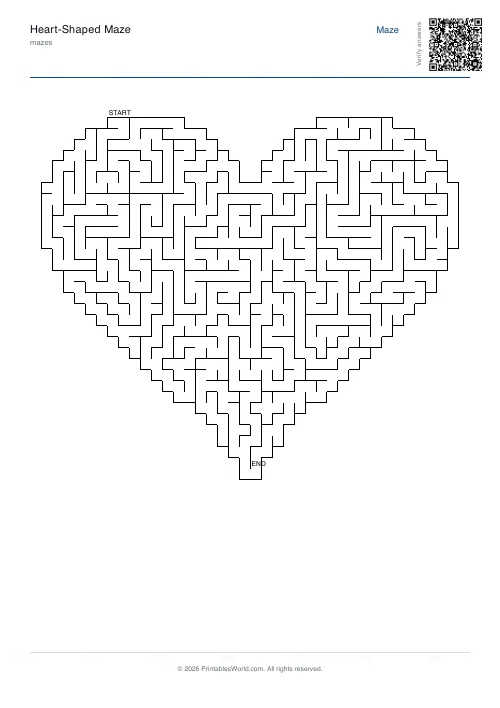
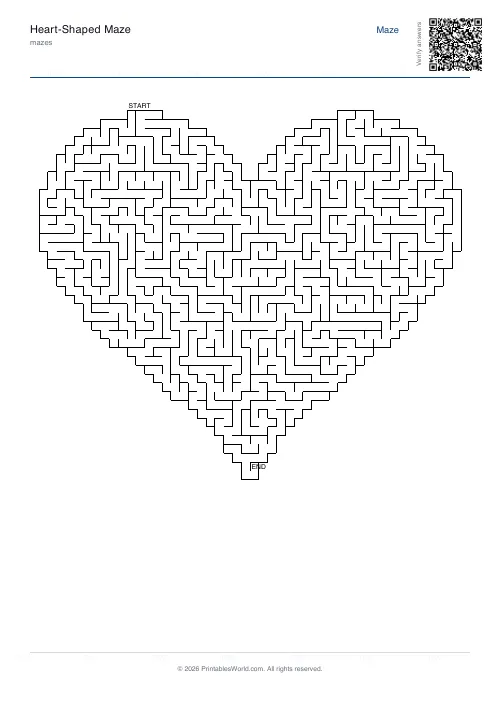
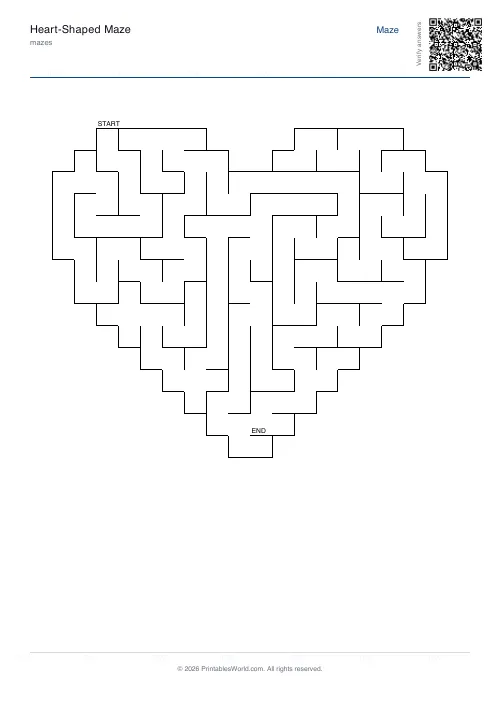
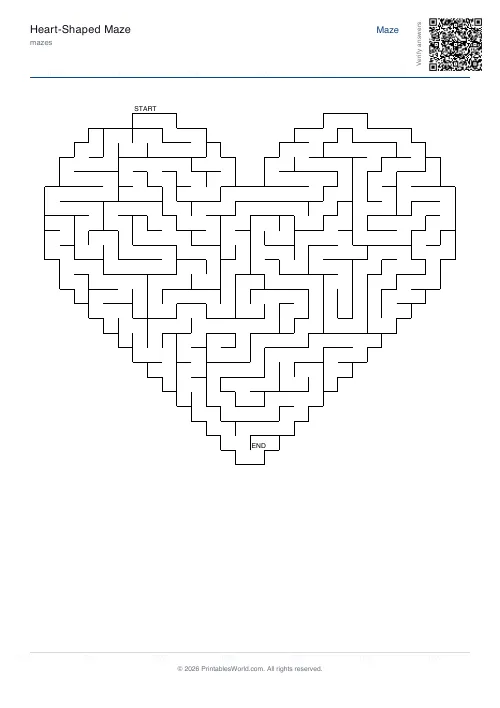
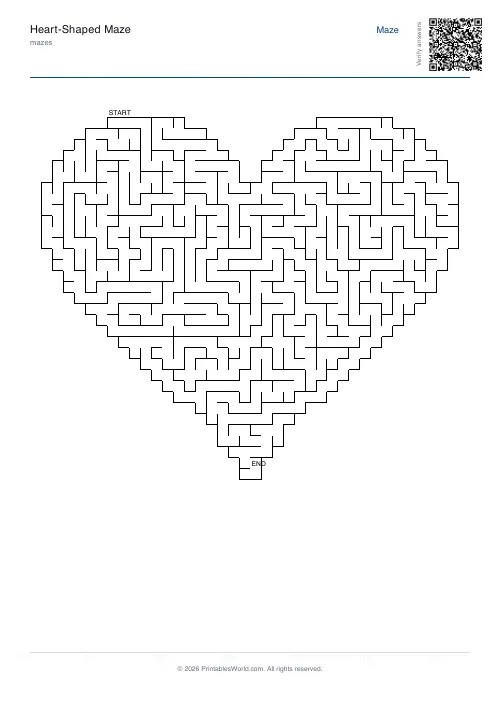
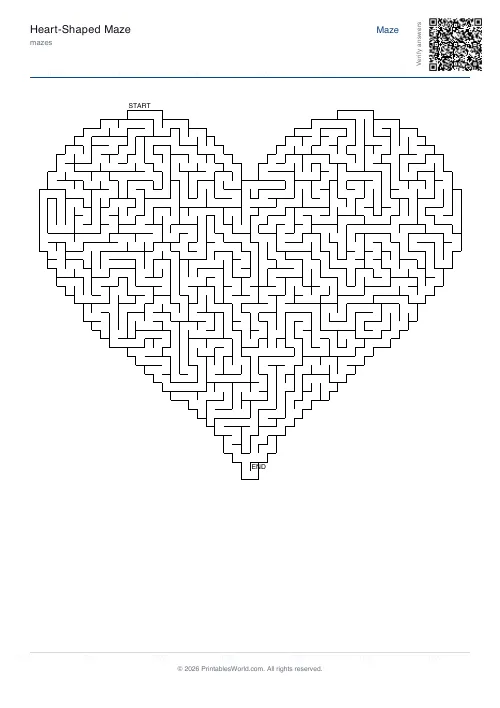
A maze carved inside the outline of a heart. Grid resolutions from 20 to 50 cells across, so the same shape can hold a gentle puzzle or a very fine one. Optional solution page.
People also used
Feedback
Spotted something off with this tool?
Heart-shaped mazes at five resolutions
The corridors are carved only into the cells that fall inside a heart outline, so every wall follows the silhouette and the finished page reads as a shape first and a puzzle second. The way in is at the top of one lobe; the finish sits down near the point.
That is the whole idea. It survives cheap paper and a tired printer, which is more than most Valentine's Day activities manage.
Resolution is the only real setting
Size is the grid the heart is drawn on: 20, 25, 30, 40 or 50 cells across. The heart takes the same proportion of the page at each one, so what changes is how fine the corridors are.
- 20 — chunky cells and a short route. A five-year-old manages it with a fat pencil.
- 25 or 30 — the middle ground, and the range where the outline still reads as a heart from across a room rather than dissolving into texture.
- 40 — a proper solve for an older child.
- 50 — very fine indeed. Lovely, and it wants a 0.5mm pencil and decent light.
Go too high for the audience and the shape stops reading. At 50 cells the walls are dense enough to swallow the outline.
Solution page and seed
The solution toggle adds a second heart with the route drawn through it. The seed reproduces an exact maze, which matters here more than on a plain grid: hearts vary a lot between generations, and if you find one whose route runs prettily through both lobes you will want it back.
What it is actually for
Valentine's Day classroom packs, obviously. It is also the shape people reach for on Mother's Day cards, on wedding tables, and inside an anniversary card that would otherwise have carried a printed verse somebody else wrote.
A blank heart maze printed at size 20 with a message written in the sea of white around it is a decent card. Print two, solve one against the other, and it is also a game.
How it is built
The heart mask is computed from the standard implicit heart curve at your chosen resolution, and a depth-first backtracker then carves corridors through the masked cells only. Every cell inside the shape is reachable and there is exactly one route between any two of them, so the maze is perfect in the technical sense as well as the sentimental one.
Print at 100% scale on A4 or US Letter. The shape's curved edges are drawn as small steps in the grid; letting the printer scale them softens the outline.
The same shaped-maze carver drives the animal-shaped mazes and the island maze, if you want a set of shapes rather than one.
FAQs
Quick answers
How is the heart shape generated?
A parametric heart curve is sampled and scaled into a binary mask of the chosen resolution. The maze backtracker walks only inside the mask.
What does the size setting do?
It controls the number of cells along each side of the bounding square. Bigger size means more cells inside the heart and a denser maze.
Can I print the solution?
Yes. Toggle the solution option to add a second page with the route overlaid.
When would I print this?
Great for Valentine's Day classroom packs or wedding-stationery activities.
Related tools
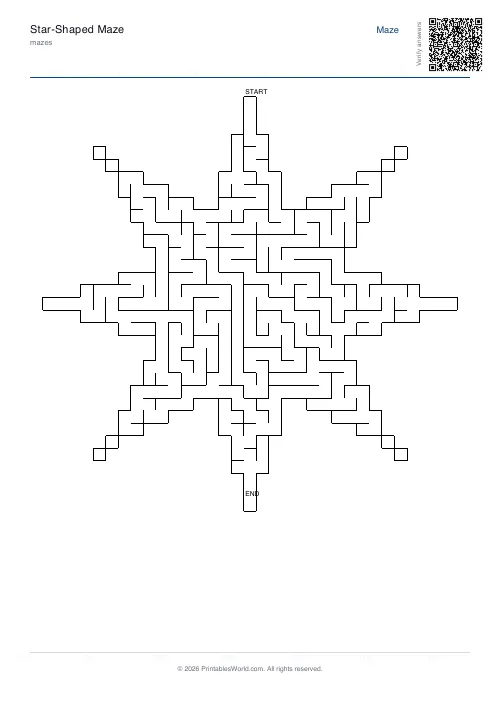
Star-Shaped Maze
Maze pathway within a five-pointed star outline.
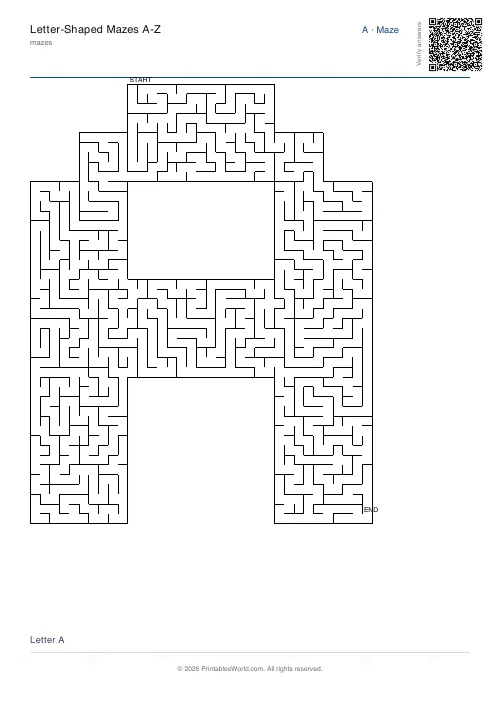
Letter-Shaped Mazes A-Z
Maze path contained within the shape of each letter of the alphabet.
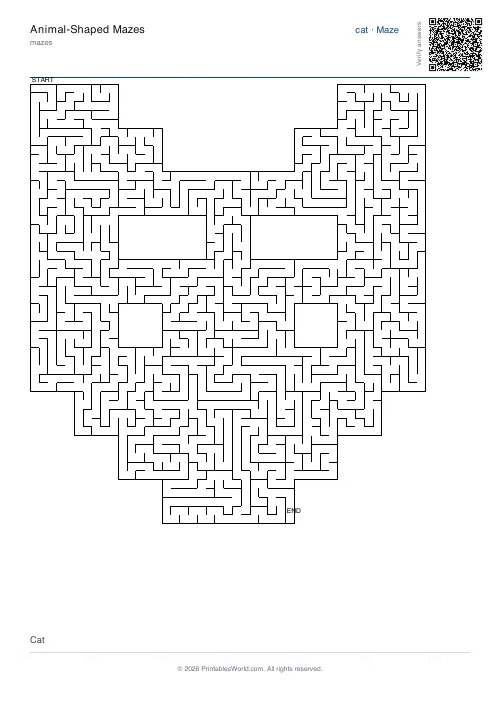
Animal-Shaped Mazes
Maze within the outline of an animal. Cat, fish, or bird.
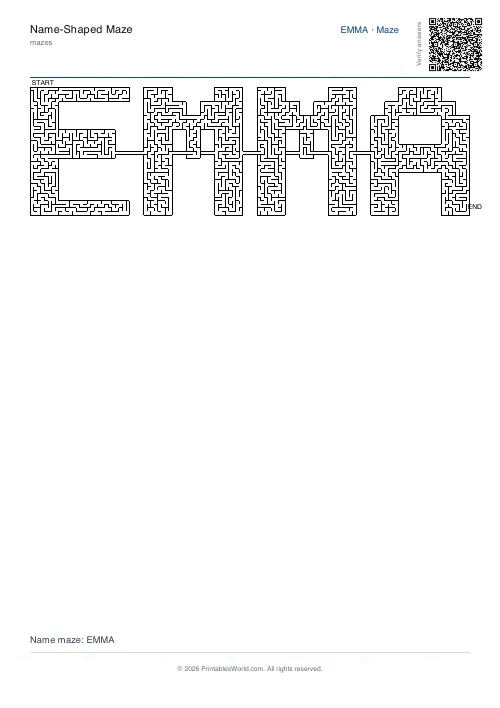
Name-Shaped Maze
One connected maze carved into the outline of any name you type.
Further reading
Mazes
Why mazes are great for kids' development
Mazes are one of the few activities that exercise pencil control and forward planning at the same time. Which is why they suit the years just before formal handwriting.
4 min read
Mazes
Printable maze difficulty: matching mazes to ages
Maze difficulty has two independent dials, and confusing them is why a maze is either too fiddly or too easy. Here is which to turn for which child.
4 min read