What this tool does
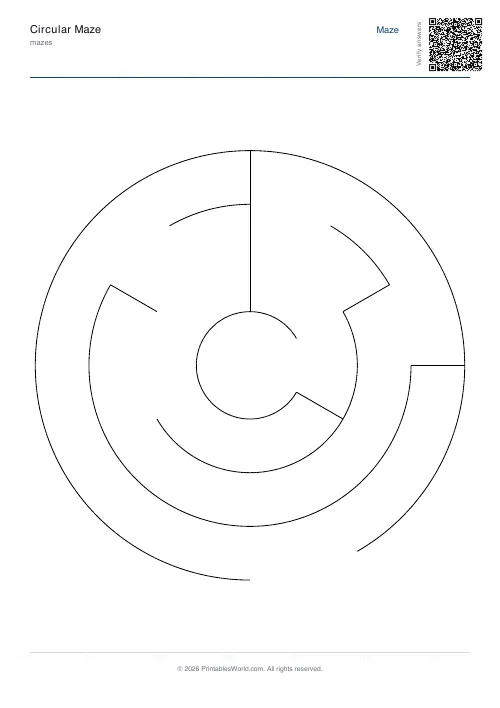
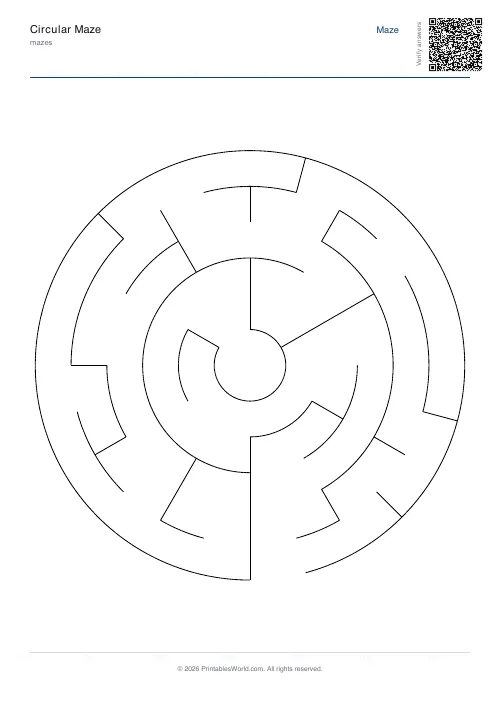
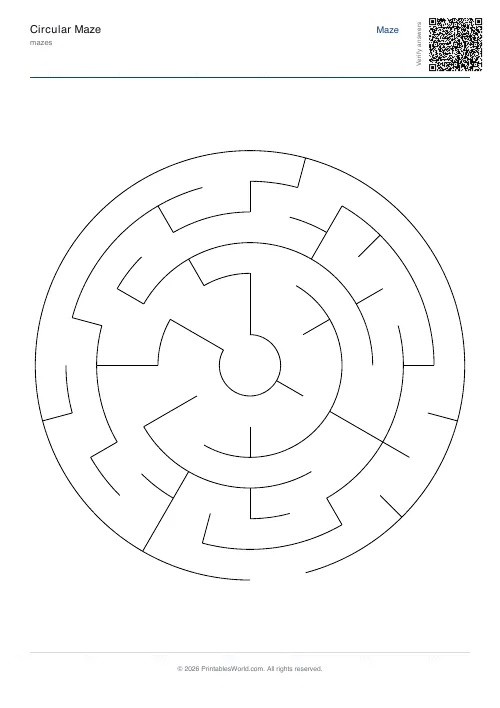
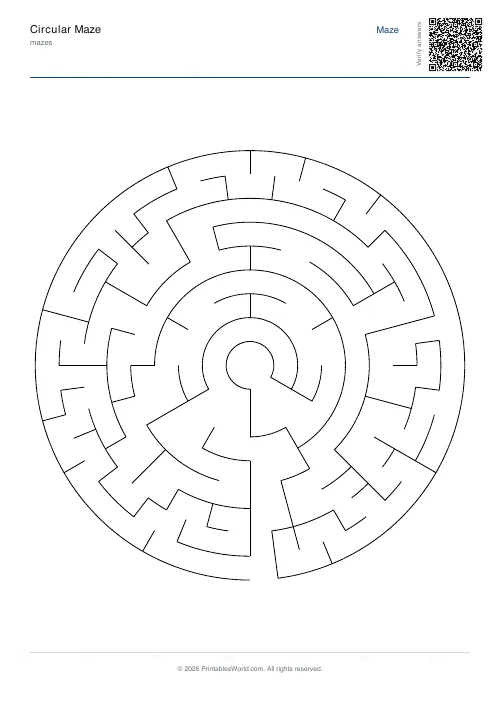
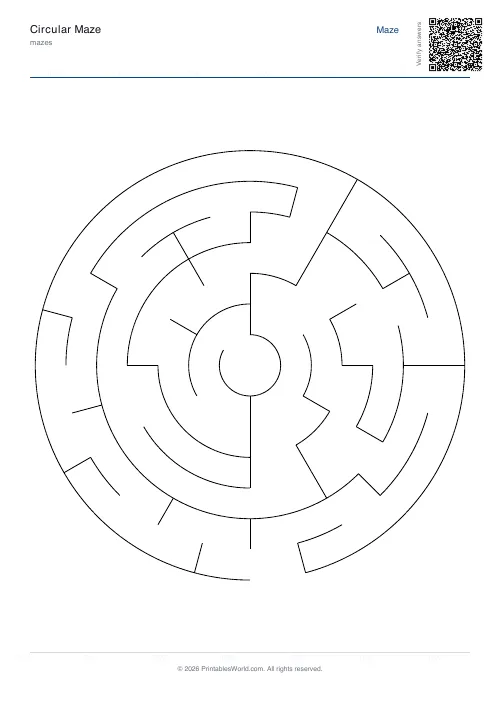
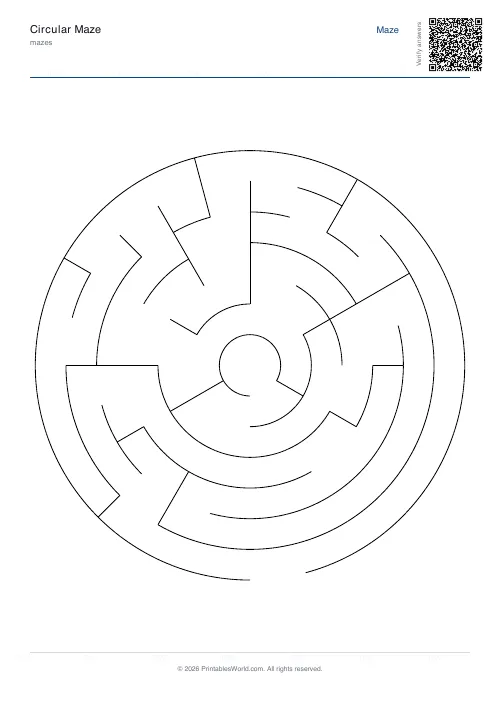
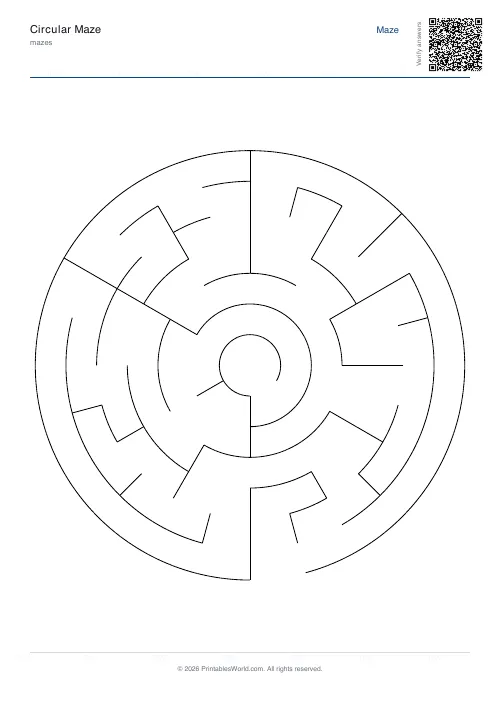
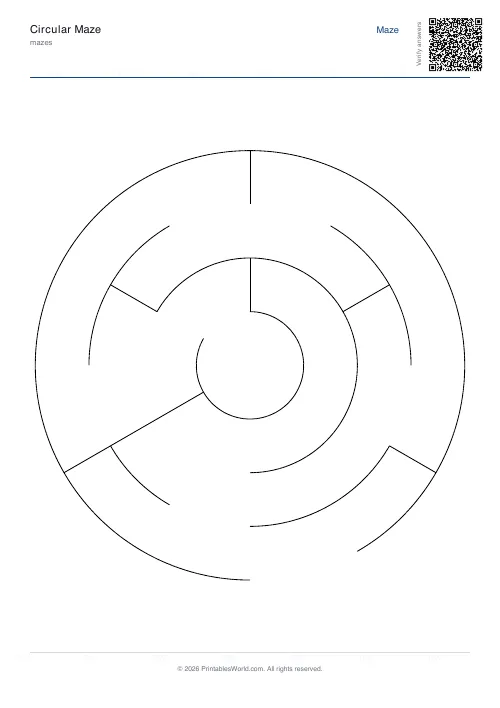
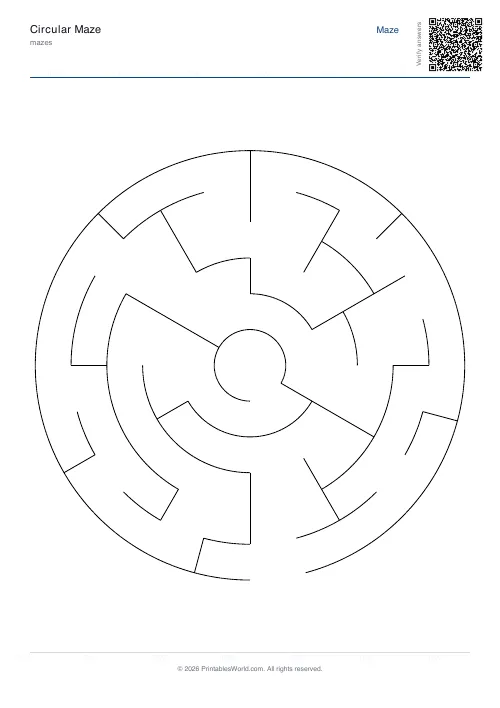
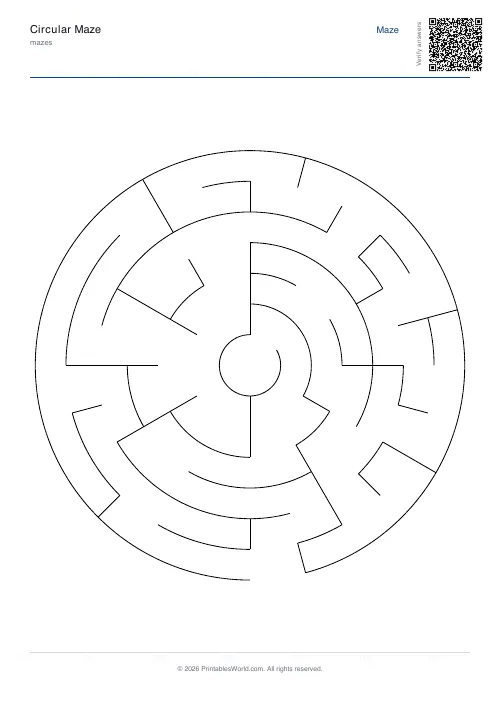
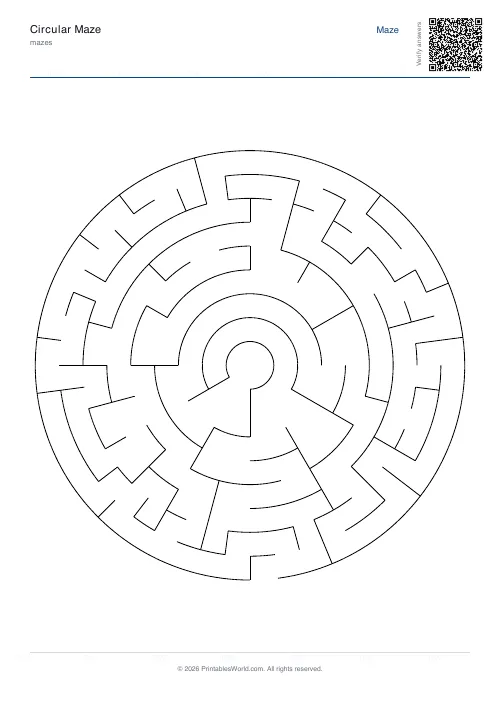
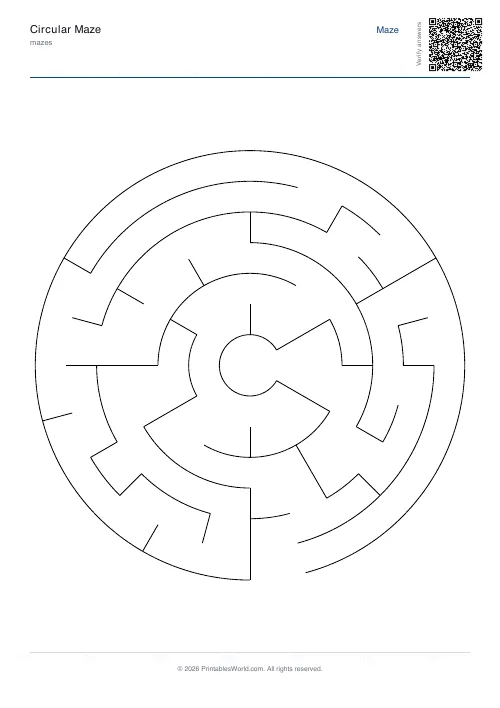
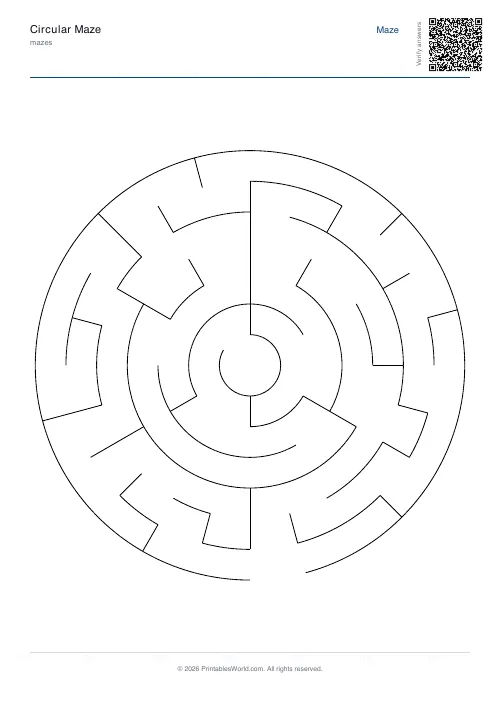
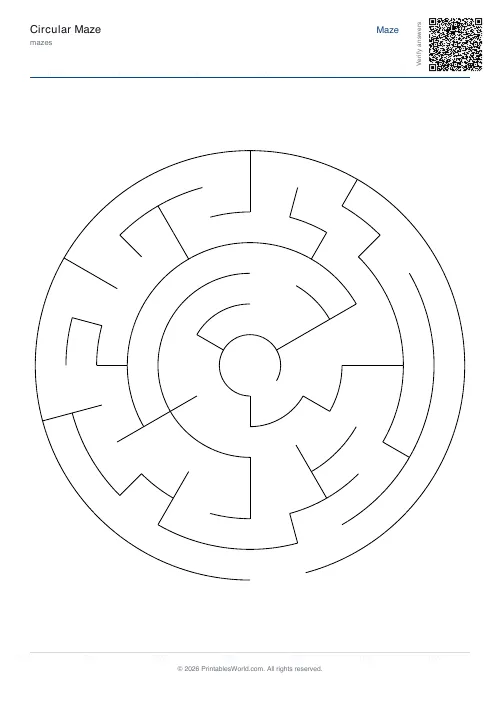
A maze carved onto a polar grid of concentric rings. You start on the outer ring and work in to the centre. Pick 4 to 9 rings, set the difficulty, and print with or without the solved route on a second page.
People also used
Feedback
Spotted something off with this tool?
Circular mazes, carved on rings instead of squares
The grid underneath this maze is polar. Every ring is cut into wedges, and the wedge count rises as the rings get bigger, so a cell near the rim stays roughly the same size as one near the middle instead of stretching into a long thin arc.
You enter on the outer ring. You finish in the centre. Between those two points the route runs both ways round the disc and in and out through the ring boundaries, which is a genuinely different job for the eye than a square maze, because there is no such thing as a straight corridor to follow — every path curves, and a solver who has learned to scan along lines has to give that habit up and start tracking around a bend instead.
Rings and difficulty do separate jobs
Rings runs from 4 to 9. Four is a large-cell puzzle a five-year-old can trace with a fat pencil. Nine packs the disc tightly and is about as dense as a standard pencil tip can handle.
Difficulty does not change the ring count. It changes how the maze is carved. On easy the carver strongly prefers to keep going the way it was already heading, which produces long sweeping corridors with few places to make a decision. On hard it has no such preference, so the route turns constantly and the disc fills with junctions and short dead ends. Same number of rings, noticeably different solve.
That means a 5-ring hard maze and a 9-ring easy maze are both reasonable puzzles for very different reasons, and it is worth generating one of each to see the difference before you print a stack.
The rest of the controls
- Include solution — prints a second disc with the route drawn over it.
- Seed — type anything. The same seed with the same settings rebuilds the same maze exactly, which is how you reprint a favourite or hand a whole class the identical puzzle.
- Paper size — A4 or US Letter.
How it is built
A depth-first recursive backtracker walks the polar grid, knocking down walls between neighbouring wedges — clockwise, anticlockwise, inward, outward — until every cell has been reached. The result is a perfect maze: exactly one route from the outer ring to the centre, no loops, no isolated pockets. The difficulty bias steers which neighbour the carver reaches for first; it never lets it revisit a cell, so the single-route guarantee holds at every setting.
Printing it
Print at 100%. Scaling to fit shrinks the outermost wedges first, and those are the narrowest cells on the page.
Nine rings on A4 is fine for an adult with a fine pencil and cramped for a six-year-old with a crayon. If the maze is going to a young child, drop to four or five rings and let the cells be generous.
Related grids
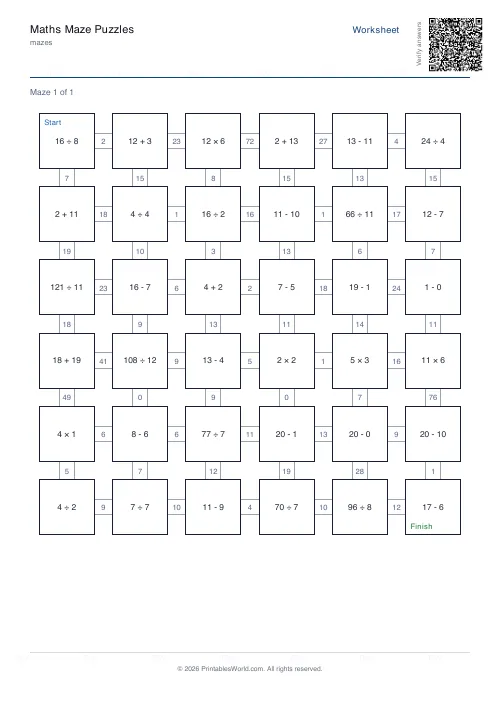
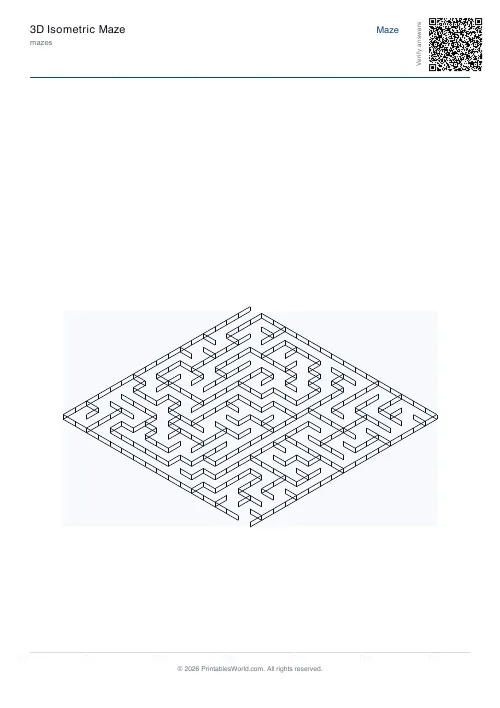
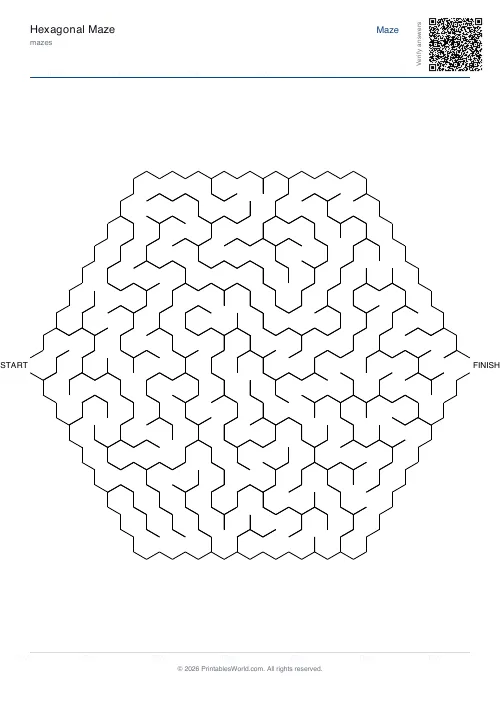
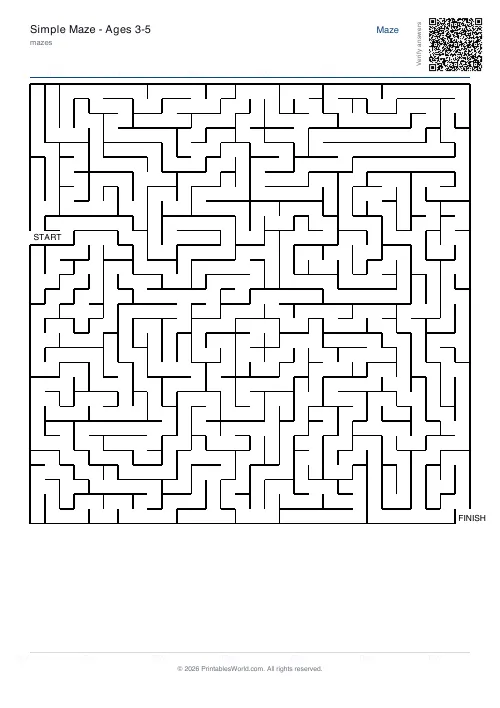
The same carving algorithm runs on other geometries, which makes a decent lesson in itself: hexagonal mazes give each cell six neighbours, isometric mazes keep the square grid but draw the walls as standing blocks, and the standard maze generator is the plain square version.
FAQs
Quick answers
How does a circular maze differ from a square one?
It uses a polar grid: each ring is divided into wedges, and the only walls are between wedges in the same ring or between adjacent rings.
Can I print the solution?
Yes. Toggle the solution option to add a page with the path overlaid.
How many rings should I pick?
Five rings is comfortable; nine rings is challenging. The wedge count grows automatically with the radius.
Where does the path start and end?
Start is the outermost ring; finish is the centre cell.
Related tools
Further reading
Mazes
Why mazes are great for kids' development
Mazes are one of the few activities that exercise pencil control and forward planning at the same time. Which is why they suit the years just before formal handwriting.
4 min read
Mazes
Printable maze difficulty: matching mazes to ages
Maze difficulty has two independent dials, and confusing them is why a maze is either too fiddly or too easy. Here is which to turn for which child.
4 min read