What this tool does
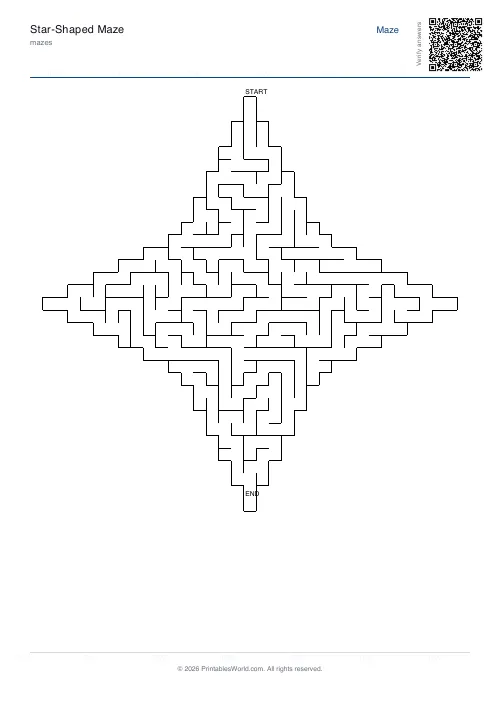
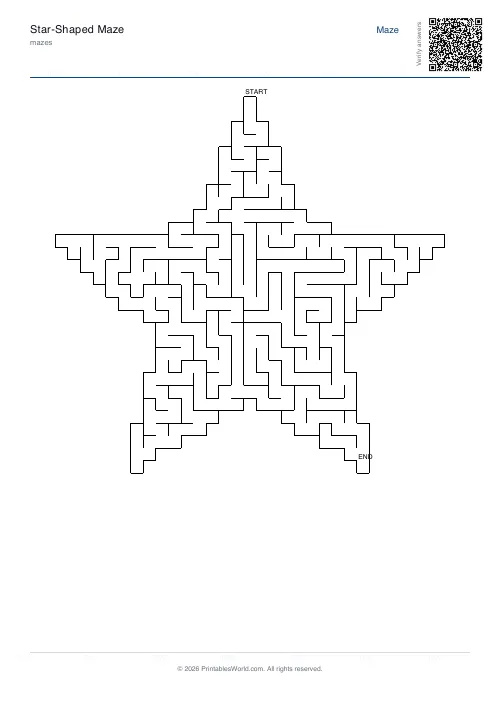
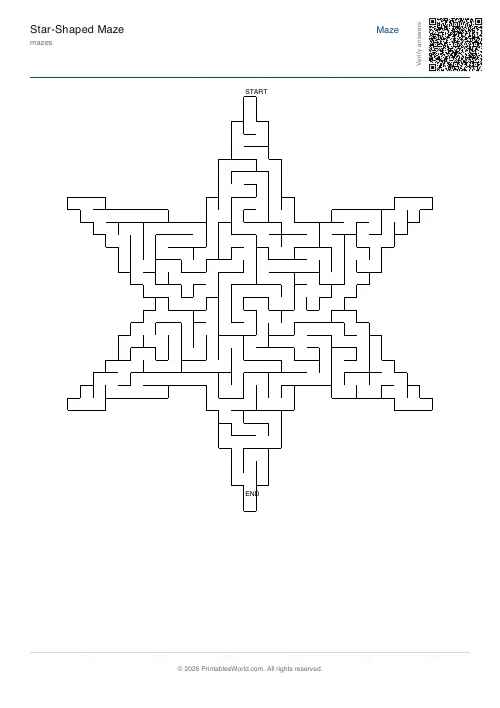
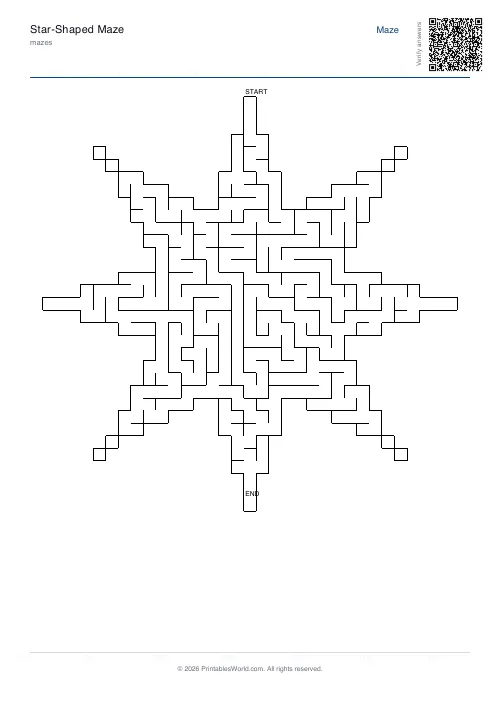
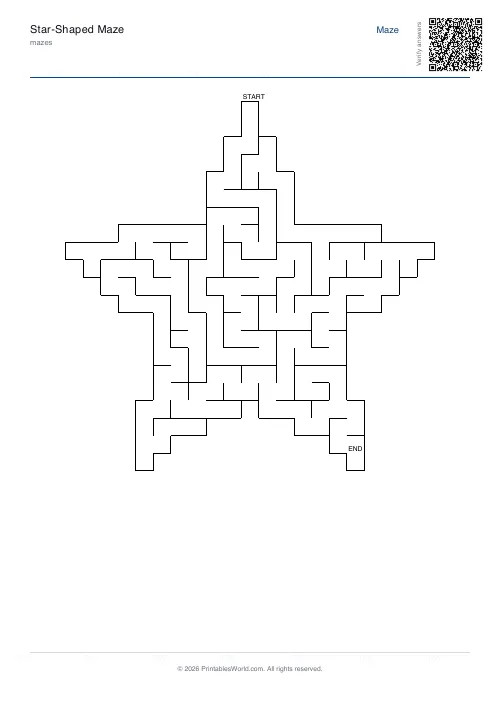
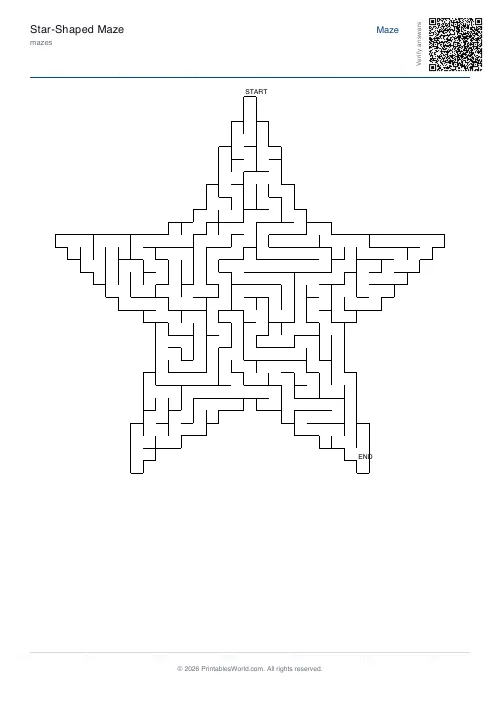
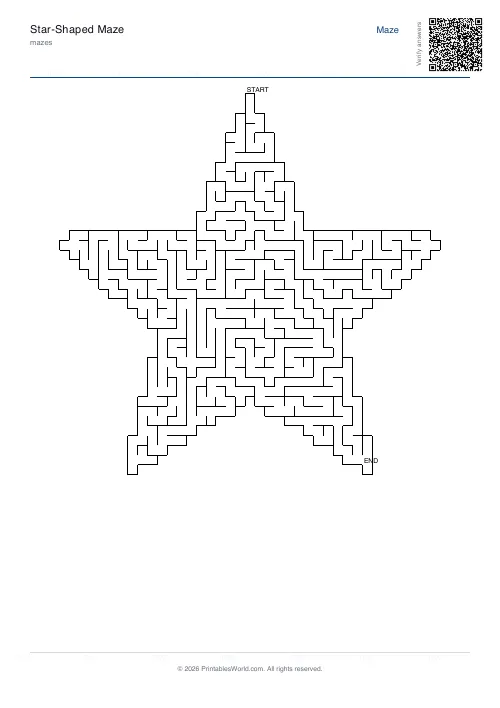
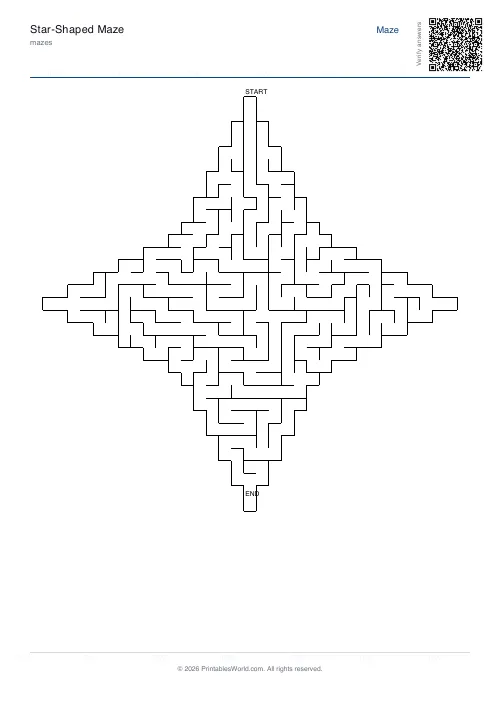
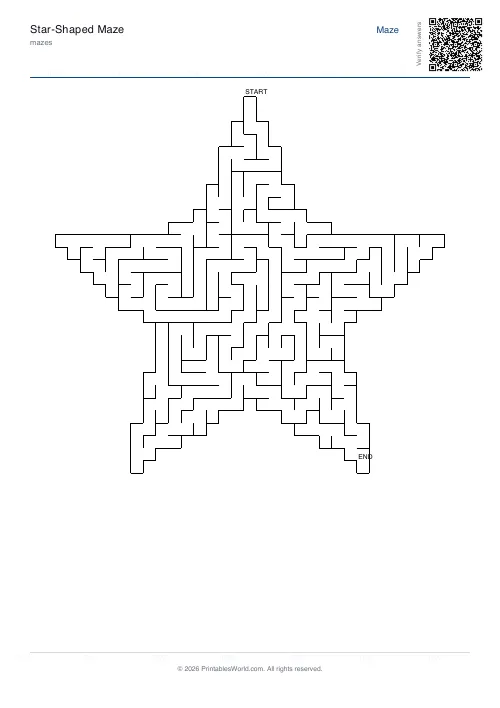
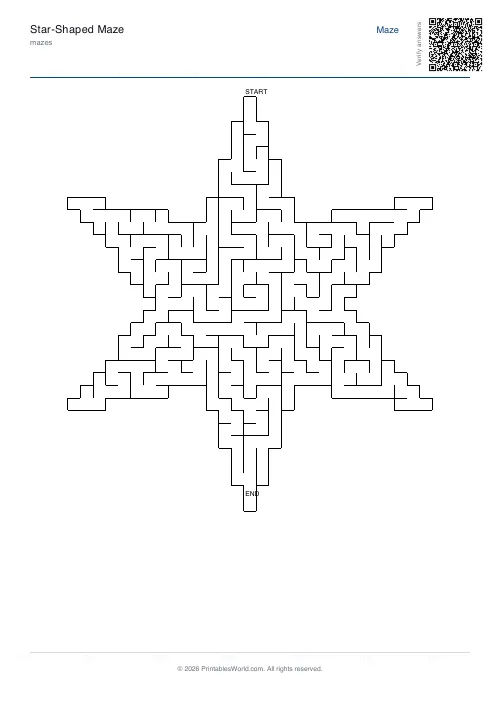
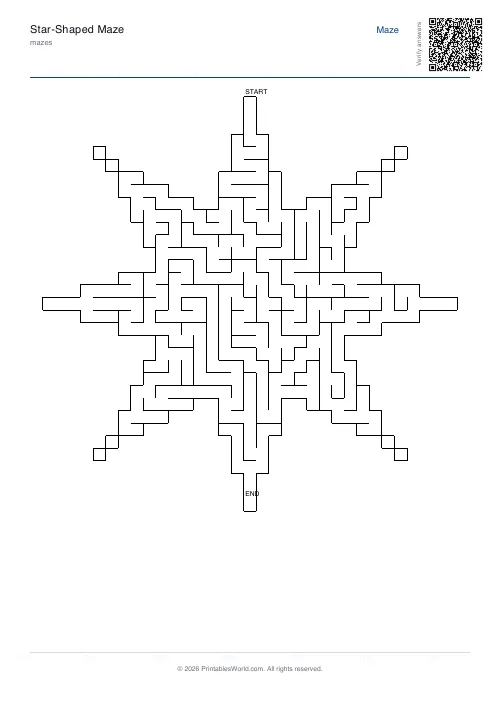
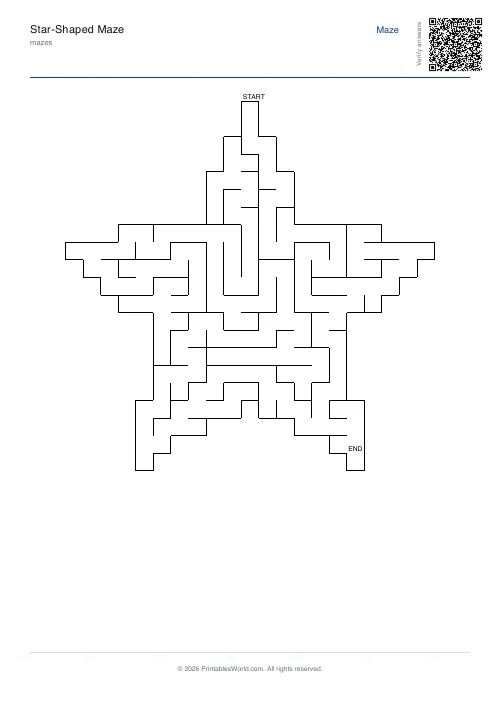
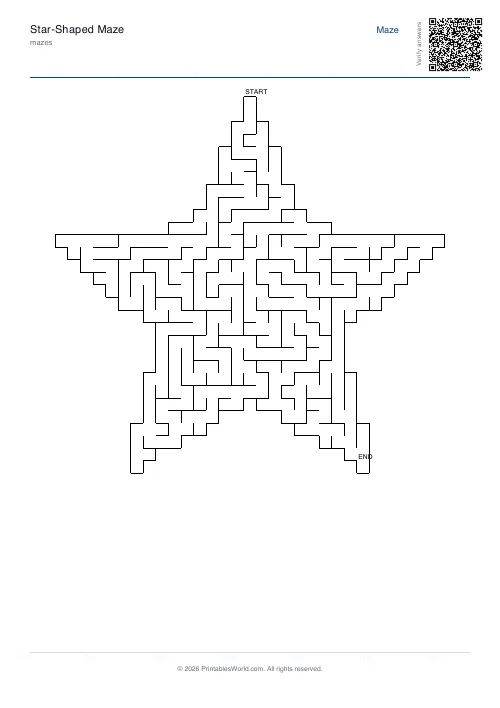
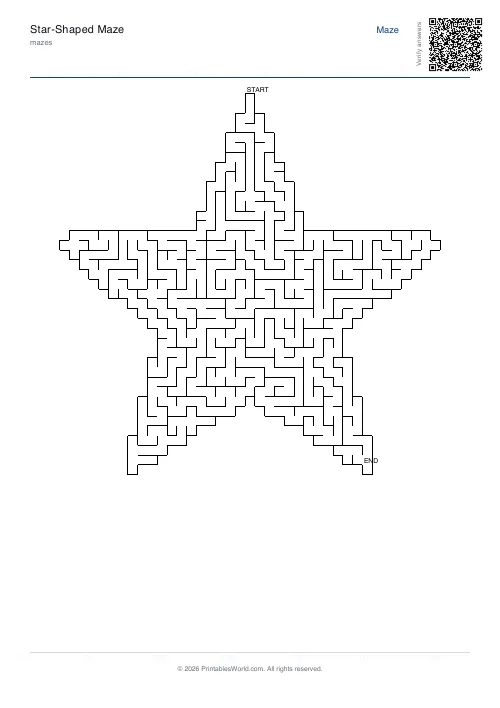
A maze carved inside a star. Choose 4 to 8 points and a grid resolution from 25 to 45, with an optional solution page.
People also used
Feedback
Spotted something off with this tool?
A star with a maze inside it
Corridors are cut only into the cells inside a star outline, so the walls follow the shape itself and the finished page reads as a star first and as a maze somewhere afterwards, which is the whole reason anybody prints a shaped maze rather than a square one.
Two controls: how many points the star has, and how finely the shape is divided.
The number of points changes the puzzle, not just the picture
Five points is the star everybody draws. Its arms are long and narrow, so each one becomes a corridor with a dead end at the tip. The points are traps, which is precisely what a maze wants.
Go to eight and the star squats. Points get shorter and fatter, less of the area goes on them, and the maze moves into the middle. What you end up with is rounder and more open — a shaped grid that happens to have points, rather than a star.
Four points looks more like a compass rose. Long thin arms, small centre. It is the most distinctive of the three and the hardest to trace, because most of the route runs a single cell wide and there is nowhere for the eye to rest.
Resolution
The size setting divides the shape into 25, 30, 35 or 45 cells across.
Twenty-five gives chunky corridors a young child can follow with a fat pencil. Forty-five packs the star tightly and wants a fine tip. Past about forty the outline starts competing with the wall texture and the star reads less clearly across a room.
If the shape matters more than the difficulty, stay at 25 or 30.
How it is built
The star mask is computed from the point count. A depth-first backtracker then carves corridors through the cells inside it, visiting each exactly once. Every cell is reachable, exactly one route joins any two of them, and the printed solution is therefore the only one.
The seed reproduces an exact star, which is worth noting if you generate one whose route runs prettily out to all the points.
Where a star gets used
Reward charts and certificates, where a star is already the visual language of the thing. Space topics. Christmas, where a star maze printed on the back of a card gives a child something to do that a colouring page does not. Awards evenings. End-of-term packs.
It also pairs neatly with the heart and the animal shapes, which run on the same carver — a set of four different silhouettes makes a more interesting pack than four sizes of square maze.
Settings and printing
Points (4–8), resolution, the solution page, and a seed. A4 or US Letter, at 100% scale.
The star's edges are drawn as small steps in the grid, which means printer scaling softens this outline noticeably more than it softens the straight walls of a square maze.
FAQs
Quick answers
How is the star shape generated?
A simple polar star polygon is filled into a binary mask, then the backtracker walks only inside the mask.
Can I change the number of points?
Yes. Pick anywhere from 4 to 8 points. Five is the classic shape.
Can I print the solution?
Yes. Toggle the solution option to add a second page with the route overlaid.
How big can it be?
Up to a 60-cell bounding square. Larger means more cells inside the star and a denser maze.
Related tools
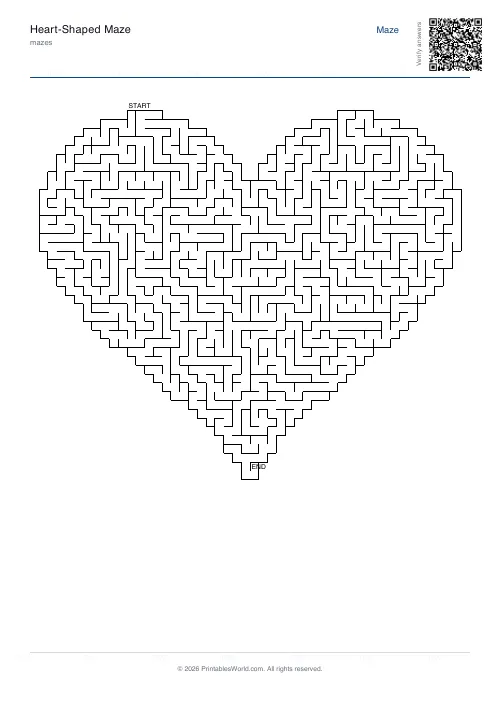
Heart-Shaped Maze
Maze contained within the outline of a heart. Perfect for Valentine's Day.
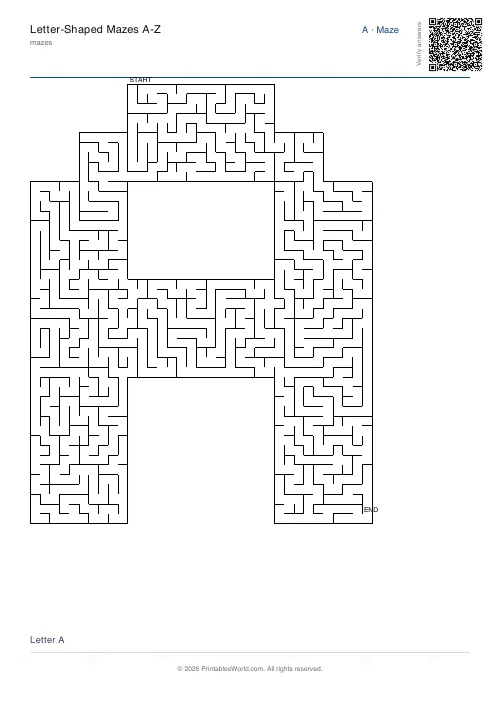
Letter-Shaped Mazes A-Z
Maze path contained within the shape of each letter of the alphabet.
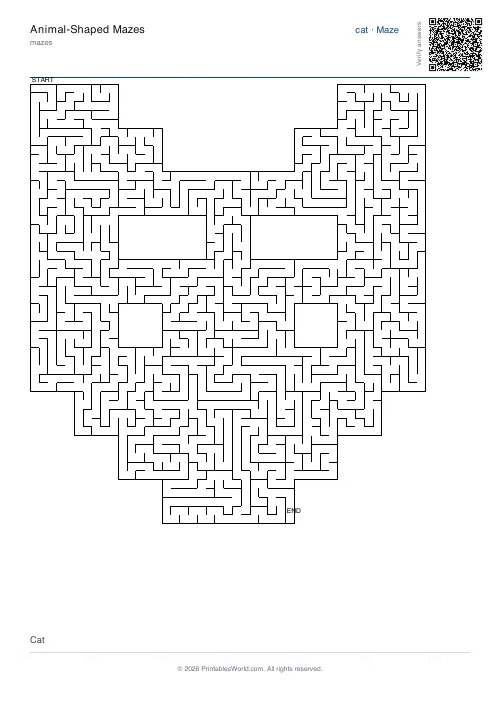
Animal-Shaped Mazes
Maze within the outline of an animal. Cat, fish, or bird.
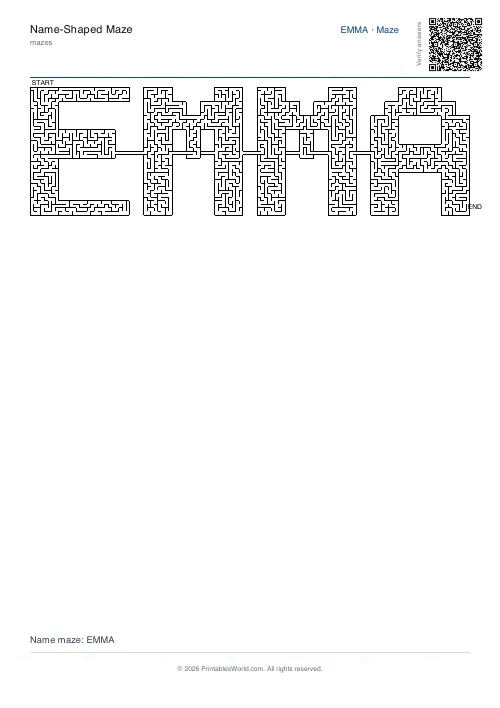
Name-Shaped Maze
One connected maze carved into the outline of any name you type.
Further reading
Mazes
Why mazes are great for kids' development
Mazes are one of the few activities that exercise pencil control and forward planning at the same time. Which is why they suit the years just before formal handwriting.
4 min read
Mazes
Printable maze difficulty: matching mazes to ages
Maze difficulty has two independent dials, and confusing them is why a maze is either too fiddly or too easy. Here is which to turn for which child.
4 min read