What this tool does
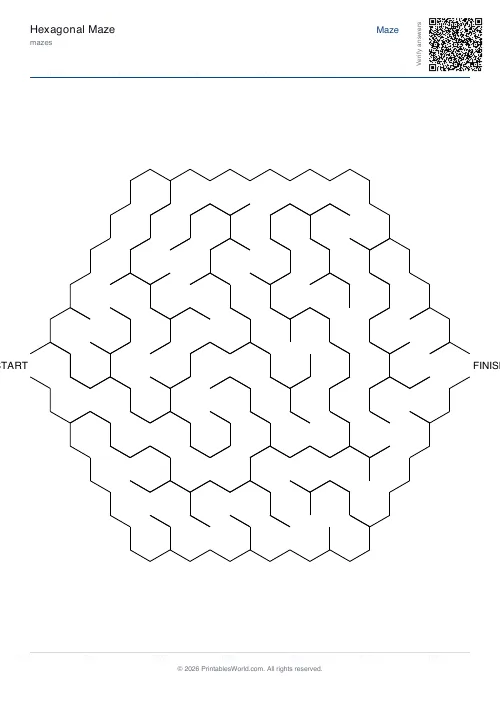
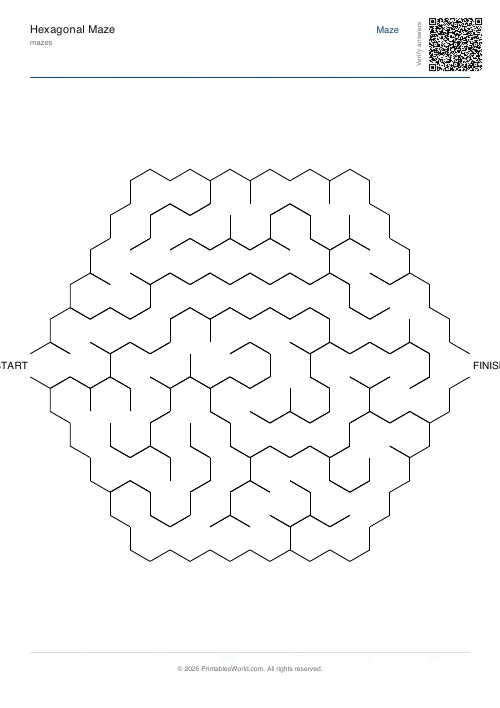
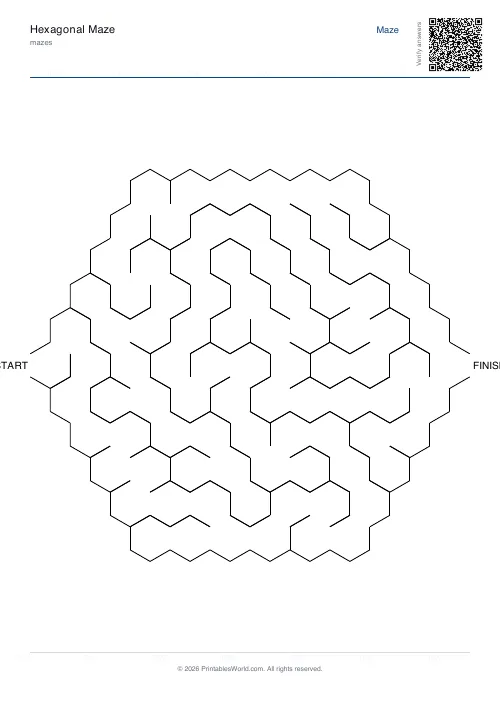
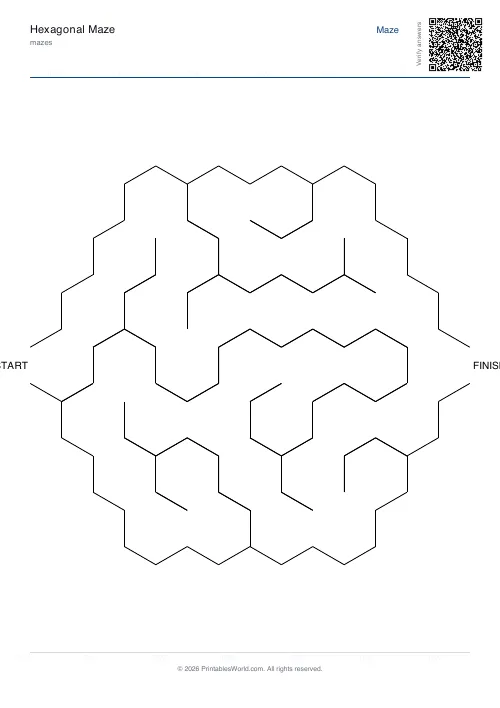
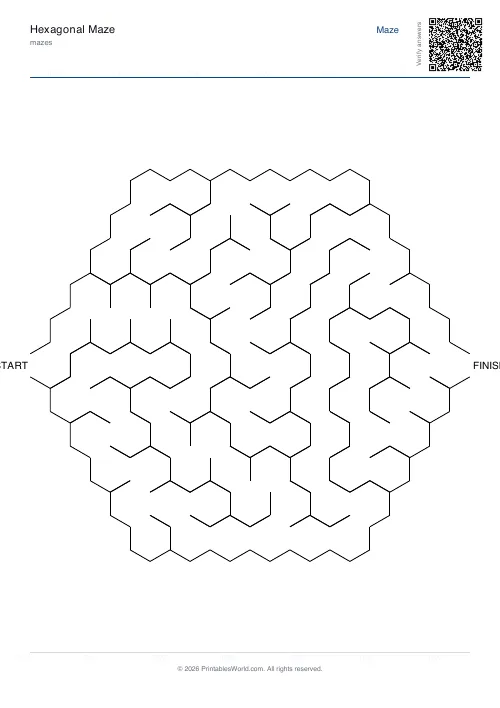
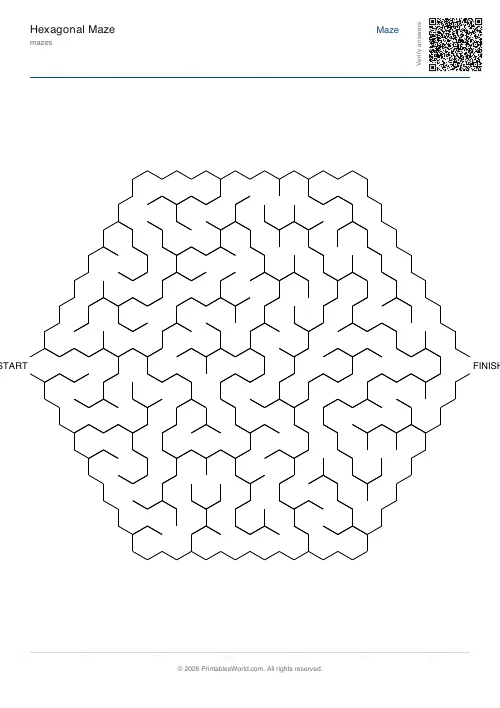
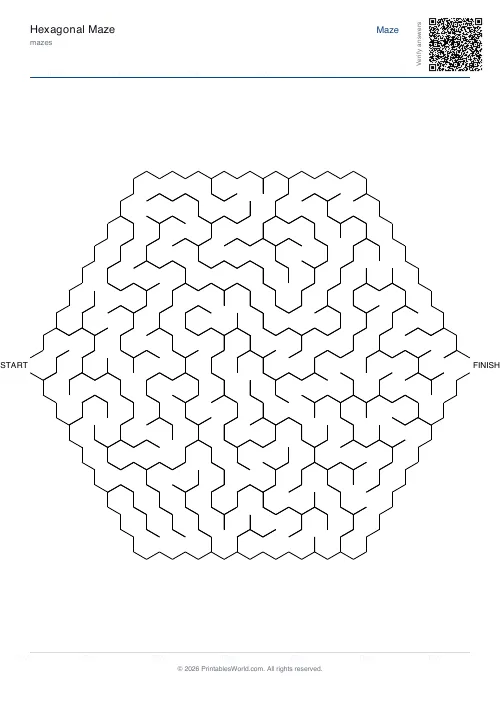
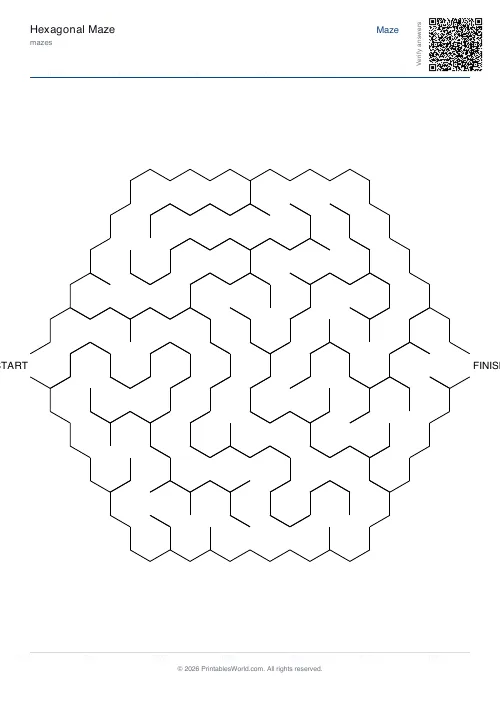
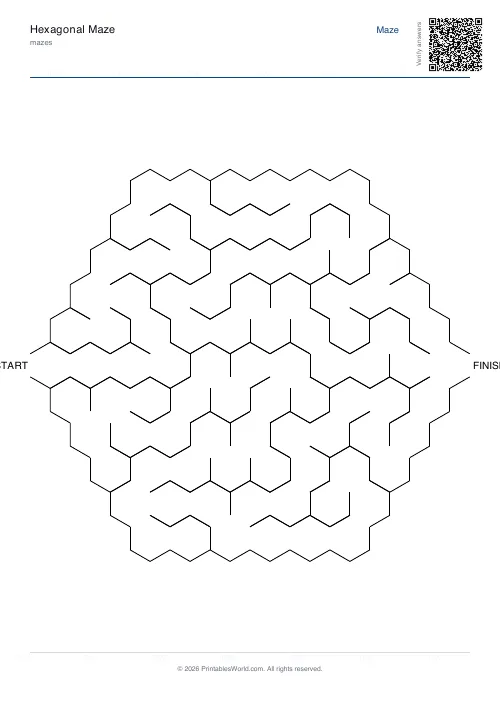
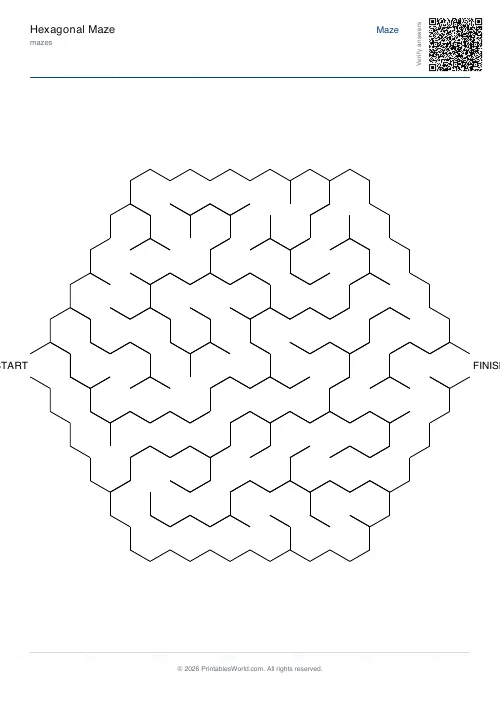
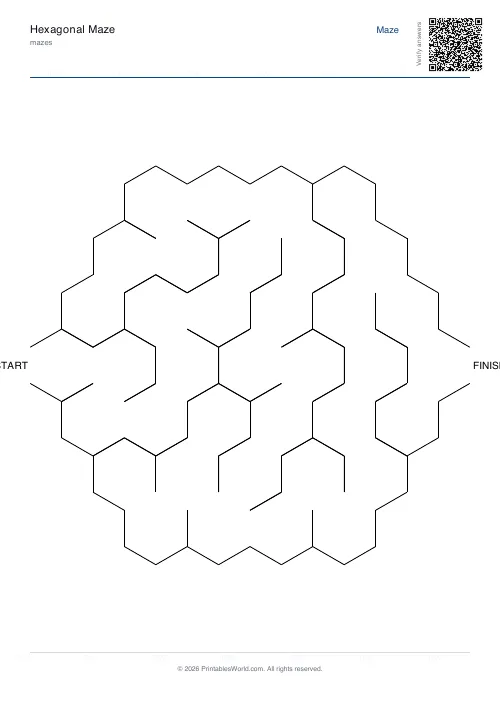
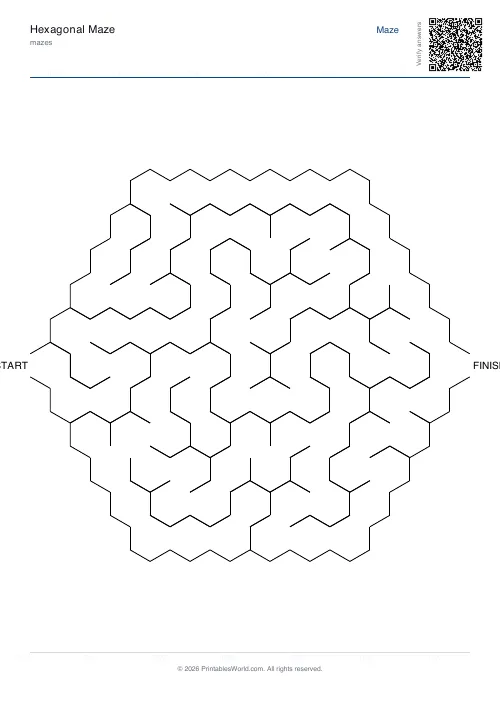
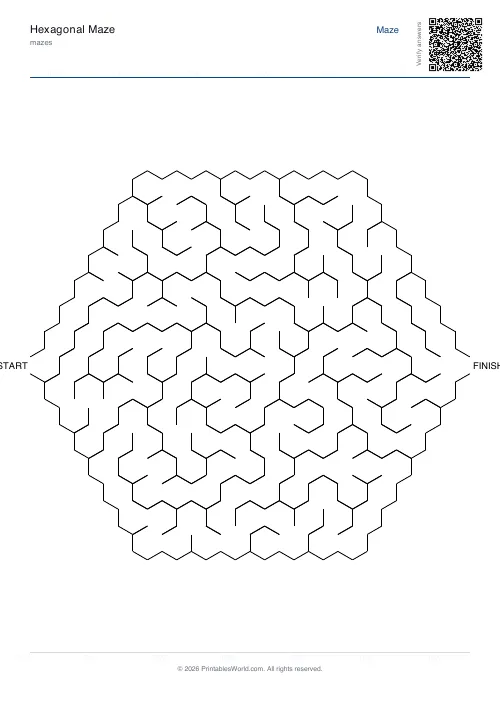
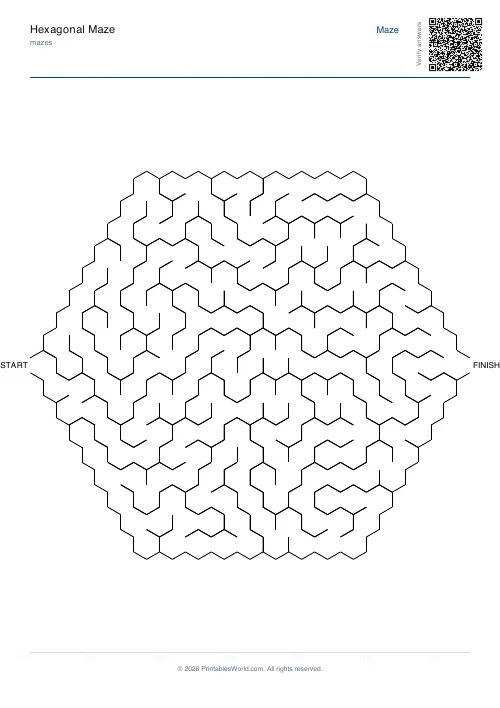
A maze on a honeycomb grid, where every cell has up to six neighbours rather than four. Radius 3 to 8, three difficulty settings, and an optional solution page.
People also used
Feedback
Spotted something off with this tool?
Hexagonal mazes on a honeycomb grid
Swap squares for hexagons and the puzzle changes more than it looks like it should. A square cell offers four ways out. A hexagon offers six, and that extra pair of diagonals means branches multiply faster and the correct route rarely runs in anything resembling a straight line.
The finished page is a hex disc with corridors threading through it. You start at the leftmost hex and finish at the rightmost, straight across the middle row.
Size is a radius, and the cell count climbs quickly
The Size control is the radius of the disc in rings, from 3 to 8. That number is not the cell count, and the gap between the two catches people out.
- Radius 3 — 37 cells. A gentle introduction.
- Radius 5 — 91 cells. The default, and comfortable on A4.
- Radius 8 — 217 cells. Dense enough that a fine-tipped pencil stops being optional.
The formula is 1 + 3N(N + 1) for a disc of radius N, which is a pleasant thing to hand a maths class alongside the puzzle: count the cells on the printed sheet and check the algebra against it.
What difficulty changes
Not the size. Difficulty controls how willingly the carver turns.
Easy keeps it heading the same way where it can, so corridors run long and junctions are scarce. Hard removes the preference entirely and the maze becomes as twisty as the grid allows. On a hex grid this is more pronounced than on a square one, because with six directions available a carver that turns freely produces something close to visual noise — which is exactly what a puzzle fan wants and exactly what will defeat a seven-year-old.
The other settings
- Include solution adds a second page with the route overlaid.
- Seed reproduces a specific maze. Same seed, same settings, same puzzle, so a class can race the identical sheet.
- Paper size: A4 or US Letter.
How it is built
A depth-first recursive backtracker again, walking hex to hex across the six axial directions and removing the shared wall each time it moves. Every cell gets visited once, so the maze is perfect: one route, no loops. The solution page is that route traced back from the finish.
Where it fits in a lesson
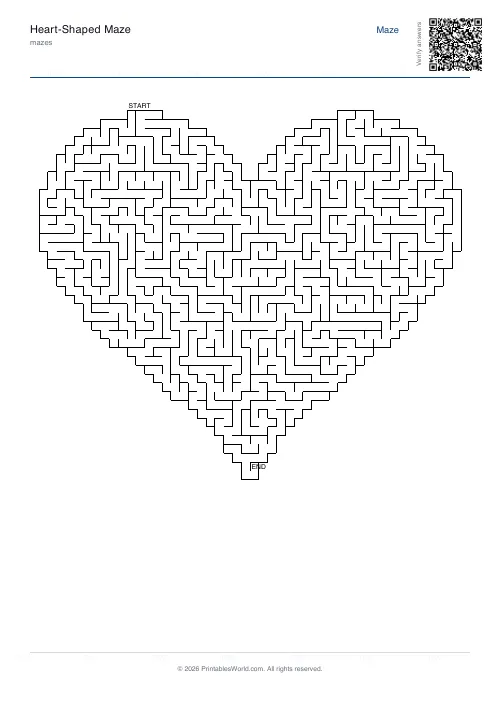
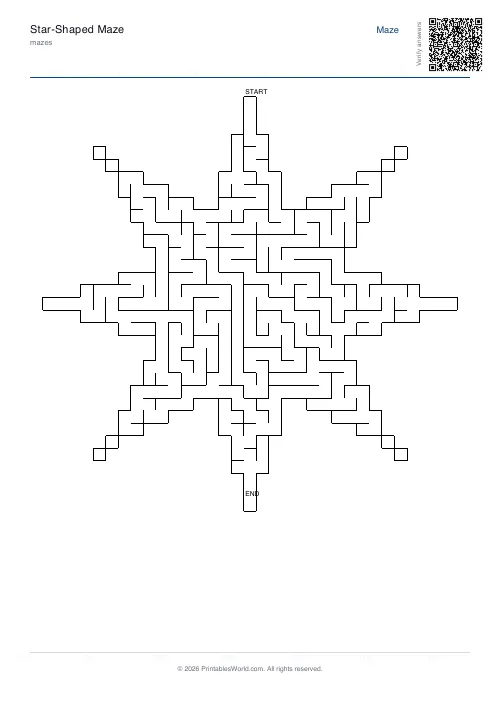
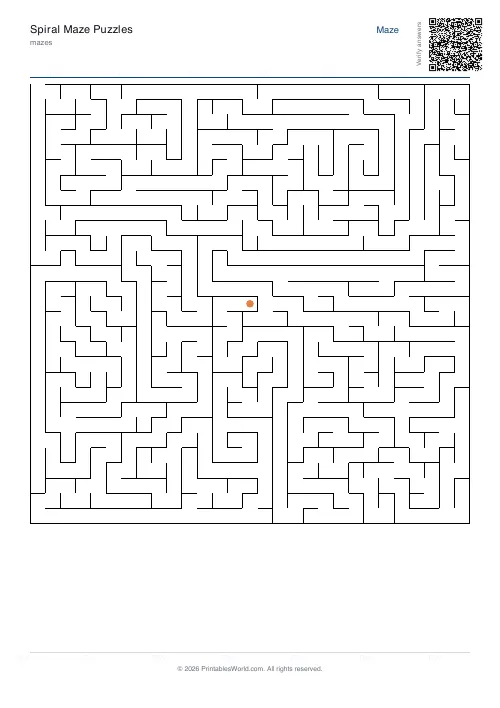
Hexagons tessellate, which is the reason honeycomb looks the way it does, and a hex maze is a cheerful way into that conversation. It also pairs well with the circular maze and the isometric maze as a set: three geometries, one algorithm, three completely different-looking pages.
Print at 100% scale. Hex edges are drawn at a slight angle and any shrink softens them.
FAQs
Quick answers
How big is a hex maze of size N?
Size N means a hex disc of radius N. Total cells = 1 + 3·N·(N+1).
Where do start and finish sit?
Start is the leftmost hex; finish is the rightmost hex along the central row.
Why are hex mazes harder?
Each cell has more neighbours, so path branches multiply faster than on a square grid of similar cell count.
Can I print the solution?
Yes. Toggle the solution option to add a page with the path overlaid.
Related tools
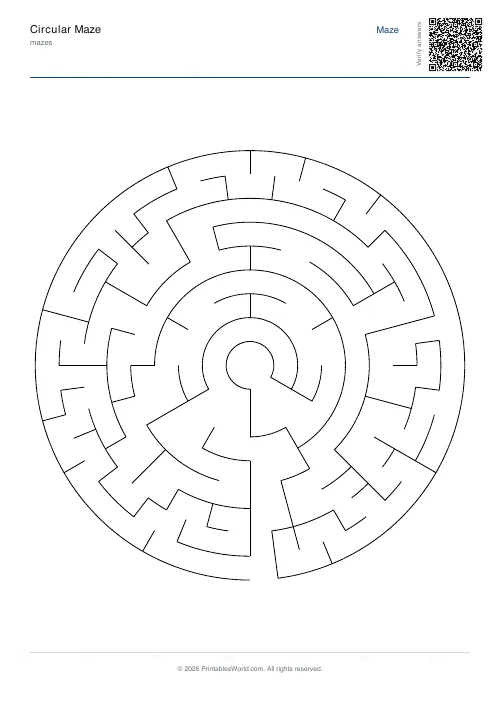
Circular Maze
Concentric ring maze. Navigate from the outside ring to the centre.
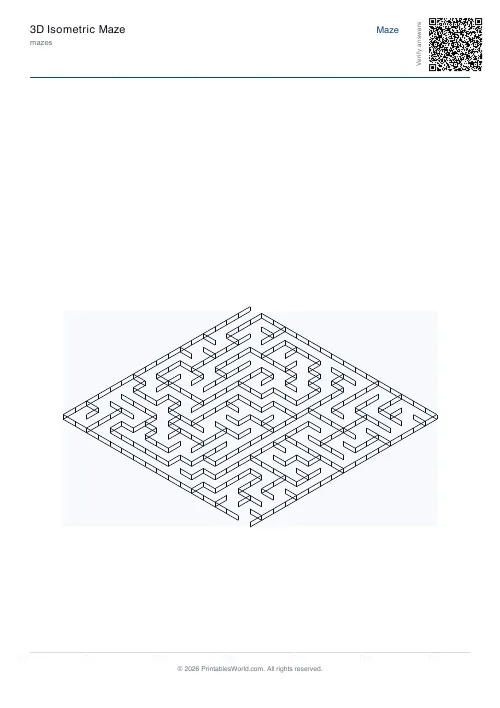
3D Isometric Maze
Maze drawn in isometric 3D perspective. Visually striking.
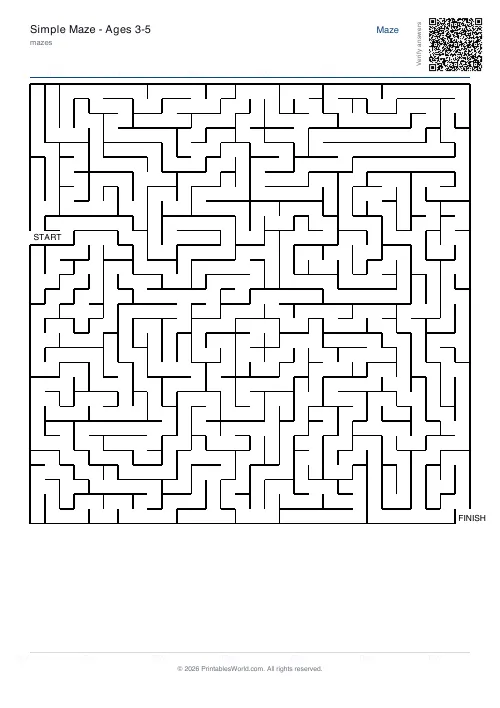
Maze Generator: Printable PDF
Generate printable maze PDFs with custom grid size, difficulty, and layout. Perfect, braided, or room-based.
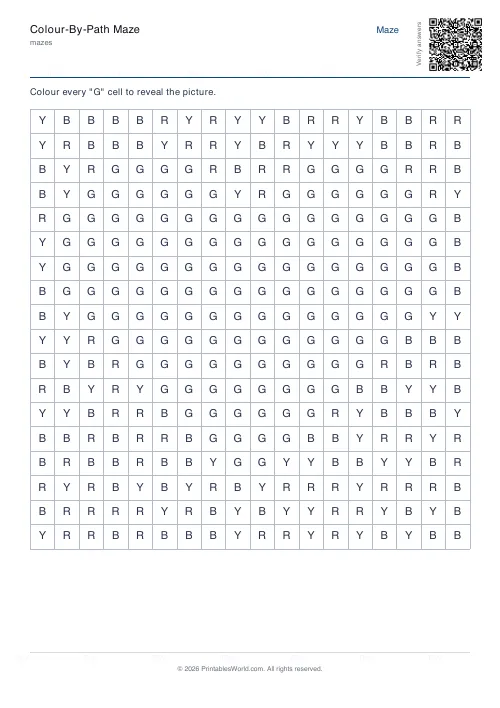
Colour-By-Path Maze
Colour every letter cell to reveal the hidden picture inside the grid.
Further reading
Mazes
Why mazes are great for kids' development
Mazes are one of the few activities that exercise pencil control and forward planning at the same time. Which is why they suit the years just before formal handwriting.
4 min read
Mazes
Printable maze difficulty: matching mazes to ages
Maze difficulty has two independent dials, and confusing them is why a maze is either too fiddly or too easy. Here is which to turn for which child.
4 min read