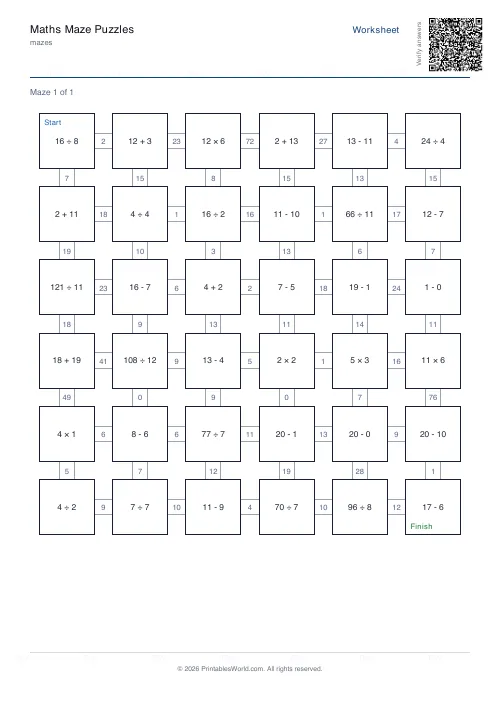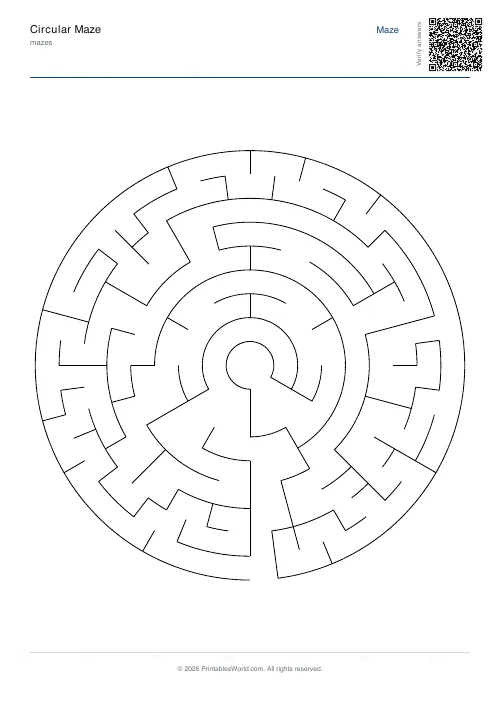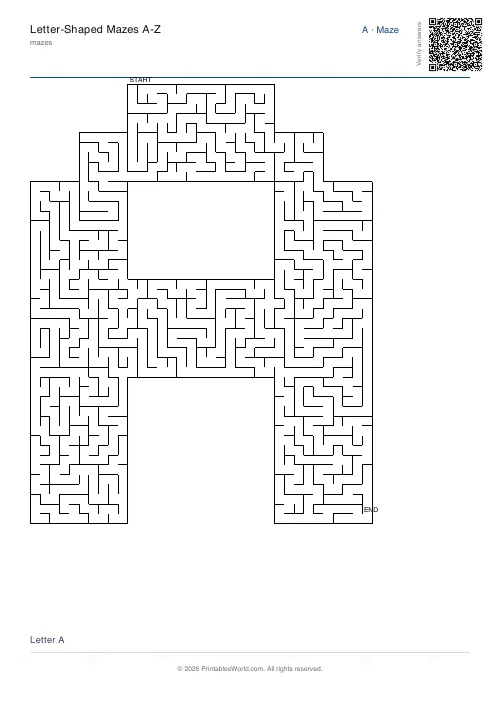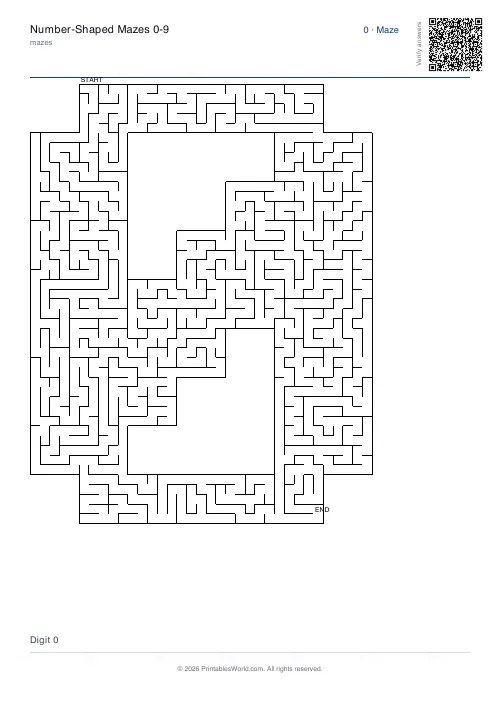
What this tool does
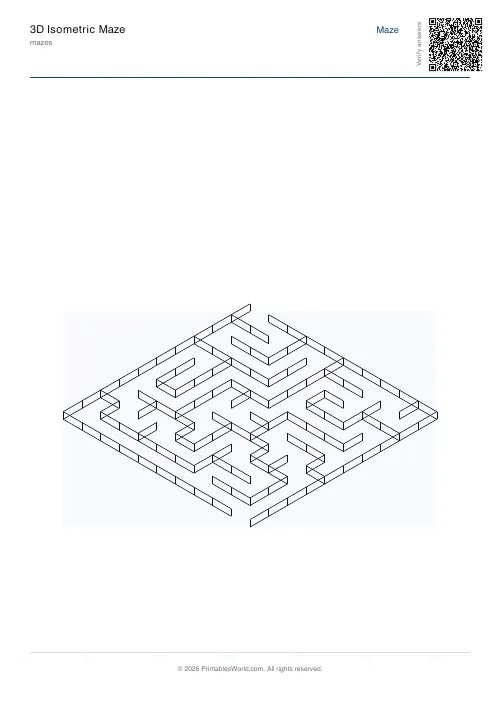
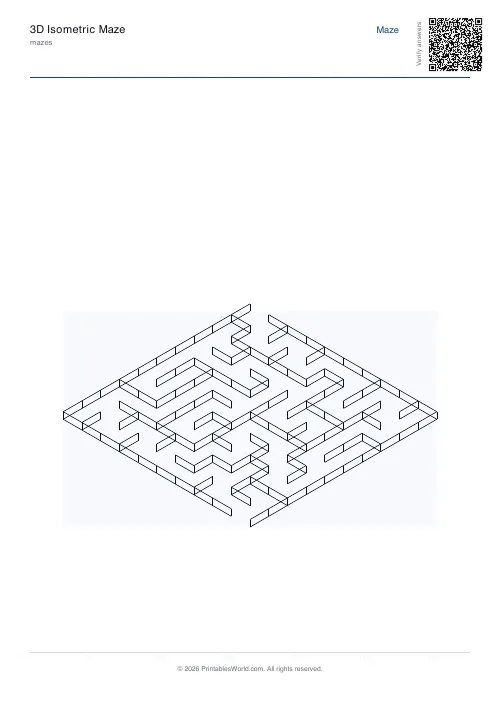
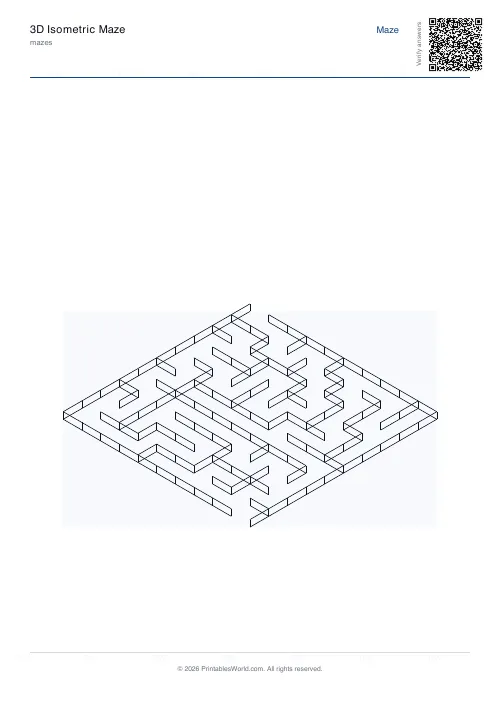
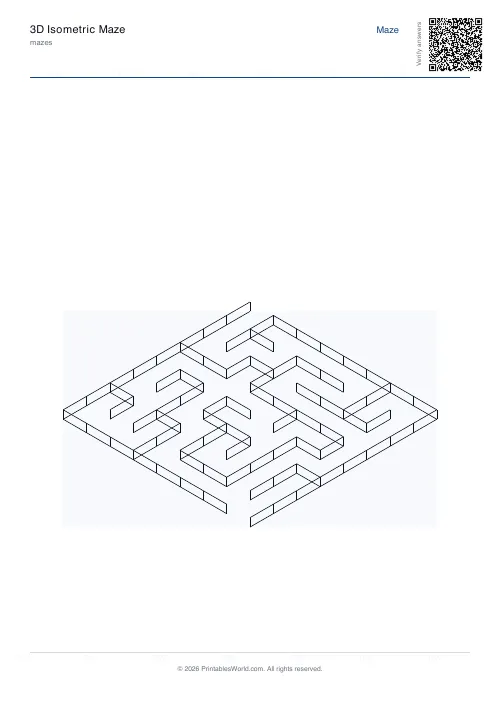
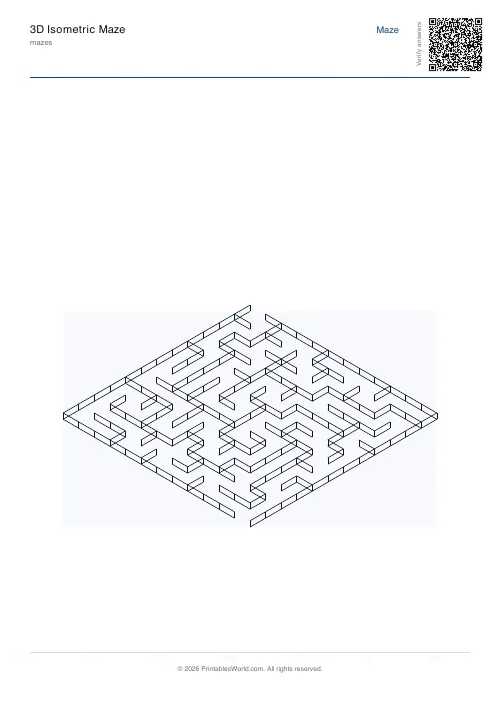
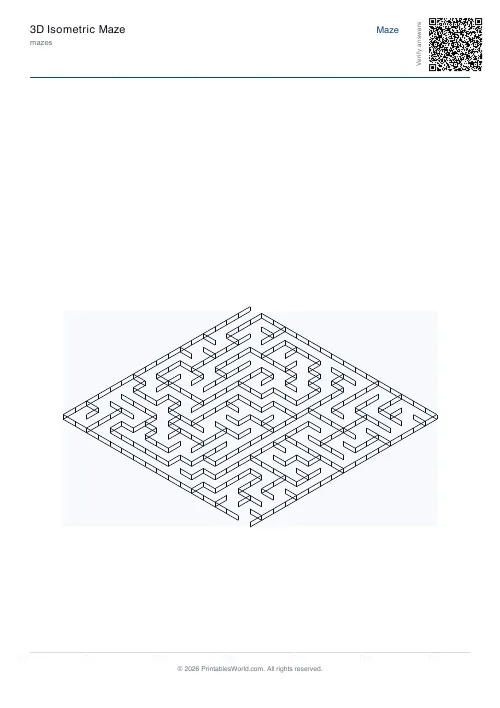
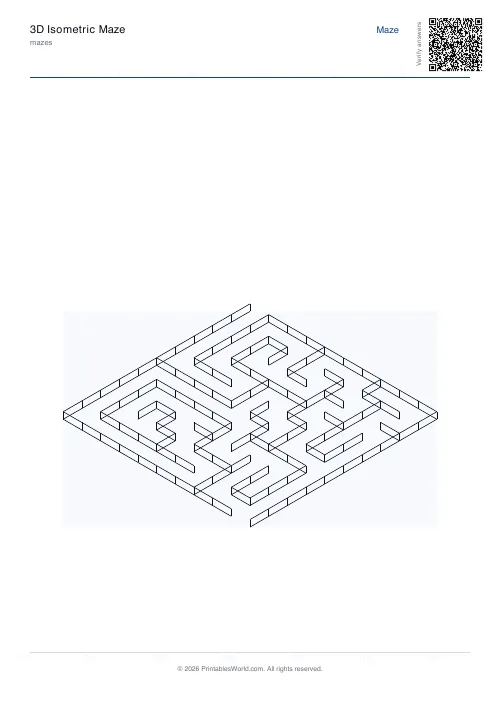
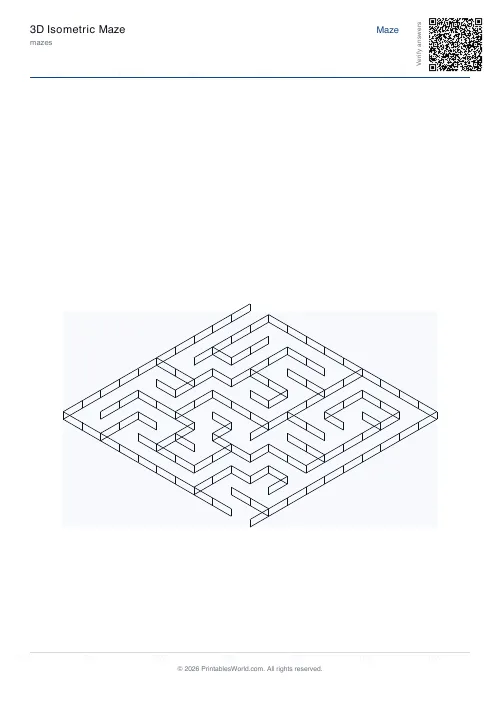
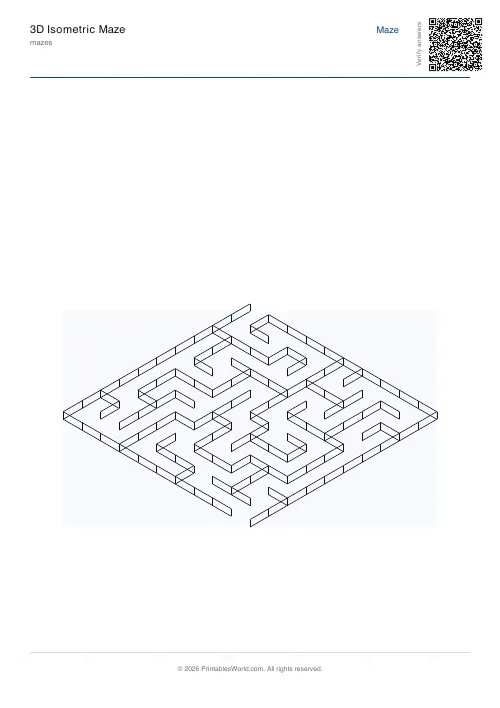
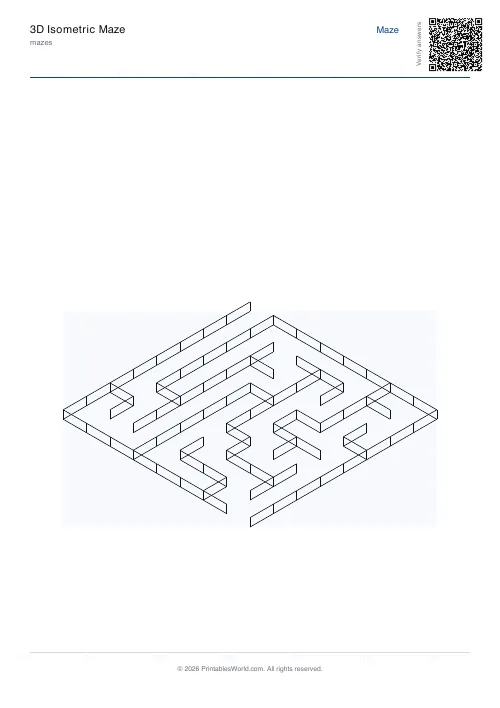
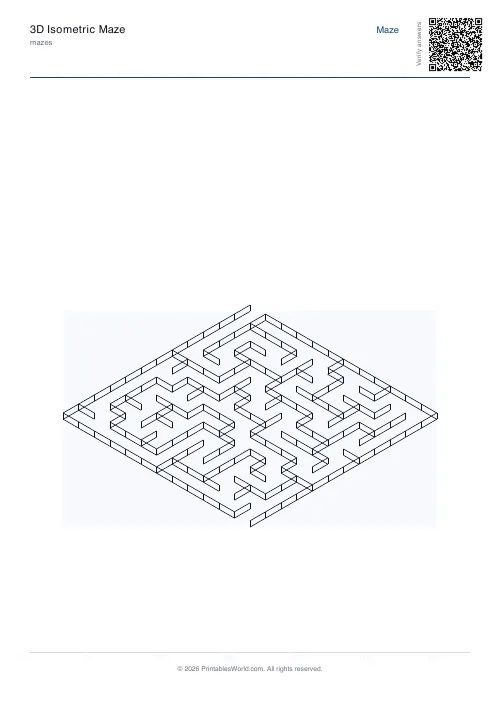
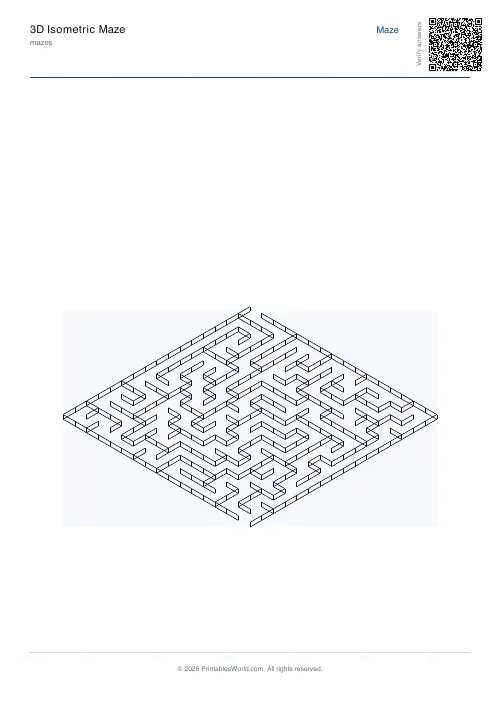
An ordinary square maze drawn in isometric projection, with every wall standing up as a block. It solves exactly like a flat maze; it just looks like a small city seen from the corner. Grids from 8 to 16, three difficulties, optional solution page.
People also used
Feedback
Spotted something off with this tool?
Isometric mazes that look built rather than drawn
Underneath, this is a normal square maze. The projection is what changes: the grid is tipped into an isometric view and every wall is drawn as a short standing block, so the page comes out looking like a small walled city seen from one corner.
The solving rules do not change at all. You trace along the floor from the opening at one corner to the opening at the other, exactly as you would on a flat sheet. What changes is that a child who has gone slightly glazed at the sight of another maze will pick this one up.
Grid size
Five options: 8, 10, 12, 14 and 16 cells to a side. That is 64 cells at the smallest and 256 at the largest.
Sixteen is dense. Isometric walls take up more of the page than flat lines do, because each one is drawn with a height as well as a length, so a 16×16 isometric maze is visually busier than a 16×16 flat one and uses noticeably more ink. If you want a big maze rather than a striking one, the plain maze generator goes further and prints cleaner.
Difficulty changes the carve, not the size
Pick your grid size first; difficulty is a separate lever. It sets how strongly the maze carver prefers to continue in the direction it is already travelling.
Easy holds that direction most of the time, producing long straight runs and few branch points. Hard drops the preference and the route turns at almost every opportunity. Measured over thirty mazes on a 12×12 grid, easy averages around seven junctions per sheet and hard around fifteen — roughly twice the number of decisions to get wrong, on a grid of identical size.
The rest
- Include solution prints a second copy of the block layout with the path drawn along the floor, which makes marking a stack of them quick.
- Seed pins a specific layout so you can reprint it.
- Paper size: A4 or US Letter.
How it is built
A depth-first recursive backtracker carves the flat square grid, and the finished grid is then projected into isometric coordinates with each remaining wall segment drawn as a block with a small vertical face. Because the projection happens after the carve, the perfect-maze property survives it: exactly one route between the two openings, no loops.
Printing
Print at 100% scale so the block edges stay crisp. Angled lines suffer more from scaling than horizontal ones do.
Ninety gsm paper or heavier is worth it if anyone is going to colour the blocks in, which older children reliably want to do — the isometric view invites shading in a way a flat maze never has.
FAQs
Quick answers
Is the maze actually 3D to solve?
No. It solves like a standard 2D maze. The 3D effect is purely visual.
Why does the print look denser than a normal maze?
The isometric projection stacks walls slightly so the same cell count uses more lines on the page.
Can I print the solution?
Yes. Toggle the solution option to add a page with the path overlaid.
How big can it go?
Up to a 20×20 grid. Larger grids look very dense in isometric. Try the standard maze for huge grids.
Related tools
Further reading
Mazes
Why mazes are great for kids' development
Mazes are one of the few activities that exercise pencil control and forward planning at the same time. Which is why they suit the years just before formal handwriting.
4 min read
Mazes
Printable maze difficulty: matching mazes to ages
Maze difficulty has two independent dials, and confusing them is why a maze is either too fiddly or too easy. Here is which to turn for which child.
4 min read