What this tool does
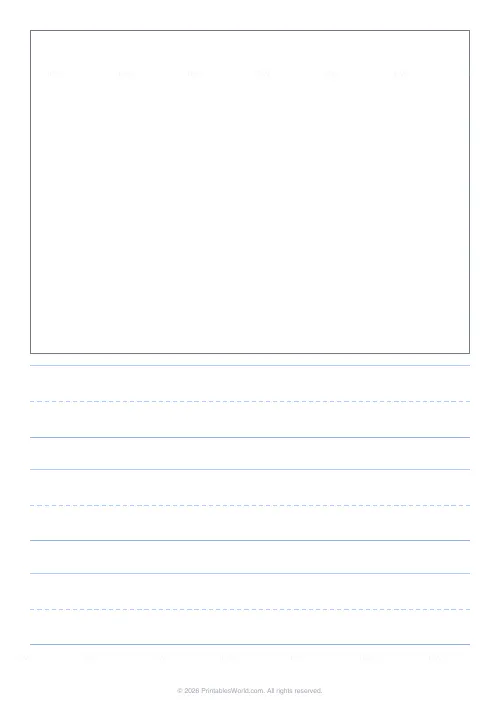
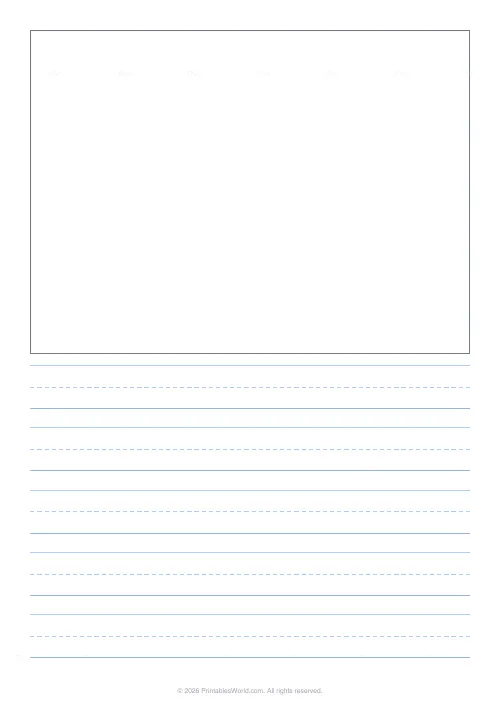
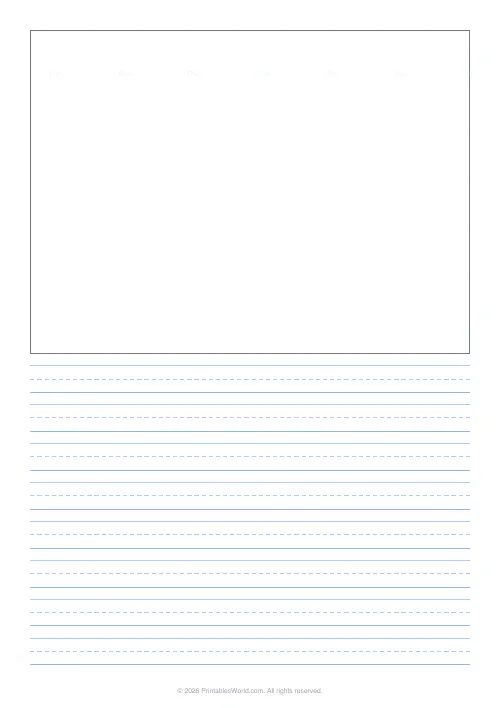
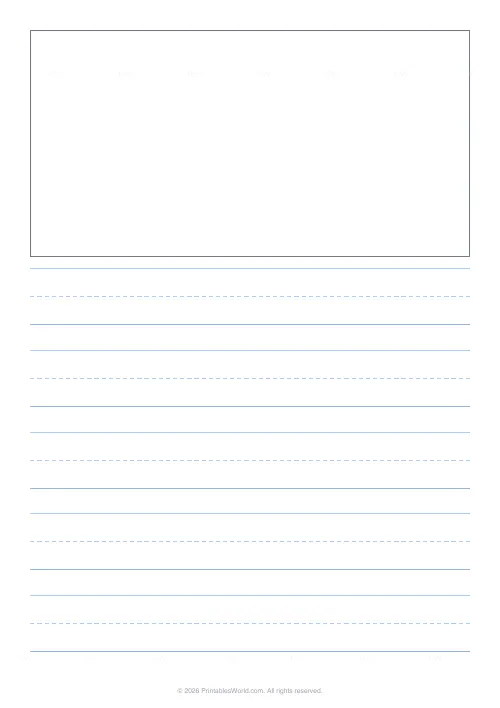
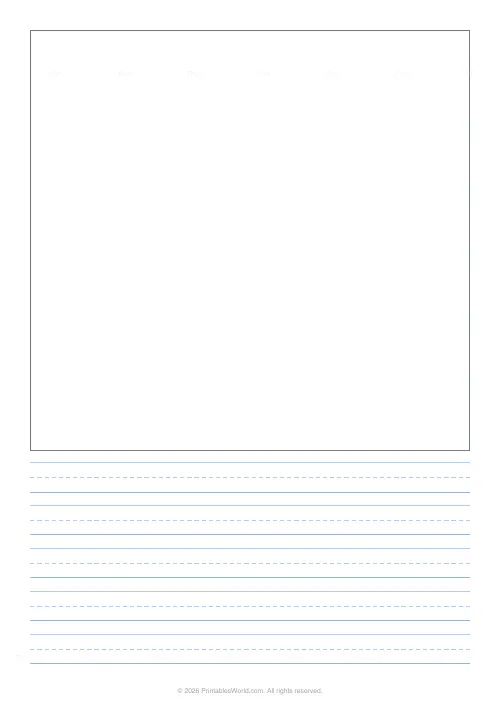
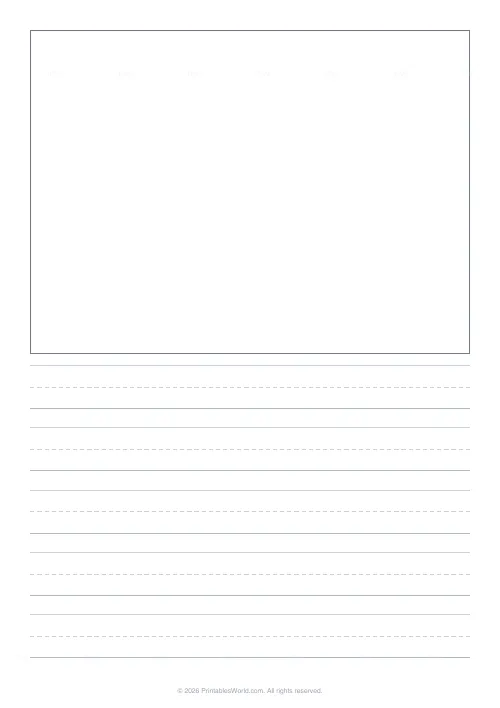
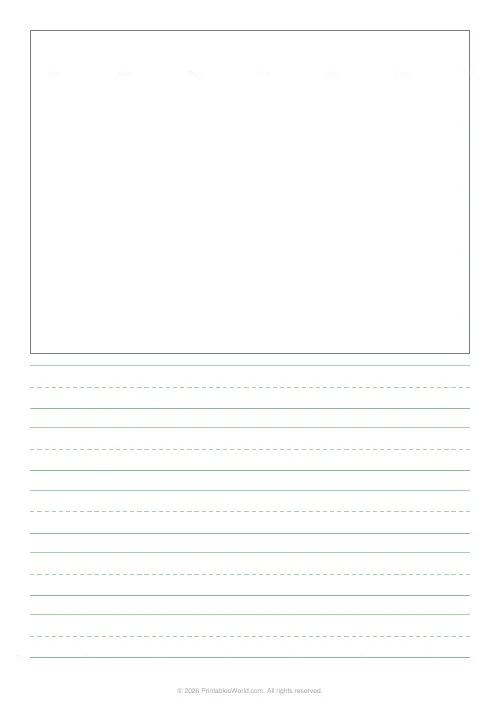
The early-years writing sheet: a large picture box across the top and three-line handwriting rules below. Set the number of lines, the box height and the rule colour.
People also used
Lined Paper Generator
Generate custom ruled paper PDFs with adjustable line spacing, colours, margins, and primary ruling styles.
Handwriting Practice Generator
Create custom 4-line handwriting practice sheets with trace rows, adjustable guides, and your own text.
Graph Paper Generator
Create custom graph paper PDFs with square or rectangular grids, dot styles, and axis numbering.
Feedback
Spotted something off with this tool?
Picture on top, writing below
A large empty box fills the upper part of the page, and beneath it sit rows of three-line handwriting rules — a top line, a dashed midline, and a solid baseline. Five rows by default.
The box height is adjustable between roughly a third and two thirds of the page, the row spacing can be set or left to fit automatically, and the rules print in blue, in grey, or in green. The picture box can be removed altogether.
Why the picture comes first
It is not a reward for finishing the writing, and treating it that way wastes it.
A young child who draws first has planned the piece. The drawing holds the content — who is in it, what is happening, what order things go in — so that when they reach the lines they are transcribing something already decided rather than inventing and spelling and forming letters all at once. That is a large reduction in load at an age when load is the limiting factor.
It also gives you something to talk about before they write, which is where most of the useful teaching happens.
What the three lines mean
The dashed midline is the important one, and children need it explained rather than left to infer.
Lowercase letters sit between the midline and the baseline. Ascenders — l, h, b, k — reach the top line. Descenders — g, p, y — drop below the baseline. Capitals go from baseline to top line.
Without that explanation a child treats the dashed line as decoration and writes everything at whatever height comes naturally, which is precisely what the paper exists to prevent.
Sizing it to the child
Wider spacing and fewer lines for the youngest writers. Reception and early Year 1 need generous rows, and a sheet crammed with narrow lines produces cramped letters and frustration.
Tighten the spacing and add rows as control improves. The progression from four wide lines to ten narrow ones is roughly the progression through infant school, and moving too fast is the commoner mistake.
Growing out of the picture box
Shrink it gradually rather than removing it one day. A smaller box with more lines is the natural next step, and eventually the box goes and you are on ordinary lined practice paper.
Some children keep drawing in the margin long after the box has gone, which is fine and usually means the planning habit stuck.
Colour
Blue is conventional and the easiest to see. Grey photocopies cleanly and stays out of the way of pencil. Green is worth trying for a child who finds blue lines visually busy.
FAQs
Quick answers
What is primary story paper?
It is a writing sheet with a large picture box at the top and three-line handwriting rules below. Children draw their idea first, then write about it on the lined area underneath.
Why does each line have three rules?
The solid baseline shows where letters sit, the dashed midline shows the height of short letters, and the faint top line marks the height of tall letters. Together they keep letter sizing neat and consistent.
Can I change how big the drawing box is?
Yes. You can set the picture box to take up a larger or smaller share of the page, which automatically leaves more or fewer writing lines below it.
What age group is it for?
It suits early years and lower primary writers (roughly Reception to Year 2). Use a big box with few lines for the youngest children and more lines for longer writing.
Related tools
Lined Paper Generator
Generate custom ruled paper PDFs with adjustable line spacing, colours, margins, and primary ruling styles.
Handwriting Practice Generator
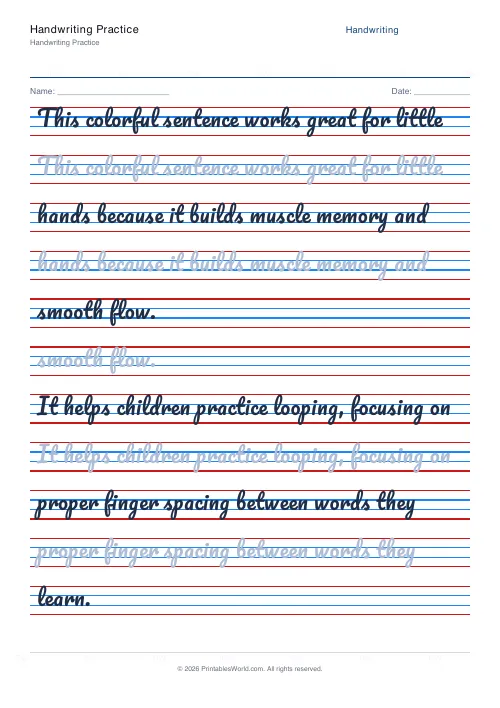
Create custom 4-line handwriting practice sheets with trace rows, adjustable guides, and your own text.
Graph Paper Generator
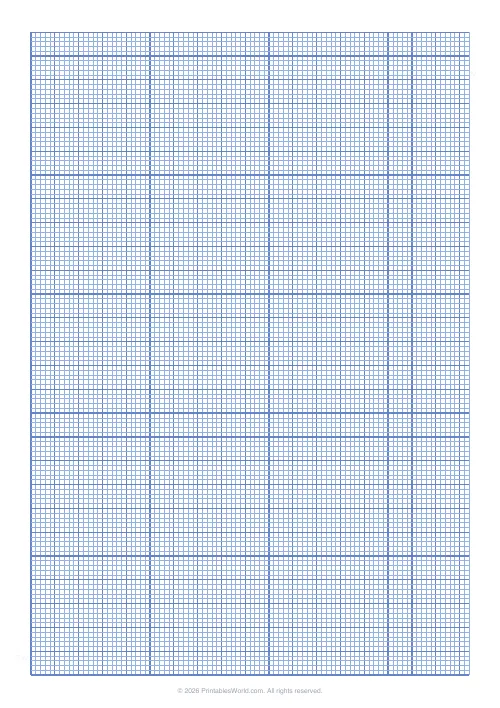
Create custom graph paper PDFs with square or rectangular grids, dot styles, and axis numbering.