What this tool does
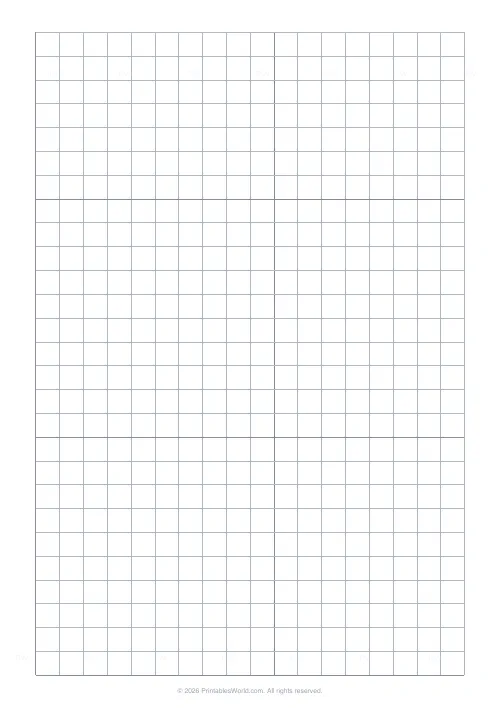
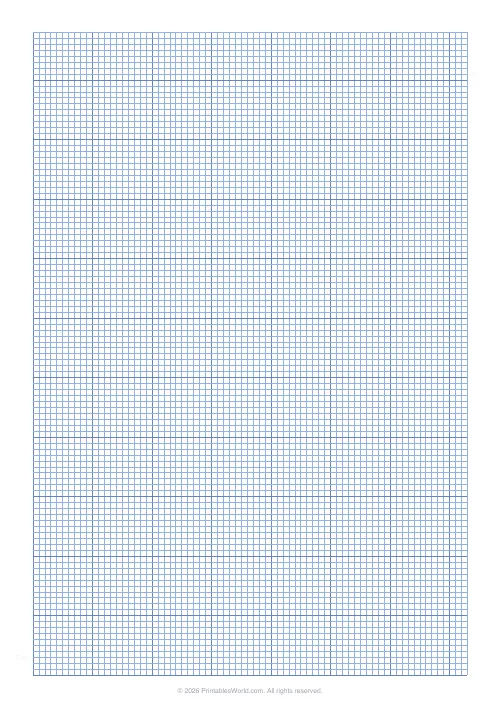
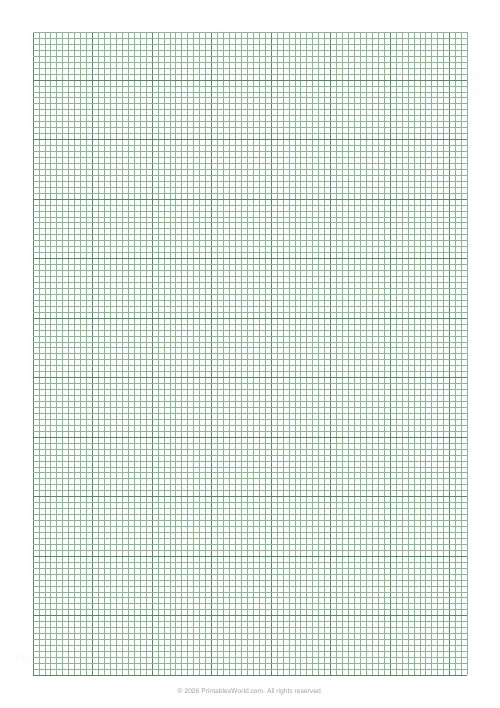
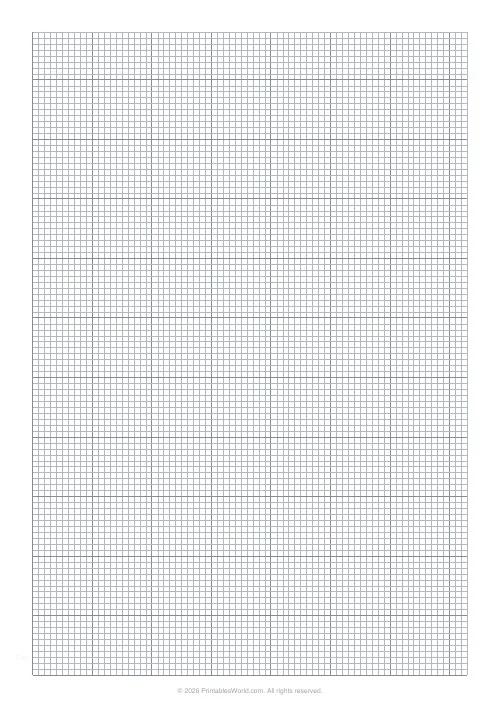
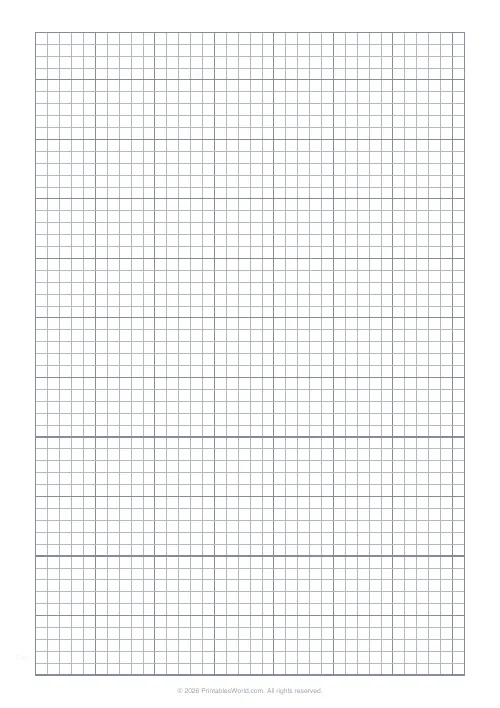
Cross stitch chart paper: 2.5 mm squares with a bold line every ten, which is the counting rhythm patterns are written in.
People also used
Feedback
Spotted something off with this tool?
Chart paper with the counting already built in
Squares of two and a half millimetres, in grey, with a heavier line every ten. One square, one stitch.
The ten-square rhythm is not arbitrary. Published cross stitch charts are ruled in tens, patterns are counted in tens, and finding your place on a chart means counting blocks rather than individual squares. Paper ruled every five will fight you the whole way through a design.
Why 2.5 mm
It is small enough to fit a real design on one sheet and large enough to put a symbol in.
An A4 sheet holds 73 stitches across and 94 down. On 14-count aida that works out at roughly 13 by 17 cm of finished stitching, which covers most small motifs and a good many samplers without taping sheets together.
If you are designing something larger, work in sections on separate sheets and number them, rather than reaching for a finer grid — below about 2 mm the squares stop taking a legible symbol.
Symbols, not colours
Colour in the squares if you like, but write a symbol in each one as well.
Three reasons. A photocopied or scanned chart loses its colour and keeps its symbols. Similar shades cannot be told apart on paper, and every project has three greens that look identical under a lamp, whereas two symbols never do. And a symbol maps to a thread number, which is the thing you actually buy.
Keep a key in the margin: symbol, thread number, colour name.
Finding the centre first
Mark the centre of the chart before you draw, and mark the centre of the fabric before you stitch. Every counted design is worked outward from the middle, because starting at a corner means any small error accumulates in one direction and the design ends up off-centre on the fabric.
The bold ten-lines make the centre easy to find and easy to mark.
What else this paper does
The same grid works for knitting charts, filet crochet, beadwork, perler bead layouts and pixel art. Anything counted in unit squares with a ten-square rhythm.
Note that knitting stitches are not square — they are wider than they are tall — so a design charted on square paper comes out squashed when knitted. For that, use the graph paper generator with different cell width and height.
Settings and printing
The 2.5 mm grid with bold tens is the preset. A4, US Letter or US Legal.
Print at 100%. At this cell size, any scaling is enough to make the squares awkward to write in.
FAQs
Quick answers
Why bold every 10 lines?
Cross stitch patterns are counted in blocks of 10. Bold rules every 10 cells make stitch counts much faster.
How big are the cells?
2.5 mm square. Close to a 14-count Aida fabric scale so charts feel realistic.
Can I print multiple sheets?
Yes. Generate as many copies as you need for larger designs.
Will my colour-in design transfer to fabric?
Each cell maps to one cross stitch, so the chart you draw is what you stitch.
Related tools
Knitting / Crochet Grid
Stitch-proportioned grid for designing knit and crochet patterns.
Pixel Art Grid: Small (16×16)
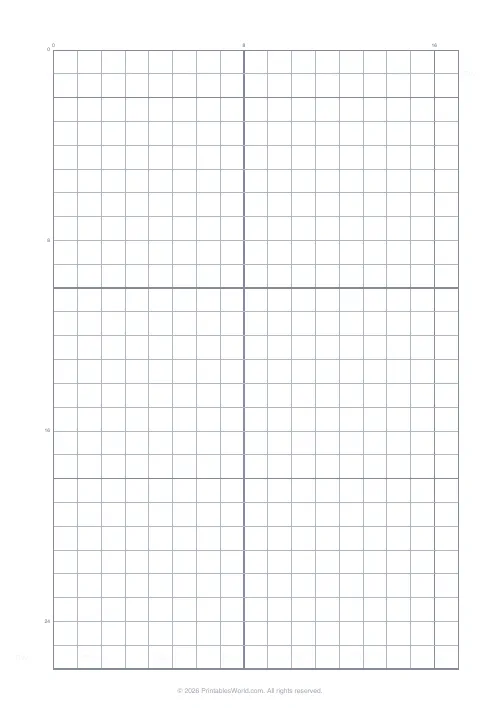
Compact 16×16 pixel grid with numbered axes for sprite design.
Graph Paper Generator
Create custom graph paper PDFs with square or rectangular grids, dot styles, and axis numbering.
Latch Hook & Needlepoint Grid
Square 4 mm grid with every fifth line highlighted for charting latch hook rugs and needlepoint canvas designs.
Perler / Fuse Bead Template Grid
Pegboard grid at a true 5mm pitch. One square per bead, matching Perler, Hama midi and Artkal midi boards.
Further reading
Printable Paper
Bullet journalling with dot grid paper: a starter guide
The bullet journal was designed to be fast, not beautiful. Here is the original system, why dot grid suits it better than lines or blank, and the four pages you actually need.
5 min read
Printable Paper
Graph paper sizes: which grid for which task
What graph paper sizes and grid spacings mean, how to match a grid to maths, art or design, and how to set it all in the free graph paper generator.
7 min read
Printable Paper
The best note-taking paper for students (Cornell, grid, lined)
The paper you take notes on quietly decides how you review them. Here is what each format is actually for, and which subjects each suits.
4 min read
More like this
- Graph Paper Generator
 Lined Paper Generator
 Dot Grid Paper
 Engineering Paper
- Knitting / Crochet Grid
- Pixel Art Grid: Small (16×16)
 Pixel Art Grid: Large (32×32)
 Classroom Seating Chart Grid
 Floor Plan Grid
 Map Grid Paper
 Blank Notebook Page
 Multiplication Grid: Blank
 Times Table Grid: Fill In
 Isometric Dot Paper