What this tool does
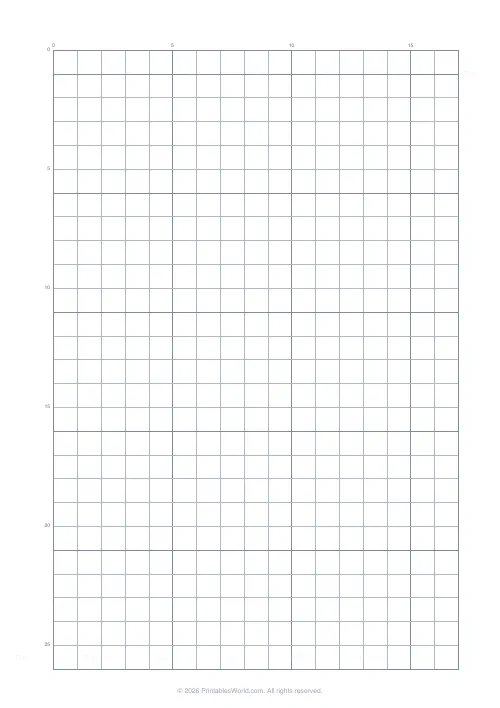
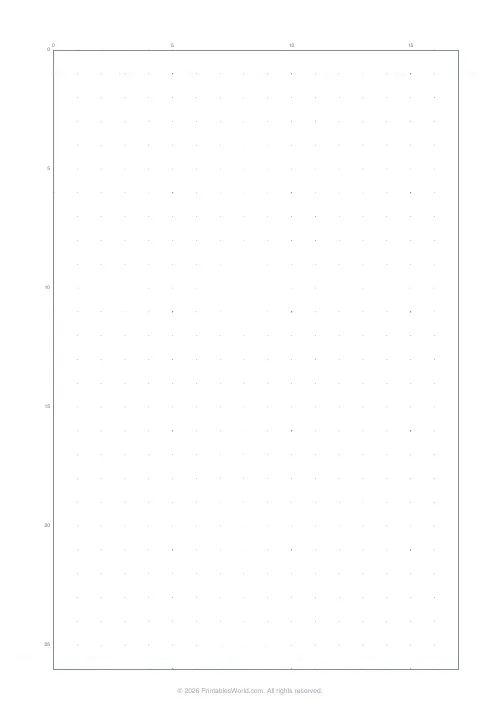
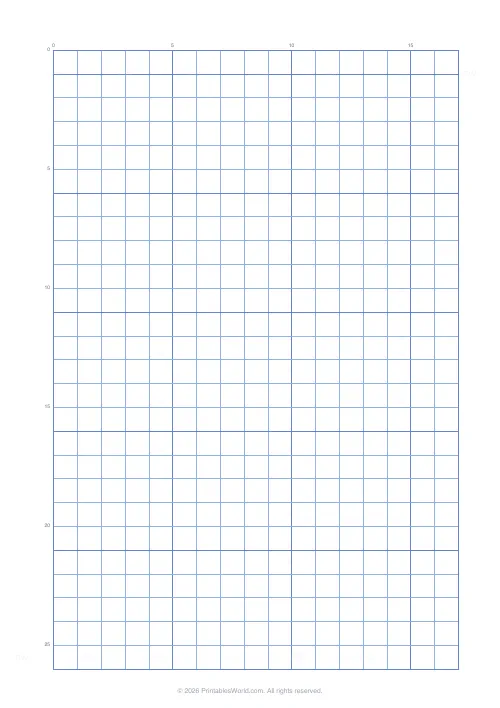
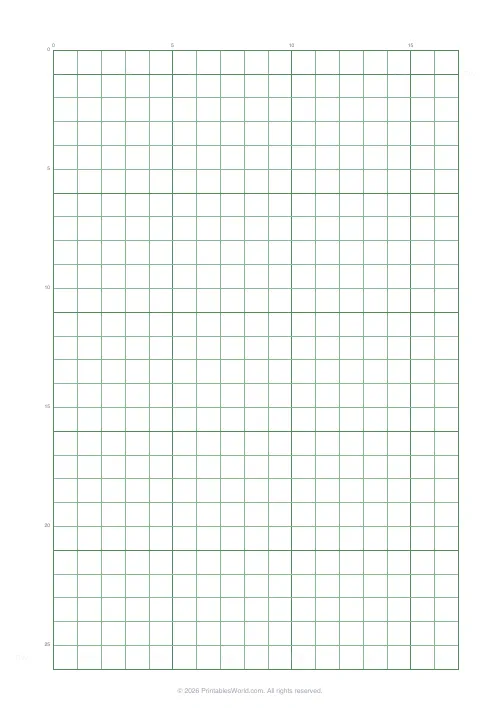
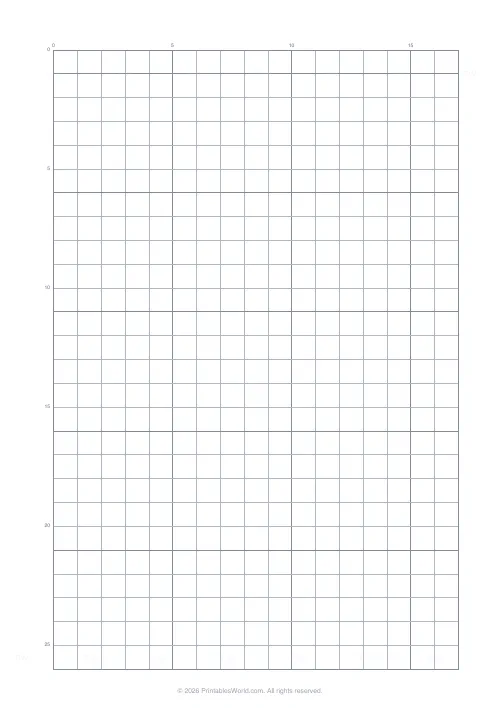
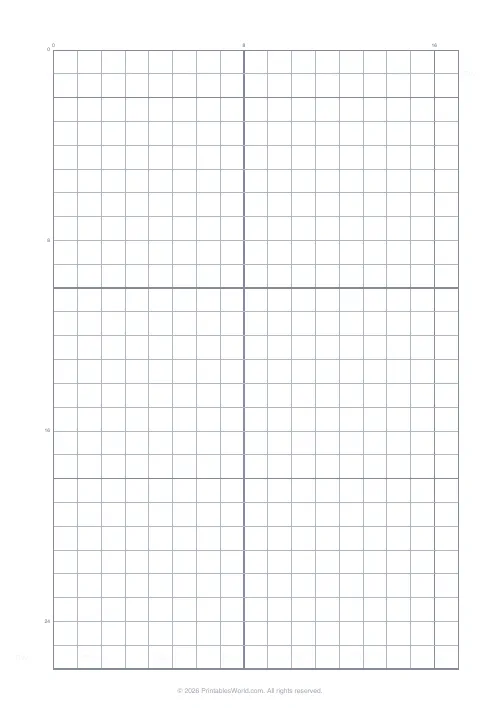
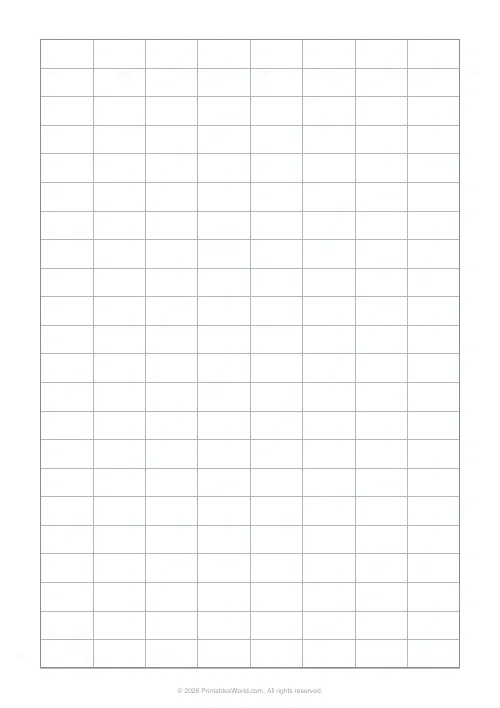
A 10 mm numbered grid with a border, for hand-drawn maps and floor plans. Every fifth line is bold and the rows and columns are labelled down the margins.
People also used
Feedback
Spotted something off with this tool?
A grid you can refer to
Ten-millimetre squares, a heavier line every fifth one, numbers along the edges and a border round the whole thing.
The numbering is the point. Without it a grid is just a grid; with it, every square has a name, so you can write "the well is at F7" and be understood without pointing.
What people draw on it
Fantasy and campaign maps, where a grid reference is how a party describes where it is standing. Floor plans and room layouts, where 10 mm to the metre is a workable scale for a house. Garden beds and allotment plots. School geography work on grid references and coordinates, which is really the same skill under a different name.
Also model railway layouts, wargaming terrain, and the kind of sketch you make when you are trying to work out whether the sofa fits.
Reading a grid reference
Across first, then up. Ordnance Survey teaches it as "along the corridor, then up the stairs", and it is worth drilling because the two orders give two different squares and only one of them is where you left the treasure.
A four-figure reference names a whole square. Six figures divides each square mentally into tenths and names a point inside it, which is the step most children find genuinely hard and this sheet makes concrete — you can see the square you are subdividing.
Setting a scale
Decide before you draw, and write it in a corner.
One square to one metre suits room plans. One square to five metres covers a house and garden. For a fantasy map, one square to a mile or a league is conventional and nobody will argue. The number itself matters far less than having committed to one, because the commonest way a hand-drawn map goes wrong is that the scale quietly drifts halfway across the page.
Options
Line weight and colour are adjustable. Grey is the default here, which stays out of the way of pencil work and photocopies cleanly; blue is the classic drafting choice because some reproduction processes drop it out entirely.
The bold-every-five toggle can come off if you want a plain lattice, though for map work it usually earns its keep — counting to fifty in fives is quicker than counting to fifty.
Print at 100% on A4, US Letter or US Legal, or the squares stop being 10 mm and the scale you wrote in the corner stops being true.
FAQs
Quick answers
Are the squares numbered?
Yes. Every 5 squares along the top and left so you can give grid references.
What can I use it for?
Hand-drawn maps, orienteering practice, and tabletop game maps where each square is a distance unit.
Can I print multiple sheets?
Yes. Generate as many copies as you need.
Can I get unnumbered grid paper instead?
Yes, use Graph Paper, 1cm Grid for the same spacing without axis labels.
Related tools
Hex Grid Paper
Hexagonal grid for board game design, mapping, and strategy games.
Floor Plan Grid
Architectural-style grid for sketching room layouts.
Graph Paper Generator
Create custom graph paper PDFs with square or rectangular grids, dot styles, and axis numbering.
RPG Battle Map Grid
One-inch square grid for tabletop battle maps, dungeons and encounters.
Further reading
Printable Paper
Bullet journalling with dot grid paper: a starter guide
The bullet journal was designed to be fast, not beautiful. Here is the original system, why dot grid suits it better than lines or blank, and the four pages you actually need.
5 min read
Printable Paper
Graph paper sizes: which grid for which task
What graph paper sizes and grid spacings mean, how to match a grid to maths, art or design, and how to set it all in the free graph paper generator.
7 min read
Printable Paper
The best note-taking paper for students (Cornell, grid, lined)
The paper you take notes on quietly decides how you review them. Here is what each format is actually for, and which subjects each suits.
4 min read
More like this
- Graph Paper Generator
 Lined Paper Generator
 Dot Grid Paper
 Engineering Paper
 Knitting / Crochet Grid
 Cross Stitch Grid
 Pixel Art Grid: Small (16×16)
 Pixel Art Grid: Large (32×32)
 Classroom Seating Chart Grid
- Floor Plan Grid
 Blank Notebook Page
 Multiplication Grid: Blank
 Times Table Grid: Fill In
 Isometric Dot Paper