
What this tool does
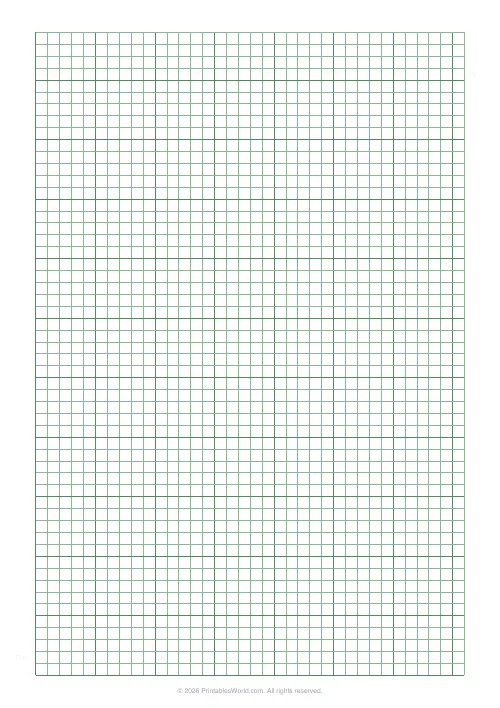
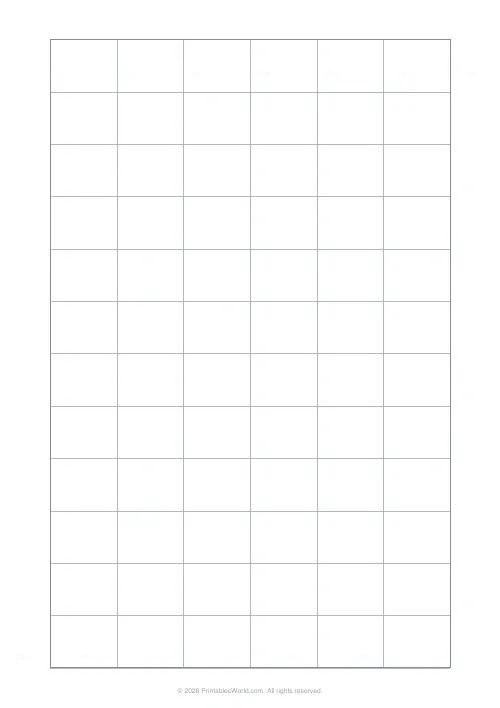
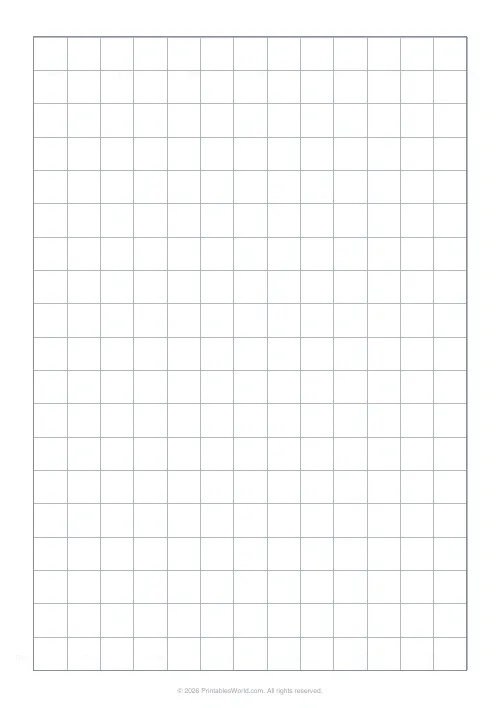
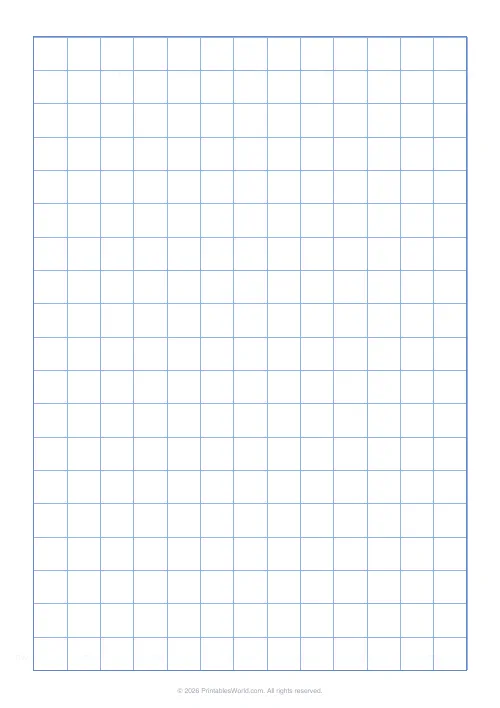
A blank 14 mm square grid with a border, for drawing your own multiplication square. Nothing is printed in the cells — the pupil fills every one.
People also used
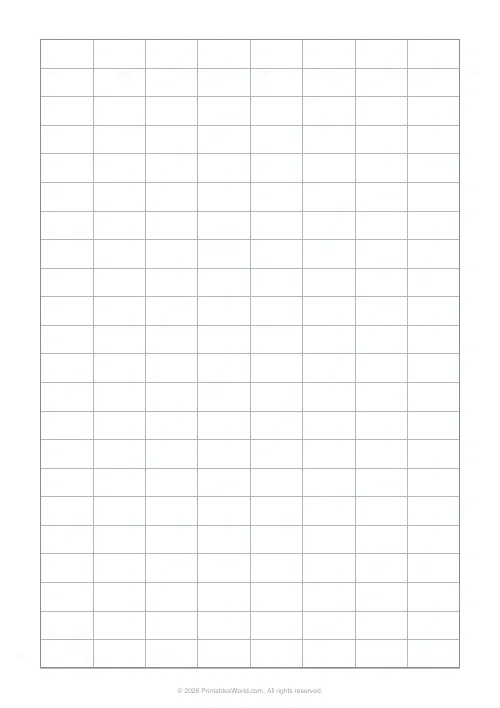
Times Table Grid: Fill In
Tall, narrow grid sized for individual times-table strips.
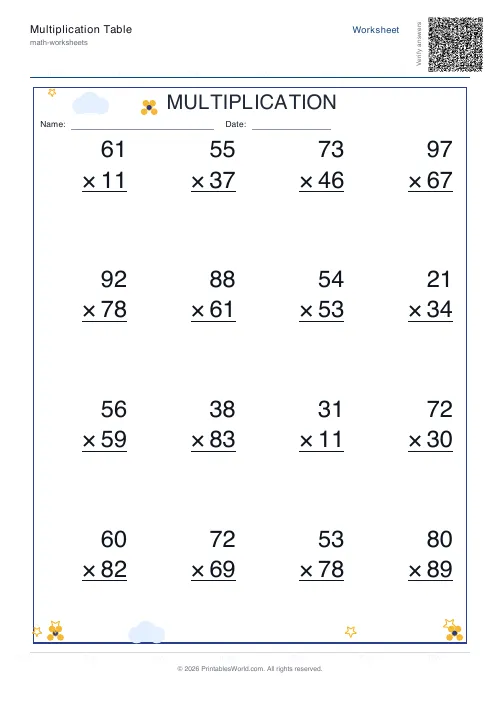
Multiplication Table Generator
Create free printable multiplication tables in table or line-by-line format with custom ranges and themes.
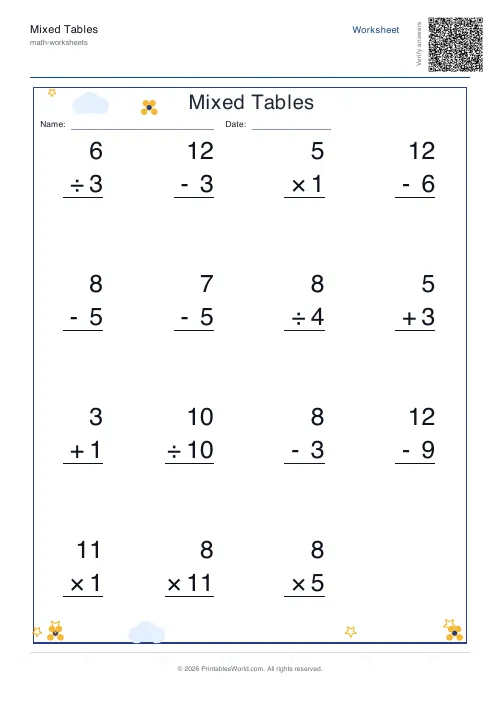
Mixed Tables Generator
Print mixed-operations worksheets combining addition, subtraction, multiplication and division on one page.
Feedback
Spotted something off with this tool?
An empty grid
Square cells of 14 millimetres with a border and no bold lines. Nothing is printed inside them, including the headers.
That is the design. A grid with the headers already filled in is a fill-in-the-blanks exercise; this one starts from nothing.
Writing the headers is half the exercise
The pupil numbers the top row and the left column themselves, and it is worth watching them do it.
Getting the two axes right — aligned, evenly spaced, both running the same way — is a small piece of work in itself, and a child who writes the row 1 to 12 and the column 1 to 12 has already established what the grid is for. Handed a pre-printed frame, they never think about it.
Fill it in the right order
Not row by row from the top left. Do the easy ones first and let the grid fill in around them.
Start with the 1s, 2s, 5s and 10s, which is well over half the grid and takes a couple of minutes. Then the squares along the diagonal. What is left is a surprisingly small number of genuinely hard facts — and seeing the page mostly full before reaching them changes how they feel.
Two facts the empty grid teaches
Symmetry across the diagonal. Once a pupil fills in 7×8 and then arrives at 8×7, they can either recall it or notice that they have already written it. That halves the learning and it is a much stronger realisation when discovered than when announced.
And the diagonal itself is the square numbers, running 1, 4, 9, 16 — with the gaps between them being the odd numbers, which is the sort of pattern a child will point out to you rather than the other way round.
How people use it
Time it. Do it weekly, and keep the sheets. A grid that took eleven minutes in September and four in November is evidence a child can see for themselves, which beats any amount of encouragement from an adult.
Do not time it until it is accurate. Speed built on guessing is worse than no speed.
Related sheets
For a grid with the headers printed, the multiplication table generator. For circular drills that break the row-order habit, multiplication wheels. For a non-square version sized for tables in rows, the blank times-table grid.
FAQs
Quick answers
How large is the grid?
12 columns × 12 rows of equal squares, sized to fit A4 with the standard branded margins.
Is the header row included?
No. Students label the rows and columns themselves so the practice covers ordering as well as recall.
Can I get a 10×10 version?
Yes. Raise the cell size. The grid fills the printable area, so the number of columns is simply how many cells fit across it: larger cells mean fewer of them. Nudge the cell size up from 14mm until the preview shows 10 columns, then print. If you would rather not change the settings at all, print the default and ignore the bottom two rows and right two columns.
Is this the same as the times table fill-in strips?
No. Those are individual table strips. This is the full square grid.
Related tools
Times Table Grid: Fill In
Tall, narrow grid sized for individual times-table strips.
Multiplication Table Generator
Create free printable multiplication tables in table or line-by-line format with custom ranges and themes.
Mixed Tables Generator
Print mixed-operations worksheets combining addition, subtraction, multiplication and division on one page.
Further reading
Printable Paper
Bullet journalling with dot grid paper: a starter guide
The bullet journal was designed to be fast, not beautiful. Here is the original system, why dot grid suits it better than lines or blank, and the four pages you actually need.
5 min read
Printable Paper
The best note-taking paper for students (Cornell, grid, lined)
The paper you take notes on quietly decides how you review them. Here is what each format is actually for, and which subjects each suits.
4 min read
Printable Paper
Graph paper sizes: which grid for which task
What graph paper sizes and grid spacings mean, how to match a grid to maths, art or design, and how to set it all in the free graph paper generator.
7 min read