What this tool does
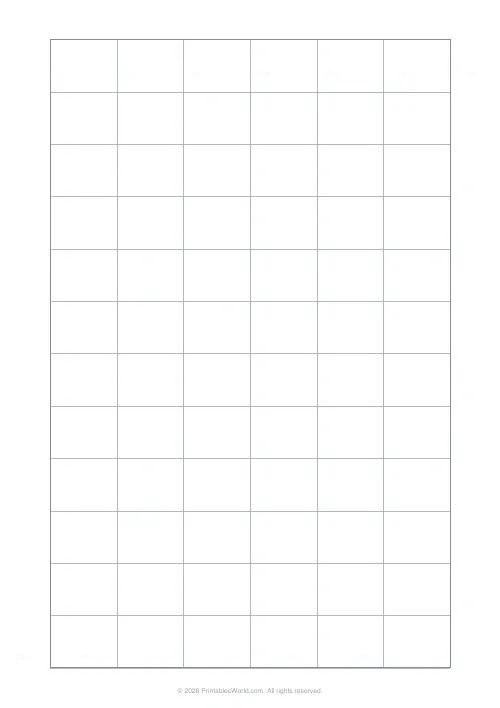
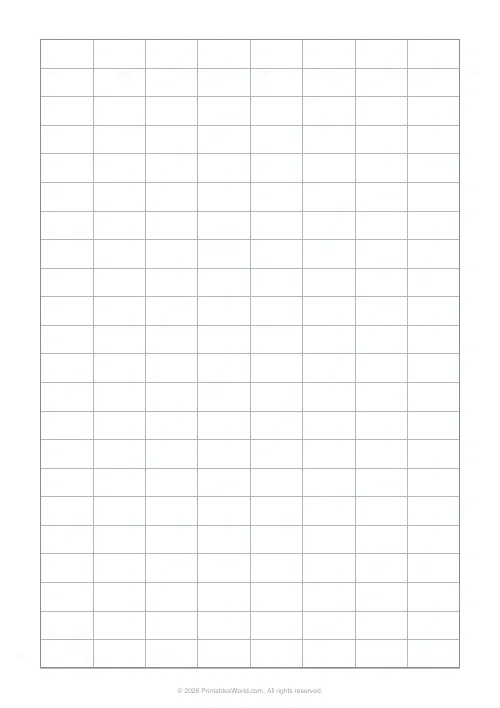
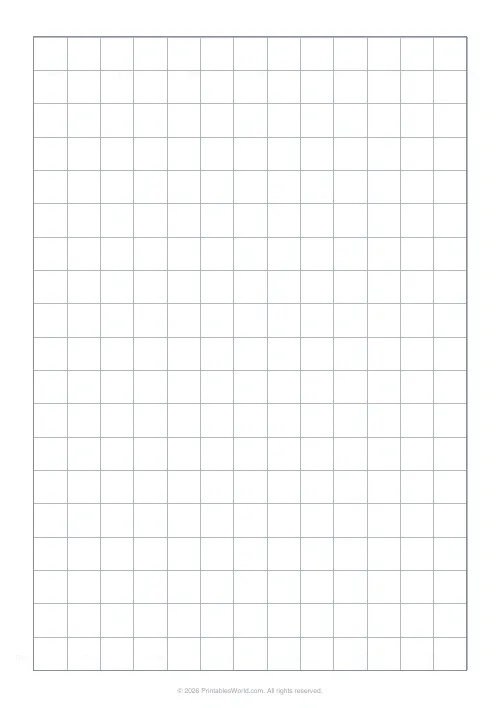
A blank grid of 22 × 12 mm cells with a border — wide, short rows for writing times tables out longhand.
People also used
Multiplication Grid: Blank
Empty 12×12 multiplication square for students to fill in.
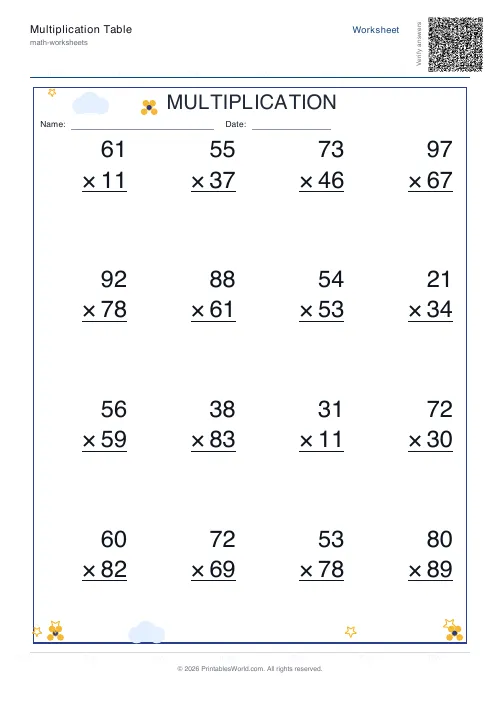
Multiplication Table Generator
Create free printable multiplication tables in table or line-by-line format with custom ranges and themes.
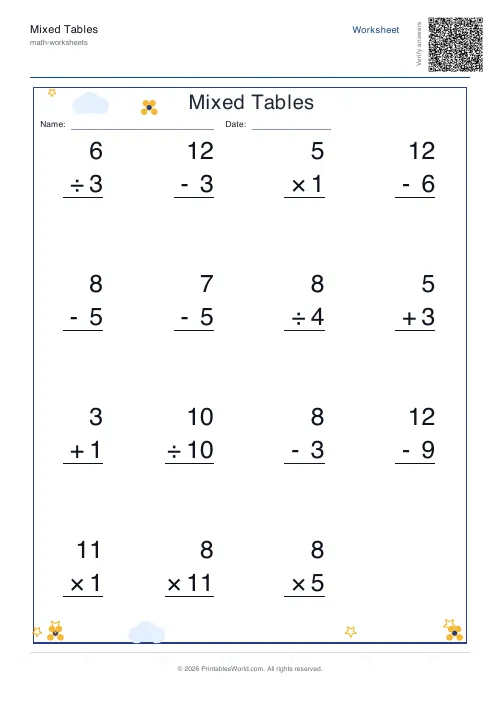
Mixed Tables Generator
Print mixed-operations worksheets combining addition, subtraction, multiplication and division on one page.
Feedback
Spotted something off with this tool?
Wide cells, short rows
Cells of 22 by 12 millimetres inside a border. Nothing printed in them.
The proportions are the point. A cell of this shape takes a whole statement — "7 × 8 = 56" — which a square cell of the same area does not.
Writing the whole thing out
This sheet is for the longhand method: the full number sentence, written repeatedly, rather than an answer dropped into a square.
It is slower, and that is the argument for it. Writing "6 × 4 = 24" engages the language of the fact as well as the number, and a child who has only ever written answers into a grid can be fluent at filling grids and lost when the same fact appears in a sentence.
Saying it aloud
Have them read each line as they write it. The multisensory version — see it, say it, write it — is markedly more effective than any one of the three, and this format is the one that supports all three at once.
It is also the format that suits chanting, which is unfashionable and works.
One table a column
The natural way to use the sheet: head each column with a table and write it down the page.
Then vary it. Write the sixes down one column in order, and down the next column in a jumbled order, and the difference in speed between the two is a direct measure of whether the facts are recalled or counted. A child fluent on the ordered column and slow on the jumbled one is counting on, and knowing that changes what you practise next.
Also good for
Number bonds written out in full. Division facts as the inverse — 56 ÷ 8 = 7 written directly under 7 × 8 = 56, which is the clearest way to show a pupil that they already know their division facts.
Spellings, in the same way: word, meaning, sentence, one per row.
Related
For a square grid to build a full multiplication square on, the blank multiplication grid. For generated practice with an answer key, the mixed tables generator.
FAQs
Quick answers
How is this different from the multiplication grid?
This is a narrower grid suited to writing one times table per column. The multiplication grid is the full square.
Are the rows numbered?
No. Students fill in both multipliers and answers, which makes the practice more thorough.
Can I get a printable answer key?
Use the Multiplication Table Generator for printed answer sheets.
How many strips per page?
Roughly 7 columns × 18 rows on A4 portrait. Enough for a full 12-row table per column with margin to spare.
Related tools
Multiplication Grid: Blank
Empty 12×12 multiplication square for students to fill in.
Multiplication Table Generator
Create free printable multiplication tables in table or line-by-line format with custom ranges and themes.
Mixed Tables Generator
Print mixed-operations worksheets combining addition, subtraction, multiplication and division on one page.
Further reading
Printable Paper
Bullet journalling with dot grid paper: a starter guide
The bullet journal was designed to be fast, not beautiful. Here is the original system, why dot grid suits it better than lines or blank, and the four pages you actually need.
5 min read
Printable Paper
Graph paper sizes: which grid for which task
What graph paper sizes and grid spacings mean, how to match a grid to maths, art or design, and how to set it all in the free graph paper generator.
7 min read
Printable Paper
The best note-taking paper for students (Cornell, grid, lined)
The paper you take notes on quietly decides how you review them. Here is what each format is actually for, and which subjects each suits.
4 min read