What this tool does
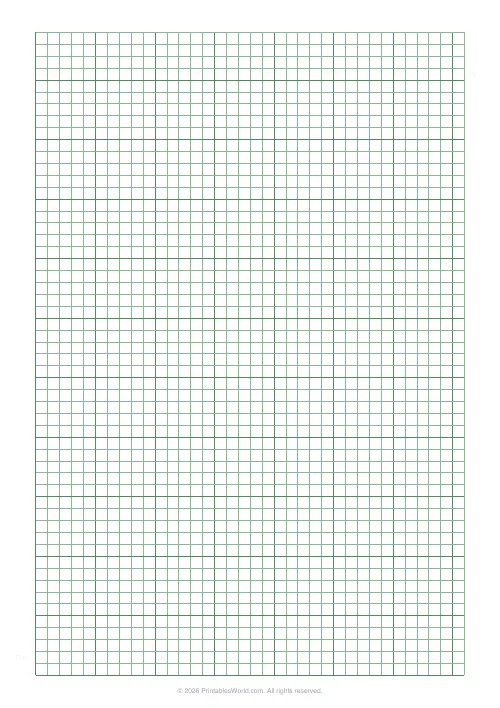
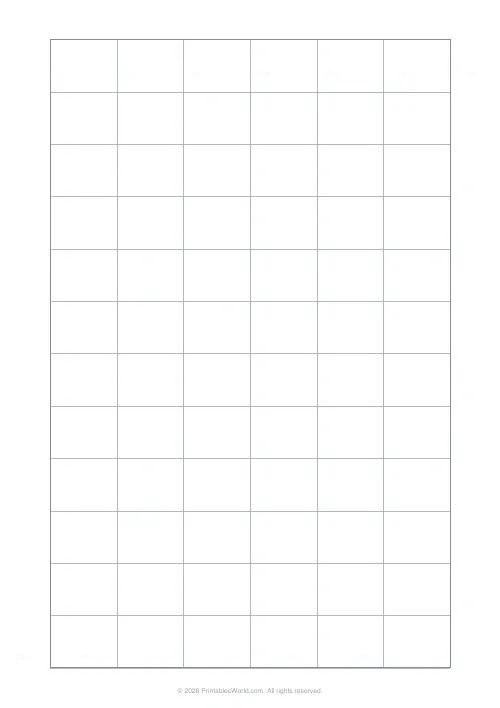
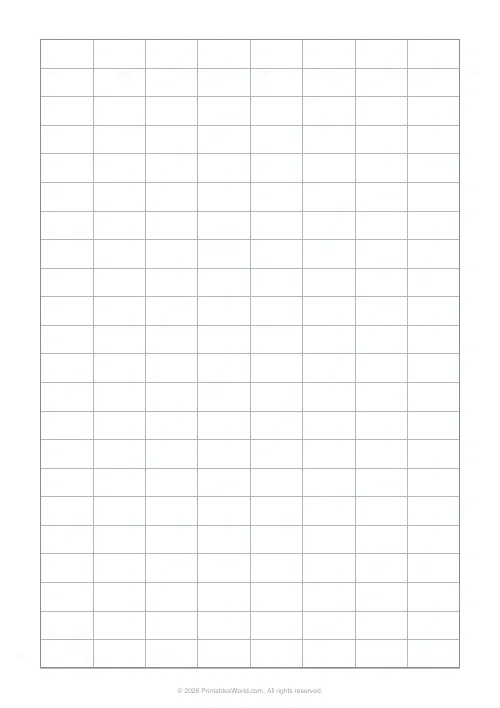
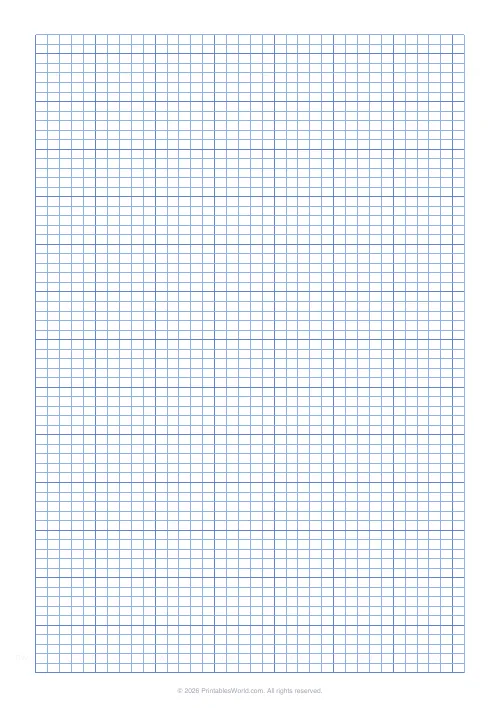
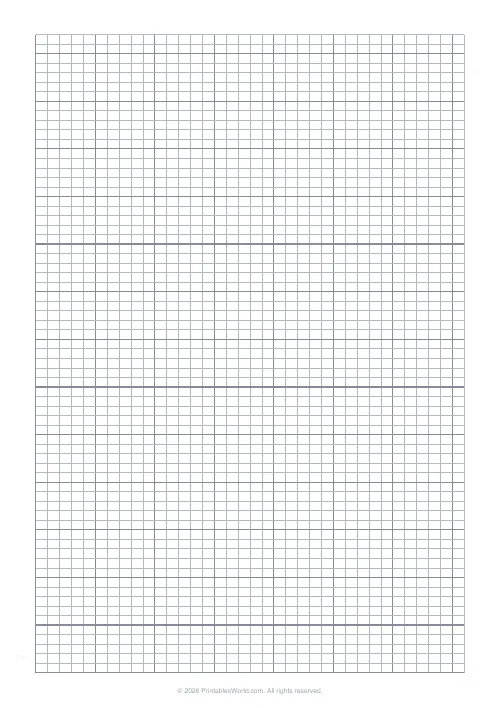
Knitter's chart paper with 5 mm × 4 mm rectangular cells, proportioned so a charted design comes out the shape it will knit.
People also used
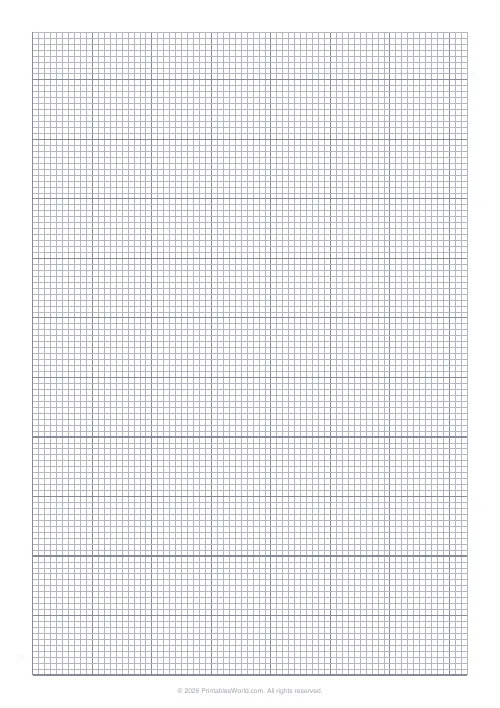
Cross Stitch Grid
Square grid with every 10th line highlighted for charting cross stitch patterns.
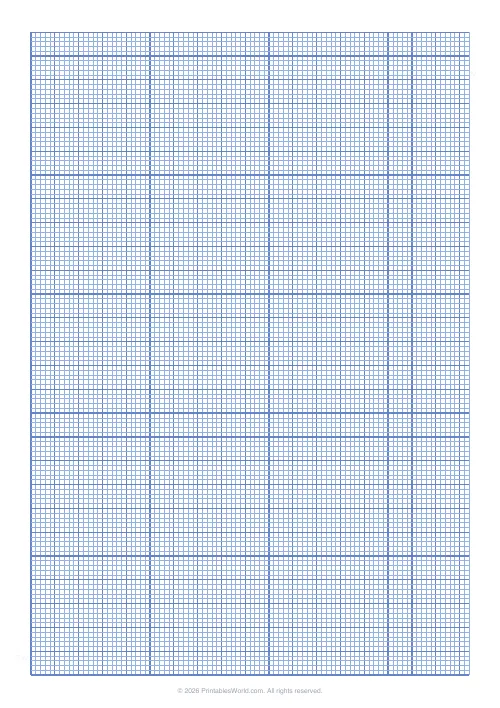
Graph Paper Generator
Create custom graph paper PDFs with square or rectangular grids, dot styles, and axis numbering.
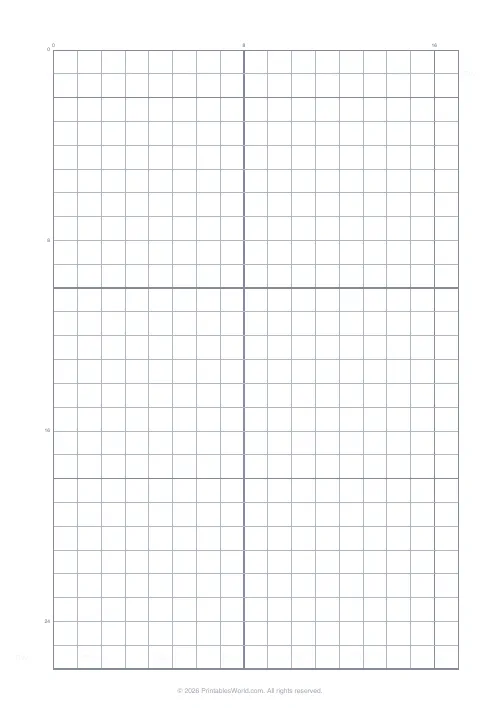
Pixel Art Grid: Small (16×16)
Compact 16×16 pixel grid with numbered axes for sprite design.
Feedback
Spotted something off with this tool?
Why the squares are not square
A knitted stitch is wider than it is tall. Chart a design on ordinary square graph paper and it will knit up squashed — the circle becomes an oval, the heart spreads sideways, the lettering goes wrong.
These cells are 5 mm across and 4 mm tall. That 5:4 ratio sits close to a typical stocking-stitch gauge, so a circle drawn here looks slightly stretched on the page — which is the whole point. It knits round.
Charting a design
One cell is one stitch. One row of cells is one row of knitting. Read charts bottom to top, because that is the direction the fabric grows.
On flat knitting, right-side rows read right to left and wrong-side rows read left to right, following the yarn. In the round every row reads right to left, which is one of several reasons colourwork is often knitted in the round and then steeked.
Fill each cell with a colour or a symbol, and keep a key in the margin. The bold line every five cells is there so you can count without losing your place.
Get your own gauge first
The 5:4 ratio is an average, and your knitting is not average.
Knit a swatch in the yarn and the needles you actually intend to use, block it the way you intend to block the finished piece, then count stitches and rows over 10 cm. Say you get 22 stitches and 30 rows. Your true ratio is 30:22, not 5:4, and a large design charted on the standard sheet will come out short. For a motif of a dozen rows, no matter. For a whole yoke, quite a lot.
Fair Isle, intarsia, mosaic
Stranded colourwork is what this paper is usually printed for. Keep float lengths in mind while you chart — more than five stitches of one colour and you will want to catch the float behind, and it is easier to design that problem out at the graph-paper stage than to discover it at the needles.
Intarsia blocks chart the same way but with no floats to worry about. Mosaic and slip-stitch patterns need a chart that tracks which colour is in the hand each row, so mark that in the margin.
For cross stitch instead
Use cross stitch grid paper, which is square — aida cloth holds a true square stitch, so the distortion this sheet corrects for does not arise.
Print at 100% on A4, US Letter or US Legal.
FAQs
Quick answers
Why are the cells rectangular?
Knit stitches are wider than they are tall. A 5×4 mm cell better matches the finished gauge so charted designs look right.
Does this work for crochet too?
It works as a general crochet chart grid. Tunisian crochet usually maps closely; granny squares and tall stitches will need their own gauge.
Can I get a square grid instead?
Yes, use Graph Paper, 5mm Grid for plain square charting.
Are bold guide lines included?
Yes. Every 5 cells the line is heavier so you can count rows and stitches quickly.
Related tools
Cross Stitch Grid
Square grid with every 10th line highlighted for charting cross stitch patterns.
Graph Paper Generator
Create custom graph paper PDFs with square or rectangular grids, dot styles, and axis numbering.
Pixel Art Grid: Small (16×16)
Compact 16×16 pixel grid with numbered axes for sprite design.
Further reading
Printable Paper
Bullet journalling with dot grid paper: a starter guide
The bullet journal was designed to be fast, not beautiful. Here is the original system, why dot grid suits it better than lines or blank, and the four pages you actually need.
5 min read
Printable Paper
Graph paper sizes: which grid for which task
What graph paper sizes and grid spacings mean, how to match a grid to maths, art or design, and how to set it all in the free graph paper generator.
7 min read
Printable Paper
The best note-taking paper for students (Cornell, grid, lined)
The paper you take notes on quietly decides how you review them. Here is what each format is actually for, and which subjects each suits.
4 min read