What this tool does
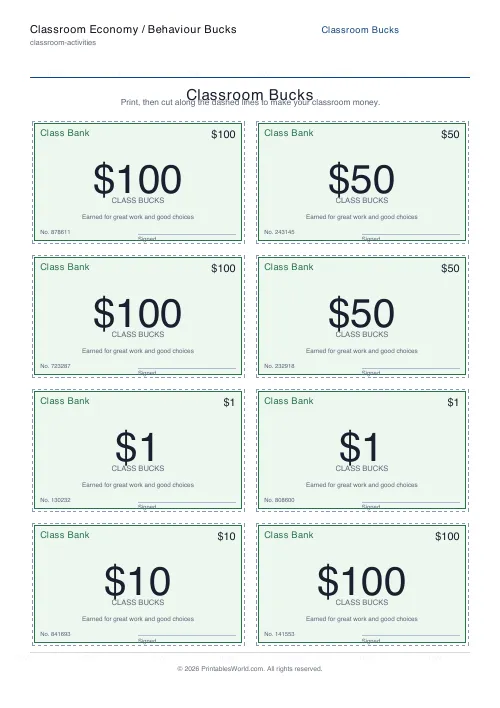
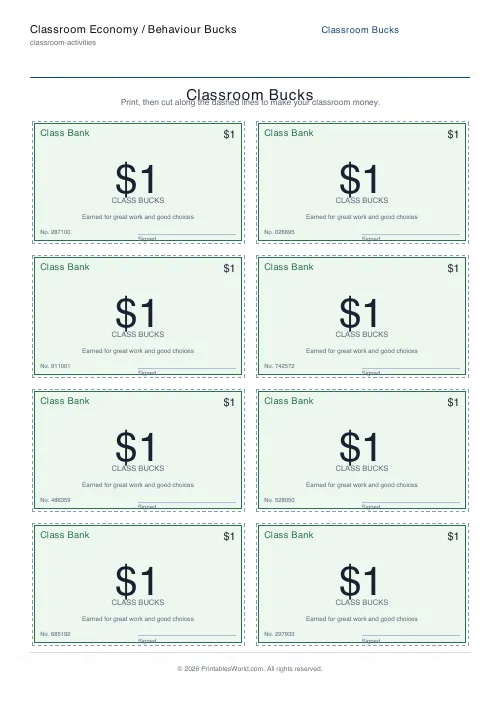
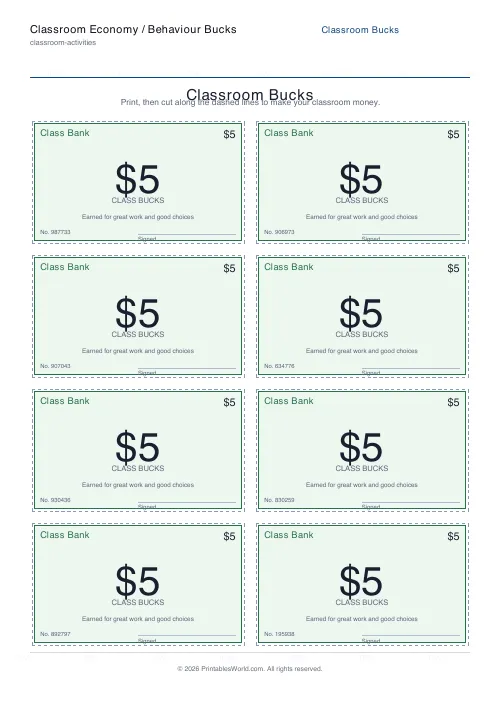
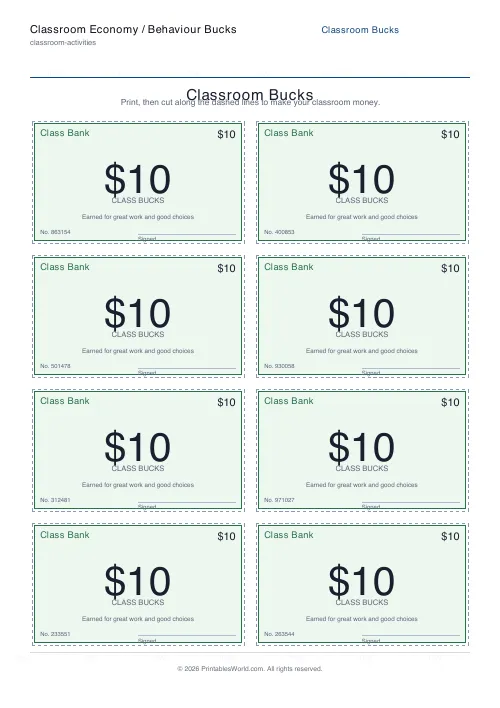
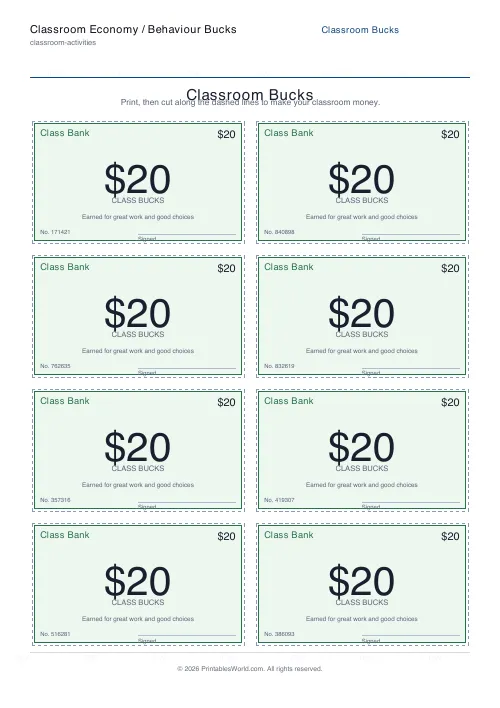
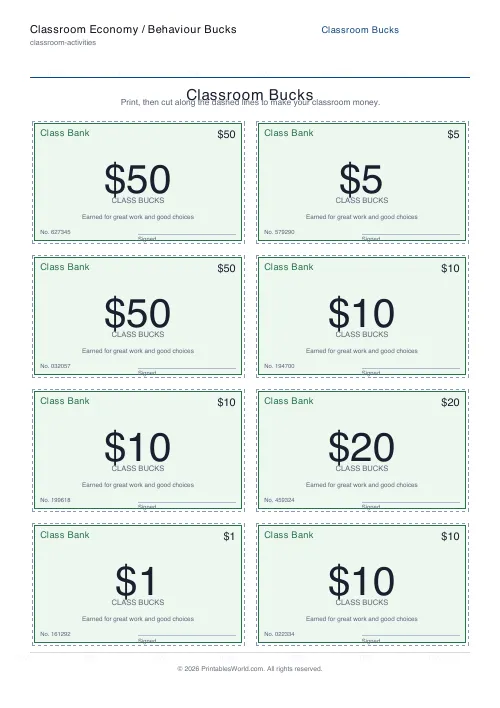
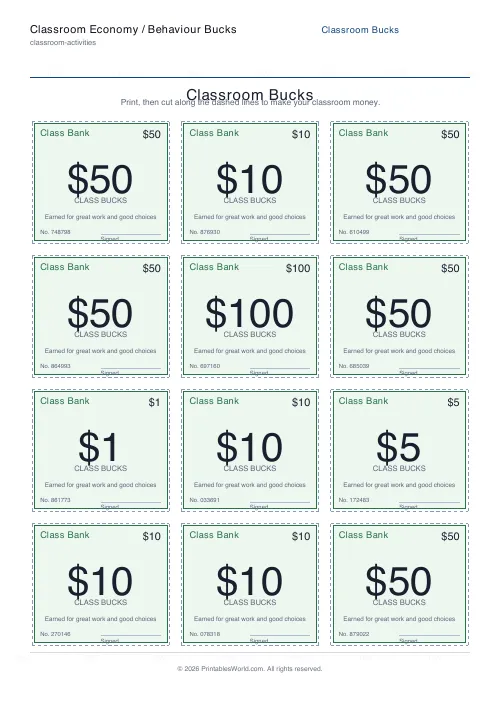
A sheet of cut-out classroom bucks for a token economy or reward system. Name the bank and the currency, pick a symbol, choose a single denomination or a mixed spread of 1, 5, 10, 20, 50 and 100 notes, and set the grid up to three across and six down. Each note carries a value, a reason-to-earn caption, a unique serial number, a signature line and a dashed cutting border.
People also used
Reward Coupons / Brag Tags
Print a sheet of cut-out reward coupons and brag tags.
Bingo Card Generator
Generate unique printable bingo cards with custom words, FREE centre toggle, call sheet, and seeded shuffles.
Reward Punch Cards / Loyalty Cards
Printable cut-out punch cards with numbered circles to mark each visit, reward or completed task.
Feedback
Spotted something off with this tool?
A page of notes, cut apart in two minutes
Name your class bank, pick a currency name and a symbol, and the sheet fills with play-money notes. Each one carries its value, a short caption saying what it was earned for, a serial number, a signature line and a dashed border to cut along.
Up to three across and six down, so eighteen notes on a page at the most. Two by four is the default and gives notes big enough for a six-year-old to handle without folding them in half by accident.
Single denomination or mixed
A full sheet of the same value is what you want for handing out on the spot. One note, one reward, no counting at the point of giving, which matters when you are trying to praise something quickly and move on.
The mixed setting fills the page with a random spread of 1, 5, 10, 20, 50 and 100 notes, and that turns the currency itself into maths. Children have to make change, add totals and work out whether they can afford something, which is the part of a classroom economy that actually teaches anything.
Start on a single denomination while the system beds in, then switch to mixed once the routine is established and the arithmetic becomes the point.
Serial numbers are a supply control
Every note gets a unique one, and they can be switched off if you would rather they were not there.
Leave them on. A classroom economy fails in exactly one way, which is inflation: bucks get handed out faster than the store can absorb them, prices stop meaning anything, and children stop caring. Serial numbers let you know roughly how much currency is in circulation, and they make a photocopied forgery obvious, which is a conversation you will have at some point in any class that is paying attention.
The signature line does similar work. A note nobody signed is a note nobody issued.
Running the economy
Pay a small salary for classroom jobs. Line leader, librarian, board cleaner. Then bonus notes for effort and for kindness, which are the things a salary cannot reward.
Somewhere to spend it matters more than the earning does. A class store of small privileges, or a Friday auction where saved bucks are bid against each other, which teaches saving in a way that a store alone never does because the child who spent everything on Monday has to watch.
Gentle fines for late work introduce budgeting. A savings account, even one recorded on a wall chart, gives adding and subtracting a reason to exist. And laminating a master set means one print run lasts a year, though most classes go through several as the bank refills.
FAQs
Quick answers
What is a classroom economy?
A classroom economy is a reward system where pupils earn play money, often called classroom bucks or behaviour bucks, for good work, helpful behaviour and classroom jobs, then spend or save it on privileges and prizes. It teaches money skills and motivates positive choices at the same time.
Can I use my own currency name and symbol?
Yes. Set the bank name, the currency name and a short currency symbol, and every note on the sheet updates. Many teachers let the class vote on a fun name for their money.
What does the mixed denomination option do?
Mixed fills the page with a random spread of 1, 5, 10, 20, 50 and 100 notes, which is great for change-making and counting practice. Press Generate New to reshuffle the values. Choose a single denomination instead if you want a full sheet of identical notes.
How many notes fit on a page?
You choose. Set the columns (1 to 3) and rows (1 to 6) to control both the number of notes and their size. A 2 by 4 grid gives eight medium notes on one page.
Related tools
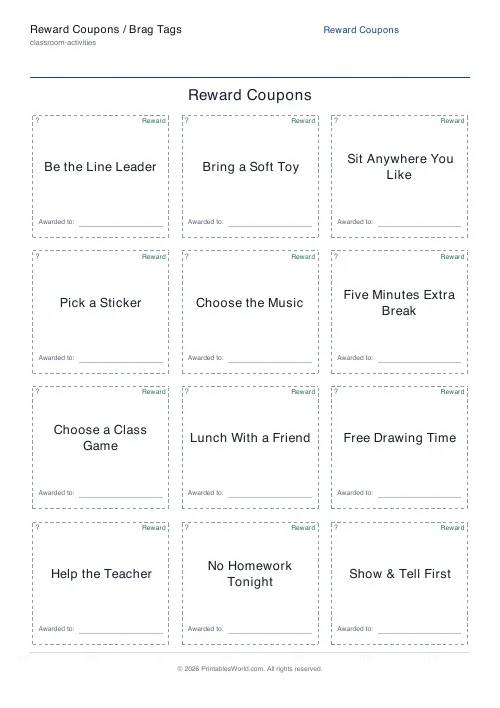
Reward Coupons / Brag Tags
Print a sheet of cut-out reward coupons and brag tags.
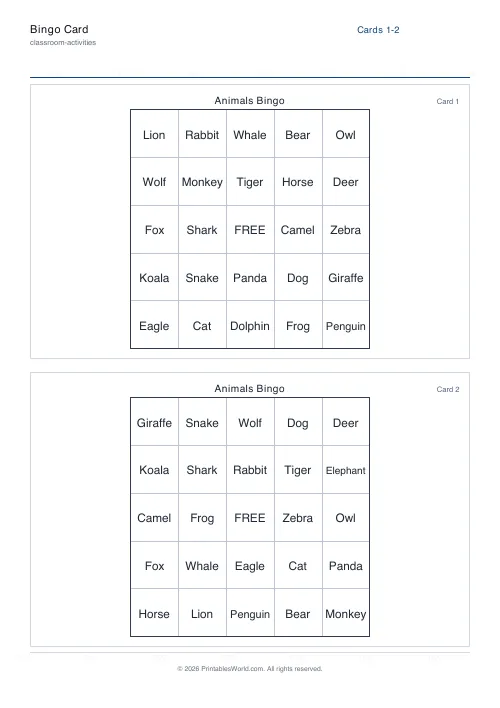
Bingo Card Generator
Generate unique printable bingo cards with custom words, FREE centre toggle, call sheet, and seeded shuffles.
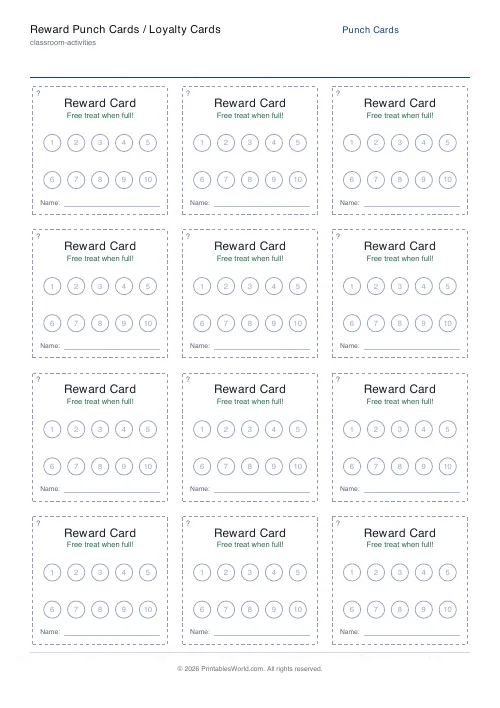
Reward Punch Cards / Loyalty Cards
Printable cut-out punch cards with numbered circles to mark each visit, reward or completed task.
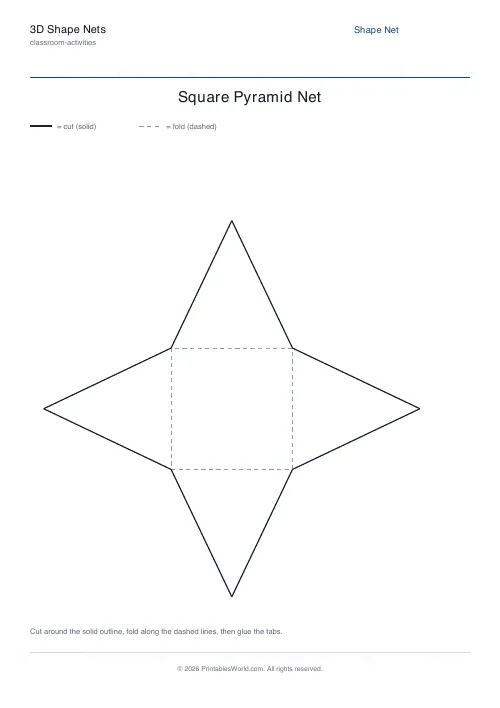
3D Shape Nets
Cut-and-fold nets for cubes, cuboids, pyramids and prisms.
Classroom Pennant / Bunting Display
Classroom heading on printable pennants. School colours, laminate-friendly, built to stay on the wall all year.
Further reading
Classroom Activities
How to run a classroom economy (free printables)
A classroom economy teaches money, work and choice at once. But it collapses if the maths is wrong. Here is how to set the numbers, and the four pitfalls to avoid.
5 min read
Classroom Activities
Positive reinforcement in the classroom: charts that work
Reward charts work when they name a specific behaviour and fade over time. They backfire when they rank children publicly. Here is the difference in practice.
5 min read
Classroom Activities
Escape room activities for the classroom: a how-to
A classroom escape room is a sequence of puzzles with a story on top. The design decision that matters most is whether groups work through them in order or all at once.
5 min read