What this tool does
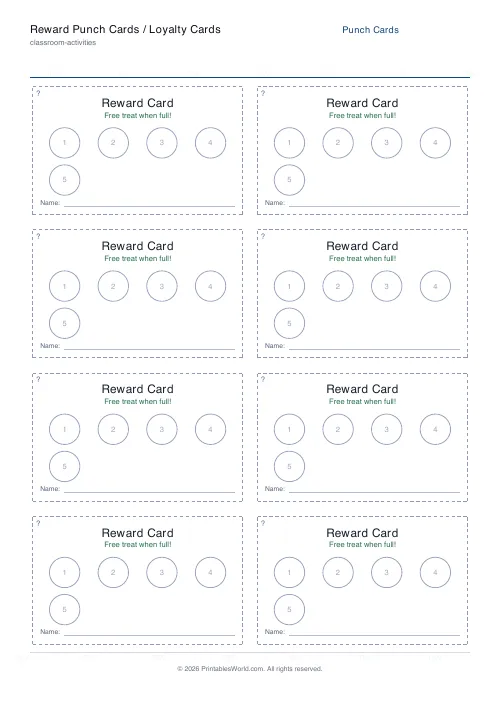
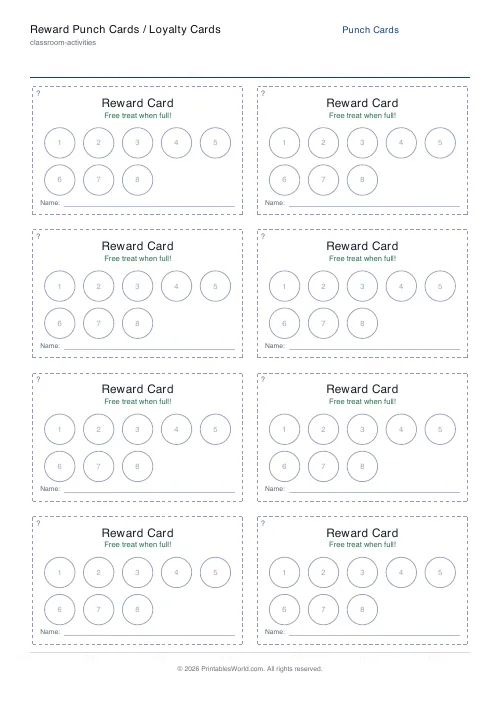
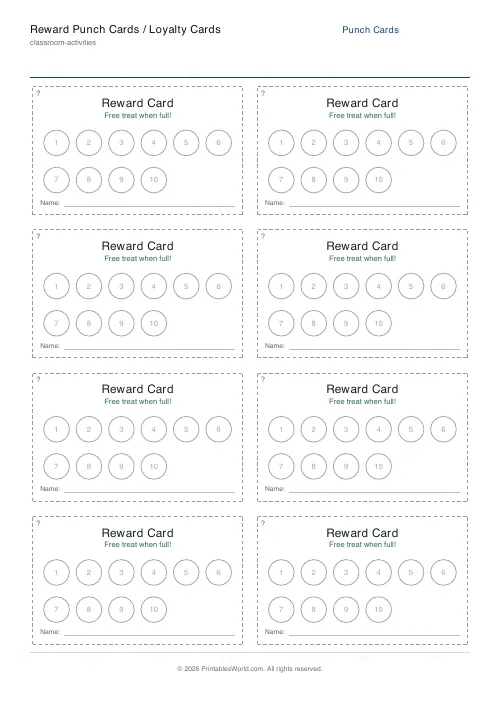
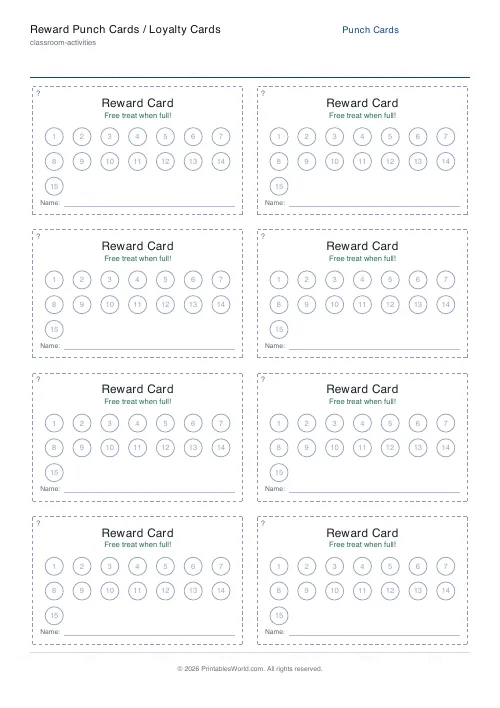
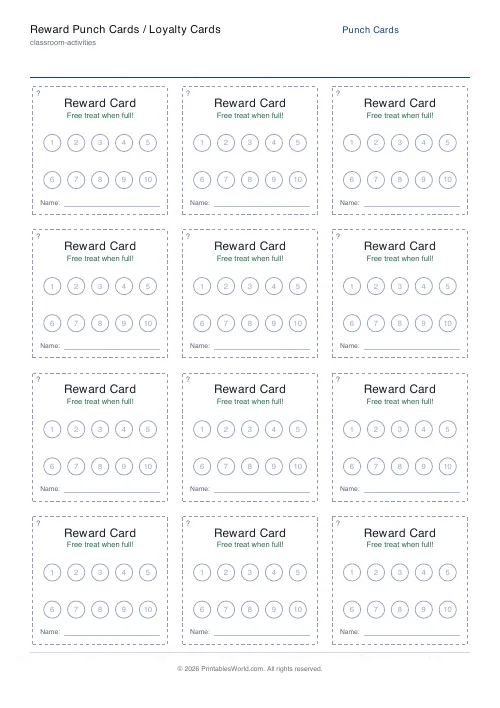
Cut-out reward cards, several to a sheet. Each carries a title, a reward line, an optional name line and a block of numbered punch circles. Set how many punches, and the grid they print in.
People also used
Feedback
Spotted something off with this tool?
Cards you cut out
The page prints a grid of cards inside dashed cutting lines — two across and four down by default, so eight cards a sheet. Each card carries a title strip, a line saying what the reward is, an optional name line, and a block of numbered circles.
Ten punches is the default. Everything is adjustable: the number of circles, the grid, and whether the name and reward lines appear at all.
Why the circles are numbered
So the child can see how far along they are without counting.
An unnumbered row of blanks requires a count every time, and young children lose track. Numbered circles turn progress into a glance: seven filled, three to go. That is also the moment the card starts doing its actual work, because visible progress is what stops someone abandoning something two thirds of the way through.
Choosing the number of punches
Ten is a good default and not a law.
For a four-year-old, five. For a fortnight's habit, ten. For something genuinely hard, twenty — but be careful, because a card that takes two months to fill stops feeling connected to anything, and the child who loses it in week five will not want to start again. Better a short card completed than a long one abandoned.
Where they get used
Classrooms, where a card per pupil — reading, homework, behaviour — is easier to manage than a wall chart and travels home with the child. Piano and swimming lessons. Dentists and hygienists, for attendance. Small businesses, for the buy-nine-get-one-free arrangement everybody understands. And at home, for anything from tidying up to sitting still at a restaurant.
Print on card if you have it. These live in pockets and bags and a paper one is a fortnight from disintegration.
Punching them
A hole punch is the satisfying option and the reason the format has a name. A single-hole punch reaches most of the circles on the sheet; the corner ones may need a pair of scissors or a decisive biro.
A stamp works. A sticker works. A drawn cross works. What matters is that the marking is done deliberately, in front of the child, as an event — the ritual is most of the reward, and a card filled in absent-mindedly at the end of the week is just a piece of paper with marks on it.
Related
For one big journey rather than repeat cards, the goal and reward step chart.
FAQs
Quick answers
How many punches can each card have?
Each card can hold between 5 and 20 numbered punch circles. The generator arranges them into a tidy block that fits the card size you choose.
Can I leave the reward blank?
Yes. Leave the reward goal empty and the card prints a blank write-in line so you can fill in the prize by hand.
How many cards fit on one page?
Set anywhere from 1 to 3 columns and 1 to 6 rows, so you can print a single large card or up to eighteen small loyalty cards per sheet.
What paper size does it use?
Choose A4 or US Letter before exporting so the cards match your printer. Print at 100% scale for accurate cutting lines.
Related tools
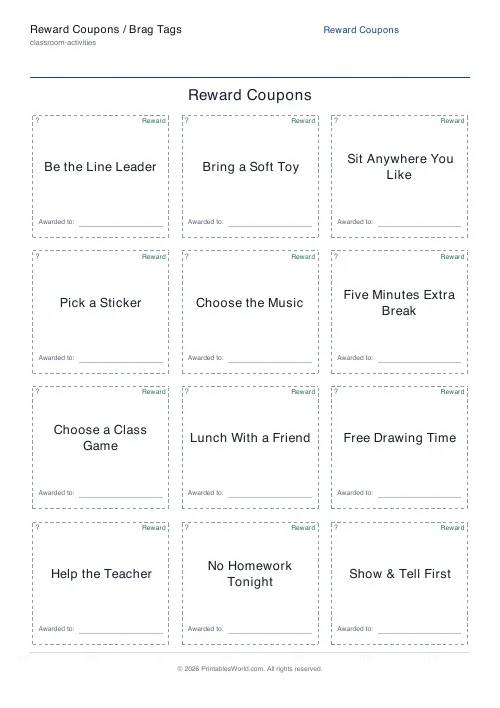
Reward Coupons / Brag Tags
Print a sheet of cut-out reward coupons and brag tags.
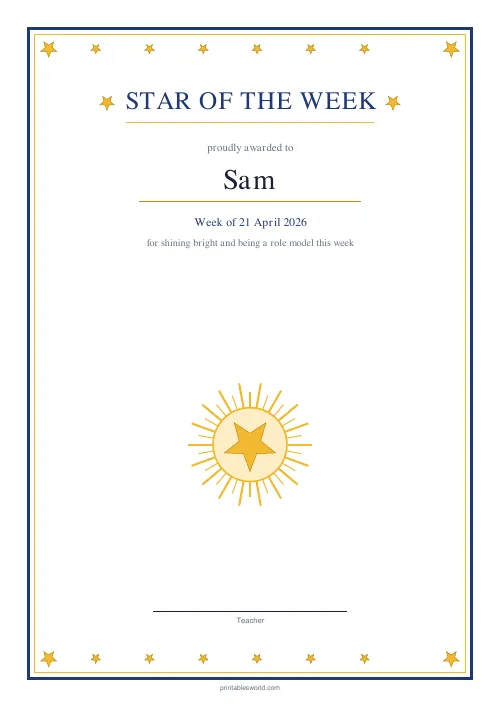
Star of the Week Certificate
A bright "Star of the Week" certificate with a golden star frame.
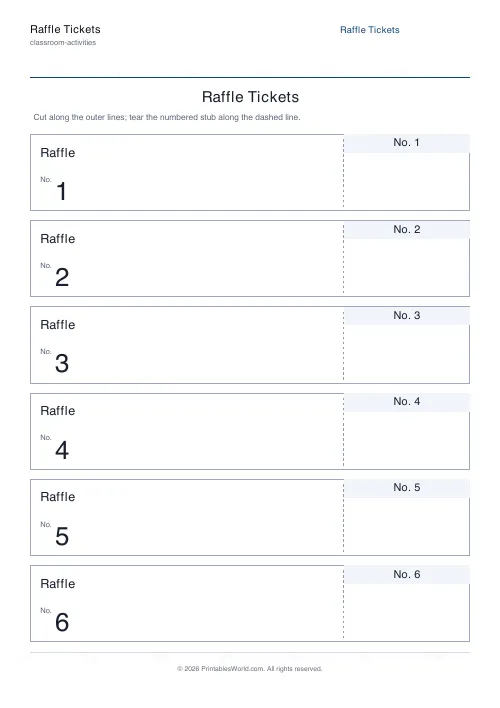
Raffle Tickets
Sequentially numbered tear-off raffle tickets with matching stubs.
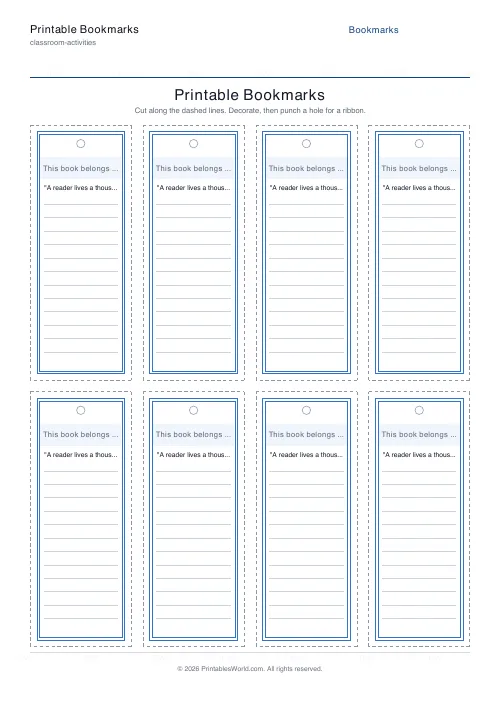
Printable Bookmarks
Cut-out bookmarks with decorative borders and space for a name or quote.
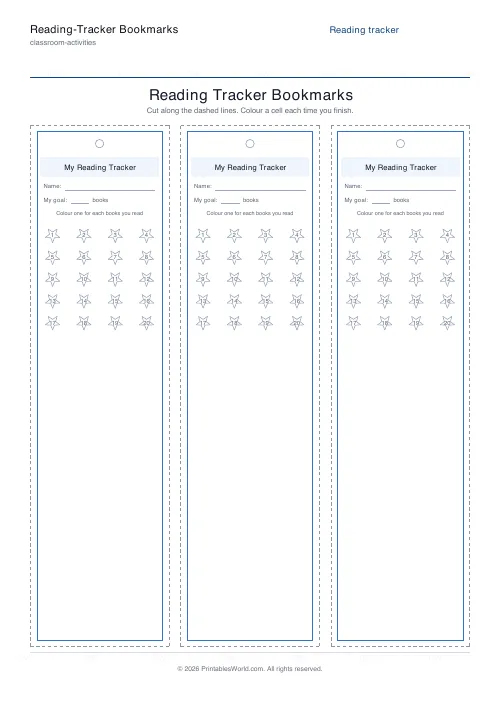
Reading-Tracker Bookmarks
Cut-out bookmarks with a numbered tracker grid kids colour as they finish books.
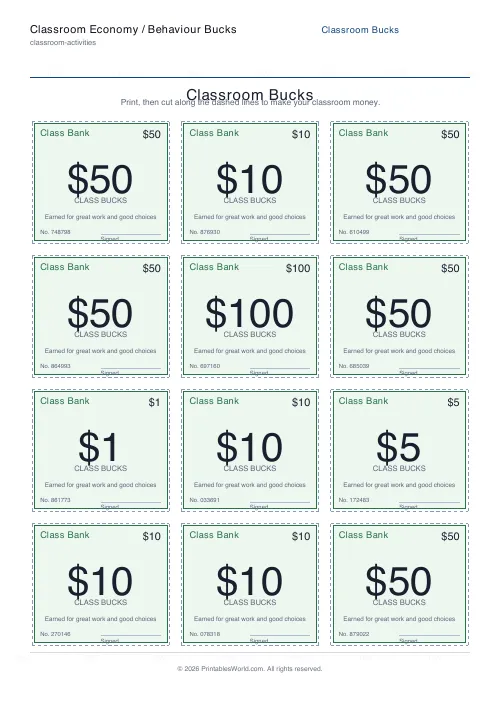
Classroom Economy / Behaviour Bucks
Print a sheet of cut-out classroom money for a token reward economy.
Further reading
Classroom Activities
Positive reinforcement in the classroom: charts that work
Reward charts work when they name a specific behaviour and fade over time. They backfire when they rank children publicly. Here is the difference in practice.
5 min read
Classroom Activities
How to make learning stations work in any classroom
Stations fail for two predictable reasons: the independent tasks are not truly independent, and the timing is wrong. Both are fixable before the lesson starts.
5 min read