What this tool does
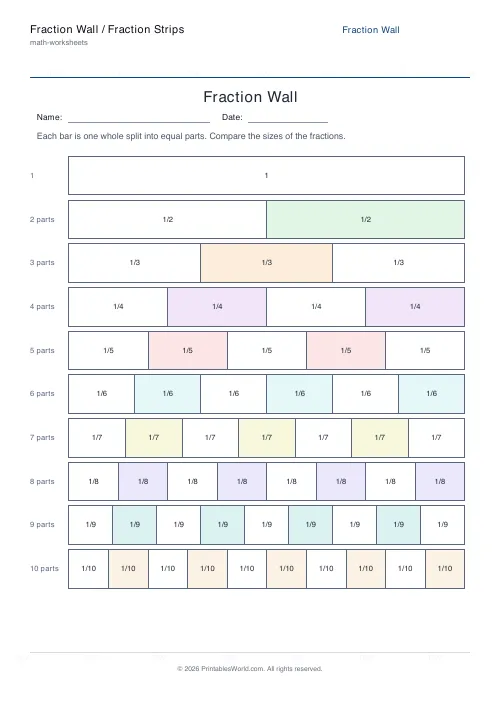
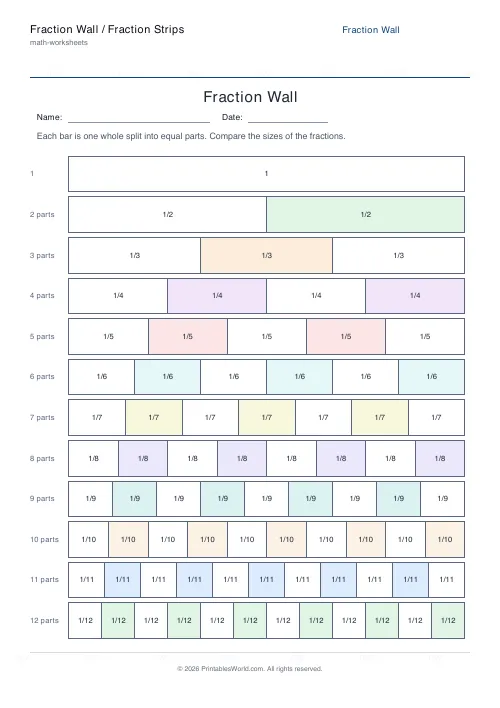
A fraction wall: one whole at the top, then the same length split into halves, thirds and so on down to your chosen denominator. Cells can be labelled or left blank, and shaded or plain.
People also used
Feedback
Spotted something off with this tool?
Bars of equal length, split into equal parts
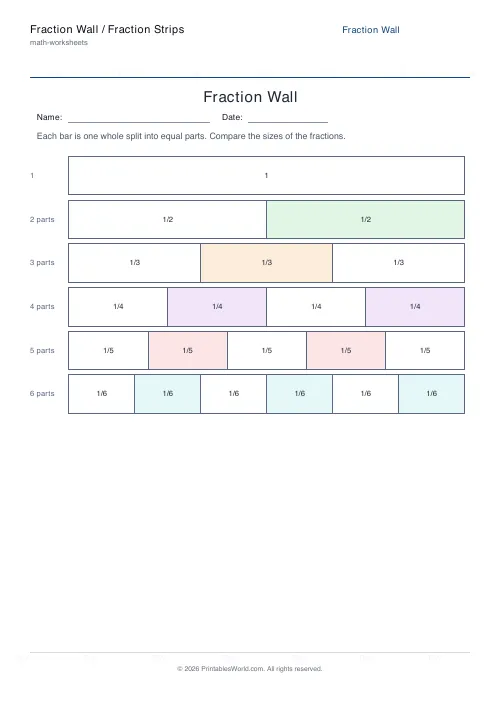
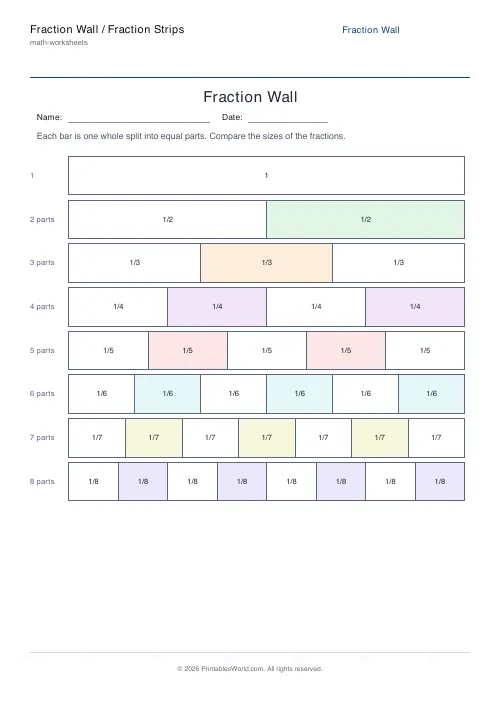
The top bar is one whole. Below it the same length gets divided into two, then three, then four, and on down to whatever largest denominator you set, up to twelfths.
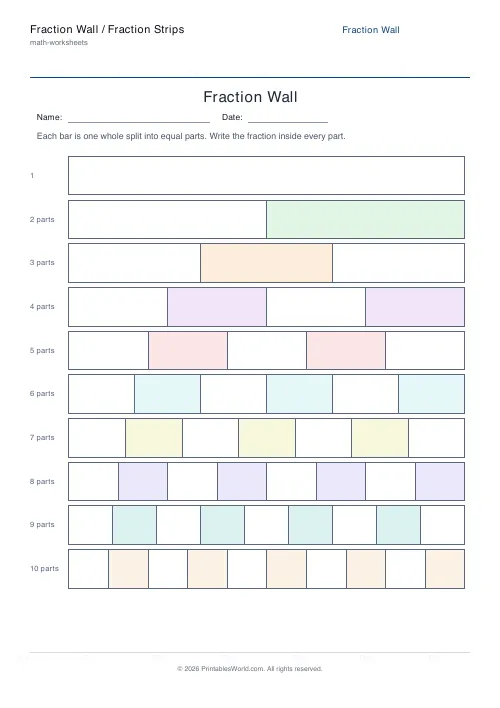
Cells can print their fraction or be left blank to fill in, and alternate cells can be shaded so each bar reads as segments rather than as a ruled line.
Every bar is the same length, and that is the whole idea
It sounds obvious and it is the thing that makes a fraction wall work.
Because the bars line up, two sixth-cells visibly reach exactly as far as one third-cell. That is what 2/6 = 1/3 means. And 1/8 is visibly shorter than 1/4 despite the bigger number underneath, which is the most persistent misconception in the entire topic.
Neither of those needs an explanation from an adult. They are visible, and a child who has looked at them tends to stop arguing that 1/8 is bigger.
Blank cells are the harder and better sheet
With labels on, the wall is a reference. Good on a desk, good stuck in a book.
With labels off, filling it in is the exercise, and it exposes the child who has been reading the labels rather than the lengths. Writing 1/5 in each of five cells requires understanding that the denominator counts the parts, and a surprising number of children who can recite that rule cannot apply it to a blank bar.
Print both. The labelled one for the wall, the blank one for the lesson.
Where to stop
Twelve is the maximum and it is rarely the right choice. Twelfths are 8mm wide on A4, which is too narrow to write in and hard to compare by eye.
Ten is comfortable. Six or eight is plenty for early work, since halves through sixths cover nearly everything a primary child meets, and a shorter wall gives larger, clearer cells into the bargain.
Using it for equivalence
Give a child a ruler-free task: find every fraction on the wall equal to 1/2. They will find 2/4, 3/6, 4/8, 5/10 and 6/12 by looking, and the pattern in those numbers is the rule for equivalent fractions arriving in the right order — the observation first, the rule afterwards.
The same works for comparison. Which is bigger, 3/5 or 5/8? Reading it off the wall takes two seconds and settles it before any method is taught.
Before you print
Largest denominator (2 to 12), labelled or blank cells, shading on or off, the whole bar on or off, a title and Name and Date fields. A4 or US Letter, printed at 100%.
Print on card and cut the bars into strips if you want a manipulative rather than a poster. Loose strips can be laid against each other, which is a stronger demonstration than looking at a fixed wall.
FAQs
Quick answers
Is this fraction wall free to print?
Yes. You can generate and download a printable fraction wall and fraction strips for free in A4 or US Letter PDF.
What is the difference between a labelled and a blank fraction wall?
A labelled wall prints the fraction in every cell (1/2, 1/3, 1/4 and so on). A blank wall keeps the bars split into equal parts but leaves the cells empty so learners write the fractions in themselves.
How many parts can the bars be split into?
You can set the largest denominator anywhere from 2 up to 12, so the wall can show halves all the way to twelfths.
Can I use the fraction wall to teach equivalent fractions?
Yes. Because every bar is the same width, learners can line up cells across rows to see that 1/2 = 2/4 = 3/6, which makes equivalent fractions concrete.
Related tools
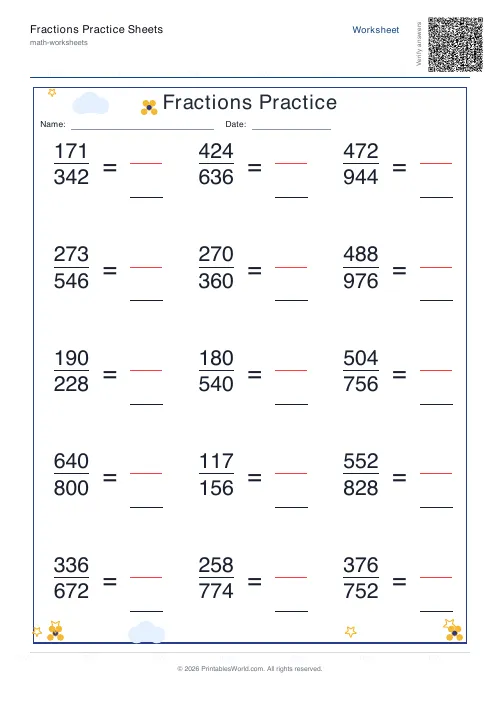
Fractions Practice Sheets Generator
Generate printable fraction simplification worksheets with custom ranges, layouts, and answer keys.
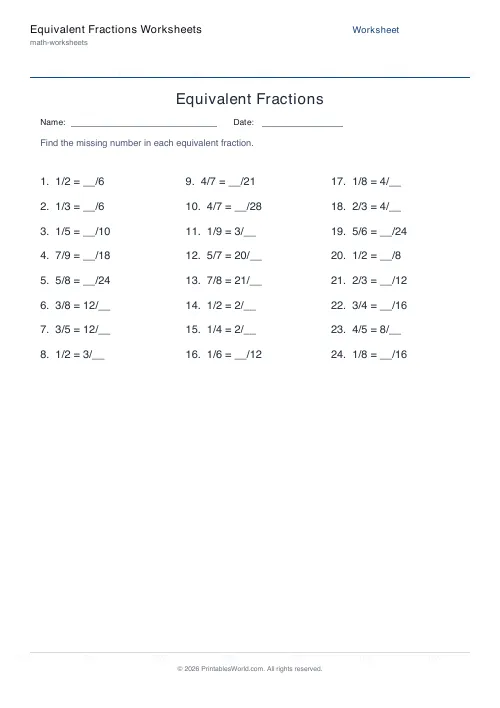
Equivalent Fractions Worksheets
Find and match equivalent fractions on printable sheets.
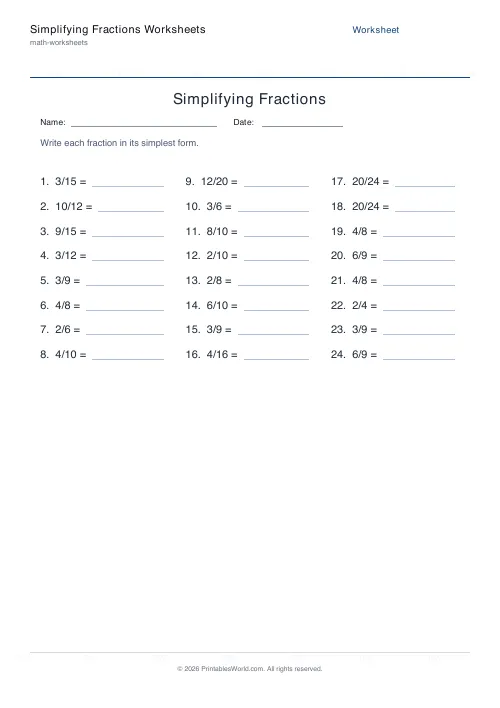
Simplifying Fractions Worksheets
Reduce fractions to their lowest terms.
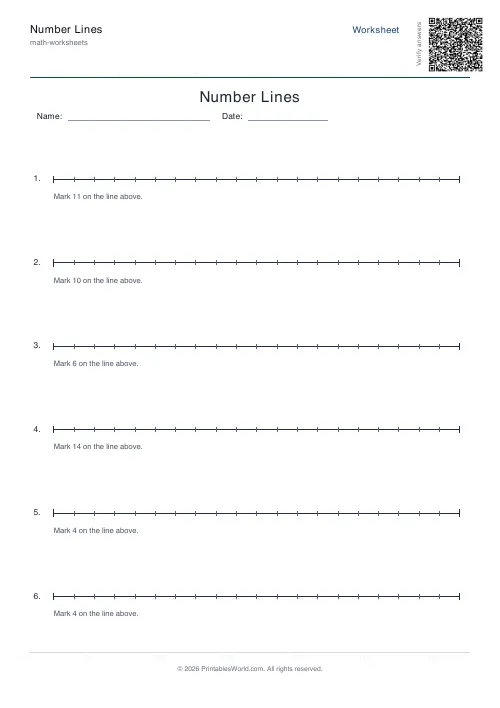
Number Lines Generator
Blank or labelled printable number lines for counting, addition and subtraction.
Further reading
Math Worksheets
Fractions made simple: teaching fractions at home
Fractions go wrong when the rules arrive before the meaning. Here is the order that works, the four misconceptions to head off early, and how to use everyday objects before any worksheet.
6 min read
Math Worksheets
Addition strategies: number lines, regrouping and more
Column addition is the destination, not the route. Here are the strategies that come before it, why each matters, and how to tell which one a child is actually using.
5 min read
Math Worksheets
Understanding BODMAS and PEMDAS: order of operations explained
BODMAS and PEMDAS describe the same rule in different words. The trouble is that both hide two facts the acronym cannot express. Which is where nearly every mistake comes from.
5 min read
More like this
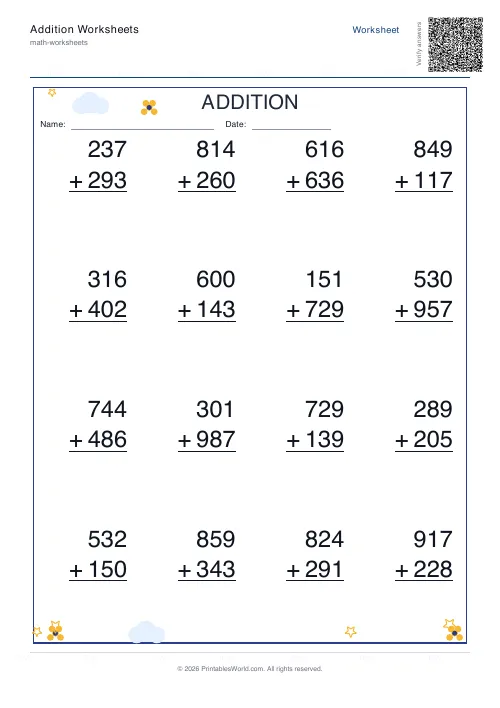 Addition Worksheets Generator
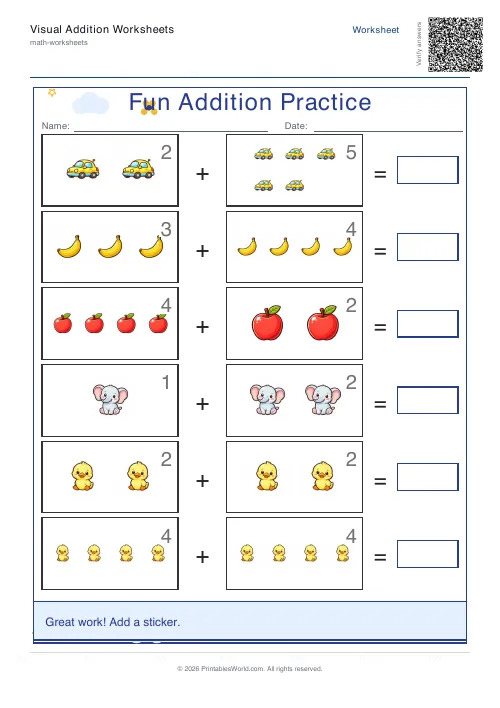 Visual Addition Worksheets Generator
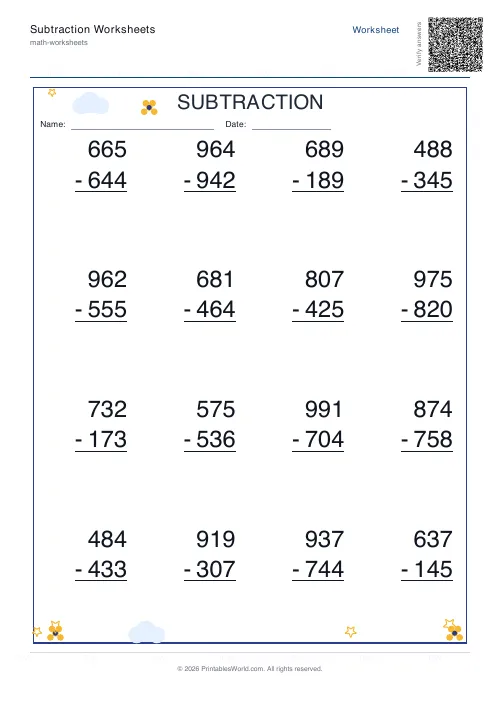 Subtraction Worksheets Generator
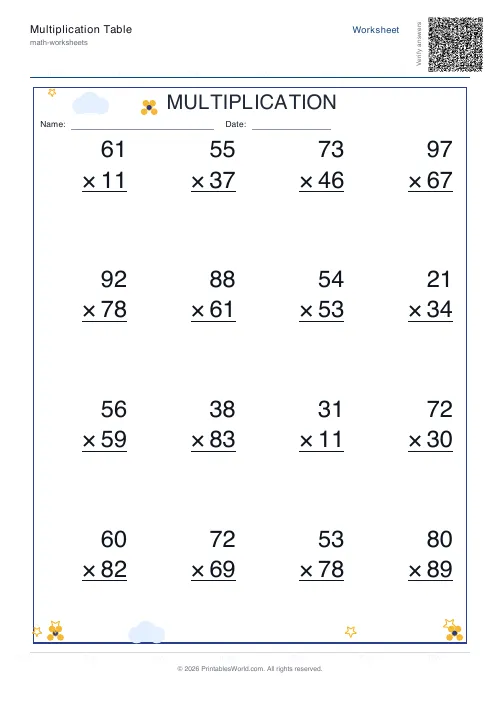 Multiplication Table Generator
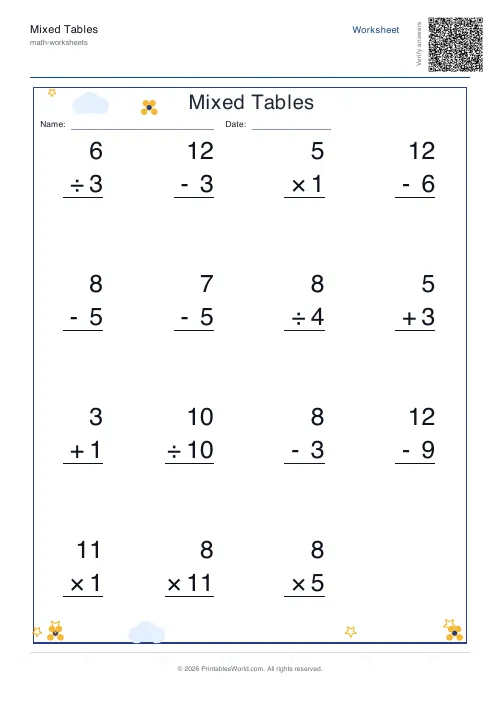 Mixed Tables Generator
- Fractions Practice Sheets Generator
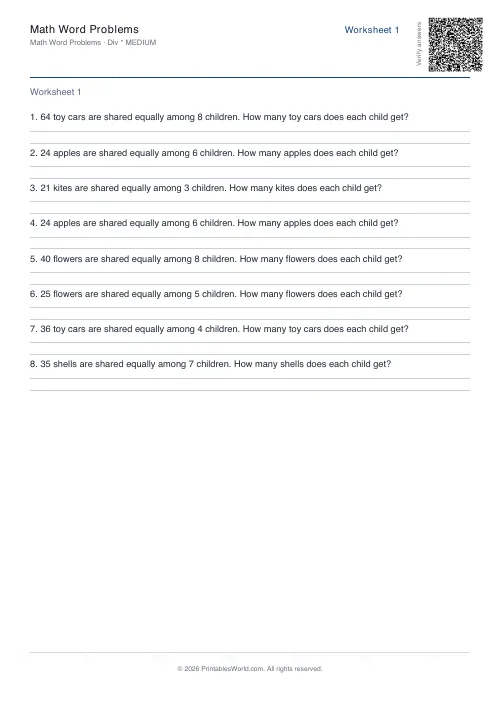 Math Word Problems Generator
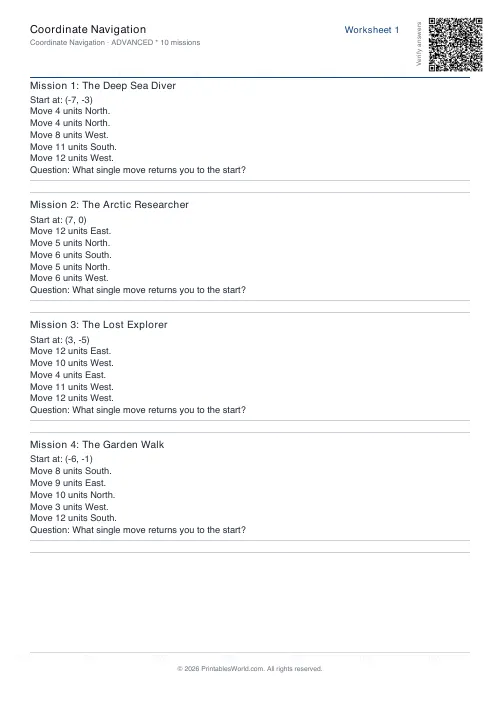 Coordinate Navigation Generator
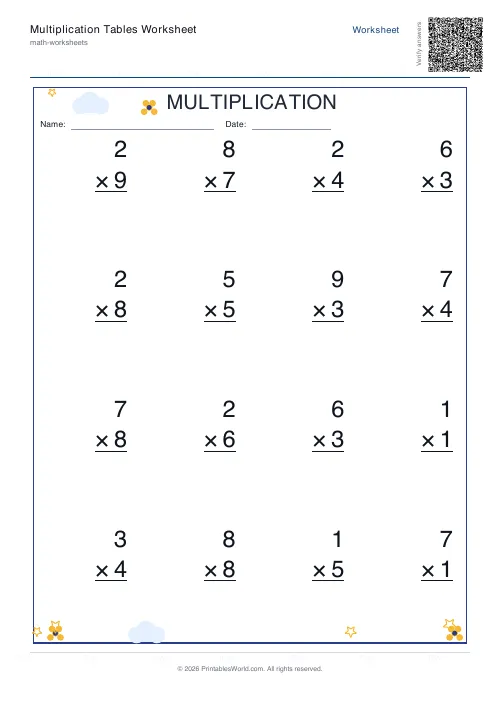 Multiplication Tables Worksheet
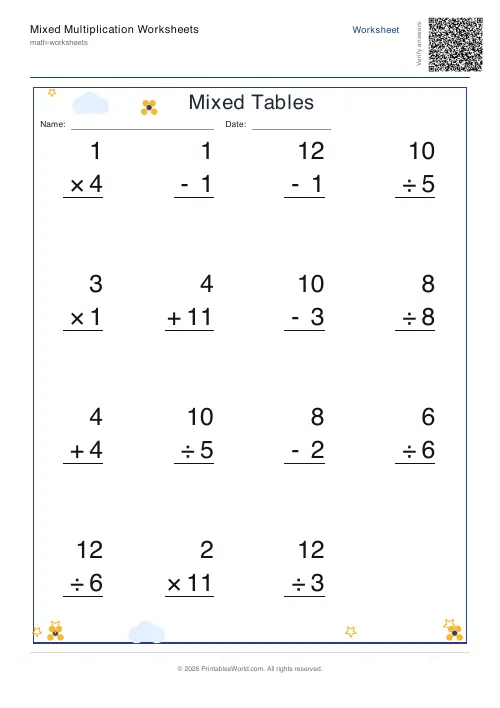 Mixed Multiplication Worksheets
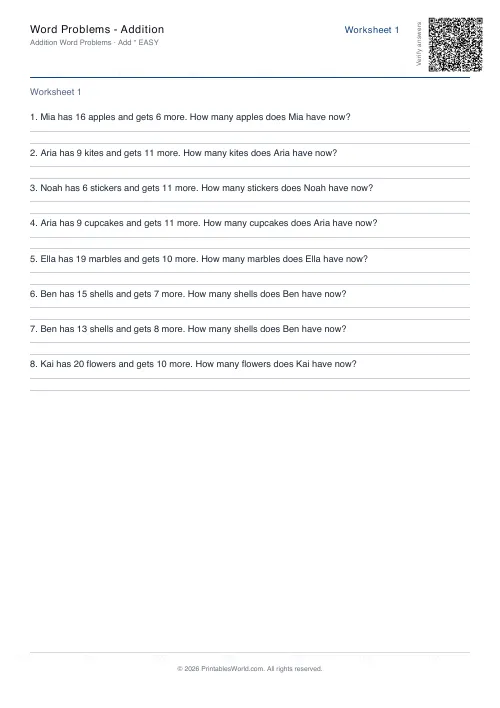 Word Problems: Addition
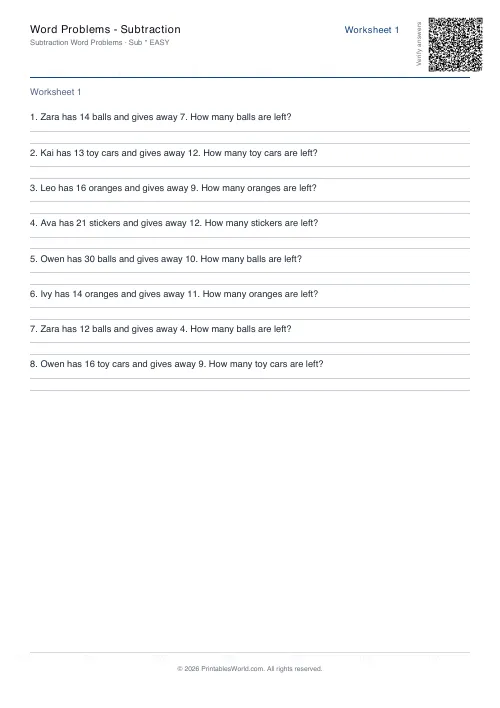 Word Problems: Subtraction
 Word Problems: Multiplication
 Word Problems: Division