What this tool does
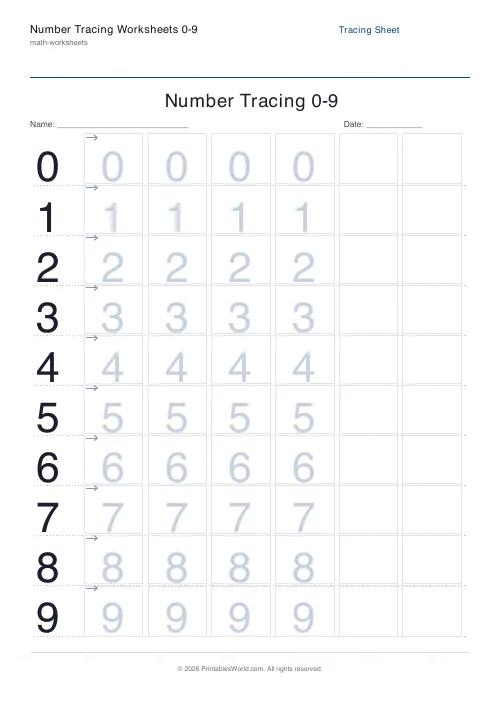
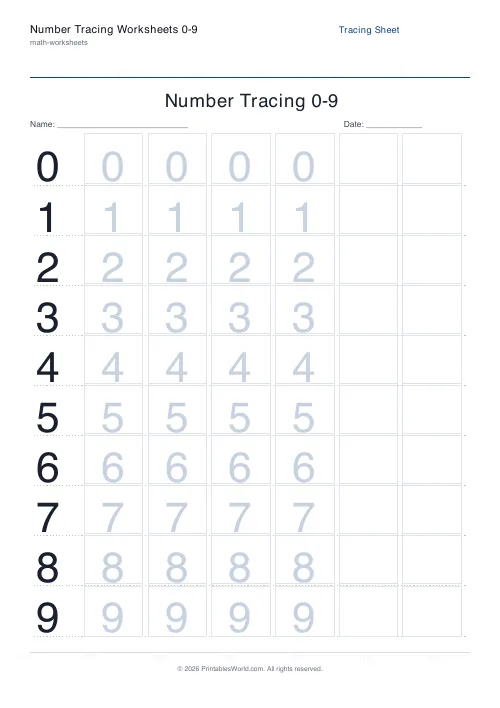
Number tracing for 0 to 9. Each row prints a bold reference digit, a run of faint ghost numerals to trace, then blank boxes for writing unaided. Choose which digits appear and how many traces per row, from two up to ten; the blank boxes follow at half that number.
People also used
Counting Objects Worksheets
Printable count-and-write practice for early learners (1 to 20).
Handwriting Practice Generator
Create custom 4-line handwriting practice sheets with trace rows, adjustable guides, and your own text.
Visual Addition Worksheets Generator
Picture-counter addition worksheets designed for early learners.
Feedback
Spotted something off with this tool?
Reference, trace, then unaided
Every row runs the same way. A bold digit at the left to look at, faint ghost numerals to write over, and blank boxes at the end with no support at all.
That last part is the bit that matters. Tracing alone teaches a child to follow a line; the blank boxes are where you find out whether the shape went in. The number of blanks follows the trace count automatically, at half of it rounded down and never fewer than one, so four traces gives two blanks and eight gives four.
Traces run from two to ten per row.
Print the digits they are getting wrong
The digit set is the control worth using. A sheet of all ten is fine as a first exposure and close to useless afterwards, because a child who can already form 1 and 7 spends most of the page practising what they can do.
Three, five, six and nine are the ones that go wrong, and they go wrong in predictable ways: 3 reversed, 5 started from the wrong end, 6 and 9 confused with each other. A sheet containing only those four is a targeted intervention and takes the same minute to produce.
The arrow guide
A small horizontal arrow cueing left-to-right, on by default.
It is worth being clear about what it does and does not do. It orients the row, so a child knows which end to start from. It does not show stroke order within a digit, and stroke order is the thing that actually needs teaching. A 6 formed from the bottom up looks correct on paper and will cause trouble in a year's time.
So demonstrate the stroke before handing over the sheet. The paper cannot do that part.
Why the numerals look the way they do
The digits are drawn in a bold system font at a large size rather than an embedded handwriting face. That is deliberate: it means the PDF renders identically in every browser with no font to download and nothing to fail silently.
The trade is that the numerals are a printed shape rather than a handwritten one, and a few digits differ slightly from the forms some schemes teach, notably the 4 and the 1. If your school follows a specific handwriting scheme, check one sheet against it before running a class set.
Making it work at four years old
- Say the number aloud while tracing it. The name and the shape are two separate pieces of learning, and nothing connects them unless somebody makes it happen.
- Fewer traces than you think. Ten repetitions of a badly formed digit entrench it.
- Watch the blank boxes, not the traces. That is the assessment; the rest is warm-up.
- Print at full scale, because the numerals are sized for a whole-arm movement and shrinking them defeats the point.
FAQs
Quick answers
Which digits are included?
By default all digits 0 through 9, one per row. You can narrow the set to just the digits you want to practise.
What is the arrow guide for?
A small horizontal arrow hints at left-to-right writing direction. It does not try to show stroke order for each specific digit.
Who is this for?
Pre-schoolers and early Reception / Kindergarten learners meeting handwritten numerals for the first time.
Does it use a handwriting font?
No. We use the bold system font at a large size so the file prints reliably without downloading extra fonts.
Related tools
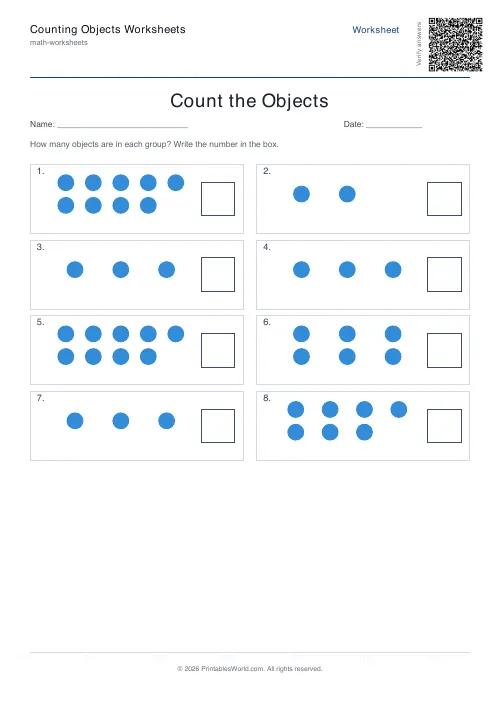
Counting Objects Worksheets
Printable count-and-write practice for early learners (1 to 20).
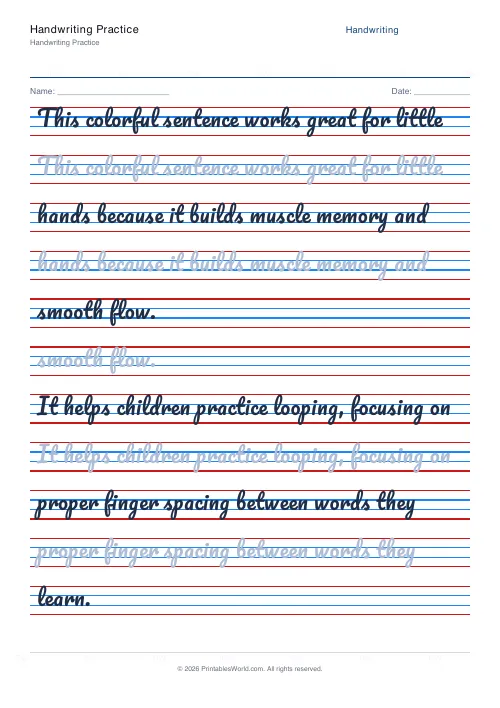
Handwriting Practice Generator
Create custom 4-line handwriting practice sheets with trace rows, adjustable guides, and your own text.
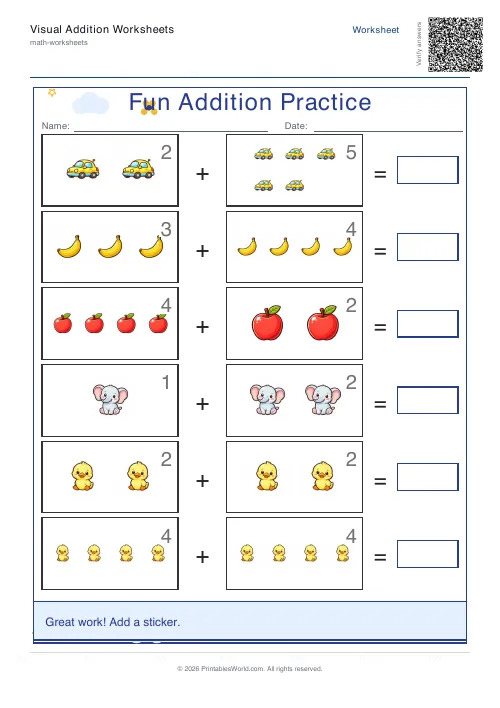
Visual Addition Worksheets Generator
Picture-counter addition worksheets designed for early learners.
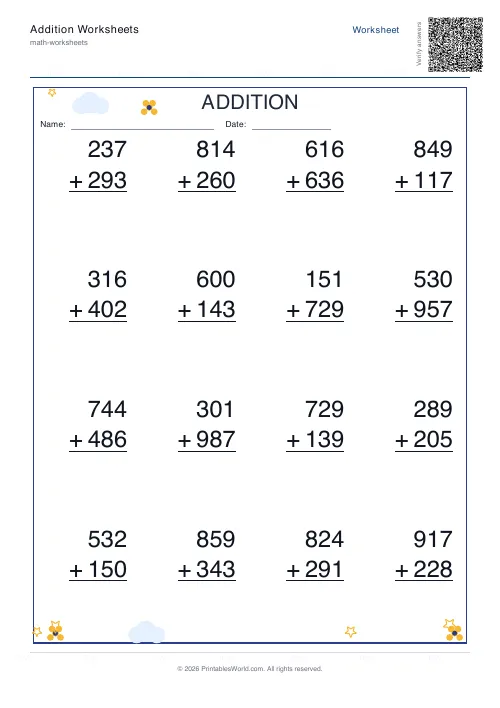
Addition Worksheets Generator
Free printable addition worksheets in tables or line-by-line layouts.
Further reading
Math Worksheets
Ten frames and number bonds: early maths foundations
A ten frame is two rows of five. That arrangement does something a row of counters cannot. It makes quantities visible without counting, which is where number sense starts.
5 min read
Math Worksheets
Addition strategies: number lines, regrouping and more
Column addition is the destination, not the route. Here are the strategies that come before it, why each matters, and how to tell which one a child is actually using.
5 min read
Math Worksheets
How many maths worksheets per day? A parent's guide
The honest answer is less than most parents assume. And the number of questions matters less than whether the session ends well.
5 min read
More like this
- Addition Worksheets Generator
- Visual Addition Worksheets Generator
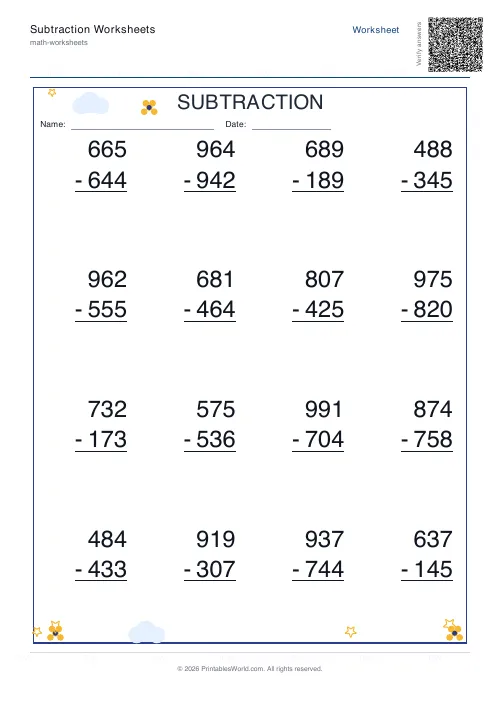 Subtraction Worksheets Generator
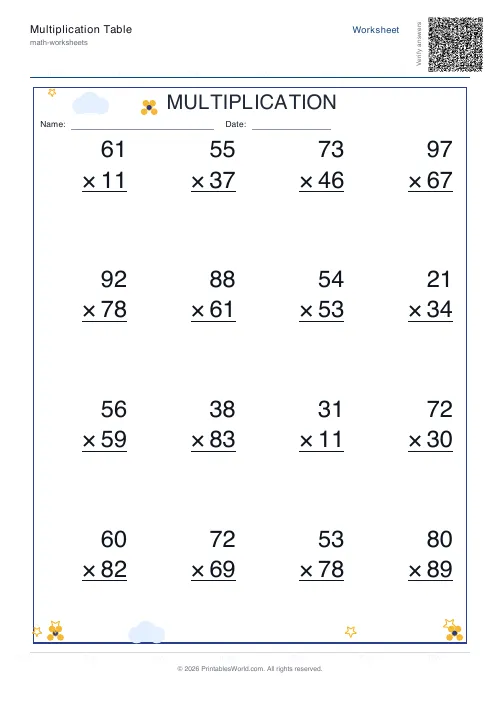 Multiplication Table Generator
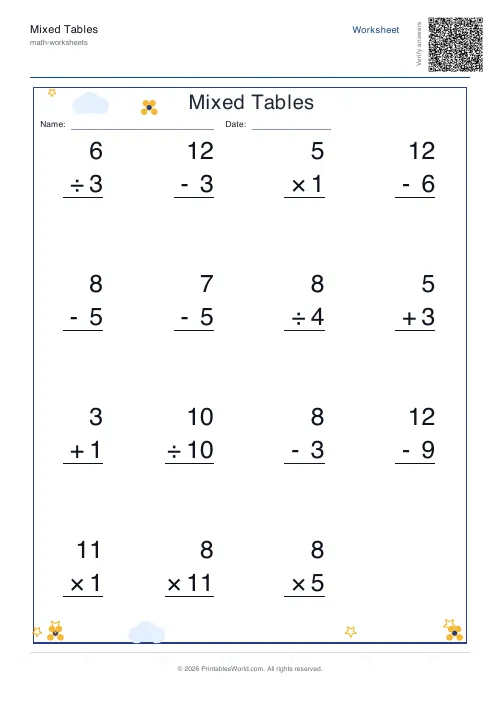 Mixed Tables Generator
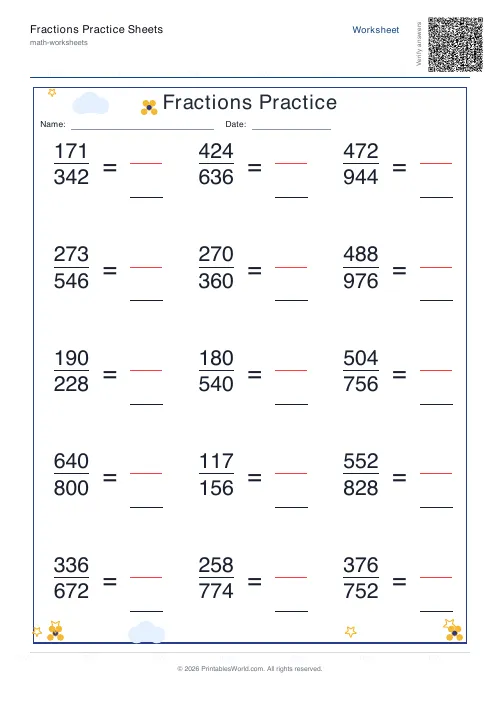 Fractions Practice Sheets Generator
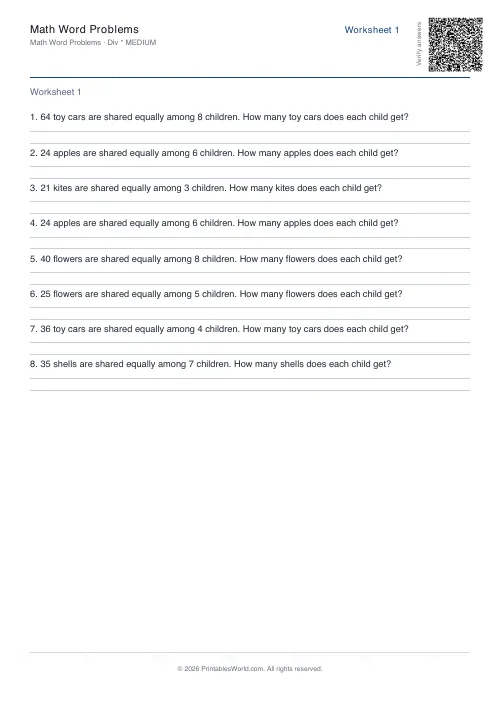 Math Word Problems Generator
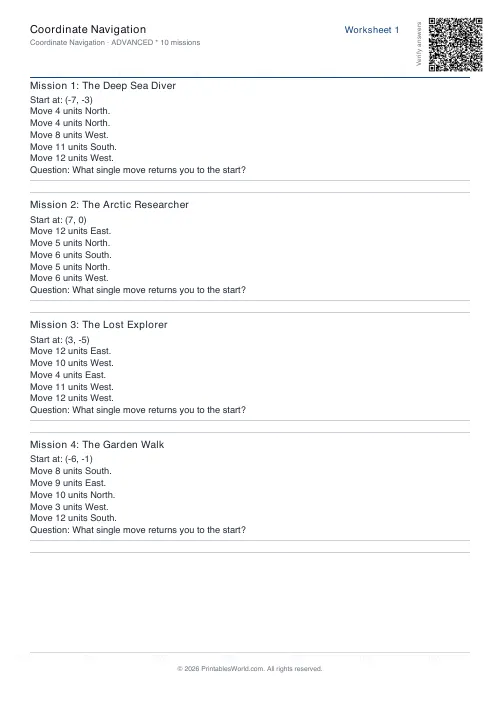 Coordinate Navigation Generator
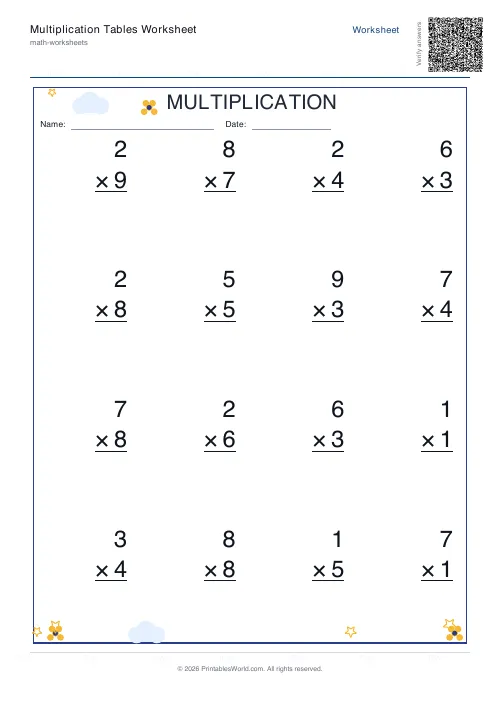 Multiplication Tables Worksheet
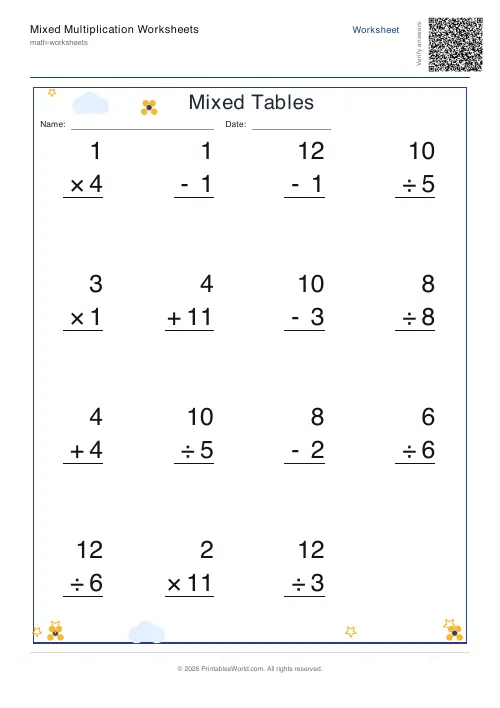 Mixed Multiplication Worksheets
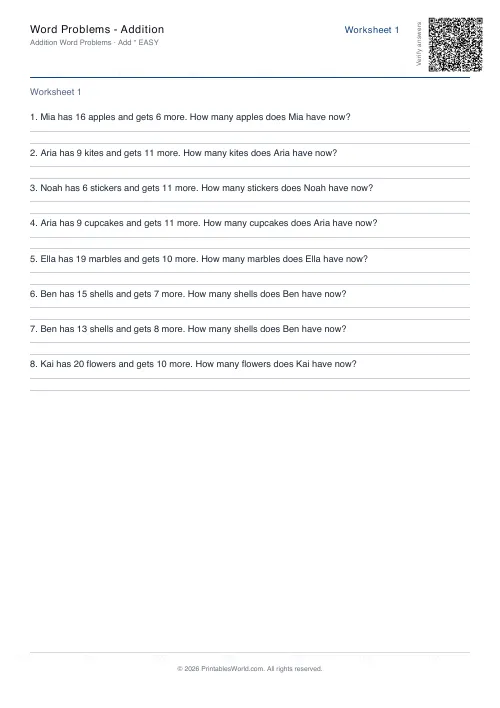 Word Problems: Addition
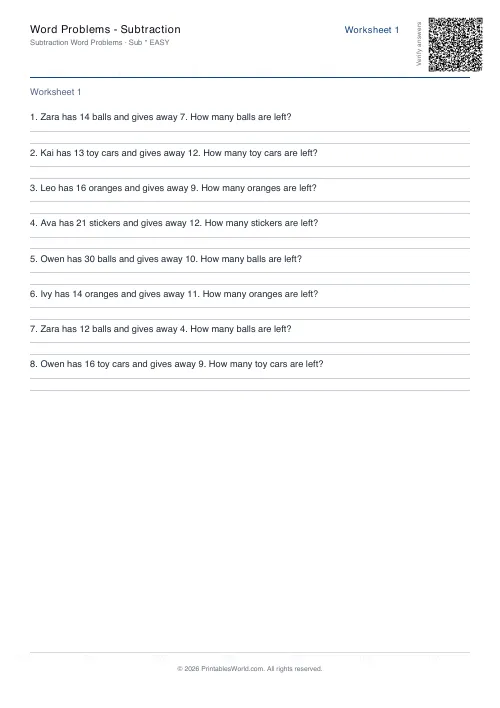 Word Problems: Subtraction
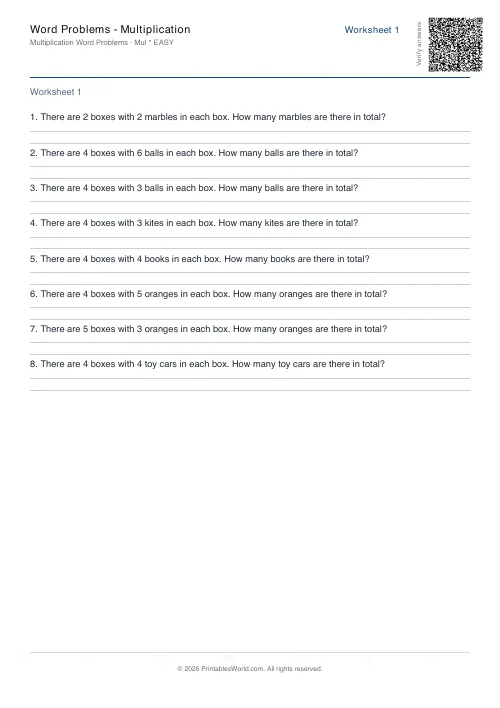 Word Problems: Multiplication
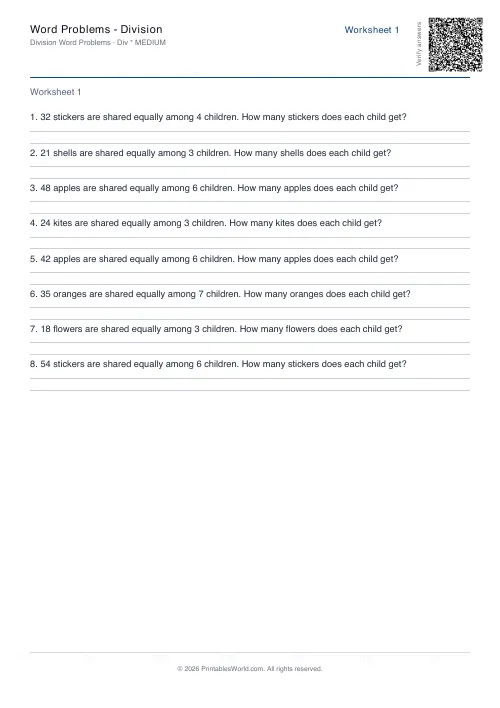 Word Problems: Division