What this tool does
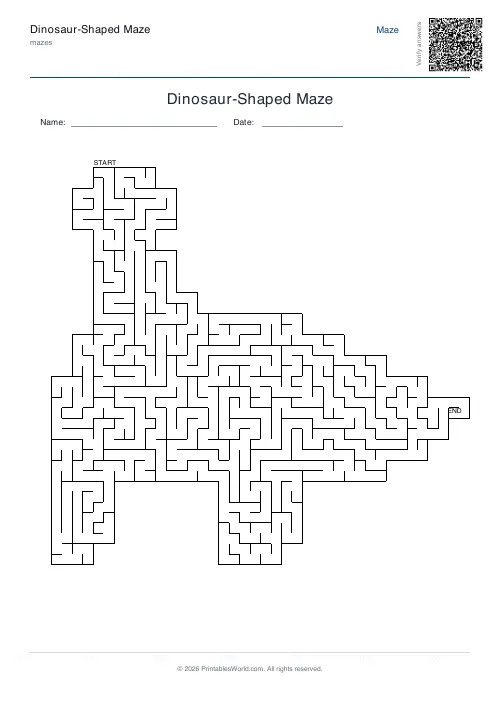
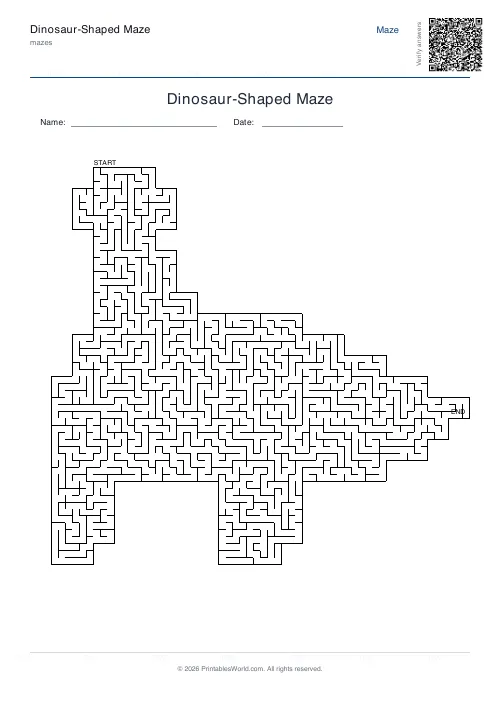
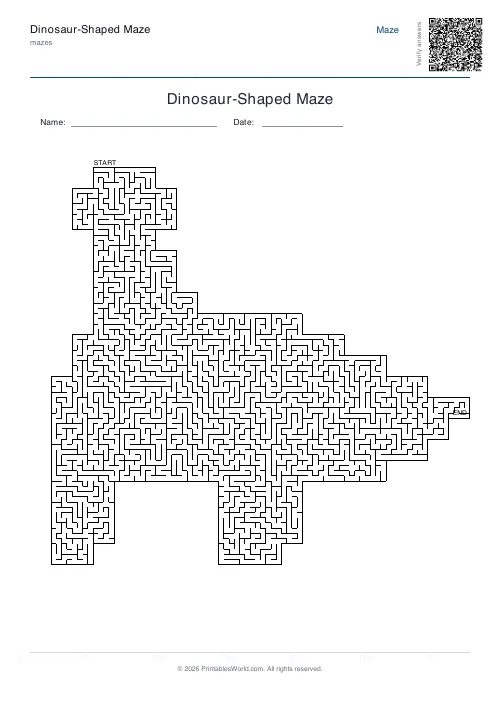
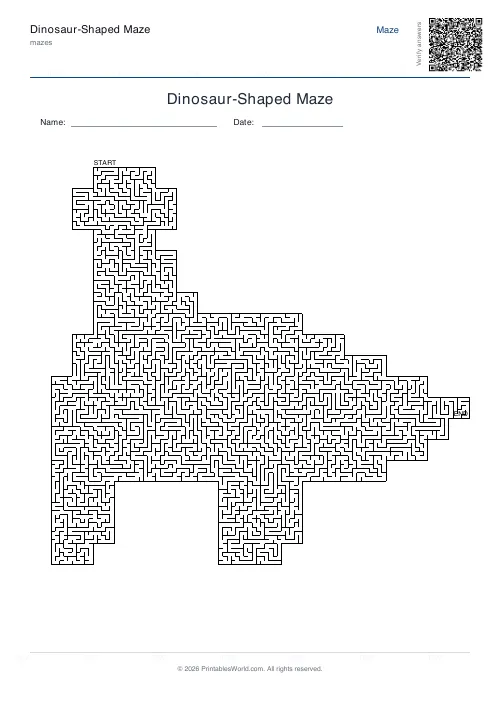
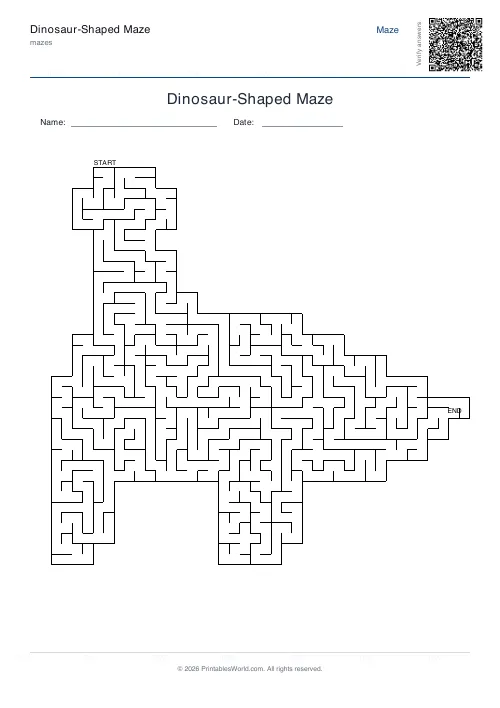
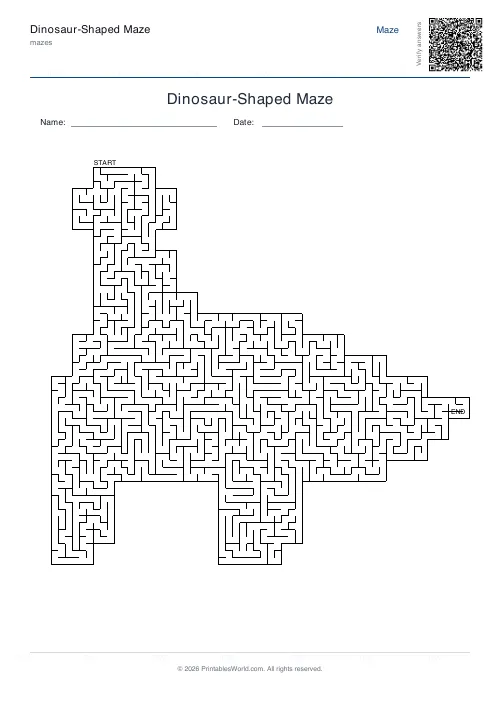
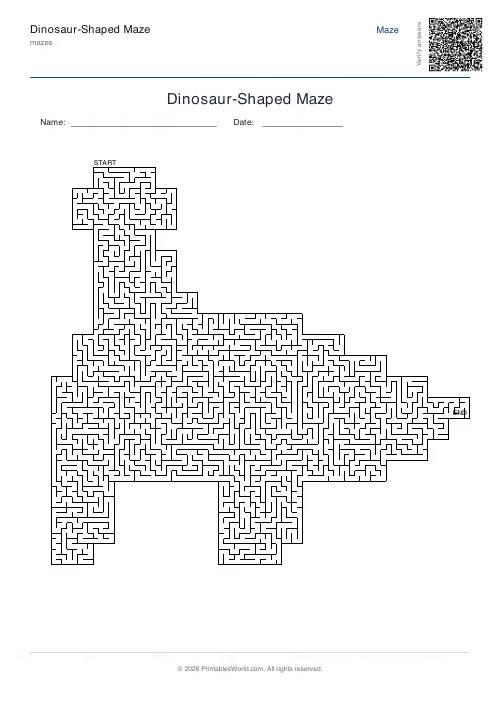
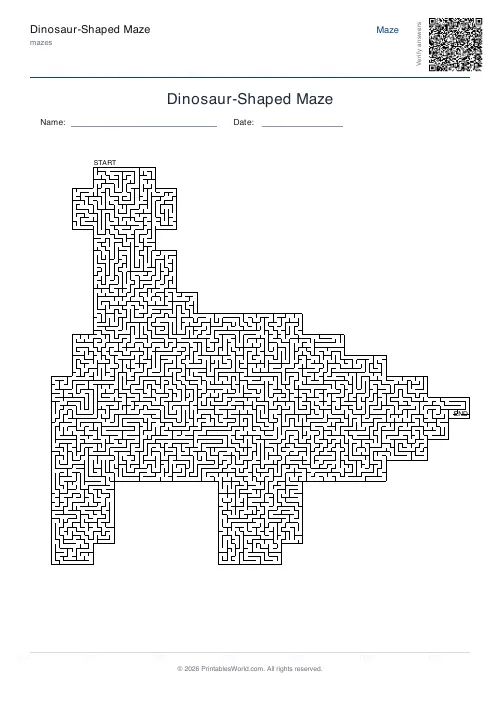
A maze carved inside the outline of a side-on dinosaur. Corridors only exist where the silhouette does, so the finished puzzle reads as the shape rather than as a square grid. The entrance is on the head and the exit is at the tip of the tail. Set the cell scale from 2 to 6, and add an optional solution page.
People also used
Feedback
Spotted something off with this tool?
The maze is the dinosaur
Corridors are cut only through cells that fall inside the silhouette: the long neck and head, the rounded body, the sweeping tail, two sturdy legs. Everything outside is blank paper.
The entrance sits on the head and the exit waits at the very tip of the tail, which gives the solve a direction and a story. Nose to tail. That reads as a journey to a five-year-old in a way that a corner-to-corner square maze does not.
Every generation carves a different maze inside the same dinosaur, so a class of thirty gets thirty puzzles and one shape.
Cell scale is the whole difficulty control
It runs from 2 to 6. Three by default, and it works by upsampling the shape mask, so a higher number means more and smaller cells packed inside the same outline.
So 2 gives wide corridors and a short route, which is what a four-year-old with a fat crayon needs. 6 gives a fine, dense maze with a long winding path and a solve that will take a while. There is no separate difficulty setting because this one does the job.
Worth printing one at each end before you run off thirty, because the gap between a scale-2 and a scale-6 dinosaur is much larger than the numbers suggest.
How it is carved
The dinosaur exists first, as a coarse grid of in-shape and out-of-shape cells. A depth-first recursive backtracker then walks only the in-shape cells, knocking down a wall each time it moves to an unvisited neighbour and reversing when it runs out.
What that guarantees is a single connected maze filling the whole silhouette with exactly one route between any two points, so the head-to-tail path is unique and every dead end is genuinely a dead end.
Where they get used
A dinosaur topic week, obviously. A themed maze buys more engagement than a plain one for identical effort.
Beyond that: wet play, an early-finisher task, a party bag, a quiet-time pack for a long journey. Coarse scales build pencil control and sustained attention in a way that feels like a game rather than practice, and that is most of what a four-year-old is working on.
Turn the solution page on for a class set and off for a party, where finding out is the point.
FAQs
Quick answers
Where do the maze entrance and exit go?
The entrance sits on the dinosaur's head at the top-left of the silhouette and the exit is at the tip of the tail on the right, so solvers travel the whole length of the creature.
Can I print the solution?
Yes. Toggle the solution option on and the PDF adds a second page with the correct route drawn through the dinosaur from start to finish.
How do I make it easier or harder?
Lower the cell scale for a coarse, short maze that suits younger children, or raise it for finer cells and a longer, more winding route.
Is every dinosaur maze different?
Yes. Each generation carves a fresh layout inside the same dinosaur outline, so you can print a unique maze for every child. Press Generate New to reshuffle the preview.
Related tools
Animal-Shaped Mazes
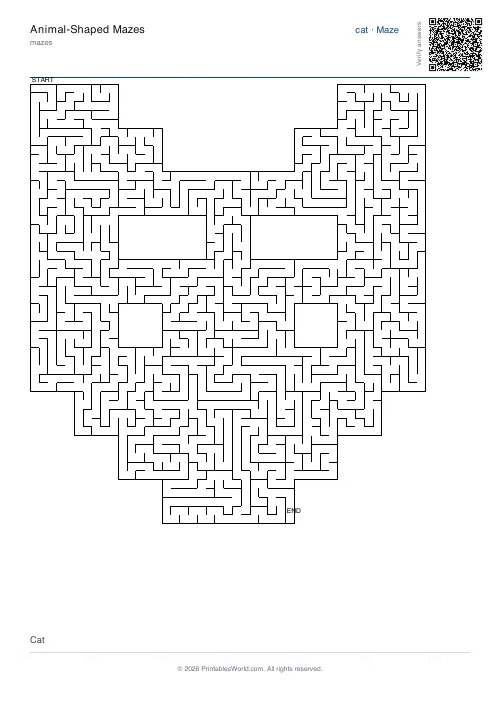
Maze within the outline of an animal. Cat, fish, or bird.
Heart-Shaped Maze
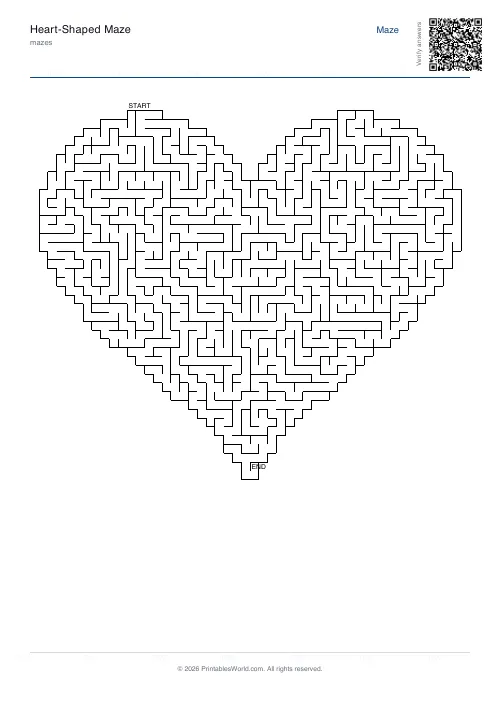
Maze contained within the outline of a heart. Perfect for Valentine's Day.
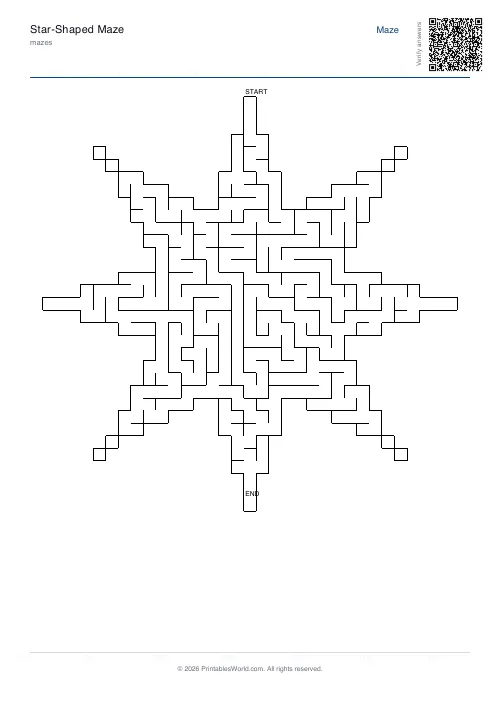
Star-Shaped Maze
Maze pathway within a five-pointed star outline.
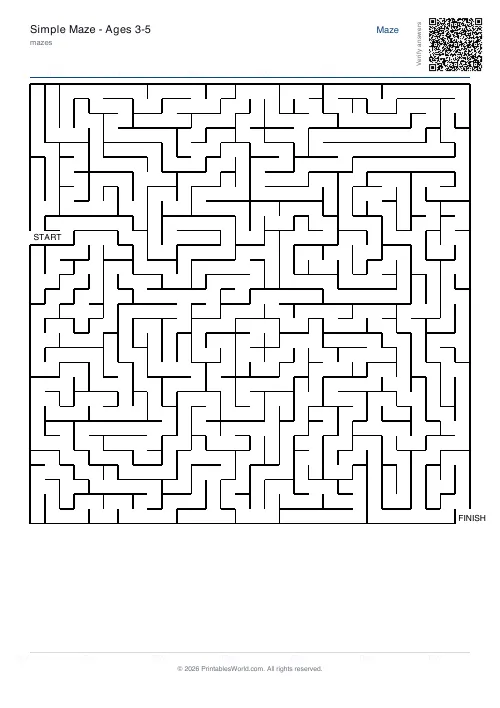
Maze Generator: Printable PDF
Generate printable maze PDFs with custom grid size, difficulty, and layout. Perfect, braided, or room-based.
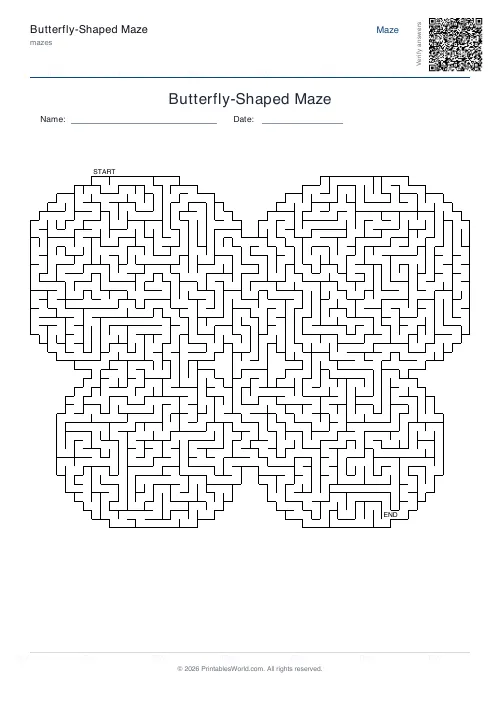
Butterfly-Shaped Maze
Maze carved inside a symmetrical butterfly silhouette, with an optional solution page.
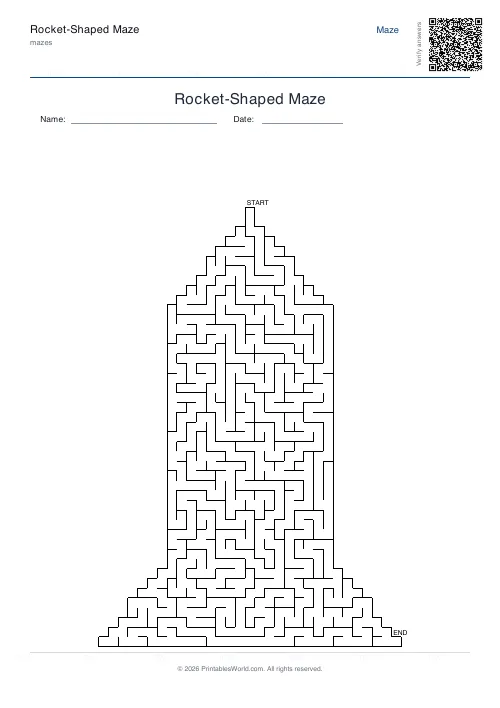
Rocket-Shaped Maze
A maze carved inside a blast-off rocket silhouette.
Further reading
Mazes
Why mazes are great for kids' development
Mazes are one of the few activities that exercise pencil control and forward planning at the same time. Which is why they suit the years just before formal handwriting.
4 min read
Mazes
Printable maze difficulty: matching mazes to ages
Maze difficulty has two independent dials, and confusing them is why a maze is either too fiddly or too easy. Here is which to turn for which child.
4 min read