What this tool does
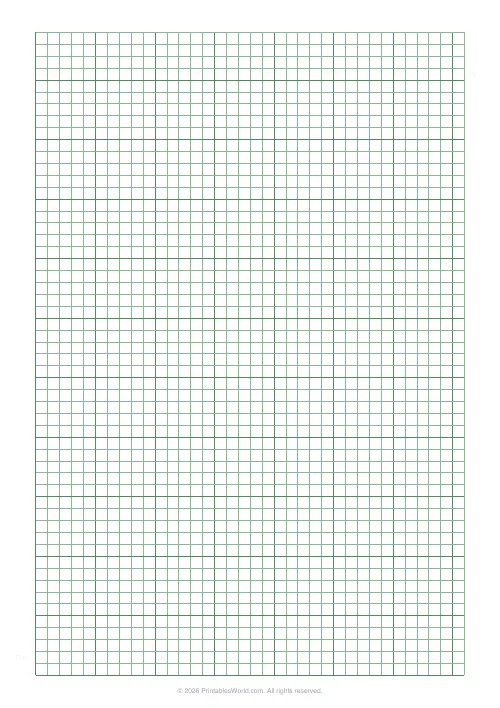
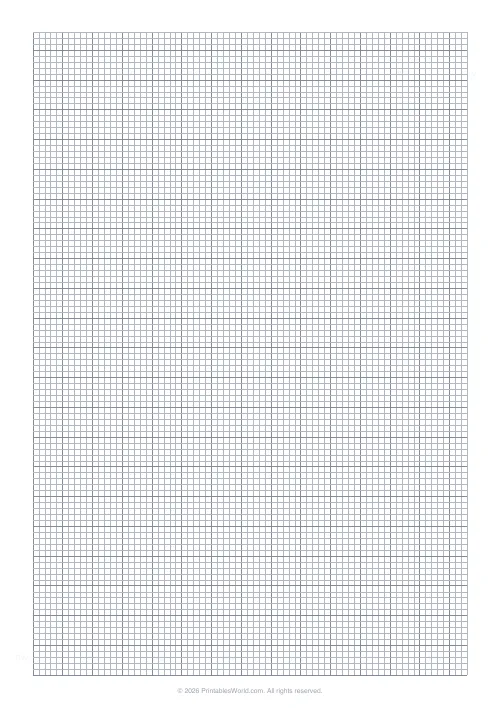
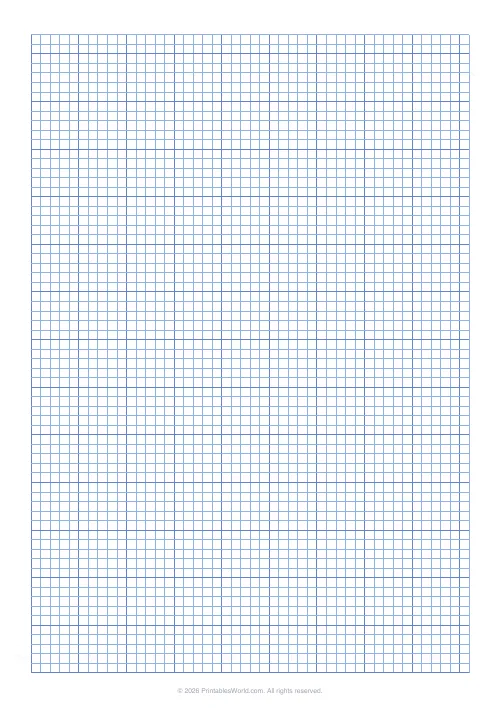
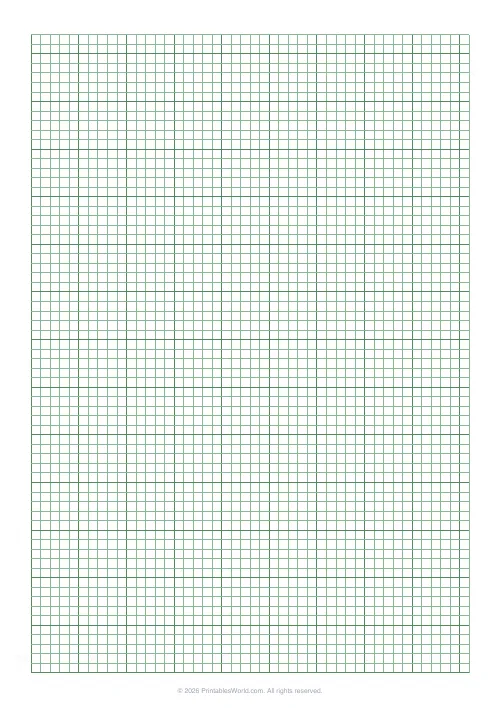
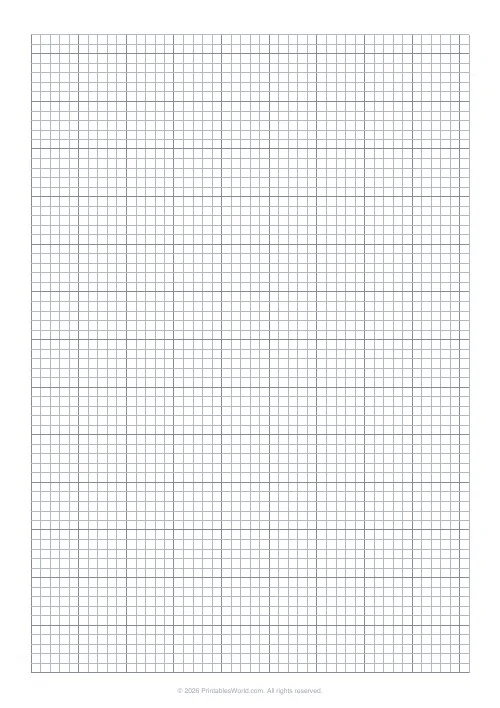
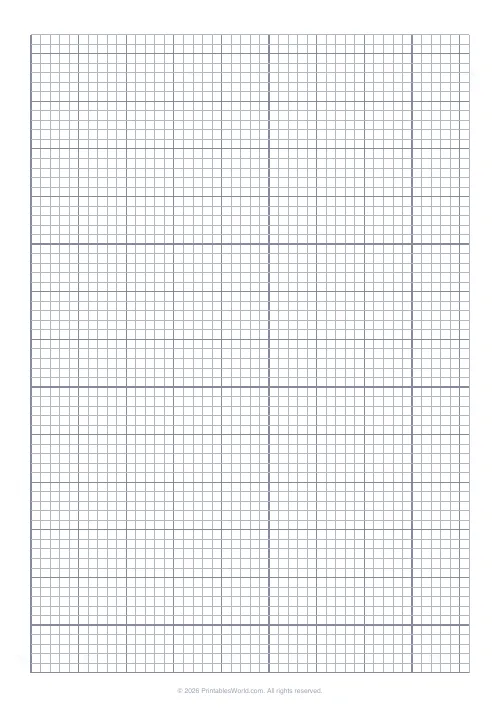
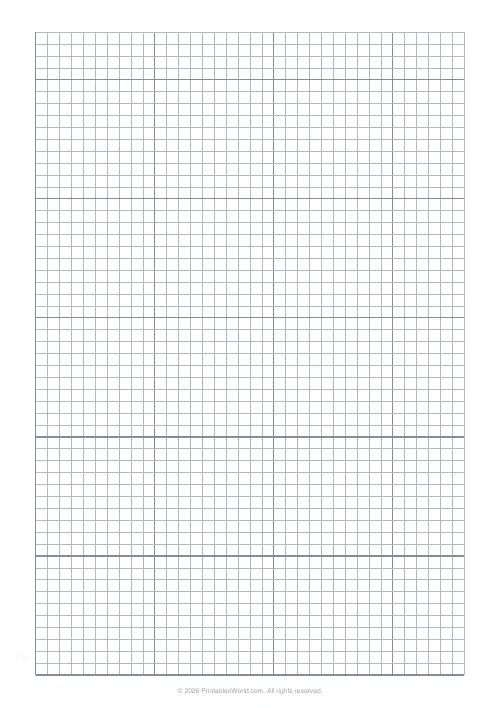
A fine 4 mm square grid with a bold line every fifth square, sized for charting latch hook rugs and needlepoint canvas.
People also used
Cross Stitch Grid
Square grid with every 10th line highlighted for charting cross stitch patterns.
Knitting / Crochet Grid
Stitch-proportioned grid for designing knit and crochet patterns.
Graph Paper Generator
Create custom graph paper PDFs with square or rectangular grids, dot styles, and axis numbering.
Feedback
Spotted something off with this tool?
Four-millimetre squares
A close grid in grey, with every fifth line drawn heavier. One square is one knot, or one stitch.
Fine enough to hold a design of real size on one sheet, and coarse enough that you can still colour a square in without a technical pen.
Counting is the whole job
The bold fifth line is not decoration. It is what makes a design of two thousand squares workable.
Nobody counts to forty-three reliably. Everybody counts to eight blocks and three, and a chart without those blocks produces designs that come out one row out somewhere in the middle — which is discovered at the point where fixing it means undoing an evening's work.
Latch hook, and gauge
Latch hook canvas comes in a few gauges, most commonly around 3.75 holes to the inch. One square here is one knot regardless of gauge, but the finished size is not.
Work it out before you start: count the squares across your design, divide by your canvas's holes per inch, and that is the finished width. A 60-square-wide design on 3.75-gauge canvas comes out at sixteen inches, and a design charted without that arithmetic comes out at whatever size it happens to be.
Needlepoint and cross stitch
The same grid works for both, with the same caveat about count. Ten-count canvas and eighteen-count canvas turn identical charts into objects of very different sizes.
For cross stitch specifically the cross stitch grid is the same idea sized for aida. For knitting, use the knitting grid instead, whose cells are deliberately not square — a knitted stitch is wider than it is tall, and charting one on a square grid distorts the finished piece.
Charting a design
Start from the centre and work outward. Find the middle square, mark it, and build from there — it is how the canvas is worked, and it means a miscount at the edge does not shift everything.
Use symbols as well as colours if the design has more than a handful of shades. Two similar reds are distinguishable in pencil on Tuesday and identical under a lamp on Saturday, and a symbol key removes the doubt permanently.
Print at 100%
The squares are 4 mm and should measure 4 mm. Check with a ruler before charting anything large — a scaled print is not a disaster for a chart, since one square is one stitch either way, but it does make the sheet harder to work on and impossible to overlay on anything.
FAQs
Quick answers
Why bold every fifth line?
Latch hook and needlepoint charts are counted in blocks of five. Bold rules every fifth cell make counting holes and stitches much faster.
How big are the cells?
4 mm square. Large enough to colour in clearly while still fitting a useful design onto one sheet.
Can I print multiple sheets for a large rug?
Yes. Generate as many copies as you need and tile them together; the fixed 4 mm cell keeps the scale consistent across pages.
Does each square equal one knot or stitch?
Yes. Each cell maps to one latch hook knot or one needlepoint stitch, so the chart you draw is what you make.
Related tools
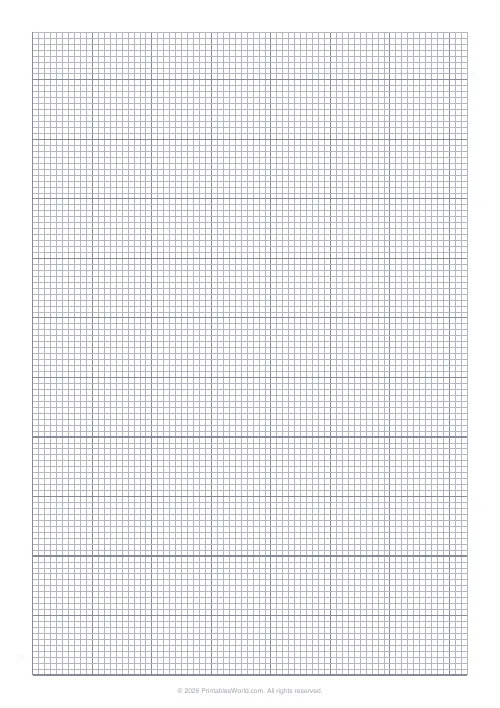
Cross Stitch Grid
Square grid with every 10th line highlighted for charting cross stitch patterns.
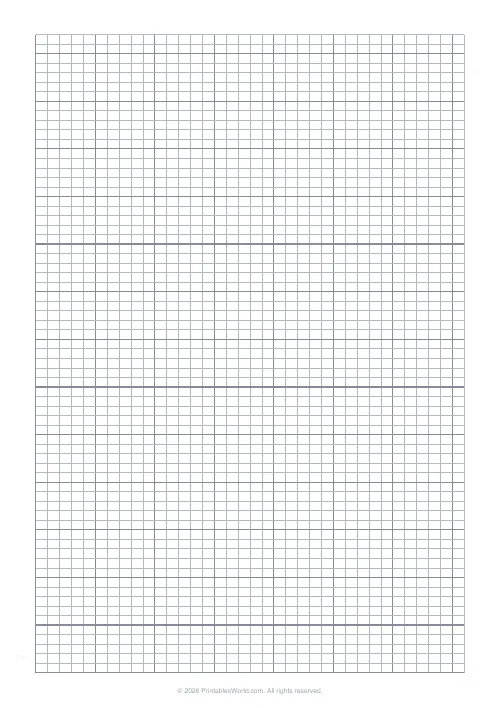
Knitting / Crochet Grid
Stitch-proportioned grid for designing knit and crochet patterns.
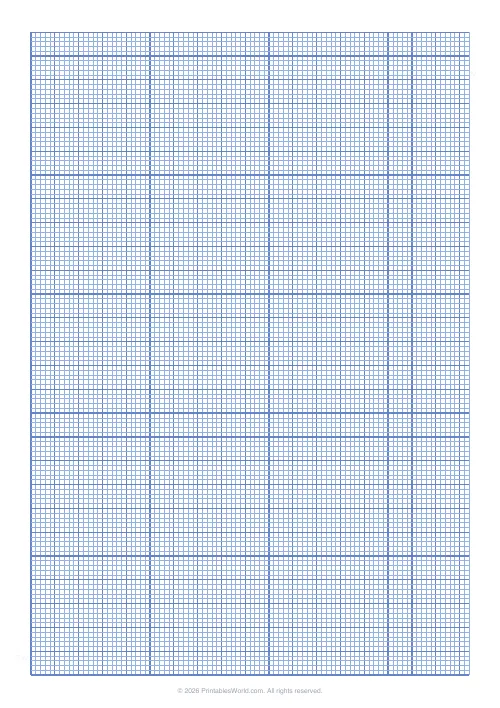
Graph Paper Generator
Create custom graph paper PDFs with square or rectangular grids, dot styles, and axis numbering.
Perler / Fuse Bead Template Grid
Pegboard grid at a true 5mm pitch. One square per bead, matching Perler, Hama midi and Artkal midi boards.
Further reading
Printable Paper
Bullet journalling with dot grid paper: a starter guide
The bullet journal was designed to be fast, not beautiful. Here is the original system, why dot grid suits it better than lines or blank, and the four pages you actually need.
5 min read
Printable Paper
Graph paper sizes: which grid for which task
What graph paper sizes and grid spacings mean, how to match a grid to maths, art or design, and how to set it all in the free graph paper generator.
7 min read
Printable Paper
The best note-taking paper for students (Cornell, grid, lined)
The paper you take notes on quietly decides how you review them. Here is what each format is actually for, and which subjects each suits.
4 min read