
What this tool does
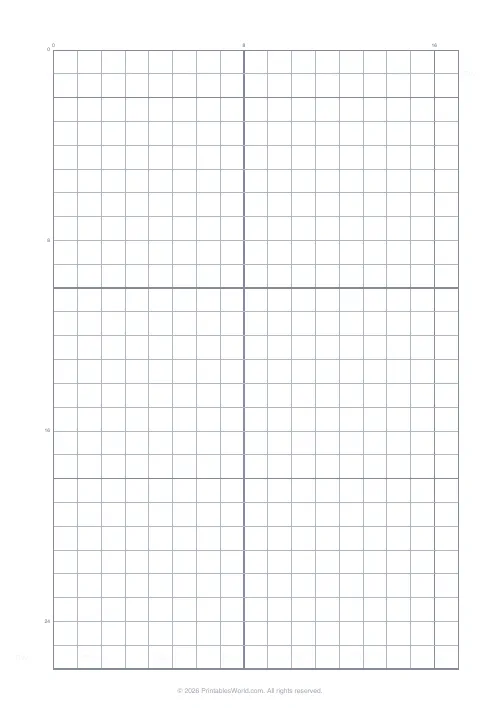
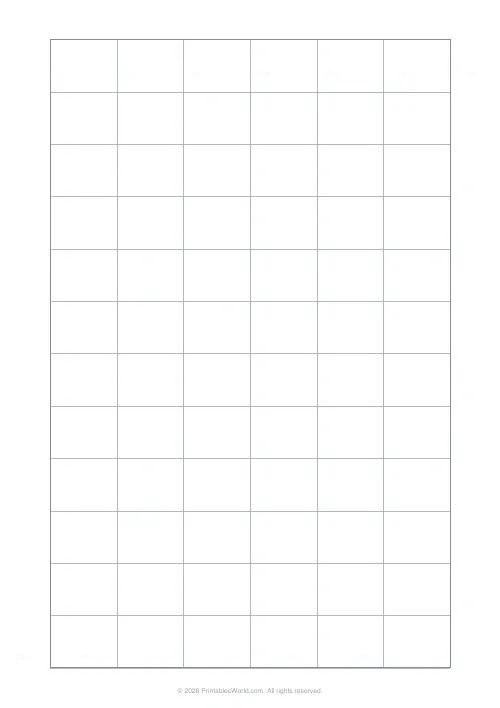
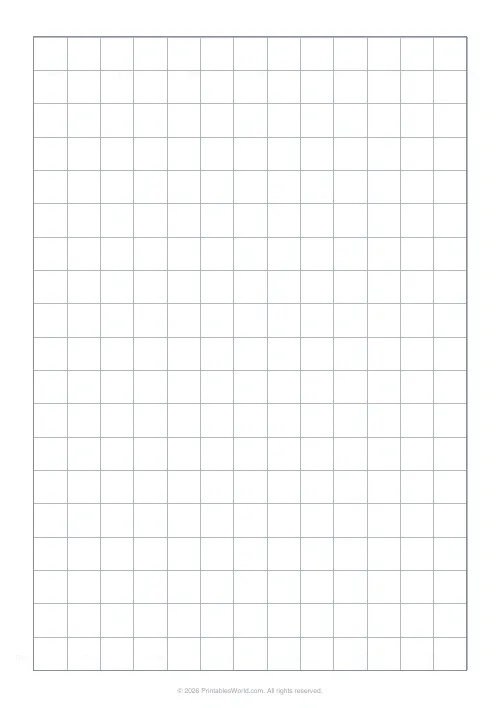
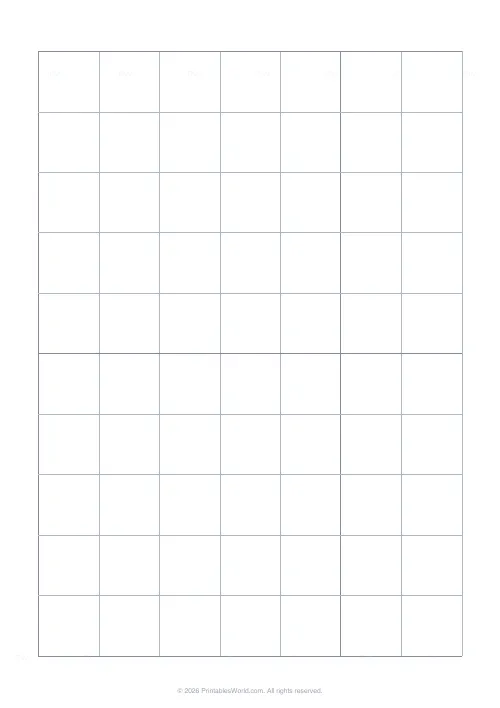
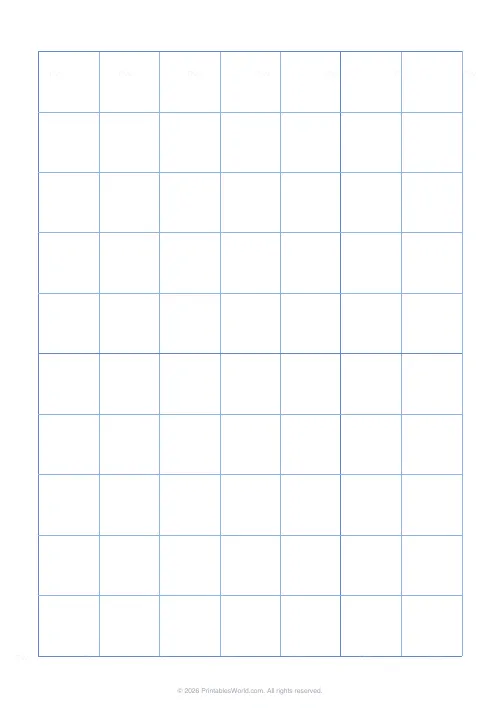
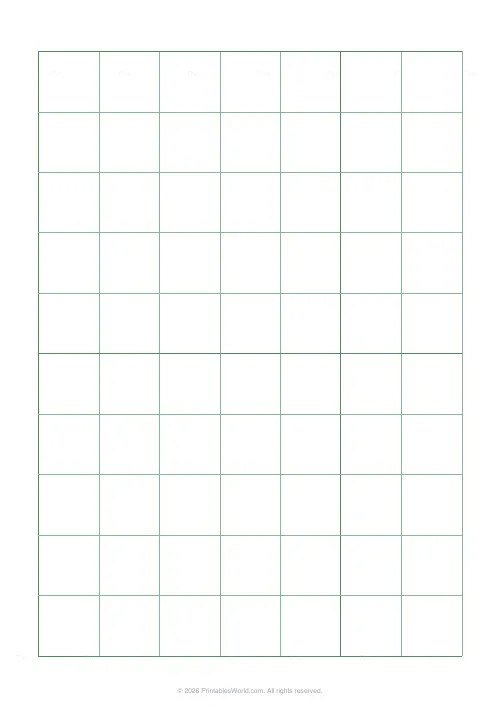
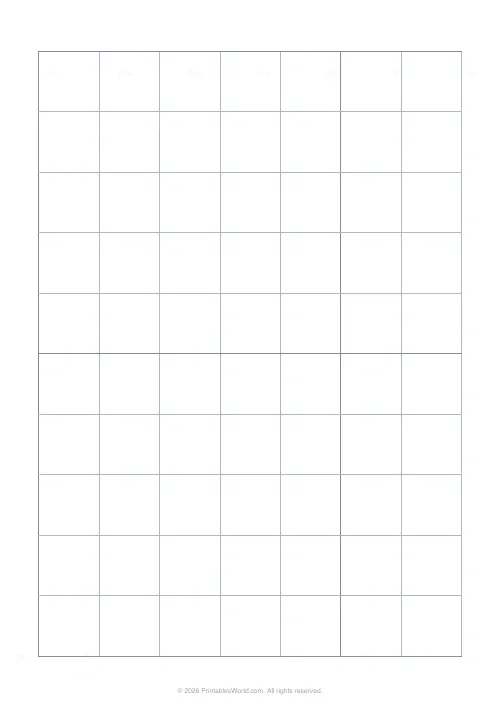
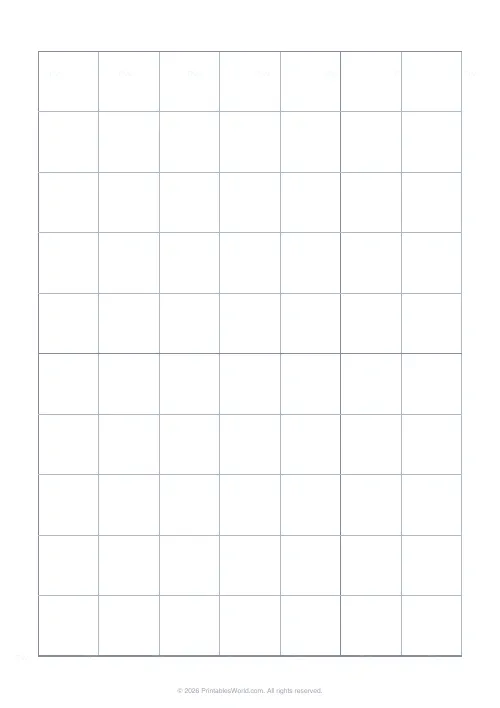
A blank one-inch square grid, at exactly 25.4 mm, matching the standard miniature footprint used by most tabletop role-playing games.
People also used
Feedback
Spotted something off with this tool?
One inch, precisely
Square cells of exactly 25.4 mm. One inch. That number is the entire point, because it is the base size of a standard miniature and the unit almost every fantasy RPG uses to measure movement and range.
Nothing else on the page. No numbering, no border decoration, no assumed dungeon.
Why the exact measurement matters here
Most printable grids are drawn at 5 mm or 10 mm because those are tidy metric numbers. A miniature on a 25 mm base does not sit in a 25 mm cell without overhanging, and across a twenty-cell corridor a 0.4 mm error per cell puts you 8 mm out.
Print this at 100% and a mini fits its square. Print it scaled and it does not, which is noticeable within one combat.
Worth checking with a ruler the first time on a new printer. Ten cells should measure 254 mm.
What one square means at the table
In most fifth-edition-style systems a square is five feet. A character with 30 feet of movement crosses six squares. A 20-foot-radius effect covers a circle four squares across.
Diagonals are where systems differ, and it is worth agreeing before play: some count a diagonal as one square, some as one and a half, some alternate. None of those is drawn on the paper and all of them change tactics.
Drawing a map on it
Pencil first, then pen. A room drawn along the grid lines reads at a glance; one that cuts through cells has to be interpreted, which is the last thing you want mid-combat.
Mark the door swings, because a door that opens into the square somebody is standing in is a question that comes up mid-combat. Number the rooms if the map has more than about six.
For a reusable surface, print onto card and put it in a document wallet — a dry-wipe pen works on the plastic and the grid underneath survives.
Other uses for a one-inch grid
Wargaming generally, model railway layout planning, and anything where an inch is the working unit rather than a centimetre. It is also a reasonable general-purpose grid for imperial work, which the metric sheets on this site are not.
Controls and printing
Paper size A4, US Letter or US Legal, printed at 100%.
US Letter is slightly wider than A4 and gives you an extra column of squares, which is worth knowing if you are laying out a wide encounter. For a different cell size, the graph paper generator is the same engine with the dimensions exposed.
FAQs
Quick answers
Why are the squares one inch?
Most tabletop RPGs use a one-inch square to represent five feet, and standard miniature bases fit a one-inch footprint, so movement and reach line up with the rules.
Will my miniatures fit the squares?
Yes. Each cell is a true 25.4 mm (one inch), matching standard 25 mm miniature bases and commercial battle mats.
Can I tile several sheets into a bigger map?
Yes. Print as many copies as you need and line them up edge to edge; the scale stays identical across every sheet.
Can I use markers on it?
Pencil works on plain paper. For wet- or dry-erase markers, print on heavier card or slip the sheet into a clear sleeve.
Related tools
Further reading
Printable Paper
Bullet journalling with dot grid paper: a starter guide
The bullet journal was designed to be fast, not beautiful. Here is the original system, why dot grid suits it better than lines or blank, and the four pages you actually need.
5 min read
Printable Paper
Graph paper sizes: which grid for which task
What graph paper sizes and grid spacings mean, how to match a grid to maths, art or design, and how to set it all in the free graph paper generator.
7 min read
Printable Paper
The best note-taking paper for students (Cornell, grid, lined)
The paper you take notes on quietly decides how you review them. Here is what each format is actually for, and which subjects each suits.
4 min read