What this tool does
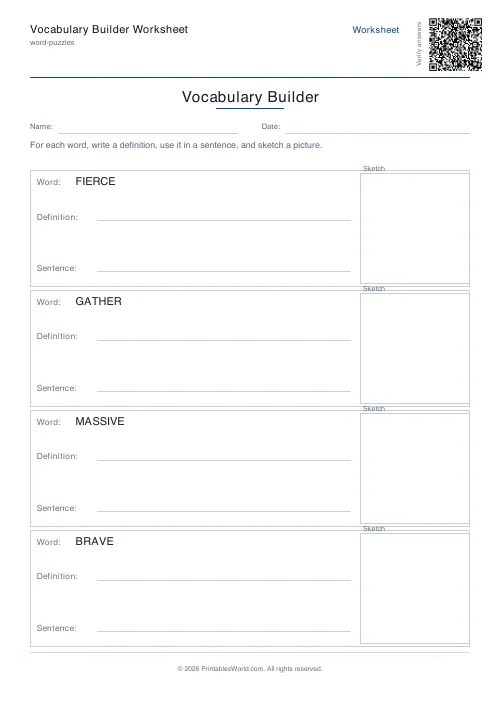
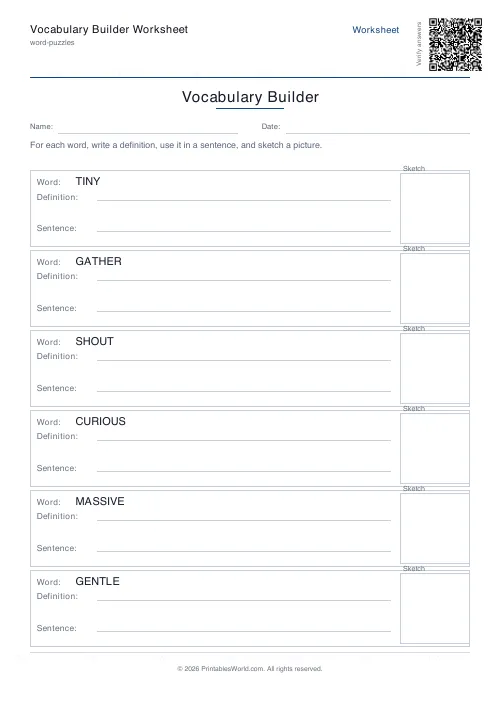
A word-study sheet with three parts per word: a definition line, a line for the child's own sentence, and a sketch box. Paste your own list of 3 to 6 words, or use the small built-in bank.
People also used
Feedback
Spotted something off with this tool?
A vocabulary sheet built around your own word list
Each word gets a row with three things to fill in: a definition in the child's own words, a sentence they write themselves, and a small box for a drawing.
Paste in your list — this week's spellings, the tricky words from a class reader, the terms from a science topic — and the sheet is built around them. There is a built-in bank of a dozen general words for when you just want to see the format, but it is small and it is not the point. The tool exists to take your words.
Why those three parts, in that order
The definition has to be written, not copied. A child who transcribes a dictionary entry has learned nothing, which is why the space is a blank line rather than a box with a heading; the instruction that matters is spoken, and it is "in your own words".
The sentence is where you find out whether the definition was understood. Watch what happens when reluctant gets defined correctly as "not wanting to" and then used in "The reluctant is on the table". The mismatch is visible in a second, and no amount of checking the definition column would have caught it.
The sketch is not decoration. Drawing a word forces a decision about what it actually refers to, and it gives the word a second route into memory that is not verbal. It works particularly well for children who find writing hard, because it lets them show they know the word without having to spell anything.
Sizing it
Three to six words per sheet. Six is the ceiling and it is a real ceiling — the rows need enough height for a child's handwriting and a drawing, and squeezing in more would mean shrinking both.
You can set the worksheet title and the instruction line, and switch the Name and Date fields off. A4 or US Letter.
Five words is usually the right number
Not because of the page. Because of what a week of vocabulary teaching can actually carry.
Research on vocabulary instruction fairly consistently finds that a handful of words taught properly beats a long list met once, and that a word needs several encounters across different contexts before anybody can actually use it. Five words worked through this way and revisited over a week will stick. Twenty copied off the board on Monday will not, and the sheet carrying twenty is easier to produce and worse at its job.
Using it across a week
Print the same five words twice. Fill the first sheet on Monday with the definition and sentence; put it away; do the second sheet on Friday from memory and compare.
The gap between the two is the actual measurement, and it is more informative than a spelling test, because it shows which words were understood rather than which were remembered as letter sequences.
Print at 100% on A4 or US Letter.
FAQs
Quick answers
How many words per page?
Three to six words fit comfortably. Six rows is the max so each one keeps enough space for writing and sketching.
Can I use my own word list?
Yes. Paste your spelling words, weekly vocabulary, or any list (one per line or comma separated).
Why include a sketch box?
Drawing a quick picture helps anchor the word in memory and is great for younger or visual learners.
Is there an answer key?
No. Vocabulary worksheets are open-ended by design. Each student's definitions, sentences, and sketches will differ.
Related tools
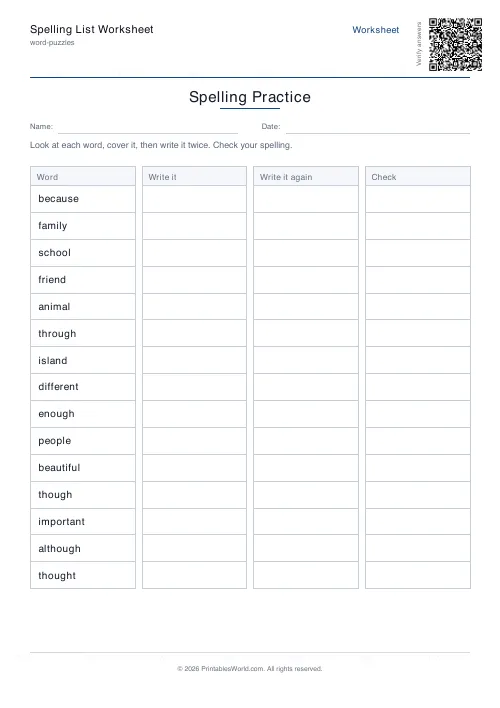
Spelling List Worksheet
Look, cover, write, and check. Practice any spelling list.
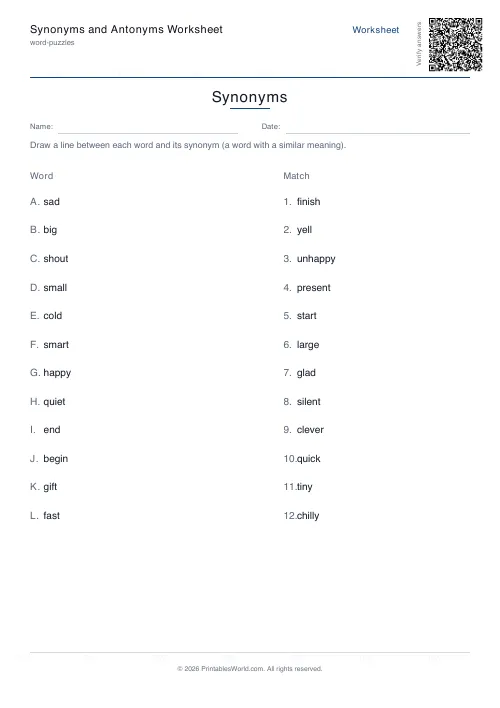
Synonyms and Antonyms Worksheet
Match each word with a synonym, an antonym, or a mix of both.
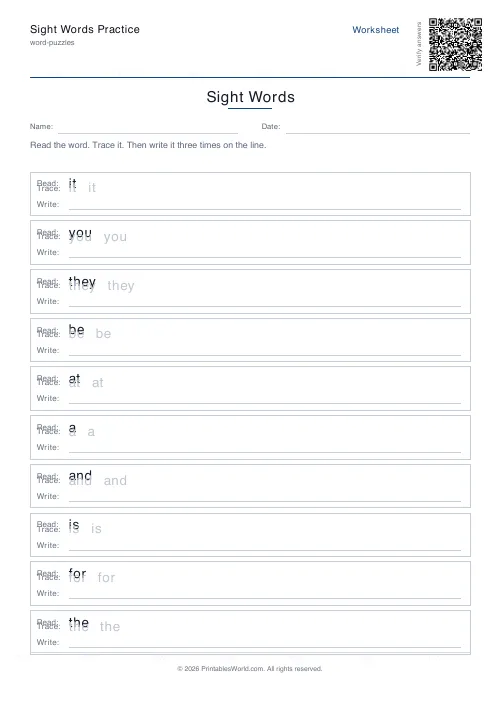
Sight Words Practice
Read, trace, and write high-frequency sight words.
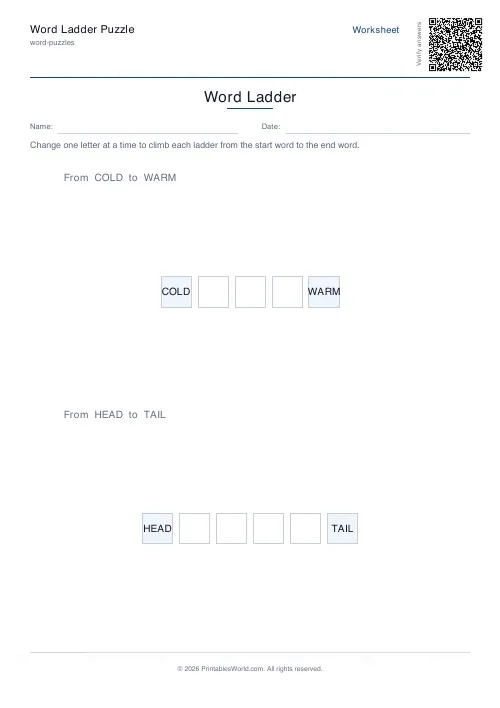
Word Ladder Puzzle
Change one letter at a time to climb from start to finish.
Further reading
Word Puzzles
Prefixes and suffixes: a simple teaching guide
Learning that "un-" means not unlocks hundreds of words at once. Here are the affixes worth teaching first and the three spelling rules that cause most errors.
5 min read
Word Puzzles
Fun ways to build vocabulary in kids
Children learn most words by meeting them repeatedly in context, not by memorising lists. Here is what that means practically, and where word lists still earn their place.
5 min read
Literacy & Spelling
Do word searches help spelling? What works
Do word searches help spelling, or just fill time? What they practise, what the evidence suggests, and how to turn a spelling list into useful recall practice.
8 min read
More like this
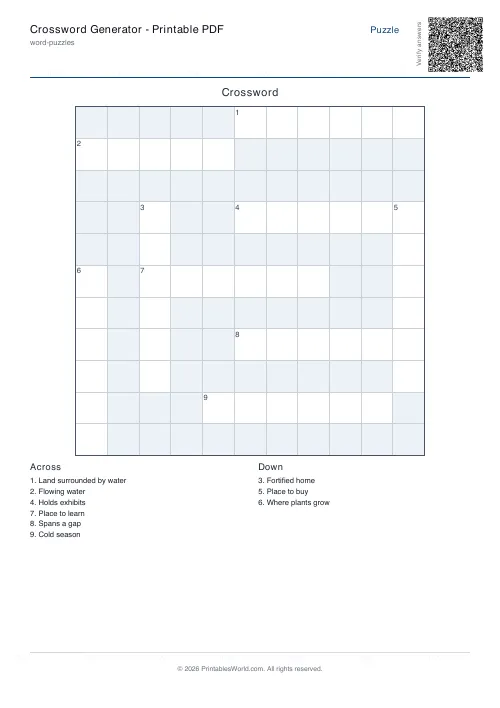 Crossword Generator: Printable PDF
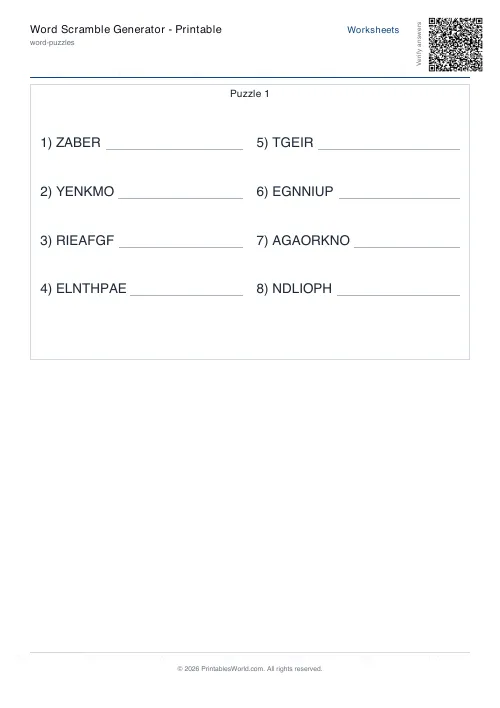 Word Scramble Generator: Printable
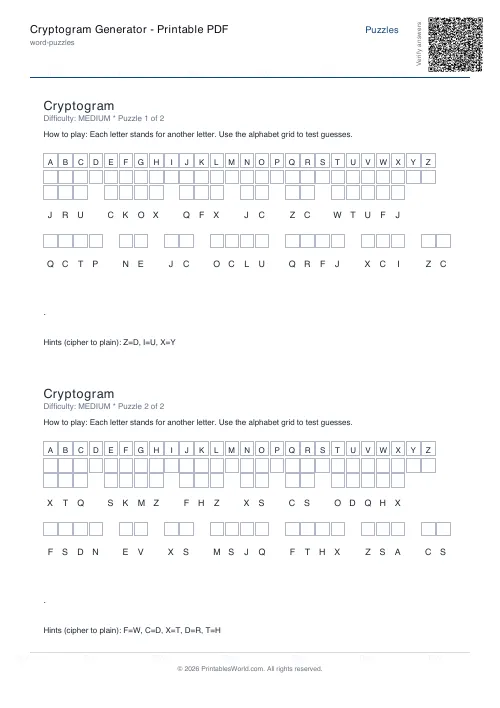 Cryptogram Generator: Printable PDF
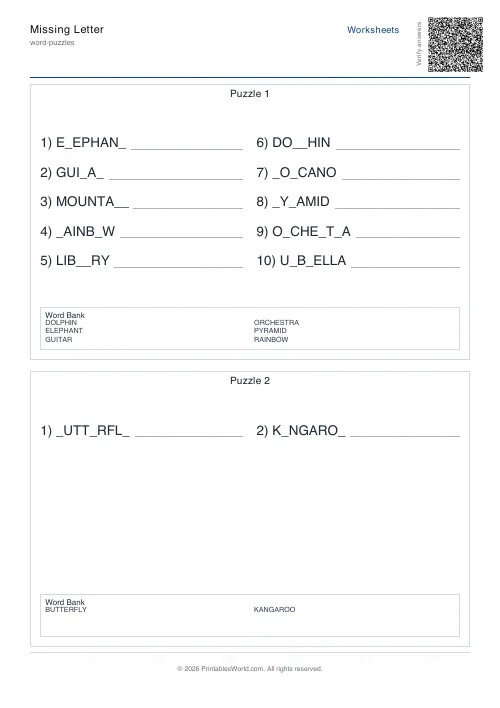 Missing Letter Generator
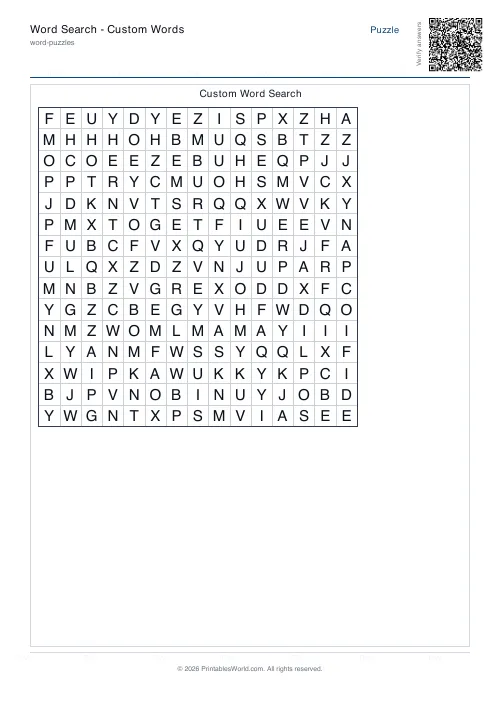 Word Search: Custom Words
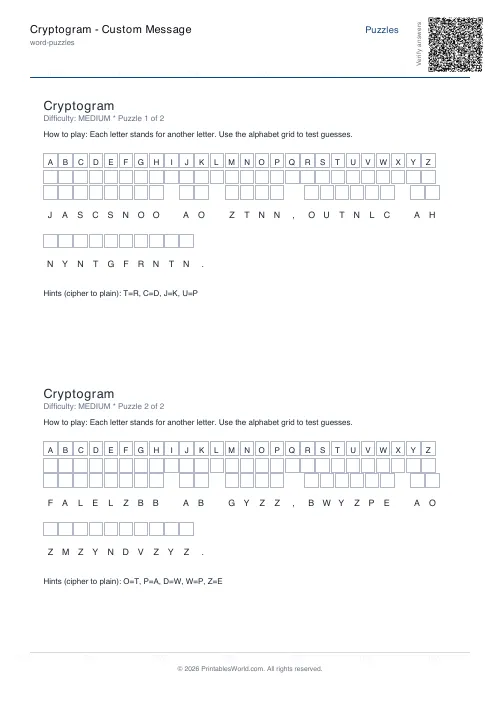 Cryptogram: Custom Message
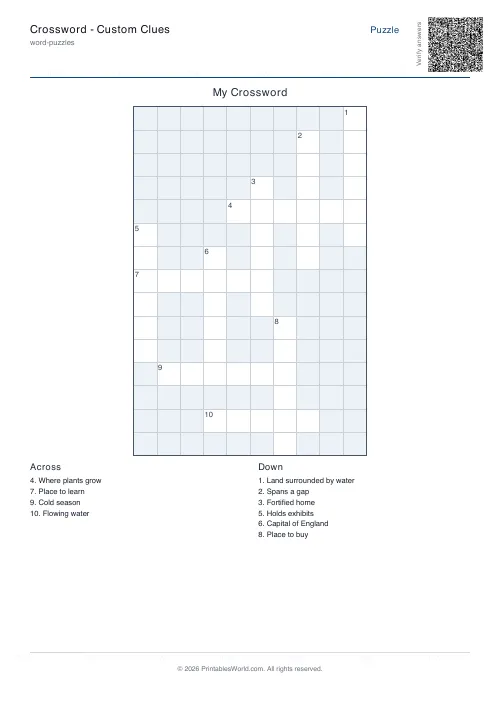 Crossword: Custom Clues
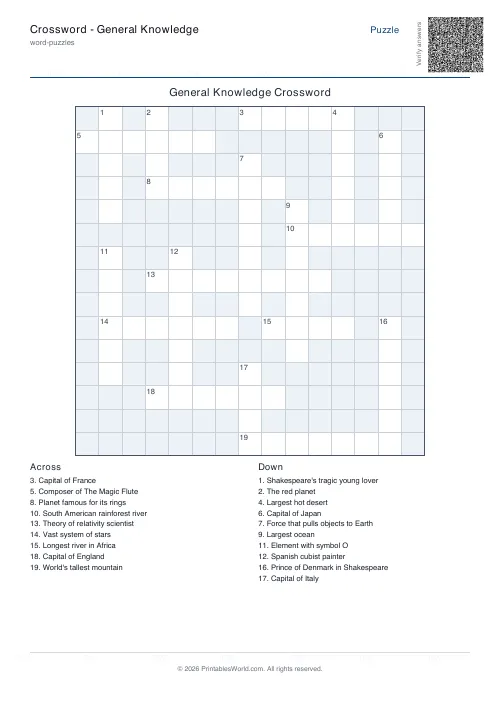 Crossword: General Knowledge
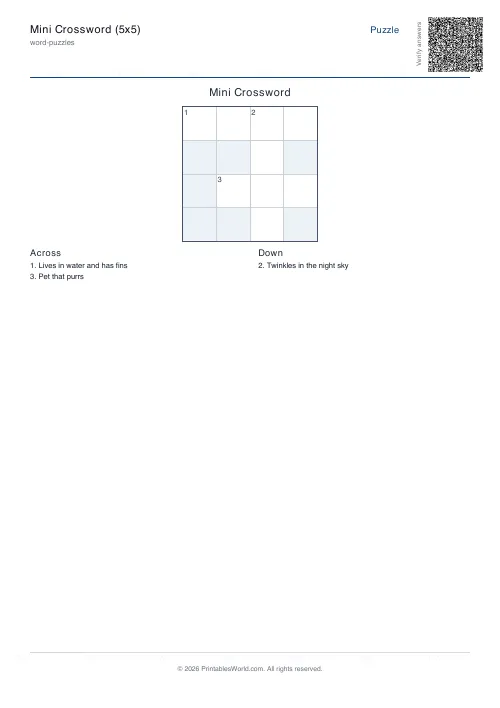 Mini Crossword
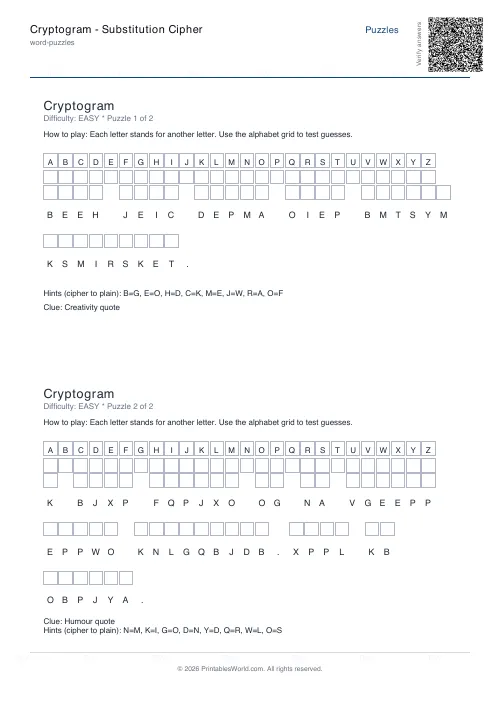 Cryptogram: Substitution Cipher
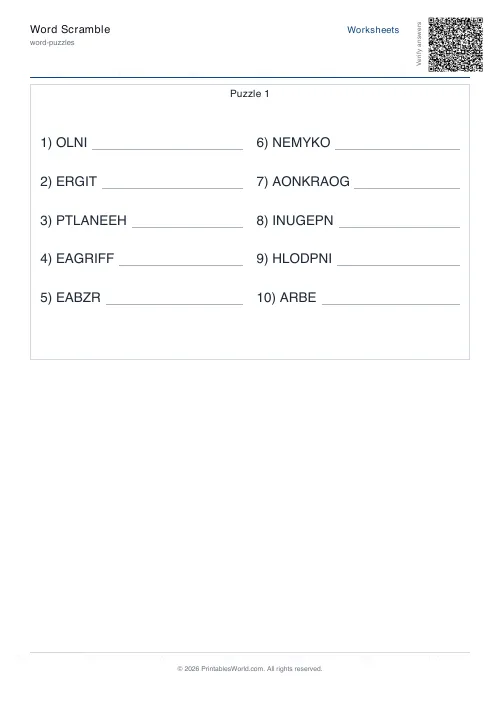 Word Scramble Generator
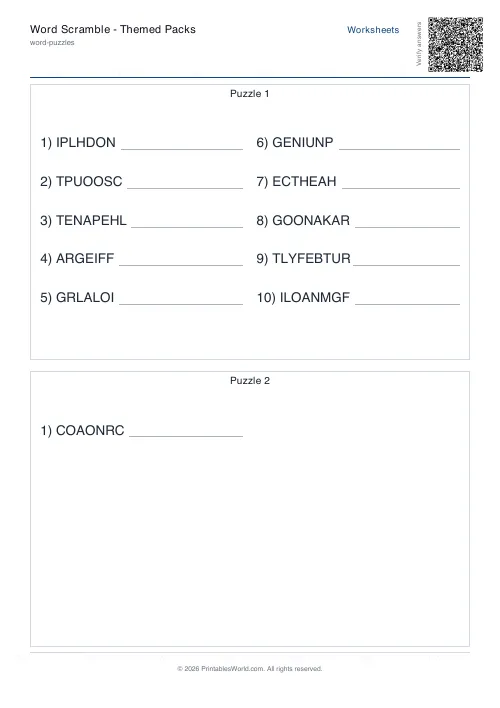 Word Scramble: Themed Packs
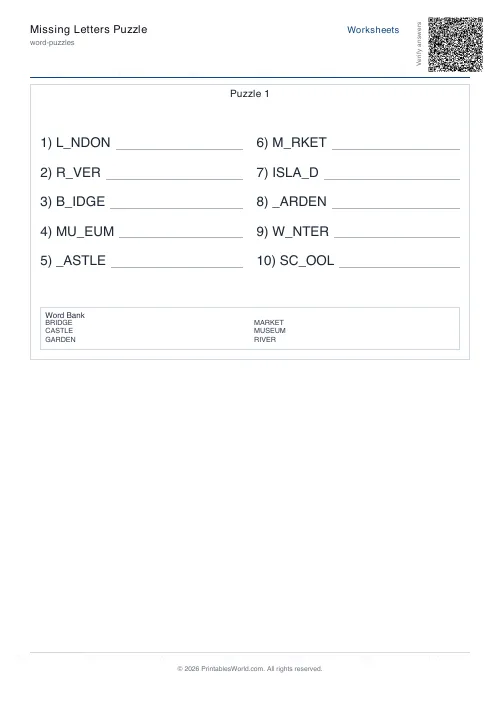 Missing Letters Puzzle
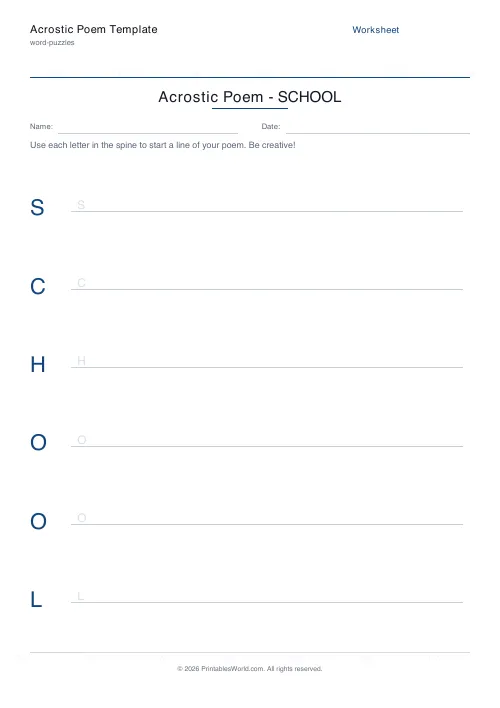 Acrostic Poem Template