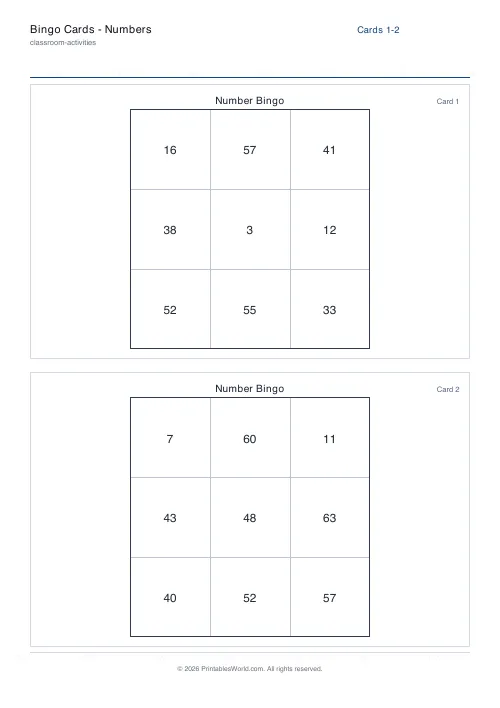
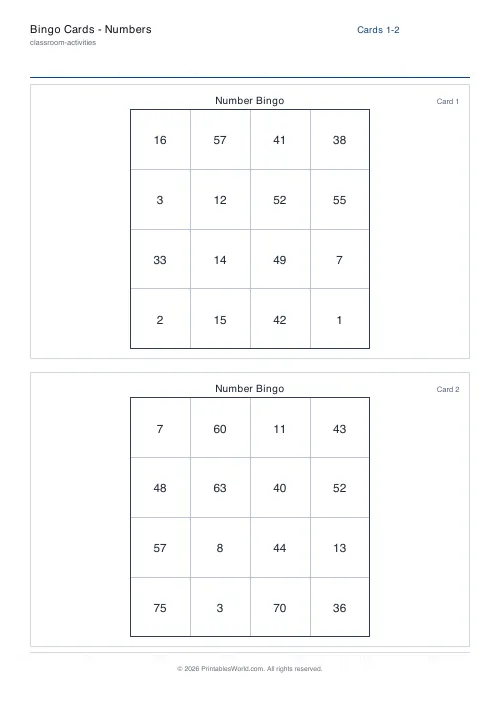
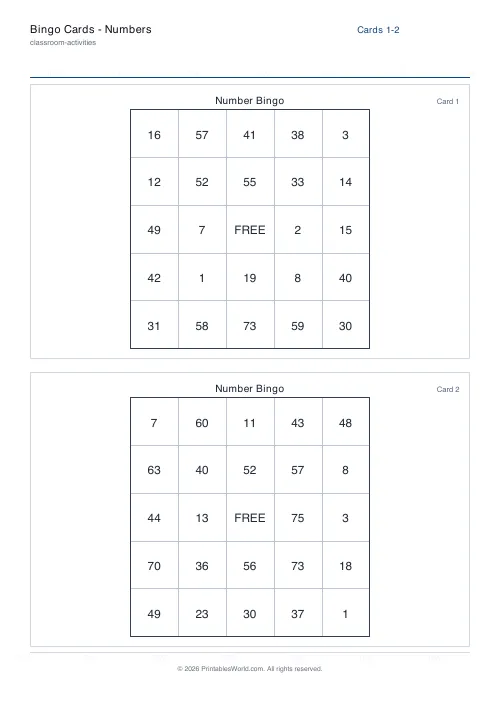
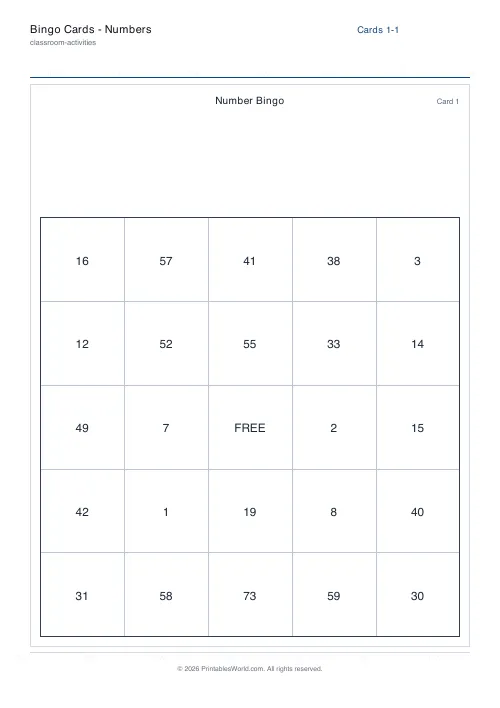
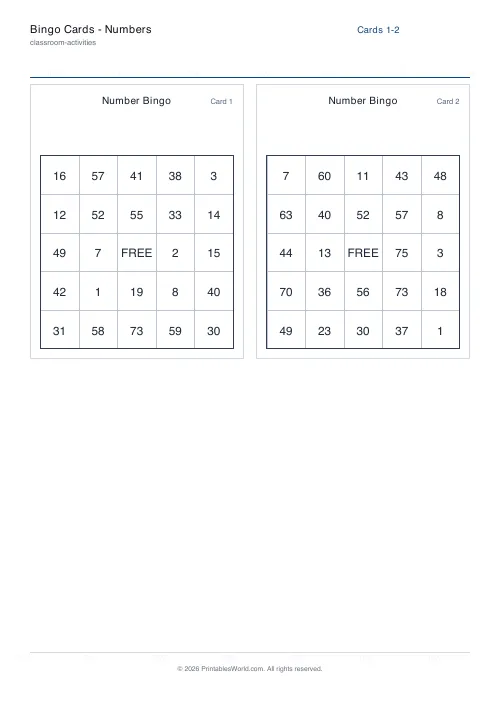
What this tool does
Number bingo cards, pre-filled with 1 to 75. For the UK 90-ball game, add 76 to 90 to the list. Every card is shuffled differently, with a host call sheet.
People also used
Bingo Cards: Custom Words
Enter any word list and generate unique bingo cards for every player.
Bingo Cards: Pictures
Picture-based bingo for early years using simple emoji-style icons.
Bingo Card Generator
Generate unique printable bingo cards with custom words, FREE centre toggle, call sheet, and seeded shuffles.
Feedback
Spotted something off with this tool?
Number bingo, ready to print
The item list arrives pre-filled with the numbers 1 to 75, which is the American ball set. Add 76 to 90 to the list and you have the UK and Australian game.
Every card is shuffled independently, so no two players hold the same grid. A call sheet prints for whoever is running it.
75 or 90
The difference is more than fifteen numbers.
With 75 balls and a 5×5 grid, one card covers a third of the pool and lines land quickly. A game runs ten to fifteen minutes. Go to 90 and each card covers a smaller share, so calls take longer to land and the whole thing stretches out. Which is why the 90-ball version suits an evening and the 75-ball version suits a classroom hour.
Pick the grid to match. A 3×3 card against 90 balls is a very long wait for nine numbers.
Running a game that does not fall apart
Cross off on the call sheet as you go. Every bingo game eventually reaches somebody claiming a line that includes a number you never called, and without a marked sheet you cannot settle it.
Say each number twice, in two forms. "Forty-two. Four, two." Numbers get misheard constantly across a hall, and fifteen and fifty are indistinguishable at volume.
Agree what wins before you start: a line, two lines, or the full card. Announce it, because half the room will assume something different.
Counters beat pens
If the cards are to be reused, hand out counters, dried beans or small squares of card rather than pens. It also lets you correct a mistake, which matters with children who mark a number in the wrong square and then cannot un-mark it.
For a one-off, pens are fine and quicker.
Using it as maths practice
Call sums rather than numbers. "Six times seven" instead of "forty-two" turns the game into times-table recall, and the pace is set by the caller rather than by the slowest child, which is unusually forgiving for a timed activity.
The same works for any calculation whose answer is in range — halves, doubles, additions, or "the number of sides on a heptagon".
The controls
The number list, grid size, free centre, how many cards, cards per page, the call sheet, card numbering and a seed. A4 or US Letter.
Print at 100%. Two cards to a page is the usual choice for adults; four is fine for children who are using counters.
FAQs
Quick answers
Which range is preset?
The items list is pre-loaded with 1-75 (the most common range). Add 76-90 to the list for UK-style bingo.
How many cards can I print?
Up to 200 unique cards per PDF, with 1, 2, or 4 cards per page.
Is there a call sheet?
Yes. Toggle "Include call sheet" to print a host page listing every number drawn.
Are the cards reproducible?
Yes. Use the same seed plus the same number range to regenerate the exact same set.
Related tools
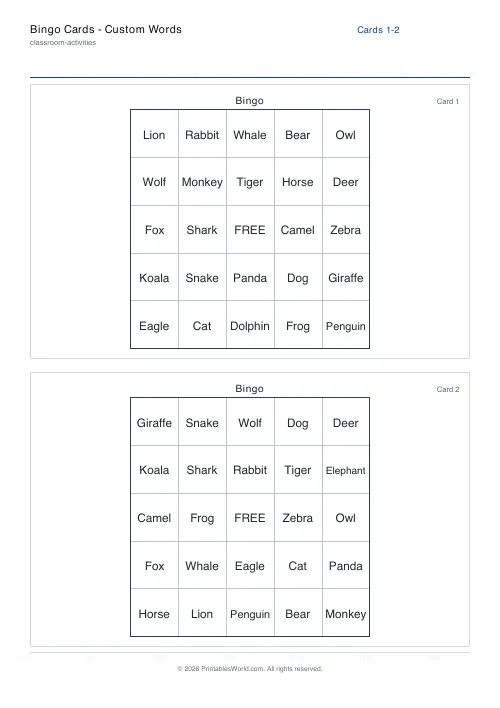
Bingo Cards: Custom Words
Enter any word list and generate unique bingo cards for every player.
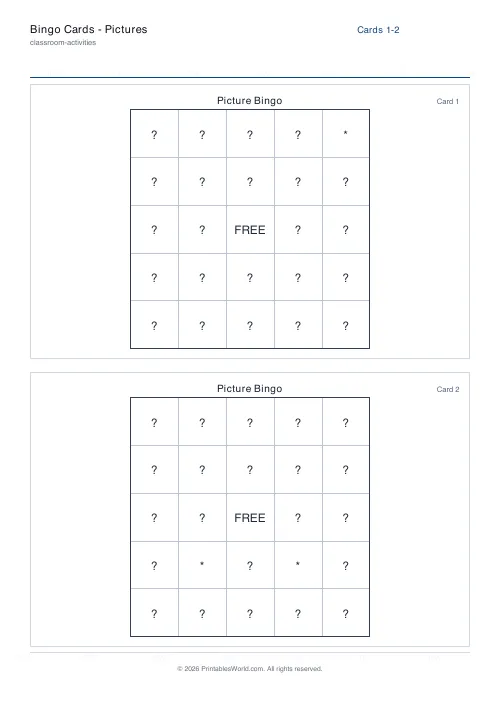
Bingo Cards: Pictures
Picture-based bingo for early years using simple emoji-style icons.
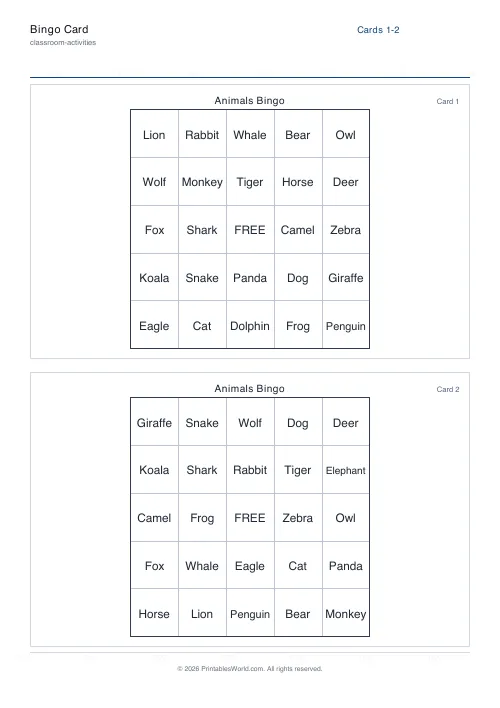
Bingo Card Generator
Generate unique printable bingo cards with custom words, FREE centre toggle, call sheet, and seeded shuffles.
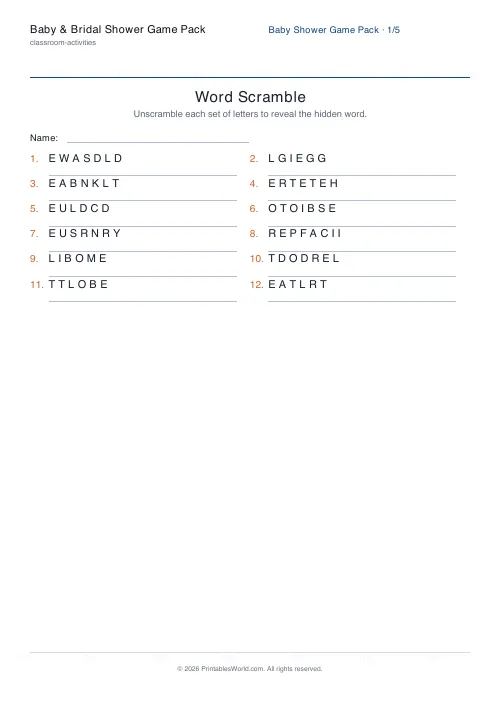
Baby & Bridal Shower Game Pack
Print a ready-made booklet of classic baby and bridal shower games.
Further reading
Classroom Activities
Bingo in the classroom: 10 subjects, one game
Bingo works in almost every subject because the mechanic never changes. Only the call does. Ten variations, and the one rule that turns it from a filler into retrieval practice.
4 min read
Classroom Activities
How to run a classroom economy (free printables)
A classroom economy teaches money, work and choice at once. But it collapses if the maths is wrong. Here is how to set the numbers, and the four pitfalls to avoid.
5 min read