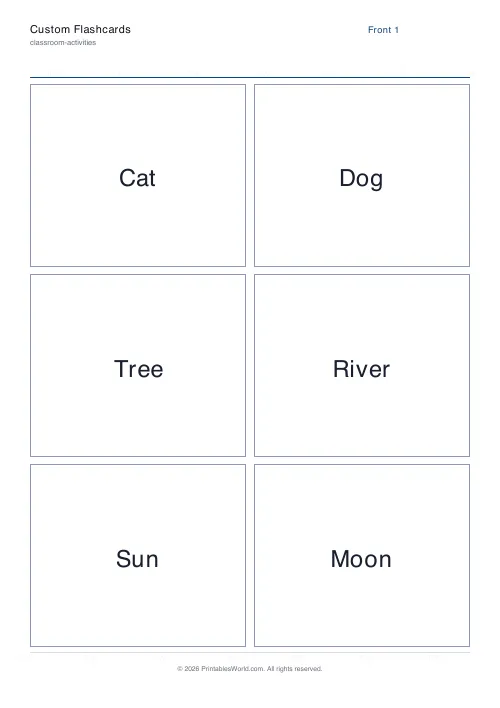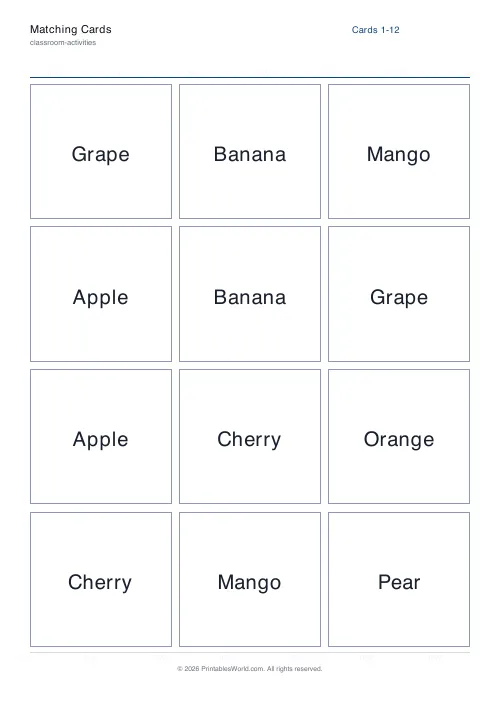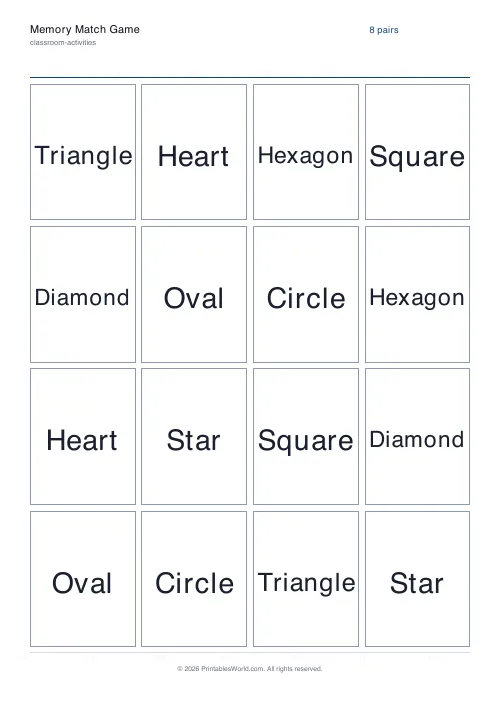
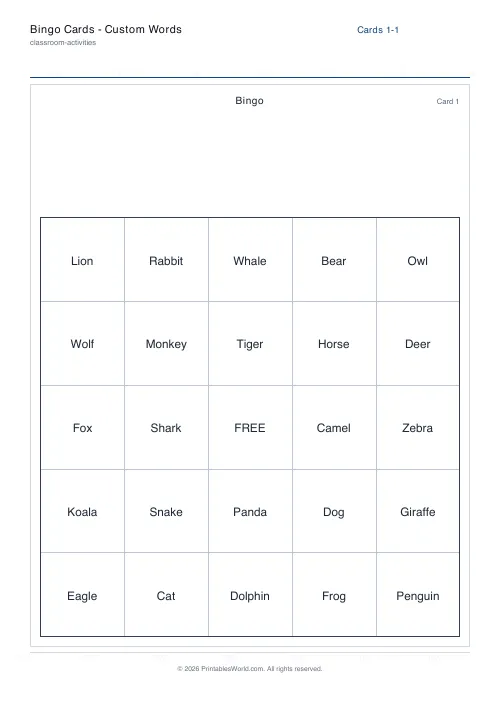
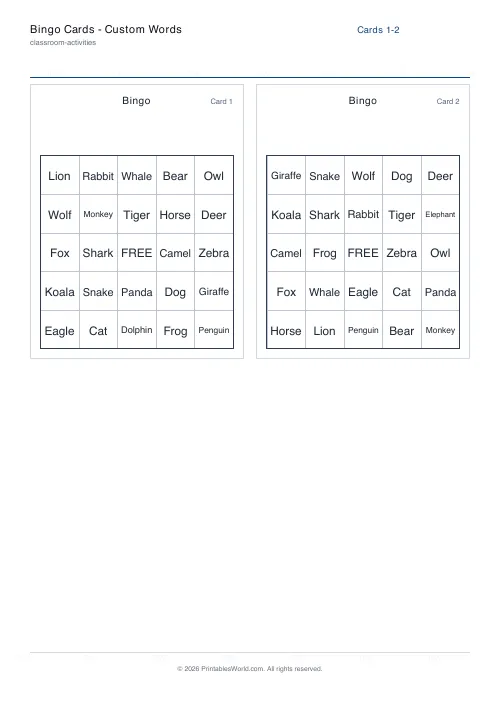
What this tool does
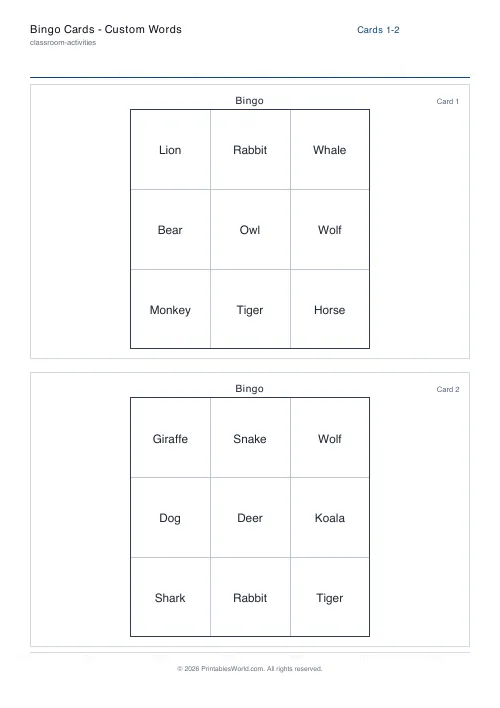
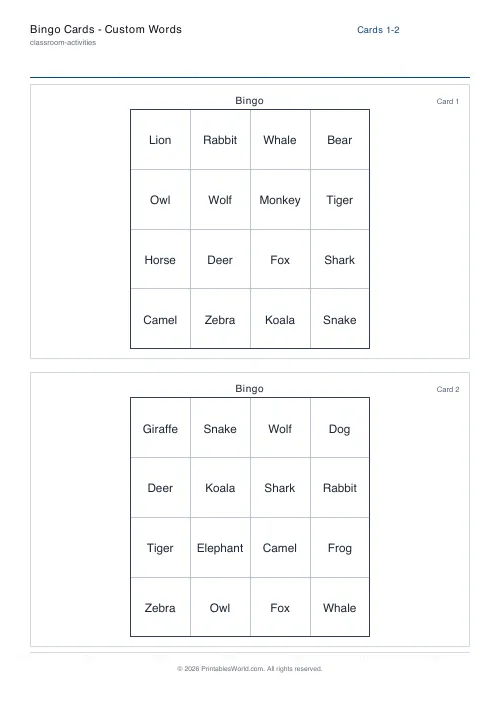
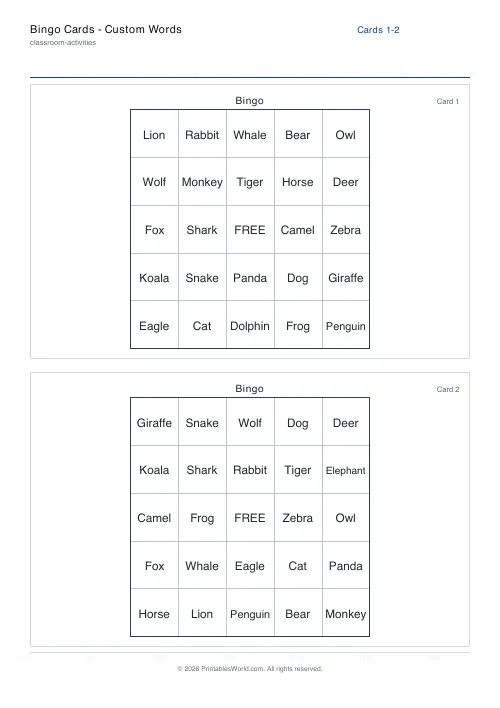
Bingo cards from any word list. Every card is shuffled differently, and a host call sheet lists every entry. Grids of 3×3, 4×4 or 5×5, one, two or four cards to a page.
People also used
Bingo Cards: Numbers
Classic number bingo (1-75 or 1-90) with unique cards per player.
Bingo Cards: Pictures
Picture-based bingo for early years using simple emoji-style icons.
Bingo Card Generator
Generate unique printable bingo cards with custom words, FREE centre toggle, call sheet, and seeded shuffles.
Feedback
Spotted something off with this tool?
Your list, one card per player, all different
Paste a word list and the generator deals a differently shuffled card to every player. Choose a 3×3, 4×4 or 5×5 grid, how many cards you need, and whether to print a call sheet.
Duplicates can be stripped automatically, card numbers printed for handing back, and the call sheet sorted or left in list order.
How many words you need
More than the grid holds, and by a decent margin.
A 5×5 grid needs 25 cells. Supply exactly 25 words and every card carries the same 25 words in a different order, so everybody gets a line at almost the same moment and the game is over in a minute. Supply 40 and the cards genuinely differ.
The rule of thumb: at least half as many words again as the grid has cells. Fifteen for a 3×3, thirty for a 4×4, forty for a 5×5.
The free centre square
Available on the 5×5 grid, where it is traditional. It speeds the game up and gives everyone one guaranteed square, which matters more with young children than it sounds.
Leave it off for a vocabulary game where every cell should be earned.
The call sheet is not optional in practice
Print it. Calling from your original list works until you lose your place, and you will — the call sheet exists so you can cross off as you go and answer "did you call photosynthesis?" without guessing.
Sorted order helps you find an item quickly when somebody claims a line and you need to check it. List order helps if the sequence matters to you.
What it is genuinely good for
Vocabulary revision, where the caller reads a definition and players cover the word. That version is far better than reading the word out, because it forces the connection rather than pattern-matching.
Language learning, with the card in one language and the call in the other. Times tables, with answers on the card and questions called. Any list you want a group to hear thirty times in ten minutes without it feeling like repetition.
End-of-term parties, obviously, where the words are in-jokes.
Options on the form
Title, item list, remove duplicates, grid size, free centre, number of cards, cards per page (1, 2 or 4), call sheet, card numbers, sort order, font size, and a seed. A4 or US Letter.
The seed reproduces an exact set of cards, which matters if you print thirty and then need one more that does not duplicate an existing card.
Print at 100%; four to a page is small but readable, and one to a page suits players who need the size.
FAQs
Quick answers
How many words do I need?
For a 5×5 card with FREE centre you need at least 24 unique words; for 4×4 you need 16, and for 3×3 you need 9.
Are the cards unique?
Yes. Each card uses a different shuffle of your word list, so no two players see the same layout.
Can I print a call sheet?
Yes. Toggle "Include call sheet" to add a host page listing every word.
Will the same seed give the same cards?
Yes. Reuse the same seed and word list to regenerate the exact same set.
Related tools
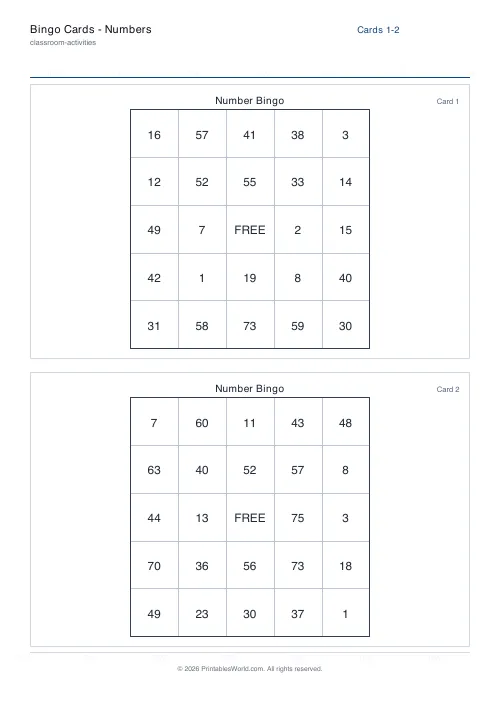
Bingo Cards: Numbers
Classic number bingo (1-75 or 1-90) with unique cards per player.
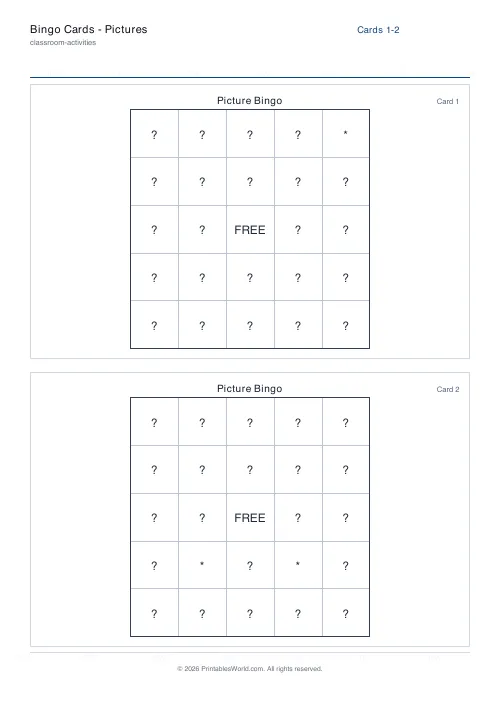
Bingo Cards: Pictures
Picture-based bingo for early years using simple emoji-style icons.
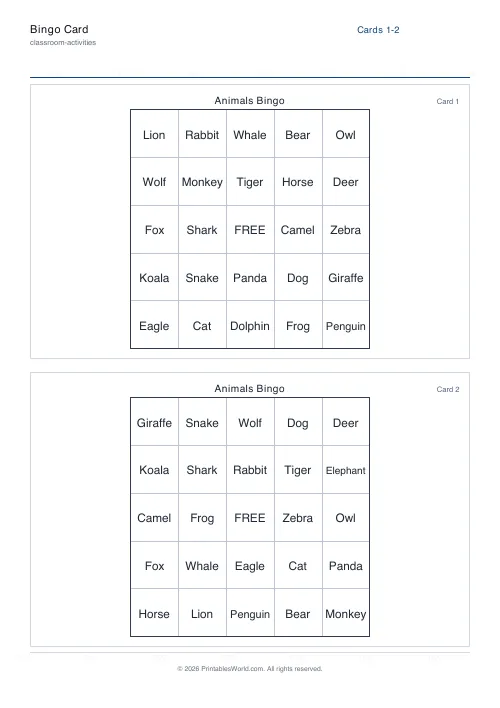
Bingo Card Generator
Generate unique printable bingo cards with custom words, FREE centre toggle, call sheet, and seeded shuffles.
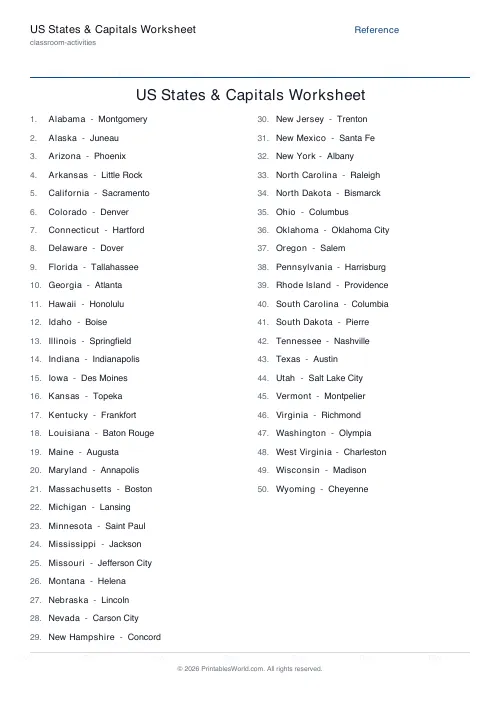
US States & Capitals Worksheet
Learn all 50 state capitals with printable quizzes and a reference list.
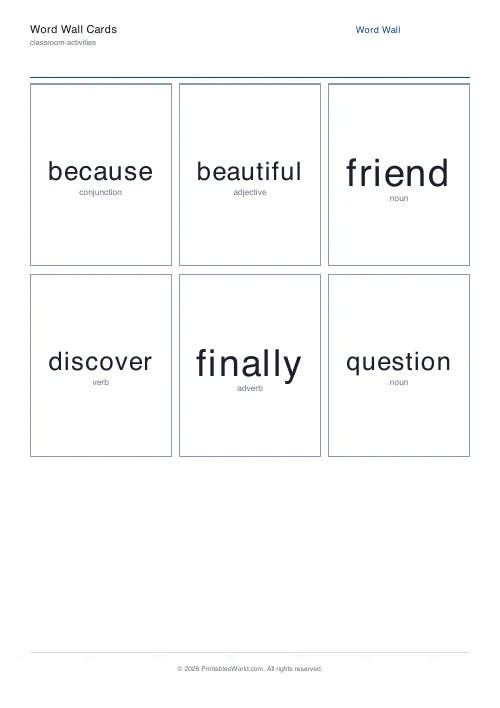
Word Wall Cards Generator
Big, bold printable word wall cards from your own word list.
Further reading
Classroom Activities
Bingo in the classroom: 10 subjects, one game
Bingo works in almost every subject because the mechanic never changes. Only the call does. Ten variations, and the one rule that turns it from a filler into retrieval practice.
4 min read
Teaching & Classroom
How to make a custom spelling word search
Turn any spelling list into a printable class set in minutes. A practical guide to making a custom spelling word search, with a worked example and difficulty tips.
7 min read
Classroom Activities
Back-to-school printables every teacher needs
Sorted by when you will actually need them: the two things to print before the children arrive, the week-one set, and the routines worth establishing while everyone is still compliant.
5 min read